

We use cookies to ensure our website works properly and to personalise your experience. Cookies policy
SMVEC School of Pharmacy, Puducherry, India.
Alzheimer's disease (AD) is a progressive neurodegenerative syndrome that leads to memory loss and decline in cognitive function. This is one of the leading causes of dementia and currently has no single known cause. Loss of cholinergic neurons, formation of amyloid-? (A?) aggregates, oxidative stress and changes in the activity of monoamine oxidase (MAO) are all thought to be involved in the development of the disease and are the targets for most current therapeutic approaches. Most of this only aim at one single target and thus have only limited success in relieving symptoms in patients with AD. The indanone ring is the active pharmaceutical ingredient of the most prescribed cholinesterase inhibitor donepezil. This ring has formed the basis of many strategies for the development of anti-AD drugs. This review follows the design, synthesis, in vitro and in vivo testing and structure activity relationships of numerous series of indanone derivatives. Published series have shown sub-nanomolar inhibitory activity against AChE or MAO-B and in some cases against A? aggregation as well. However, so far only a few of these compounds have been tested in vivo and the available data regarding their pharmacokinetic and pharmacological profile is very limited.
The aging population is facing a large health and caregiver strain from dementia, with Alzheimer’s disease (AD) being the most common form of dementia. The 2024 Lancet Commission on dementia identified 14 modifiable risk factors for dementia and reported that up to half of cases of dementia could be prevented or delayed by addressing these risk factors [3]
For decades the dominant concept of AD has been the ‘amyloid hypothesis’ which states that an imbalance between the production and clearance of amyloid beta (Aβ) is an early, initiating event in the disease with subsequent tau pathology and neuronal loss [1,2]
In contrast, the much older ‘cholinergic hypothesis’ of AD, states that memory loss in AD is caused by a loss of presynaptic cholinergic function. This hypothesis led to the development of the cholinesterase inhibitors which are still the first line of treatment for symptoms of AD [7].
Newer anti-amyloid antibodies have more recently emerged as possible treatments for AD. In the 18-month CLARITY AD trial (1,795 participants) the anti-amyloid antibody lecanemab reduced the levels of amyloid markers and led to a small but statistically significant reduction in decline compared to placebo.
However, there were significant infusion reactions and a high rate of amyloid-related imaging abnormalities with edema or effusion (ARIA-E) in 12.6% of patients [5] In the TRAILBLAZER-ALZ 2 trial (1,736 participants) donanemab slowed cognitive decline at 76 weeks but led to ARIA-E in 24.0% of patients [6]
There are many drugs in development for AD (138 drugs in 182 trials in 2025 across 15 disease processes). Some of the most studied candidates for oral AD treatment are indanone derivatives, small molecules that target multiple disease processes. Table 1 places them in context.
Table 1: Selected Reporter in the AD Therapeutic Picture
| Agent | Type / main mechanism | Point worth noting | Ref. |
|---|---|---|---|
| Donepezil | Reversible AChE inhibitor; indanone-based | AChE IC50 about 5.7 nM, strongly selective over BuChE in the original work | [8,9] |
| Rivastigmine, galantamine | Cholinesterase-directed symptomatic drugs | Part of the 'one drug–one target' group of approved agents | [7,24] |
| Lecanemab | Anti-Aβ antibody (intravenous) | Moderately less decline at 18 months; ARIA-E 12.6% | [5] |
| Donanemab | Anti-Aβ plaque antibody (intravenous) | Slowed progression at 76 weeks; ARIA-E 24.0% | [6] |
| Indanone MTDLs | Oral small molecules, preclinical | Combine AChE, MAO-B, Aβ and antioxidant activity | [18,19,24,26] |
why the indanone scaffold?
The story begins with the discovery of the donepezil lead, a benzylpiperidine, by Sugimoto and colleagues [8–10]After further modifications to the indanone-containing molecule, 1-benzyl-4-[(5,6-dimethoxy-1-oxoindan-2-yl) methyl]piperidine, the authors mapped the effects of various substitutions around the indanone moiety to determine the most potent inhibitor of AChE with high selectivity over BuChE. [9]Figure 1 shows the finished molecule.
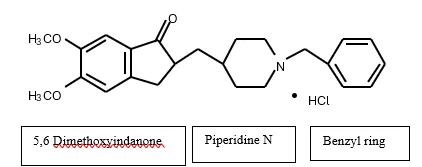
Figure 1: Donepezil Broken into Four Modules. Colours Show the Indanone (Blue), Linker (Grey), Piperidine (Orange) and Benzyl Group (Green); the Labels Note Where Medicinal Chemists Usually Make Changes. Redrawn Schematic Based on the Structure Described In [8,9,11]
To understand the structure–activity relationships of donepezil, it is helpful to view the molecule as four replaceable modules (Fig. 2) comprising: (1) the dimethoxy-indanone moiety; (2) the short CH2 linker; (3) the basic piperidine nitrogen, which is protonated at physiological pH; and (4) the benzyl group. Almost every “donepezil-like” indanone in the literature can be described by changing one or two of these modules while keeping the rest constant.
Structural biology of donepezil on AChE was subsequently described, showing that the compound spans both the catalytic site and the peripheral anionic site of the enzyme’s gorge, thus interfering with the AChE-promoted Aβ aggregation [11] Caution should be exercised when using human AChE structures for molecular modeling studies instead of those of Torpedo used in early studies [12] Figure 2 provides a simplified view of the structure of donepezil.
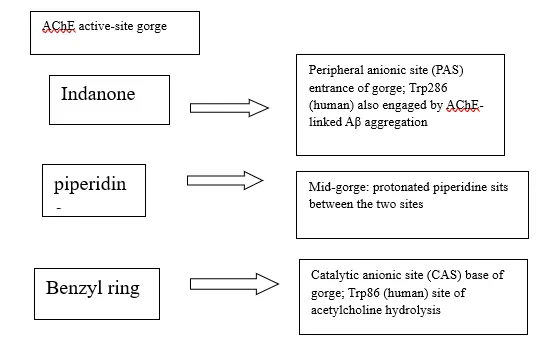
Figure 2: How Donepezil Spans the AChE Gorge. the Indanone End Sits Near the Peripheral Anionic Site (PAS), the Benzylpiperidine End Reaches the Catalytic Anionic Site (CAS). Conceptual Schematic Based on the Crystal Structure in [11] and the Human-Enzyme Structured in [12] Trp Numbering for Human AChE
From a chemist’s perspective, the indanone ring system is a convenient, compact, rigid, fused bicyclic ketone with an aromatic ring that can be substituted with methoxy, hydroxy, halogen etc. substituents and a reactive C-2 position that can be extended with benzylidene, alkyl or heteroaryl groups [16,17]. When C-2 is substituted with an arylidene group, the molecule can be considered a conformationally locked cousin of a chalcone [16] Chalcones are known for their selective MAO-B inhibition [24] This provides an alternative route into AD biology for the arylidene indanones. Reviews of the chemistry and pharmacology of this scaffold are available. [16,17,27]
DESIGN STRATEGIES
Donepezil-guided design
The methoxy-substituted indanone moiety of Donepezil can be retained in the design of novel AChE inhibitors by replacing the amine-bearing tail. Saglık and co-workers recently synthesized 42 indan-1-one derivatives with various piperazine and secondary amine moieties attached via a benzylidene linker to the indanone core [24] In a similar study, a series of thiazolylhydrazone-indane derivatives was synthesized, with the best compound displaying an AChE IC50 of 0.026 µM in a mixed-type inhibition manner. [23]
Another approach to design novel AChE inhibitors involves the conjugation of the indanone core with a 1-benzyl-1,2,3,6-tetrahydropyridine moiety.[26]
Multi-target-directed ligands (MTDLs)
For AD pathology is multifactorial, single molecules modulating several nodes of disease are expected to have higher therapeutic potential than selective inhibitors of single targets.[13] Early examples of MTDLs include the polyamine–quinone memoquin series,[14]which were designed to combine cholinesterase inhibition, anti-aggregation activity and antioxidant activity in one single molecule. For indanones, the typical target profile consists of AChE (often also BuChE) and MAO-B, as well as the aggregation of Aβ and oxidative stress. MAO-B is of particular interest as target, because MAO inhibitors can have neuroprotective properties beyond the inhibition of the enzyme. [15]
The four targets in Figure 3 offer different benefits to be exploited. Cholinesterase inhibition (AChE and, in some cases, also BuChE) increases the concentration of acetylcholine at the synapse. MAO-B metabolizes amines by oxidative deamination and therefore also produces hydrogen peroxide.
Thus, inhibition of MAO-B not only reduces its activity but also the amount of oxidative stress caused by the enzyme. [15] Aβ self-assembly is the amyloid-related target and radical-scavenging or metal-chelating moieties are the targets for oxidative stress. [18] The rigid, mostly planar benzylideneindanone core is ideally suited for the targets of aggregation and MAO-B, while the basic amine tail directs the molecule towards the cholinesterases. The main design challenge is to create a single molecule that can bind several of these targets with sufficient potency and that does not exceed a size and a degree of polarity that would prevent it from crossing the blood-brain barrier.
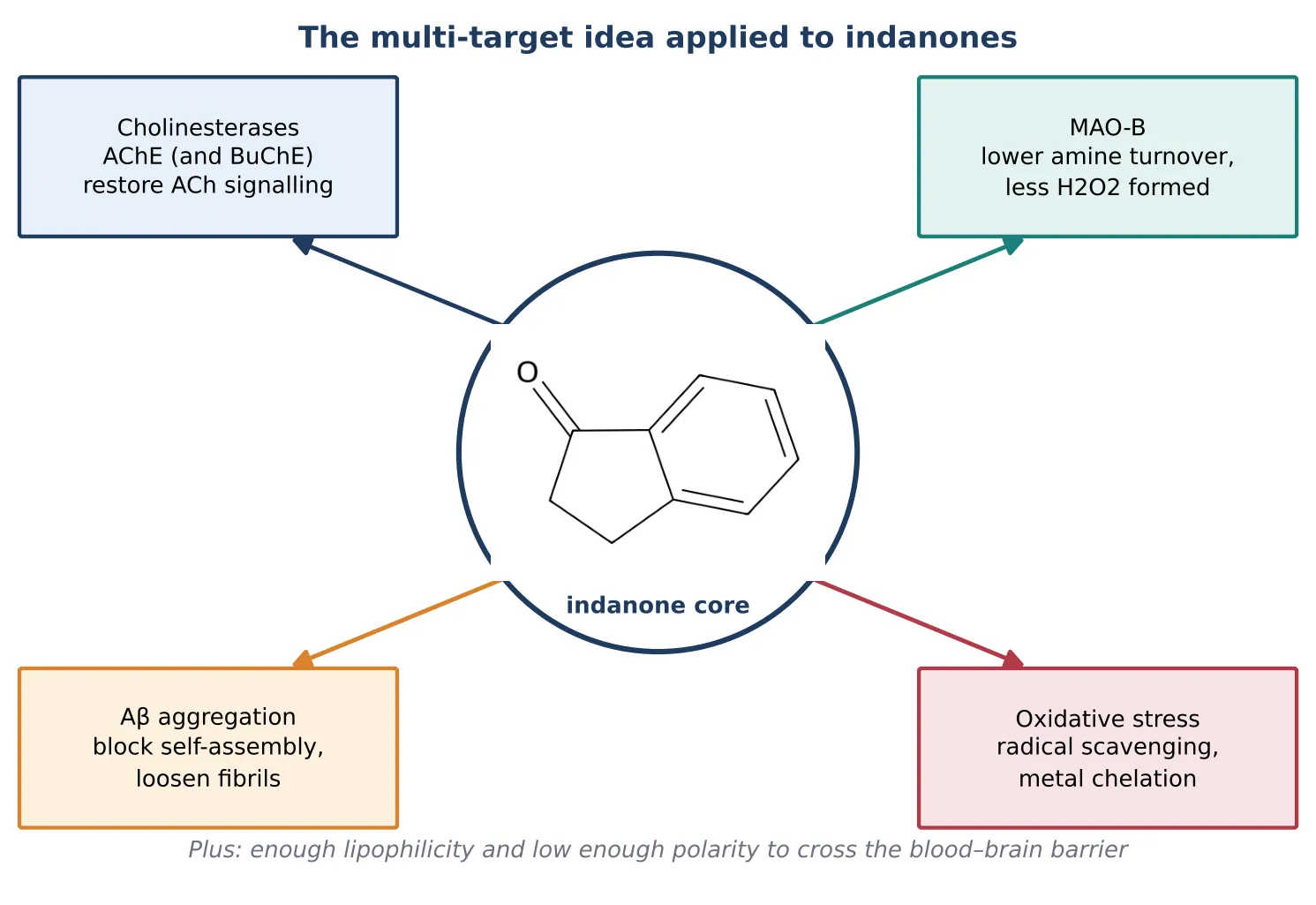
Figure 3: The Multi-Target Idea Applied to Indanones. One Scaffold Is Tuned to Engage Four Disease-Relevant Activities While Staying Brain-Penetrant. Concept Figure Compiled from the Target Sets Reported In [13,18,19,24,26]
Pharmacophore hybridisation
This hybrid strategy involves combining fragments from two different drugs.
For example, a group of researchers combined the indanone core of donepezil with the carbamate function of rivastigmine and confirmed that the carbamate was stable to the assay conditions by HPLC (Figure 3.1) [25]
Another group combined the indanone core with a benzyl-tetrahydropyridine function to target dual AChE/MAO-B inhibition [26]
Computation as a filter, not a verdict
Computational docking is used as a filter to rationalize binding modes and to prioritize compounds before synthesis. [24,25,28] The best use of docking for compounds intended for human use is to build a model of the human enzyme, [12]to check docked poses against kinetic data (competitive, non-competitive, or mixed inhibition) and to use the same protocol for donepezil as a reference.
The other filter for CNS-active compounds is that they must reach the brain. They are generally small, of moderate lipophilicity, have low polar surface area and low numbers of hydrogen-bond donors.
Thus, a design for CNS-active compounds should have few hydroxyl, amide or carbamate groups. PAMPA-BBB provides an early measure of passive permeability [30] and it is better to measure this before synthesis than after.
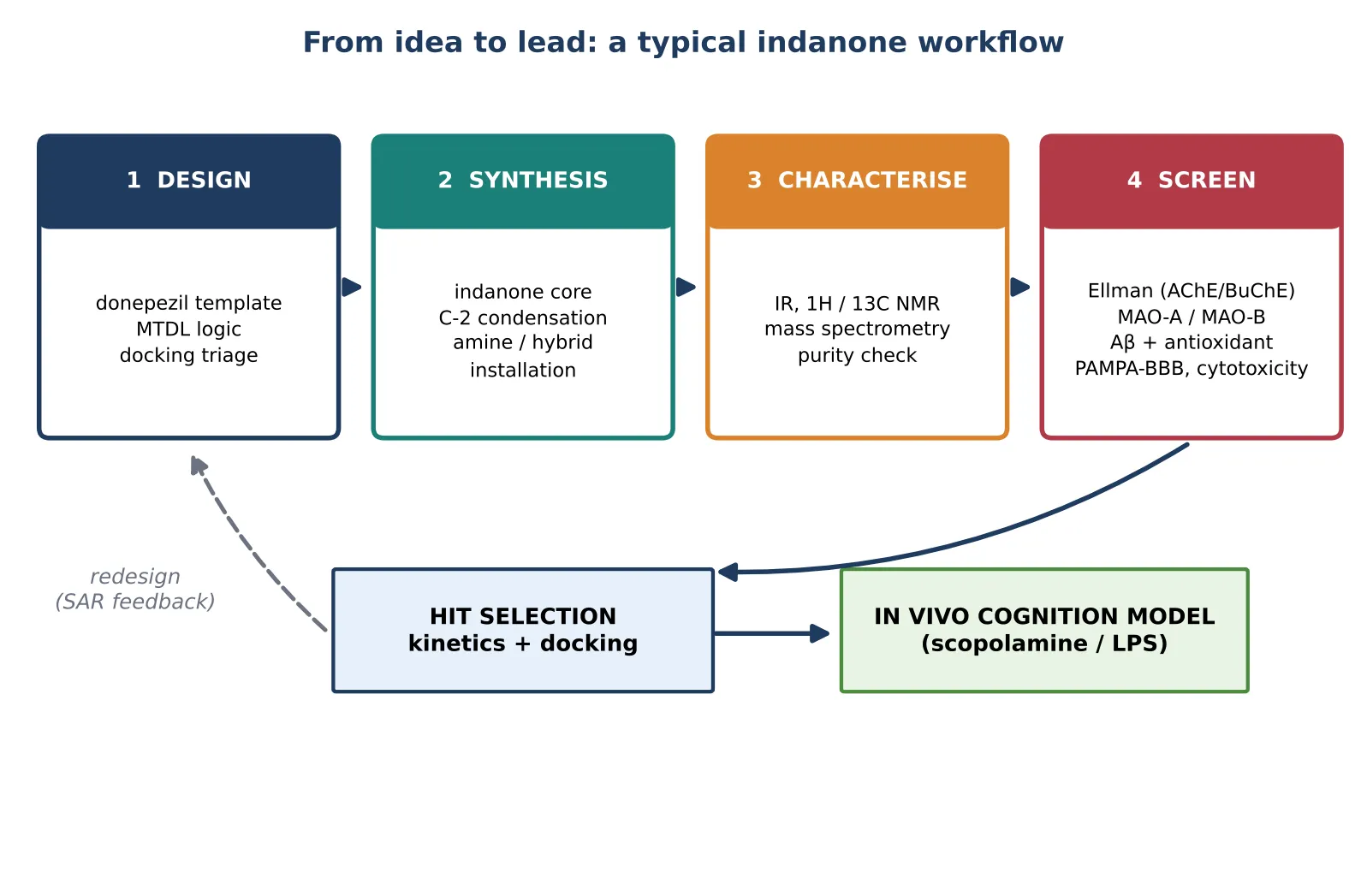
Figure 4: A Typical Design-To-Lead Workflow for Indanone anti-AD Candidates, with SAR Feedback Looping Back to Design. Schematic Assembled from the Workflows Reported In [18,19,24,26]
SYNTHESIS
Building the indanone core
There are many different routes to 1-indanones, starting from the literature of 1926 [17]The workhorse reaction for building 1-indanones is intramolecular Friedel–Crafts acylation of 3-arylpropionic acids (e.g. using polyphosphoric or sulfuric acid). Nazarov cyclisation of aryl vinyl ketones and even microwave-assisted Nazarov cyclisation reactions have also been described [16,17]
Installing diversity at C-2
The condensation of the indanone with an aromatic aldehyde under aldol conditions (Claisen–Schmidt reaction) with base catalysis or with potassium carbonate under microwave heating can be used to prepare arylidene (benzylidene) derivatives [16] Most of the 2-benzylidene and 2-heteroarylidene derivatives tested against MAO and cholinesterases were prepared using this simple reaction [20–22,24]
For Donepezil the condensation of 5,6-dimethoxy-1-indanone with 1-benzylpiperidine-4-carbaldehyde under strongly basic conditions is followed by hydrogenation of the exocyclic double bond over Pd/C [8]This ‘condense, then reduce’ scheme can be used for the preparation of flexible, conjugated MAO-B-oriented compounds or for the preparation of flexible, donepezil-like compounds by reducing the double bond.
Addition of amine tails and hybrid fragments
The acetamidobenzylidene indanone of the 42-compound series was first deprotected to the amine, then converted to the corresponding chloroacetamide and finally reacted with piperazine or various secondary amines to give the final products [24] The structures of the compounds of these studies were established by means of IR (infrared spectroscopy), 1H and 13C NMR (nuclear magnetic resonance spectroscopy) and mass spectrometry [24]As is always the case, the double-bond geometry of the enone should be checked by means of NMR and the purity of the compounds before testing for biological activity should be confirmed, since impure enones can give false positive results. The overall sequence of the syntheses is summarized in Scheme 1.
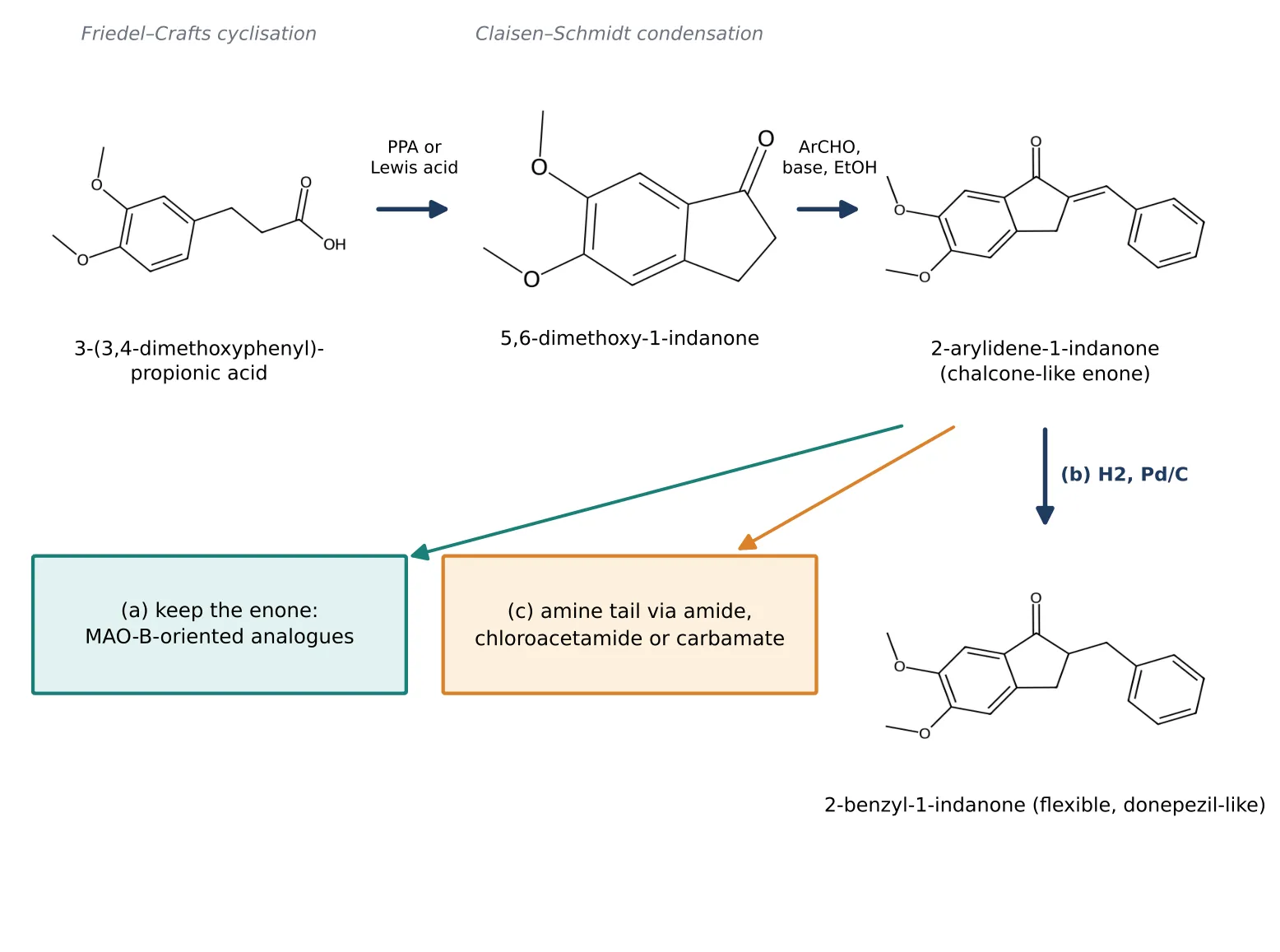
Scheme 1: General Synthetic Logic for Donepezil-Like and Arylidene Indanones: (I) Friedel–Crafts Cyclisation of a 3-Arylpropionic Acid; (Ii) Claisen–Schmidt Condensation with an Aromatic Aldehyde; (Iii) Optional Reduction of the Exocyclic Double Bond, or Installation of an Amine Tail. Redrawn Schematic Based on the Routes In [8,16,17,24]
The simplicity of Scheme 1 is one of the key advantages of this scaffold, being achievable in two or three steps from the commercial acid and aldehyde of choice to generate a diverse library of compounds. In practice, each step is monitored by TLC, the intermediate indanone is purified before condensation to the arylidene, which is formed as the thermodynamically favored E-isomer, although this can be confirmed by NMR as well.
BIOLOGICAL EVALUATION
The screening cascade starts with the cheapest and fastest assays and only the best compounds proceed to more sophisticated screens.
To provide a little more background to the various readouts in the indanone literature, we have summarized the most common assays in Table 2. The Ellman assay for example, is used to monitor the enzyme-catalyzed hydrolysis of acetylthiocholine to thiocholine and its subsequent reaction with DTNB (5,5′-Dithiobis (2-nitrobenzoic acid) to give a yellow product, measured at 412 nm. Inhibitors of the enzyme will cause a decrease in the rate of color change [29] The Thioflavin T assay is used to detect aggregation of β-sheet-rich fibrils. Compounds that decrease the signal of Thioflavin T can be read as decreasing aggregation; however, compounds that quench Thioflavin T fluorescence or that compete with Thioflavin T for binding to the fibrils would also give a decrease in signal. The MAO assays utilize either a fluorometric or a spectrophotometric assay to measure the product formed from a standard substrate. Reversibility of inhibitors can be assessed by dialysis [20–22] IC50 values are dependent on the enzyme used, the concentration of the substrate used and the incubation time used in each assay.
Therefore, the IC50 values given in a paper should only be compared with other values given in the same paper.
Table 2: Core Assays for Indanone anti-AD Candidates
| Assay | What it tells you | Conventional result | Ref. |
|---|---|---|---|
| Ellman colorimetric assay | AChE / BuChE inhibition | IC50; kinetics (competitive, mixed) | [29] |
| Thioflavin T fluorescence | Inhibition of self-induced Aβ aggregation; disaggregation of fibrils | % inhibition at a fixed dose (e.g. 20 µM) | [18,19] |
| Recombinant human MAO-A / MAO-B | Potency and isoform selectivity; reversibility by dialysis | IC50 | [20-22] |
| Antioxidant tests (e.g. ORAC-FL, radical scavenging) | Capacity to counter oxidative stress | ORAC value or IC50 | [18,24] |
| PAMPA-BBB | Passive blood–brain barrier permeation | Effective permeability, CNS+/CNS− class | [30] |
| Cytotoxicity on cell lines | Early safety signal | IC50 | [24] |
| Docking and kinetics | Binding mode and mechanism | Pose, binding energy, Lineweaver–Burk plots | [23-25] |
| Animal cognition models | Functional efficacy | Memory/spatial tests (e.g. scopolamine, LPS) | [26,28] |
A few habits would make the results more credible. Always include donepezil in assays, ideally as a control compound run in parallel with the test compounds. For carbamates, stability under assay conditions needs to be demonstrated [25]PAMPA-BBB measures only passive diffusion, and results do not provide any information regarding efflux transporters or metabolism. [30] Many of the arylidene indanones are Michael acceptors, so before claiming a specific mechanism, counter-screens should be included in the assay.
6. Representative results and structure–activity relationships
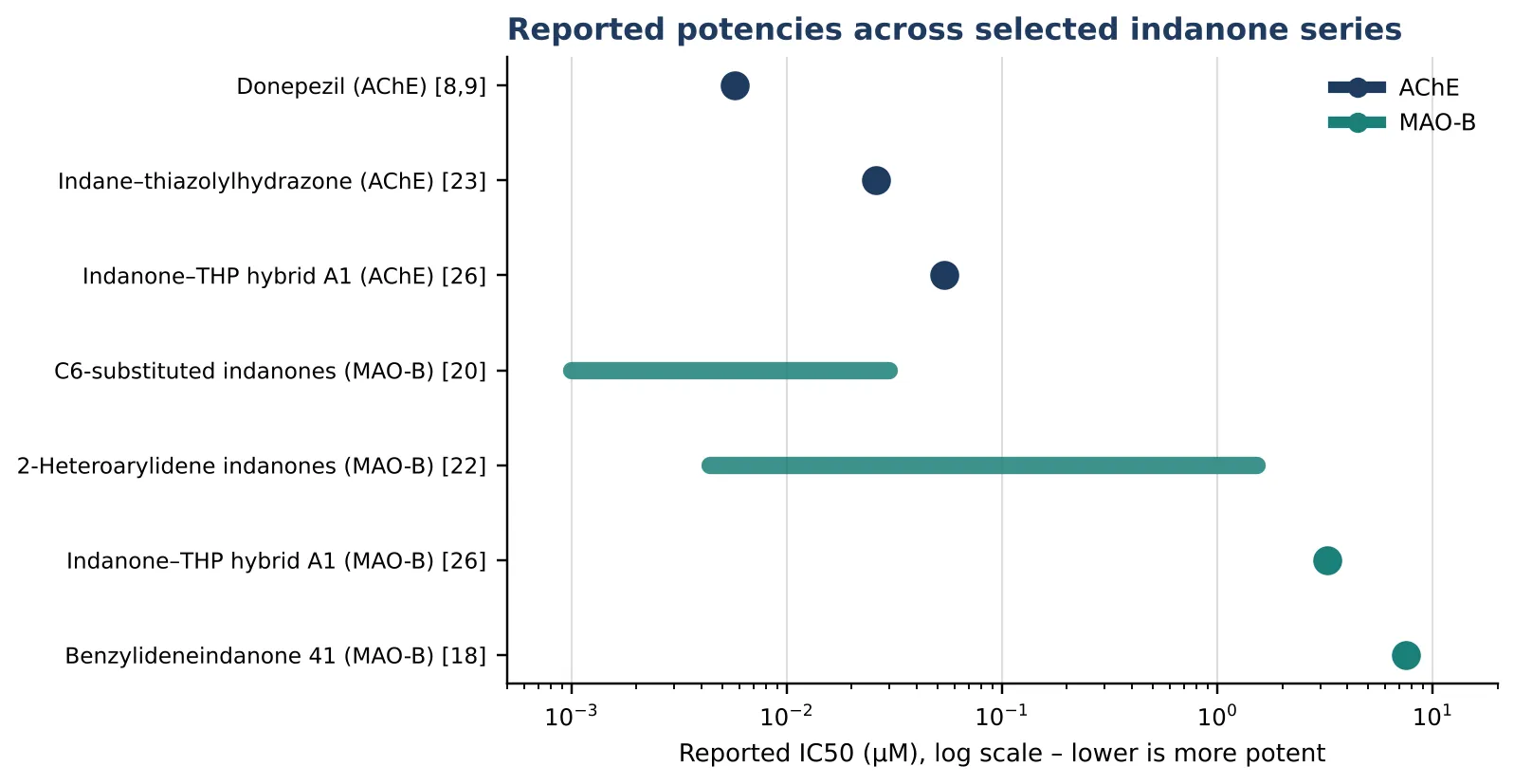
Figure 5: Reported Potencies from Selected Indanone Series on a Common Log Scale. Bars Span the Reported Range; Dots Are Single Best Values. Values Are Taken from [8,9,18,20,22,23,26] and Come from Different Laboratories and Assay Conditions, So the Chart Shows Orders of Magnitude, Not a Ranking.
In Figure 5 the headline potencies are plotted on one axis. What is notable is that the best MAO-B inhibitors from the simple indanone series are in the low-nanomolar range for potency, i.e. better than the best donepezil-like analogues for AChE inhibition. Hybrid compounds that act on both targets, i.e. the multi-target approach, are, of course, somewhat less potent than single-target compounds, but the trade-off is managed well.
Table 3: Selected Indanone Series and Their Headline Findings
| Series / design idea | Headline results | Ref. |
|---|---|---|
| Benzylideneindanones (MTDL) | Compound 41: 80.1% inhibition of Aβ1-42 aggregation at 20 µM, MAO-B IC50 7.5 µM, antioxidant and metal-chelating; disassembled Aβ fibrils | [18] |
| Indanone MTDLs, AChE-focused | Most compounds with nanomolar AChE IC50; compounds 9 and 14 inhibited Aβ aggregation by 85.5% and 83.8% and crossed an in vitro BBB model | [19] |
| C6- and C5-substituted indanones | C6 substitution: highly potent, selective MAO-B inhibitors (IC50 0.001–0.030 µM); C5 weaker; reversible competitive mode | [20] |
| 2-Benzylidene-1-indanones | MAO-B-selective; twelve of 22 compounds with IC50 below 0.1 µM | [21] |
| 2-Heteroarylidene-1-indanones | MAO-B IC50 0.0044–1.53 µM | [22] |
| Indane–thiazolylhydrazones | Best compound AChE IC50 0.026 µM, mixed-type inhibition | [23] |
| 42 donepezil-based indan-1-ones | D28–D30 and D37–D39 combined AChE, BChE and MAO-B inhibition with Aβ and antioxidant activity | [24] |
| Indanone–carbamate hybrids | Best compound inhibited AChE and BChE at low-micromolar level and self-induced Aβ aggregation more strongly than donepezil (see note) | [25] |
| Indanone–benzyl-tetrahydropyridine hybrids | Compound A1: AChE IC50 0.054 µM, MAO-B IC50 3.25 µM; improved memory in a scopolamine mouse model | [26] |
| 4-(2-oxo-2-aminoethoxy)-2-benzylidene indanones | Pyrrolidine and piperidine analogues most potent in an LPS memory-impairment model | [28] |
Note: the carbamate-series figures (AChE 1.2 µM, BChE 0.3 µM, Aβ inhibition 86.8% versus 45.5% for donepezil) come from the group's thesis abstract; verify them against the final paper before quoting them.
Table 4: Emerging Structure–Activity Trends
| Structural feature | Observed effect | Ref. |
|---|---|---|
| 5,6-Dimethoxy pattern on the indanone A-ring | Retained from donepezil in many designs; supports AChE-oriented activity | [8,24] |
| Substitution at C6 rather than C5 | Higher MAO-B potency and selectivity | [20] |
| 5-Hydroxy on the indanone A-ring plus halogen or methyl on the B-ring | High-potency MAO-B inhibition in 2-benzylidene series | [21] |
| Exocyclic arylidene (chalcone-like enone) | Directs activity towards MAO-B; also a potential reactivity liability | [16,24] |
| Basic amine tails (piperazine, secondary amines, benzyl-tetrahydropyridine) | Supports AChE inhibition and dual AChE/MAO-B profiles | [24,26] |
| Carbamate fragment | Rivastigmine-like cholinesterase activity; needs a stability check | [25] |
What do these trends add up to? The scaffold is genuinely tunable with respect to AChE and MAO-B, and moving substitution patterns can generate compounds with AChE-dominant or MAO-B-dominant profiles as required for a MTDL program.
However, as noted above, achieving balance is difficult, and the most potent MAO-B inhibitors in the simple indanone series [20–22] are not necessarily good AChE inhibitors. The best dual inhibitors [24,26] are compromise compounds. The data on the effect of the compounds on Aβ are encouraging, but most of the data are from self-aggregation assays [18,19,25] and so the compounds interfere with aggregation in a test tube but do not necessarily lower plaque burden in a brain. Figure 6 summarizes these trends on a single structure.
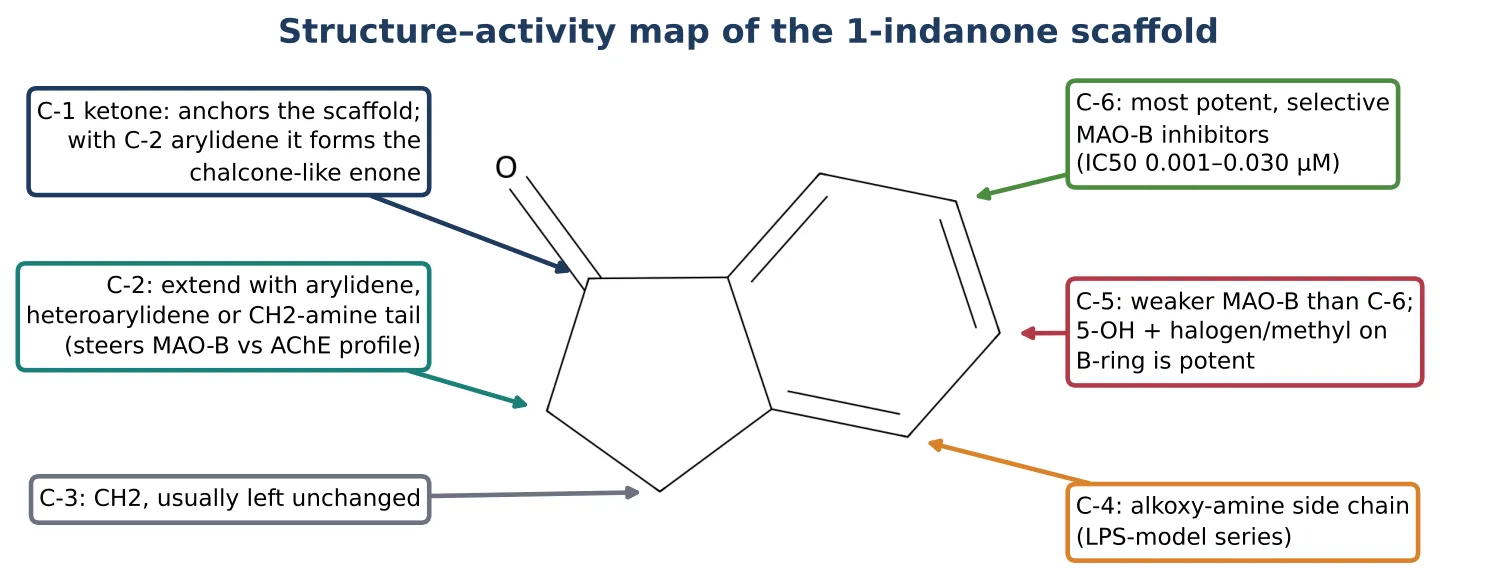
Figure 6: Structure–Activity Map of the 1-Indanone Scaffold, Summarising the Trends in Table 4. Position-by-position Summary Compiled From [16,20,21,24,26,28]
Challenges and future directions
Most published work stops at in vitro enzyme and aggregation assays. There are a few studies in vivo [26,28] but the data are limited. Potency numbers say little about real-world promise without pharmacokinetics, brain exposure and repeat-dose safety.
Keep selectivity honest. Several indanones are reported to inhibit both MAO-A and MAO-B [20–22]Since MAO-A inhibition can bring its own pharmacology, selectivity should be reported and not assumed. [15]
Watch the chemistry. Conjugated enones can be reactive in non-specific ways. Carbamates can be unstable. [25] Early checks on stability, thiol-reactivity and on cytotoxicity are useful [24]
Use better structural models. Because donepezil binds the human enzyme differently from the Torpedo enzyme, [12]docking should be run on human AChE and verified with kinetics.
Add more targets with good reason. Tau pathology and neuroinflammation are targets that can be explored with indanones (e.g. LPS-based work in [28]). But more targets do not necessarily make a good compound. Each target must have a good reason for being added and be tested for.
Think about combinations. Oral MTDLs will not replace antibodies,[5,6]but they might complement them. Early-stage work that tests both ideas together would be informative.
A practical checklist for new indanone leads
• Start from a clear hypothesis for each target, not a fashionable one.
• Run donepezil as a reference drug in every assay.
• Confirm structure, geometry and purity before bioassay.
• Report AChE/BuChE and MAO-A/MAO-B selectivity together.
• Pair docking on the human enzyme with kinetic data.
• Add PAMPA-BBB, a stability test and cytotoxicity early.
• Take the best two or three compounds into an animal model with exposure data.
CONCLUSION
Donepezil established the indanone ring in AD research. The multi-target agents based on the indanone core are easy to synthesize and decorate and interact with several targets of the Alzheimer’s disease. Many of the reported derivatives show nanomolar inhibition of AChE and/or MAO-B. Some of them even interfere with the aggregation of Aβ. Several compounds even improved the cognitive performance of mice. What is still missing is more in vivo work, better pharmacokinetic properties, more stringent selectivity and safety profiles and above all common assays to allow comparison of different series of compounds. Such multi-target agents based on the indanone core could be used as oral drugs in combination with the antibody-based therapies currently in clinical trials.
ACKNOWLEDGEMENT
We thank our respected dean for the opportunity to prepare this review article and our guide for valuable guidance and support. We express our gratitude for our faculty members and batchmates for the cooperation. We also acknowledge the researchers. Artificial intelligences tools were used to generate selected illustrative figures included in this review articles.
Abbreviations:
AChE, acetylcholinesterase; BuChE, butyrylcholinesterase; Aβ, amyloid-β; AD, Alzheimer’s disease; BBB, blood–brain barrier; MAO, monoamine oxidase; MTDL, multi-target-directed ligand; PAS/CAS, peripheral/catalytic anionic site; SAR, structure–activity relationship; PAMPA, parallel artificial membrane permeability assay; IC50, concentration giving 50% inhibition.
REFERENCES





S. Vishvaja, P. Sathya Narayanan, R. Yakesh, R. Keerthiga, M. Dhanalakshmi, Design, Synthesis, Evaluation of Indanone Derivatives for Alzheimer’s Disease, Int. J. of Pharm. Sci., 2026, Vol 4, Issue 11, 337-347. https://doi.org/
 10.5281/zenodo.23922727