

We use cookies to ensure our website works properly and to personalise your experience. Cookies policy
Arvind Gavali College of Pharmacy, Satara, Maharashtra, India 415004.
The present study was undertaken to develop and characterize a thermoresponsive ophthalmic hydrogel containing diclofenac sodium for prolonged ocular retention and controlled drug release. Pluronic F127 was selected as the thermoresponsive polymer, while xanthan gum was incorporated as a natural viscosity-enhancing and mucoadhesive polymer. A 3² full factorial design was applied using Pluronic F127 (16, 18 and 20% w/w) and xanthan gum (0.1, 0.2 and 0.3%) as formulation variables. Gelation temperature and viscosity were selected as responses. Nine formulations (F1–F9) were prepared by the cold method and evaluated for physical appearance, pH, viscosity, gelation temperature and gelation time. F5 containing 18% Pluronic F127 and 0.2% xanthan gum was selected as the optimized formulation. It showed a gelation temperature of 34.2 ± 0.2 °C, viscosity of 220 ± 8 cP at 25 °C and 640 ± 5 cP at 34 °C, and gelation time of 34 ± 2°C. The optimized formulation showed pH 7.1 ± 0.01, spreadability of 3.61 g·cm/s and drug content of 95.6%. FTIR, DSC and XRD studies did not indicate apparent incompatibility between diclofenac sodium and the polymeric components. In vitro diffusion through a dialysis membrane using phosphate buffer pH 7.4 showed 87.74% cumulative drug release at 8 h. The release data showed the highest coefficient of determination for the zero-order model (R² = 0.9985), while the Korsmeyer–Peppas exponent was 0.66. In HET-CAM, the optimized formulation showed a primary irritation index of 3.92. The formulation produced a 16 mm zone of inhibition against Staphylococcus aureus compared with 21 mm for the standard. The findings indicate that the developed Pluronic F127–xanthan gum system has potential as a thermoresponsive ophthalmic delivery platform for diclofenac sodium.
Ophthalmic drug delivery is challenging because tear turnover, blinking, nasolacrimal drainage and the corneal barrier can rapidly remove or restrict topically administered drugs. Conventional eye drops therefore generally provide a short precorneal residence time and may require repeated administration.[1] In-situ gelling systems have been investigated to address this limitation by allowing a formulation to be administered as a liquid and subsequently transform into a gel under physiological conditions, thereby increasing residence time on the ocular surface.[2]
Thermoresponsive systems are particularly attractive for ocular delivery because the formulation can remain sufficiently fluid during administration and undergo sol-to-gel transition at ocular temperature. Pluronic F127 (poloxamer 407) is a non-ionic triblock copolymer that exhibits temperature-dependent micellization and gelation.[3] However, a formulation based only on Pluronic F127 may have limitations related to gel durability and ocular retention. Xanthan gum, a natural polysaccharide, can contribute viscosity and mucoadhesive characteristics and may therefore complement the thermogelling behavior of Pluronic F127.[4]
Diclofenac sodium is a non-steroidal anti-inflammatory drug used in ophthalmic therapy, including management of ocular inflammation. Incorporation of diclofenac sodium into a thermoresponsive hydrogel may combine the convenience of a liquid during administration with increased viscosity after exposure to ocular temperature.[5] Accordingly, the present study was designed to develop and optimize a diclofenac sodium-loaded thermoresponsive ophthalmic hydrogel using Pluronic F127 and xanthan gum, with gelation temperature and viscosity as the principal optimization responses.
2. MATERIALS AND METHODS:
2.1 Materials:
Diclofenac sodium was purchased from Research Lab Pvt. Ltd., Pluronic F127 was purchased Sigma Aldrich Pvt. Ltd. and xanthan gum and Sodium Chloride (NaCl) was purchased from Loba Chemie Pvt. Ltd., Mumbai, India. All chemicals and reagents used in the study were of analytical grade and were used as received without further purification. Distilled water was used throughout the experimental work.
The study was conducted during the academic year 2025–2026 at Arvind Gavali College of Pharmacy, Satara, Maharashtra, India.
2.2. Method:
1. Preparation of PF127 and Xanthan Gum Solution:
The Pluronic F127 containing thermoresponsive hydrogel formulations was prepared using the cold method. The necessary amount of Pluronic F127 (Poloxamer 407) (16% w/v, 18% w/v, and 20% w/v) was combined with cold distilled water under constant mixing at ambient temperature (4-6℃). The resulting mixtures were kept in a refrigerator at (4±2 ℃) for about 24 h to ensure all polymer had been completely dissolved.
Xanthan gum used as a viscosity enhancer, firstly sufficient quantity of xanthan gum (0.1 % w/v – 0.3% w/v) was dissolved in distilled water with magnetic stirring, stored overnight to remove air bubbles. Viscous solution should be obtained.
2. Preparation of Diclofenac Sodium and NaCl Solution:
Diclofenac sodium concentration is (0.1% w/v) was kept constant in every batch. The drug was dissolved in 5 ml of aqueous solution with the help of sonication, then prepare 0.9% NaCl solution for isotonicity
3. Addition of Polymers and API solution:
Now take Pluronic F-127 solution (cold condition). Add xanthan gum solution slowly under the constant stirring. Add diclofenac drug solution gradually. Stir continuously to obtain uniform mixture. Maintain temperature at 4°C during mixing. After that, the formulation was adjusted to 30 ml with water. Adjust pH to 7.4 using NaOH (0.1N). The prepared formulation fill into ophthalmic dropper bottles and stored in refrigerator at 4-6℃ temperature. [6,7,8]
2.3 Experimental Design (Design-Expert® Software):
A 3² full factorial design was employed using Design-Expert® software to systematically investigate the effects of formulation variables on the characteristics of the developed thermoresponsive ophthalmic hydrogel. Pluronic F127 and Xanthan Gum were selected as the independent variables, each investigated at three different levels. The concentrations of Diclofenac sodium, sodium chloride were kept constant throughout all experimental runs. Gelation temperature and viscosity were selected as the response variables. The factorial design comprised nine experimental runs (F1–F9), which were prepared and evaluated to determine the effects of Pluronic F127 and Xanthan Gum concentrations on the thermoresponsive gelation and viscosity of the developed ophthalmic hydrogel. [9,10]
2.4 Gelation Temperature of Hydrogel:
To determine the gelation temperature of the formulations using the method of test tube inversion. The prepared formulation 2 mL was contained in 5 mL capacity of test tubes exposed to a water bath operated under thermostatic control. Temperature of the water bath was incremented by 0.5°C with starting and finished temperatures being 20 and 40 °C, respectively. Each temperature increment allowed for 1-minute of equilibration before the tube was inverted through 90° to determine the gelation temperature.[11]
2.5 Viscosity study of developed hydrogel:
Using a Brookfield DV-E viscometer with spindle, measurements of viscosity for the developed thermoresponsive ophthalmic hydrogel formulations were conducted by using a spindle. The viscosity was measured at two temperatures 25°C and 37°C in order to simulate the gels’ characteristics in both the sol phase and the gel phase. The proper volume of the hydrogel formulation was put into an appropriately sized beaker and the spindle was placed into the hydrogel formulation without trapping air bubbles; the viscosity was recorded once stable readings were obtained at both temperatures. All viscosities were recorded in triplicate, and the average of the viscosity results were calculated so that the results would be accurate and reproducible. The increase in the viscosity at room temperature resulted in the pluronic F127 colloidal gel formulations changing from sol to gel. [12,13]
3. FORMULATION AND OPTIMIZATION:
3.1 Formulation Table:
Table No 1: Formulation coding of thermoresponsive hydrogel
|
Batch |
F1 |
F2 |
F3 |
F4 |
F5 |
F6 |
F7 |
F8 |
F9 |
|
PF127 (%) |
16 |
18 |
20 |
16 |
18 |
20 |
16 |
18 |
20 |
|
Xanthan Gum (%) |
0.1 |
0.2 |
0.3 |
0.1 |
0.2 |
0.3 |
0.1 |
0.2 |
0.3 |
|
Diclofenac sodium (%) |
0.1 |
0.1 |
0.1 |
0.1 |
0.1 |
0.1 |
0.1 |
0.1 |
0.1 |
|
Sodium Chloride (%) |
0.9 |
0.9 |
0.9 |
0.9 |
0.9 |
0.9 |
0.9 |
0.9 |
0.9 |
3.2 Optimization:
The study employed a 3² factorial design, where two factors, each with three levels, were investigated. Design Expert Software was used to create the design. In this study, a 3² full factorial design was implemented, focusing on PF 127 Concentration (X1) and Xanthan gum Concentration (X2) chosen as independent variables. The levels of these two factors, with three different levels: low, medium, and high, were established based on a preliminary study conducted before initiating the experimental design. Throughout the study, all other formulation and processing variables remained constant. The response variables selected were Gelation temperature (Y1) and Viscosity (Y2). The prepared hydrogel batches were evaluated and characterized across various parameters.
4. CHARACTERIZATION OF OPTIMIZED BATCH:
4.1. Fourier Transform – Infrared spectroscopy (FTIR):
FTIR was employed to study the drug-polymer interaction. The IR spectrum of the hydrogel containing Diclofenac sodium is the analysed. The spectrum covering a range of wavelengths from 400 to 4000 cm−1 was determined to observe any interaction between drug and polymer. [14]
4.2 Differential Scanning Colorimetry (DSC):
The thermal and thermotropic properties of the two types of hydrogels pure and modified are assessed using DSC. The thermal properties of the new hydrogel are also assessed using DSC in order to identify the new materials used to create the composite hydrogel Diclofenac sodium, Pluronic F127, and Xanthan gum and their associated phases. The samples were heated from 30 to the 300 °C at a controlled rate of 10 °C/min in a nitrogen in environment with flow rate of 20 ml/min. 1 mg of each sample was placed into its own aluminium pan before being heated. [15]
4.3 X-Ray Diffractometer:
An XRD analysis of a thermoresponsive hydrogel containing Diclofenac sodium focused on the hydrogel sample polymer Pluronic F127 and Xanthan Gum and the diffraction angles recorded will be used to determine the crystalline nature and physical state of the finished product. [16,17]
4.4 HET-CAM for ex vivo ocular irritation test:
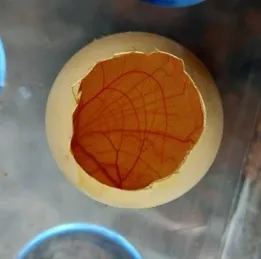
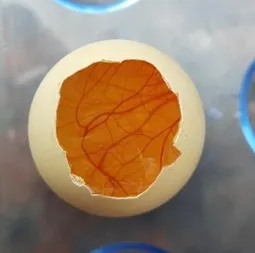
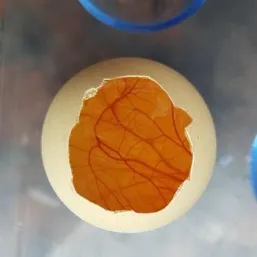
The HET-CAM system is an ex vivo method that can be used to assess the possible negative effects of ophthalmic products. In order to ascertain the degree of irritation that occurred following the application of a test material to the chicken egg, vascularization such as bleeding, lysis the rupturing of cells or deep vascularity within the medullary zone of the chorioallantoic membrane of chicken eggs is periodically recorded. HET-CAM is frequently used as a first step in determining the safety of a drug product for use in humans because it is thought to be a quick, repeatable, and non-invasive method for evaluating ocular drug delivery systems. [18,19]
4.5 Antibacterial Activity:
Using the diffusion, we evaluated the newly developed thermoresponsive ophthalmic hydrogel that contains Diclofenac sodium on Staphylococcus aureus. This evaluation was completed by preparing and pouring sterile nutrient agar medium into sterile petri plates under aseptic conditions, then allowing the nutrient agar to solidify. Once solidified, a sterile cotton swab was used to evenly spread freshly prepared Staphylococcus aureus culture over the surface of the plate. Approximately 6 mm diameter wells were made with a sterile cork borer in each of the agar plates, then the required quantity of the newly developed hydrogel formulation was carefully added to each well. The standard drug solution and blank hydrogel formulations were used as controls when comparing the results from the newly developed hydrogel formulation to the controls. [20]
4.6. In Vitro Diffusion Study:
The in vitro diffusion study of the developed thermoresponsive ophthalmic hydrogel was performed using a Franz diffusion cell. The formulation was evaluated for its ability to release diclofenac sodium through a diffusion membrane into the receptor medium. Phosphate buffer pH 7.4 was used as the receptor medium and maintained at 37 ± 0.5 °C with continuous stirring. The drug diffusion was monitored at predetermined time intervals up to 8 h, and the withdrawn samples were analysed spectrophotometrically at 276 nm. The cumulative percentage drug release (% CDR) was calculated from the obtained absorbance values, and the release profile was used for further evaluation of the drug diffusion behaviour. [21,22,23]
4.7. Release kinetics of Hydrogel:
There are numerous mathematical models available to analyse the kinetics of medication release, and these models take into account the amounts of drug released throughout an 8 hrs period. These equations show the models that were put to the test. Appropriate mathematical models were chosen to characterize the dissolution profiles based on these estimations. The following plots were created to estimate the release kinetic model: Zero-order model, First-order model, Higuchi model, and Korsmeyer–Peppas model. [24,25]
4.8 Stability Study:
As part of the ICH guidelines, hydrogel formulations were tested for stability. The hydrogel made from this preparation underwent stability testing for the 30 days at 25 °C and 60% RH at all times during this time. After 1 month of storage, the spreadability, pH, drug content and the physical properties of developed thermoresponsive diclofenac sodium loaded hydrogel products were measured. [26,27]
5. RESULTS AND DISCUSSION:
5.1 Viscosity Study:
The viscosity study showed that the viscosity of the developed hydrogel formulations increased gradually with an increase in polymer concentration. The viscosity values of all the developed formulations were found to be in the range of 440– 930cP, which is within the acceptable range for ophthalmic administration. The obtained results indicate good ocular compatibility and suggest that the formulations are unlikely to cause significant irritation to the eye. All batches exhibited viscosity values suitable for ophthalmic application.
5.2 Gelation Temperature:
The gelation temperature study confirmed the thermoresponsive behavior of the developed ophthalmic hydrogel formulations. As the polymer concentration increased, the gelation temperature gradually decreased. Among all the formulations, F5 exhibited a gelation temperature of 34.2 ± 0.2°C, which corresponds to the physiological ocular surface temperature and is therefore considered an ideal gelation temperature for ophthalmic application.
5.3 Optimization (Design-Expert® Software):
A total of nine experimental runs (F1–F9) were generated using Design-Expert® software. A 3² full factorial design was employed for the optimization of the Pluronic F127/Xanthan Gum thermoresponsive ophthalmic hydrogel system. The experimental formulations generated by the Design-Expert® software were prepared and evaluated for gelation temperature and viscosity, and the obtained responses were subjected to statistical analysis.
The results demonstrated that variations in the concentrations of Pluronic F127 and Xanthan Gum produced measurable changes in the selected response variables. An increase in Pluronic F127 concentration generally resulted in an increase in viscosity and a decrease in gelation temperature, which may be attributed to increased temperature-dependent micellization and polymer concentration.
Table No. 2: Table of Design of Experiment of hydrogel
|
|
|
Factor 1 |
Factor 2 |
Response 1 |
Response 2 |
|
Run
|
Std
|
A:PF 127 Concentration (%) |
B: XG Concentration (%) |
Gelation temperature (℃) |
Viscosity (CPs) |
|
4 |
1 |
16 |
0.2 |
36.6 |
490 |
|
1 |
2 |
16 |
0.1 |
37.2 |
440 |
|
5 |
3 |
18 |
0.2 |
34.2 |
640 |
|
7 |
4 |
16 |
0.3 |
36.2 |
530 |
|
3 |
5 |
20 |
0.1 |
32.6 |
760 |
|
9 |
6 |
20 |
0.3 |
31.8 |
930 |
|
6 |
7 |
20 |
0.2 |
32.2 |
840 |
|
2 |
8 |
18 |
0.1 |
34.5 |
580 |
|
8 |
9 |
18 |
0.3 |
33.8 |
710 |
5.3.1 ANOVA for Quadratic model:
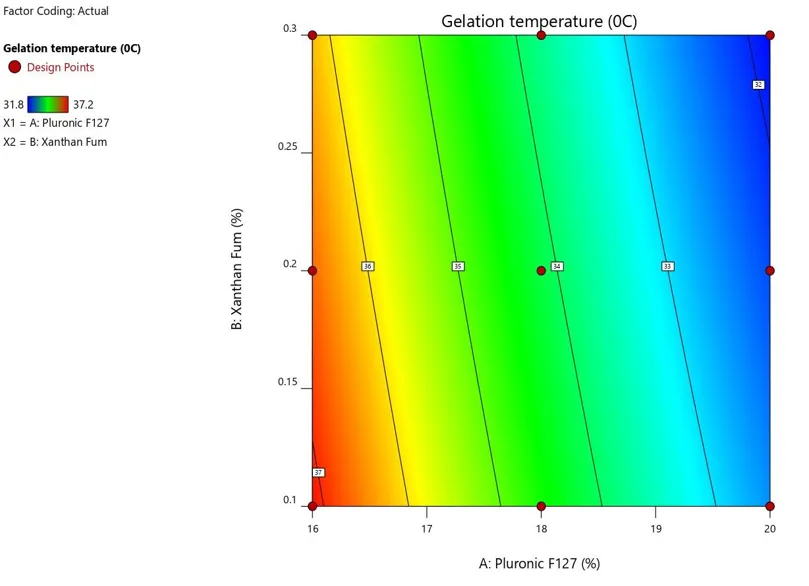
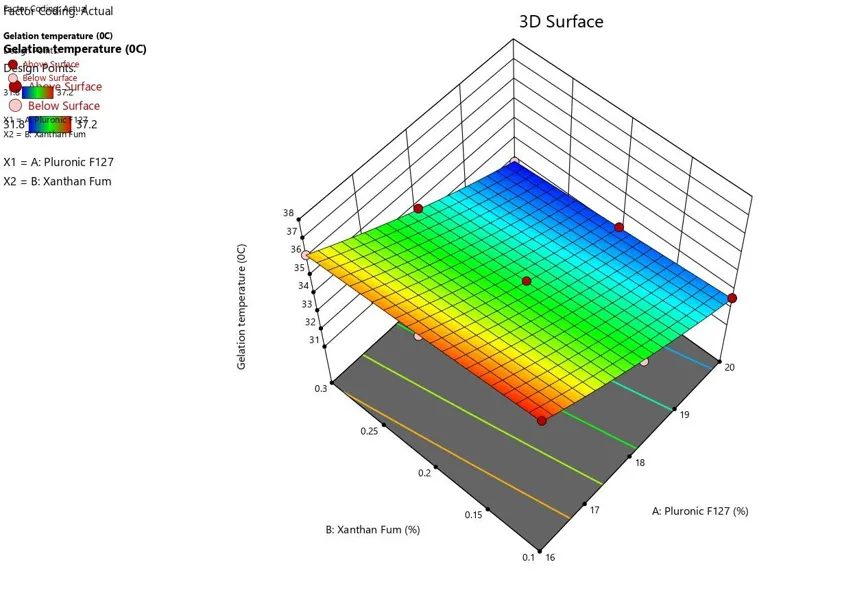
1. Response 1: 1. Gelation temperature:
ANOVA analysis for gelation time showed that the quadratic model was significant with an F value of 884.49 and p-value < 0.0001. The formulation variables Pluronic F127 (A), Xanthan Gum (B) exhibited significant effect on gelation time. The interaction terms AB were found to be non-significant, whereas quadratic terms A², B² showed significant influence on the response.
Table No. 3: Response 1 Gelation temperature of hydrogel
|
Source |
Sum of Squares |
df |
Mean Square |
F-value |
p-value |
|
|
Model |
31.12 |
5 |
6.22 |
884.49 |
< 0.0001 |
significant |
|
A-Pluronic F127 |
29.93 |
1 |
29.93 |
4252.74 |
< 0.0001 |
|
|
B-Xanthan Gum |
1.04 |
1 |
1.04 |
148.03 |
0.0012 |
|
|
AB |
0.0100 |
1 |
0.0100 |
1.42 |
0.3189 |
|
|
A² |
0.1422 |
1 |
0.1422 |
20.21 |
0.0205 |
|
|
B² |
0.0006 |
1 |
0.0006 |
0.0789 |
0.7970 |
|
|
Residual |
0.0211 |
3 |
0.0070 |
|
|
|
|
Cor Total |
31.14 |
8 |
|
|
|
|
Factor coding is Coded.
Sum of squares is Type III - Partial
The Model F-value of 884.49 implies the model is significant. There is only a 0.01% chance that an F-value this large could occur due to noise.
P-values less than 0.0500 indicate model terms are significant. In this case A, B, A² are significant model terms. Values greater than 0.1000 indicate the model terms are not significant. If there are many insignificant model terms (not counting those required to support hierarchy), model reduction may improve your model.
2. Fit Statistics:
Table No. 4: Fit statistics of response 1 gelation time.
|
Std. Dev. |
0.0839 |
R² |
0.9993 |
|
Mean |
34.34 |
Adjusted R² |
0.9982 |
|
C.V. % |
0.2443 |
Predicted R² |
0.9924 |
|
|
|
Adeq Precision |
77.3796 |
The Predicted R² of 0.9924 is in reasonable agreement with the Adjusted R² of 0.9982; i.e. the difference is less than 0.2.
Adeq Precision measures the signal to noise ratio. A ratio greater than 4 is desirable. Your ratio of 77.380 indicates an adequate signal. This model can be used to navigate the design space.
Final Equation of gelation time in Terms of Coded Factors:
Gelation Temperature = 34.34 – 2.23 A − 0.4167 B + 0.0500 AB + 0.2667 A² + 0.0167 B²
This Final equation indicates that the increasing both Pluronic F127 and xanthan Gum concentrations decrease the gelation temperature and there are Pluronic F127 shows the strongest influence.
3. DIGNOSTIC PLOTS:
Contour plot and 3D Response surface plot of response 1 gelation time
2. Response 2: 1. Viscosity:
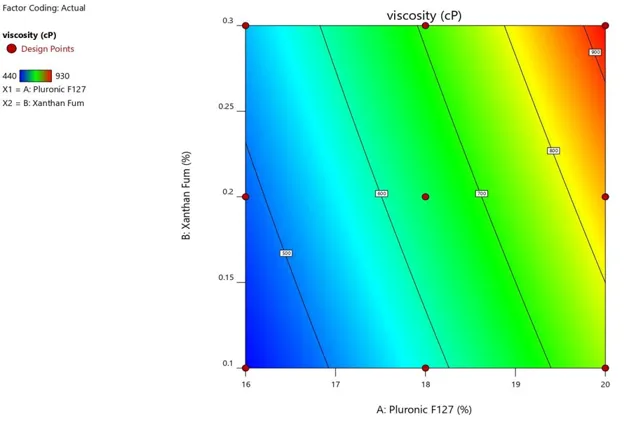
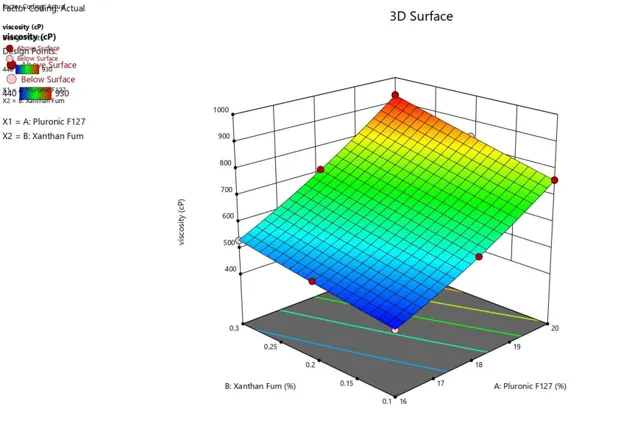
The ANOVA analysis for Response 2 Viscosity showed that the developed model was significant with an F-value of 295260 and p-value < 0.0001. The formulation variables A (Pluronic F127), B (Xanthan Gum) exhibited significant effect on viscosity. The interaction term AB, quadratic terms A², B² were also significant.
Table No. 5: Response 2 Viscosity of developed hydrogel
|
Source |
Sum of Squares |
df |
Mean Square |
F-value |
p-value |
|
|
Model |
2.187E+05 |
5 |
43742.22 |
2952.60 |
< 0.0001 |
significant |
|
A-Pluronic F127 |
1.908E+05 |
1 |
1.908E+05 |
12880.12 |
< 0.0001 |
|
|
B-Xanthan Gum |
25350.00 |
1 |
25350.00 |
1711.12 |
< 0.0001 |
|
|
AB |
1600.00 |
1 |
1600.00 |
108.00 |
0.0019 |
|
|
A² |
938.89 |
1 |
938.89 |
63.37 |
0.0041 |
|
|
B² |
5.56 |
1 |
5.56 |
0.3750 |
0.5836 |
|
|
Residual |
44.44 |
3 |
14.81 |
|
|
|
|
Cor Total |
2.188E+05 |
8 |
|
|
|
|
Factor coding is Coded.
Sum of squares is Type III - Partial
The Model F-value of 2952.60 implies the model is significant. There is only a 0.01% chance that an F-value this large could occur due to noise.
P-values less than 0.0500 indicate model terms are significant. In this case A, B, AB, A² are significant model terms. Values greater than 0.1000 indicate the model terms are not significant. If there are many insignificant model terms (not counting those required to support hierarchy), model reduction may improve your model.
The quadratic model for viscosity was statistically significant. The concentrations of Pluronic F127 and Xanthan gum showed a considerable effect on viscosity, and the developed model demonstrated high accuracy for prediction.
2. Fit Statistics:
Table No. 6: Fit statistics of response 2 Viscosity.
|
Std. Dev. |
3.85 |
R² |
0.9998 |
|
Mean |
657.78 |
Adjusted R² |
0.9995 |
|
C.V. % |
0.5852 |
Predicted R² |
0.9978 |
|
|
|
Adeq Precision |
154.8564 |
The Predicted R² of 0.9978 is in reasonable agreement with the Adjusted R² of 0.9995; i.e. the difference is less than 0.2.
Adeq Precision measures the signal to noise ratio. A ratio greater than 4 is desirable. Your ratio of 154.856 indicates an adequate signal. This model can be used to navigate the design space.
Final Equation in Terms of Coded Factors:
Viscosity = 642.22 + 17.33 A + 40.00 B + 20.00 AB + 12.64 A² + 1.67 B²
The positive coefficients indicate that increasing Pluronic F127 and Xanthan gum concentrations increases the viscosity of the hydrogel. Among the two factors, Pluronic F127 has the greatest influence on viscosity, while the positive interaction term suggests a synergistic effect when both polymers are increased simultaneously.
3. Dignostic Plots:
Contour plot and 3D Response surface plot of response 2 Viscosity:
5.3.2 Numerical optimization solutions:
Table No. 7: Numerical optimization solutions data
|
Sr. No. |
Pluronic F127 Conc. |
Xanthan Gum Conc. |
Gelation Temperature |
Viscosity |
Desirability |
|
|
1. |
18.098 |
0.175 |
34.150 |
634.915 |
1.000 |
Selected |
|
2. |
20.000 |
0.100 |
32.572 |
758.889 |
1.000 |
|
|
3. |
18.000 |
0.200 |
34.156 |
642.222 |
1.000 |
|
|
4. |
16.000 |
0.100 |
37.139 |
442.222 |
1.000 |
|
|
5. |
18.000 |
0.300 |
36.206 |
553.222 |
1.000 |
|
5.3.3 Predicted vs Experimental Comparison of optimized Batch:
Table No. 8: Predicted vs Experimental Comparison of optimized Batch:
|
Parameter |
Predicted |
Experimental |
% Error |
|
Gelation Temp. (℃) |
34.15°C |
34.2°C |
0.15 % |
|
Viscosity (CPs) |
634.91 CPs. |
640 CPs |
0.80 % |
5.3.4 Selection of Optimized Batch:
The experimental values were found to be very close to the predicted values, with a percentage error of only 0.15% for gelation temperature and 0.80% for viscosity. This confirms the accuracy of the Quadratic optimization model and validates the selected optimized formulation. Therefore, F5 was considered the optimized formulation and selected for further evaluation studies.
5.4 Characterization of Optimized Batch:
1. Fourier Transform – Infrared spectroscopy (FTIR):
FTIR analysis of the hydrogel sample containing Diclofenac Sodium showed major absorption bands representing its characteristic functional groups. The broad band observed around 3200–3600 cm⁻¹ corresponds to O–H stretching, while aromatic C–H stretching appears distinctly at 3033.47 cm⁻¹. The spectrum displays a strong C=O stretching vibration at 1613.42 cm⁻¹, which confirms the carbonyl group of the drug in its salt form, complemented by the characteristic C–N stretching at 1264.35 cm⁻¹ and C–O stretching at 1100.14 cm⁻¹. Additionally, the prominent C–Cl stretching band at 751.31 cm⁻¹ further establishes and confirms the successful incorporation of Diclofenac Sodium within the hydrogel matrix.
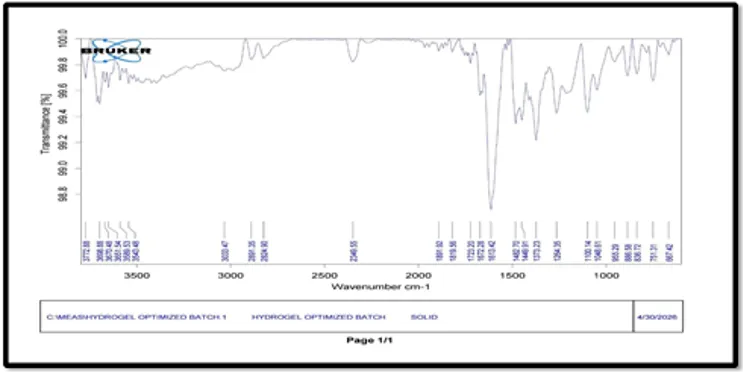
Spectra No.1: FTIR of Thermoresponsive Hydrogel containing Diclofenac Sodium
2. Differential Scanning Colorimetry (DSC):
The DSC thermogram of the optimised batch of thermoresponsive hydrogel containing Diclofenac sodium showed an endothermic peak at 55.93°C with an onset temperature of 52.43°C. This thermal transition may be attributed to the interaction of the polymers and loss of moisture from the hydrogel system. The absence of any additional sharp peaks indicated that the drug was uniformly dispersed in the polymer matrix and that the developed thermoresponsive ophthalmic hydrogel was thermally stable.
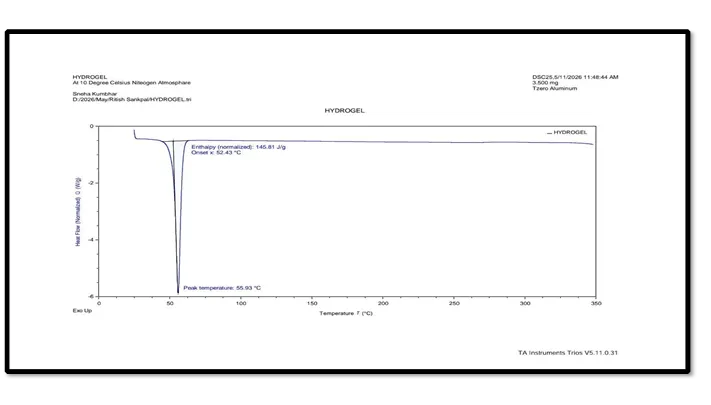
Thermogram No. 1: DSC of Thermoresponsive hydrogel containing Diclofenac Sodium.
3. X-ray Diffraction (XRD):
The XRD study of the developed thermoresponsive ophthalmic hydrogel showed characteristic diffraction peaks, indicating the presence of an ordered polymer structure. No additional unwanted peaks were observed, suggesting good compatibility among Diclofenac sodium, Pluronic F127, and Xanthan Gum. These results indicate the successful formation of a stable thermoresponsive ophthalmic hydrogel.
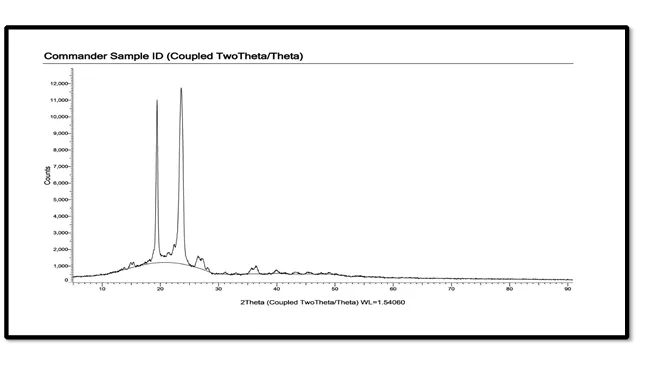
Thermogram No. 2: XRD of Thermoresponsive hydrogel containing Diclofenac
4. HET-CAM Test for Ocular Irritation:
The HET-CAM test was performed to evaluate ocular irritation potential of the optimized ophthalmic hydrogel formulation. The vehicle control and negative control showed no irritation response with a PII value of 0.07. The positive controls NaOH exhibited severe irritation with PII values of 17.80. The optimized in situ gel exhibited low irritation response PII = 3.92 as compared to positive controls. The reduced irritation may be attributed to controlled drug release, polymeric gel network formation, and good ocular compatibility of the formulation.
Table No. 9: Ocular irritancy assessment of optimized hydrogel using HET-CAM Assay
|
Sample |
Haemorrhage time (sec) |
Coagulation time (sec) |
Lysis time (sec) |
PII |
Observation |
|
Vehicle Control (Water) |
300 |
300 |
300 |
0.07 |
Non-irritant |
|
Negative Control (0.9% NaCl) |
300 |
300 |
300 |
0.07 |
Non-irritant |
|
Positive Control (NaOH) |
30 |
65 |
44 |
17.80 |
Highly-irritant |
|
Optimized Hydrogel |
205 |
255 |
225 |
3.92 |
Mild-irritant |
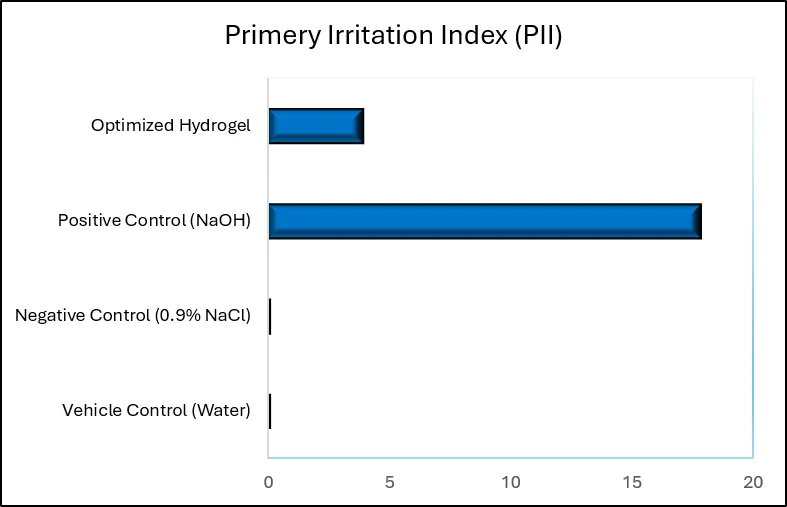
Figure No.1: Bar graphs showing (PII) Values in HET-CAM Assay
Representative images of HET-CAM assay for ocular irritation assessment:
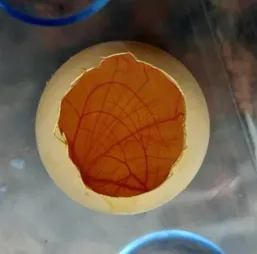
A. Vehicle Control (Water)
B. Negative Control 0.9% NaCl
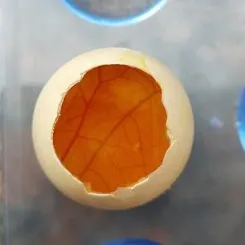
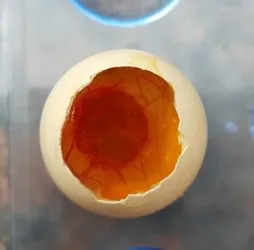
C. Positive Control (NaOH)
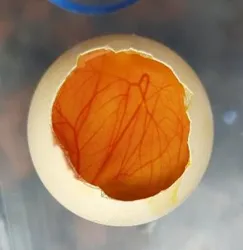
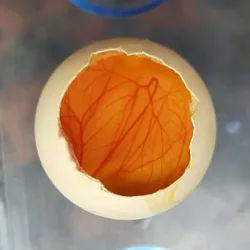
D. Optimized ophthalmic Hydrogel
Figure No. 2: Representative images of HET-CAM assay for ocular irritation assessment.
5. In-Vitro drug release study:
Table No. 10: In- Vitro drug release of Hydrogel
|
Time |
Absorbance(y) |
%CDR |
|
0 |
0.00 |
0.00 |
|
1 |
0.176 |
14.28 ± 1.12 |
|
2 |
0.223 |
24.67 ± 1.45 |
|
3 |
0.273 |
36.14 ± 1.85 |
|
4 |
0.338 |
47.82 ± 2.16 |
|
5 |
0.389 |
59.46 ± 2.38 |
|
6 |
0.439 |
69.38 ± 2.71 |
|
7 |
0.484 |
78.52 ± 3.05 |
|
8 |
0.529 |
87.74 ± 3.42 |
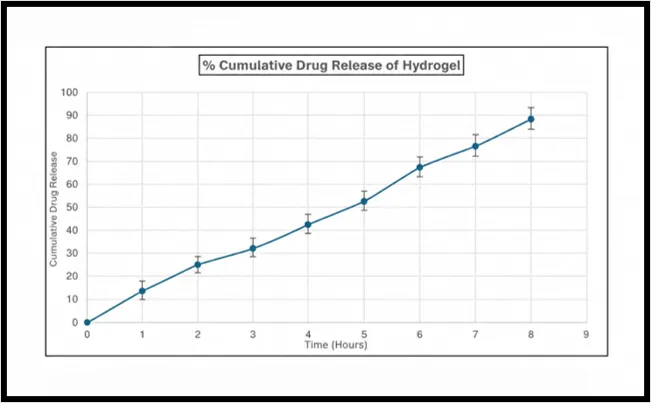
Histogram No. 1: Invitro drug release of optimised Batch of Hydrogel
Quantitative analysis of the released diclofenac sodium was performed using UV-Visible spectroscopy at a maximum wavelength (λmax) of 276 nm. The concentration of drug released was calculated using the previously validated calibration curve equation:
y = 0.0259x + 0.0987
The optimized hydrogel formulation showed a sustained drug release with a cumulative drug release of 87.74% at 8 h. The release profile indicated a prolonged and controlled release of diclofenac sodium from the thermoresponsive hydrogel.
6. Antibacterial Activity:
Antibacterial activity against Staphylococcus aureus:
The antibacterial activity of the prepare thermoresponsive hydrogel containing Diclofenac sodium optimised batch was evaluated by agar diffusion method. The activity of Batch F5 was compared with that of standard. And it was observed that the formulation exhibited a noticeable zone of inhibition and it indicating antimicrobial potential of the developed hydrogel system.
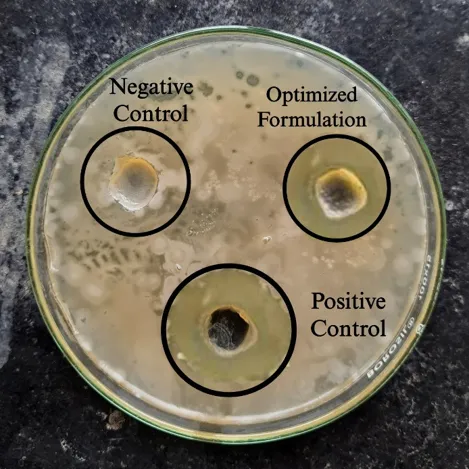
Figure No. 3: Antibacterial activity of Hydrogel in Staphylococcus aureus
Table No. 11: Zone of inhibition of Hydrogel against Staphylococcus aureus.
|
Parameter |
Result |
|
Test Organism |
Staphylococcus aureus |
|
Optimized Formulation |
17 ± 0.36 mm |
|
Positive Control |
21 ± 0.42 mm |
|
Negative Control |
No inhibition |
7. Release kinetics of Hydrogel:
The drug release data of the optimized ophthalmic hydrogel were analysed using various mathematical models, including Zero-order model, First-order model, Higuchi model, and Korsmeyer–Peppas model, to understand the mechanism of drug release. The release data were fitted to each kinetic model, and the regression coefficient (R²) values were compared to determine the best-fit model. The study indicated that the formulation exhibited a sustained and controlled drug release behavior, demonstrating the ability of the polymeric hydrogel matrix to regulate drug diffusion. Thus, kinetic analysis confirmed the suitability of the optimized ophthalmic hydrogel for prolonged ocular drug delivery.
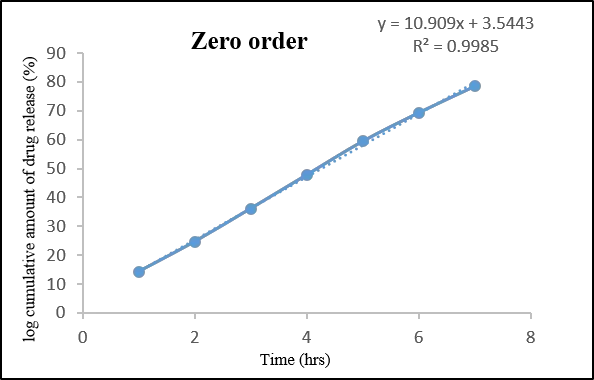
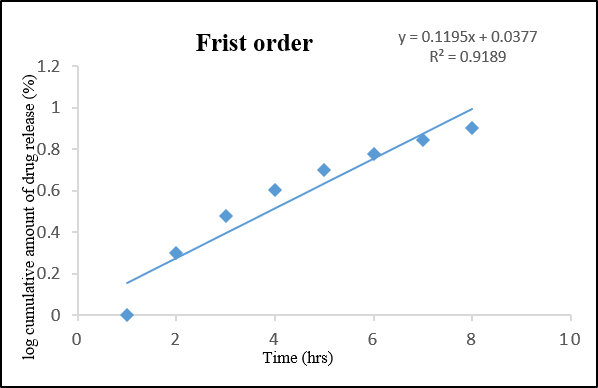
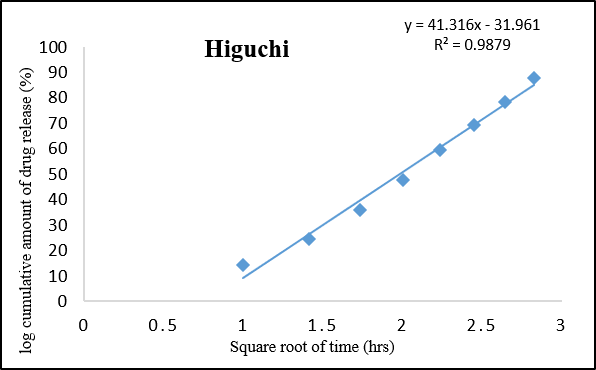
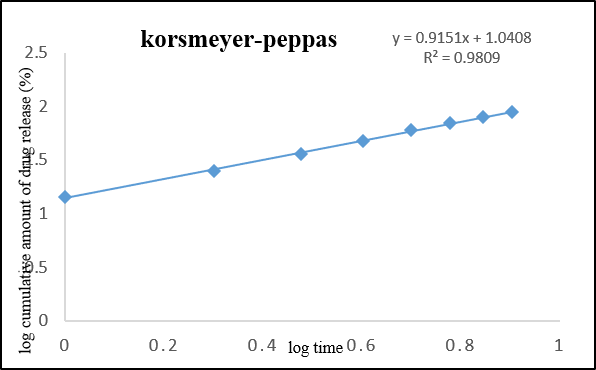
Table No. 12: The regression values of kinetic models of developed hydrogel
|
Sr. No. |
Model |
Observed parameter and Values |
|
|
1. |
Zero-order model |
R2 |
0.9985 |
|
2. |
First-order model |
R2 |
0.9189 |
|
3. |
Higuchi model |
R2 |
0.9879 |
|
4. |
Korsmeyer-Peppas model |
R2 |
0.9809 |
8. Stability Study:
The stability study of the Thermoresponsive hydrogel containing Diclofenac sodium optimised batch evaluating.
Table No. 13: Stability study of Thermoresponsive hydrogel.
|
|
Thermoresponsive Hydrogel (F5 Batch) Optimised Batch |
|
||
|
Sampling Intervals (Days) |
pH |
Physical Appearance |
Homogeneity |
Drug Content |
|
Initial Day 1 |
7.1±0.01 |
Slightly translucent Liquid |
Excellent |
95.6% |
|
15 |
7.1 ±0.02 |
No alteration in appearance |
No Change |
95.6% |
|
30 |
7.2 ±0.01 |
No alteration in appearance |
No Change |
95.6% |
CONCLUSION
The present investigation successfully developed a thermoresponsive ophthalmic hydrogel containing Diclofenac sodium using Pluronic F127 and Xanthan Gum for the management of postoperative ocular inflammation. The developed formulations showed satisfactory physical appearance, clarity, homogeneity and pH suitable for ocular application. The thermoresponsive behavior was confirmed by gelation temperature and viscosity studies, with the selected formulation exhibiting suitable solution-state viscosity for administration and increased viscosity at ocular temperature for prolonged ocular retention.
FTIR, DSC and XRD studies indicated good compatibility between Diclofenac sodium and the formulation components, while the in vitro drug release study demonstrated sustained release of the drug over the study period. Overall, the developed hydrogel exhibited desirable physicochemical and drug-release characteristics, suggesting its potential to improve ocular residence time, reduce dosing frequency and enhance patient convenience. Further in vivo and clinical studies are required to establish its therapeutic effectiveness and safety.
REFERENCES


Ritish Sankpal, Smita Borkar, Kailas Karande, Vasant Lokhande, Development and Characterization of Diclofenac Sodium-Loaded Thermoresponsive Hydrogel Using Pluronic F127 and Xanthan, Int. J. of Pharm. Sci., 2026, Vol 4, Issue 10, 1931-1948. https://doi.org/10.5281/zenodo.23355815
 10.5281/zenodo.23355815