

We use cookies to ensure our website works properly and to personalise your experience. Cookies policy
The Jamner Taluka Education Society’s Shree Suresh Dada Jain Institute of Pharmaceutical Education And Research, Jamner, Jalgaon, Maharashtra, India 424206.
Digital therapeutics (DTx) represent an emerging and transformative approach in the management of chronic diseases through evidence-based, software-driven interventions. These technologies utilize mobile applications, wearable devices, artificial intelligence, and data analytics to deliver personalized, real-time healthcare solutions. Unlike traditional therapies, DTx focus on behavioral modification, continuous monitoring, and patient engagement, thereby improving treatment adherence and clinical outcomes. This study reviews the Cardiovascular diseases of digital therapeutics in chronic disease management. Evidence from randomized controlled trials and meta-analyses demonstrates significant improvements in conditions such as with Cardiovascular diseases (heart failure, hypertension, coraonary artery disease, rhythm refer to arrhymias, congenital heart disease, valvular heart disease.) Despite their advantages such as accessibility, cost-effectiveness, and scalability DTx face challenges related to regulatory approval, data privacy, awareness, and integration into healthcare systems. However, with ongoing advancements and increasing clinical validation, digital therapeutics are poised to become an integral component of modern healthcare, supporting precision medicine and improving long-term disease management outcomes.
Chronic disease management can promote the recovery of patients’ health and reduce medical costs. It is safe, feasible, and effective for patients with chronic diseases.(5) Digital therapeutics has created new ideas for chronic disease management, greatly improved the accessibility and effectiveness of medical service resources, and played an important supporting role in patient disease management.(4)
Digital therapeutics are defined by the digital therapeutics alliance, an international nonprofit organization, as evidence based therapeutic interventions driven by high-quality software programs designed to prevent, manage, or treat medical disorders or diseases(1)The fields where digital therapeutics development is most active include mental health, chronic diseases, and physical health. For mental health, digital therapeutics enable cognitive-behavioral therapy for conditions such as depression and anxiety, and they facilitate the development of tools for stress management and self-regulation enhancement(2) Digital therapeutics leverage technologies such as mobile applications, wearable sensors, artificial intelligence, and data analytics to provide personalized, real-time, and scalable healthcare solutions. They play a significant role in chronic disease management, mental health disorders, metabolic conditions, cardiovascular diseases, and neurological disorders by improving treatment adherence, enabling behavior modification, and supporting continuous monitoring. The rapid growth of digital therapeutics is driven by the increasing global burden of chronic diseases, rising healthcare costs, and the demand for patient-centric care. Regulatory bodies such as the U.S. Food and Drug Administration and the European Medicines Agency have begun establishing frameworks to evaluate the safety, efficacy, and quality of digital therapeutic products. As clinical evidence continues to expand, digital therapeutics are emerging as a vital component of modern precision medicine and digital health ecosystems. (2,3) which greatly improve disease control. The COVID-19 pandemic accelerated digital health adoption, highlighting gaps in conventional care delivery models(4) First, distinguishing between digital therapeutics and digital healthcare apps that focus on general health and wellness presents a challenge in the digital healthcare market. Second, national policies related to support in medical environments, such as insurance coverage and tax refunds, have not been firmly established. The bolded boxes in Fig. delineate the roles of digital therapeutics across 3 stages of primary care, arranged into a 3P (pre-education, prediction/ diagnosis/ treatment, post management) content model. This organization aims to clarify the areas in which digital therapeutics are distinct from general digital healthcare apps (3).
|
Digital healthcare |
Digital medicine |
Digital therapeutics |
|
All activities in which consumers participate with aim of maintaining health based on health data. No clinical evidence required. No regulatory device or procedure is necessary, but monitoring may be required
|
Refers to evidence-based software and hardware devices for health measurement, etc. Requires clinical evidence. Regulatory devices or procedures are necessary -medical device regulatory clearance required. -Assessment and approval required for tools and other products. |
Advanced software for prevention, management, and treatment of diseases or disorders Requires clinical evidence like real world data Safety, efficacy, applicability |
|
3p concept : Pre-education |
Prediction diagnostic treatment |
Post - management |
|
Fig 1: Differences between digital healthcare, digital medicine and digital therapeutics and 3p content model (1) |
||
CARDIOVASCULAR DISEASES:
Cardiovascular disease (CVD) refers to a class of diseases that affect the heart and blood vessels. It includes conditions such as coronary artery disease, heart failure, stroke, and peripheral artery disease.(8)It affects individuals of all ages, genders, and socioeconomic backgrounds.(7)However, certain risk factors contribute to a higher prevalence of CVD. These include unhealthy dietary patterns, physical inactivity, tobacco use, obesity, hypertension, diabetes, and high cholesterol levels.(3)The management of CVD involves a comprehensive approach that aims to reduce risk factors, control symptoms, and prevent complications.(5) Digital therapeutics for heart health involve mobile apps and wearable’s that help track vital signs like heart rate, blood pressure, and physical activity. Apps such as Kardia Mobile and Well frame enable patients to monitor their cardiovascular health, providing reminders for medication adherence and lifestyle changes. Additionally, virtual cardiac rehabilitation programs, offered by platforms like My Heart Counts, guide users through exercises, provide feedback on physical activity, and support lifestyle changes crucial for heart disease management.
Digital Therapeutics (DTx): Clinically validated software applications provide cognitive behavioural therapy and education to assist patients in managing chronic conditions like hypertension and heart failure without replacing traditional medication.
|
Table no 1 |
||||
|
Category |
Disease Area |
Intervention Type |
Reported Outcomes |
Reference |
|
Cardiovascular Disorder |
Hypertension Management |
Real-world mobile BP self-management program |
Sustained blood pressure control for up to 3 years in a cohort of 28,189 U.S. adults |
(Gazit et al., 2021 |
|
Hypertension Management |
Meta-analysis of 18 telehealth-based studies |
86% of participants achieved greater systolic BP reduction; 85% experienced improved diastolic BP compared to controls |
(Kalagara et al., 2022) |
|
|
Cardiovascular Disorder
|
Hypertension Management |
DTx interventions (Meta-analysis of 15 RCTs |
↓ Systolic BP by 3.75 mmHg; ↓ Diastolic BP by 1.79 mmHg compared to controls; 47% improvement in BP control rates |
(Liu etal., 2025) |
|
Hypertension Management |
HERB-DH1 pivotal trial |
DTx systems reduced 24-hour ambulatory systolic BP by 2.4 mmHg vs standard lifestyle modification alone in patients not receiving antihypertensive therapy |
(Kario et al.,2020) |
|
A. Heart failure:
Heart failure (HF)-related morbidity and mortality is increasing in the United States (US).(14)Evidence-based interventions to address this care gap are lacking. In the Safety, Tolerability and Efficacy of Rapid Optimization, Helped by NT-pro BNP Testing, of Heart Failure Therapies (STRONG-HF) trial, a rapid medication titration program that began during a HF hospitalization and continued in the weeks after discharge led to increased use of HF medical therapy and improved clinical outcomes at 180 days compared with usual care.(15)However, STRONG-HF program required frequent in-person visits, and this high-intensity care is unlikely to be scalable in most clinical settings, particularly in areas facing clinician shortages or limited resources. Digital approaches to HF medication initiation and titration are a potential solution to suboptimal use of medical therapy for HF.(16)Digital tools typically collect patient data remotely (e.g., heart rate and blood pressure), outside of structured episodes of care, and may identify frequent opportunities for medication optimization. In addition to remote monitoring tools, digital interventions can allow for an asynchronous care model that uses multi-channel touch points, including Short Message Service (SMS), and automation to enable continuous engagement and more timely clinical interventions with patients. Within current HF guidelines, authors have identified studies on digital approaches to HF care as a key gap in evidence.(17) Therefore, we conducted the Virtual Care to Improve Heart Failure Outcomes trial to determine the safety and efficacy of a remote, digital intervention targeting HF medical therapy optimization vs. usual care in adults with HF with reduced ejection fraction (HFrEF) over six months of follow-up.
B. Hypertension
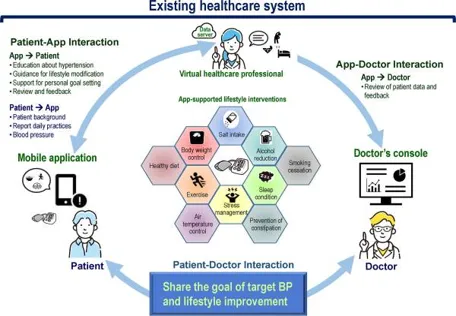
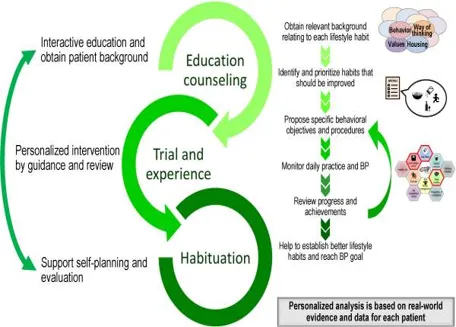
In digital therapeutics, ICT is used to store, retrieve, share, and exchange health-related information to support the prevention, diagnosis, treatment, and monitoring of hypertension.(18) This is facilitated by the now widespread availability of smartphones and tablets. In addition, a shared internet-based platform enables collaborative care and interactions between stakeholders.(18) This connected infrastructure of health systems and services is also referred to as the “Internet of Medical Things.”(19) Contributors to the Internet of Medical Things include the patient, health care professionals involved in their care, and devices that collect medical information (eg, smartphone, tablet, connected BP monitor), and potentially other environmental signals (eg, temperature, humidity, air pollution). With data storage in the cloud, all this information is then available to stakeholders involved in patient care, including the hospital/clinic/health care provider, the patient, and relevant health care professionals (eg, physician, nurse, pharmacist).Elements of a digital therapeutics platform for hypertension include patient-app interaction, app-doctor interaction, and patient-doctor interaction, all of which combine to facilitate a shared goal of lifestyle improvement and target BP attainment (Figure 2).(20)
|
|
|
Figure 2: Components of a theoretical digital therapeutics platform for hypertension: interactive approach for optimized Personalized intervention. BP, blood pressure.(20) |
|
C. Coronary Artery Disease
Coronary artery disease (CAD) remains one of the leading causes of mortality and disability worldwide (21). It is primarily caused by atherosclerotic narrowing or occlusion of the coronary arteries, which results in myocardial ischemia or hypoxia and may lead to severe complications such as heart failure and sudden cardiac death (22, 23). With the ongoing global trends of population aging and the increasing prevalence of major cardiovascular risk factors—including hypertension, diabetes mellitus, and obesity the burden of CAD continues to rise (24, 25). In clinical practice, the management of coronary artery disease typically involves pharmacological therapy, percutaneous coronary intervention (PCI), and coronary artery bypass grafting (CABG). However, CAD is a chronic condition characterized by a prolonged disease trajectory, and effective management often extends beyond hospital care. After discharge, patients frequently encounter challenges in maintaining long-term self-management, including poor medication adherence and difficulties sustaining lifestyle modifications. These issues can significantly compromise clinical outcomes and increase the risk of recurrent cardiovascular events (26, 27). Digital health interventions (DHIs), which are based on information and communication technologies, have emerged as an important evidence-based approach for supporting health management. According to the World Health Organization, DHIs refer to the application of digital technologies to achieve specific health objectives, including mobile health (mHealth), remote monitoring systems, wearable devices, mobile applications, and web-based platforms (28, 29). As an innovative model for chronic disease management, DHIs can provide personalized guidance, real-time monitoring, and continuous feedback, thereby improving the acceptability and sustainability of self-management strategies among patients (30–31). Previous studies have demonstrated that digital health interventions can enhance medication adherence, improve health literacy, and strengthen self-management capacity in individuals with Coronary Artery Disease. (32–33).
In both developed and developing countries, the clinical application of digital health technologies is expanding rapidly. Several countries and regions, including Europe, Canada, and Australia, have introduced policies encouraging the integration of digital health strategies into the long-term management of cardiovascular diseases (34–35). Although a growing body of research has examined the use of digital interventions in cardiac rehabilitation and remote monitoring, comprehensive syntheses of the best available evidence specifically focusing on digital health interventions that support self-management in patients with coronary artery disease remain limited. Existing systematic reviews tend to focus primarily on cardiac rehabilitation programs or remote monitoring technologies, with relatively little emphasis on the broader role of DHIs in enhancing self-management capacity among individuals with coronary artery disease (36). Therefore, this study aims to systematically summarize the best available evidence regarding digital health interventions designed to support self-management in patients with coronary artery disease, thereby providing evidence-based guidance for clinical practice and nursing management.
D. Rhythm refers to arrhythmias
Abnormal cardiac rhythms, including brady- and tachy arrhythmias, carry a significant health burden, often due to their paroxysmal nature and low detection yield, which can lead to delayed diagnoses.5Atrial fibrillation (AF) is the most common cardiac arrhythmia worldwide. It is associated with reduced quality of life, risk of significant morbidities, such as heart failure, and a five-times increased risk of stroke and significant mortality.(37) A large meta-analysis evaluating the diagnostic accuracy of 10 studies investigating PPG signals collected from smartphones and smart watches (via finger and facial skin) and analysed by machine learning algorithms has concluded that mass screening for arrhythmias, particularly AF, using smartphones and smart watches remains a viable and reliable Nonetheless, the low detection yield of arrhythmias proposition.(38) and unknown clinical outcomes are important to note and highlight the need for further research.
E. Congenital heart Disease
provide evidence-based, software-driven interventions to remotely manage patient care, promote physical activity, and improve mental health.Congenital heart disease (CHD) is associated with emotional distress and reduced quality of life, yet evidence-based psychosocial treatments are limited. Digital emotion regulation interventions may offer a scalable solution. To evaluate the effectiveness of tailored and general digital emotion regulation interventions compared with usual care for patients with CHD.
Patients with CHD face varying emotional challenges beginning in early life. These may include anxiety about medical procedures, social isolation from hospital stays, and frustration over activity restrictions in school, work, or social life. Collectively, these stressors contribute to rates of anxiety and depression that are 2-fold to 3-fold higher than in the general population. Without treatment, these difficulties can compound the disease burden for individuals and families and may impair adherence to medical care.(39)
F. Valvular heart Disease
Valvular heart disease (VHD) is becoming more prevalent in an ageing population, leading to challenges in diagnosis and management. This two-part Series offers a comprehensive review of changing concepts in VHD, covering diagnosis, intervention timing, novel management strategies, and the current state of research. The first paper highlights the remarkable progress made in imaging and transcatheter techniques, effectively addressing the treatment paradox wherein populations at the highest risk of VHD often receive the least treatment. These advances have attracted the attention of clinicians, researchers, engineers, device manufacturers, and investor. Artificial intelligence and digital methods are enhancing screening, diagnosis, and planning procedures, and the integration of imaging and clinical data is improving the classification of VHD severity. The emergence of artificial intelligence techniques, including so-called digital twins eg, computer-generated replicas of the heart is aiding the development of new strategies for enhanced risk stratification, prognostication, and individualised therapeutic targeting. Various new molecular targets and novel pharmacological strategies are being developed, including multiomicsie, analytical methods used to integrate complex biological big data to find novel pathways to halt the progression of VHD. In addition, efforts have been undertaken to engineer heart valve tissue and provide a living valve conduit capable of growth and biological integration. Overall, these advances emphasise the importance of early detection, personalised management, and cutting-edge interventions to optimise outcomes amid the evolving landscape of VHD. Although several challenges must be overcome, these breakthroughs represent opportunities to advance patient-centred investigations.(40)
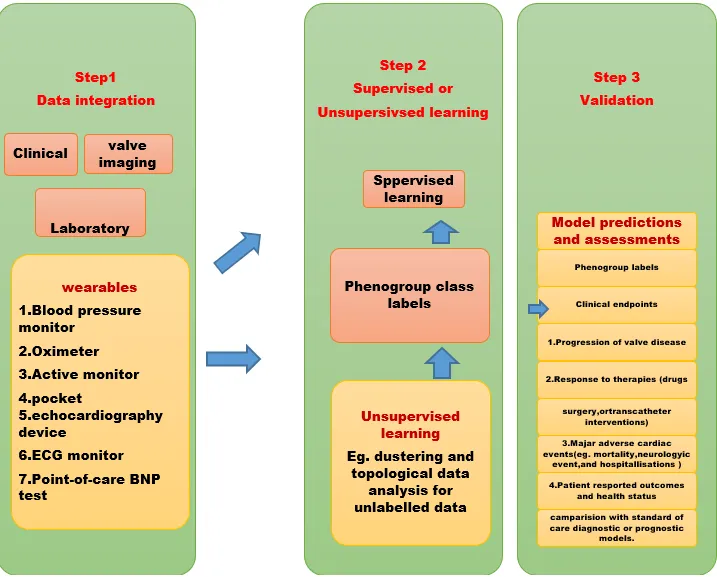
Figuer3: use of machine-learning approaches to refine the taxonomy of valvular heart diseases.
Smart Technologies and Lifestyle
The increasing integration of medical digital technology in everyday life in the form of digital health diaries, smartphones, smart watches, and personal health monitoring systems has made the technical possibilities more tangible. Even though smartphones have been in use since 1999, the launch of the first iPhone in 2007 triggered a noticeable change. Today, an estimated 4 billion people, or half of the world’s population, use a smartphone (9).As a mobile minicomputer, the phone accompanies most people around the clock, and many of them can no longer imagine life without a smartphone. Specialized apps have been developed for a wide range of tasks including health care. Although these were purely informative in the first few years, there has been an increasing rethinking of how these data can be used in everyday patient care. As approximately 500 million people worldwide live with cardiovascular diseases (CVDs), it becomes obvious that smart technologies have enormous potential for prevention, diagnostics, and therapy monitoring (10).A growing number of people continuously wear mobile minicomputers on their wrists (so-called wearables) to record activity data or vital signs. Prominent representatives of this class are smart watches or fitness trackers. As with smartphones, the collected data are far more than just informative and have the potential to improve patient care. The most important parameters that can be recorded today are ECGs, heart rate, number of steps, oxygen saturation, and blood pressure or blood sugar values via special additional modules (11,12).
DISCUSSION
This review provides an overview of all the present digital technologies in the cardiovascular field. This illustrates an enormous increase in knowledge and investigations in recent years with respect to optimized diagnostic and therapeutic strategies (Figure 4 and Table 2). We should not hesitate to face these opportunities and challenges in maintaining patient care at the highest possible standard. Thematic reappraisal, as previously described, is indispensable. Today, we are in a comfortable position to actively restructure and optimize our daily medical work.
|
Table 2. Diagnostic and therapeutic use of digital technologies. |
|||||
|
|
Diagnostics |
Therapy |
|||
|
Disease |
Remote diagnosis |
Events detection |
Medication Plan |
Patient education |
Remote rehabilitation |
|
Heart failure |
- |
++ |
+++ |
++ |
++ |
|
Hypertension |
+++ |
++ |
++ |
++ |
+ |
|
Coronary Artery Disease |
+ |
++ |
+ |
++ |
+++ |
|
Rhythm refers to arrhythmias |
+++ |
+++ |
+ |
+ |
- |
|
Congenital heart Disease |
+++ |
- |
- |
- |
- |
|
Valvular heart Disease |
++ |
+ |
- |
- |
- |
|
|
|
|
|
|
|
|
+,++,+++ indicate the degree of scientific evidence for positive effects on patient care, Whereas – indicates negative results or missing data.(13) |
|||||
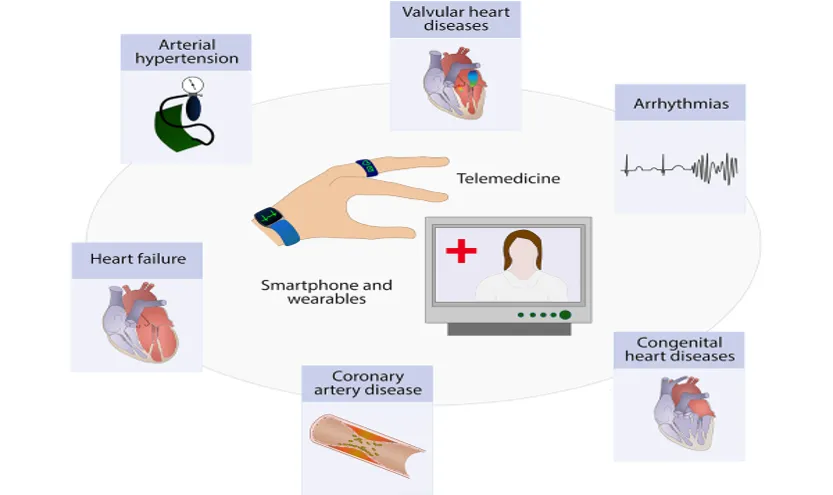
Figure 4 Digital medicine in cardiology. (13)
Acute disease patterns such as myocardial infarction or sudden-onset arrhythmias can be documented via wearables and made accessible to remote telemedical diagnostics. With these modern methods, we have the unique opportunity to record short-term health conditions on demand or, as in the case of myocardial infarction, to save important time in the emergency cascade and thus reduce mortality.(13)
CONCLUSIONS
This evidence summary provides a comprehensive synthesis of digital health interventions designed to enhance self-management among patients with Cardiovascular diseases (heart failure, hypertension, coronary artery disease, rhythm refer to arrhymias, congenital heart disease, valvular heart disease.) The findings offer a scientific basis for healthcare professionals to integrate digital health strategies into clinical practice and highlight their potential role in strengthening self-management and improving health outcomes in this population.
DECLARATION BY AUTHORS
Ethical Approval: None
Acknowledgement: None
Source of Funding: None
Conflict of Interest: No conflicts of interest declared.
REFERENCES

Patil Srushti, Patil Yogesh, Pawar Gayatri, Pimpale Charushila, Pinjari Umair, Patil Surekha, Digital Therapeutics in Chronic Disease Management in Cardiovascular Diseases, Int. J. of Pharm. Sci., 2026, Vol 4, Issue 9, 610-620. https://doi.org/10.5281/zenodo.22309784
 10.5281/zenodo.22309784