

We use cookies to ensure our website works properly and to personalise your experience. Cookies policy
1,2,3,4,5,6Bachelor of Pharmacy students, Siddhi's Institute of Pharmacy, Nandgaon, Murbad, Thane – 421401, Maharashtra, India.
7Assistant Professor, Siddhi's Institute of Pharmacy, Nandgaon, Murbad, Thane – 421401, Maharashtra, India.
Aloe vera is used in pharmaceutical, cosmetic, food and herbal preparations, making reliable identification of its botanical source important. Macroscopic examination, sensory assessment and microscopy can help identify intact plant material, but these approaches become less informative after drying, powdering, extraction or blending. DNA metabarcoding can be used to study many plant species in a mixed sample, while DNA barcoding looks at specific regions of the genome, such as matK, rbcL and ITS/ITS2. In the case of Aloe vera authentication, this assessment considers traditional identification along with PCR-based methods, DNA sequencing, RAPD, target-capture sequencing and metabarcoding. It also discusses practical constraints: processing can reduce recoverable DNA, and standard barcode regions may not separate every closely related Aloe species. Molecular findings should therefore be interpreted with validated reference sequences and complementary quality tests [1–5, 15, 18–22].
Aloe vera is widely incorporated into pharmaceutical, cosmetic, food and nutraceutical products. As demand for powders, extracts and other processed ingredients grows, confirming the species becomes more difficult because many visible plant features are no longer present. Incorrect identification or substitution can compromise product quality and may introduce safety concerns [1, 2]. Chemical analysis, microscopy, pharmacognostic investigation and sensory evaluation are still useful although their applicability may be restricted to highly processed materials or closely related species. DNA-based methods provide an additional line of evidence by examining genetic regions that are generally less affected by plant age and growing conditions than external morphology. Their success still depends on DNA integrity, marker choice and the quality of reference data [2–4].
A direct example of this approach is a study that applied the matK barcode to commercial Aloe vera powder samples [5]. Such work illustrates the potential of molecular testing for materials in which ordinary botanical features are absent. DNA results are most informative when considered alongside conventional identification and chemical quality assessment, rather than treated as a complete test of product quality [1,4].
Botanical and Medicinal Significance of Aloe vera
Aloe vera (L.) Burm. f. is a perennial succulent in the genus Aloe and is cultivated widely in tropical and subtropical regions. Its short stem bears a rosette of thick, lance-shaped leaves with toothed margins. A leaf contains an outer green rind, a yellowish latex layer and a clear, mucilaginous inner gel. The gel contains polysaccharides, including acemannan, together with other constituents associated with the plant’s reported uses. Aloe vera is commercially important in foods, cosmetics and medicinal products; its chemical composition and applications have been discussed in several reviews [6–9].
Need for Authentication of Aloe vera
Correct species identification is a foundation of quality control for Aloe vera raw materials used in medicines and herbal preparations. Substitution or adulteration may affect consistency and can create safety concerns, so botanical identity should be established before further quality assessment [1,2]. Appearance, microscopy, sensory characteristics and chemical tests can provide useful evidence, although powders and extracts may lack diagnostic structures. DNA methods based on regions such as matK, rbcL, ITS/ITS2 and trnH–psbA can add genetic evidence, but the resolving power differs by marker and by the species being compared [2–4,12–15].
• Accurate identification: :
Reliable identification is central to the authentication of Aloe products. Commonly investigated plant barcode regions include matK, rbcL and ITS/ITS2; however, their ability to separate closely related Aloe taxa is not identical. A marker that performs well for one comparison may provide limited resolution for another. Multilocus approaches or more advanced methods may therefore be needed in difficult cases. Research using target capture of low-copy nuclear loci has explored improved discrimination among Aloe and related taxa, but any method intended for routine product testing requires validation for the sample type and intended use [4,5,15].
• Adulteration prevention
Powdering and other processing steps remove many visible features that could otherwise help reveal substitution. DNA analysis can provide evidence about the plant species present, and a published study has examined commercial Aloe vera powder using matK [5]. RAPD profiling has also been investigated for distinguishing selected Aloe species and related materials. These examples support the potential value of molecular methods, but results from one sample set or marker system should not be assumed to apply universally; suitable controls and reference material remain necessary [1,5,16].
• QA (quality assurance)
For quality assurance, DNA-based methods can help verify the botanical identity of a raw ingredient and flag possible substitution. This is relevant because misidentification may affect the consistency of herbal products. Genetic evidence complements, rather than replaces, chemical analysis and other tests used to assess product quality and safety [1–3].
• Safety of herbal products •
DNA barcoding and molecular techniques are of great importance for the safety of Aloe vera herbal products, since they allow the correct botanical identification and the detection of adulteration or substitution.
A botanical substitution may introduce an unintended plant into a herbal preparation. DNA barcoding can support identification when conventional features are obscured by drying or processing. A typical workflow involves DNA extraction, amplification of selected regions such as ITS, matK, rbcL or trnH–psbA, sequence analysis and comparison with authenticated references. Metabarcoding extends this concept to mixed samples, although detection depends on DNA preservation, marker choice, sequencing and reference-database coverage [1–3,18–20]. Genetic identification alone does not establish the concentration of active constituents or rule out chemical and microbial contaminants.
Aloe vera authenticity by traditional methods
Traditional Aloe vera authentication uses external morphology, organoleptic examination and microscopy. Leaf shape, arrangement, colour, thickness and marginal teeth can be assessed in intact plants, while microscopy provides information about tissue structure and sensory examination records observable characteristics such as colour, odour and texture. These pharmacognostic methods are useful when diagnostic features are present and the examiner has appropriate expertise. Their reliability may decline for powders, extracts and materials from closely related species, which is why molecular or chemical evidence may be needed as a complement [1–3].
Microscopic identification of Aloe vera
Microscopic identification is an important traditional pharmacognostic method for the authentication of Aloe vera and for its differentiation from closely related Aloe species or adulterated plant materials.
Light microscopy and, where appropriate, scanning electron microscopy can reveal leaf anatomy and cellular features. Examiners may observe epidermal tissue, stomata, vascular bundles, gel-bearing parenchyma and crystalline inclusions. Such observations contribute to pharmacognostic characterisation, but individual features should not be treated as conclusive proof of species identity without comparison to authenticated material [1,2,10,11].
1) Epidermis and cuticle: The outer epidermis and cuticle protect the leaf and help limit water loss [1,3].
2) Stomata: Stomata and their surrounding epidermal cells can be examined microscopically and compared across Aloe species, although these features are not conclusive alone [1,2,10,11].
3) Parenchyma and gel-bearing tissue: The inner leaf contains water-rich parenchyma associated with the clear gel. Transverse sections can help distinguish this region from the outer tissues [3,4].
4) Vascular bundles: Xylem and phloem occur in the leaf’s vascular bundles and contribute to water and nutrient transport; their arrangement can assist anatomical description [3].
5) Crystalline inclusions: Calcium oxalate crystals occur in several Aloe species. Their appearance and distribution may support microscopic characterisation, but are not unique proof of Aloe vera [1,2].
Organoleptic Evaluation of Aloe vera
Organoleptic assessment uses observable sensory characteristics, including appearance, odour and texture, as an initial check of plant material. It is a preliminary assessment and should not replace confirmatory methods where identity is uncertain [1,2].
Odour: The inner gel generally has little distinct odour; the yellow latex may have a more noticeable smell.
Taste: Aloe latex is characteristically bitter, whereas the inner gel is usually mild. Unknown botanical materials should never be tasted for identification.
Texture: Fresh leaves are thick and fleshy, and the inner gel has a slippery, mucilaginous consistency.
Morphological Identification of Aloe barbadensis
Morphological assessment relies on visible characteristics such as leaf form, arrangement, colour, margin, flowering features and growth habit. It is a useful initial step when identifying intact Aloe vera plants. Nevertheless, environmental variation and similarities among related taxa can make a confident distinction difficult; powders and extracts may have lost the features needed for comparison [1,2].
Limitations of Morphological Identification
Plant age, harvest stage and growing conditions can change the size and appearance of leaves. Related Aloe species may also share external traits, while processing can remove or obscure diagnostic structures. For these reasons, morphology is valuable but may not be sufficient on its own for processed material or difficult species comparisons [1,2].
Role of DNA barcoding in confirmation
DNA barcoding adds a genetic comparison to conventional identification. DNA is isolated from a sample, a selected barcode region is amplified by PCR, and the resulting sequence is compared with suitable authenticated reference sequences. The method can help resolve uncertain identifications, provided that the DNA is adequate and the selected region distinguishes the species under study. DNA data, together with botanical analysis and chemical evaluations, provide a fuller appraisal. [1–4,12,13].
Microscopy of Aloe vera powder
Powder microscopy is a method for authenticating Aloe vera (L.) Burm. on dried leaves or other specific plant material using a compound microscope. F. The sample is mounted on a glass slide with a suitable mounting medium and examined for characteristic cellular elements and tissue fragments.
According to the botanical identity reference, aloe vera powder is a reddish-brown powder composed of irregular, angular and somewhat opaque particles. These features can be helpful in a preliminary identification, but must be compared with a known reference sample. [3] [10]
Importance in authentication
Identification: Provides a primary means of identifying plant material of Aloe vera. Detection of adulteration: Assists in detection of foreign matter and other parts of plants. Quality Control: A rapid and inexpensive test for powdered herbal drugs. Limitations: Microscopy alone cannot distinguish soluble adulterants from closely related Aloe species. DNA barcoding, chemical analysis and microscopy combine to improve authentication. [1,2,4]
DNA Barcoding – Basic Principle
DNA barcoding identifies an organism by examining a selected DNA region that contains variation useful for distinguishing species. In plant studies, a barcode is chosen for the taxonomic question and sample type; no single region is equally effective for every plant group. Authentication therefore depends on marker performance, sequence quality and trustworthy reference records, not simply on obtaining a DNA sequence [12–14].
A general workflow begins with a botanically authenticated reference specimen and a test sample. DNA is extracted, a relevant fragment is amplified using appropriate primers and the amplified product is sequenced as needed. The sequence is then checked and compared with verified records. Controls and documentation are important, particularly when testing processed products or samples that may contain more than one species [1–4,12].
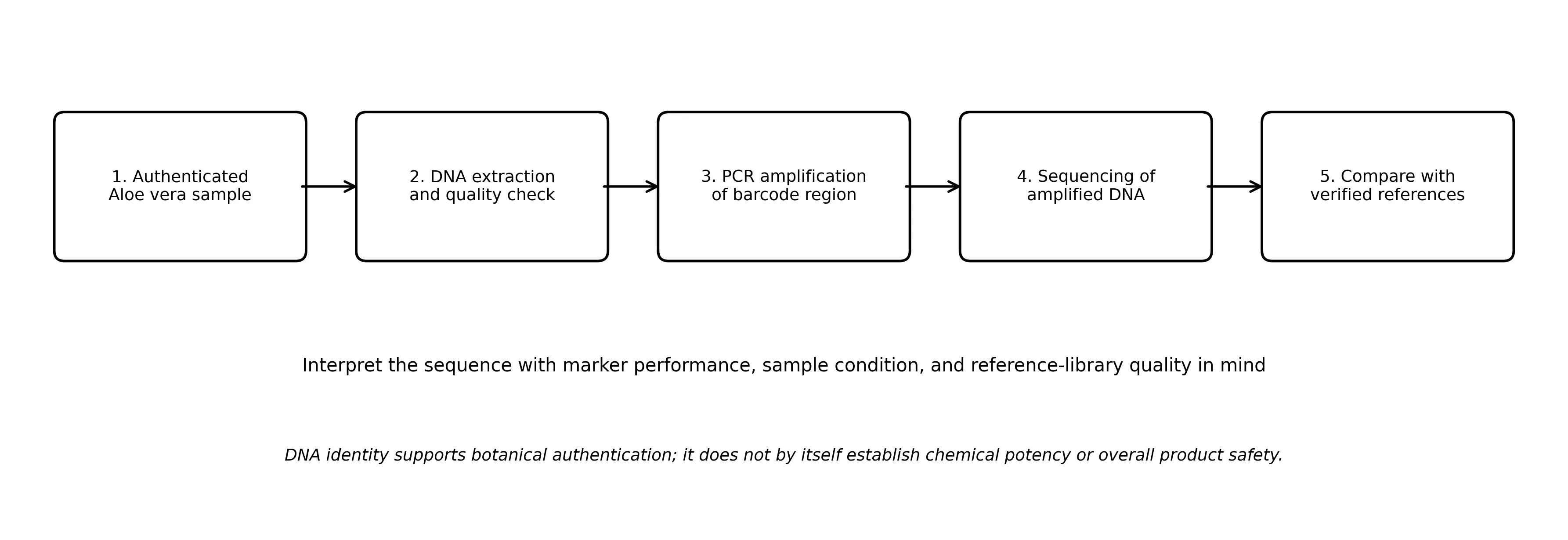
Figure 1: General workflow for DNA barcoding of Aloe vera. The result should be interpreted with sample quality, marker performance, and authenticated reference sequences in mind.
Plant studies commonly investigate chloroplast regions such as rbcL and matK, the intergenic spacer trnH–psbA, and nuclear ribosomal ITS/ITS2. After amplification and sequencing, the resulting data are compared with reference sequences. Marker choice should reflect the species group and the expected condition of the sample; the discriminatory performance of these regions is not uniform across Aloe taxa [4,12–15].
Table 1: Common DNA Barcode Regions Relevant to Plant Authentication
| Marker / region | Genome location | Potential value | Important limitation / consideration | Use in this review |
|---|---|---|---|---|
| rbcL | Chloroplast | Widely used plant barcode; useful for broad identification and reference comparison. | May not resolve some closely related species; interpret with other evidence. | Include as a candidate barcode, not a guaranteed species-level discriminator. |
| matK | Chloroplast | Commonly used plant barcode; used in the cited study of commercial Aloe vera powder. | Amplification and discrimination depend on primers, DNA quality, and taxonomic group. | Discuss the Aloe powder study (Ahamed et al., 2025) as direct application-specific evidence. |
| trnH–psbA | Chloroplast intergenic spacer | Can provide variation useful for distinguishing some plant taxa. | Sequence alignment and interpretation may be complicated by length variation or ambiguous regions. | Describe as a complementary candidate region where supported. |
| ITS / ITS2 | Nuclear ribosomal DNA | Can provide useful variation for medicinal-plant identification. | May show intra-individual variation or amplification issues; performance is taxon-dependent. | Compare with plastid markers rather than assuming universal superiority. |
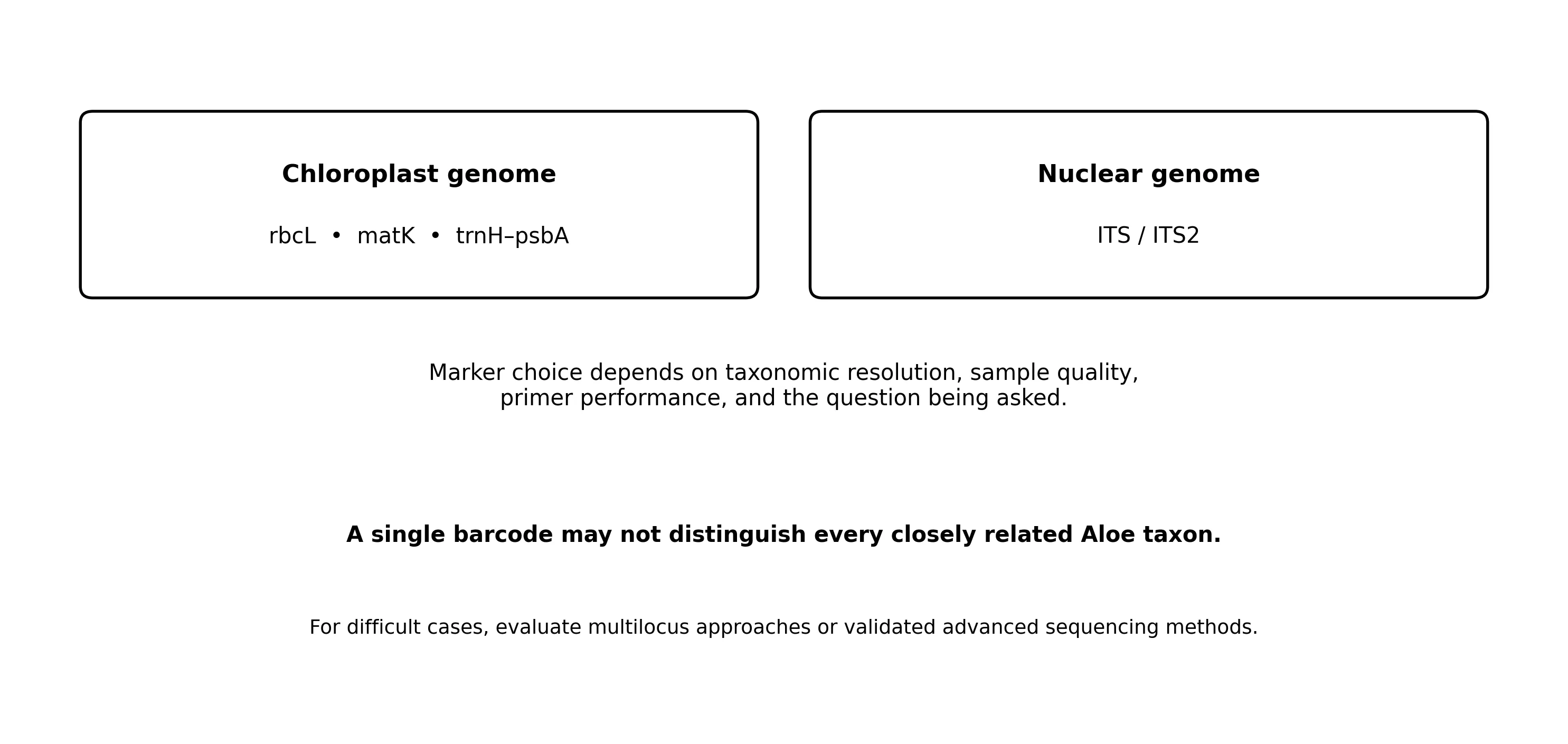
Figure 2: Overview of commonly used plant DNA barcode regions. The diagram is schematic and does not imply equal discriminatory power or validation for all Aloe taxa.
Molecular Methods for Authentication of Aloe vera
Molecular methods examine genetic material to support identification of medicinal plants and investigate possible substitution or contamination. For Aloe vera, relevant approaches include DNA barcoding, PCR assays, DNA fingerprinting and sequencing. These techniques answer questions about botanical identity; they do not, by themselves, determine the amount of a chemical constituent, therapeutic activity or the overall safety of a finished product [1–4,14,18].
DNA-based assays can help distinguish Aloe vera from related species when the chosen markers provide adequate variation. Interpretation should take account of sample processing, DNA quality, primer specificity and the availability of correctly identified reference sequences. Molecular findings are best integrated with pharmacognostic examination and chemical testing as part of a wider quality-control strategy [1–5,14,15].
DNA barcoding
DNA barcoding uses sequence variation in a selected genomic region to support species identification. In pharmacognosy, it can provide an independent source of evidence when visual examination is inconclusive, especially for dried or powdered material. Reliability depends on the barcode segment, laboratory efficiency and quality of the reference data. [1–4,12–14].
Authentication of Aloe Vera by Polymerase Chain Reaction (PCR)
Polymerase chain reaction (PCR) amplifies a selected DNA segment so that it can be analysed. PCR-based assays are frequently used in plant identification because they can generate enough target DNA for downstream testing. For Aloe vera authentication, the outcome depends on extraction quality, primer suitability, the integrity of the target region and controls that reveal contamination or amplification failure [1–3].
Principle of PCR
PCR is a technique that amplifies a specific DNA segment in vitro, using primers and heat-stable DNA polymerase. The technique generates millions of copies of a chosen DNA sequence from a small quantity of extracted DNA.
PCR is generally divided into three major steps:
Denaturation: The DNA sample is heated, commonly between 94-98°C, to separate the two strands of double-stranded DNA. Annealing: The temperature is reduced to 50 to 65 degrees Celsius so that some primers can bind to complimentary sequences in the target DNA.
Extension: The temperature is changed, usually to about 72°C, to allow a thermostable DNA polymerase to synthesise new DNA strands.
The above procedures are repeated several times to amplify the desired region of the DNA. The PCR products generated can be analysed by gel electrophoresis and sequenced and compared to authenticated reference sequences when used for DNA barcoding [1,2].
Authentication of Aloe vera by Random Amplified Polymorphic DNA (RAPD)
Medicinal plants are identified and authenticated and genetically analysed for diversity using a PCR based molecular marker technique called Random Amplified Polymorphic DNA (RAPD). It uses short random nucleotide primers to amplify random regions of genomic DNA. RAPD is useful in the verification of medicinal plants as closely related species may have morpho-anatomical characters that make it difficult to identify using traditional techniques. DNA markers 1 can be used to distinguish genuine medicinal plants from related species, adulterants and substitutes. Genetic variation between Aloe vera and other similar Aloe species can be used with RAPD to authenticate Aloe vera. The method generated unique DNA banding patterns which were comparable between authenticated plant samples. These patterns can be used to discriminate plant species and to detect genetic diversity. So RAPD can be combined with morphological, microscopic and chemical approaches for the quality control of herb raw materials [1,2] [16].
Principle:
DNA sequencing
DNA sequencing determines the sequence of nucleotides in a segment of DNA. In a barcode workflow, a selected region is commonly amplified before sequencing, and the resulting sequence is compared with authenticated records in resources such as GenBank. Identification is only as dependable as the sequence quality, the chosen marker and the accuracy of the reference records [1–4,12–14].
Principle of Sequencing of DNA
For plant authentication, the target DNA region is generally amplified and then sequenced. The sequence is compared with curated or otherwise verified reference data to assess the likely identity of the sample. Ambiguous matches, low-quality reads and incomplete reference coverage should be reported rather than interpreted as definitive species confirmation [1,3,12–14].
DNA metabarcoding
DNA metabarcoding combines barcode amplification with high-throughput sequencing and computational analysis to investigate multiple taxa in a mixed sample. It may be useful for polyherbal products in which conventional examination cannot easily establish which species are present. For Aloe-containing formulations, it could help screen for declared and undeclared botanical ingredients. Detection is not guaranteed: processing-related DNA damage, primer bias, marker choice and gaps in reference databases can affect which taxa are recovered [18–20].
Principle of DNA metabarcoding
The DNA metabarcoding approach for identifying the present plant species consists of extracting the DNA from a mixed sample, amplifying specific areas of the DNA barcode, sequencing the amplified DNA and comparing the resulting sequences with reference databases [18,19,20].
Table 2: Comparison of Molecular Techniques for Aloe Vera Authentication
| Technique | Basic output | Potential application | Strength | Limitation / evidence note |
|---|---|---|---|---|
| DNA barcoding + sequencing | Sequence from one or a few selected barcode regions | Confirm botanical identity of authenticated raw material or suitable powders | Sequence can be compared with curated reference data | Closely related Aloe taxa may not be resolved by standard markers; processed samples may yield little DNA. |
| Species-specific PCR | Presence/absence of a target amplicon | Targeted screening for Aloe vera or a known substitute | Can be relatively direct once a specific assay is validated | Requires validated primers, inclusivity/exclusivity testing, and appropriate controls. |
| RAPD | Banding-pattern fingerprint | Compare genetic differences among plant samples or species | Does not require prior sequence information | Reproducibility can be sensitive to PCR conditions; avoid treating a general medicinal-plant study as product-level validation. |
| DNA metabarcoding | Multiple sequence variants/taxa from a mixed sample | Investigate multiple botanical ingredients or possible undeclared plant taxa | Can survey complex mixtures in one sequencing workflow | Amplification bias, DNA degradation, reference gaps, and low-level detection complicate interpretation; Aloe-product performance needs validation. |
| Target-capture sequencing | Sequences from selected target loci, potentially many nuclear loci | Resolve closely related Aloe taxa when standard barcodes are insufficient | Can provide greater discriminatory information than a small barcode set | Requires appropriate capture design, sequencing and bioinformatics; cost and routine QC suitability must be assessed. |
| Next-generation sequencing (NGS) | Large volumes of sequence data | Support metabarcoding or targeted sequencing workflows | Enables parallel analysis of many sequence reads or loci | NGS is a platform category, not a single authentication assay; accuracy depends on design and validation. |
Marker selection should be guided by the question being asked and by evidence for the relevant taxa. Researchers may evaluate nuclear ITS2 and chloroplast regions such as rbcL, matK and trnH–psbA. Because the discriminatory ability of these regions varies, a combined-marker strategy may be necessary when closely related Aloe species cannot be reliably separated with one locus [4,12–15].
Benefits of DNA Barcoding
1) Correct identification of plant species
Identification of aloe vera by unique DNA sequences (DNA bar coding). The selected DNA markers, if sufficiently diverse, can be used to discriminate true material from related plant species and provide genetic evidence of species identity [1, 3].
2) Substitution
Substitution occurs when the declared botanical ingredient is replaced, deliberately or inadvertently, by another species. This can be difficult to recognise in powders and extracts because diagnostic plant structures may no longer be visible. Validated DNA assays can help identify the species represented in a sample, although the result depends on marker performance and DNA preservation [1–3,18,19].
A major problem in herbal therapy is the substitution of true therapeutic plants by other species—adulteration. DNA barcoding can identify the substitution of Aloe vera by similar or mislabeling plant materials. This helps to build confidence in the botanical identity of raw herbal materials and to assure their originality [2,4].
3) Suitable for products made of processed herbs
Conventional methods depend heavily on visible or anatomical characteristics, which may be absent from powders, extracts and finished products. Where enough suitable DNA is available, analysis of the DNA can also provide a means of identification. It is not universally successful in processed samples, so negative or ambiguous results require cautious interpretation [1,2,14,19].
4) High specificity
Nucleotide sequence variations can be used to identify plant species by DNA barcoding.
Barcode sequence differences can improve species discrimination beyond external appearance alone. For closely related Aloe taxa, however, one marker may not provide enough variation; selecting additional loci or a validated higher-resolution method may improve confidence [3–5,12,15].
Backing The Standardisation Of Herbal Medicines
For herbal-material standardisation, DNA barcoding can help confirm the declared botanical source before other tests are performed. Aloe vera products should be applied with pharmacognostic evaluations and chemical analysis since genetic identification does not directly assess concentration or integrity of relevant components. [1–4,14].
5) More independent from external circumstances
Morphological and chemical characteristics may vary with cultivation, harvest, storage and processing. DNA sequence information is often less sensitive to these factors, but the DNA itself can be damaged during processing. Thus, genetic analysis offers complementary evidence rather than a replacement for other quality tests [1–3,14].
6) Useful for biodiversity study and research
Barcode data can support taxonomic research and the study of genetic relationships among plant species. Where standard loci do not separate closely related Aloe taxa, additional genomic data or specialised methods may be needed. These approaches should be assessed for their reproducibility and suitability for routine authentication [12–15,17].
7) Facilitates the rapid and systematic identification
A barcode workflow provides a structured process—DNA extraction, amplification, sequencing and comparison with reference records. The time and certainty of identification depend on sample preparation, laboratory facilities, marker choice and database coverage, so the method should not automatically be described as rapid or definitive in every setting [1–4,14].
Limitations of Molecular Techniques and DNA Barcoding
1) DNA degradation
DNA can become fragmented or difficult to recover during drying, heating, extraction and storage. Commercial Aloe vera ingredients may be sold as powders, gels, extracts or formulated products, and these forms can differ substantially in the amount of amplifiable DNA they retain. This can limit the use of standard-length barcode regions [1,2,14,19].
When a target region is too degraded or present in insufficient quantity, PCR may fail to produce a usable fragment. Identification may then require a shorter target, another extraction strategy or a different validated method; a failed amplification should not be treated as evidence that the declared species is absent [1,2,14].
2) The Problem of Choosing Appropriate DNA Barcoding Markers
Plant authentication studies commonly consider rbcL, matK, ITS/ITS2 and trnH–psbA. These loci differ in amplification success and taxonomic resolution, and no single marker is suitable for every species group or processed sample. Marker choice should be justified for the intended identification task [3,4,12–15].
Some markers may lack sufficient genetic variation to distinguish Aloe vera from closely related species of Aloe. For better identification accuracy, a combination of barcode markers may be needed [3, 4].
3) Limitations of Polymerase Chain Reaction (PCR)
PCR success is affected by the quantity and integrity of extracted DNA, primer compatibility and compounds carried over from the sample. Appropriate positive, negative and extraction controls help distinguish a genuine negative result from technical failure [1,2,14].
Plant polysaccharides, polyphenols and other compounds can interfere with DNA isolation or PCR. Such inhibitors may reduce amplification or distort the representation of species in a mixed sample. Extraction procedures and assay conditions should therefore be checked and validated for the particular Aloe material being examined [1,2,14,19].
Uses in Standardisation of Herbal Drugs
1) Authentication and Accurate Identification of Aloe vera
Botanical identity can be assessed by analysing selected DNA regions, including nuclear ITS2 and chloroplast matK or rbcL. The most appropriate marker depends on the comparison being made and its demonstrated ability to distinguish the relevant taxa [1–4,12–14].
The sequence obtained from a test sample can be compared with reference records in resources such as GenBank. A convincing identification requires a high-quality sequence and a reference that is correctly named and taxonomically supported; database similarity alone should not be treated as conclusive if reference quality is uncertain [1,3,4,12].
2) Detection of Adulteration and Substitution
Adulteration may involve replacing a declared plant with a cheaper or incorrectly labelled species, or mixing in undeclared material. Such substitutions can be hard to detect once the source plant has been powdered or extracted [1–3,18,19].
PCR, sequencing and barcode-based approaches can help reveal which plant taxa are represented in a sample, particularly when visible characteristics are unavailable. Results need appropriate controls because of DNA degradation, marker bias and the completeness of reference libraries limiting the use. [1–4,18–20].
For an Aloe vera ingredient, DNA analysis may support the presence of the declared species or indicate a possible substitution. The strength of that conclusion depends on sample quality, the chosen marker, assay validation and the availability of suitable reference sequences [1–5,14].
3) Quality Control of Herbal Raw Materials
A validated DNA test may be included as one step in quality control of incoming botanical materials. It should supplement, not replace, identity tests and quality specifications appropriate to the material and final product [1–4,14].
The comparison with authenticated reference data can provide genetic support for a proposed botanical identity. Nevertheless, DNA barcoding does not measure chemical composition, potency, microbial quality or contaminants, so additional tests remain necessary for a full product assessment [1–4].
Standardisation of Herbal Formulation
DNA-based methods can support standardisation by checking the identity of botanical ingredients and building reference profiles from authenticated specimens. Metabarcoding may be considered for mixtures, but processing can reduce DNA recovery and affect detection. Method selection and validation should therefore match the product type and intended use [2,3,5,18–20].
4) Development of DNA Reference Libraries
Reference libraries contain sequences used to compare and assess unknown samples. Authenticated Aloe vera specimens can contribute reference data for selected barcode regions, provided their identity is independently verified and their sequence records are adequately documented. Reliable taxonomy and reference quality are essential for meaningful comparisons [1,4,5,12].
(5) Supporting the Safety and Consistency of Herbal Products
An unwanted plant species in a herbal product may alter its composition and could affect quality or safety. DNA barcoding can support traceability and help investigate botanical substitution, but it does not establish efficacy or detect every non-botanical hazard. Chemical assays and tests for microbial contamination, pesticides and heavy metals may still be required [2,3,5,18–22].
6) Mixture of Phytochemical Analysis
DNA methods and phytochemical analysis address different questions. Barcoding provides evidence about botanical origin, whereas techniques such as TLC, HPLC and mass spectrometry characterise chemical constituents or profiles. Using these methods together can give a more complete view of Aloe vera material than either approach alone, although the test panel should be selected according to the product and quality requirements [2,3,5,21,22].
Table 3: Complementary Quality-Control Approaches
| Approach | Main question answered | Examples | What it cannot establish alone |
|---|---|---|---|
| Macroscopy / microscopy | Does the material show expected botanical features? | Leaf morphology, tissue fragments, epidermis and vascular structures | May not conclusively identify processed mixtures or closely related species. |
| DNA-based methods | Which botanical taxon or taxa are represented by recoverable DNA? | DNA barcoding, targeted PCR, sequencing, metabarcoding | Does not directly quantify active constituents or establish overall safety. |
| Chemical fingerprinting | Is the chemical profile consistent with the intended material? | TLC, HPLC, LC–MS or other suitable analytical methods | A chemical profile alone may not uniquely establish botanical identity. |
| Contaminant testing | Are relevant chemical or microbiological hazards within applicable limits? | Risk-based tests for heavy metals, pesticides, microbes and other contaminants | Does not independently prove botanical identity. |
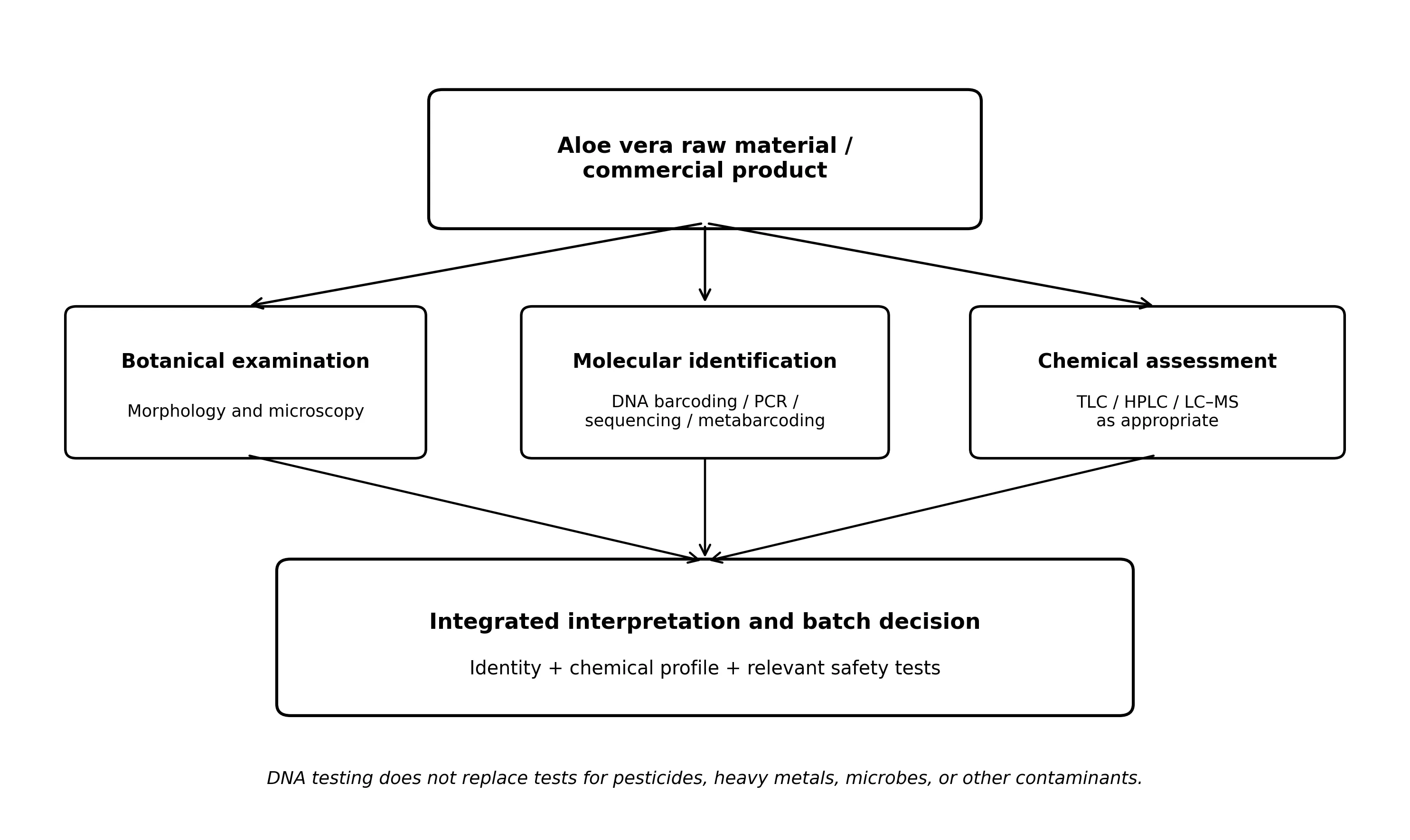
Figure 3: Integrated framework for botanical authentication and quality assessment of Aloe vera products. DNA analysis complements botanical examination, chemical profiling, and relevant contaminant testing.
Future Scope
Development of DNA Barcode Markers Specific to Aloe vera
Further work should compare and validate barcode regions for their ability to distinguish Aloe vera from related taxa. Candidate loci include rbcL, matK, ITS/ITS2 and trnH–psbA, but marker combinations may be needed where one region lacks sufficient variation. Proposed species-specific assays should be tested with authenticated specimens and relevant substitutes before routine use [1–5,12–15].
Next Generation Sequencing (NGS) Application
Next-generation sequencing can generate large amounts of sequence data and may improve investigation of closely related taxa that are difficult to separate using standard barcodes. Its practical value depends on validated methods, appropriate reference data, laboratory capability and reliable bioinformatic interpretation; cost and workflow complexity also need consideration [2,3,15,17].
DNA metabarcoding of mixed herbal formulations
Metabarcoding may help profile several plant species in a mixed herbal sample by combining barcode amplification and high-throughput sequencing. It could be explored for screening Aloe vera products for undeclared botanical ingredients, but detection depends on the DNA that survives processing, primer performance, the chosen marker and reference-database coverage [3,5,18–20].
Fast Authentication Methods Development
Species-specific PCR, mini-barcodes and barcode high-resolution melting (Bar-HRM) are potential options for more targeted screening. Their speed or practicality will vary with the assay and sample. Each method needs validation using the intended Aloe vera material and likely substitutes before it is adopted for quality-control decisions [2,4,14].
Identifying Adulteration and Substitution
Substitution and adulteration remain challenges for herbal-product authentication. Validated markers, species-specific PCR and metabarcoding may help identify related Aloe species or undeclared plants in raw and some processed materials. In highly processed products, however, DNA may be too fragmented or scarce for reliable identification [1,4,5,18–20].
Developing Standardised Procedures for Quality Control
Standardisation efforts should define reproducible procedures for extraction, marker selection, amplification, sequencing, quality checks and interpretation. Validation should include relevant plant parts, geographic sources, processing conditions and likely substitutes. Harmonised methods could improve comparability between laboratories and support the appropriate use of DNA authentication in herbal quality control [1,4,5,15,17,22].
CONCLUSION
DNA barcoding and related molecular methods can add genetic evidence to the morphological, microscopic and chemical examination of Aloe vera. Common loci such as matK, rbcL and ITS/ITS2 are useful candidates, but their ability to distinguish closely related taxa varies. Target-capture sequencing may offer higher resolution in difficult comparisons, while metabarcoding can investigate mixed botanical samples. Both approaches remain dependent on DNA preservation, marker performance, validated procedures and trustworthy reference data. Because molecular identification does not quantify constituents or assess all contaminants, it should form part of an integrated quality-control strategy rather than serve as the sole test of product quality [1–5,12–15,18–22].
REFERENCES







Sumit Kor, Yash Mulay, Raj Dohale, Avadhoot Partole, Sahil Shirose, Aditya Jamghare, Shreyash Pardeshi, DNA Barcoding and Molecular Techniques for Authentication of Aloe Vera – Review Article, Int. J. of Pharm. Sci., 2026, Vol 4, Issue 11, 1606-1618. https://doi.org/10.5281/zenodo.24034871
 10.5281/zenodo.24034871