

We use cookies to ensure our website works properly and to personalise your experience. Cookies policy
Department of Pharmacognosy, Sree Bhavani College of Pharmacy, Kandappankurich, Cuddalore-606 302 India
Dracaena trifasciata is a well-known ornamental and medicinal plant belonging to the family Asparagaceae. Besides its ornamental value, the plant has been widely used in traditional medicine for the management of inflammation, wounds, respiratory disorders, skin diseases, and gastrointestinal problems. Different parts of the plant, particularly the leaves and rhizomes, contain several bioactive phytochemicals such as flavonoids, phenolic compounds, alkaloids, saponins, tannins, glycosides, and terpenoids, which are responsible for its therapeutic properties. Pharmacological studies have reported antioxidants, antimicrobial, anti-inflammatory, analgesic, antidiabetic, and wound-healing activities. Pharmacognostic evaluation also provides important diagnostic characteristics for the identification and authentication of the plant. This review summarizes the botanical description, pharmacognosy, phytochemistry, extraction methods, traditional medicinal uses, and pharmacological activities of Dracaena trifasciata. The available evidence indicates that this plant is a promising source of natural bioactive compounds with potential pharmaceutical and therapeutic applications.
Dracaena trifasciata formerly known as Sansevieria trifasciata, is a perennial evergreen succulent belonging to the family Asparagaceae. It is commonly known as snake plant or mother-in-law's tongue and is native to tropical West Africa. Due to its remarkable adaptability, drought tolerance, and low maintenance requirements, the plant is widely cultivated as an ornamental species in tropical and subtropical regions across the world. Besides its decorative value, Dracaena trifasciata has been extensively used in traditional medicine for the treatment of various diseases.
The leaves, rhizomes, and roots of Dracaena trifasciata have long been employed in folk medicine to manage earaches, cough, asthma, fever, skin infections, wounds, ulcers, urinary disorders, respiratory inflammation, and snake bites. In several African and Asian countries, the plant has also been traditionally used for the treatment of alopecia, malaria, and inflammatory conditions. These ethnomedicinal applications indicate the presence of several biologically active phytochemicals that contribute to its therapeutic potential.
Phytochemical studies have reported that Dracaena trifasciata contains a wide range of secondary metabolites, including flavonoids, steroidal saponins, phenolic compounds, alkaloids, glycosides, tannins, and terpenoids. These phytoconstituents are responsible for numerous pharmacological activities such as antimicrobial, antioxidant, anti-inflammatory, antidiabetic, antiallergic, thrombolytic, wound-healing, anti-anthelmintic, cytotoxic, anti-alopecia, and analgesic effects. The leaf extract has shown inhibitory activity against pathogenic microorganisms including Staphylococcus aureus and Escherichia coli, supporting its traditional use in the treatment of infectious diseases.
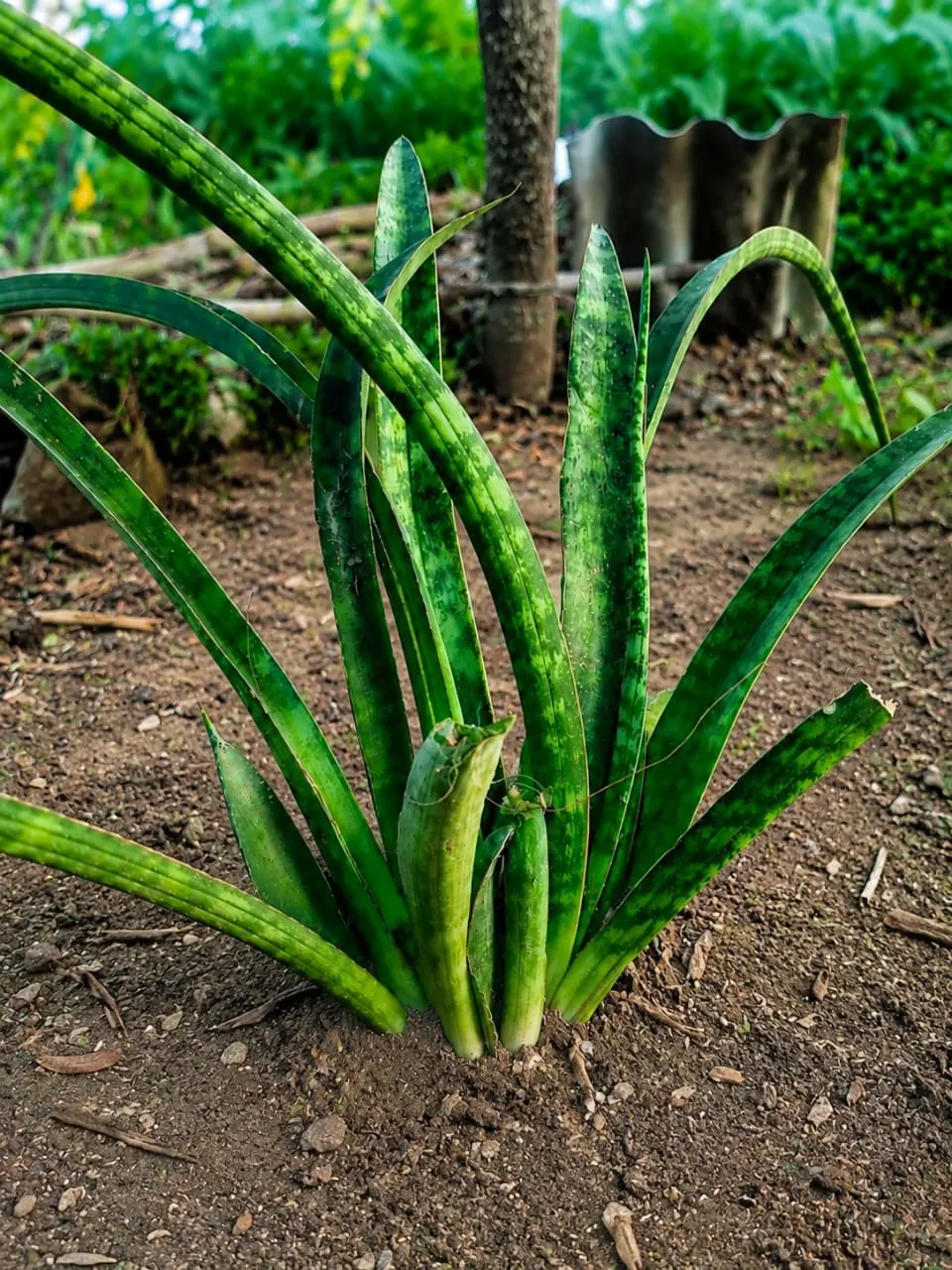
Fig 1 (Dracaena trifasciata plant )
Morphology
Dracaena trifasciata is an evergreen perennial herb that typically grows to a height of 0.5–1.0 m. The plant possesses a horizontal, fleshy rhizome that serves as a storage organ and facilitates vegetative propagation by producing new shoots in compact clumps. Its well-developed rhizomatous growth enables the plant to withstand drought and adapt to diverse environmental conditions.
The leaves are simple, sessile, erect, thick, and succulent, arising directly from the rhizome in a basal rosette. They are linear-lanceolate to sword-shaped with a leathery texture, smooth and glossy surface, entire margins, and a sharply pointed apex. The leaves are dark green with characteristic light or greyish-green transverse bands, giving the plant its distinctive ornamental appearance. Mature leaves generally measure 52.5–76.9 cm in length and 3.5–5.5 cm in width.
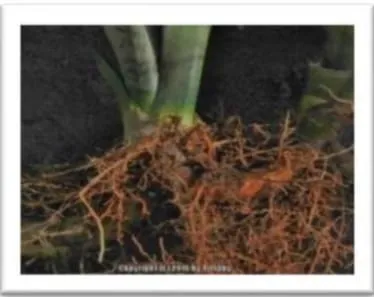
Fig 2 (Root)
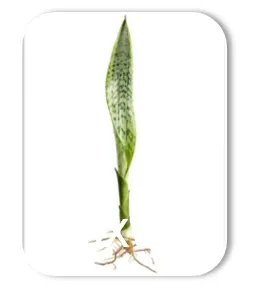
Fig 3 (leaves)
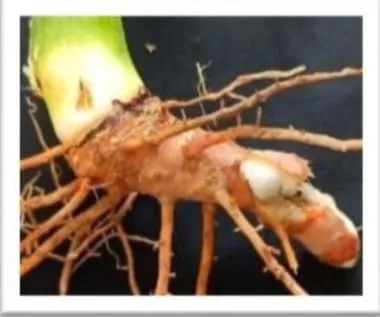
Fig 4 (rhizomes)
Pharmacognosy
Macroscopic characters of leaf:
The leaves are erect, thick, succulent, sword-shaped, and dark green with greyish-white bands. They have smooth surfaces, entire margins, pointed tips, and grow up to 1 m long. Dried leaves are light brown, fibrous, odorless, and slightly bitter.
Microscopic characters of leaf:
The leaf has a single-layered epidermis with a thick cuticle and no trichomes. It is amphetaminic with tetractys stomata. The mesophyll is differentiated into chlorenchyma and water-storage parenchyma. Vascular bundles are collateral, closed, and endarch with sclerenchyma, and calcium oxalate raphide crystals are present.
Macroscopic characters of rhizome
The rhizome of Dracaena trifasciata is cylindrical, fibrous, and light brown, measuring about 1–2 cm in thickness and up to 10 cm in length. It has a smooth, glossy surface with distinct leaf scars. The dried rhizome shows a fibrous cut surface, is odorless, and has a slightly bitter taste.
Microscopic characters of rhizome
The transverse section of the rhizome is circular and consists of a multilayered epidermis made of suberized cells. The ground tissue is composed of undifferentiated mucilage-containing parenchyma. Numerous collaterals, closed, and endarch vascular bundles are enclosed by a well-developed sclerenchyma Tous bundle cap. The xylem contains 6–8 vessel elements with protoxylem located near the Centre, while the phloem is composed of sieve tubes and companion cells.
Macroscopic characters of root
The roots of Dracaena trifasciata are slender, wiry, and dark brown, measuring up to 15 cm in length and 1.5–2.0 mm in diameter. They have a rough surface and are odorless with no characteristic taste.
Microscopic characters of root
The transverse section of the root shows four distinct regions: epidermis, cortex, vascular cylinder, and central pith. The epidermis consists of thick-walled suberized cells, while the cortex is made up of thin-walled parenchymatous cells. A distinct endodermis and pericycle separate the cortex from the vascular tissue. The vascular cylinder is circular, with alternating strands of xylem and phloem. The central pith is composed of parenchymatous cells, and calcium oxalate crystals are absent.
Traditional use
Traditional Medicinal Uses Dracaena trifasciata has long been valued in traditional medicine for its diverse therapeutic properties. The leaves and rhizomes are widely used to promote wound healing, reduce inflammation, and enhance tissue regeneration. In traditional systems such as Ayurveda and Traditional Chinese Medicine (TCM), the plant is commonly used to relieve cough, cold, bronchitis, sore throat, and other respiratory ailments. It is also employed in the management of skin infections, gastrointestinal disorders, stomach ulcers, jaundice, urinary tract disorders, earache, rheumatism, and inflammatory conditions. In addition, the plant has been traditionally used to treat snake bites, insect bites, boils, swellings, and minor wounds. Owing to its analgesic, antipyretic, and immune-supportive properties, Dracaena trifasciata continues to be recognized as an important ethnomedicinal plant with a wide range of traditional applications.
Table 1 : Traditional Medicinal Uses of Dracaena trifasciata across various Countries
|
Continent & Country |
Ethnomedicinal Uses/ Therapeutic significance |
Plant part used |
Form of preparation |
|
Africa Nigeria (west Africa) |
Traditionally used to treat hemorrhage, dysenter, diarrhea, gastric ulcers, external wounds, leucorrhea, fractures, piles, diabetes and tumors. |
Leaves and rhizomes |
Brewed, decoction, paste |
|
Asia Indonesia |
Used in traditional medicine for snake bites, cough, common cold, diarrhea, and wound healing. |
Leaves and rhizomes |
Crushed, infusion, Decoction. |
|
India |
Used for bronchitis, asthma, food poison, toxemia, cough, snake bite, insect bites, digestive issues, tumors, and immune support. |
Leaves and rhizomes |
Brewed, decoction, paste. |
|
Myanmar |
Used for hemorrhage, dysentery And ulcers, wounds, leucorrhea And fractures, piles, diabetes, Tumors, and to promote blood circulation and tissue repair. |
Leaves and rhizomes |
Not specified |
|
Yemen |
Used for hemorrhage, dysentery and ulcers, wounds, leucorrhea and fractures, piles, diabetes, tumors, skin repair, and improved blood circulation. |
Leaves and rhizomes |
Brewed, decoction, Paste. |
|
China |
Used for pain relief, hemorrhage control, and as a substitute for dragons’ blood (“Long- Xue- jie”). |
Leaves and rhizomes |
Brewed, decoction. |
|
Vietnam, Cambodia, Thailand |
Used for cough, leprosy, Rheumatism, glandular swelling, Nutritional deficiencies and Snake bites. |
Leaves and rhizomes |
Brewed, decoction, paste |
Phyto chemical screening
Test for alkaloids, flavonoids, phenol, tannins, saponins
Test for Alkaloids
To 2 mL of plant extract, 2 mL of 1% hydrochloric acid (HCl) was added and heated gently. Wagner's and Mayer's reagents were then added separately. The formation of turbidity or a precipitate indicated the presence of alkaloids.
Test for Flavonoids
A few drops of 10% ferric chloride solution were added to the aqueous extract. The appearance of a green-colored precipitate confirmed the presence of flavonoids.
Test for Carbohydrates
One milliliter each of Fehling's solution A and B was mixed with 1 mL of the filtrate and heated in a boiling water bath. Formation of a brick-red precipitate indicated the presence of carbohydrates.
Test for Phenols
A few drops of 5% ferric chloride solution were added to the aqueous extract. Development of a dark green or bluish-black color indicated the presence of phenolic compounds.
Test for Tannins
One milliliter of the filtrate was diluted with distilled water, followed by the addition of three drops of 10% ferric chloride solution. A blue-green coloration confirmed the presence of tannins.
Test for Phytosterols
The plant extract was dissolved in 2 mL of acetic anhydride, and 1–2 drops of concentrated sulfuric acid (H?SO?) were carefully added along the side of the test tube. A characteristic color change indicated the presence of phytosterols.
Test for Saponins
About 0.5 g of the plant extract was mixed with 2 mL of distilled water and shaken vigorously for 10 minutes. The formation of persistent froth indicated the presence of saponins.
Test for Steroids
Approximately 50 mg of the extract was dissolved in 1 mL of acetone, followed by the addition of 1 mL of concentrated sulfuric acid. Formation of two distinct layers with a red or yellow coloration confirmed the presence of steroids.
Test for Resins
One milliliter of the plant extract was mixed with acetic anhydride, followed by the addition of 1 mL of concentrated sulfuric acid. Development of an orange to yellow color indicated the presence of resins
Test for Proteins
One milliliter of the test solution was acidified with sulfuric acid, followed by the addition of Millon's reagent and heating. Formation of a yellow precipitate indicated the presence of proteins.
Test for Fixed Oils and Fats
A small quantity of the extract was pressed between two filter papers. The appearance of a permanent oily stain on the filter paper confirmed the presence of fixed oils and fats.
Pharmacological Activities
Dracaena trifasciata has attracted considerable scientific interest due to its wide range of pharmacological activities. Various in vitro and in vivo studies have demonstrated its therapeutic potential, including antioxidant, antibacterial, analgesic, antipyretic, antidiabetic, wound healing, anti-alopecia, anthelmintic, and cytotoxic activities. These biological effects are mainly attributed to the presence of bioactive phytochemicals such as flavonoids, phenolic compounds, saponins, alkaloids, steroids, and terpenoids.
Antioxidant Activity
The antioxidant potential of Dracaena trifasciata leaf extracts has been extensively investigated using DPPH and phosphomolybdenum assays. Ethanolic extracts exhibited significantly higher total phenolic content and stronger free radical scavenging activity than aqueous extracts. The antioxidant activity increased in a concentration-dependent manner, indicating that the plant possesses excellent natural antioxidant properties capable of reducing oxidative stress.
Antidiabetic Activity
Methanolic leaf extracts of Dracaena trifasciata have shown promising antidiabetic effects in streptozotocin-induced diabetic rats. Oral administration of the extract significantly reduced blood glucose levels, decreased oxidative stress, and restored normal histological architecture of pancreatic tissues. These findings suggest that the plant may help improve glucose metabolism and protect pancreatic β-cells from oxidative damage.
Cytotoxic Activity
The cytotoxic potential of Dracaena trifasciata has been evaluated against various human cancer cell lines, including A-549, HepG-2, and CACO-2. The alcoholic leaf extract exhibited moderate cytotoxic activity against A-549 and HepG-2 cell lines, whereas minimal activity was observed against CACO-2 cells. These results indicate the possible anticancer potential of the plant, although further mechanistic studies are required.
Wound Healing Activity
Hydrogel formulations containing Dracaena trifasciata leaf extract have demonstrated significant wound healing activity in experimental animal models. Formulations containing 20–25% extract promoted faster wound contraction and tissue regeneration compared to untreated controls, highlighting the plant's potential in the development of topical wound healing preparations.
Toxicity and Safety
Acute oral toxicity studies conducted in Wistar rats revealed that Dracaena trifasciata leaf extract is relatively safe at a single dose of 2000 mg/kg body weight. No mortality, significant behavioral changes, or biochemical abnormalities were observed, indicating a favorable safety profile for therapeutic use.
Anti-alopecia Activity
Recent molecular docking and LC-MS/MS studies have identified several bioactive compounds in Dracaena trifasciata leaf extract with high affinity for androgen receptors. Some compounds demonstrated stronger binding interactions than minoxidil, suggesting that the plant may serve as a promising natural candidate for the treatment of androgenic alopecia.
Analgesic Activity
Studies have demonstrated that both ethanolic and aqueous leaf extracts possess significant analgesic activity. The ethanolic extract exhibited greater pain-relieving effects than the aqueous extract in a dose-dependent manner, suggesting its effectiveness in managing mild to moderate pain.
Antipyretic Activity
The antipyretic activity of Dracaena trifasciata leaf extracts has been evaluated using yeast-induced pyrexia models. Ethanolic extracts significantly reduced elevated body temperature, whereas aqueous extracts showed comparatively lower activity, indicating the superior efficacy of the ethanolic extract in fever management.
Antibacterial Activity
Several studies have reported that Dracaena trifasciata extracts possess broad-spectrum antibacterial activity against pathogens such as Staphylococcus aureus, Escherichia coli, and Pseudomonas aeruginosa. Methanolic and ethanolic extracts produce notable zones of inhibition, confirming their potential as natural antimicrobial agents.
Anthelmintic Activity
Leaf extracts of Dracaena trifasciata have exhibited effective anthelmintic activity against Fasciola hepatica. The extracts caused paralysis and death of parasites in a concentration-dependent manner, demonstrating their potential as natural antiparasitic agents.
Extract method
Preparation of Ethanolic Extract
Fresh leaves of Dracaena trifasciata were collected, washed thoroughly with running water to remove impurities, and shade-dried at room temperature until a constant weight was obtained. The dried leaves were ground into a coarse powder and sieved to obtain a uniform particle size. The powdered material was extracted with 95% ethanol using a Soxhlet extraction apparatus under controlled temperature for an adequate extraction period. The resulting extract was filtered and concentrated under reduced pressure using a rotary evaporator to remove the solvent. The concentrated extract was further dried, the percentage yield was recorded, and the dried extract was stored in an airtight container under refrigerated conditions until further use.
CONCLUSION
Dracaena trifasciata is an important medicinal plant with diverse pharmacological properties supported by both traditional knowledge and scientific research. The presence of various bioactive phytochemicals contributes to its antioxidant, antimicrobial, anti-inflammatory, analgesic, antidiabetic, and wound-healing activities. Pharmacognostic evaluation further ensures accurate identification and quality assessment of the plant material. Although current studies demonstrate encouraging therapeutic potential, additional investigations, including toxicity studies, standardization, formulation development, and well-designed clinical trials, are required to establish its safety, efficacy, and long-term therapeutic value. Therefore, Dracaena trifasciata represents a promising natural resource for future pharmaceutical research and the development of effective herbal medicines.
REFERENCES

J. Jayarani*, R. Sathya, K. Selvabharathi, R. Tamilkodi, S. veeravel, A. Senthil, P. Govindharaj , Dracaena Trifasciata: A Comprehensive Review Of Pharmacognosy, Phytochemistry, Traditional Medicinal Uses And Pharmacological Activities, Int. J. of Pharm. Sci., 2026, Vol 4, Issue 7, 4647-4655. https://doi.org/ 10.5281/zenodo.21497353
 10.5281/zenodo.21497353