

We use cookies to ensure our website works properly and to personalise your experience. Cookies policy
Department of Pharmaceutics, KMCH College of Pharmacy, Kovai Estate, Kalapatti Road, Coimbatore – 641048, Tamil Nadu, India. Affiliated to The Tamil Nadu Dr. M.G.R. Medical University, Chennai, Tamil Nadu, India
Background:Pharmacological management in sports medicine can be challenging because athletes experience variable training schedules, frequent travel, changes in hydration and nutrition, exercise-induced gastrointestinal symptoms, and the need to maintain symptom control without compromising safety. Modified-release drug formulations may help align drug exposure with therapeutic needs and daily sporting activities. Objective:This narrative review discusses the pharmacokinetic principles, potential clinical applications, formulation limitations, and anti-doping considerations associated with dual-release and multiphasic-release drug formulations in sports medicine.Methods: A narrative review was developed using peer-reviewed literature on modified-release drug delivery, oral pharmacokinetics, exercise physiology, sports medicine, analgesic use, stimulant pharmacotherapy, depot corticosteroid preparations, and anti-doping regulations. Evidence from athletes was distinguished from evidence obtained in healthy volunteers or general clinical populations. Results: Dual-release formulations commonly combine an immediate-release component with a sustained- or extended-release component. They may provide relatively rapid onset followed by prolonged drug exposure and reduced dosing frequency. Multiphasic formulations introduce additional delayed or programmed-release events and may theoretically reduce peak-to-trough fluctuations or align drug availability with circadian or activity-related requirements. However, their pharmacokinetic performance is formulation- and drug-specific. A lower C_max, lower fluctuation, or longer apparent duration does not automatically demonstrate improved efficacy or safety. Athlete-specific clinical evidence for oral triple-phase formulations remains limited. Exercise-related changes in gastrointestinal function, hydration, tissue perfusion, food intake, and training load may also increase interindividual variability. Conclusion: Modified-release formulation selection should be individualized according to the drug, clinical indication, treatment duration, therapeutic target, gastrointestinal and renal risk, adherence, cost, and anti-doping status. Dual-release formulations remain appropriate for many acute and short-term indications because of their established availability and clinical familiarity. Multiphasic and chronomodulated systems are promising for selected chronic or time-dependent conditions, but athlete-specific pharmacokinetic and clinical trials are required before they can be considered superior to established modified-release regimens.
Athletes are not pharmacokinetically identical to sedentary healthy volunteers or general clinical populations. Prolonged exercise, heat exposure, dehydration, altered gastrointestinal motility, changes in splanchnic blood flow, variable nutritional intake, travel, altitude exposure, and changes in training load may influence drug absorption, distribution, metabolism, and elimination.1-3 Exercise-associated gastrointestinal symptoms are common in endurance athletes and may include nausea, abdominal pain, reflux, bloating, diarrhoea, and impaired gastrointestinal tolerance. These symptoms may be relevant when an oral dosage form depends on predictable gastrointestinal transit, luminal pH, or intestinal absorption.9,15
The pharmacokinetic behaviour of a medicine can therefore be as clinically important as its pharmacodynamic activity. The same active pharmaceutical ingredient may produce different clinical experiences when administered as an immediate-release, extended-release, delayed-release, biphasic, or multiphasic dosage form. The release pattern can influence the rate of absorption, maximum plasma concentration (Cmax


Modified-release dosage forms are designed to control the rate, timing, or site of drug release. Their objectives include prolonging therapeutic exposure, reducing dosing frequency, minimizing peak-related adverse effects, improving adherence, and coordinating drug delivery with symptom patterns or circadian physiology.9-12 Common systems include matrix tablets, reservoir systems, coated multiparticulates, osmotic systems, pH-responsive coatings, pulsatile systems, and chronomodulated dosage forms.14-17
Dual-release formulations commonly contain two release fractions, most often an immediate-release fraction and a sustained- or extended-release fraction.37 Multiphasic-release formulations contain three or more temporally controlled release events. In a conceptual three-phase system, the first fraction may provide immediate release, the second fraction may provide delayed or pulsatile release, and the third fraction may provide sustained or extended release.39,40
The pharmacokinetic rationale for multiphasic delivery is attractive, particularly for medicines requiring rapid onset followed by prolonged exposure. However, a theoretical improvement in the concentration–time profile does not necessarily translate into improved clinical outcomes. The result depends on the active ingredient, dose, release mechanism, absorption characteristics, therapeutic index, gastrointestinal physiology, and patient variability.30-33
This narrative review compares dual-release and multiphasic-release systems in the context of sports medicine. It emphasizes the distinction between formulation science, pharmacokinetic evidence, general clinical evidence, and athlete-specific evidence.35-37 It also discusses the implications of modified-release formulations for analgesia, ADHD management, metabolic disease, depot corticosteroid therapy, adherence, and anti-doping practice.6,33,34
2.1. Exercise and gastrointestinal function
Standard pharmacokinetic parameters remain applicable to athletes, but exercise may alter the physiological conditions under which those parameters are observed. During prolonged or high-intensity exercise, sympathetic activation, reduced splanchnic blood flow, heat stress, dehydration, altered gastrointestinal motility, and changes in fluid or food intake may influence oral drug absorption. Systematic reviews have linked exercise with changes in indirect markers of gastrointestinal damage and permeability.1-4
The extent of these effects varies according to exercise intensity, duration, environmental temperature, hydration status, nutritional strategy, individual susceptibility, and the presence of pre-existing gastrointestinal disease. Therefore, it is inappropriate to assume that every athlete will experience a major alteration in oral drug absorption. The more accurate interpretation is that exercise may increase pharmacokinetic variability in susceptible individuals and under demanding conditions.20-23
Modified-release systems can be particularly sensitive to gastrointestinal conditions. A pH-responsive coating may be affected by intestinal pH, transit time, food intake, and motility. A multiparticulate system may distribute more widely throughout the gastrointestinal tract than a single-unit tablet, but its release still depends on the behaviour of the coating, polymer, pellets, and drug.9-12
2.2. Hydration, heat, and renal considerations
Changes in plasma volume, body water, tissue perfusion, and renal function may influence the apparent distribution and clearance of selected drugs. Dehydration and heat stress are particularly important when medicines have renal or gastrointestinal toxicity, such as NSAIDs. However, the effects of exercise, heat, altitude, or hydration status on drug clearance are drug-specific and should not be generalized across all medicines.
2.3. Pharmacokinetic parameters
The major parameters relevant to comparison of modified-release systems include:


These parameters help characterize the rate, extent, and consistency of drug exposure after administration of a modified-release formulation. The release pattern may influence the rate of absorption, Cmax


A lower Cmax

2.4. The Dual-Release the Bimodal Plasma Profile
Dual-release systems commonly combine an immediate-release component with a sustained- or extended-release component. The immediate-release fraction is intended to provide relatively rapid onset, while the modified-release fraction prolongs exposure and reduces the need for repeated administration.37,39
The resulting concentration–time profile is not universal. Depending on the dose ratio, release mechanism, absorption rate, and elimination half-life, a product may generate two discernible peaks, a shoulder in the profile, or a broad extended exposure phase.37,39 A transient decline between the early and later phases may occur, but it should not automatically be interpreted as a clinically important subtherapeutic trough.
Dual-release products may be manufactured using hydrophilic or hydrophobic matrices, coated pellets, reservoir systems, osmotic mechanisms, layered tablets, or combinations of these approaches.15-17,37,39 The formulation must be evaluated using dissolution testing, dose uniformity, stability studies, in-vivo pharmacokinetics, and, where appropriate, in-vitro–in-vivo correlation.18,19
The potential benefits of dual-release systems include rapid onset, prolonged exposure, reduced dosing frequency, established manufacturing experience, and familiarity among clinicians and patients. Limitations may include dose dumping, food effects, variable gastrointestinal transit, incomplete flexibility when treatment must be stopped rapidly, and persistence of peak-related adverse effects.9,10,15
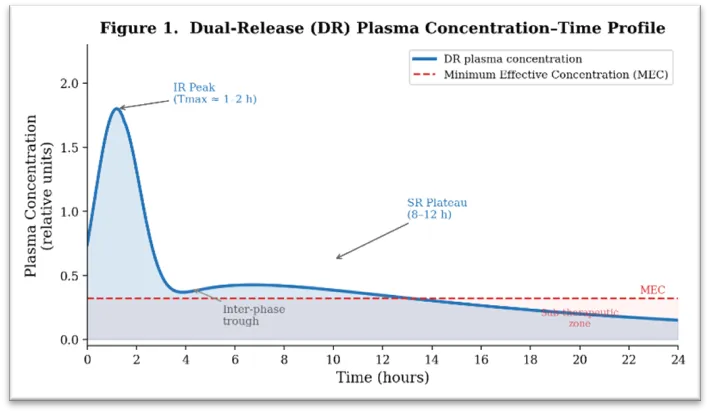
Figure 1. Dual-release (DR) plasma concentration -time profile.
2.5. Multiphasic and triple-phase systems
Multiphasic systems are intended to provide more than two temporally controlled release events. A conceptual three-phase formulation may include an immediate-release fraction, a delayed or pulsatile fraction, and a sustained or extended-release reservoir.13-15
Such systems may be achieved using:
The primary pharmacokinetic objectives may include rapid onset, delayed drug availability, prolonged exposure, reduced peak-to-trough variation, or synchronization with symptom patterns. In chronotherapy, a formulation may be administered before sleep or before a predictable period of symptoms so that drug exposure begins later.9-11
However, the presence of multiple release phases does not guarantee a flat plasma profile. The final concentration–time curve reflects dissolution, gastrointestinal transit, absorption, first-pass metabolism, systemic clearance, and interindividual physiology. Food, exercise, gastrointestinal pH, motility, and hydration may further influence the timing of each phase.9,10,15
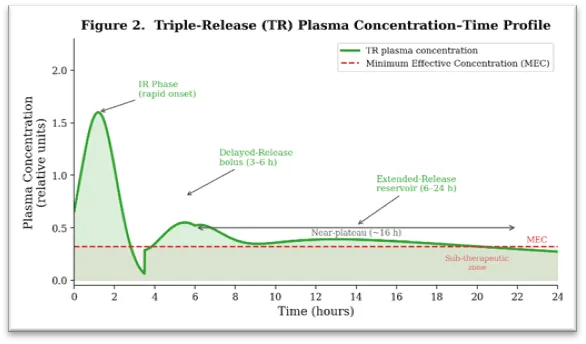
Figure 2. Triple release (TR) plasma concentration time profile.
2.6. The Direct Comparison Form Requires Comparing Two Stories Through Their Textual Interaction
The comparison that may be made between DR and TR profiles at the same doses of the total drug is educative when the profiles are superimposed (Figure 3). The DR curve has more variability in the amplitude of variation more initial Cmax, inter-phase deeper trough and the short productive coverage. The TR curve also loses maximum acuity with a wider and even exposure of the drug. Importantly, the total exposure of drugs is similar at the same dose with the formulations. The total efficacy of the drug is received by the patient with an even distribution over time.9,10,18,19
In drugs whose toxicity is peak-led, e.g. NSAIDs, and adverse effects of gastrointestinal systems, blunting the Cmax whilst maintaining AUC will have actual pharmacological benefit. In drugs with large therapeutic indices, there is no significance of low fluctuation.24,28,29
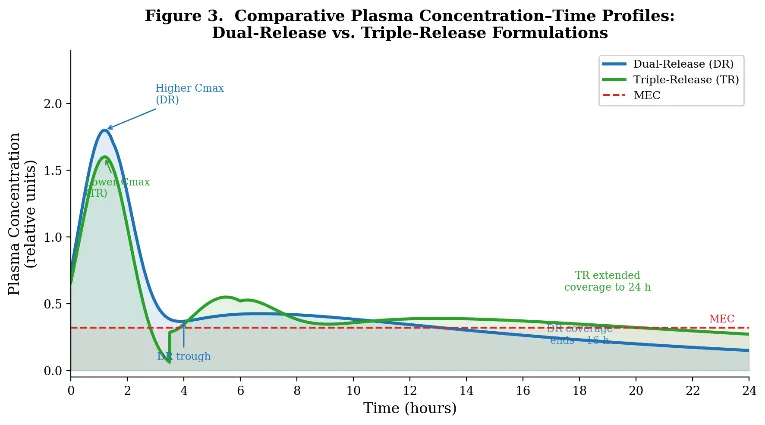
Figure 3. Comparison of plasma concentration versus time of the single dosages of blue (dual-release (DR)) and green (triple-release (TR)) formulations.
Table 1 offers systematic comparison of DR and TR packaged enlargement of parameters of chief priority to the sports medicine practice. These parameters are most likely to be perceived as a clinical decision point that led to the individualised prescribing decision.9.10,15
Table 1. Comparison of Clinical and Pharmacokinetic parameters Dual-release vs Triple-release Dual and Triple-release.
|
Parameter |
Dual-Release (DR) |
Triple-Release (TR) |
|
Release Phases |
Immediate + Sustained |
Immediate + Delayed + Extended |
|
Plasma Profile |
Bimodal (2 distinct peaks) |
Near-plateau (1 sustained coverage) |
|
Dosing Frequency |
Once or twice daily |
Once daily (in most cases) |
|
Therapeutic Window |
Moderate; potential coverage gaps |
Broad and stable; fewer coverage gaps |
|
Peak-Trough Ratio |
Relatively moderate fluctuation |
Relatively low fluctuation |
|
Onset of Action |
Rapid via IR phase |
Equally rapid via IR phase |
|
GI Side Effects |
Moderate; coupled with Cmax spikes |
Lower; blunted peak reduces GI load |
|
Formulation Complexity |
Moderate |
High (three independent layers) |
|
Manufacturing Cost |
Less expensive |
More expensive |
|
Athlete Compliance |
Good; familiar regimen |
Potentially better; simplified schedule |
|
Generic Availability |
Broad |
Limited; mainly brand products |
|
Clinical Evidence |
Extensive (>30 years) |
Emerging; promising but early stage |
NSAIDs are commonly used for short-term management of acute musculoskeletal pain and inflammation in athletes. Contemporary anti-doping surveillance indicates that NSAIDs remain among the most frequently reported medicines in elite athletes.5,24,26
Immediate-release, extended-release, and combination-release NSAID formulations may differ in onset, dosing frequency, peak exposure, and duration.38 However, formulation selection should be based on the individual drug, dose, contraindications, treatment duration, gastrointestinal and renal risk, and clinical objective.27
For acute injuries requiring short treatment, a conventional or dual-release formulation may be appropriate when rapid symptom relief and predictable discontinuation are important. Athletes exposed to dehydration, heat stress, prolonged endurance exercise, or renal hypoperfusion require particular caution because NSAID-related renal and gastrointestinal risks may be increased.25,26
A lower peak concentration may theoretically reduce some peak-related adverse effects, but NSAID gastrointestinal safety depends on systemic exposure, topical gastrointestinal effects, mucosal vulnerability, dose, treatment duration, concomitant medicines, and individual risk factors. Consequently, a lower Cmax

Multiphasic NSAID systems may theoretically reduce concentration fluctuation or prolong exposure. Nevertheless, athlete-specific evidence is insufficient to recommend them routinely over established formulations. Tendinopathy should not automatically be treated with prolonged systemic NSAID therapy. Treatment should incorporate diagnosis, load management, rehabilitation, functional goals, and risk–benefit assessment.27
Athletes with ADHD may require pharmacotherapy that provides symptom control during training, competition, academic or occupational activities, and recovery periods. Extended-release stimulant formulations can reduce the need for repeated daytime dosing, but their duration and timing of effect are product-specific.30,31
Jornay PM Extended release is an evening-administered delayed-release and extended-release methylphenidate capsule. Its formulation is designed to provide a prolonged lag period after evening administration, followed by release and absorption during the morning and daytime period. It should not automatically be classified as a conventional three-phase release system. The product label reports that the pharmacokinetic profile is characterized by delayed absorption after evening dosing, with a median Tmax

Treatment decisions should consider sleep, appetite, cardiovascular status, anxiety, dehydration, heat exposure, and the timing of training, competition and the misuse potential of stimulants41. Athletes must verify the current anti-doping status of methylphenidate and determine whether a Therapeutic Use Exemption is required. The relevant requirements depend on the substance, dose, route, competition setting, sport, and applicable anti-doping organization.7,43
Metabolic conditions may occur in athletes, former athletes, and physically active individuals, although their prevalence and clinical significance vary according to age, body composition, genetics, training status, and other risk factors. Extended-release metformin is an established modified-release dosage form, but the available references in this review do not provide athlete-specific evidence for its use.
Gastrointestinal tolerability is an important consideration with metformin therapy. This issue may be particularly relevant in endurance athletes because prolonged exercise can itself challenge gastrointestinal function.3,20
Injectable corticosteroid suspensions may produce prolonged local exposure because drug particles dissolve at different rates according to particle size, crystal characteristics, formulation composition, and tissue environment. This may produce a depot effect, but it should not automatically be classified as a standardized triple-release system.36
The duration of clinical benefit varies according to the corticosteroid, formulation, injection site, disease, dose, tissue response, and outcome assessed. A fixed duration such as 6–8 weeks should not be generalized across all preparations.
Anti-doping implications depend on the corticosteroid, route, dose, timing, and applicable rules. Systemic glucocorticoid use is subject to restrictions during specified periods, whereas some local routes may be treated differently. The current WADA Prohibited List and applicable Therapeutic Use Exemption guidance should be checked before treatment.7,43
5.1. Advantages of Dual-release Formulations
Over 30 years has been achieved in clinical experience in multiple drug classes with dual-release preparations, which has yielded an established safety and efficacy profile. Generic availability means the DR preparations are available in the entire gamut of athletic settings. Inter-individual variation is known to physicians and pharmacokinetics of the drugs is very predictable which minimises uncertainty in the prescription. The two-dose daily regimen allowing flexibility of clinical dosing is also beneficial: decrement in dosing, or premature termination can be easily achieved in case of adverse effects development.9,15,37
5.2. Disadvantages of Dual-release Formulations
BID administration creates real compliance dilemmas within intensive sporting circles especially when there is an international travel and competition block. Inter-phase trough can create sub-therapeutic systemic plasma levels at certain training phases. Relatively high Cmax compared to TR formulations enhance toxicity burden, which is usually pertinent in NSAIDs and disturbances of the gastrointestinal system caused by drugs, especially when the dose reaches its peak38. DR architecture is not able to give much chronotherapeutic optimisation as well.9,10
5.3. Advantages of Triple-release Formulations
Triple-release preparations can provide practical 2024 hours of therapeutic coverage despite having one dose daily of the drug once which has an episodic and demanding lifestyle of an athlete of any type. A papillomavirus profile exhibiting a lower Cmax and no clinically significant inter-phase trough, the flatter plasma profile, has the benefit of less peak related toxicity and the same exposure to drug42. Chronotherapeutic flexibility is a truly new-fangled functionality. program structure is able to provide morning drug activity in an evening dose.9,13,14
5.4. Disadvantages of Triple-release Formulations
Available clinical evidence to support the use of TR formulations in sport specific clinical findings is limited. There are few studies that have utilized athlete specific RCTs to offer clinical evidence on the use of the former. The prices of acquisition are considerably expensive compared to a similar DR preparation and generic products are seldom available. The use of multi-phase release systems has increased the variability in drug response by adding high pharmacologic dispersion to the response according to GI transit time, intraluminal pH, and motility there and which vary significantly among athletes during high levels of training.3,9,20
The anti-doping status of a medicine is generally determined by its active substance, route of administration, dose, timing, and the applicable WADA rule rather than simply by whether the product is immediate-release, dual-release, extended-release, or multiphasic.7,43
Modified-release formulations may nevertheless alter the time course of systemic and urinary exposure. This may be relevant when athletes and clinicians plan treatment around competition, document medication use, or assess the need for a washout interval.
The 2026 WADA Prohibited List became effective on 1 January 2026, and WADA also publishes a separate monitoring programme. Tramadol has been prohibited in competition since 1 January 2024. Current regulations should be checked before prescribing or using tramadol in an athlete.7,8,43
Methylphenidate and other stimulant medicines require particular attention. The athlete and treating clinician should verify whether the substance is prohibited in the relevant setting and whether a Therapeutic Use Exemption is necessary.7,43 Documentation should include:
Glucocorticoid restrictions depend on the substance, route, dose, and washout period. Local administration is not automatically exempt in every circumstance. Athletes should consult the current WADA guidance or an authorized anti-doping organization before treatment.7,43
A formulation change does not automatically require a new TUE in every jurisdiction. However, if the active substance, dose, route, indication, or dosing schedule changes materially, existing documentation should be reviewed.
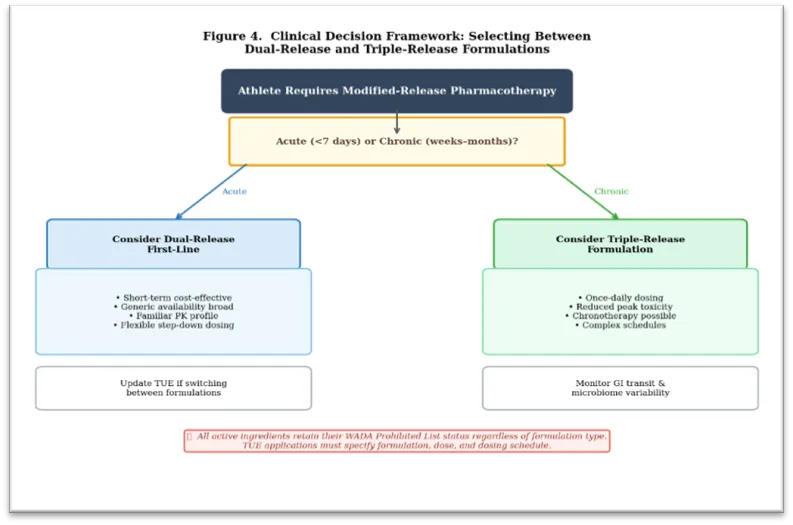
Figure 4. Clinical Decision Framework.
Formulation selection in sports medicine should be individualized according to the clinical indication, treatment duration, therapeutic target, gastrointestinal and renal risk, training schedule, adherence, cost, and anti-doping requirements. The following framework provides general considerations rather than fixed prescribing rules.9,15
7.1. A dual-release conventional or dual-release may be appropriate when:
7.2. A multiphasic or chronomodulated formulation may be considered when:
7.3. A multiphasic formulation should not be selected solely because:

The use of personalised pharmacokinetic modelling is moving out of the laboratory and into the clinic. Population PK models, which include individual covariates may soon allow clinicians to make prediction of whether a specified DR or TR regimen will elect to achieve target plasma concentrations in a specific athlete: GI transit time, body composition, renal clearance, altitude exposure, etc. This has been particularly applied in the case of TR formulations, the multi-phase release kinetics of which are particularly vulnerable to single physiological variability.18,19
Although in the early clinical development phase, Smart ingestible sensor technology could offer the possibility of providing real-time confirmation of each stage of release of a modified-release formulation occurring in the GI tract on time to restore the confidence of some clinicians that some form of TH may be used in high-stakes sporting.
The interaction of the gut microbiome and oral drug pharmacokinetics is a new research priority. There is a systematic difference in microbiome features between athletes and non-athletic population. TR-pH sensitive coating relies on local pH to induce dissolution; when local pH conditions, which have been shown modified in microbiome training response to intensive training, alter the pH-dependent drug preparations, the pH-dependent pharmacokinetics of pH-dependent drug preparations could vary in a clinically significant manner.3,4,20
Most importantly, the field needs clinical trials with particularization of athletes. An adequately constructed RCT comparing twice a day DR diclofenac to once a day TR diclofenac on athletes with patellar tendinopathy with major outcomes of pain scale, toleration of training load, recovery Department back-in-action, and GI adverse events would have direct and significant clinical implications. The trial on the same has not yet been carried out.
Dual-release and other modified-release dosage forms can provide rapid onset, prolonged exposure, reduced dosing frequency, or improved temporal control compared with conventional immediate-release therapy. Their clinical usefulness is established for selected drugs and indications, but the pharmacokinetic and safety benefits remain product-specific.9,15
Multiphasic and triple-phase systems offer a rational strategy for coordinating drug release with symptom patterns, circadian biology, or prolonged therapeutic requirements. However, the existence of three release phases does not automatically produce a flat plasma profile, 20–24-hour therapeutic coverage, lower gastrointestinal toxicity, or superior clinical outcomes. 9,15
In sports medicine, formulation selection should be individualized according to the indication, treatment duration, therapeutic target, gastrointestinal and renal risk, training schedule, adherence, cost, and anti-doping status. Conventional or dual-release products may remain appropriate for many acute and short-term conditions because of their established evidence and availability. Multiphasic systems may be useful in selected chronic or time-dependent situations, but athlete-specific comparative trials are needed before they can be recommended as superior alternatives.
The most important future step is to move beyond theoretical formulation advantages and conduct clinical studies that evaluate pharmacokinetics together with pain control, functional recovery, training tolerance, gastrointestinal and renal safety, adherence, and anti-doping implications.
REFERENCES

Yokeshwaran S., Sneha R., Dhanapriya S., Naresh Kumar S., DR. C. Sankar, Dual- And Multiphasic-Release Drug Formulations In Sports Medicine: Pharmacokinetic Principles, Clinical Applications, And Anti-Doping Considerations—A Narrative Review, Int. J. of Pharm. Sci., 2026, Vol 4, Issue 10, 1768-1782. https://doi.org/10.5281/zenodo.23336756
 10.5281/zenodo.23336756