

We use cookies to ensure our website works properly and to personalise your experience. Cookies policy
Sims College Of Pharmacy, Mangaldas Nagar, Guntur.
Lactation is a critical physiological period during which maternal pharmacotherapy may be required for acute and chronic medical conditions. The use of medicines during breastfeeding raises important concerns because many drugs can be detected in human milk, and some may expose the breastfed infant to clinically relevant amounts . The safety of medication use during lactation depends on several factors, including maternal dose, drug lipophilicity, molecular weight, protein binding, ionization, half-life, milk composition, infant age, and infant hepatic and renal maturity . Drug transfer into breast milk occurs through passive diffusion and, for some compounds, active transporter-mediated secretion at the blood–milk barrier . Relative infant dose and milk-to-plasma ratio are commonly used to estimate exposure, but these metrics must be interpreted together with drug potency, oral bioavailability, and clinical context . Although concerns about infant exposure are common, most medicines are not absolutely contraindicated during breastfeeding, and rational prescribing requires an individualized risk–benefit assessment that considers maternal health, infant safety, and the benefits of continued breastfeeding
Breastfeeding is recognized as the preferred method of infant feeding because of its nutritional, immunologic, developmental, and maternal health benefits . The World Health Organization recommends exclusive breastfeeding for the first six months of life, followed by complementary feeding with continued breastfeeding thereafter . Because postpartum women may require treatment for infections, pain, hypertension, diabetes, psychiatric illness, allergies, or chronic diseases, medication exposure during lactation is common in clinical practice .
The key challenge in lactation pharmacotherapy is not merely whether a drug enters milk, but whether the amount transferred is sufficient to affect the infant or alter milk production . In the past, fear of infant harm often led to unnecessary interruption of breastfeeding or avoidance of needed treatment. Contemporary evidence supports a more balanced approach: many medicines are compatible with breastfeeding, while only a limited number require avoidance, temporary interruption, or enhanced monitoring . Therefore, drug use during lactation should be guided by pharmacology, available human data, and clinical judgment rather than by assumption alone .
RATIONALE AND OBJECTIVES:
The purpose of this review is to provide a structured discussion of drug transfer into human milk, the factors governing exposure, maternal and infant effects of medicines during breastfeeding, and the practical use of evidence-based information sources such as LactMed . This article also highlights current gaps in knowledge, particularly in transporter biology and data for newer medicines . A better understanding of these issues is essential for clinicians, pharmacists, and researchers who manage medication use in lactating mothers .
METHODOLOGY:
This is a narrative review based on published literature, authoritative guidance documents, and specialized lactation drug databases. Relevant evidence may be drawn from PubMed-indexed studies, WHO publications, and LactMed records, which compile peer-reviewed information on drug levels in milk, infant exposure, adverse effects, and alternative therapies . Current reviews and evidence syntheses are particularly useful because they integrate pharmacokinetic data with clinical outcomes and help interpret the practical relevance of milk transfer .
DRUG TRANSFER INTO BREAST MILK:
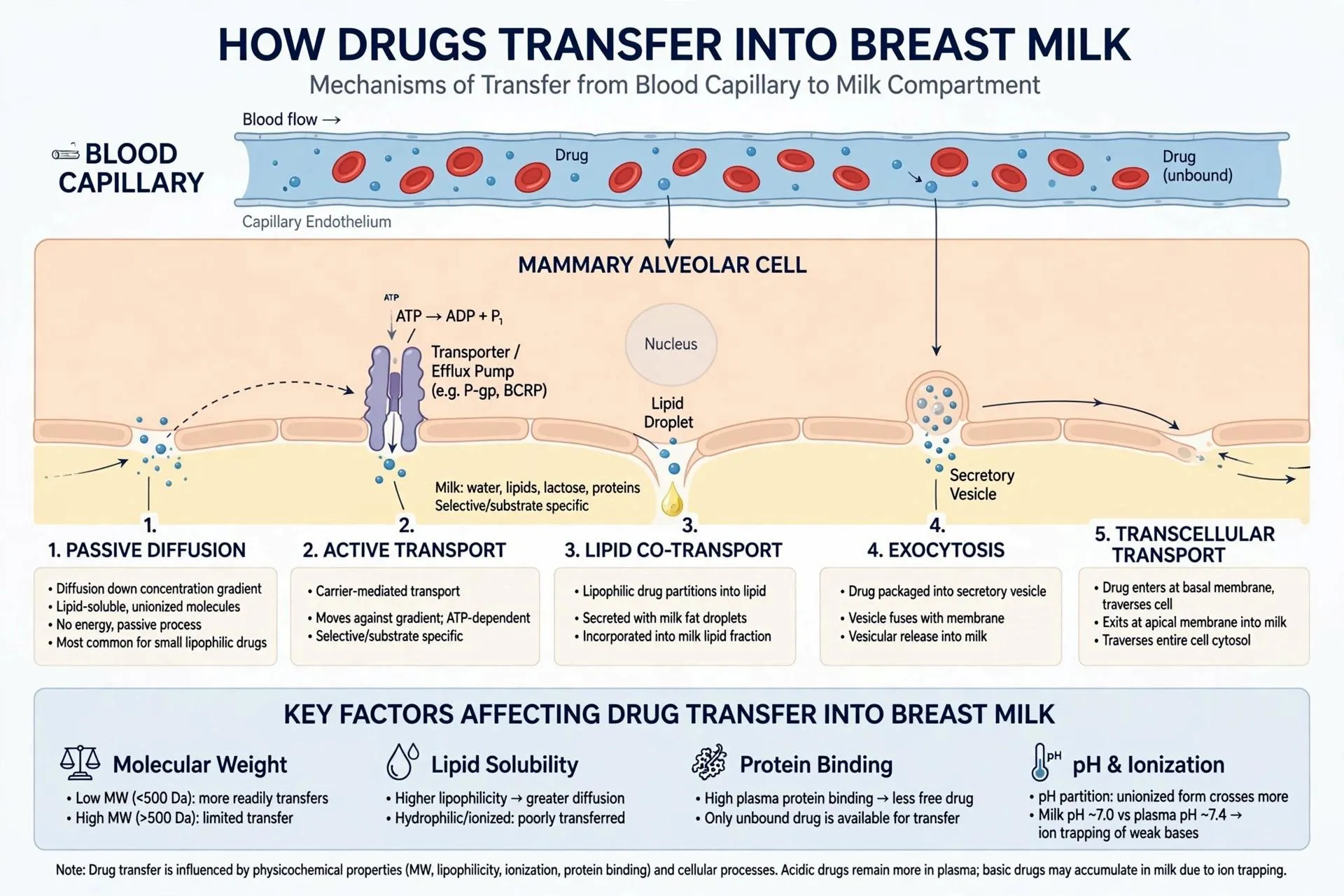
After maternal administration, a drug is absorbed into the systemic circulation and may reach the mammary gland. Once there, it can pass into breast milk and be ingested by the infant during feeding . This process is influenced by passive diffusion, active transport, lipid partitioning, and other biological processes occurring at the blood–milk interface . The presence of specific membrane transporters in the lactating mammary gland means that milk concentrations of some medicines may be higher or lower than expected from plasma data alone .
The blood–milk barrier is not a simple passive filter. Instead, it is a dynamic biologic interface in which multiple ATP-binding cassette and solute carrier transporters may actively influence the secretion of xenobiotics into milk . This is clinically important because it explains why certain drugs show measurable milk concentrations even when their conventional pharmacokinetic properties would suggest limited transfer . As a result, predicting breast milk exposure requires more than estimating maternal plasma levels; it also requires an understanding of mammary transporter biology
FACTORS AFFECTING DRUG TRANSFER INTO HUMAN MILK:
Several drug characteristics influence transfer into milk. Low molecular weight, high lipid solubility, low protein binding, and long half-life generally favor passage into breast milk . Drug ionization is also relevant because the pH difference between maternal plasma and milk may lead to trapping of weak bases in milk . Maternal plasma concentration matters because it determines the quantity available for transfer into milk .
Lactation stage and milk composition can further modify transfer. Colostrum, transitional milk, and mature milk differ in protein and lipid content, which may affect drug partitioning . Infant-related factors are equally important. Premature infants, neonates, and infants with hepatic or renal immaturity clear drugs less efficiently and may be more susceptible to adverse effects from exposure through milk . Thus, the same maternal medication may be low risk in an older infant but more concerning in a newborn .
|
FACTOR |
EFFECTS ON DRUG TRANSFER INTO MILK |
EXAMPLES/REMARKS |
|
Molecular weight |
Low molecular-weight drugs cross into milk more easily |
Drugs <500 Da generally transfer more readily |
|
Lipid solubility |
Highly lipid-soluble drugs tend to accumulate more in milk |
Lipid-rich breast milk can increase transfer |
|
Protein binding |
Highly protein-bound drugs usually transfer less into milk |
Free/unbound drug crosses more readily |
|
pKa and ionization |
Weak bases may become trapped in milk because milk is slightly more acidic than plasma |
Ion trapping can increase transfer of weakly basic drugs |
|
Milk pH |
Difference between plasma and milk pH influences ionization and distribution. |
Human milk is usually slightly more acidic than plasma |
|
Maternal plasma concentration |
Higher maternal blood concentration generally increases the concentration gradient and milk transfer. |
Dose and dosing frequency can influence exposure.
|
|
Half-life of drug |
Long half-life may result in prolonged drug presence in milk |
Short half-life drugs may be eliminated more rapidly |
|
Volume of distribution |
Drugs with a large volume of distribution may have lower plasma concentrations available for transfer |
Tissue distribution affects milk exposure |
|
Milk composition |
Fat and protein content of milk can affect drug binding and accumulation |
Hindmilk has more fat than foremilk |
|
Drug lipid solubility |
Increased lipid solubility may increase partitioning into milk fat |
Particularly relevant for lipophilic drugs |
|
Maternal metabolism and clearance
|
Rapid metabolism or elimination can reduce drug availability for transfer |
Liver and kidney function are important |
|
Route of administration |
Oral, IV, topical, inhaled and other routes produce different maternal plasma concentrations |
Systemic exposure is usually greater after IV administration |
|
Time after maternal dose |
Drug concentration in milk may change with time |
Peak milk concentration may occur at different times depending on the drug |
|
Stage of lactation |
Milk composition changes from colostrum to mature milk, potentially affecting drug distribution |
Colostrum and mature milk differ in composition |
|
Infant factors |
Prematurity, age, oral absorption and immature renal/hepatic function can affect the infant's exposure |
Newborns may be more susceptible to some drugs |
|
Maternal disease/organ function
|
Liver or kidney impairment can increase maternal drug concentrations and potentially milk exposure |
Dose adjustment may be necessary |
PHARMACOKINETIC MAJOR OF EXPOSURE:
Two major measures are used in lactation pharmacology: milk-to-plasma ratio and relative infant dose. The milk-to-plasma ratio compares drug concentration in milk with concentration in maternal plasma, helping estimate the tendency of a drug to partition into milk . Relative infant dose estimates the amount of drug ingested by the infant as a percentage of the maternal weight-adjusted dose .
An RID below about 10% is often used as a general screening benchmark for low exposure, but it should not be interpreted as an absolute safety threshold . A drug with a low RID can still be clinically important if it is highly potent, sedating, or poorly cleared by the infant. Conversely, some drugs with measurable milk transfer may still be compatible with breastfeeding if infant absorption is low or clinical toxicity is unlikely . Therefore, these metrics are best used as part of a broader clinical assessment rather than as standalone rules .
EFFECTS ON LACTATING MOTHERS:
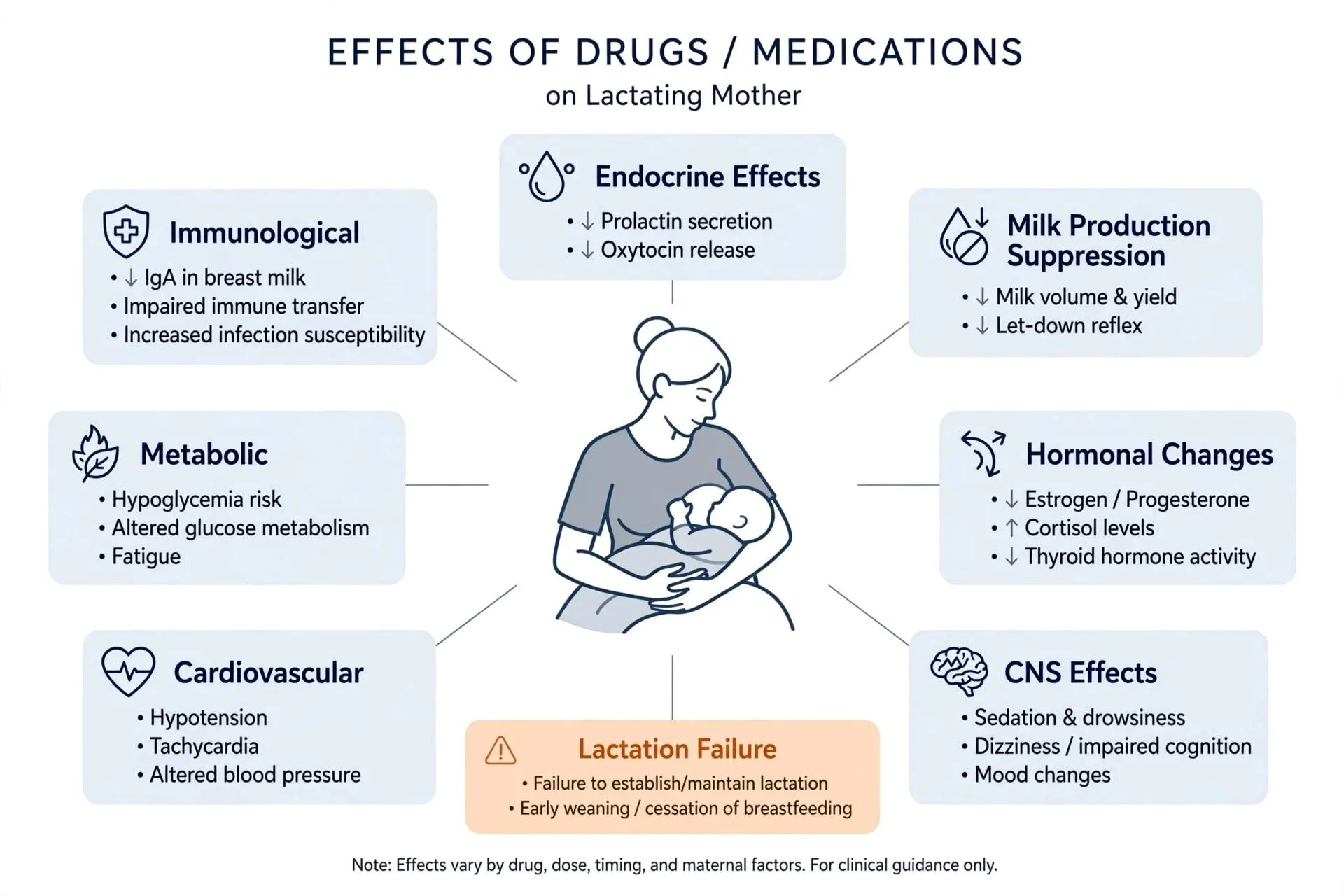
Medication use during lactation can affect the mother directly through adverse drug effects or indirectly by altering milk production. Some medicines can reduce milk supply, especially those that interfere with hormonal signaling pathways involving prolactin and dopamine . WHO guidance identifies certain estrogen-containing preparations and some diuretics as potential causes of reduced lactation in specific circumstances .
Maternal adverse effects such as sedation, dizziness, gastrointestinal upset, fatigue, headache, and reduced alertness may affect breastfeeding success even if the infant is not directly harmed
. Reduced alertness can impair infant handling, nighttime feeding, or adherence to breastfeeding schedules. In addition, untreated maternal illness may worsen lactation or prevent adequate infant care, so avoiding needed treatment can be harmful in its own right . For this reason, maternal well-being is an essential part of lactation safety assessment.
Effects on the Breastfed Infant
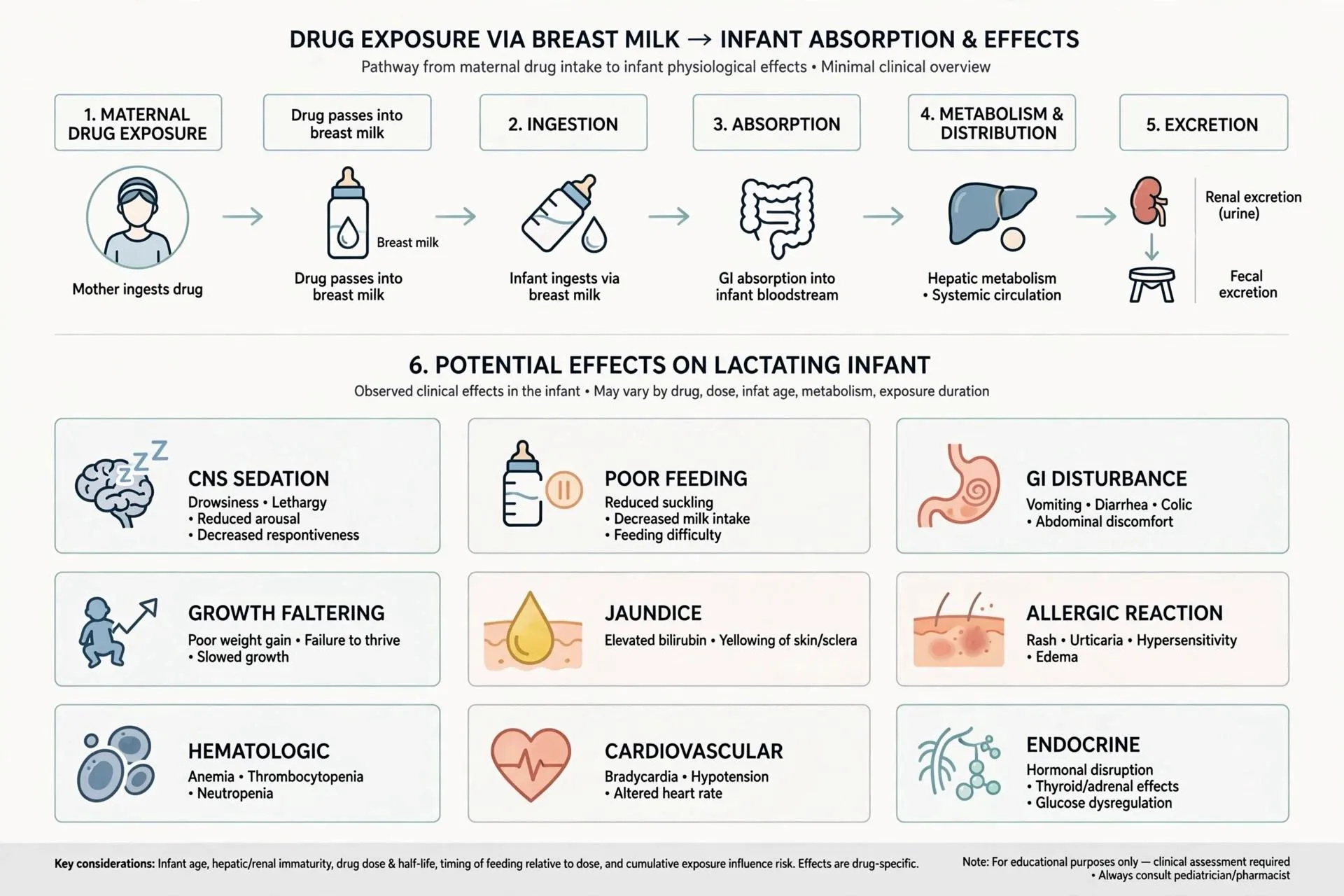
Potential infant effects depend on the drug, dose, duration of exposure, and infant susceptibility. The most frequently discussed outcomes include sedation, irritability, poor feeding, vomiting, diarrhea, and altered sleep patterns . Medicines with central nervous system activity require particular caution because infant sedation may progress to poor feeding or, in rare cases, respiratory depression .
Infant maturity strongly modifies risk. Neonates and preterm infants have immature hepatic and renal elimination pathways, making them more vulnerable to accumulation of medicines received through breast milk . In older, healthy infants, the same exposure may be of little or no clinical significance . Therefore, drug safety during lactation should always be interpreted in the context of infant age, health status, feeding pattern, and the pharmacology of the specific medicine .
COMMON DRUG CLASSES:
Many commonly used medicines are considered compatible with breastfeeding when used appropriately. WHO guidance and LactMed both support the use of many analgesics, antibiotics, bronchodilators, and other routine medicines when there is a clear clinical need . For example, short courses of several analgesics and many beta-lactam antibiotics are generally considered acceptable, whereas some opioids require greater caution because of infant sedation risk .
Psychiatric medicines, antihypertensives, antidiabetic agents, corticosteroids, and anti-infective drugs often require individualized assessment rather than broad class-based assumptions . Anticancer medicines and some radioactive agents are special categories because breastfeeding may need to be interrupted or avoided depending on the agent and treatment schedule . Since drug behavior differs widely within each class, a medicine-by-medicine evaluation is always preferable to assuming a class effect.
Drugs Requiring Special Caution
Some drugs warrant special caution because of their toxicity profile, long half-life, high infant exposure potential, or limited human safety data. Cytotoxic anticancer medicines are among the most important examples because of their potential effects on rapidly dividing cells . WHO guidance identifies certain anticancer drugs and radioactive substances as incompatible with breastfeeding or requiring interruption for specific periods .
Opioids also require careful individualized evaluation because of the risk of infant central nervous system depression, particularly in young or vulnerable infants . Certain psychotropic medicines may be appropriate during lactation, but drug selection should be based on current evidence, the mother’s psychiatric stability, and infant monitoring when needed . The central principle is that high-risk drugs are not necessarily prohibited in every case, but they require stricter risk management and more careful clinical judgment.
|
DRUG GROUP |
COMMON EXAMPLES |
EFFECTS ON LACTATING MOTHER |
POSSIBLE EFFECTS ON BREASTFED INFANTS/LACT ATION |
GENERAL CONSIDERATI ONS |
|
Antibiotics
|
Amoxicillin, ampicillin, cephalexin, azithromycin
|
Usually well tolerated; may cause nausea, diarrhea or allergic reactions
|
Usually low exposure; occasional diarrhea, rash or thrush may occur |
Many commonly used antibiotics are compatible with breastfeeding
|
|
Antiviral drugs |
Acyclovir, valacyclovir, oseltamivir
|
May cause headache, nausea or gastrointestinal effects
|
Acyclovir exposure through milk is generally low; infant effects are uncommon |
Selection depends on the viral infection and drug
|
|
Anti-asthmatic drugs
|
Salbutamol, budesonide, beclomethasone , montelukast
|
Relieve bronchospasm/i nflammation; may cause tremor, headache or palpitations depending on drug |
Inhaled drugs generally produce very low milk concentrations |
Inhaled corticosteroids and bronchodilators are generally preferred when appropriate |
|
Anti-tubercular drugs
|
Isoniazid, rifampicin, ethambutol, pyrazinamide
|
May cause hepatotoxicity, gastrointestinal effects and other drug-specific adverse effects |
Drug levels in milk are generally insufficient to treat or prevent TB in the infant; isoniazid exposure requires consideration of pyridoxine supplementation |
Breastfeeding is generally possible with appropriate TB treatment and monitoring |
|
Antifungal drugs |
Fluconazole, nystatin, clotrimazole
|
May cause GI upset, headache or other drug-specific effects
|
Nystatin/clotrima zole have minimal systemic exposure; fluconazole enters milk but is generally considered acceptable when clinically indicated |
Choice depends on infection and route of administration |
|
Antimalarial drugs |
Chloroquine, hydroxychloroqu ine, quinine, artemisinin-base d combinations
|
May cause GI upset, headache, dizziness or other drug-specific effects
|
Some drugs enter milk in small amounts; infant exposure varies by drug |
Treatment should follow the malaria species, severity and local resistance pattern
|
|
Antiprotozoal drugs |
Metronidazole, tinidazole, nitazoxanide
|
May cause nausea, metallic taste, diarrhea or headache
|
Metronidazole passes into milk; infant exposure should be considered, particularly with high-dose regimens |
Use depends on infection and dose
|
|
Anthelmintic drugs
|
Albendazole, mebendazole, ivermectin, pyrantel
|
Usually mild GI effects; occasional headache or dizziness
|
Albendazole and mebendazole produce low exposure through milk; infant effects are generally uncommon |
commonly used agents can be used during lactation when indicated
|
Table: Effects and safety considerations of commonly used antibiotics, antivirals, anti-asthmatic, anti-tubercular, antifungal, antimalarial, antiprotozoal and anthelmintic drugs during lactation.
HOW DRUGS AFFECTS ON LACTATING INFANTS-PATHWAYS+EFFECTS:
ROLE OF LACTMED:
LactMed is one of the most important resources for medication decisions in breastfeeding. It provides peer-reviewed, literature-based information on drug concentrations in milk and infant blood, reported adverse effects in nursing infants, effects on lactation, and alternative medicines where appropriate . The database is updated regularly and is designed to support healthcare professionals in evidence-based decision-making .
A major strength of LactMed is that it links pharmacokinetic data with real clinical information. This allows clinicians to move beyond theoretical concern and assess the best available human evidence for a specific drug . In lactation care, this is especially valuable because many medicines lack large clinical trials in breastfeeding women, making curated evidence summaries essential .
RISK–BENEFIT ASSESSMENT:
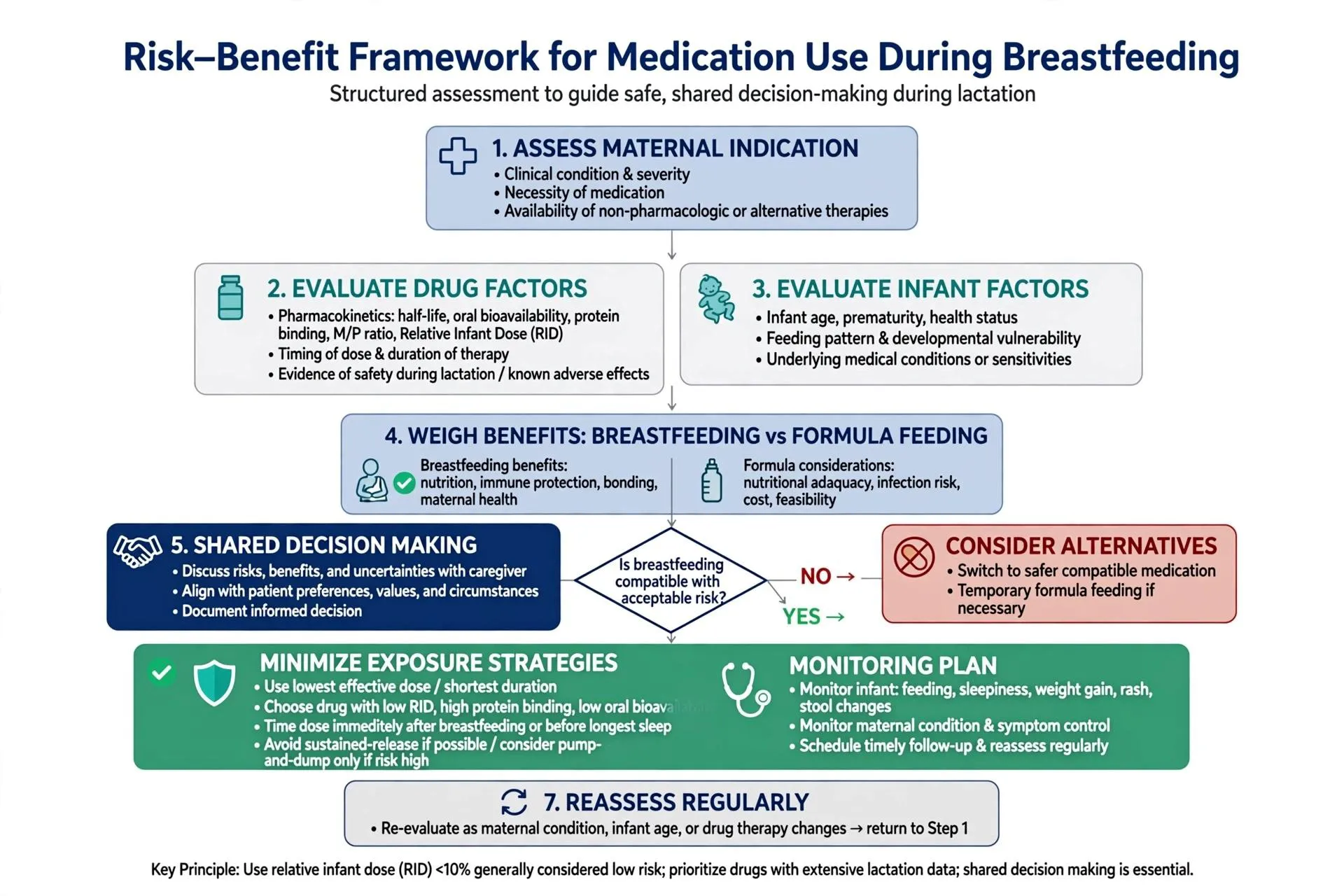
The safest approach to lactation pharmacotherapy is an individualized risk–benefit assessment. This means considering whether treatment is necessary, whether a better-studied alternative exists, whether timing of doses can reduce infant exposure, and whether the infant has factors that increase vulnerability . Maternal disease severity also matters because untreated illness may compromise maternal health, infant care, and breastfeeding continuation .
A rational decision-making framework includes the following questions: Is the drug essential? Can a safer alternative be used? What is the expected infant exposure? How mature is the infant’s elimination capacity? Is monitoring required? This framework is preferable to simplistic labeling of drugs as universally “safe” or “unsafe” during breastfeeding.
KNOWLEDGE GAPS AND FUTURE DIRECTIONS:
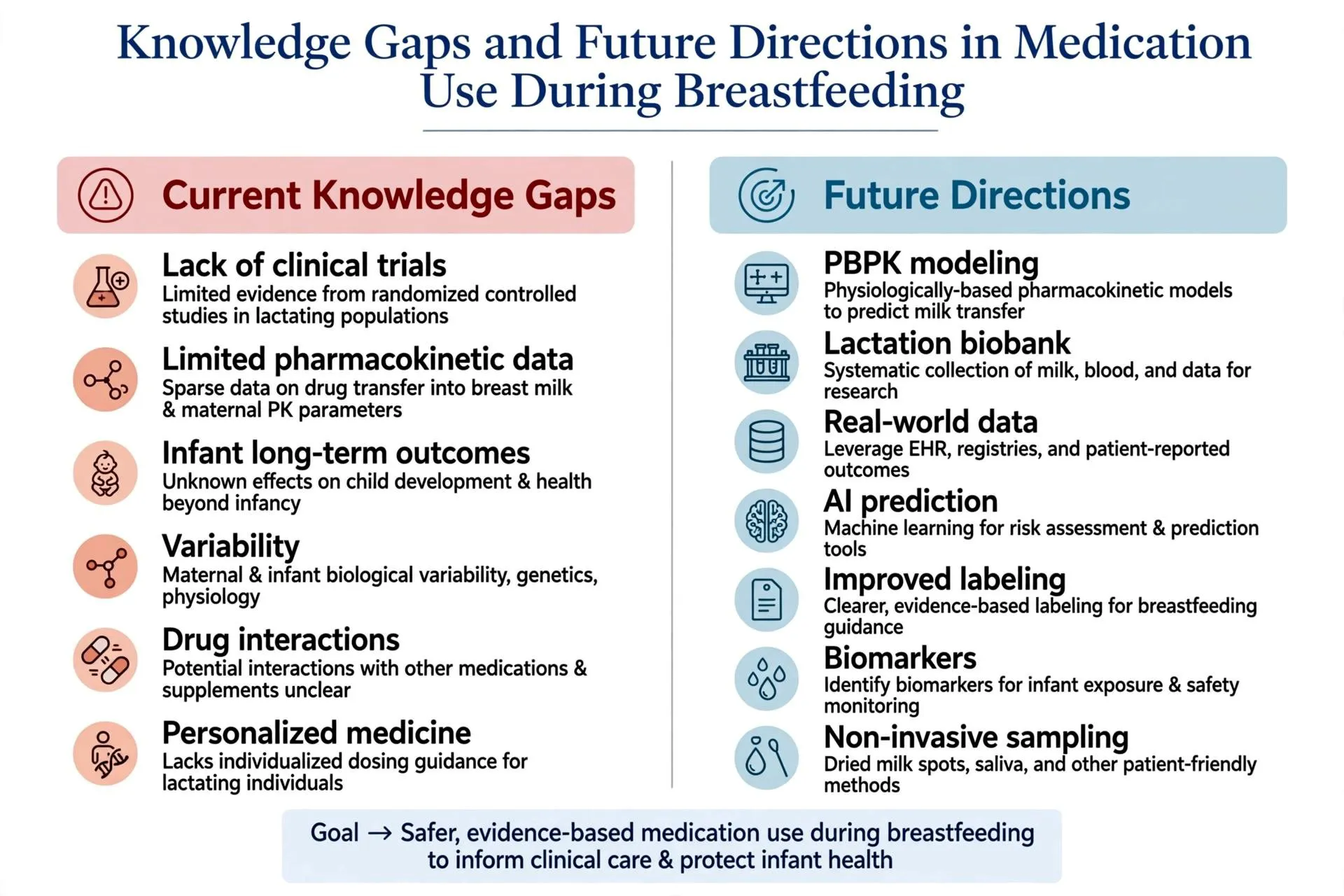
Although lactation pharmacology has advanced considerably, important knowledge gaps remain. Many medicines still lack robust human milk data, and breastfeeding women have historically been underrepresented in clinical research . This limits confidence in recommendations for newer therapies, biologics, and highly specialized medicines . Future research should focus on standardized milk sampling, paired maternal–infant concentration studies, transporter function at the blood–milk barrier, and long-term developmental outcomes in exposed infants . Improved modeling approaches may help predict milk transfer more accurately and reduce uncertainty in prescribing . Such work would support more precise, safer, and less disruptive management of medicines during breastfeeding.
CONCLUSION
Drug use during lactation is a common and clinically significant issue because maternal treatment and breastfeeding often must occur at the same time. Although many medicines can pass into breast milk, only a limited number are absolutely incompatible with breastfeeding, and most can be used with proper selection and monitoring .
The clinical relevance of milk transfer depends on drug properties, maternal plasma concentration, transporter activity, milk composition, and infant maturity .
Milk-to-plasma ratio and relative infant dose are useful tools, but they must be interpreted together with the pharmacology of the specific drug and the clinical condition of the mother and infant . Evidence-based resources such as LactMed and WHO guidance remain central to rational decision-making during lactation . Overall, the best approach is individualized care that supports maternal treatment while preserving the benefits of breastfeeding whenever possible .
REFERENCES

Dr. Y. Sirisha, Revu Devika, Veeranki. Harshitha, N. Abhishek, Dr. B. Thangabalan, Effects of Drugs on Lactating Mothers: Drug Transfer into Breast Milk, Maternal Effects, and Infant Safety, Int. J. of Pharm. Sci., 2026, Vol 4, Issue 9, 2653-2664, https://doi.org/10.5281/zenodo.22895634
 10.5281/zenodo.22895634