View Article

Abstract

The present study focuses on the formulation and evaluation of a herbal moisturizing cream using natural ingredients with potential skin-nourishing and moisturizing properties. Herbal ingredients are increasingly used in cosmetic preparations due to their natural origin and beneficial effects on skin health. The cream was formulated using Aloe vera gel, almond oil, and neem extract incorporated into a suitable cream base by an appropriate emulsification method. The prepared formulation was evaluated for various physicochemical and cosmetic parameters, including appearance, colour, odour, pH, homogeneity, spreadability, washability, and stability. The formulation was designed to provide adequate hydration, improve skin softness, and help maintain the skin's natural moisture balance. The prepared herbal moisturizing cream exhibited satisfactory physical characteristics and was found to be smooth, homogeneous, and suitable for topical application. The study indicates that herbal ingredients can be effectively incorporated into a moisturizing cream to develop a potentially safe and suitable cosmetic preparation for maintaining healthy, hydrated, and nourished skin.

Keywords

Herbal cream, Aloe vera, Almond oil, Neem extract, Moisturizer, Emulsion, Evaluation.

Introduction

× Popup Image

Moisturizing cream is one of the most commonly used topical cosmetic preparations for maintaining the hydration, softness, smoothness, and overall appearance of the skin. The skin acts as an important protective barrier between the body and the external environment. It is continuously exposed to environmental factors such as dry weather, low humidity, wind, sunlight, frequent washing, and cleansing agents. These factors can disturb the natural moisture balance of the skin and may result in dryness, roughness, scaling, and discomfort. Therefore, the regular application of a suitable moisturizing preparation helps maintain skin hydration and supports the natural protective function of the skin.A moisturiser is a topical preparation that helps increase and maintain the water content of the outermost layer of the skin. It also helps reduce transepidermal water loss (TEWL) and improves the softness and flexibility of the skin. Moisturizers generally produce their effects through three major mechanisms: humectant, emollient, and occlusive actions.[1,2]

Humectants attract and retain water in the outer layer of the skin. Common examples include glycerin, propylene glycol, and sorbitol. Glycerin is widely used because it is water soluble, compatible with many formulation ingredients, and effective in improving skin hydration. Emollients help soften and smooth the skin by improving the surface characteristics of the skin. Natural oils such as almond oil are commonly used as emollients. Occlusive agents form a protective layer over the skin surface and reduce water loss. Petrolatum, mineral oil, and waxes are commonly used occlusive materials. A combination of these components can provide an effective moisturizing effect.[3]
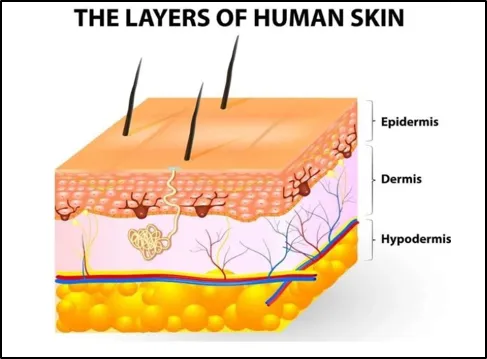


Fig. No. 1: Layers of Human Skin


Moisturizing creams are generally semisolid emulsions containing an aqueous phase and an oily phase. Since oil and water are immiscible, suitable emulsifying agents are required to produce a stable and uniform preparation. Other ingredients may include preservatives, antioxidants, fragrances, consistency modifiers, and active herbal ingredients. The selection of ingredients depends on the desired properties, stability, texture, and intended use of the formulation.[4]

Herbal Ingredients in Moisturizing Cream

The use of herbal ingredients in cosmetic preparations has increased due to their natural origin and potential moisturizing, soothing, antioxidant, nourishing, and skin-conditioning properties. Herbal ingredients can be incorporated into suitable cream bases to develop cosmetic preparations with desirable skin-care properties.[5] Aloe vera is widely used in cosmetic formulations because of its hydrating and soothing properties. It can provide a smooth and refreshing feel to the skin.[6] Almond oil acts as a natural emollient and helps improve skin softness and smoothness. Neem extract contains naturally occurring phytoconstituents and is traditionally used in skin-care preparations for its supportive antioxidant and skin-conditioning properties.The combination of Aloe vera, almond oil, and neem extract with a suitable cream base may provide a moisturizing formulation with desirable cosmetic and skin-conditioning properties.[7]
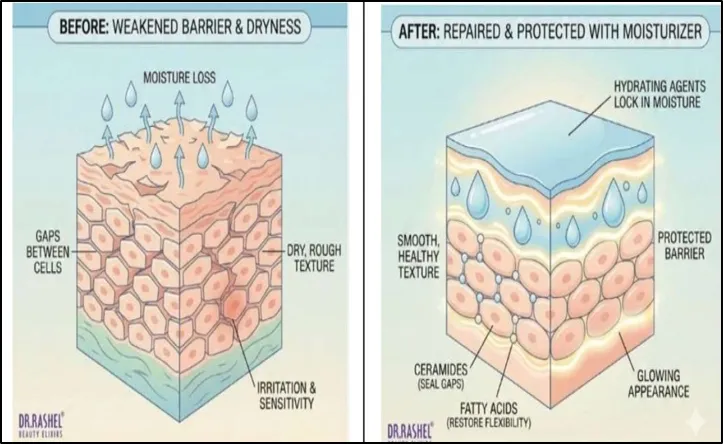


Fig. No. 2: Before and After Application of Moisturizing Cream


Preparation of Moisturizing Cream

The preparation of moisturizing cream generally involves the separate preparation of the aqueous and oily phases. Oil-soluble ingredients are incorporated into the oily phase, while water-soluble ingredients are incorporated into the aqueous phase. Both phases are heated to suitable temperatures and then combined with continuous stirring to form a uniform emulsion.[8]After emulsification, the formulation is gradually cooled with continuous stirring. Heat-sensitive herbal ingredients such as Aloe vera gel and neem extract may be added during the cooling stage to minimize unnecessary exposure to high temperatures. The formulation is then mixed until a smooth, homogeneous, and suitable consistency is obtained.Various processing factors, including temperature, order of addition, mixing speed, mixing time, emulsifier concentration, and cooling conditions, can influence the quality and stability of the final cream. Proper processing conditions are therefore important for obtaining a uniform and stable formulation.[9]


Table: Uses and Advantages of Herbal Moisturizer Cream[10,12,13]


Sr.No.

Uses

Advantages

1.

Helps moisturize and hydrate the

skin.

Contains herbal or naturally derived

ingredients.

2.

Helps reduce dryness and

roughness.

Provides moisturizing and skin-conditioning

effects.

3.

Maintains skin softness and

smoothness.

May provide soothing and antioxidant

properties.

4.

Helps reduce moisture loss from

the skin.

Provides smooth and pleasant application.

5.

Provides skin-conditioning and

nourishing effects.

Combines moisturizing and herbal

ingredients in one formulation.

6.

Can be used as part of daily

skincare.

Can be customized according to desired

skincare properties.

7.

May provide soothing and

refreshing effects.

Uses the beneficial properties of selected

herbal ingredients.


MATERIAL AND METHOD


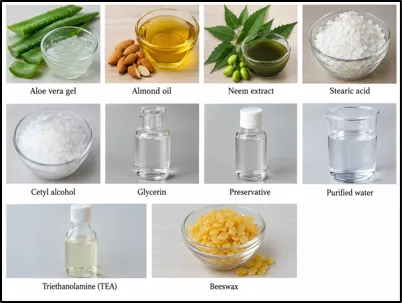
Table: Materials Used in the Formulation of Herbal Moisturizing Cream[14,15]

Sr.

No.

Material

Source/Description

Role in Formulation

1

Aloe vera gel

Aloe barbadensis Miller

Moisturizing and soothing

agent

2

Almond oil

Prunus amygdalus kernels

Emollient and moisturizing

agent

3

Neem extract

Azadirachta indica

Herbal protective and skin-

conditioning agent

4

Stearic acid

Fatty acid

Consistency and emulsifying

agent

5

Cetyl alcohol

Waxy fatty alcohol

Thickening, stabilizing and

consistency agent

6

Glycerin

Glycerol

Humectant and moisturizing

agent

7

Preservative

Suitable pharmaceutical

preservative

Prevents microbial

contamination

8

Purified water

Purified aqueous vehicle

Vehicle and aqueous phase

9

Triethanolamine

(TEA)

Pharmaceutical excipient

Neutralizing, emulsifying and

pH-adjusting agent

10

Beeswax

Natural wax from

honeybees

Thickening, consistency and

stabilizing agent


Figure 4. Photographic representation of the materials used in the formulation


Method of Preparation of Herbal Moisturizing

Cream Step 1: Cleaning and Weighing

All the required equipment, including beakers, measuring cylinders, weighing balance, spatula, thermometer, glass rod, and water bath, was cleaned and dried properly before use. All the ingredients were accurately weighed according to the specified formulation.[16]


Step 2: Preparation of Oil Phase

The required quantities of almond oil, stearic acid, and cetyl alcohol were transferred into a clean beaker. The beaker was placed on a water bath and heated to approximately 70–75°C with continuous stirring. Heating was continued until the stearic acid and cetyl alcohol melted completely, resulting in a clear and uniform oil phase.[17]

Step 3: Preparation of Aqueous Phase

In a separate clean beaker, the required quantity of purified water was taken. Glycerin and the required quantity of preservative were added to the water and mixed thoroughly. The aqueous phase was heated separately to approximately 70–75°C to achieve a temperature comparable to that of the oil phase.[18]

Step 4: Emulsification

After both the oil and aqueous phases reached approximately the same temperature, the aqueous phase was added gradually to the oil phase with continuous stirring. Stirring was continued throughout the addition to facilitate proper emulsification and formation of a smooth cream base.[19]

Step 5: Formation of Cream Base

Continuous stirring was maintained until a uniform and smooth cream base was obtained. Adequate mixing was ensured to prevent phase separation and achieve a consistent cream preparation.[20]

Step 6: Cooling

After formation of the cream base, heating was discontinued. The cream was allowed to cool gradually to avoid excessive exposure of the formulation to high temperature. Gentle continuous stirring was maintained during the cooling process. The herbal ingredients were incorporated during the cooling stage to minimize their exposure to elevated temperatures.[21]

Step 7: Addition of Aloe vera Gel

When the cream base had cooled sufficiently, the required quantity of Aloe vera gel was added gradually with continuous stirring. Stirring was continued until the gel was uniformly incorporated into the cream base without the formation of lumps.[22]

Step 8: Addition of Neem Extract

The required quantity of neem extract was subsequently added to the cream base. The mixture was stirred thoroughly to ensure uniform distribution of the extract throughout the formulation.[23]

Step 9: Homogenization

The prepared cream was subjected to continuous stirring/homogenization until a smooth, homogeneous, and lump-free preparation was obtained. Homogenization ensured uniform distribution of the formulation components and improved the consistency and overall appearance of the cream.[24]

Step 10: Final Mixing and Cooling

The cream was gently mixed for a few minutes and allowed to cool completely to room temperature. The final preparation was visually inspected for smoothness, homogeneity, uniformity, consistency, and absence of lumps or phase separation. The prepared herbal cream was then transferred into a suitable, clean, dry, and properly labelled container for further evaluation.[25]


Step 11: Filling

The prepared herbal moisturizing cream was carefully transferred into a clean, dry, and suitable container using a spatula. Care was taken to avoid the incorporation of air bubbles and contamination during the filling process. The container was filled uniformly and appropriately sealed.[26]

Step 12: Labelling and Storage

The filled container was properly closed and labelled with the name of the formulation, formulation code/batch number, date of preparation, and other relevant details. The prepared herbal moisturizing cream was stored in a cool and dry place, protected from direct sunlight and excessive heat, until further evaluation.[27]
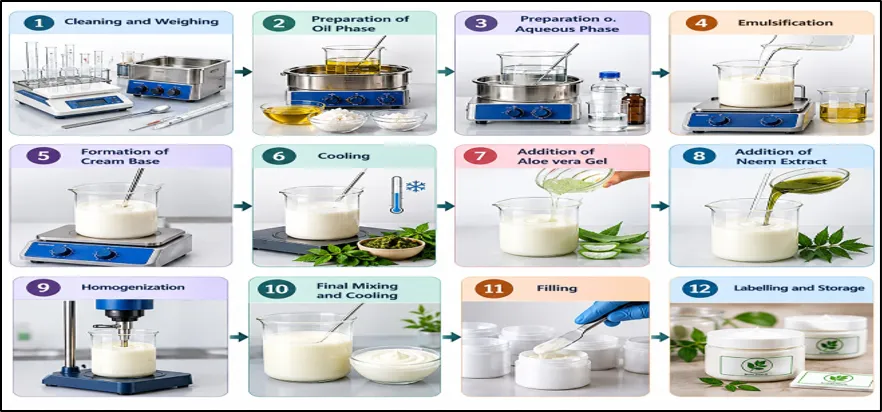


Figure 5: Method of Preparation of Herbal Moisturizing Cream


Evaluation of Herbal Moisturizer Cream [28-32]


Sr.

No.

Evaluation

Test

Method

Expected Result

1

Appearance

Cream was visually checked for colour,

texture, smoothness and lumps.

Smooth,  uniform  and

pleasant appearance.

2

pH

1 g cream was mixed with 10 mL distilled water and pH was measured

using a calibrated pH meter.

pH between 5.0–7.0.

3

Spreadability

Cream was placed between two glass slides and its spreading ability was

observed.

Good    and       uniform spreadability.

4

Homogeneity

Cream was rubbed between fingers and checked            for        lumps,            grittiness          and

uniformity.

Smooth and

homogeneous,  free from lumps.

5

Washability

Cream was applied to the skin and

washed with water.

Easily  washable  with

water.

6

Viscosity

Viscosity was measured using a suitable

viscometer.

Suitable  viscosity  for

easy application.

7

Irritation Test

A small amount of cream was applied to the  skin  and  observed  for  redness,

itching or burning.

No significant irritation.

8

Stability Test

Cream was stored under selected conditions and checked periodically for changes  in  colour,  odour,  pH  and

consistency.

Stable   with     no significant changes.

9

Moisturizing Effect

Cream was applied to clean skin and

softness,           smoothness      and            hydration were observed.

Improved skin softness,

smoothness      and hydration.


CONCLUSION

Herbal moisturizing creams provide a promising and natural approach for maintaining skin hydration, softness, smoothness, and overall skin health. The incorporation of herbal ingredients such as Aloe vera, Neem extract, and natural oils can provide moisturizing, soothing, antioxidant, and skin-conditioning properties. These ingredients may help improve the appearance and feel of the skin while providing a pleasant topical application.The quality and effectiveness of a herbal moisturizing cream depend on the proper selection, concentration, and compatibility of the ingredients used in the formulation. Evaluation of important parameters such as appearance, homogeneity, pH, spreadability, washability, viscosity, irritation potential, stability, and moisturizing effect helps to determine the quality, safety, and performance of the prepared formulation.A well-formulated herbal moisturizer should possess a smooth and homogeneous texture, skin-compatible pH, good spreadability, suitable viscosity, easy washability, good stability, and should not cause significant skin irritation. The formulation should also provide noticeable improvement in skin softness, smoothness, and hydration.Thus, herbal moisturizing creams can serve as useful topical preparations for supporting skin hydration and maintaining healthy-looking skin. However, further detailed studies, including long-term stability, safety, efficacy, and appropriate clinical evaluation, are required to establish their therapeutic benefits and ensure consistent product quality. Overall, the development of herbal moisturizing creams combines the benefits of natural botanical ingredients with modern pharmaceutical formulation techniques and represents a potential area for further research and development.

REFERENCES

  1. Mali AS, Karekar P, Yadav AV. Formulation and evaluation of multipurpose herbal cream. International Journal of Science and Research. 2015;4(11):1495–1498.
  2. Dhyani A, Chander V, Singh N. Formulation and evaluation of multipurpose herbal cream. Journal of Drug Delivery and Therapeutics. 2019;9(2):341–343. doi:10.22270/jddt.v9i2.2540. ResearchGate
  3. Kapoor S, Saraf S. Formulation and evaluation of moisturizer containing herbal extracts for the management of dry skin. Pharmacognosy Journal. 2010;2(11):409–417. doi:10.1016/S0975-3575(10)80024-0. ScienceDirect
  4. Attar JK, Shete RV, Kore KJ. Review on herbal face cream. International Journal of Advance Research and Innovative Ideas in Education. 2024;10(3):6–18. IJARIIE
  5. Saha R. Cosmeceuticals and herbal drugs: practical uses. International Journal of Pharmaceutical Sciences and Research. 2012;3(1):59–65. doi:10.13040/IJPSR.0975-8232.3(1).59-65. IJPSR
  6. Fathima A, Varma S, Jagannath P, Akash M. General review on herbal cosmetics. International Journal of Drug Formulation and Research. 2011;2(5):140–164. ResearchGate
  7. Datta HS, Paramesh R. Trends in aging and skin care: Ayurvedic concepts. Journal of Ayurveda and Integrative Medicine. 2010;1(2):110–113. doi:10.4103/0975-9476.65081. PubMed
  8. Chanchal D, Saraf S. Novel approaches in herbal cosmetics. Journal of Cosmetic Dermatology. 2008;7(2):89–95. doi:10.1111/j.1473-2165.2008.00369.x. PubMed
  9. Aswal A, Kalra M, Rout A. Preparation and evaluation of polyherbal cosmetic cream. Der Pharmacia Lettre. 2013;5(1):83–88. Scholars Research Library
  10. Draelos ZD. The science behind skin care: Moisturizers. Journal of Cosmetic Dermatology. 2018;17(2):138–144. doi:10.1111/jocd.12490. PubMed
  11. Sethi A, Kaur T, Malhotra SK, Gambhir ML. Moisturizers: The slippery road. Indian Journal  of  Dermatology.  2016;61(3):279–287.  doi:10.4103/0019-5154.182427. PubMed Central (PMC)
  12. Surjushe A, Vasani R, Saple DG. Aloe vera: A short review. Indian Journal of Dermatology. 2008;53(4):163–166. doi:10.4103/0019-5154.44785. PubMed Central (PMC)
  13. Christaki EV, Florou-Paneri PC. Aloe vera: A plant for many uses. Journal of Food, Agriculture and Environment. 2010;8(2):245–249. ResearchGate
  14. Nalimu F, Oloro J, Kahwa I, Ogwang PE. Review on the phytochemistry and toxicological profiles of Aloe vera and Aloe ferox. Future Journal of Pharmaceutical Sciences. 2021;7(1):145. doi:10.1186/s43094-021-00296-2. PubMed
  15. Alzohairy MA. Therapeutics role of Azadirachta indica (Neem) and their active constituents in diseases prevention and treatment. Evidence-Based Complementary and Alternative Medicine. 2016;2016:7382506. doi:10.1155/2016/7382506. PubMed
  16. Bhowmik D, Yadav CJ, Tripathi KK, Sampath Kumar KP. Herbal remedies of Azadirachta indica and its medicinal application. Journal of Chemical and Pharmaceutical Research. 2010;2(1):62–72.
  17. Kaur LP, Singh AP, Singh AP, Kaur T. A review on herbal cosmetics. International Journal of Pharmaceutics and Drug Analysis. 2021;9(3). doi:10.47957/ijpda.v9i3.483. IJPDA
  18. Vaishampayan P, Rane MM. Herbal nanocosmeceuticals: A review on cosmeceutical innovation. Journal of Cosmetic Dermatology. 2022;21(11):5464–5483. doi:10.1111/jocd.15238. DOI
  19. Roy J, Pal A, Chakraborty S, Haldar A, Biswas M. Herbal creams: An overview. International Journal of Health Sciences and Research. 2024;14(7). doi:10.52403/ijhsr.20240717. IJHSR
  20. Sontakke AS, Dahiwale RS, Sontakke SS, Kharate SS, Borkar SA, Dhande SC. Review on herbal face cream. International Journal of Pharmacognosy and Pharmaceutical Research. 2024;6(2):99–102. doi:10.33545/26647168.2024.v6.i2b.83. Pharmacognosy Journals
  21. Valhekar DB, Ingavale RR, Giramkar AA, Khedekar AN, Bhor SS. Formulation and evaluation of herbal moisturizing cream. International Journal of Innovative Research in Computer and Communication Engineering. 2024;10(3):1–11.
  22. Rafique S, Hassan SM, Mughal SS, Hassan SK, Shabbir N, Perveiz S, Mushtaq M, Farman M. Biological attributes of lemon: A review. Journal of Addiction Medicine and Therapeutic Science. 2020;6(1):30–34. doi:10.17352/2455-3484.000034. DOI
  23. Behlil F, Samiullah, Khan N, Akbar A, Tareen RB, Achakzai AKK, Ali I, Rehman AU. Phytochemical screening and antioxidant activity determination of some medicinally important plants of Balochistan. Pakistan Journal of Botany. 2019;51(2):601–608.
  24. Pawar H, Karde M, Mundle N, Jadhav P, Mehra K. Phytochemical evaluation and curcumin content determination of turmeric rhizomes collected from Bhandara District of Maharashtra (India). Medicinal Chemistry. 2014;4(8):588–591.
  25. Gupta N, Dubey A, Prasad P, Roy A. Formulation and evaluation of herbal fairness cream comprising hydroalcoholic extracts of Pleurotus ostreatus, Glycyrrhiza glabra and Camellia sinensis. UK Journal of Pharmaceutical and Biosciences. 2015;3(3):40–45.
  26. Vinchure BD, Kokate R, Patil SP. Formulation and evaluation of cream containing curcumin and lycopene for antioxidant and antibacterial activity. European Journal of Pharmaceutical and Medical Research. 2017;4(5):394–399.
  27. Sun B, Wu L, Wu Y, Zhang C, Qin L, Hayashi M, Kudo M, Gao M, Liu T. Therapeutic potential of Centella asiatica and its triterpenes: A review. Biomedicine & Pharmacotherapy. 2020;132:110888. PubMed Central (PMC)
  28. Gohil KJ, Patel JA, Gajjar AK. Pharmacological review of Centella asiatica: A potential herbal cure-all. Indian Journal of Pharmaceutical Sciences. 2010;72(5):546–556. PubMed Central (PMC)
  29. James JT, Dubery IA. Pentacyclic triterpenoids from the medicinal herb, Centella asiatica. Phytochemistry. 2009;70(15–16):1954–1960.
  30. Pastorino G, Cornara L, Soares S, Rodrigues F, Oliveira MBPP. Liquorice (Glycyrrhiza glabra): A systematic review of its phytochemistry and pharmacology. Phytotherapy Research. 2018;32(12):2323–2339. PubMed Central (PMC)
  31. Nalimu F, Oloro J, Kahwa I, Ogwang PE. Aloe vera and Aloe ferox: Phytochemistry and toxicological perspectives. Future Journal of Pharmaceutical Sciences. 2021;7:145. doi:10.1186/s43094-021-00296-2. Springer
  32. Akanny E, et al. Predicting tactile sensory attributes of personal care emulsions based on instrumental characterizations: A review. International Journal of Cosmetic Science. 2024;46(6):1035–1063. doi:10.1111/ics.13004. Wiley Online Library

Reference

  1. Mali AS, Karekar P, Yadav AV. Formulation and evaluation of multipurpose herbal cream. International Journal of Science and Research. 2015;4(11):1495–1498.
  2. Dhyani A, Chander V, Singh N. Formulation and evaluation of multipurpose herbal cream. Journal of Drug Delivery and Therapeutics. 2019;9(2):341–343. doi:10.22270/jddt.v9i2.2540. ResearchGate
  3. Kapoor S, Saraf S. Formulation and evaluation of moisturizer containing herbal extracts for the management of dry skin. Pharmacognosy Journal. 2010;2(11):409–417. doi:10.1016/S0975-3575(10)80024-0. ScienceDirect
  4. Attar JK, Shete RV, Kore KJ. Review on herbal face cream. International Journal of Advance Research and Innovative Ideas in Education. 2024;10(3):6–18. IJARIIE
  5. Saha R. Cosmeceuticals and herbal drugs: practical uses. International Journal of Pharmaceutical Sciences and Research. 2012;3(1):59–65. doi:10.13040/IJPSR.0975-8232.3(1).59-65. IJPSR
  6. Fathima A, Varma S, Jagannath P, Akash M. General review on herbal cosmetics. International Journal of Drug Formulation and Research. 2011;2(5):140–164. ResearchGate
  7. Datta HS, Paramesh R. Trends in aging and skin care: Ayurvedic concepts. Journal of Ayurveda and Integrative Medicine. 2010;1(2):110–113. doi:10.4103/0975-9476.65081. PubMed
  8. Chanchal D, Saraf S. Novel approaches in herbal cosmetics. Journal of Cosmetic Dermatology. 2008;7(2):89–95. doi:10.1111/j.1473-2165.2008.00369.x. PubMed
  9. Aswal A, Kalra M, Rout A. Preparation and evaluation of polyherbal cosmetic cream. Der Pharmacia Lettre. 2013;5(1):83–88. Scholars Research Library
  10. Draelos ZD. The science behind skin care: Moisturizers. Journal of Cosmetic Dermatology. 2018;17(2):138–144. doi:10.1111/jocd.12490. PubMed
  11. Sethi A, Kaur T, Malhotra SK, Gambhir ML. Moisturizers: The slippery road. Indian Journal  of  Dermatology.  2016;61(3):279–287.  doi:10.4103/0019-5154.182427. PubMed Central (PMC)
  12. Surjushe A, Vasani R, Saple DG. Aloe vera: A short review. Indian Journal of Dermatology. 2008;53(4):163–166. doi:10.4103/0019-5154.44785. PubMed Central (PMC)
  13. Christaki EV, Florou-Paneri PC. Aloe vera: A plant for many uses. Journal of Food, Agriculture and Environment. 2010;8(2):245–249. ResearchGate
  14. Nalimu F, Oloro J, Kahwa I, Ogwang PE. Review on the phytochemistry and toxicological profiles of Aloe vera and Aloe ferox. Future Journal of Pharmaceutical Sciences. 2021;7(1):145. doi:10.1186/s43094-021-00296-2. PubMed
  15. Alzohairy MA. Therapeutics role of Azadirachta indica (Neem) and their active constituents in diseases prevention and treatment. Evidence-Based Complementary and Alternative Medicine. 2016;2016:7382506. doi:10.1155/2016/7382506. PubMed
  16. Bhowmik D, Yadav CJ, Tripathi KK, Sampath Kumar KP. Herbal remedies of Azadirachta indica and its medicinal application. Journal of Chemical and Pharmaceutical Research. 2010;2(1):62–72.
  17. Kaur LP, Singh AP, Singh AP, Kaur T. A review on herbal cosmetics. International Journal of Pharmaceutics and Drug Analysis. 2021;9(3). doi:10.47957/ijpda.v9i3.483. IJPDA
  18. Vaishampayan P, Rane MM. Herbal nanocosmeceuticals: A review on cosmeceutical innovation. Journal of Cosmetic Dermatology. 2022;21(11):5464–5483. doi:10.1111/jocd.15238. DOI
  19. Roy J, Pal A, Chakraborty S, Haldar A, Biswas M. Herbal creams: An overview. International Journal of Health Sciences and Research. 2024;14(7). doi:10.52403/ijhsr.20240717. IJHSR
  20. Sontakke AS, Dahiwale RS, Sontakke SS, Kharate SS, Borkar SA, Dhande SC. Review on herbal face cream. International Journal of Pharmacognosy and Pharmaceutical Research. 2024;6(2):99–102. doi:10.33545/26647168.2024.v6.i2b.83. Pharmacognosy Journals
  21. Valhekar DB, Ingavale RR, Giramkar AA, Khedekar AN, Bhor SS. Formulation and evaluation of herbal moisturizing cream. International Journal of Innovative Research in Computer and Communication Engineering. 2024;10(3):1–11.
  22. Rafique S, Hassan SM, Mughal SS, Hassan SK, Shabbir N, Perveiz S, Mushtaq M, Farman M. Biological attributes of lemon: A review. Journal of Addiction Medicine and Therapeutic Science. 2020;6(1):30–34. doi:10.17352/2455-3484.000034. DOI
  23. Behlil F, Samiullah, Khan N, Akbar A, Tareen RB, Achakzai AKK, Ali I, Rehman AU. Phytochemical screening and antioxidant activity determination of some medicinally important plants of Balochistan. Pakistan Journal of Botany. 2019;51(2):601–608.
  24. Pawar H, Karde M, Mundle N, Jadhav P, Mehra K. Phytochemical evaluation and curcumin content determination of turmeric rhizomes collected from Bhandara District of Maharashtra (India). Medicinal Chemistry. 2014;4(8):588–591.
  25. Gupta N, Dubey A, Prasad P, Roy A. Formulation and evaluation of herbal fairness cream comprising hydroalcoholic extracts of Pleurotus ostreatus, Glycyrrhiza glabra and Camellia sinensis. UK Journal of Pharmaceutical and Biosciences. 2015;3(3):40–45.
  26. Vinchure BD, Kokate R, Patil SP. Formulation and evaluation of cream containing curcumin and lycopene for antioxidant and antibacterial activity. European Journal of Pharmaceutical and Medical Research. 2017;4(5):394–399.
  27. Sun B, Wu L, Wu Y, Zhang C, Qin L, Hayashi M, Kudo M, Gao M, Liu T. Therapeutic potential of Centella asiatica and its triterpenes: A review. Biomedicine & Pharmacotherapy. 2020;132:110888. PubMed Central (PMC)
  28. Gohil KJ, Patel JA, Gajjar AK. Pharmacological review of Centella asiatica: A potential herbal cure-all. Indian Journal of Pharmaceutical Sciences. 2010;72(5):546–556. PubMed Central (PMC)
  29. James JT, Dubery IA. Pentacyclic triterpenoids from the medicinal herb, Centella asiatica. Phytochemistry. 2009;70(15–16):1954–1960.
  30. Pastorino G, Cornara L, Soares S, Rodrigues F, Oliveira MBPP. Liquorice (Glycyrrhiza glabra): A systematic review of its phytochemistry and pharmacology. Phytotherapy Research. 2018;32(12):2323–2339. PubMed Central (PMC)
  31. Nalimu F, Oloro J, Kahwa I, Ogwang PE. Aloe vera and Aloe ferox: Phytochemistry and toxicological perspectives. Future Journal of Pharmaceutical Sciences. 2021;7:145. doi:10.1186/s43094-021-00296-2. Springer
  32. Akanny E, et al. Predicting tactile sensory attributes of personal care emulsions based on instrumental characterizations: A review. International Journal of Cosmetic Science. 2024;46(6):1035–1063. doi:10.1111/ics.13004. Wiley Online Library

Photo
Vrushali Deshmukh
Corresponding author

UG Students, Department of Pharmacy, Karmayogi Tatyasaheb Bondre Institute of Pharmacy, Chikhli, Maharashtra, India.

Photo
Vaishnavi Nikas
Co-author

Assistant Professor, Department of Pharmacy, Karmayogi Tatyasaheb Bondre Institute of Pharmacy, Chikhli, Maharashtra, India.

Photo
Vipashyana Ingle
Co-author

UG Students, Department of Pharmacy, Karmayogi Tatyasaheb Bondre Institute of Pharmacy, Chikhli, Maharashtra, India.

Photo
Vedanti Dukare
Co-author

UG Students, Department of Pharmacy, Karmayogi Tatyasaheb Bondre Institute of Pharmacy, Chikhli, Maharashtra, India.

Photo
Valaya Ghorpade
Co-author

UG Students, Department of Pharmacy, Karmayogi Tatyasaheb Bondre Institute of Pharmacy, Chikhli, Maharashtra, India.

Photo
Varsha Narwade
Co-author

UG Students, Department of Pharmacy, Karmayogi Tatyasaheb Bondre Institute of Pharmacy, Chikhli, Maharashtra, India.

Photo
Vrushali Late
Co-author

UG Students, Department of Pharmacy, Karmayogi Tatyasaheb Bondre Institute of Pharmacy, Chikhli, Maharashtra, India.

Photo
Dr. Ramesh Pagore
Co-author

Principal, Karmayogi Tatyasaheb Bondre Institute of Pharmacy, Chikhli, Maharashtra, India.

Vaishnavi Nikas, Vipashyana Ingle, Vedanti Dukare, Valaya Ghorpade, Vrushali Deshmukh, Varsha Narwade, Vrushali Late, Dr. Ramesh Pagore, Formulation And Evaluation of Herbal Moisturizer Cream: A Review, Int. J. of Pharm. Sci., 2026, Vol 4, Issue 10, 1443-1451, https://doi.org/

More related articles
Formulation And Evaluation Of Polyherbal Gel For S...
Yamini Lanjewar, Sanjay Wate, Sachin Lohe, Dineshkumar Lende, Ans...
Clinical Efficacy of Ethanolic Extract Ointment of...
Dr. Sayed Mohammadali, Dr. Farheen Fani, Dr. R. V. Raulkar, Dr. S...
Microencapsulation Technologies: Recent Advances i...
Bhagyashree Khairnar , Ishwari Kulkarni , Reva Joshi , Bhumi Suni...
Related Articles
Recent Advances In Analytical Chemistry: Emerging Technologies, Innovative Metho...
Darla Swarnalatha, Orsu Devadasu, Abijith Vardhan Reddy , Gope Bhargavi, Pogula Sathwika...
Design, Development and Evaluation of Ornidazole Microspheres...
Neha Bombilwar, Vandana Patil, Reshma Patil, Sachidanand Angadi...
Ultraviolet–Visible Spectroscopy: Principles, Instrumentation, Derivative Meth...
Prajapati Kushagr, Jinal Patel, Dr. Mitali Dalwadi, Tithi Patel...
Formulation And Evaluation Of Polyherbal Gel For Skin Diseases...
Yamini Lanjewar, Sanjay Wate, Sachin Lohe, Dineshkumar Lende, Anshuman Borkar, Sumit Meshram...
More related articles
Formulation And Evaluation Of Polyherbal Gel For Skin Diseases...
Yamini Lanjewar, Sanjay Wate, Sachin Lohe, Dineshkumar Lende, Anshuman Borkar, Sumit Meshram...
Clinical Efficacy of Ethanolic Extract Ointment of Euphorbia hirta on Wound Heal...
Dr. Sayed Mohammadali, Dr. Farheen Fani, Dr. R. V. Raulkar, Dr. S. D Chepate, Dr. M. G. Thorat...
Microencapsulation Technologies: Recent Advances in Drug Protection, Controlled ...
Bhagyashree Khairnar , Ishwari Kulkarni , Reva Joshi , Bhumi Sunil Kawade...
Formulation And Evaluation Of Polyherbal Gel For Skin Diseases...
Yamini Lanjewar, Sanjay Wate, Sachin Lohe, Dineshkumar Lende, Anshuman Borkar, Sumit Meshram...
Clinical Efficacy of Ethanolic Extract Ointment of Euphorbia hirta on Wound Heal...
Dr. Sayed Mohammadali, Dr. Farheen Fani, Dr. R. V. Raulkar, Dr. S. D Chepate, Dr. M. G. Thorat...
Microencapsulation Technologies: Recent Advances in Drug Protection, Controlled ...
Bhagyashree Khairnar , Ishwari Kulkarni , Reva Joshi , Bhumi Sunil Kawade...