

We use cookies to ensure our website works properly and to personalise your experience. Cookies policy
Department of Pharmaceutical Quality Assurance, B.K. Mody Government Pharmacy College Rajkot, Polytechnic Campus, Near Aji dam Chokdi, Bhavnagar Road, Rajkot, Gujarat, India.
Cancer is a worldwide problem. Improved quality of life, increased survival, and a cheaper cost of cancer treatments--which are higher at later stages of detection—all depend on early detection. This evaluation focuses on the strengths of the current market market. Despite their effectiveness and widespread clinical use, traditional techniques like imaging and biopsy are frequently hindered by their invasiveness, high cost, and lack of sensitivity for early-stage cancer. As a result, biosensors have become potential instruments that can discover biomarkers connected to cancer, such as circulating tumor DNA and tumor-associated proteins. These devices are fast, highly sensitive, non-intrusive, and capable of real-time monitoring. This study links engineering principles with clinical readiness by covering basic concepts, material developments, and data supporting clinical application across electrochemical, optical, and piezoelectric biosensors. We talk about wearable devices, amplification, wearable biosensor devices. Problems with sensitivity, nonspecific binding and signal drift, standardization, manufacturing scalability, production costs, regulatory validation, and real-world repeatability restrict the broad clinical applicability of current biosensors. This research also discusses the integration of biosensors, AI, and liquid biopsy procedures that could result in point-of-care diagnostics and personalized cancer treatment. In the battle for early cancer diagnosis, early detection and treatment are essential. The detection of ctDNA has lately become a viable approach for early cancer screening. The detection of ctDNA in fluid samples has drawn a lot of attention in the diagnosis and treatment of cancers. Both are actively researching this scientific scientific community as well as the industry.
There are nearly one in six fatalities. More effective treatment may result from early identification of aggressive cancers (1).The development of cancer, a very complex and diverse disease, is significantly influenced by many genetic changes that vary from person to person. Because of this biological heterogeneity, precision and tailored treatment have emerged as important cancer therapies. Patients are greatly impacted by early cancer detection, which is ultimately very important. As a highly complex and heterogeneous disease, cancer development is largely influenced by diverse genetic mutations that vary between individu als. This biological variability prompted the emergence of personalized and precision medicine as central strategies in cancer. Early and accurate cancer detection plays a crucial role in improving treatment outcomes and prognosis, ultimately contributing to increased survival rates among patients(2). This review covers the state of the art regarding innovative blood-based and biomarker-driven approaches for early cancer detection, assesses their clinical usefulness, identifies hurdles and restrictions, and offers future prospects. The purpose is to help researchers, physicians, and legislators realize how MCED tests can improve early cancer detection, direct tailored therapy, minimize cancer-related mortality, and maximize healthcare resources(6). According to the National Cancer Institute, the 5-year survival rates for cancer patients are highest when the disease is detected and treated at an early, localized stage. At present, there are several cancer-type specific biomarkers that are used to help detect cancer at an early stage.However, most of these biomarkers are linked to a very high rate of false positive results. For example, the use of the CA-125 biomarker for ovarian cancer screening is one such case(37). Circulating tumor DNA (ctDNA), which is fragmented tumor-derived DNA with somatic mutations, methylation patterns, and fragmentomic features for sensitive detection even in early stages; circulating tumor cells (CTCs), intact viable cells that provide insights into metastatic potential and heterogeneity through molecular profiling; cell-free RNA (cfRNA), which includes miRNAs and other non-coding RNAs that reflect tumor gene expression and regulatory changes; exosomes and other extracellular vehicles (EVs), which transport diverse cargo (proteins, lipids, and nucleic acids) for early signaling and multiomic analysis; and other entities like proteins and metabolites that supplement genetic markers. For example, in ovarian cancer, where traditional markers (like CA-125) lack specificity, emerging biomarkers such as ctDNA, CTCs, exosomes, and cfRNA show promise for overcoming diagnostic delays common in this malignancy, underscoring liquid biopsy's potential to improve early detection and prognostic stratification(8).
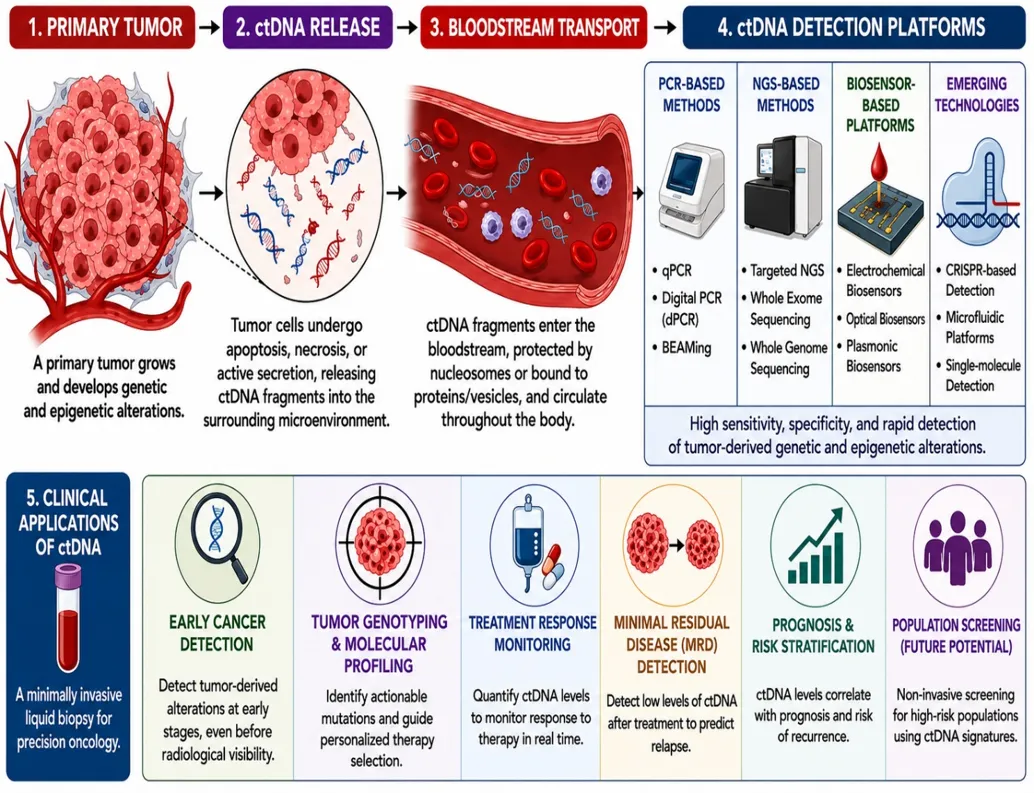
1.1 Circulating Tumor DNA (ctDNA)
The term is used to describe the DNA DNA is used to describe the DNA fragments of DNA bits of DNA. A unique triple-circulating amplification system that combines entropy, enzyme cascade driven 3D DNA walker, and Branched Hybridization Strand Reaction (B-HCR) was created in order to identify ctDNA associated with breast cancer, specifically a PIK3CAE545K mutation. DNA walkers have gained popularity as an amplification strategy because of their higher DNA load, which increases interaction efficiency. In the work presented, the target activated a DNA walker, which initiated a Strand Displacement Reaction (SDR). Triggers that cleaves Color production was noticed when hemin, H2O2, and ABTS were introduced. With a detection limit of 0.65 fM, the method showed outstanding specificity(11). Even though CTCs originate from primary tumors, they differ from the origin cells in that they have stemness traits and epithelial-to-mesenchymal transition (EMT) properties that allow them to leave the parent tumor and enter the bloodstream, increasing their capacity to start metastasis. Three main categories can be used to describe the molecular processes that CTCs go through in order to spread from the originating site, enter the bloodstream, and colonize to create a secondary tumor: a) Angiogenesis and Intravasation, b) Survival Maintenance, and c) Extravasation and Colonization(14).
Table 1 Cancer Biomarkers and Clinical Needs(13)
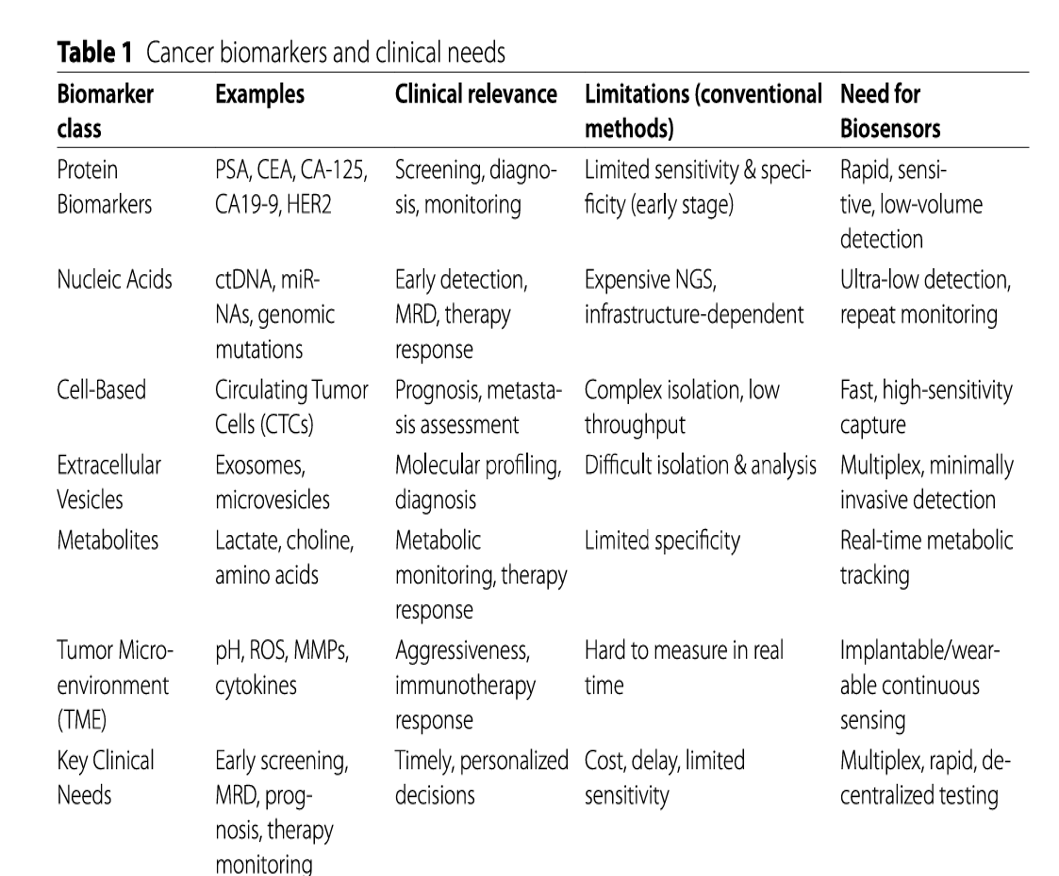
Preanalytical variables encompass all steps that occur before the analysis of ctDNA samples and are crucial in determining the integrity, purity, yield, and suitability of ctDNA for subsequent analyses.Although these factors are vital, they are frequently neglected during validation, which can compromise the reliability of the results.It is essential to develop standardized preanalytical protocols to ensure consistency and accuracy in ctDNA analysis(35).
1.3 Limitations of ctDNA Analysis in Clinical Practice
Currently, ctDNA's primary clinical function is to assess therapy response in individuals with a history of cancer, such as breast, lung, or colorectal cancer. Nonetheless, this liquid clinical clinical clinical clinical method. Standardization for liquid biopsy sample collection and analysis, as well as clinical and laboratory recommendations for the best times to collect samples, are currently lacking. Additionally, it is still unknown. What are the optimum times to sample following cancer treatment in order to predict clinical relapse? The outcomes of ongoing clinical trials may also be impacted by these restrictions. Additionally, ct biopsies may be limited by liquid liquid biopsies. Crucially, patient comorbidities, especially chronic illnesses, inflammatory illnesses, and illnesses involving cell proliferation, may cause confusing DNA data(12).
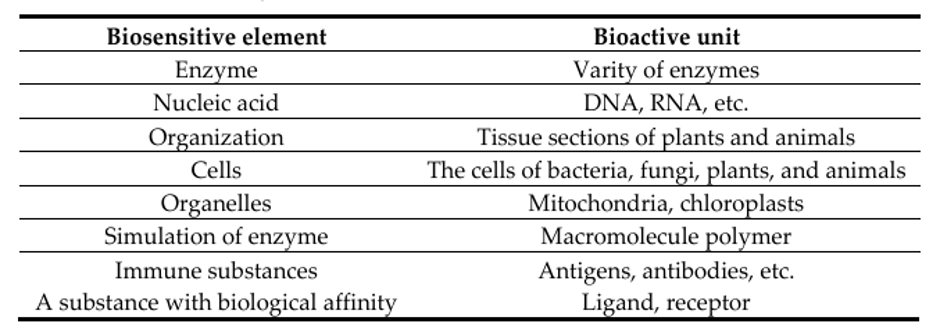
Table 2 Biosensitive element and Bioactive Unit(15)
1.4 Assays and biosensors
Enrichment and detection using chip-based systems
The analysis of circulating tumor cells (CTCs) involves a complicated process.
In 1 mL of whole blood, the number of CTCs is generally fewer than 10, compared to 10 million white blood cells and 5 billion red blood cells.To examine these special cells, it is necessary to use complex enrichment techniques to determine their molecular and functional features. Improving CTC enrichment methods involves a detailed evaluation of various factors, including recovery efficiency (the percentage of target cells that are successfully isolated), enrichment purity (the ratio of CTCs to other cells), the preservation of cell viability, the capacity to process a large number of samples, pre-analytical conditions, costs, and the reproducibility of the results.When selecting the best enrichment method, all these factors should be considered carefully and aligned with the needs of the next steps in research, such as molecular analysis, functional testing, or clinical diagnosis.
At present, there are two primary methods for enriching CTCs: biological methods, which depend on the biological features of cells, and mechanical (biophysical) methods, which are based on physical properties. Biological methods use differences in the expression of cell surface markers, such as epithelial cell adhesion molecule (EpCAM) and CD45.They also consider metabolic activity and the ability of cells to invade other tissues.In contrast, biophysical methods rely on physical characteristics of CTCs, such as their size (typically between 12 to 25 micrometers in diameter, compared with 8–12 micrometers for white blood cells), density, electrical properties (membrane capacitance and cytoplasmic conductivity), and mechanical deformability(38).
2.1 Electrochemical biosensors
Sensors are devices that capture physical, chemical, or biological changes and translate them into measurable signals. Electrochemical nano-biosensors represent a main type of CTM detectors. These devices convert biomolecular binding into electrical signals (impedance, voltage, or current) (27). They have a transducer that converts the reaction into an electrical readout and a recognition element that can identify a particular analyte or a group analyte without interfering with other sample components.
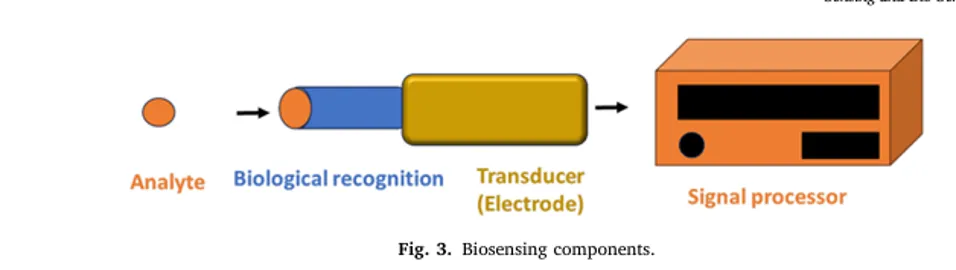
Different kinds of sensors are classified according to the analyte to be measured or the physical contact (substance). These include piezoelectric sensors, optical sensors, chemical sensors etc. Currently, one of the most researched areas for disease diagnosis and biomarker detection is the multidisciplinary field of biosensors. The majority of biosensors employ electrochemical detection for transducers due to their affordability, usability, portability, and straightforward design. Electrochemical biosensors are the most widely used transducers for cancer detection. Furthermore, recent research on cancer employing electrochemical sensors has demonstrated success with extremely high sensitivity and specificity in both buffer and serum samples. Thus, this part will provide a detailed discussion of several forms of electrochemical biosensing. A type of chemical sensors known as electrochemical biosensors combines the sensitivity of electrochemical transducers with great specificity in the biological recognition process, as demonstrated by low detection limits. Enzymes, proteins, antibodies, nucleic acids, cells, tissues, and receptors are examples of biological recognition components that are typically included in these devices. These components react selectively with target analytes to produce electrical signals that are correlated with analyte concentrations. Electrochemical techniques are grouped into five basic categories: amperometry, voltammetry, conductometry, impedimetry, and poten tiometry(17).
2.2 Optical biosensors
Light wavelength fluctuations are monitored by optical biosensors. Fluorescent, luminescent, colorimetric, and interferometric versions of these transducers are available. In response to the analyte's perception, optical transducers convert wavelength changes into electrical measurements and digital data. Many biological and chemical compounds can be identified directly, instantly, and without labeling using optical biosensors, which provides a substantial advantage over current analysis methods. The application of optical biosensors in cancer diagnostics has been studied by Griffin, Bohunicky Mousa, Mittal et al. Pancreatic cancer can be detected early with the use of optical biosensors. The study also gives information on the current breakthroughs in lateral flow biosensors (LFBs), surface plasmon resonance (SPR), and other methods for finding PDAC biomarkers(18)
2.3 Piezoelectric Biosensors
These sensors work by detecting slight mass changes on a surface through the oscillation of crystals. leading When combined with nanostructured coatings, they provide more surface area, to better sensitivity molecules(23)
2.4 Electroanalytical biosensors
The biomolecular recognition element, which has the capacity for molecular recognition, is one of the two primary components of biosensors, as Table 1 illustrates. In order to identify the target analyte with high specificity, biosensors employ a bioactive unit as their bio-sensitive component. Enzymes, nucleic acids, mimicked enzymes, immunological compounds, etc. are examples of the biomolecular recognition components of the ctDNA biosensor. Physical adsorption, covalent bonding, embedding, self-assembled membranes, affinity, and other techniques can be used to fix biomolecular probes on the surface of a biosensor. The second component is signal conversion, or the transducer, which primarily consists of optical, electrochemical, and thermistor detecting components. They can translate the biological reaction into electrical signals which may be further amplified and processed to provide the concentrations of the target analytes. Consequently, ctDNA detection methods can be constructed using a range of surface modification strategies and transducers(25) .
2.5 miRNAs as a target for biosensor
Micro-ribonucleic acids are known to be involved in several physiological processes. In malignant cells, they are highly common. It is believed that the majority of the majority of the majority of genes are involved in the origin, prognosis, and microRNAs. The development of different stages of cancer is therefore directly dependent on the abnormal function of these biomolecules. MiRNAs play a major role in immune system regulation. Some miRNAs are specific to tumors. Because miRNA levels vary according to the stage of cancer, measuring them can be a useful diagnostic method. Furthermore, the pathogenic pathogenic process of metastasis is involved. However, miRNA-141 suppresses cancer cells by inhibiting their motility, invasion, and division. It also frequently raises the level of this biomarker. Researchers is employed a biosemi-Carbon(26).
2.6 GMR Biosensors for Tumor-specific Protein Biomarkers Detection
Garner-specific biomarkers have garner-specific biomarkers that are particular to cancer. Biomarkers are special molecules that can detect the presence of cancer or offer information about how the illness progresses and how well a treatment is working. Become can be created. Using immunoassays and molecular diagnostics, researchers and medical professionals have made significant strides in recognizing these markers with high sensitivity and specificity. Early cancer identification allows for timely intervention and treatment initiation at earlier stages, when outcomes are usually more favorable, by finding tumor-specific protein biomarkers. These markers are also crucial for developing personalized treatment plans that enable doctors to tailor therapies to each patient's particular cancer profile. All things considered, there is a great deal of promise to improve patient survival rates and the overall effectiveness of cancer care strategies through the use of tumor-specific protein biomarkers for cancer diagnosis and screening(33).
Wearable biosensors including microneedle arrays, smart textiles, and epidermal patches are redefining the temporal component of cancer diagnosis. These platforms enable for continuous monitoring of biomarkers such cytokines, metabolic signatures, or circulating tumor DNA (ctDNA), in contrast to episodic testing. RESP for treatment is a real-R. Recent advances in flexible electronics, biocompatible substrates, and wireless telemetry have made wearable biosensors more comfortable, inconspicuous, and clinically dependable. Through connectivity with smartphones or cloud dashboards, patients and doctors may see trends, get alerts, and manage treatment remotely(26).
PCR-Based technologies
Traditional PCR-based methods are easy to use and reasonably priced. However, most of these methods have several shortcomings, such as low sensitivity, limited optimization, and the ability to detect only previously discovered genes and mutations. The sensitivity of digital users has increased. This dependable technique allows for the precise and accurate measurement of target molecules by diluting the sample and splitting it into many compartments. The other PCR is necessary for BEAMing. BEAM is useful for accurately screening template DNA diversity by determining the proportion of certain mutations in the DNA population. These techniques excel in the accurate identification of point mutations, even at rates as low as O. 1%. Over the past 10 years, there has been a significant increase in research on the application of ctDNA for early cancer diagnosis(19).
Businesses worldwide are researching and creating diagnostics to detect pancreatic and liver cancers in their early stages in an effort to save lives and improve patient outcomes. in the class of regulation. Class II (moderate risk) requires FDA 510(k) clearance, Class III (high risk) requires FDA approval, and Class I (low risk) does not. There is also the FDA breakthrough device program that speeds up development, evaluation, and review for pre-market approval, clearance, and De Novo marketing author ization for devices that deliver more effective diagnosis of cancer than other devices presently on the market. A few tests that have received such FDA designations are Thermo Fisher’s BRAHMS CgA II KRYPTOR test, that is the first and only FDA-cleared, fully automated chromogranin A assay used to detect gastro entero pancreatic neuroendocrine tumors 205 and also an AFP-L3% immunological test system that was cleared by the FDA in 2005 for the risk assessment of HCC. A few other tests, notably GRAIL's Galleri test in 2019 and, more recently, Burning Rock Dx's OverC test in 2023, have also been recognized as FDA breakthrough devices. and 207 A variety of companies that are looking at early cancer detection for liver and/or pancreatic cancer are studied in order to show the expansion and diversity within this emerging field(20).
Cancer diagnosis and therapy are undergoing a paradigm shift due to the advancement of non-invasive technologies that enable real-time tumor biology monitoring. As liquid biopsy technologies evolve, advances in microfluidics, nanotechnology, artificial intelligence (AI), and multi-omics integration are boosting the accuracy, sensitivity, and clinical utility of CTC-based diagnostics. The fact that CTCs are increasingly acknowledged as important real-time indicators for tracking illness, guiding treatment, and predicting metastasis further emphasizes their critical role in precision oncology. On the other hand, the development of the molecular characterization of the molecular the circulation. In order to provide cell enrichment. Nanotechnology-driven techniques using functionalized nanoparticles in conjunction with CTC-specific biomarkers have simultaneously enhanced high-affinity capture and multi-modal characterization of CTCs spanning genomic, transcriptomic, and proteomic dimensions. Treatment(32).
The initial method involved using CRISPR-Cas9 to remove the wild-type DNA sequence, taking advantage of the specific cleavage ability of Cas9.
This system cuts the wild-type EGFR DNA at a site near a PAM sequence, while leaving the mutant EGFR DNA (specifically, the exon 19 deletion variant) untouched.After this targeted cutting, the remaining mutant DNA strands are amplified through PCR, which increases the amount of mutant fragments and improves the ability to detect them, even at very low levels—down to an allele frequency of 0.01%—using Sanger sequencing.A PCR performed after cleavage showed a 1000-fold improvement in signal compared to unprocessed samples, making it suitable for enhancing the detection of low-abundance cfDNA targets.29 Building on this, Boyeon Kim and colleagues developed CRISPR-CPPC (CRISPR combined with post-PCR cfDNA), which targets the T790M resistance mutation in the EGFR gene.This mutation often develops in patients after treatment with first or second-generation tyrosine kinase inhibitors (TKIs), leading to drug resistance.Detecting this mutation through cfDNA enables timely therapeutic adjustments.In the CPPC system, PCR is carried out before cutting the wild-type sequences using a Cas9–sgRNA complex.This approach effectively avoids the problem of DNA fragmentation, which can interfere with PCR amplification if cleavage occurs before amplification.The sample was then quantified using ddPCR, resulting in a 13-fold increase in signal and a significant improvement in detection sensitivity, rising from 43.8% with ddPCR alone to 93.8% when CRISPR was combined with ddPCR.30 Although CRISPR-CPPC provides substantial enrichment, its need for an additional PCR step and ddPCR for quantification still adds complexity to the workflow(44).
CONCLUSION
Currently, liquid biopsy is considered one of the most advanced non-invasive diagnostic methods that can carry out key clinical actions that may lead to precision medicine. Historically, the use of liquid biopsy in characterizing cancer patients has mainly focused on CTCs. However, more recently, the analysis has expanded to include cell-free DNA (cfDNA) and microRNAs (miRNAs), which have been shown to be associated with cancer and have potential applications in early diagnosis, staging, prognosis, prediction of treatment response, assessment of treatment outcomes, and monitoring during therapy. Liquid biopsy measures changes in gene structure, regulation, and expression, which are characteristic of cancer. These biomarkers include nucleotide variations, promoter methylation, copy number variations of specific genes, chromosomal rearrangements, mutations affecting transcription, splicing, and RNA maturation, as well as differences in miRNA signatures. The analysis of all these parameters can be approached using various technological platforms. Furthermore, the main advantage of liquid biopsy is that it avoids several critical issues related to invasive surgical biopsies. These include, but are not limited to: i) a limited representation of tumor pathology based only on tissue sampling; ii) ethical and practical challenges with repeated tissue biopsies; iii) tumor heterogeneity, especially during disease progression and metastasis (which often requires multiple samples); and iv) easier patient monitoring using non-invasive procedures like liquid biopsy. While liquid biopsy has certain limitations, such as the fragmentation of cfDNA, instability of RNA, low yield of isolated samples for analysis, and the variable presence of normal DNA and RNA, it is still generally regarded as highly promising for future applications, patent development, and clinical trials. These will eventually confirm the potential of liquid biopsy in cancer. It is not expected that liquid biopsy will replace surgical biopsy; however, within a few years, it may complement the information obtained from excisional, incisional, surgical, and needle biopsies, becoming a preferred tool for monitoring patients during treatment and for long-term health surveillance. The use of diagnostic, predictive, and prognostic biomarker models forms the basis for personalized cancer therapies. Biomarkers must be reliable, robust, and reproducible, and the collection of specific biomarkers alone cannot capture the full picture of oncological treatment. Although progress has been made in molecular imaging and blood-based testing, biomarker analysis in oncology still mainly relies on molecular tissue laboratory testing. A precise molecular characterization of cancer cells within a tumor requires the identification of specialized markers and the use of appropriate enrichment techniques. New technologies in genomics, transcriptomics, proteomics, and epigenomics, along with the development of new single-cell methods, will help in more accurately identifying biomarkers(39-41).
REFERENCES




Ashvin Dudhrejiya, Krishna Tandel, Amit Vyas, Harshil Jadav, Abhishek Pandey, Emerging Biosensing Technologies for Circulating Biomarkers in Precision Cancer Diagnostics, Int. J. of Pharm. Sci., 2026, Vol 4, Issue 10, 1633-1645, https://doi.org/10.5281/zenodo.23332679
 10.5281/zenodo.23332679