View Article

  • Emulgel: A Novel Approach for Topical Drug Delivery System

  • 1,2,3,4 Student of Ashokrao Mane Institute of Pharmaceutical Sciences and Research, located in Save. Shahuwadi, Kolhapur, Maharashtra.

    5 Student of Sant Gajanan Maharaj College of Pharmacy, located in Mahagaon, Kolhapur, Maharashtra.

    6 Student of Annasaheb Dange College of Pharmacy (ADCBP), located in Ashta, Sangli, Maharashtra. .

Abstract

A gel is a kind of mix where the main part is a fluid, which is about 99% of what it weighs. Mostly made of a weak system with parts that link together, a gel stays solid and does not move easily when things are steady. A big problem is that it's hard to give drugs that don't mix with water. To fix this issue, a new method using a mix-based plan is now being used. This way, even things that don't like water can use the special things about gels. An "emulgel" is what you call it when you mix a gel and a mix together. Emulgels are a really interesting way to put drugs on the skin, because they can release things in two ways, acting like both a gel and a mix. A normal mix changes into an emulgel when you add a gel-making thing to the water part. Emulgels made for putting on skin have many good points, like being easy to spread and remove, not being oily, adding water, not staining, mixing with water, staying stable for a long time, being safe for the body, being clear, and looking good. Emulgels are used a lot to help with pain and to fight and treat with fungus problems.

Keywords

Emulgel, Gel, Emulsion, Emulsifier, Topical Drug Dilevery System, Approches, Process of Formulation, Evaluation

Introduction

× Popup Image

Putting medicine for the skin directly on it, usually in a cream, is called topical drug delivery, and it's a good way to handle skin problems. This way of giving medicine is often chosen when other ways, like swallowing a pill, putting it under the tongue, using a suppository, or getting a shot, aren't the best option, or when the problem is just on the skin, like a fungal infection. A big plus of using medicine on the skin is that it doesn't go through the body's first filtering process. Emulgels, which are used on the skin, are great because they become less thick when stirred, aren't oily, are easy to apply, are easy to wash off, add moisture, don't leave marks, can be dissolved in water, last a while, are good for the environment, are see-through, and look nice. [1,2,3]
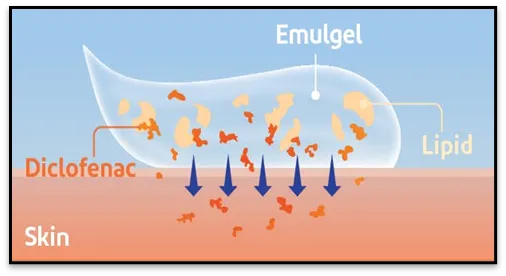


Figure: Structure of emulsion

Giving medicine to the body by putting it on the skin, eyes, rectum, or vagina is known as topical medication delivery. These methods include many different products used for both looking good and keeping skin healthy, whether the skin is problem or has a normal. [4,5]

When mix gels and emulsions, we get a type of medicine called Emulgels. When a gelling ingredient is added to the water part of an emulsion, it turns the emulsion into an emulgel. The oil-in-water method grabs drugs that are oily, while the water-in-oil method grabs drugs that dissolve in water. [6,7]
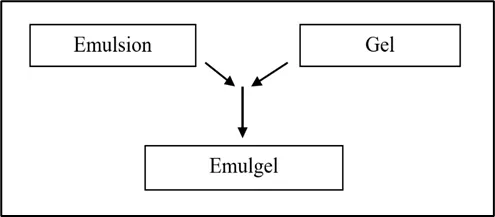


Figure: Emulgel Process

Emulgels are a kind of emulsion, either oil-in-water or water-in-oil, that becomes a gel when mixed with something that makes it gel. Gels are like frameworks made of polymers, and the emulsion helps control how the medicine is released, letting the drug particles slowly go into the skin. [8]

So, emulgels are a combination of emulsions and gels, giving a double way to control how drugs that don't dissolve in water are released. One issue with putting medicine on the skin is that it can be hard for the skin to absorb it, because there's a lot of active medicine in it. [9,10]
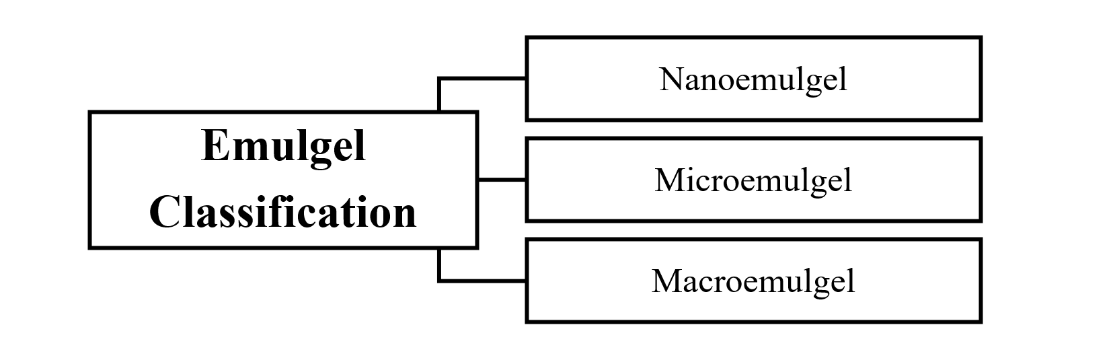


Figure: Emulgel Classification


1. Drug Delivery across the Skin:

The skin is a large area and a sensible option for giving medicines. However, its natural features create some problems concerning whether it is right for this use. The skin, being the biggest part of the body, makes up about 16% of the body's weight and covers an area of about 1.8 m2.[2]

The epidermis, which is the top layer of the skin, is made of a layered, tough covering of cells. Its thickness changes in different parts of the body. The skin is a very important place to find and take care of different skin problems. For medicines to soak in well through the skin, they should be dissolved, mix well with both fats and water, and not be charged particles. [11,12]

Most of the time, medicines take a difficult path around dead cells and through the oily layer to get to the living parts of the skin. Lotions and gels, put on the skin by rubbing, have been used for a long time to give pain relief and fight germs in the body's affected areas. Some examples are gels and lotions made to treat yeast infections in the vagina, lotions for skin infections, and lotions to help with pain from arthritis.[12]
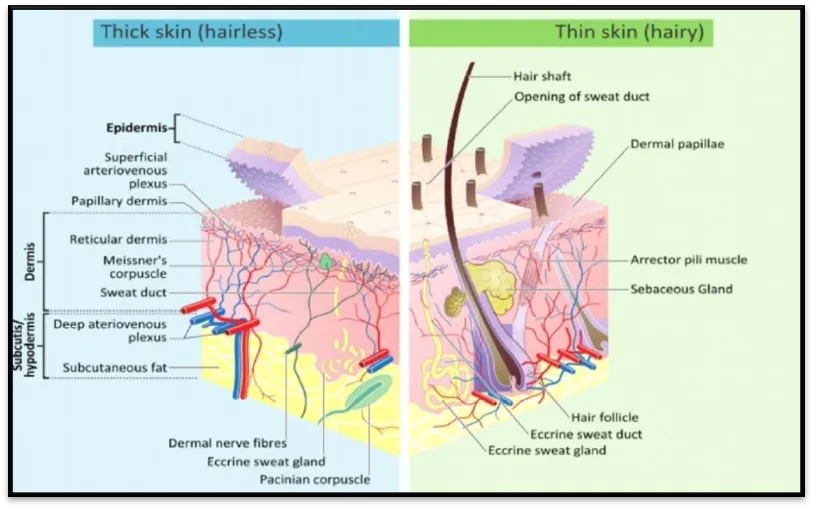


Figure 4: Structure of Skin


Different methods, like nanoemulsions, microemulsions, and proniosomal gels, are used to put oily medicines on the skin. In a system that puts medicine on the skin, the drug moves out of the system, gets to where it needs to work, and then is soaked up by the skin. [8]

Adding a thickening ingredient to the water part changes a regular emulsion into what is called an emulgel. Both kinds of emulsions, oil-in-water and water-in-oil, are used to carry different medicines to the skin. Emulgels made for skin use have many good qualities, such as being able to change thickness, not feeling greasy, being easy to spread and wash off, softening the skin, not staining, lasting a long time on the shelf, being safe for the body, being clear, and looking good. To use skin medicines well, it is important to know what affects how they soak into the skin. Molecules get into the skin through three different ways: right through the unbroken outer layer, through sweat glands, or through oil-producing openings. A gel is known by the tension on the surface between a liquid colloid’s normal weight of 99% and a big, connected network of threads made from a small amount of jelly-like stuff.[13]

Getting through this outside part is the slowest part of skin absorption. The main things that happen in skin absorption are creating a difference in how much medicine there is, which pushes the medicine through the skin, letting the medicine go from what it's mixed with, and the medicine moving through the different skin layers. The best qualities for skin medicines are being small (600 Da), able to dissolve well in oil and water, and good at separating into the skin. Unless they are tiny, watery ions and molecules with a charge cannot get through the unbroken outer skin layer. Skin products can change how well the skin protects; for example, skin antibiotics and infection fighters make a weak barrier stronger against infection, sunscreens and the outer skin layer protect living tissue from UV rays, and softening creams make a dry outer skin layer soft again. [14]

Consideration To Make Topical Preparation

Making a medicine that helps requires knowing the ingredient's traits (like how well it dissolves, how big it is, and if it can handle acid), how it will be used based on the sickness and how thick it should be for that use (like spreading a lot, putting it on your head, nails, thin insides, face, hands, or feet), whether you can use ingredients and still follow the rules (like drug laws, patents), and what the packaging needs and how long it can be used (like not getting germs, not changing its parts, and keeping its look and flavor). [15]

1. The Ingredients of Topical Preparation [16,17]

  1. How well a medicine works can change based on how it's carried into the body. For instance, when something seals in the medicine, it can get deeper into the skin, making the treatment work better. The way it's delivered can also give extra benefits, like making the skin feel cooler, drier, softer, or safer.
  2. It's key to choose the right type of medicine for the exact skin problem you're trying to fix. Like, don't use thick, greasy creams on skin that's already very wet or leaking fluids.
  3. Where you're putting the medicine should help you decide which type of medicine to use. For instance, gels or light creams work better on body parts that have a lot of hair.
  4. Some medicines might cause skin to get irritated or cause allergic reactions in some people. Usually, creams that have water mixed in oil are less likely to irritate the skin. On the other hand, gels are more likely to cause irritation. Creams are a good choice for people allergic to preservatives because they usually don't have them.

 2. Consideration of Topical Preparation: [18]

  1. Drug dose should be low i.e. less than 10 mg.
  2. Weight of Molecular of drug should be 400 Da or less.
  3. Half-life of drug 10 hr or less.
  4. Partition coefficient i.e. Log p (Octanol-water) between 0.4-0.8.
  5. Having a skin –permeability coefficient more than 0.5 × 10⁻³ cm/hr.
  6. Oral bioavailability and therapeutic index should be low.

3. Some Other consideration of Topical Preparation: [19]

  1. Thickness and integrity of the stratum cornea epidermidis.
  2. Size of the molecule that is to be administered.
  3. Drug metabolism by skin flora.
  4. Lipid solubility.
  5. Drug depot in skin.

Topical Drug Delivery System

1. Advantages [20,21,22]

    1. Clear of the primary pass metabolism.
    2. It is simple to stop taking the drug.
    3. Simple to apply and utilize.
    4. Prescriptions sent to designated locations.
    5. There will be no gastrointestinal incompatibility.
    6. Avoidance of first pass metabolism Convenient and easy to apply.
    7. Avoidance of the risks and inconveniences of intravenous therapy and of varied conditions of absorption, like pH changes, presence of enzymes, gastric emptying time.
    8. Improve patient compliance.
    9. Providing utilization of drugs with short biological half-life, narrow therapeutic window.
    10. Incorporation of hydrophobic drugs.
    11. Better loading capacity.
    12. Better stability.
    13. Controlled release.
    14. No intensive sonication.
    15. Avoiding first pass metabolism.
    16. Avoiding gastrointestinal incompatibility.

2. Disadvantage [23,24]

  1. The potential for skin irritation when the product is applied.
  2. Certain medications that have low permeability don't pass through the skin.
  3. Skin irritation of contact dermatitis may occur due to drug or excipients.
  4. Poor permeability of some drugs through the skin.
  5. Possibility of allergenic reactions through the skin emulgel.

3. Objective of TDDS [7,10,14]

1. Localized Therapeutic Effect

The main goal is to keep the drug's action limited to the skin's top or specific parts when treating skin issues like acne, psoriasis, eczema, or fungal problems, which lets a strong, local amount of drug be present where it's needed most.

2. Avoidance of First-Pass Metabolism

TDDS tries to bypass the breakdown of the drug by the stomach and liver first, which can greatly lessen the drug's amount and lower how much is available before it gets into the body's general blood flow.

3. Reduction of systemic side effect

A key goal is to lower the amount of drug that ends up in healthy body parts and organs that aren't being targeted, greatly reducing the chance of harmful side effects throughout the body compared to swallowing medicine.

4. Controlled and Sustained Drug Release

For both treatment in one spot and across a large area, an important goal is to make drug combinations (like skin patches or new nanocarriers) that can hold the drug at a treatment level within a certain range for a good while.

5. Enhanced Patient Compliance

The fact that skin-based methods don't require needles and are easy to use (apply yourself) is meant to increase how much patients like and stick to the treatment plan they're given.

6. Overcoming the Skin Barrier

The drug creation goal is to effectively allow the medicine to get past the strong barrier of the stratum corneum (the skin's top layer) to reach the deeper area it needs to, often needing things that help it get through or advanced systems (like liposomes or nanocarriers).

4. Key Feature of Topical Preparation: [11,16,18]

  1. Direct Target.
  2. Reduced Systemic Absorption.
  3. Bypassing the Liver Metabolism.
  4. Minimized Toxicity.
  5. Ease of Use.
  6. Cross Skin Barrier.
  7. Variability of Formulation as per Use.
  8. Reduce Local Irritation.
  9. Variety of Dosage Forms (Ointment, Cream, Gel, Lotion, Paste).

Emulgel:

1. Advantages of Emulgel [25,26,27]

      1. Incorporation of hydrophobic drugs.
      2. Better loading capacity.
      3. Better stability.
      4. No intensive sonication.
      5. Controlled release.
      6. Production feasibility and low preparation cost
      7. Avoidance of first pass metabolism.
      8. Avoidance of gastrointestinal incompatibility.
      9. More selective to a specific site.
      10. Improve patient compliance and suitability for self- medication.
      11. Providing utilization of medication with short biological half-life and narrow therapeutic window.
      12. Ability to easily terminate medication when needed.

2. Disadvantages of Emulgel [28,29,30]

  1. Skin irritation on contact dermatitis.                   
  2. Bubbles formed during emulgel formulation.
  3. Possibility of allergenic reactions.
  4. Drugs having large particle size (>400 Da) are not easily absorb or cross through the skin barrier.
  5. The larger particle size drugs not easy to absorb through the skin.
  6. Poor permeability of some drugs through the skin.
  7. Can be used only for drugs which require very small plasma concentration for action.
  8. An enzyme in the epidermis may denature the drugs.
  9. Skin irritation of contact dermatitis may occur due to drug or excipients.

Different method to enhance drug penetration and absorption:

1. Iontophoresis:

The use of electric current to improve the skin's ability to absorb medications applied topical is known as iontophoresis. While an indifferent counter electrode is positioned elsewhere on the body, the drug is applied using an electrode that has the same charge as the drug. The active substance is successfully driven into the skin and repelled by active electrode. [31,32]

2. Ultrasound:

The ultrasound, also known as sonophoresis, is a method of increasing the absorption of topical substances (transdermal administration) into the epidermis, dermis, and subcutaneous tissues. Ultrasound waves create micro-vibrations inside the skin epidermis, increasing the overall kinetic energy of molecules in topical treatments, resulting in sonophoresis. In hospitals, it is commonly used to give medications through the skin. [33]

3. Elelctroporation:

Electroporation is a method used to introduce drugs or genes into cells by applying brief, intense electric pulses that temporarily make the cell membrane more permeable, enabling substances that would typically be unable to cross it to enter the cell. When the substances being moved are chemotherapy drugs, this method is referred to as electro-chemotherapy, while if the substances are DNA, it is termed gene electro transfer. [34]

4. Radio-Frequency:

This involves putting skin in contact with a fast-changing electrical flow that goes back and forth at 100 kHz, causing tiny heated pathways to form in the skin's layer, like what occurs with laser light. How many tiny pathways are created and how deep they go, based on the features of the tiny electrical parts used in device, controls how fast medicine is given. [35]

5. Magnetophoresis:

Magnetophoresis is a technique that employs a magnetic field to improve the uptake of medication across biological barriers. Magnetophoresis has been shown to enhance transdermal drug delivery in both in vitro and in vivo studies. [36]

6. Microporation:

Microporation is a procedure in which microneedles are inserted into the skin and puncture only the stratum corneum, increasing skin permeability. Microneedles are needles with a length of 10 to 200 metres and a width of 10 to 50 meters. [37]

Factors affecting topical absorption of formulations [38,39]:

There are two type of factors which affecting topical absorption of formulation.

1. Physiological factors

  1. Skin Moisture: When skin has more moisture, it usually soaks things up better because the top layer gets bigger, making it easier to pass through.
  2. Skin pH: How acidic or basic the skin is changes how a medicine breaks down, which then changes how well it's absorbed (like we talked about with chemical properties).
  3. Amount of hair openings: These act like different ways for things to get in, especially for bigger things. More of them can mean more absorption.
  4. Blood flow: When blood flows faster in the skin, it gets rid of the drug that was absorbed faster, which helps more of the drug keep getting absorbed.
  5. How much fat: Fats are a big part of what keeps skin safe. How much is there can change how well things get through, mostly for drugs that like fat.
  6. Skin thickness: Skin that's thicker (like on hands and feet) usually works better at keeping things out, so less gets absorbed compared to skin that's not as thick.
  7. Skin swelling: When skin swells up, what keeps things out is often messed up, so more stuff gets absorbed, and sometimes you can't guess how much.

2. Physiochemical factors

  1. How ionized it is (only drugs not ionized are absorbed well): Drugs can be either ionized (have a charge) or unionized (have no charge). Usually, the unionized type dissolves better in fat and can easily go through the skin barrier's fatty layers. How much of each type there is depends on the drug's traits and the skin's pH level.
  2. Size of the molecule: In most cases, molecules need to be small (usually under 500 Da) to get through the stratum corneum without problems. The diagram points out that molecules smaller than 400 Da are absorbed best.
  3. How it separates: This tells us how well a drug dissolves in oil (fats) compared to water. To be absorbed well, a drug should dissolve in fats enough to pass through the skin's fat layers but also dissolve in water enough to mix with the skin's watery layers.
  4. How it's carried: The substance (like a gel, cream, patch, or ointment) that carries the drug is very important. A carrier can: Change how quickly the drug is released onto the skin's surface. Add water to the skin (like an ointment does), which helps it absorb better. Work as a co-solvent that changes the skin's barrier features.

Formulation of Emulgel [40,41]

For the preparation of emulgel some constituents are used including drug, which are:

1. Vehicle

Vehicle should follow the ideal characters given in the Pharmacopeias.

2. Aqueous material

The aqueous phases used are water, alcohol, etc.

3. Oil

Oils are used for preparation of emulsion. Mineral oils and paraffin are used either alone or in combination.

4. Emulsifiers

Emulsifiers used for preparation of emulsion. Some examples are span 80, tween 80, stearic acid, sodium stearate.

5. Gelling agents

Gelling agents are used for prepare gels, which enhance consistency of preparation.

6. Penetration enhancers

Penetration enhancers help to absorb drug to the skin.

7. pH adjusting agent

a) Preparation of drug loaded nanoemulsion:

The clear oily part was created by combining menthol, camphor, and methyl salicylate with linseed oil. Exactly 0.6gm of NSAIDs was consistent across all chosen combinations, and it dissolved within the oily part of the nanoemulsion blend. The watery part was prepared by dissolving tween 80, propylene glycol, and PEG 400 in purified water while mixing with a magnetic device. Afterward, the watery part was blended with the oily part utilizing a magnetic stirrer at 1000 rpm for half an hour, resulting in nanoemulsions containing NSAIDs inside.

Note: To formulate NSAIDs nanoemulsions, camphor functions as a natural penetration enhancer in formula F1, and it is replaced in formulas F0, F2-F5, using other natural enhancers such as Eucalyptus oil, Turpentine oil, Neem oil, and Tulsi oil.
b) Formulation of NSAIDs nanoemulsion based Emulgel

1gm of Carbopol 934, selected as the gelling agent, was added to a sufficient amount of purified water. After thorough mixing, the carbopol 934 was kept in darkness for twenty-four hours to swell completely. Triethanolamine was incorporated into the swollen Carbopol 934 to adjust the gel's correct pH value. NSAIDs nanoemulsion blends were obtained and incorporated into the gel, and nanoemulsion emulgels were produced following mixing with a stirrer for fifteen minutes at 250 rpm.

Method of Preparation of emulgel [3]
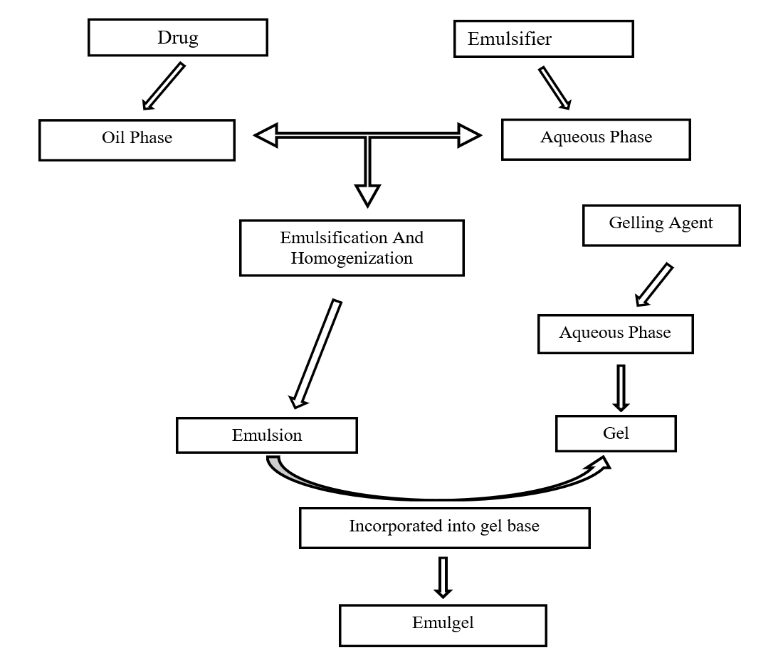


Figure: Process for formation of an Emulgel


STEP 1: Preparation of Emulsion either O/W or W/O

STEP 2: Formulation of gel base

STEP 3: Mixing of emulsion into gel base with continuous stirring

Evaluation and characterization:

1. Physical Examination

The prepared emulgel formulations are inspected visually for their color, homogeneity, consistency and phaseseparation. [41,42]

2. Photo microscopy

To examine the round forms within the gel's basic composition, the best group of emulgel was examined under a light microscope. The emulgel was carefully thinned, set on a piece of glass, and examined under a 40x magnification light microscope.

3. Globule size

The globule size obtained was determined using Zetasizer (Malvern Instrument 3000 HSA, UK). The sample was suitably diluted and the globule size was measured at 25 0C.

4. Rheological studies

The different emulgel mixtures' thickness is checked at 25 degrees Celsius using a device with a cone and flat surface, along with a specific part numbered 52, made by Brookfield Engineering Laboratories, and it's hooked up to a water bath that keeps the temperature steady. [43]

5. Determination of pH

The pH measurements were done using a digital pH meter (Thermo scientific) which was calibrated with standard buffer solutions. The measurements of pH of each system were replicated three times [44]

6. Determination of viscosity

The viscosity of the prepared formulations was determined at ambient temperature using Brookfield digital viscometer (DV-II +Pro) with spindle no. 96 at 0.1, 0.5, 1 and 1.5 rpm.

7. Determination of thixotropic characteristics

The formulations were subjected to different rates of shear using GEMINI 200: Rheometer, at constant temperature (250C). the measuring system employed was the cone and plate system having 40 mm diameter and 40 angles. The rheogram was constructed by plotting rate of shear against shear stress.

8. Swelling Index

A single gram of the emulgel is put in a thin aluminum sheet and then put by itself into 50 ml container holding ten milliliters of point one N NaOH. After that, the samples are taken out at various times and measured again to see how much they weigh.

Swelling index is worked out like this: Swelling index (SW) % = [(Wt-Wo)/Wo] × 100

Here,

Wt = Weight of the emulgel after it has soaked for a time,

Wo = The emulgel's starting weight at the beginning. [45]

9. Spreading Coefficient

How well something spreads is found using equipment changed a bit in the lab and used for checking. It has a wood piece, which has a wheel at one side to help move things. Using this way, how well something spreads is learned from how easily it moves and how much it resists moving when it’s a thick mix. A glass piece with a rough surface is stuck on this wood piece. Too much of the thick mix (about 2 grams) being tested is put on this rough glass piece. Then, the thick mix is squeezed between this glass piece and another glass piece that’s the same size as the rough one and has a hook on it. A weight of 1 kg is put on the two glass pieces for 5 minutes to get rid of air and to make the thick mix spread evenly between them. Any extra thick mix is taken off from the sides. The top glass piece is then pulled with a force of 80 grams. Using a string tied to the hook, the time (in seconds) it takes for the top glass piece to move 7.5 cm is recorded. Less time means it spreads better. [46,47]

10. Drug Content Determination

Take one gram of the special gel. Put it together with a liquid that works well. Clean it to get a see-through liquid. Find out how much light it absorbs with a special machine. A reference chart for the medicine is made using the same liquid. The amount of medicine inside can be learned by using the same reference chart after finding the absorbance value.

Drug Content = (Concentration × Dilution Factor × Volume taken) × Conversion Factor.[48]

11. Skin Irritation Test (Patch Test)

After the rat's skin has been properly shaved, the substance is applied, and any negative effects like color or skin changes should be monitored for up to a day. Eight rats in all may be utilized in the study. If there is no irritation, the test is successful. The study should be repeated if more than two rats exhibit skin irritation. [49]

12. In Vitro Release/Permeation studies:

In vitro release studies were carried out using Franz diffusion cell. [52]

13. Extrudability Study of Topical Emulgel (Tube Test)

This experiment checks how long it takes to push the test substance out of a container. The way of figuring out the pushing or pulling force in a certain part of the tool that makes flow diagrams matches how quickly the substance is moving, going past the point where it starts to flow, and causing it to move like a solid object. Lately, the way of checking how easily a gel-like emulsion can be squeezed out relies on how much of the gel-like emulsion or amount is squeezed out from a tube made of aluminum with a coating because of the pushing power from the weight used (measured in grams) needed to squeeze out even a tiny bit (at least 0.5 cm/10 sec of the gel-like emulsion). The more that is squeezed out means the test substance can be squeezed out more easily.

It is worked out using the math equation below

Extrudability = The force used to squeeze out the gel-like emulsion from the container used (g)/ Area (cm). [50]

14. Ex–Vivo Bioadhesive Strength Measurement of Topical Emulgel

(Mice Shaven Skin)

This altered way helps us find out how well something sticks to living tissue.
New skin is taken and made smaller, and cleaned using a solution of 0.1 N NaOH.
Two skin bits were connected to two glass pieces on their own; one glass piece stays still on a wood block, and the other joins to the measuring tool on the right.
The two sides of the tool were made even by putting more weight on the left side.
1 gm of the skin product goes between the two glass pieces holding the skin, and weight comes off the left to press the skin together, pushing out any air. The tool stays like this for 5 minutes.

Weight slowly goes onto the left side at 200 mg each minute until the product comes off the skin.

How much weight (in grams) it takes to separate the product from the skin shows how well it sticks.

The bioadhesive strength is figured out with this: Bioadhesive Strength = How much weight it takes (in grams) / Area (cm2).[51]

15. Stability studies

The made emulgels were put into squeezable aluminum tubes (5 g) and checked to see how well they held up at 5°C, 25°C/ 60% RH, 30°C/65% RH, and 40°C/75% RH for 3 months. Every 15 days, some of the emulgels were taken out and looked at to see how they looked, their pH level, how they flowed, how much medicine was inside, and how well the medicine came out. [53,54]

CONCLUSION

The emulgel formulation represents a novel and highly effective evolutionary leap in topical drug delivery systems. This unique approach strategically merges the fast penetration and superior drug partitioning of emulsions with the stability, controlled release kinetics, and cosmetic elegance of gels. By successfully combining these two distinct systems, the emulgel addresses and overcomes critical limitations inherent in traditional topical preparations.

Conventional creams and lotions (emulsions) often suffer from poor shelf-life stability and leave an undesirable greasy residue, leading to poor patient compliance. Conversely, simple gels are often restricted to carrying only hydrophilic drugs and may sometimes cause skin drying. The emulgel solves these issues by incorporating an emulsion into a high-viscosity gelling base, creating a sophisticated vehicle.

This architecture offers key benefits: the gelling base not only stabilizes the emulsion droplets, significantly enhancing the product's shelf-life, but also ensures the final product has a desirable non-greasy, thixotropic consistency. This texture allows for easy spreading and rapid absorption, which is crucial for high patient adherence in managing chronic conditions.

Furthermore, the dual nature of the system is a game-changer for therapeutic efficacy. The emulsion component can efficiently encapsulate both hydrophobic and hydrophilic drugs, broadening its therapeutic application. When applied, the low surface tension and use of penetration enhancers facilitate the drug's enhanced diffusion across the stratum corneum and into the deeper skin layers, leading to improved bioavailability and therapeutic action at the site of treatment (e.g., for pain relief or infection).

In summary, the emulgel is an optimized, versatile drug carrier that capitalizes on the strengths of its components. It stands as a robust, patient-friendly topical dosage form that provides enhanced stability, superior drug loading, optimized percutaneous absorption, and excellent cosmetic appeal. Emulgel technology is therefore firmly positioned to become a cornerstone for future topical and transdermal pharmaceutical products, solidifying its status as a truly novel and impactful approach in modern drug delivery.

REFERENCES

  1. Joshi B, Singh G, Rana A, Saini S, Singla V. Emulgel: a comprehensive review on the recent advances in topical drug delivery. Int Res J of Pharm., 2011; 2(11): 66-70.
  2. Alexander A, Khichariya A, Gupta S, Patel RJ, Giri TK, Tripathi DK. Recent expansions in an emergent novel drug delivery technology: Emulgel. Journal of Controlled release., 2013; 171(2): 122-32.
  3.  Patel S., Aundhia C., Seth A., Shah N., Pandya K. Emulgel: A Novel Approach for Topical Drug Delivery System. European Journal of Biomedical and Pharmaceutical Sciences. 2016; 3(9): 501–506.
  4. Kshirsagar N A. Drug Delivery Systems. Ind. J. Pharmacol. 2000; 32:S54- S61.
  5. S. Panwar, S. Gandhi, A. Sharma, N. Upadhyay, M. Bairagi, S. Gujar, G. N. Darwhekar, D. K. Jain, Asian Journal of Pharmacy and Life Science, Vol. 1 (3), July-Sept, 2011
  6. Jain A, Gautam SP, Gupta, Jain S, Development and characterization of Ketoconazole emulgel for topical drug delivery. Der Pharmacia Sinica, 1(3); 2010:.221-231.
  7. Eswaraiah S, Swetha K, Lohita M, Jaya Preethi P, Priyanka B, Reddy KK. Emulgel: Review on Novel Approach to Topical Drug Delivery. Asian J. Pharm. Res. 2014; 4(1): 04–11.
  8. Robinson R Joseph: Controlled drug delivery fundamentals and applications. Informa health care, 2nd edition.
  9. Ajazuddin, Alexend eramit, Khichariya Ajita, Gupta Saurabh, Patel Ravish.J, Giri Kumar Tapan and Tripathi Krishna Dulal: Recent expansion in an emergent novel drug delivery technology: Emulgel, J Control Release, 2013, 171, 122–132.
  10. U. Supriya, C. B. Seema, K. Preeti "Emulgel: A Boon for Dermatological Diseases" Int. J. of Pharm. Res. & All. Sci. 2014;3(4):1-9.
  11. Bonacucina G, Cespi M, Palmieri GF. Characterization and stability of emulsion gels based on acrylamide/sodium acryloyldimethyl taurate copolymer. Aaps Pharmscitech. 2009;10(2):368-375.
  12. Benson HA. Transdermal drug delivery: penetration enhancement techniques. Current drug delivery. 2005;2(1):23-33.
  13. Saini R, Koundal A, Kumar P, Kumari D, Ashawat MS. Emulgel: A Novel Strategy for Enhanced the Topical Drug Delivery. International Journal For Research in Applied Science and Engineering Technology. 2023; 11(6): 14–22.
  14. Ojha A, Ojha M, Madhav NVS. Recent Advancement in Emulgel: A Novel Approach for Topical Drug Delivery. International Journal of Advances in Pharmaceutics. 2017; 6(1): 17–23.
  15. Mills PC, Magnusson BM, Cross SE. The effects of vehicle and region of application on in vitro penetration of testosterone through canine skin. Vet J 2006; 171: 276–80.
  16. Gaur PK, Mishra S, Purohit S, Dave K. Transdermal Drug Delivery System: A Review. AJPCR 2009; 2: 14-20.
  17. Subranayam N, Ghosal SK, Moulik SP. Enhanced In Vitro Percutaneous Absorption and In Vivo Anti-Inflammatory Effect of a Selective Cyclooxygenase Inhibitor Using Microemulsion. Drug Dev. and Industrial Pharm., 2005.
  18. Kumar D, Singh J, Antil M, Kumar V. Emulgel-Novel Topical Drug Delivery System-A Comprehensive Review. International Journal of Pharmaceutical Sciences and Research. 2016; 7(12): 4733–4742
  19. Shingade GM, Quazi A, Sabale PM, Grampurohit ND, Gadhave MV, Jadhav SL, Gaikwad DD. Review on: Recent Trend on Transdermal Drug Delivery System. Journal of Drug Delivery & Therapeutics. 2012; 2(1): 66–73.
  20. Bhowmik D, Gopinath H, Kumar BP, Duraivel S, Kumar KP, Recent Advances in Novel Topical Drug Delivery System. The Pharma Innovation, 1(9); 2012: 12-31.
  21. Divide P, Jain A, Vyas N, Jain S. Development of antifungal emulsion based gel for topical fungal infection. International Journal of Pharma Research and Development, 3(2); 2011:18-25.
  22. Mishra AN, Ed. Controlled and novel drug delivery, 4th Edition, CBS Publishers and distributers;1997:107- 109
  23. Jain NK. Progress in controlled and novel drug delivery systems. CBS Publishers & Distributors; 2004.
  24. Hardenia A, Jayronia S, Jain S. Emulgel: An emergent tool in topical drug delivery. International journal of pharmaceutical sciences and research. 2014;5(5):1653.
  25. Panwar A, Upadhyay N, Bairagi M, Gujar S, Darwhekar G, Jain D. Emulgel: a review. Asian Journal of Pharmacy and Life Science., 2011; 2231:4423.
  26. Haneefa KM, Mohanta GP, Nayar C. Emulgel: An Advanced Review. J Pharm Sci & Res., 2013; 5(12): 254-8.
  27. Asija R, Sharma R, Gupta A. Emulgel: A novel approach to topical drug delivery. Journal of Biomedical and Pharmaceutical Research., 2013; 2(6): 91-4.
  28. Mishra AN (1997), “Controlled and Novel Drug Delivery”, 4thed. CBS Publisher and Distributers, pp. 107−109.
  29. Swarbrick J (2007), “Encyclopedia of Pharmaceutical Technology”, Informa Healthcare, 3rd ed., Volume 1, pp. 1311−1323.
  30. Vats S, Saxena C, Easwari TS and Shukla VK. Emulsion based gel technique: novel approach for enhancing topical drug delivery of hydrophobic drugs. Int. J. Pharm. Res., 3, 649-660 (2014).
  31. Reena R, Srinivas CR. Iontophoresis in Dermatology. Indian J Dermatol Venereol Leprol 2005; 71(4):236-41.
  32. Preat V, Vanbever R. Skin Electroporation for Transdermal and Topical Drug Delivery. In: Guy RH, Hadgraft J, editors. Transdermal Drug Delivery. 2nd ed. New York: Marcel Dekker; 2003. p. 227-54
  33. Brown MB, Traynor MJ, Martin GP, Akomeah FK. Transdermal drug delivery systems: skin perturbation devices. Methods Mol Biol. 2008; 437:119-39.
  34. Sarah Yang (2007-02-12). "New medical technique punches holes in cells, could treat tumors". Retrieved 2007-12-13.
  35. Brown MB, Traynor MJ, Martin GP, Akomeah FK. Transdermal drug delivery systems: skin perturbation devices. Methods Mol Biol. 2008; 437:119-39.
  36. Huczko A, Lange H. Fullerenes: experimental evidence for a null risk of skin irritation and allergy. Fullerene Sci Technol 1999; 7:935-9.
  37. Rai R, Srinivas CR. Iontophoresis in dermatology. Indian J Dermatol Venereol Leprol 2005; 71:236-41.
  38. Kalia YN, Guy RH. Modeling transdermal drug release. Advanced drug delivery reviews. 2001; 48(2-3): 159-72.
  39. Ayub AC, Gomes AD, Lima MV, Vianna-Soares CD, Ferreira LA. Topical delivery of fluconazole: in vitro skin penetration and permeation using emulsions as dosage forms. Drug development and industrial pharmacy. 2007; 33(3): 273-80.
  40. Pant S, Badola A, Baluni S, Pant W, 2015. A review on emulgel novel approach for topical drug delivery system. World Journal of Pharmacy and Pharmaceutical Sciences, 4, pp 1728-43.
  41. Mortazavi SA, Aboofazeli R, 2003. An Investigation into the Effect of Various Penetration Enhancers on Percutaneous Absorption of Piroxicam. Iranian Journal of Pharmaceutical Research, pp 135-140.
  42. Shahin M, Hady SA, Hammad M., Novel jojoba oil-based emulsion gel formulations for clotrimazole delivery, AAPS Pharm. Sci. Technol 2011; 12:239–247.
  43. Kasliwal N, Derle D, Negi J., Effect of permeation enhancers on the release and permeation kinetics ofmeloxicam gel formulations through rat skin, AsianJ. Pharm. Sci 2008; 3(5):193–199.
  44. Jain A, Gautam SP, Gupta Y., Development and characterization of ketoconazole emulgel for topical drug delivery, Der Pharmacia Sinica 2010; 1(3): 221-231.
  45. Bonacucina G, Cespi M, Palmieri GF, Characterization and stability of emulsion gels based on acrylamide/sodium acryloyldimethyl taurate copolymer, AAPS Pharm SciTech 2:10.
  46. Kaur LP, Garg R., Gupta GD, Development and evaluation of topical gel of Minoxidil from different polymer bases in application of alopecia, Int J Pharm and Pharma Sci 2010; 2(3): 43-47.
  47. Patel RP, Patel G., Baria A., Formulation and evaluation of transdermal patch of aceclofenac, Int. J. Drug Del 2009; 1: 41 – 51.
  48. Gupta GD, Gound RS, Release rate of nimesulide from different gellants, Indian J Pharm Sci 1999; 61:229-234.
  49. Gupta G.D., Gaud RS, Release rate of tenoxicam from acrypol gels, Ind. Pharm2005; 69–76.
  50. Chaudhari P, Ajab A, Malpure P, Kolsure P., Development and in-vitro evaluation of thermo reversible nasal gel formulations of Rizatriptan benzoate, Indian J. Pharm. Edu. Res 2009; 43: 55-62
  51. Murty SN, Hiremath SRR, Physical and chemical enhancers in transdermal delivery of terbutaline sulphate, AAPS Pharm. Sci. Tech 2001; 2:1–5
  52. Chakole CM, Shende MA, Khadatkar SN, Formulation and development of novel combined halobetasol propionate and fusidic acid ointment, Int J Chem Tech Res 2009; 1: 103-116.
  53. Choi HG, Yong CS, Sah H., Physiochemical characterization of diclofenac sodium loaded poloxamer gels as a rectal delivery system with fast absorption, Drug Dev. Ind. Pharm 2003; 29: 545–533.
  54. Kakkar AP, Gupta A., Gelatin based transdermal therapeutic system, Ind. Drugs 1992; 29: 308–312.

Reference

  1. Joshi B, Singh G, Rana A, Saini S, Singla V. Emulgel: a comprehensive review on the recent advances in topical drug delivery. Int Res J of Pharm., 2011; 2(11): 66-70.
  2. Alexander A, Khichariya A, Gupta S, Patel RJ, Giri TK, Tripathi DK. Recent expansions in an emergent novel drug delivery technology: Emulgel. Journal of Controlled release., 2013; 171(2): 122-32.
  3.  Patel S., Aundhia C., Seth A., Shah N., Pandya K. Emulgel: A Novel Approach for Topical Drug Delivery System. European Journal of Biomedical and Pharmaceutical Sciences. 2016; 3(9): 501–506.
  4. Kshirsagar N A. Drug Delivery Systems. Ind. J. Pharmacol. 2000; 32:S54- S61.
  5. S. Panwar, S. Gandhi, A. Sharma, N. Upadhyay, M. Bairagi, S. Gujar, G. N. Darwhekar, D. K. Jain, Asian Journal of Pharmacy and Life Science, Vol. 1 (3), July-Sept, 2011
  6. Jain A, Gautam SP, Gupta, Jain S, Development and characterization of Ketoconazole emulgel for topical drug delivery. Der Pharmacia Sinica, 1(3); 2010:.221-231.
  7. Eswaraiah S, Swetha K, Lohita M, Jaya Preethi P, Priyanka B, Reddy KK. Emulgel: Review on Novel Approach to Topical Drug Delivery. Asian J. Pharm. Res. 2014; 4(1): 04–11.
  8. Robinson R Joseph: Controlled drug delivery fundamentals and applications. Informa health care, 2nd edition.
  9. Ajazuddin, Alexend eramit, Khichariya Ajita, Gupta Saurabh, Patel Ravish.J, Giri Kumar Tapan and Tripathi Krishna Dulal: Recent expansion in an emergent novel drug delivery technology: Emulgel, J Control Release, 2013, 171, 122–132.
  10. U. Supriya, C. B. Seema, K. Preeti "Emulgel: A Boon for Dermatological Diseases" Int. J. of Pharm. Res. & All. Sci. 2014;3(4):1-9.
  11. Bonacucina G, Cespi M, Palmieri GF. Characterization and stability of emulsion gels based on acrylamide/sodium acryloyldimethyl taurate copolymer. Aaps Pharmscitech. 2009;10(2):368-375.
  12. Benson HA. Transdermal drug delivery: penetration enhancement techniques. Current drug delivery. 2005;2(1):23-33.
  13. Saini R, Koundal A, Kumar P, Kumari D, Ashawat MS. Emulgel: A Novel Strategy for Enhanced the Topical Drug Delivery. International Journal For Research in Applied Science and Engineering Technology. 2023; 11(6): 14–22.
  14. Ojha A, Ojha M, Madhav NVS. Recent Advancement in Emulgel: A Novel Approach for Topical Drug Delivery. International Journal of Advances in Pharmaceutics. 2017; 6(1): 17–23.
  15. Mills PC, Magnusson BM, Cross SE. The effects of vehicle and region of application on in vitro penetration of testosterone through canine skin. Vet J 2006; 171: 276–80.
  16. Gaur PK, Mishra S, Purohit S, Dave K. Transdermal Drug Delivery System: A Review. AJPCR 2009; 2: 14-20.
  17. Subranayam N, Ghosal SK, Moulik SP. Enhanced In Vitro Percutaneous Absorption and In Vivo Anti-Inflammatory Effect of a Selective Cyclooxygenase Inhibitor Using Microemulsion. Drug Dev. and Industrial Pharm., 2005.
  18. Kumar D, Singh J, Antil M, Kumar V. Emulgel-Novel Topical Drug Delivery System-A Comprehensive Review. International Journal of Pharmaceutical Sciences and Research. 2016; 7(12): 4733–4742
  19. Shingade GM, Quazi A, Sabale PM, Grampurohit ND, Gadhave MV, Jadhav SL, Gaikwad DD. Review on: Recent Trend on Transdermal Drug Delivery System. Journal of Drug Delivery & Therapeutics. 2012; 2(1): 66–73.
  20. Bhowmik D, Gopinath H, Kumar BP, Duraivel S, Kumar KP, Recent Advances in Novel Topical Drug Delivery System. The Pharma Innovation, 1(9); 2012: 12-31.
  21. Divide P, Jain A, Vyas N, Jain S. Development of antifungal emulsion based gel for topical fungal infection. International Journal of Pharma Research and Development, 3(2); 2011:18-25.
  22. Mishra AN, Ed. Controlled and novel drug delivery, 4th Edition, CBS Publishers and distributers;1997:107- 109
  23. Jain NK. Progress in controlled and novel drug delivery systems. CBS Publishers & Distributors; 2004.
  24. Hardenia A, Jayronia S, Jain S. Emulgel: An emergent tool in topical drug delivery. International journal of pharmaceutical sciences and research. 2014;5(5):1653.
  25. Panwar A, Upadhyay N, Bairagi M, Gujar S, Darwhekar G, Jain D. Emulgel: a review. Asian Journal of Pharmacy and Life Science., 2011; 2231:4423.
  26. Haneefa KM, Mohanta GP, Nayar C. Emulgel: An Advanced Review. J Pharm Sci & Res., 2013; 5(12): 254-8.
  27. Asija R, Sharma R, Gupta A. Emulgel: A novel approach to topical drug delivery. Journal of Biomedical and Pharmaceutical Research., 2013; 2(6): 91-4.
  28. Mishra AN (1997), “Controlled and Novel Drug Delivery”, 4thed. CBS Publisher and Distributers, pp. 107−109.
  29. Swarbrick J (2007), “Encyclopedia of Pharmaceutical Technology”, Informa Healthcare, 3rd ed., Volume 1, pp. 1311−1323.
  30. Vats S, Saxena C, Easwari TS and Shukla VK. Emulsion based gel technique: novel approach for enhancing topical drug delivery of hydrophobic drugs. Int. J. Pharm. Res., 3, 649-660 (2014).
  31. Reena R, Srinivas CR. Iontophoresis in Dermatology. Indian J Dermatol Venereol Leprol 2005; 71(4):236-41.
  32. Preat V, Vanbever R. Skin Electroporation for Transdermal and Topical Drug Delivery. In: Guy RH, Hadgraft J, editors. Transdermal Drug Delivery. 2nd ed. New York: Marcel Dekker; 2003. p. 227-54
  33. Brown MB, Traynor MJ, Martin GP, Akomeah FK. Transdermal drug delivery systems: skin perturbation devices. Methods Mol Biol. 2008; 437:119-39.
  34. Sarah Yang (2007-02-12). "New medical technique punches holes in cells, could treat tumors". Retrieved 2007-12-13.
  35. Brown MB, Traynor MJ, Martin GP, Akomeah FK. Transdermal drug delivery systems: skin perturbation devices. Methods Mol Biol. 2008; 437:119-39.
  36. Huczko A, Lange H. Fullerenes: experimental evidence for a null risk of skin irritation and allergy. Fullerene Sci Technol 1999; 7:935-9.
  37. Rai R, Srinivas CR. Iontophoresis in dermatology. Indian J Dermatol Venereol Leprol 2005; 71:236-41.
  38. Kalia YN, Guy RH. Modeling transdermal drug release. Advanced drug delivery reviews. 2001; 48(2-3): 159-72.
  39. Ayub AC, Gomes AD, Lima MV, Vianna-Soares CD, Ferreira LA. Topical delivery of fluconazole: in vitro skin penetration and permeation using emulsions as dosage forms. Drug development and industrial pharmacy. 2007; 33(3): 273-80.
  40. Pant S, Badola A, Baluni S, Pant W, 2015. A review on emulgel novel approach for topical drug delivery system. World Journal of Pharmacy and Pharmaceutical Sciences, 4, pp 1728-43.
  41. Mortazavi SA, Aboofazeli R, 2003. An Investigation into the Effect of Various Penetration Enhancers on Percutaneous Absorption of Piroxicam. Iranian Journal of Pharmaceutical Research, pp 135-140.
  42. Shahin M, Hady SA, Hammad M., Novel jojoba oil-based emulsion gel formulations for clotrimazole delivery, AAPS Pharm. Sci. Technol 2011; 12:239–247.
  43. Kasliwal N, Derle D, Negi J., Effect of permeation enhancers on the release and permeation kinetics ofmeloxicam gel formulations through rat skin, AsianJ. Pharm. Sci 2008; 3(5):193–199.
  44. Jain A, Gautam SP, Gupta Y., Development and characterization of ketoconazole emulgel for topical drug delivery, Der Pharmacia Sinica 2010; 1(3): 221-231.
  45. Bonacucina G, Cespi M, Palmieri GF, Characterization and stability of emulsion gels based on acrylamide/sodium acryloyldimethyl taurate copolymer, AAPS Pharm SciTech 2:10.
  46. Kaur LP, Garg R., Gupta GD, Development and evaluation of topical gel of Minoxidil from different polymer bases in application of alopecia, Int J Pharm and Pharma Sci 2010; 2(3): 43-47.
  47. Patel RP, Patel G., Baria A., Formulation and evaluation of transdermal patch of aceclofenac, Int. J. Drug Del 2009; 1: 41 – 51.
  48. Gupta GD, Gound RS, Release rate of nimesulide from different gellants, Indian J Pharm Sci 1999; 61:229-234.
  49. Gupta G.D., Gaud RS, Release rate of tenoxicam from acrypol gels, Ind. Pharm2005; 69–76.
  50. Chaudhari P, Ajab A, Malpure P, Kolsure P., Development and in-vitro evaluation of thermo reversible nasal gel formulations of Rizatriptan benzoate, Indian J. Pharm. Edu. Res 2009; 43: 55-62
  51. Murty SN, Hiremath SRR, Physical and chemical enhancers in transdermal delivery of terbutaline sulphate, AAPS Pharm. Sci. Tech 2001; 2:1–5
  52. Chakole CM, Shende MA, Khadatkar SN, Formulation and development of novel combined halobetasol propionate and fusidic acid ointment, Int J Chem Tech Res 2009; 1: 103-116.
  53. Choi HG, Yong CS, Sah H., Physiochemical characterization of diclofenac sodium loaded poloxamer gels as a rectal delivery system with fast absorption, Drug Dev. Ind. Pharm 2003; 29: 545–533.
  54. Kakkar AP, Gupta A., Gelatin based transdermal therapeutic system, Ind. Drugs 1992; 29: 308–312.

Photo
Avinash Shinde
Corresponding author

Student of B. Pharmacy in Ashokarao Mane Institute of Pharmaceutical Sciences and Research, Save

Photo
Vijeta Patil
Co-author

Student of B. Pharmacy in Ashokarao Mane Institute of Pharmaceutical Sciences and Research, Save

Photo
Rutuja Patil
Co-author

Student of B. Pharmacy in Ashokarao Mane Institute of Pharmaceutical Sciences and Research, Save

Photo
Vyankatesh Atigidad
Co-author

Student of B. Pharmacy in Ashokarao Mane Institute of Pharmaceutical Sciences and Research, Save

Photo
Shweta Mali
Co-author

Student of B. Pharmacy in Sant Gajanan Maharaj College of Pharmacy, located in Mahagaon, Kolhapur, Maharashtra

Photo
Atharva Sawant
Co-author

Student of M. Pharmacy (Pharmaceutics) in Annasaheb Dange College of Pharmacy (ADCBP), located in Ashta, Sangli, Maharashtra

Avinash Shinde, Vijeta Patil, Rutuja Patil, Vyankatesh Atigidad, Shwetal Mali, Atharva Sawant, Emulgel: A Novel Approach for Topical Drug Delivery System, Int. J. of Pharm. Sci., 2026, Vol 4, Issue 8, 2212-2226, https://doi.org/10.5281/zenodo.21917640

More related articles
Advanced Therapeutic Modalities and Novel Drug Del...
Aakanksha Pagar , Dr. Chandrashekhar Patil, Tejaswini Kulkarni, ...
Study of UTI’s and Prevalence of Antibiotic-Resi...
Vedanti Rane, Dr. Manoj Pisure, Dr. Trupti Tuse , Divya Chothe, P...
A Review On The Species: Achyranthes aspera L....
Dr.N.Astalakshmi, Dr.M.Surendra Kumar, Suguna V., Sugandhan G., Muthumani V., Dhinagaran P., Deena D...
Lifestyle Modification And Role Of Herbal Medicine In Management Of Type 2 Dm (D...
Khandagale Ashwini , Shaikh Agaz, Jadhav Pratiksha , Mali Vedika , Dr.Kelgaonkar Prajakta...
Related Articles
Effect Of Artificial Intelligence on The Pharmacy Practice...
Avinash Shinde, Chinmay Tarkar , Reva Patwardhan , Vaishnavi Naiknaware, Saloni Dalavi , Snehal Pat...
Formulation And Evaluation of Melaleuca Alternifolia (Tea Tree) Oil Nanoemulgel ...
Karan Bhedse, Dr. Umesh Jirole, Dhanashree Jirole, Avinash Shinde, Rutuja Patil, Vijeta Patil...
A Review on Prosopis Juliflora (SW.) Dc...
Shiny M, Prathisha. F, Bhadra Sree. A. S, Balaji. N, Aparna. P. A, Annavi. K, Kenneth. N...
Advanced Therapeutic Modalities and Novel Drug Delivery Systems: A Comprehensive...
Aakanksha Pagar , Dr. Chandrashekhar Patil, Tejaswini Kulkarni, Nayana Pagar, Kajal Pansare...
More related articles
Advanced Therapeutic Modalities and Novel Drug Delivery Systems: A Comprehensive...
Aakanksha Pagar , Dr. Chandrashekhar Patil, Tejaswini Kulkarni, Nayana Pagar, Kajal Pansare...
Study of UTI’s and Prevalence of Antibiotic-Resistant Pathogens in Patients wi...
Vedanti Rane, Dr. Manoj Pisure, Dr. Trupti Tuse , Divya Chothe, Prerana Doorkar...
Advanced Therapeutic Modalities and Novel Drug Delivery Systems: A Comprehensive...
Aakanksha Pagar , Dr. Chandrashekhar Patil, Tejaswini Kulkarni, Nayana Pagar, Kajal Pansare...
Study of UTI’s and Prevalence of Antibiotic-Resistant Pathogens in Patients wi...
Vedanti Rane, Dr. Manoj Pisure, Dr. Trupti Tuse , Divya Chothe, Prerana Doorkar...