

We use cookies to ensure our website works properly and to personalise your experience. Cookies policy
Department of Pharmaceutics, Anurag college of Pharmacy, Warthi, Bhandara, Maharashtra.
The growing interest in herbal topical preparations has encouraged the development of semisolid formulations combining plant-derived ingredients with conventional pharmaceutical excipients. This study aimed to formulate and preliminarily evaluate an oil-in-water (O/W) polyherbal cream containing extracts of Moringa oleifera leaves, Acacia catechu, and Piper longum, selected for their reported antioxidant, anti-inflammatory, and antimicrobial potential. Moringa oleifera contains phenolic and flavonoid constituents, Acacia catechu is rich in catechins, tannins, and polyphenols, while Piper longum contains alkaloids such as piperine and piperlongumine. The extracts were prepared by maceration/solvent extraction and incorporated into an O/W cream base containing stearic acid, cetyl alcohol, beeswax, peppermint oil, triethanolamine, propylene glycol, and preservatives. Evaluation included pH, viscosity, aqueous dissolution behaviour, stability, skin irritation, acid value, and saponification value. The recorded pH values were 7.33 and 7.36, while Brookfield viscosity readings were 26832 and 26963 at 100 rpm using spindle No. 64. The cream was reported to dissolve completely in water and produced no visible irritation, erythema, or edema during observation. Physical stability was reported under room-temperature, sunlight, and freezer storage conditions. Acid values were approximately 28.38 and 29.62, while calculated saponification values were approximately 23.84 and 32.26. Overall, the formulation demonstrated acceptable preliminary physical characteristics. The selected herbal ingredients have reported antioxidant and anti-inflammatory potential; however, these activities require further experimental evaluation of the prepared polyherbal cream.
Herbal ingredients are increasingly being incorporated into topical preparations because the skin offers a practical route for local application. Plant extracts may contain phenolic compounds, flavonoids and other constituents with reported biological activities. However, the use of natural ingredients alone does not establish the quality of a formulation. A topical cream also needs suitable physical characteristics, acceptable skin compatibility and adequate stability during storage.
Moringa oleifera Lam. is a widely studied medicinal plant containing flavonoids, phenolic compounds, glucosinolates, carbamates and other phytochemicals. Recent reviews describe antioxidant and anti-inflammatory activities among the reported biological properties of different Moringa preparations [1,2]. Topical research has also explored Moringa leaf extracts and seed oil in formulations intended for skin care, antioxidant protection and wound-related applications [3,4].
Acacia catechu (L.f.) Wild., commonly known as catechu or Khair, is another plant of interest because of its rich polyphenolic profile. Catechin, epicatechin, gallic acid, quercetin and related compounds have been reported from different parts or extracts of the plant. Published reviews describe antioxidant, antimicrobial and anti-inflammatory activities associated with Acacia catechu, although the evidence is not uniform across all extracts and experimental models [5,6].
Piper longum L. (long pepper) is traditionally used in Indian systems of medicine and contains several bioactive constituents, particularly piperine and related alkaloids. Modern literature reports antioxidant, anti-inflammatory and antimicrobial activities among its pharmacological properties [7,8]. Piper longum has therefore attracted interest as a potential component of multi-herbal preparations.
The three extracts were selected with the intention of bringing their reported biological properties into one topical preparation. In this project, the main emphasis was on preparing the cream and assessing its preliminary physicochemical characteristics. Accordingly, the numerical findings presented below are restricted to the tests recorded in the project, whereas antioxidant and anti-inflammatory effects are discussed only on the basis of published evidence.
Aim and Objectives
Aim: To formulate and preliminary evaluate an oil-in-water polyherbal cream containing extracts of Moringa oleifera, Acacia catechu and Piper longum.
MATERIAL AND METHODS
Plant materials
Moringa oleifera leaves were collected from Warthi, Maharashtra and healthy leaves were selected. Black catechu and Piper longum were obtained from the local market at Warthi, Maharashtra. The plant material and source were recorded in the original project document. The documented project identifies the catechu material as Acacia catechu and describes an extraction procedure using sieved plant powder.
[Figure - see the formatted PDF]
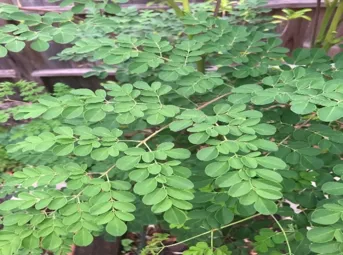
Figure 1: Moringa Oleifera Figure 2. Catechu
[Figure - see the formatted PDF]
Figure 3: Piper Longum
Preparation of extracts
Moringa oleifera leaves were subjected to maceration. The plant material was soaked for at least three days at room temperature in a suitable solvent with regular agitation. After extraction, the filtrate was collected and stored in an airtight container and the marc was re-extracted using the same method.
For Acacia catechu, the powdered material was passed through a 100 mesh sieve and extracted with ethanol at a 1:2 w/v ratio at 65C for 1 hr. The extract was filtered, the marc was re-extracted and the combined extract was evaporated using a rotary evaporator. Preparation of the long-pepper extract by maceration/mortar and pestle processing followed by aqueous extraction and filtration.
Formulation of polyherbal cream
An oil-in-water emulsion cream was prepared. Oil-soluble ingredients were incorporated into the oil phase, while water-soluble ingredients were incorporated into the aqueous phase. Both phases were heated to approximately 75C. The phases were then combined with continuous stirring and allowed to cool with continued mixing until cream formulation.
Evaluation of cream
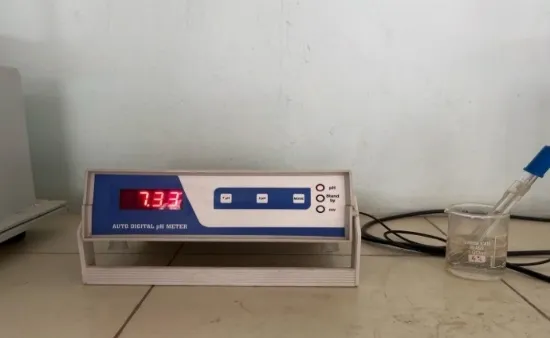
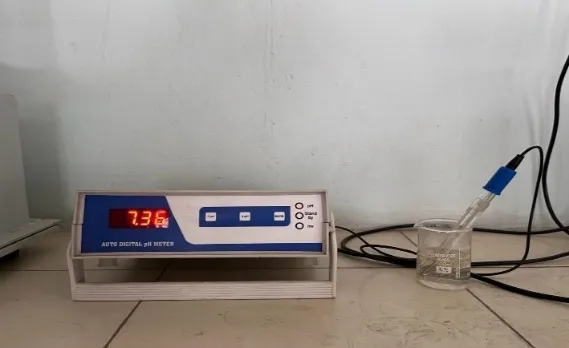
Figure 4: pH Meter Figure 5. pH Meter
pH = For pH determination, the pH meter was calibrated with standard buffer solution. Approximately 0.5 g of cream was dispersed in 50ml distilled water and the pH was recorded.
Viscosity = Viscosity was measured using a Brookfield viscometer at 100 rpm with spindle no.64. Aqueous dissolution was assessed by dispersing 0.5 g of cream in 50ml water.
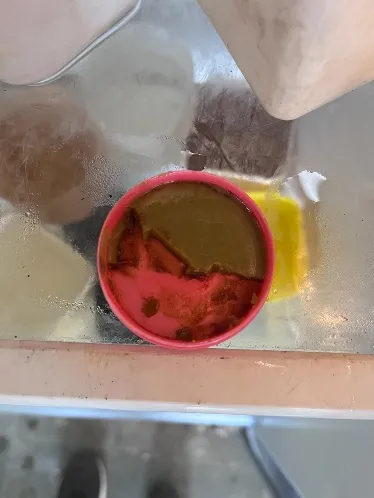
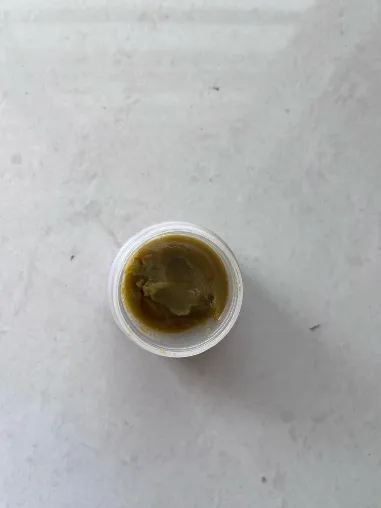
Stability = Stability was observed under room temperature, sunlight and freezer conditions.
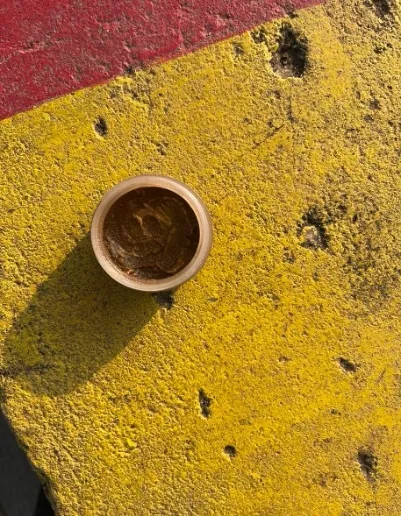
Figure 6: Cream at Room Temperature Figure 7. Cream in Freezer.
Irritancy = Irritancy was assessed after topical application to a specified area, with observation for irritancy, erythema and oedema.
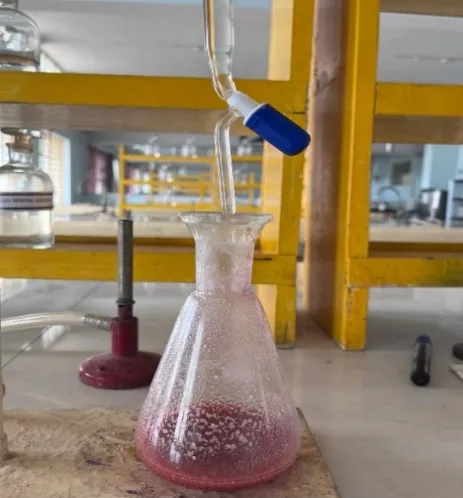
Figure 8: Cream in Sunlight.
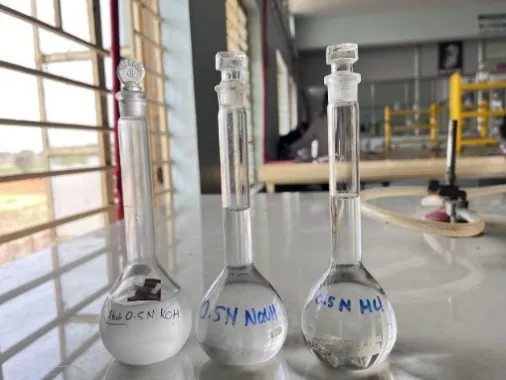
Figure 9: Preparation of a, B, C Solution Figure 10. Acid Value
Acid value = Acid value was determined by titration after dissolving the cream in an alcohol-ether mixture. 5gm of cream dissolved in a 25ml mixture of equal amounts of alcohol and ether. Reflux till the sample dissolves completely. 1ml of phenolphthalein was added and then titrated with 0.1N NaOH. Pink color obtained after shaking for 30seconds.
(0.5N KOH, 0.5N NaOH, 0.5 HCL)
Saponification value= Saponification value was determined after refluxing the sample with 0.5 N KOH followed by titration with 0.5 N HCL. 2gm of cream dissolves in 25ml of 0.5N KOH. Reflux if for 30 minutes. Add 1ml of phenolphthalein and then titrate with 0.5N HCl.
In- vitro Antioxidant activity
The antioxidant potential of Moringa oleifera leaves has been investigated in several studies using different in vitro methods. One commonly used method is the DPPH radical-scavenging assay, which measures the ability of an extract to neutralize free radicals. The antioxidant activity of plant extracts is generally expressed as IC50, which represents the concentration required to inhibit 50% of the tested radicals. A lower IC50 value indicates greater radical-scavenging activity under the experimental conditions. Methanolic Moringa oleifera leaf extract reported a DPPH IC50 value of 57.12+-0.09microg/mL and an ABTS IC50 value of 37.58+-0.87microg/mL. The total phenolic content was reported as 66.33+-0.40mg gallic acid equivalents of extract. These findings indicate that the tested leaf extract contained phenolic constituents and demonstrated measurable radical-scavenging activity.
In- vitro Anti-inflammatory activity
The anti-inflammatory potential of Moringa oleifera leaf extracts has also been investigated using in vitro protein- denaturation assays. Protein denaturation is one of the laboratory models used to screen substances for potential anti- inflammatory activity. In this assay, the ability of an extract to inhibit heat-induced albumin denaturation is measured at different concentration. Study reported an IC50 value of 110.73+-2.45microg/mL for the inhibition of protein denaturation by methanolic Moringa oleifera leaf extract. This finding suggests that the extract showed measurable activity in the selected in vitro model.
RESULTS AND DISCUSSION
Based on the observations recorded during the project, the formulation showed acceptable preliminary physical characteristics. Several parameters were recorded for samples.
| Sr. no. | Parameter | 10ml sample | 15ml sample |
|---|---|---|---|
| 1 | pH | 7.33 | 7.36 |
| 2 | Brookfield viscosity reading (100rpm, spindle 64) | 26832 | 26963 |
| 3 | Visible Stability | Stable as recorded | Stable as recorded |
| 4 | Irritancy | No irritancy/erythema/edema observed | No irritancy/erythema/edema observed |
| 5 | Acid value | 28.38 | 29.62 |
| 6 | Saponification value | 23.84 | 32.26 |
The measured pH values were 7.33 and 7.36 with very little difference between the two samples. Thus, the cream was close to neutral in the recorded measurements. pH is relevant in topical formulations because an unsuitable pH can affect skin comfort. The recorded absence of visible erythema and edema is encouraging as a preliminary observation, but it cannot by itself establish complete skin safety.
At 100 rpm with spindle no. 64, the recorded Brookfield readings were 26832 and 26963. The two values were relatively close, indicating similar measured consistency under the stated conditions.
Complete dissolution in water was recorded for the tested cream sample. This observation is useful as a simple preliminary washability/dissolution indication, although it is not equivalent to a formal solubility or release study. The formulation was also reported to remain stable at room temperature, in sunlight and in a freezer. These observations suggest acceptable short-term physical stability under the conditions, actually examined. More rigorous stability work would require controlled temperature and humidity conditions, defined sampling intervals and quantitative comparison of pH, viscosity, appearance and other critical quality attributes.
The acid values were 28.38 and 29.62 for the two samples. Acid value can provide information related to the free fatty acid content of lipid-containing formulations and may be useful when monitoring changes during storage. The recorded saponification values were also different between the two samples.
The choice of the herbal ingredients has a reasonable literature basis. Moringa oleifera contains a broad range of phenolic and flavonoid compounds and has been associated with antioxidant and anti-inflammatory effects in experimental studies [1,2]. Studies have also investigated Moringa in topical preparations, including formulations aimed at moisturizing, antioxidant and wound-related applications [3,4]. Acacia catechu contains catechin, epicatechin and other polyphenolic constituents and has reported antioxidant, antimicrobial and anti-inflammatory properties [5,6]. Piper longum contains piperine and related phytochemicals and systematic reviews describe several biological activities, including antioxidant and anti-inflammatory effects [7,8]. These findings support the scientific rationale for exploring the three extracts together in a topical formulation.
An important limitation of the present work is that direct antioxidant or anti-inflammatory assays were not documented among the complete evaluation tests. Therefore, the present study should not claim that the formulated cream itself demonstrated antioxidant or anti-inflammatory activity. Instead, the formulation can be described as a polyherbal cream with literature-supported potential for such activities. Future work should include an appropriate antioxidant assay (for example, DPPH or another validated method) and a validated in vitro anti-inflammatory assay before making direct efficacy claims.
CONCLUSION
A polyherbal oil-in-water cream containing Moringa oleifera, Acacia catechu and Piper longum extracts was successfully formulated using the documented procedure. The prepared formulation showed pH values of 7.33 and 7.36, closely similar Brookfield viscosity readings under the stated conditions, complete dissolution in water, no visible irritancy in the documented test and physical stability under the observed storage conditions. Acid and saponification values were also determined. The selected plants have a substantial literature basis for antioxidant, anti-inflammatory and antimicrobial potential, but these activities were not directly established for the present cream. Thus, the work provides a useful preliminary formulation study and a basis for further evaluation using standardized antioxidant, anti-inflammatory, microbial and stability testing.
REFERENCES



Sakshi Zode, Kumudini Dhurvey, Dr. Sachin Lohe, Formulation and Evaluation of a Polyherbal Cream Containing Moringa Oleifera, Acacia Catechu and Piper Longum Extracts, Int. J. of Pharm. Sci., 2026, Vol 4, Issue 11, 479-485. https://doi.org/10.5281/zenodo.23924130
 10.5281/zenodo.23924130