

We use cookies to ensure our website works properly and to personalise your experience. Cookies policy
Sant Gajanan Maharaj College of Pharmacy, Mahagaon, Chinchewadi, Maharashtra, India 416503
Polycystic Ovary Syndrome (PCOS) is a multifactorial endocrine disorder affecting women of reproductive age and is characterized by hormonal imbalance, insulin resistance, and the presence of multiple ovarian cysts. The present study was undertaken to formulate and evaluate herbal tablets containing Ficus religiosa leaf extract for the management of PCOS. Fresh leaves of Ficus religiosa were collected, authenticated, and extracted using a suitable extraction method. The obtained extract was subjected to preliminary phytochemical screening, which confirmed the presence of alkaloids, phenolic compounds, flavonoids, tannins, and steroids. The in-vitro anti-PCOS potential of the extract was evaluated using the KGN cell line, where it exhibited significant activity with an IC?? value of 59.53 µg/mL. Herbal tablets (F1–F4) were formulated using appropriate pharmaceutical excipients and evaluated for various physicochemical parameters, including hardness, friability, weight variation, thickness, and disintegration time. Among the formulated batches, formulation F3 demonstrated the most satisfactory performance, with a disintegration time of 10.2 minutes while meeting all prescribed quality evaluation criteria. The findings of this study suggest that Ficus religiosa leaf extract possesses promising therapeutic potential and can be developed into a standardized herbal tablet as a safe and effective alternative for the management of PCOS.
Herbal Tablet
A herbal system is a holistic medical approach in which herbs are used in various forms such as powders, decoctions, tablets, and oils to maintain health and treat illnesses. Herbal tablets are pharmaceutical preparations made from natural plant materials or their extracts. They are commonly used in traditional healthcare systems like Ayurveda for maintaining health and treating various conditions. [1-3]
PCOS (Polycystic Ovary Syndrome)
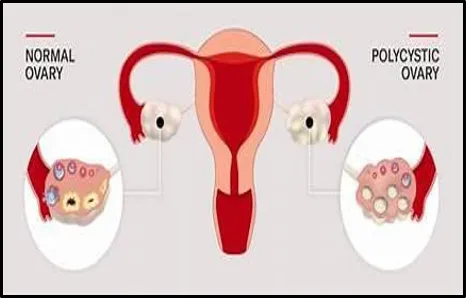
Fig No.01: PCOS Disorder
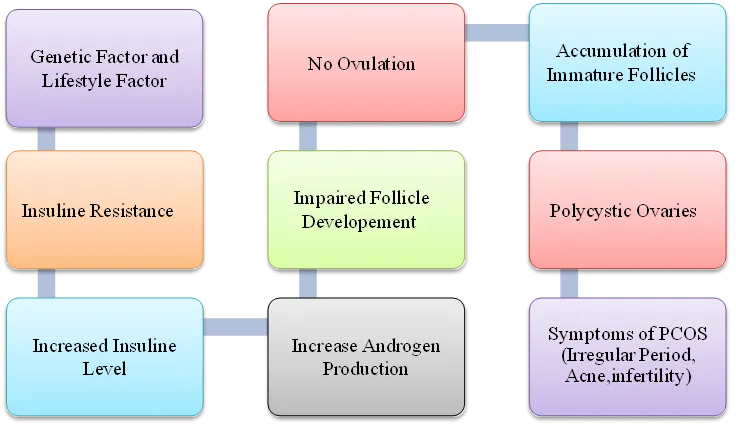
Polycystic Ovary Syndrome (PCOS) is a common endocrine disorder that affects women of reproductive age. It is characterized by hormonal imbalance, irregular menstrual cycles, and the presence of multiple small cysts in the ovaries. PCOS is one of the leading causes of infertility in women. In this condition, the normal functioning of the ovaries is disrupted due to increased levels of male hormones (androgens) and abnormal insulin activity. This leads to irregular or absent ovulation, resulting in menstrual irregularities and difficulty in conceiving. PCOS is a complex disorder influenced by genetic, hormonal, metabolic, and environmental factors. It is also associated with other health problems such as obesity, acne, excessive hair growth, insulin resistance, and increased risk of diabetes and cardiovascular diseases. Early diagnosis and proper management through lifestyle changes, diet control, and medication can help in controlling symptoms and improving quality of life. [4-5]
Mechanism of PCOS
Plant Profile
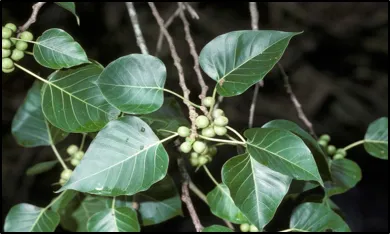
Fig No.02: Ficus Religiosa
Ficus religiosa or sacred fig is a species of fig native to the Indian Subcontinent and Indochina that belongs to Moraceae, the fig or mulberry family. It is also known as the bodhi tree, peepul tree, peepal tree, pipala tree or ashvattha tree (in India and Nepal) [6-7]. The sacred fig is considered to have a religious significance in four major religions that originated on the Indian subcontinent: Hinduism, Buddhism, Sikhism and Jainism. Hindu and Jain ascetics consider the species to be sacred and often meditate under it. Gautama Buddha is believed to have attained enlightenment under a tree of this species. The sacred fig is the state tree of the Indian states of Odisha, Bihar and Haryana [8-10].
Traditional Uses and Ethno Medicinal Significance
In traditional systems of medicine such as Ayurveda, different parts of Ficus religiosa including leaves, bark, fruits, and roots are extensively used for the treatment of various ailments. It possesses several pharmacological properties such as antidiabetic, anti-inflammatory, antioxidant, antimicrobial, and wound healing activities. Apart from its medicinal importance, Ficus religiosa holds great cultural and spiritual value [11-12]. It is revered as the Bodhi tree under which Lord Buddha attained enlightenment, making it a symbol of knowledge and spirituality [13-14]. Due to its wide range of therapeutic uses and bioactive constituents, Ficus religiosa has attracted significant attention in modern research for the development of herbal formulations and pharmaceutical applications [11].
Table No.01: Drug Profile
|
Scientific name |
Ficus religiosa |
|
Synonyms |
Sacred fig, Bodhi tree, Peepul tree, Pipal tree |
|
Biological source |
Ficus religiosa Linn. commonly known as Peepal or Sacred Fig, is a large perennial tree belonging to the family Moraceae (mulberry family). |
|
Family |
Moraceae |
|
Taxonomical classification |
Kingdom: Plantae Sub kingdom: Viridiplantae Division: Angiosperms Class: Magnoliopsida Order: Rosales Family: Moraceae Genus: Ficus (Fig genus) Species: Ficus religiosa L. (Sacred fig) |
|
Phytochemical constituents |
Ficus religiosa contains phenols, flavonoids (quercetin), Amino acids (Alanine), tannins and phenolic compound, alongside bioactive steroids like stigmasterol and triterpnoids like lupeol. Its fruits and bark are further enriched with serotonin, vitamin K, and essential minerals that support its various medicinal properties. |
LITERATURE REVIEW
Murugesu et al. (2021) In 2021, Murugesu et al. reviewed phytochemistry and applications of Ficus religiosa and highlighted its suitability for modern dosage forms, including tablets. The study emphasized its antioxidant and metabolic regulatory properties, which are beneficial for formulation into standardized herbal products.
Maheshwari et al. (2023) In 2023, Maheshwari et al. conducted a systematic review focusing on phytochemistry and pharmacology of Ficus religiosa. The study highlighted the need for converting plant extracts into stable dosage forms like tablets for improved patient compliance and dose accuracy.
Rawat et al. (2024) A recent 2024 review by Rawat et al. provided updated insights into phytochemical constituents and pharmacological activities of Ficus religiosa. The authors stressed the importance of standardization and evaluation of herbal formulations, including tablets, to ensure consistent therapeutic efficacy.
Phytochemistry Letters Review (2026) A 2026 comprehensive review summarized recent advances in phytochemistry and therapeutic applications of Ficus religiosa. It emphasized that plant-based compounds can be developed into pharmaceutical formulations with proper extraction, granulation, and evaluation techniques.
General Herbal Tablet Formulation Studies (Various Authors, 2015–2022) Multiple pharmaceutical studies (2015–2022) on herbal tablet formulation techniques describe standard procedures such as wet granulation, direct compression, and evaluation parameters (hardness, friability, disintegration time). These methods are applicable to Ficus religiosa extracts for developing effective tablet formulations.
MATERIAL AND METHODOLOGY
Materials
Table No. 02: List of Chemicals used and their uses in formulation.
|
Sr. No. |
Chemicals |
Use in Formulation |
|
1 |
Microcrystalline Cellulose |
Diluent |
|
2 |
PVP |
Binder |
|
3 |
Sodium Starch Glycolate |
Disintegrating Agent |
|
4 |
Magnesium Stearate |
Lubricant |
|
5 |
Talc |
Glindant |
Equipment: Soxhlet apparatus, Electronic balance, Heating mental, pH Meter, Hot Air Oven, Tablet Compression Machine, Hardness tester, Disintegration apparatus, Friability Tester, FT-IR
EXPERIMENTAL METHODS
Extraction and Drying of herb
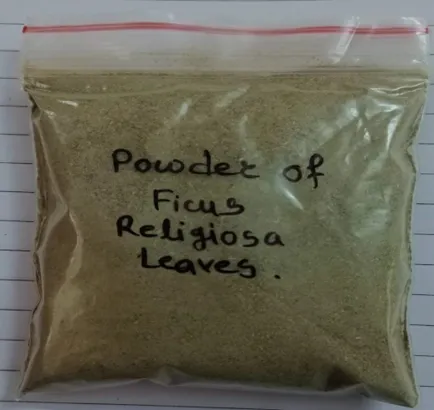
Fig No. 03: Ficus Religiosa leaves powder.
Pre-formulation study of Hydro alcoholic Extract
Study of organoleptic characters
Color of extract were observed by naked eyes. Odor of extract were felled by smelling. Taste and texture were observed by touching and tasting. All tests were carried out visually.
Solubility of extract
To check out solubility Buchanania lanzen Spreng leaf extract in different solvents and find out solubility range, here 10 mg of extract was added in 10ml variety of solvents such as Methanol, Ethanol, Acetone, Chloroform and Water and solubility was observed.
Phytochemical screening of extract
A scientific process known as phytochemical screening uses analysis, inspection, extraction, and experimentation to identify different kinds of phytoconstituents that are present in different portions. It helps in the discovery of novel drugs. By using phytochemical screening, the presence of phytoconstituents such as alkaloids, flavonoids, glycosides, phenols, saponins and tannins was verified.
Table No.03: Phytochemical screening
|
Sr. No. |
Test |
Observation |
Inference |
|
1 |
Fehling’s Test |
Brick Red |
Carbohydrate Present |
|
2 |
Salkowshi Reaction |
Choloroform layer appears red and acid layer show greenish yellow fluorescence |
Steroid Present |
|
3 |
Foam Test |
Formation of stable persistent foam (froth) for a few minutes |
Saponins present |
|
4 |
Shinoda Test |
Formation of orange color |
Flavonoids Present |
|
5 |
Dragendorff’s Test |
Formation of reddish-brown precipitate |
Alkaloids present |
Experimental Design:
Tablet formulations were developed using a factorial design approach. The design matrix was generated and analyzed using Design Expert DX 13.0 (Stat-Ease Inc., MN, USA).
Two formulation variables were considered as independent factors: Polyvinylpyrrolidone (X₁) and Sodium Starch Glycolate (X₂). The prepared batches were evaluated for critical quality attributes, namely hardness and disintegration time, which were selected as dependent variables.
Table No .04: Design layout of 22 factorial design.
|
Formulation Batches |
X1 |
X2 |
|
F1 |
15 |
30 |
|
F2 |
15 |
10 |
|
F3 |
35 |
10 |
|
F4 |
35 |
30 |
Formulation of Tablet
Table No. 05: Composition of 22 factorial batches of Tablets.
|
Sr No. |
Ingredients |
F1 |
F2 |
F3 |
F4 |
|
1 |
Extract |
200 |
200 |
200 |
200 |
|
2 |
Microcrystalline Cellulose |
248 |
270 |
248 |
230 |
|
3 |
PVP |
30 |
15 |
35 |
35 |
|
4 |
Sodium Starch Glycolate |
30 |
10 |
10 |
30 |
|
5 |
Magnesium Stearate |
4 |
3 |
3 |
2 |
|
6 |
Talc |
3 |
2 |
4 |
3 |
Process of Formulation of Tablet
Evaluation of tablets
General appearance
The general appearance and color of tablets were found by visual determination.
Weight variation test
The weight variation test was carried out to assess the uniformity of tablet weights. A total of 20 tablets were randomly selected and individually weighed using a calibrated analytical balance, and their respective weights were recorded. The average tablet weight was calculated by summing the individual weights and dividing by the total number of tablets. Each tablet weight was then compared with the calculated mean to determine the percentage deviation. The results were evaluated in accordance with pharmacopoeial specifications, which state that not more than two tablets may deviate from the average weight by more than the prescribed percentage limit, and no individual tablet should deviate by more than twice that limit.
Hardness and Thickness
The mechanical strength and dimensional uniformity of the tablets were evaluated by determining hardness and thickness. For each formulation, 20 tablets were randomly selected. Tablet hardness was measured using a Monsanto hardness tester, while thickness was determined using a Vernier caliper.
Friability Test
Friability was assessed to evaluate the resistance of tablets to mechanical stress during handling and transportation. The test was performed using a Roche friabilator. A pre-weighed sample of tablets was placed in the friabilator, which was operated at 25 rpm for 100 revolutions, allowing the tablets to fall from a height of approximately 6 inches during each rotation. After completion of the test, the tablets were dedusted and reweighed. The percentage friability was calculated, and a weight loss of less than 1% was considered acceptable for compressed tablets.
Disintegration Time
The disintegration test was conducted to determine the time required for tablets to break down into smaller particles under specified experimental conditions. The test provides an indication of the rate at which the tablet disintegrates, which is a critical parameter influencing drug release. The study was performed using a standard disintegration test apparatus, and the time required for complete disintegration of the tablets was recorded.
In-Vitro Anti-PCOS Activity:
RESULT AND DISCUSSION
Pre formulation study:
Plant Authentication:
Authentication of herb was done from Shivraj College of Science, Gadhinglaj Affiliated to Shivaji University, Kolhapur by Dr. Vinayak A. Sardesai.
Organoleptic Characters:
Table No. 06: Physical properties of extract
|
Sr. No |
Physical properties and tests |
Methods |
Description of drug extract |
|
1 |
Physical state |
Visual observation |
solid |
|
2 |
Colour |
Visual observation |
dark green |
|
3 |
Odour |
By smelling |
characteristic |
Solubility:
Table. No. 07: Solubility of extract in different solvent
|
Sr. No. |
Solvents |
Solubility of extract |
|
1 |
Water |
Slightly soluble |
|
2 |
Ethanol |
Highly soluble |
|
3 |
Methanol |
Highly soluble |
|
4 |
Chloroform |
Slightly soluble |
|
5 |
Petroleum ether |
Insoluble |
|
6 |
Acetone |
Moderately soluble |
Phytochemical Screening
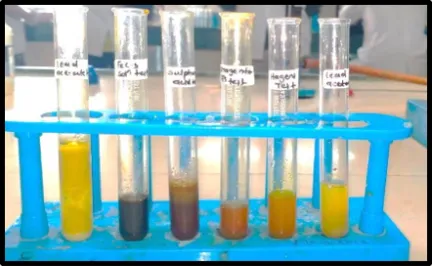
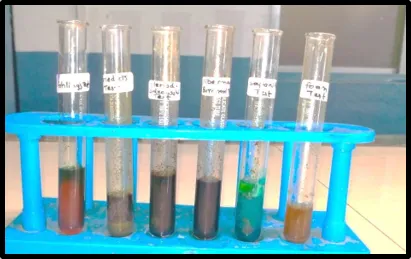
Fig.no.04: Phytochemical screening
Table No.08: Phytochemical screening results
|
Sr. No. |
Test |
Observation |
Inference |
|
1 |
Fehling’s Test |
Brick Red |
Carbohydrate Present |
|
2 |
Salkowshi Reaction |
Choloroform layer appears red and acid layer show greenish yellow fluorescence |
Steroid Present |
|
3 |
Foam Test |
Formation of stable persistent foam (froth) for a few minutes |
Saponins present |
|
4 |
Shinoda Test |
Formation of orange color |
Flavonoids Present |
|
5 |
Dragendorff’s Test |
Formation of reddish-brown precipitate |
Alkaloids present |
|
6 |
Ferric chloride Test |
Deep Blue Colour Produce |
Phenolic Compound Present |
Evaluation Test
Physical appearance
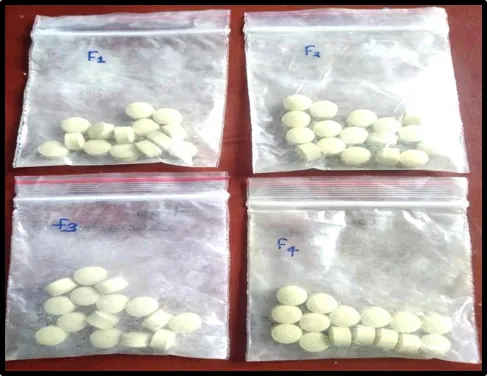
Fig. No.5: Physical appearance of Tablet
Table No.09: Physical Appearance of Tablet
|
Formulation |
Colour |
Shape |
Appearance |
|
F1 |
Greenish |
Biconvex Circular (round) |
Opaque |
|
F2 |
Greenish |
Biconvex Circular (round) |
Opaque |
|
F3 |
Greenish |
Biconvex Circular (round) |
Opaque |
|
F4 |
Greenish |
Biconvex Circular (round) |
Opaque |
Pre Compression evaluation of granule
Table No.10: Pre-Compression Evaluation of Granules
|
Batches |
Bulk Density |
Tapped Density |
Hausners Ratio |
Cars Index |
Angle of Repose |
|
F1 |
0.47 |
0.56 |
1.19 |
16.07 |
29.8 |
|
F2 |
0.49 |
0.55 |
1.12 |
10.91 |
27.4 |
|
F3 |
0.46 |
0.55 |
1.20 |
16.36 |
30.6 |
|
F4 |
0.48 |
0.58 |
1.21 |
17.24 |
31.8 |
Evaluation of Tablet formulation
Weight variation test
Table No.11: Weight variation test of Tablet
|
Batches |
Mean Weight |
Sandard Deviation (mg) |
Acceptable range (mg) |
Result |
|
F1 |
500.8 |
3.6 |
475 - 525 |
Pass |
|
F2 |
499.6 |
2.9 |
475 – 525 |
Pass |
|
F3 |
501.4 |
4.1 |
475 – 525 |
Pass |
|
F4 |
500.2 |
3.8 |
475 – 525 |
Pass |
Hardness:
Table No.12: Hardness test of Tablet
|
Batches |
Hardness (kg/cm²) |
Result |
|
F1 |
2.5 |
Poor |
|
F2 |
2.7 |
Poor |
|
F3 |
6.0 |
good |
|
F4 |
5.4 |
fair |
Friability:
Table No.13: Friability of Tablet
|
Batches |
Initial Weight |
Final Weight |
Friability (%) |
Result |
|
F1 |
12 gm |
11.90 |
0.83% |
Good |
|
F2 |
12 gm |
11.92 |
0.67% |
Good |
|
F3 |
12 gm |
11.91 |
0.75% |
Good |
|
F4 |
12 gm |
11.88 |
1.00% |
Borderline/ Acceptable |
Disintegration time:
Table No.14: Disintegration Time of Tablet
|
Batches |
Disintegration Time (min) |
Result |
|
F1 |
9.8 min |
Good |
|
F2 |
7.5 min |
Very good |
|
F3 |
10.2 min |
Good |
|
F4 |
15min |
Acceptable |
In-Vitro Anti-PCOS Activity
Table No.15: Disintegration Time of Tablet
|
Sr No |
Sample Code |
Concentrations (µg/mL) |
OD at 550 nm |
Mean |
% of Inhibition |
% of Viability |
IC50 (µg/mL) |
||
|
1 |
Control |
|
1.482 |
- |
- |
- |
- |
||
|
2 |
Standard (5,Flurouracil) |
20 |
0.916 |
0.915 |
0.916 |
0.915 |
38.25% |
61.75% |
39.33 |
|
40 |
0.732 |
0.729 |
0.734 |
0.731 |
50.67% |
49.33% |
|||
|
60 |
0.507 |
0.504 |
0.502 |
0.504 |
65.99% |
34.01% |
|||
|
80 |
0.315 |
0.312 |
0.314 |
0.313 |
78.87% |
21.13% |
|||
|
100 |
0.208 |
0.205 |
0.207 |
0.206 |
86.09% |
13.91% |
|||
|
3 |
Ficus religiosa leaves extract |
20 |
1.106 |
1.108 |
1.109 |
1.107 |
25.30% |
74.7% |
59.53 |
|
40 |
0.912 |
0.915 |
0.914 |
0.913 |
38.39% |
61.61% |
|||
|
60 |
0.732 |
0.734 |
0.736 |
0.734 |
50.47% |
49.53% |
|||
|
80 |
0.608 |
0.609 |
0.605 |
0.607 |
59.04% |
40.96% |
|||
|
100 |
0.446 |
0.448 |
0.449 |
0.447 |
69.83% |
30.17% |
|||
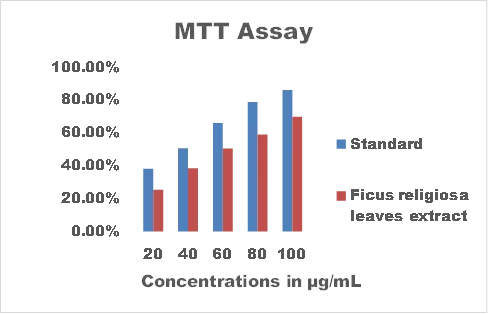
Graph No..1: MTT Assay % of Inhibition
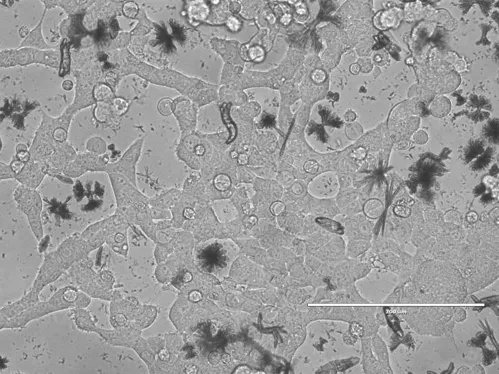
Fig. No.06: Control Group of MTT Assay
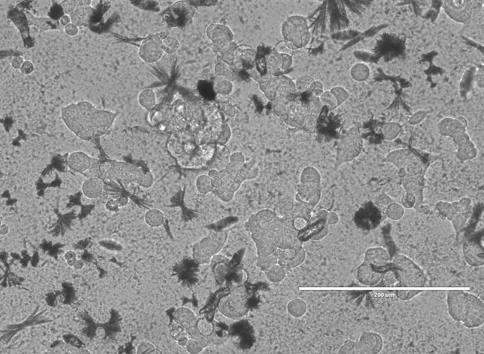
Fig. No. 07: Extract of MTT Assay
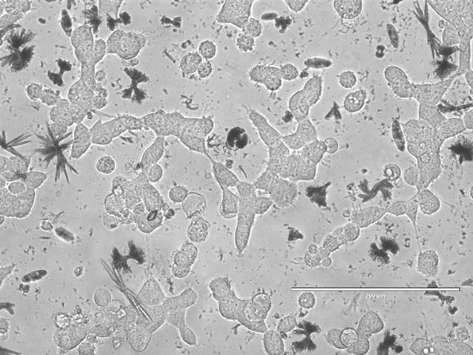
Fig No. 08: Standard of MTT Assay
CONCLUSION
The present study successfully formulated and evaluated herbal tablets of Ficus religiosa leaves for PCOS management. Phytochemical screening confirmed presence of phenolics, flavonoids, alkaloids, and steroids which contribute to antioxidant and hormone-regulating activity. The MTT assay on KGN cell line showed that Ficus religiosa leaf extract possesses significant anti-PCOS activity with IC50 of 59.53 µg/mL compared to standard 5-Fluorouracil. Among the four formulations, batch F3 exhibited very good disintegration time of 10.2 min and acceptable physical parameters and also pass the Pre formulation studies as well as all post compression evaluation tests . The tablets were greenish, biconvex, circular, and opaque in appearance. Hence, Ficus religiosa leaf extract can be effectively formulated into a stable, patient-compliant herbal tablet dosage form. Further in-vivo and clinical studies are warranted to establish its therapeutic efficacy in PCOS. The study supports traditional use of Ficus religiosa in reproductive disorders and provides scientific basis for herbal formulation development.
REFERENCES

Pooja Pote, Sayali Kotekar, Aarti Injal, Shweta Mali, Harshada Chougule, Formulation and Evaluation of Herbal Tablets Containing Ficus religiosa Leaf Extract for the Management of Polycystic Ovary Syndrome (PCOS), Int. J. of Pharm. Sci., 2026, Vol 4, Issue 7, 3948-3959. https://doi.org/10.5281/zenodo.21458105
 10.5281/zenodo.21458105