

We use cookies to ensure our website works properly and to personalise your experience. Cookies policy
Anand Charitable Sanstha’s, College of Pharmaceutical Science and Research Ashti (D, B & M Pharm), Gangainagar, Murshadpur, Ashti, Tal. Ashti, Dist. Beed, Maharashtra 414203.
The present study aimed to formulate and evaluate a polymeric emulgel containing Buchanania lanzan leaf extract for topical anti-inflammatory application. The leaves were subjected to Soxhlet extraction using different solvents, and the ethanolic extract was selected based on its highest percentage yield (33%) and rich phytochemical profile. Preliminary phytochemical screening confirmed the presence of alkaloids, flavonoids, phenols, tannins, saponins, glycosides, steroids, and terpenoids. FTIR studies demonstrated the compatibility of the extract with formulation excipients. A total of nine emulgel formulations (F1–F9) were developed using a 3² full factorial design by varying the concentrations of Carbopol 940 and Span 20. The prepared formulations were evaluated for physical appearance, spreadability, viscosity, pH, washability, and homogeneity. Among all formulations, F9 exhibited optimum characteristics with excellent homogeneity, spreadability (3.7 ± 0.124 cm), viscosity (2117 ± 1.885 cP), and skin-compatible pH (6.8 ± 0.069). The optimized formulation showed significant concentration-dependent anti-inflammatory activity in the protein denaturation assay, with 52.59% inhibition at 100 µg/mL. Skin irritation studies confirmed the non-irritant nature of the formulation, while in-vitro skin permeation studies demonstrated effective penetration into deeper skin layers. Stability studies conducted under accelerated conditions for 45 days showed no significant changes in physicochemical properties. The findings suggest that the developed polymeric emulgel of Buchanania lanzan leaf extract is a stable, safe, and effective topical drug delivery system with promising anti-inflammatory potential
Inflammation is a complex biological response of vascularized tissues to harmful stimuli such as pathogens, physical injury, chemical irritants, and immune reactions. It serves as a protective mechanism that eliminates damaging agents and initiates tissue repair and regeneration.1-3 Although acute inflammation is essential for healing, persistent or uncontrolled inflammation contributes to the development of various chronic disorders, including arthritis, dermatitis, cardiovascular diseases, and autoimmune conditions.4 Conventional anti-inflammatory therapies, particularly non-steroidal anti-inflammatory drugs (NSAIDs) and corticosteroids, are widely used for the management of inflammatory conditions. However, their prolonged use is associated with adverse effects such as gastric irritation, renal toxicity, immunosuppression, and cardiovascular complications, necessitating the development of safer therapeutic alternatives.5-8
Medicinal plants have long been recognized as valuable sources of bioactive compounds with therapeutic potential. Herbal medicines possess several advantages, including better safety profiles, reduced toxicity, affordability, and the ability to modulate multiple biological pathways simultaneously. Among medicinal plants, Buchanania lanzan Spreng. (Family: Anacardiaceae), commonly known as Chironji, is an important indigenous species widely distributed throughout the Indian subcontinent. Traditionally, different parts of the plant have been used in Ayurveda and folk medicine for the treatment of inflammatory disorders, skin diseases, wounds, gastrointestinal ailments, and other health conditions. The leaves of Buchanania lanzan are rich in phytoconstituents such as flavonoids, phenolic compounds, tannins, alkaloids, terpenoids, and saponins, which have been reported to exhibit significant antioxidant and anti-inflammatory activities.7-9
Despite its medicinal importance, the therapeutic application of Buchanania lanzan leaf extract is often limited by challenges associated with conventional dosage forms, including poor stability, inadequate skin penetration, and reduced bioavailability. To overcome these limitations, novel topical drug delivery systems have gained considerable attention. Topical delivery offers several advantages, including localized drug action, avoidance of first-pass metabolism, reduced systemic side effects, and improved patient compliance. Among the various topical formulations, emulgels have emerged as promising drug delivery systems due to their ability to combine the advantages of both emulsions and gels. Emulgels facilitate the incorporation of hydrophobic herbal extracts, improve drug stability, enhance skin permeation, and provide controlled release of active constituents.10-12
Polymers play a crucial role in emulgel formulations by imparting viscosity, improving stability, enhancing bioadhesion, and controlling drug release. Carbopol-based polymeric emulgels are particularly attractive because of their excellent rheological properties, ease of application, and ability to maintain prolonged contact with the skin surface. The incorporation of herbal extracts into polymeric emulgels can significantly enhance their therapeutic effectiveness while ensuring patient acceptability and formulation stability.
Therefore, the present study was undertaken to formulate and evaluate a polymeric emulgel containing Buchanania lanzan leaf extract for topical anti-inflammatory application. The developed formulations were optimized using a 3² factorial design and evaluated for physicochemical characteristics, in-vitro anti-inflammatory activity, skin compatibility, permeation behavior, and stability. The study aimed to develop a safe, stable, and effective herbal topical drug delivery system capable of providing enhanced anti-inflammatory activity and improved therapeutic performance.13-18
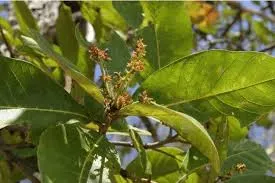
Figure 1: Plant Buchanania Lanzen Spreng
MATERIALS AND METHODS:
MATERIALS:
The materials used for the formulation of polymeric emulgel of Buchanania lanzan leaf extract included Carbopol 940 as a gelling polymer, propylene glycol as a humectant and penetration enhancer, and triethanolamine as a pH-adjusting agent. Tween and Span 20 were employed as emulsifying agents for the preparation of the emulsion system, while light liquid paraffin served as the oil phase. Methyl paraben and propyl paraben were incorporated as preservatives to ensure microbiological stability of the formulation. Methanol was used as a solvent during extraction and analytical procedures. All chemicals and reagents used in the study were of analytical grade and procured from reputed commercial suppliers, including Finechem Industries, Molychem, S.D. Lab Chemical Centre (Mumbai), and Changshu Hongsheng Fine Chemical Co. Ltd.
MATERIALS AND METHODS
Collection and Authentication of Plant Material
Fresh leaves of Buchanania lanzan were collected and authenticated based on their organoleptic and morphological characteristics. The leaves were washed, shade dried, and coarsely powdered for further studies.19-20
Organoleptic and Morphological Evaluation
The collected leaves were evaluated for organoleptic characteristics including color, odor, taste, texture, and appearance. Morphological examination was carried out by observing leaf shape, size, margin, apex, venation pattern, surface characteristics, and other macroscopic features. These evaluations were performed to establish the identity and quality of the plant material.21-22
Extraction of Plant Material
The shade-dried and powdered leaves of Buchanania lanzan were subjected to Soxhlet extraction using solvents of increasing polarity. The extraction was performed sequentially using petroleum ether, chloroform, ethanol, and distilled water. The obtained extracts were concentrated under reduced pressure using a rotary evaporator and stored in airtight containers for further investigation.23-25
Preliminary Phytochemical Screening
The extracts were subjected to qualitative phytochemical analysis to identify the presence of major secondary metabolites such as alkaloids, flavonoids, tannins, phenolics, saponins, glycosides, steroids, terpenoids, carbohydrates, proteins, and fixed oils. Standard phytochemical tests were carried out using appropriate reagents and the results were recorded based on characteristic color changes or precipitate formation.26-27
Organoleptic Evaluation of Extract
The dried extract was evaluated for physical appearance, color, odor, and texture. The observations were recorded to establish the sensory characteristics and quality of the extract prior to formulation development.28-29
Solubility Studies
The solubility profile of the extract was determined in different solvents including methanol, ethanol, acetone, chloroform, and distilled water. The extract-solvent mixtures were observed for dissolution behavior and categorized as soluble, slightly soluble, or insoluble.30-32
Physicochemical Evaluation of Extract
The physicochemical parameters of the extract were evaluated by determining loss on drying, total ash value, acid-insoluble ash, and water-soluble ash according to standard procedures. These parameters were assessed to establish the purity, quality, and stability of the herbal extract.33-34
Drug–Excipient Compatibility Study
Compatibility between Buchanania lanzan leaf extract and formulation excipients was evaluated using Fourier Transform Infrared (FT-IR) spectroscopy. The infrared spectra of the extract and selected polymer were recorded in the range of 600–4000 cm⁻¹. The spectra were analyzed for any significant changes in characteristic peaks to assess possible interactions between the extract and excipients.35-36
Experimental Design
A 3² full factorial design was employed to optimize the formulation variables of the polymeric emulgel using Design-Expert® software (Version 13.0, Stat-Ease Inc., USA). Two independent variables, namely Carbopol 940 concentration (X₁) and Span 20 concentration (X₂), were selected at three levels. A total of nine formulations (F1–F9) were prepared according to the experimental design. The effect of these variables on spreadability (R₁) and viscosity (R₂) was evaluated. This statistical design facilitated systematic optimization of the formulation while reducing the number of experimental trials required.38-39
Formulation of Polymeric Herbal Emulgel
The polymeric herbal emulgel containing Buchanania lanzan leaf extract was prepared by the emulsion-gel incorporation method. The aqueous phase was prepared by dissolving the extract, propylene glycol, and preservatives in purified water. Simultaneously, the oil phase containing liquid paraffin and Span 20 was prepared separately. Both phases were heated to the same temperature and mixed under continuous stirring to obtain a stable emulsion.
The gel base was prepared by dispersing Carbopol 940 in distilled water and allowing complete hydration. Triethanolamine was added gradually to neutralize the dispersion and adjust the pH, resulting in the formation of a clear gel. The prepared emulsion was then incorporated slowly into the gel base with continuous stirring until a smooth, homogeneous emulgel was obtained. The formulations were stored in suitable containers and subjected to further evaluation.40-45
Table 1: Composition of 32 factorial design batches of Emulgel
|
Sr.No. |
Ingredients |
F1 |
F2 |
F3 |
F4 |
F5 |
F6 |
F7 |
F8 |
F9 |
|
1 |
Extract(mg) |
50 |
50 |
50 |
50 |
50 |
50 |
50 |
50 |
50 |
|
2 |
Carbapol934 (gm) |
0.5 |
1 |
1.5 |
0.5 |
1 |
1.5 |
0.5 |
1 |
1.5 |
|
3 |
Span 20(ml) |
0.1 |
0.1 |
0.1 |
0.2 |
0.2 |
0.2 |
0.3 |
0.3 |
0.3 |
|
4 |
Methyl paraben (gm) |
0.05 |
0.05 |
0.05 |
0.05 |
0.05 |
0.05 |
0.05 |
0.05 |
0.05 |
|
5 |
Propyl paraben (gm) |
0.05 |
0.05 |
0.05 |
0.05 |
0.05 |
0.05 |
0.05 |
0.05 |
0.05 |
|
6 |
Triethanolamine (ml) |
q.s |
q.s |
q.s |
q.s |
q.s |
q.s |
q.s |
q.s |
q.s |
|
7 |
Liquidparaffin (ml) |
3 |
3 |
3 |
3 |
3 |
3 |
3 |
3 |
3 |
|
8 |
Tween(ml) |
1 |
1 |
1 |
1 |
1 |
1 |
1 |
1 |
1 |
|
9 |
Propylene Glycol (ml) |
3 |
3 |
3 |
3 |
3 |
3 |
3 |
3 |
3 |
|
10 |
Distilled water (ml) |
q.s |
q.s |
q.s |
q.s |
q.s |
q.s |
q.s |
q.s |
q.s |
Evaluation of Polymeric Herbal Emulgel46-52
Physical Evaluation
The prepared emulgels were visually inspected for color, odor, appearance, homogeneity, consistency, and phase separation. The formulations were examined to ensure uniformity and aesthetic acceptability for topical application.
Spreadability
Spreadability was determined to assess the ease of application of the emulgel. Approximately 1 g of formulation was placed between two glass slides, and a specified weight was applied for a fixed period. The diameter of the spread emulgel was measured, and greater spreading indicated better applicability and patient compliance.
Viscosity
The viscosity of the formulations was measured using a Brookfield viscometer at room temperature. Appropriate spindle and rotational speed were selected to evaluate the rheological behavior and consistency of the emulgel.
pH Determination
The pH of the prepared emulgels was determined using a calibrated digital pH meter. A known quantity of formulation was dispersed in distilled water and analyzed to ensure skin compatibility and minimize the risk of irritation.
Washability
Washability was evaluated by applying a small quantity of emulgel on the skin and subsequently rinsing with water. The ease of removal was observed and recorded as an indicator of user convenience and suitability for topical use.
In-vitro Anti-inflammatory Activity
The in-vitro anti-inflammatory activity of the prepared polymeric emulgel was evaluated using the egg albumin protein denaturation method. The reaction mixture consisted of fresh egg albumin, phosphate-buffered saline (PBS, pH 6.4), and different concentrations of the test formulation. The mixtures were incubated at 37 ± 2°C followed by heating at 70°C to induce protein denaturation. After cooling, the absorbance was measured at 660 nm using a UV-visible spectrophotometer. Diclofenac sodium was used as the reference standard. The percentage inhibition of protein denaturation was calculated and used as an indicator of anti-inflammatory activity.53-55
In-vitro Skin Permeation Study
The in-vitro skin permeation study was performed using a Franz diffusion cell equipped with a suitable skin membrane. The receptor compartment was filled with phosphate-buffered saline (PBS, pH 6.9) and maintained at 37 ± 0.5°C with continuous stirring. The optimized emulgel formulation was applied to the donor compartment, and samples were withdrawn from the receptor medium at predetermined intervals. An equal volume of fresh buffer was added after each sampling to maintain sink conditions. The collected samples were analyzed for drug permeation, and the cumulative permeation profile was determined. Following the permeation study, the treated skin samples were fixed in 10% buffered formalin and subjected to histopathological evaluation. The tissues were embedded in paraffin, sectioned into thin slices, stained with hematoxylin and eosin (H&E), and examined under a digital microscope to assess any structural changes in the skin.56-58
In-vitro Cytotoxicity Study
The cytotoxicity of the optimized formulation was evaluated using the MTT assay on L929 fibroblast cell lines. The cells were cultured and seeded into 96-well plates at an appropriate density and allowed to attach for 24 h. The cells were then treated with different concentrations of the formulation and incubated under standard culture conditions. After the treatment period, MTT reagent was added to each well and the plates were further incubated to allow the formation of formazan crystals by viable cells. The crystals were dissolved using dimethyl sulfoxide (DMSO), and the absorbance was measured using a microplate reader. Cell viability was expressed as a percentage relative to the untreated control, thereby assessing the biocompatibility and safety of the developed polymeric emulgel formulation.59-63
RESULTS AND DISCUSSION
Organoleptic and Morphological Evaluation of Buchanania lanzan Leaves
The organoleptic evaluation of Buchanania lanzan leaves revealed characteristic sensory properties including greenish-brown color, mild aromatic odor, slightly bitter and astringent taste, and coarse leathery texture. Morphological examination showed simple, ovate to broadly elliptic leaves with entire margins, rounded apex, and prominent reticulate venation. The collected leaves were free from fungal contamination, insect infestation, and physical deterioration, confirming their authenticity and suitability for further studies.
Table 2: Organoleptic and Morphological Evaluation of Buchanania lanzan Leaves
|
Parameter |
Observation |
|
Color |
Greenish-brown |
|
Odor |
Mild, characteristic, aromatic |
|
Taste |
Slightly bitter and astringent |
|
Texture |
Coarse, leathery |
|
Appearance |
Smooth upper surface; slightly rough lower surface |
|
Leaf Type |
Simple |
|
Shape |
Ovate to broadly elliptic |
|
Margin |
Entire |
|
Apex |
Rounded to slightly acute |
|
Base |
Rounded |
|
Venation |
Prominent reticulate venation |
|
Surface Features |
Glossy upper surface, pale rough lower surface |
|
Leaf Size |
Length: 10–18 cm; Width: 5–8 cm |
|
Condition |
Free from contamination, fungal growth, and insect damage |
Extraction Yield of Buchanania lanzan Leaf Extract
Soxhlet extraction of Buchanania lanzan leaves using different solvents resulted in varying extraction yields. Ethanol exhibited the highest extraction yield (33%), followed by aqueous extract (24.8%), chloroform extract (20.2%), and petroleum ether extract (16.4%). The higher yield obtained with ethanol indicates its superior ability to extract polar and moderately polar phytoconstituents. Therefore, the ethanolic extract was selected for further formulation and evaluation studies.
Preliminary Phytochemical Screening
Qualitative phytochemical analysis demonstrated the presence of several bioactive constituents, including alkaloids, flavonoids, tannins, saponins, glycosides, steroids, terpenoids, phenols, and carbohydrates. The ethanolic extract showed abundant amounts of alkaloids, flavonoids, and phenolic compounds compared to other extracts. These phytoconstituents are known to possess significant anti-inflammatory and antioxidant activities, supporting the therapeutic potential of Buchanania lanzan leaf extract.
Table 3: Phytochemical Screening of Buchanania lanzan Leaf Extracts
|
Phytochemical Constituents |
Ethanol Extract |
Petroleum Ether Extract |
Chloroform Extract |
Aqueous Extract |
|
Alkaloids |
+++ |
+ |
++ |
++ |
|
Flavonoids |
+++ |
+ |
++ |
+ |
|
Tannins |
++ |
- |
+ |
++ |
|
Saponins |
++ |
- |
+ |
++ |
|
Glycosides |
++ |
+ |
+ |
+ |
|
Steroids |
+ |
++ |
++ |
+ |
|
Terpenoids |
++ |
+ |
++ |
+ |
|
Phenols |
+++ |
+ |
++ |
++ |
|
Carbohydrates |
++ |
+ |
+ |
+++ |
+++ : Abundant / Strong presence
++ : Moderate presence
+: Trace presence
-: Absent
Organoleptic Characteristics of Ethanolic Extract
The dried ethanolic extract was obtained as a brown-colored solid mass with a characteristic woody odor. The observed organoleptic properties indicated the presence of aromatic phytoconstituents and confirmed the quality and stability of the extract for subsequent formulation development.
Solubility Study
The solubility profile revealed that the extract was soluble in methanol and water, while it exhibited slight solubility in ethanol, acetone, and chloroform. These findings suggest the presence of predominantly polar phytoconstituents within the extract and support the selection of suitable solvents and excipients during formulation development.
Physicochemical Evaluation of Extract
The physicochemical parameters of the ethanolic extract were found to be within acceptable limits. The loss on drying was 3.5%, indicating low moisture content and reduced susceptibility to microbial growth. The total ash value was 8%, while acid-insoluble ash and water-soluble ash values were 4% each. These results indicate minimal contamination with inorganic impurities and confirm the purity and quality of the extract. Overall, the extraction, phytochemical, organoleptic, solubility, and physicochemical studies confirmed that the ethanolic extract of Buchanania lanzan leaves possesses desirable characteristics and a rich phytochemical profile, making it a suitable candidate for incorporation into a polymeric emulgel intended for topical anti-inflammatory applications.
Table 4: Physicochemical Parameters of Buchanania lanzan Leaf Extract
|
Sr. No. |
Parameter |
Result |
|
1 |
Loss on Drying |
3.5% |
|
2 |
Total Ash Value |
8% |
|
3 |
Acid Insoluble Ash |
4% |
|
4 |
Water Soluble Ash |
4% |
FTIR Compatibility Study
The compatibility between Buchanania lanzan leaf extract and the selected formulation excipients was evaluated using FTIR spectroscopy. The characteristic absorption peaks of the pure extract, Carbopol 940, and their physical mixture were compared to identify any potential drug–excipient interactions. The FTIR spectrum of the extract exhibited characteristic peaks corresponding to aromatic C–H stretching, carbonyl (C=O) stretching, and C=C stretching vibrations, indicating the presence of phytoconstituents such as flavonoids, phenolic compounds, and terpenoids. The physical mixture retained all major characteristic peaks without any significant shift, disappearance, or formation of new peaks. These findings suggest the absence of chemical incompatibility between the extract and formulation excipients. Therefore, Carbopol 940 and other excipients were considered suitable for the development of the polymeric emulgel formulation.
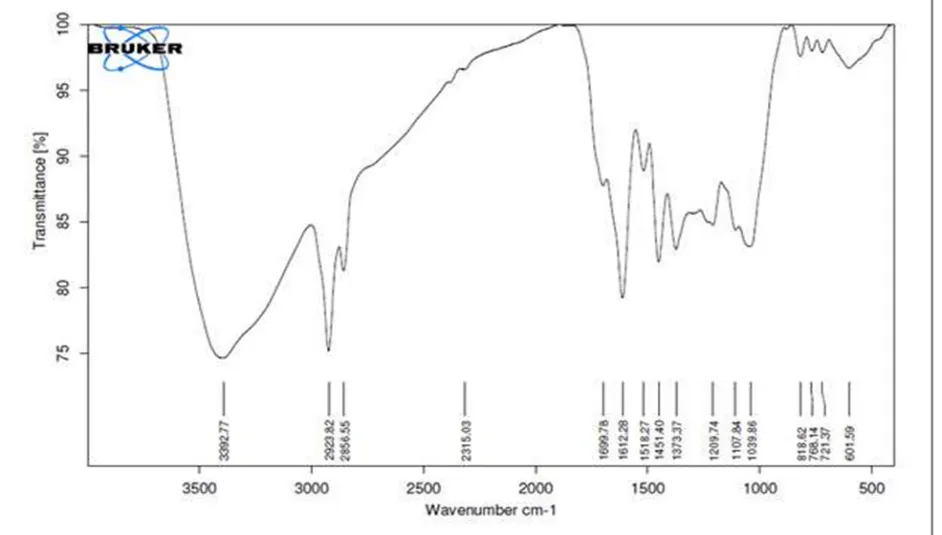
Figure 2: FTIR of Plant Extract
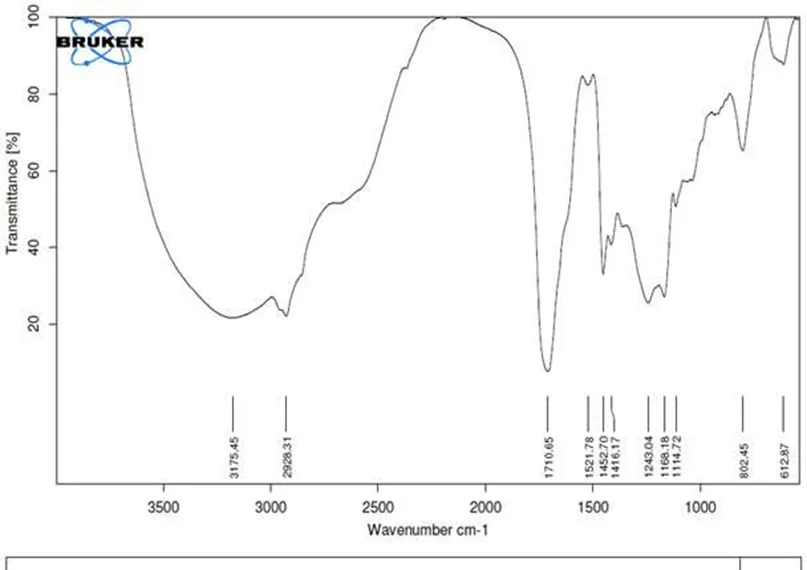
Figure 3: FTIR-Physical Mixture
Experimental Design and Formulation Development
A 3² full factorial design was employed to optimize the polymeric emulgel formulation using Design-Expert® software (Version 13.0). The concentration of Carbopol 940 (X₁) and Span 20 (X₂) were selected as independent variables, while spreadability (R₁) and viscosity (R₂) were considered dependent responses. Nine experimental formulations (F1–F9) were prepared according to the factorial design matrix. This statistical approach enabled systematic evaluation of the influence of formulation variables and facilitated optimization of the emulgel characteristics.
Evaluation of Herbal Emulgel Formulations
Physical Appearance
The developed emulgel formulations (F1–F9) were evaluated for colour, consistency, homogeneity, appearance, greasiness, and washability. All formulations exhibited a uniform light brown colour and opaque appearance, indicating successful incorporation of the plant extract and proper emulsion formation. The formulations were found to be non-greasy and easily washable, suggesting good cosmetic acceptability and patient compliance. Among all batches, formulation F9 showed excellent consistency and homogeneity, indicating superior formulation characteristics.
Table 5: Physical Evaluation of Developed Emulgel Formulations
|
Formulation |
Colour |
Consistency |
Homogeneity |
Appearance |
Greasiness |
Washability |
|
F1 |
Light Brown |
Fair |
Good |
Opaque |
Non-greasy |
Washable |
|
F2 |
Light Brown |
Good |
Fair |
Opaque |
Non-greasy |
Washable |
|
F3 |
Light Brown |
Fair |
Good |
Opaque |
Non-greasy |
Washable |
|
F4 |
Light Brown |
Good |
Good |
Opaque |
Non-greasy |
Washable |
|
F5 |
Light Brown |
Good |
Good |
Opaque |
Non-greasy |
Washable |
|
F6 |
Light Brown |
Good |
Fair |
Opaque |
Non-greasy |
Washable |
|
F7 |
Light Brown |
Fair |
Good |
Opaque |
Non-greasy |
Washable |
|
F8 |
Light Brown |
Good |
Good |
Opaque |
Non-greasy |
Washable |
|
F9 |
Light Brown |
Excellent |
Excellent |
Opaque |
Non-greasy |
Washable |
The physical evaluation confirmed that all formulations possessed acceptable aesthetic and application characteristics. The uniform colour, opaque appearance, non-greasy nature, and easy washability demonstrated successful formulation development. Formulation F9 exhibited the best overall performance with excellent consistency and homogeneity, indicating enhanced stability and suitability for topical administration.
Spreadability, Viscosity and pH
The prepared emulgel formulations (F1–F9) were evaluated for spreadability, viscosity, and pH. All formulations exhibited acceptable physicochemical properties suitable for topical application. Spreadability ranged from 2.7 ± 0.081 to 3.7 ± 0.124 cm, viscosity ranged from 2117 ± 1.885 to 2864 ± 2.540 cP, and pH values were found between 6.5 ± 0.114 and 6.9 ± 0.090. Among all formulations, F9 showed the highest spreadability, lowest viscosity, and acceptable pH, indicating superior formulation characteristics and suitability for topical delivery.
Table 6: Evaluation Data of Developed Emulgel Formulations
|
Formulation |
Spreadability (cm) |
Viscosity (cP) |
pH |
|
F1 |
3.2 ± 0.152 |
2234 ± 1.699 |
6.5 ± 0.114 |
|
F2 |
3.4 ± 0.205 |
2131 ± 1.632 |
6.6 ± 0.066 |
|
F3 |
3.6 ± 0.169 |
2754 ± 1.414 |
6.7 ± 0.074 |
|
F4 |
2.7 ± 0.081 |
2774 ± 1.632 |
6.9 ± 0.086 |
|
F5 |
3.1 ± 0.081 |
2656 ± 1.699 |
6.9 ± 0.090 |
|
F6 |
3.2 ± 0.169 |
2864 ± 2.540 |
6.7 ± 0.074 |
|
F7 |
2.9 ± 0.081 |
2341 ± 2.160 |
6.7 ± 0.074 |
|
F8 |
3.4 ± 0.124 |
2216 ± 1.699 |
6.9 ± 0.061 |
|
F9 |
3.7 ± 0.124 |
2117 ± 1.885 |
6.8 ± 0.069 |
The evaluation results demonstrated that formulation variables significantly influenced spreadability and viscosity. Formulation F9 exhibited optimum physicochemical characteristics with maximum spreadability (3.7 ± 0.124 cm), minimum viscosity (2117 ± 1.885 cP), and skin-compatible pH (6.8 ± 0.069). Therefore, F9 was selected as the optimized formulation for further anti-inflammatory and permeation studies.
In-vitro Anti-inflammatory Activity
The anti-inflammatory activity of the optimized formulation (F9) was evaluated using the protein denaturation assay and compared with Diclofenac sodium as the standard drug. The percentage inhibition increased with increasing concentration for both the standard and test formulation. At 100 µg/mL, Diclofenac sodium showed 73.37% inhibition, whereas F9 exhibited 52.59% inhibition. The IC₅₀ values were found to be 65.11 µg/mL for Diclofenac sodium and 98.25 µg/mL for F9. The results indicate that the optimized emulgel possesses significant concentration-dependent anti-inflammatory activity.
Table 7: In-vitro Anti-inflammatory Activity by Protein Denaturation Assay
|
Concentration (µg/mL) |
Diclofenac Sodium (% Inhibition) |
F9 Formulation (% Inhibition) |
|
20 |
7.14 ± 0.58 |
7.79 ± 1.29 |
|
40 |
22.07 ± 0.75 |
18.18 ± 1.29 |
|
60 |
37.01 ± 0.65 |
33.76 ± 0.75 |
|
80 |
53.89 ± 0.37 |
38.96 ± 1.29 |
|
100 |
73.37 ± 0.37 |
52.59 ± 1.29 |
|
Sample |
IC₅₀ (µg/mL) |
|
Diclofenac Sodium |
65.11 |
|
F9 Formulation |
98.25 |
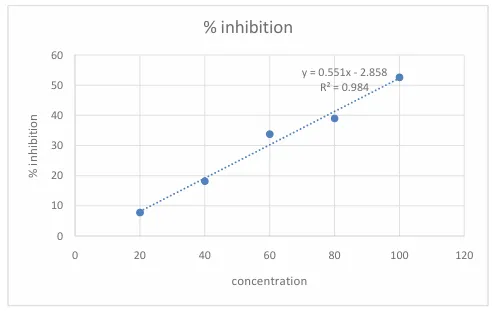
Figure 4: F9 Formulation graph
Skin Irritation Study
The skin irritation potential of the optimized formulation (F9) was evaluated and compared with Aspirin as the standard. The formulation exhibited cell viability ranging from 89.59% to 83.01% across the tested concentrations. No significant cytotoxicity was observed, and the IC₅₀ value could not be determined (NE), indicating a non-irritant nature. These findings suggest that the developed emulgel is safe for topical application.
Table 8: Skin Irritation Study of Optimized Formulation (F9)
|
Concentration (µg/mL) |
Standard (% Viability) |
F9 (% Viability) |
|
20 |
94.84 |
89.59 |
|
40 |
91.13 |
88.37 |
|
60 |
90.54 |
86.53 |
|
80 |
89.30 |
84.92 |
|
100 |
88.12 |
83.01 |
In-vitro Skin Permeation Study
The skin permeation study demonstrated effective penetration of the optimized emulgel through the skin layers. Microscopic examination revealed progressive diffusion of the formulation from the stratum corneum to deeper epidermal and dermal regions over time. Enhanced fluorescence intensity observed after 30, 60, and 90 minutes confirmed improved skin permeation and efficient delivery of the active constituents. These findings indicate the suitability of the developed emulgel for topical anti-inflammatory therapy.
Stability Study
The optimized formulation was subjected to accelerated stability testing at 40°C ± 2°C and 75% ± 5% RH for 45 days according to ICH guidelines. No significant changes were observed in colour, consistency, homogeneity, washability, appearance, pH, or spreadability during the study period, indicating good stability of the formulation.
Table 8: Compiled Stability Study Data of Optimized Formulation (F9)
|
Storage Period |
Colour |
Appearance |
pH |
Spreadability (cm) |
|
0 Day |
Light Brown |
Opaque |
6.6 ± 0.066 |
3.4 ± 0.205 |
|
15 Days |
Light Brown |
Opaque |
6.7 ± 0.074 |
3.6 ± 0.169 |
|
30 Days |
Light Brown |
Opaque |
6.7 ± 0.074 |
3.7 ± 0.124 |
|
45 Days |
Light Brown |
Opaque |
6.8 ± 0.069 |
3.6 ± 0.169 |
The optimized formulation F9 exhibited significant anti-inflammatory activity, good skin compatibility, enhanced skin permeation, and excellent stability under accelerated storage conditions. These results confirm the potential of the polymeric emulgel as a safe and effective topical anti-inflammatory drug delivery system.
CONCLUSION
The present investigation successfully developed and evaluated a polymeric emulgel containing Buchanania lanzan leaf extract for topical anti-inflammatory therapy. The ethanolic extract exhibited the highest extraction yield and was rich in bioactive phytoconstituents such as flavonoids, alkaloids, phenols, tannins, and terpenoids, which are known to contribute to anti-inflammatory activity. FTIR analysis confirmed the compatibility of the extract with the selected excipients, supporting its suitability for formulation development. Nine emulgel formulations were prepared using a 3² full factorial design and evaluated for their physicochemical characteristics. Among the developed formulations, F9 demonstrated superior performance with excellent homogeneity, optimum spreadability, suitable viscosity, and skin-compatible pH. The optimized formulation exhibited significant anti-inflammatory activity in the protein denaturation assay, along with good skin compatibility and enhanced permeation through the skin layers. Furthermore, stability studies indicated that the formulation remained stable under accelerated storage conditions without any significant changes in its physical and functional properties. Overall, the study confirms that the polymeric emulgel of Buchanania lanzan leaf extract represents a promising herbal topical delivery system with effective anti-inflammatory activity, good patient acceptability, and excellent stability. The developed formulation may serve as a potential alternative to conventional topical anti-inflammatory therapies and warrants further in-vivo and clinical investigations.
CONFLICT OF INTEREST
The authors declare no conflict of interest.
REFERENCES

Pranjal Gite, Ashvini Bankar, Dr. Sagar Muley, Formulation And Evaluation of Polymeric Emulgel of Buchanania Lanzan Leaf Extract for In-Vitro Anti-Inflammatory Activity, Int. J. of Pharm. Sci., 2026, Vol 4, Issue 8, 1932-1947, https://doi.org/10.5281/zenodo.21900676
 10.5281/zenodo.21900676