

We use cookies to ensure our website works properly and to personalise your experience. Cookies policy
Department of Pharmacognosy, GES’s Sir Dr. M. S. Gosavi College of Pharmaceutical Education and Research, Nashik.
Skin ageing is a complicated biological process that is impacted by a number of variables, such as heredity and the environment. Particularly during the COVID-19 pandemic, the perennial plant Houttuynia cordata, which is endemic to East Asian countries, has drawn interest for its possible antiviral qualities. Flavonoids, water-soluble polysaccharides, volatile oils, and leaf extracts with antioxidant qualities are all present in H. Cordata. Research has been done on the possible anti-aging and acne-causing properties of H. Cordata extract. Pharmacological effects include anti-tumor, anti-cancer, anti-anaphylactic, antiviral, antibacterial, anti-obesity, anti-diabetic, anti-leukemic, antimutagenic, anti-inflammatory, and antioxidant properties. The antioxidant properties of Houttuynia cordata neutralise free radicals, avoiding cellular damage and minimising fine lines and wrinkles.
Skin aging is a multifaceted biological process that is impacted by both exogenous and endogenous variables, such as chronic light exposure, contamination, ionizing radiation, chemicals, and toxins, as well as endogenous or intrinsic elements including genetics, cellular metabolism, hormones, and metabolic processes.[1]Together, these elements cause progressive changes in every layer of the skin, accumulated structural and physiological abnormalities, and modifications in the look of the skin, particularly in parts of the skin exposed to the sun.[2]The features of prematurely photoaged skin involve primarily more thick epidermis, mottled pigmentation, deep wrinkles, laxity, dullness, and roughness, as opposed to delicate, weakened, finely wrinkled, and dry intrinsically aged skin.[3]Collagen, elastin, and glycogen-boosting agents (GAGs) constitute the three main structural elements of the dermis. These components have been the focus of most rejuvenating research and efforts related to dermatology, ranging from “wrinkle creams” to several distinct fillers.[4]The entire face may exhibit signs of aging due to an array of variables like gravity, muscular contraction, volume loss, the reduction and redistribution of deep and superficial fat, and the loss of bone support, which can cause the face to sag and change in form and contour.[5]Phytochemicals. Antioxidants (Basel).The likelihood of long-term effects like photoaging, photoimmunosuppresion, and photocarcinogenesis is raised via UV radiation.[6]The skin experiences two separate kinds of alterations. Chronological aging is the term used to describe changes in the complexion that are solely brought about by time. The alterations brought about by repeated exposure to sunlight are referred to as photoageing.Clinical indications of chronological aging of the skin include wrinkles, slackness, xerosis, laxity, and the emergence of several benign neoplasms including cherry angioma and seborrheic keratosis.[7]Historically, 70–95% of the treatments provided for various diseases, particularly in Asia, including India, have been based on the extensive traditional knowledge of medicinal plants.[8]Analgesic morphine, antimalarial medications artemisinin and chloroquine, cancer-treating vinca alkaloids, and other significant pharmacologically active substances utilised in contemporary medicine are all derived from plants.[9]An ongoing and essential source of potent medicinal molecules is the never-ending quest for new, plant-derived bioactive chemicals. Houttuynia cordata (H. Cordata), a perennial plant native to East Asian countries and member of the Family “Saururaceae,” is one such plant that has drawn special attention because of its possible anti-viral properties, particularly in light of the current COVID-19 pandemic.[10]Also, depending on the area, it is referred to by a variety of common names, including Chinese lizard tail, fish wort, heart leaf, and chameleon plant.[11]
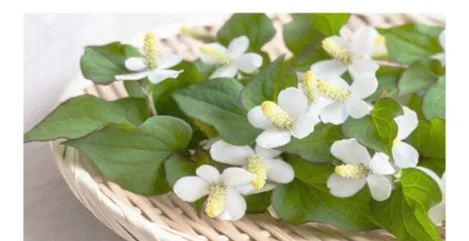
Fig.1: Houttuynia cordata[124]
History
Known as Yuxingcao in China, Houttuynia cordata Thunb is a widely recognized herb and vegetable in many regions of Asia, and it is noted for its distinct fishy fragrance.[12]The perennial herb Houttuynia cordata, which refers to the Saururaceae family, is used both as a food as well as a Chinese herbal remedy. It flourishes particularly well in warm, wet soil environments. Its use has been documented in China, Korea, Japan, India, and other Asian nations; in particular, numerous Chinese provinces have benefited from it. For the past few millennia, Native Americans have been consuming H. Cordata and using it as medicine. At the moment, it is also harvested in the Yarlung Zangbo Valley in Assam, India, for use as daily food and medicinal.[13]
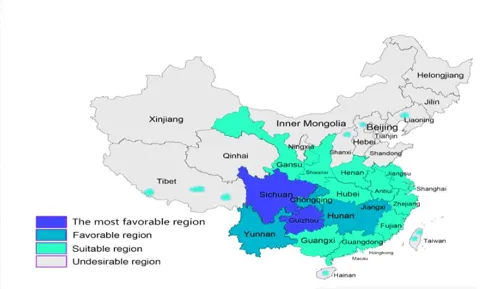
Fig.2: Favourable regions for growth of H.cordata[125]
It is mostly found in North-Eastern states of India, such as Assam, Meghalaya, Manipur, Tripura, Mizoram, Arunachal Pradesh, and Sikkim.[118]
The plant likes a moist, damp atmosphere to grow in.[119] Research from North-East India has revealed that the plant needs a unique, damp environment with clay loam soil that has a greater level of organic carbon (0.85 ± 0.05%).soil moisture content of 78% and average soil pH of 5.9[120]Many common names for the plant are widely used in everyday speech, including Chinese lizard tail, fish wort, or heart leaf. For culinary, medicinal, and decorative purposes, it is widely utilised.[121]It is frequently used in culinary preparation, medicine, and ornamentation.[122]There are no known reports of sexual reproduction in this plant. It primarily reproduces by parthenogenesis and profuse rhizomes or stolons, which are forms of vegetative propagation.[123]
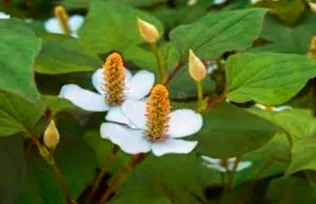
Fig.3: Houttuynia cordata[126]
Table.1:Taxonomic hierarchy of Houttuynia cordata
|
Species |
Houttuniya Cordata Thunb |
|
Genus |
Houttuniya thunb |
|
Family |
Saururaceae |
|
Order |
Piperales |
|
Superorder |
Magnolianae |
|
Class |
Magnoliopsida |
|
Subdivision |
Spermatophytina |
|
Division |
Tracheophyta |
|
Superdivision |
Embryophyta |
|
Infrakingdom |
Streptophyta |
|
Subkingdom |
Viridiplantae |
|
Kingdom |
Plantae |
Morphology
H. cordata Thunb. Belongs to the family Saururaceae and is commonly known as Chinese lizard tail. It is a perennial herb with stoloniferous rhizome having two distinct chemotypes.[14]The goal of this review is to provide light on the medicinal plant Houttuynia cordata Thunb, which is native to China and North-East India.[15]H. cordata is a polyploid flowering herb that is endemic to China, Japan, Korea, northeast India, and Southeast Asia. It is either diploid or tetraploid.[16]Houttuynia cordata is a single species of creeping herb that is located in India. It is a perennial herb with alternating, big, and broad leaves; bisexual flowers are regular and form a long, dense spike; the perianth is absent, and there are six or less stamens in the flower. Three to four carpels that are either distinct or combined into a hypogynous or pistil. An ovary with three to four cells, two to multiple ovules present during parietal placentation, and stigmas as numerous as the carpels; lobed berries or fruit follicles. It is anatomically similar and closely related to the family Piperaceae. Secretory cells are broadly distributed, and vascular bundles are frequently in large quantities in ground tissue. Cluster crystals are frequently found. This family’s fundamental values are monoterpenes, benzamides, and flavanoids.[17][18][19][20]H. cordata is a creeping herbaceous plant with scented leaves. Its broad, ovate-cordate leaves measure 4–8 cm in length and 3-6 cm in breadth. It grows to a height of around 20–50 cm. Petiole length is 1-3.5 cm, glabrous; stipular sheath is 1-2.5 cm, ¼-1/2 as long as petiole, generally ciliate, base expanded and somewhat clasping.[21]The leaf blades are typically glabrous, slightly papery, thickly glandular, widely oblong or ovate-cordate, and 4–10 cm long by 2.5–6 cm wide. Sometimes they are pubescent at the vein axils; veins 5-7, basal or innermost pair originating approximately 5 mm above the base, if 7-veined, then outermost pair extremely slender or inconspicuous; reticulate veins ± prominent. Usually purplish abaxial; base cordate; apex acuminate briefly.Peduncles: 1.5–3 cm, subglabrous; involucral bracts: oblong or obovate, 10-15 mm long, 5-7 mm wide, with a rounded tip. Inflorescences: 1.5–2.5 cm long, 3-6 mm wide. The flowers have dense spikes and are naked. They flower in June and July and are supported by three stamens, involucres, non-petal golden inflorescences that are about 1-3 cm long, and four white and petalloid bracts.Rhizomes are slender, creeping structures, with the basal portion of stems rooted in whorls at nodes and the apical part standing, glabrous
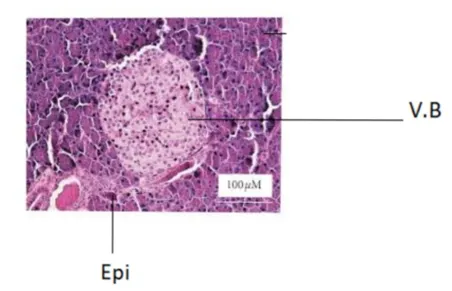
Fig.4:Histology through petiole of Houttuynia cordata [23]
The upright aerial stems of H. Cordata Thunb. Are connected by horizontal rhizomes or stolons, and mature plants range in height from 30 to 60 cm. Each terminal inflorescence bears four bracts at the base that mimic a single flower, giving the appearance of a dense spike of tiny, petalless blooms measuring 1.5–2.5 cm in length. The leaves are cordate, heart-shaped, and have a sheathing base. They can grow up to 10 cm long and 6 cm wide. Normally green, they can turn purplish when exposed to sunshine. There are nine to eighteen apomictic seeds in each of the tiny (2–3 mm long) fruits.[24]In the spike ofHouttuynia cordata with many large bracts all flowers in a spike are regularly arranged in a secondary pseudo-opposite order. Arrangment of flowers in the normal spike also follows the same order. A pistillate organ is usually borne at the terminal of the spike. Vascular anatomy of the flower, inflorescence and the arrangement of flowers suggest that this terminal organ should be interpreted as a compound structure composed of four units, each of which represents one flower with a single carpel and a single dorsal stamen. The terminal pistillate organ of a lateral spike is considered to have a structure intermediate between that of the normal hermaphoriditic flower and that of the terminal pistillate organ of the main spike.[25] Idioblasts of H. Cordata were dispersed in the root cortex in a ring-like pattern. The vascular cycle of H. Cordata was single. A stem of H. Cordata had a noticeable hypodermis layer, and the epidermis of the plant formed epidermal oil cells. In the stem of H. Cordata, the cross-sectional form was round.[26]The species, which forms the basis of paleoherbs, is typically identified by the presence of three distinct types of secretory cells, oil cells, and glandular hairs.[27]In Houttuynia cordata, glandular hairs are found on the aerial stems and leaves, while oils cells and secretory cells are found throughout the plant’s organs. Although they begin in the protoderm, glandular hairs and oil cells have distinct developmental processes. Despite coming from distinct main meristems, all three types of secretory cells follow the identical developmental pathways.[28] According to histochemical findings, flavonoids, phenolic compounds, tannins, lipids, aldehyde, and ketone compounds are produced by oil cells, secretory cells, and glandular hairs. Furthermore, alkaloids are found in secretory cells of aerial stems, terpenoids and pectic-like compounds are found in oil cells, and terpenoids and alkaloids are found in glandular hairs.[29] The functions of these chemicals are crucial in preventing microbial diseases and herbivores from consuming plants. During the evolution of secretory structures, the oil cell and secretory cell, as unicellular secretory tissues, represent intermediates between the primordial surface glandular and secretory cavity and canal.[30]
Phytoconstituents
Numerous active substances, such as flavonoids, water-soluble polysaccharides, and volatile oils, are present in H. Cordata. H. Cordata leaf extracts contained flavonoids with potent antioxidant properties.The formation of inflammatory biomarkers was reduced by the ethanolic extract of H. Cordata’s aerial parts.[31]The health benefits of medicinal plants have also drawn interest. Plant-derived flavonoids, saponins, polysaccharides, and alkaloids have been shown to have llpowerful antiaging properties, making them promising candidates for the creation of antiaging products.[32]Its chemical components, which include volatile oils, alkaloids, flavonoids, and phenolic acids, are typical of therapeutic plants. These ingredients were extracted from H. Cordata. The two primary active ingredients are flavonoids and volatile oils.[33]The contents of the underground and aboveground stems varied; in the aboveground parts, there were higher concentrations of 2-undecanone, myrcene, ethyl decanoate, ethyl dodecanoate, 2-tridecanone, and decanal; specifically, 11 ingredients were only isolated in the leaves, while seven ingredients in the roots were not present in the leaves.[34]The aerial portions and underground stem have essential oil contents ranging from 0.06 to 0.14% and 0.08 to 0.16%, respectively. The essential oils were examined using NMR (1H and 13C), GC-FID, and GC/MS. 2-undecanone, myrcene, ethyl decanoate, ethyl dodecanoate, 2-tridecanone, and decanal were the main ingredients of aerial-parts oil. Nevertheless, 2-undecanone, myrcene, sabinene, 2-tridecanone, β-pinene, and ethyl dodecanoate were the main ingredients of underground-stem oil.[35]Most phytochemical research on H. Cordata to far has concentrated on three categories of phytochemicals: components of essential oils, flavonoids, and alkaloids.[36]The antitumor, antioxidant, antimutagenic, and free radical scavenging properties of the flavonoid components were demonstrated.[37]Similarly, there were notable strong antiplatelet and cytotoxic effects from the alkaloid components.[38]
Biosynthesis
The biological activities of Aureobasidium pullulans fermented with Houttuynia cordata, a medicinal plant, were studied for chemical and photooxidation-induced oxidations of human skin keratinocytes. HaCaT cell lines that were stimulated by H 2 O 2/UVA were treated with water/ethanol extracts from H. Cordata (HCW/HCE) and fermented with water/ethanol extracts from A. Pullulans (HCFW/HCFE). When compared to H. Cordata water extracts (HCW), A. Pullulans fermented with H. Cordata (HCFW) increased in flavonoids by 2.3 fold and total polyphenol by 5.4 fold.All of the H. Cordata extracts fermented with A. Pullulans shown no appreciable cytotoxicity for HaCaT cells. HCFW extracts have been shown to significantly reduce inflammatory variables in oxidatively stressed HaCaT cells generated by UVA and H 2 O 2 treatments, including COX-2 and Hsp70 proteins.[39]UVB radiation damages skin by inducing oxidative stress, inflammation, and collagen breakdown, among other harmful effects. A hyperoside-enriched fraction from Houttuynia cordata Thunb . (H. Cordata) was used to study the photoprotective effects on human fibroblasts’ ability to attenuate UVB-induced skin ageing. The solvent-partition method was employed to determine H. Cordata’s hyperoside-enriched fraction (HcEA).[40]The active ingredients found in the H. Cordata extracts were rutin, hyperoside, quercitrin, and chlorogenic acid. HcEA and hyperoside reduced intracellular ROS production and inflam matory cytokine secretions (IL-6 and IL-8), while upregulating MMP-1 gene and protein expressions and increasing collagen type I synthesis were the photoprotective effects of H. Cordata on UVB-irradiated dermal fibroblasts.[41]Mechanistically, by reducing the activation of JNK/ERK/c-Jun in human dermal fibroblasts, the hyperoside-enriched fraction isolated from H. Cordata reduced UVB-irradiated skin ageing through modulation of the MAPK signalling pathway. In response to UVB exposure, the hyperoside-enriched fraction of H. Cordata demonstrated strong anti-aging effects on the skin. In response to UVB exposure, the hyperoside-enriched fraction of H. Cordata demonstrated strong anti-aging effects on the skin.[42]Since UVB is more active in causing skin damage and can cause photochemical damage to cellular DNA and proteins, it is believed that UVB radiation, which makes up a small part of all UV radiation, is more dangerous than UVA radiation.[43]While changes resulting from UVB radiation cause visibly dramatic photo-aging effects primarily within the epidermis and penetrate the upper part of dermis, which is rather concerning in terms of skin aging characteristics, UVA radiation has a negative effect on epidermal keratinocytes and dermal fibroblasts and induces long-term changes.[44]It has been discovered that UVB exposure to the skin causes harmful photochemical reactions, such as sunburn, inflammation, and DNA damage, which subsequently result in gene mutation and the development of skin cancer.[45]
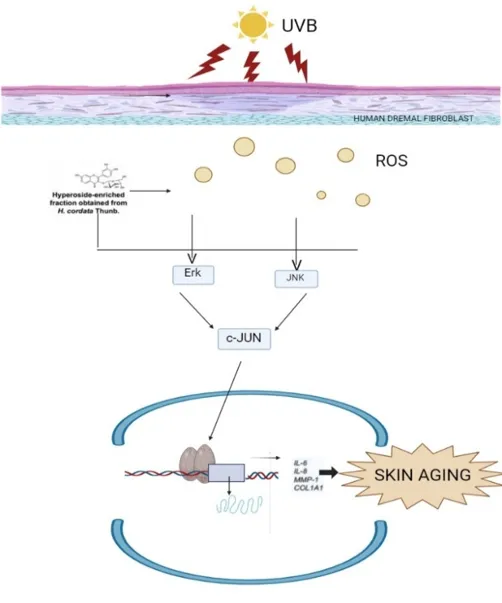
Fig.5: UVB induced on human dermal fibroblast[127]
Skin inflammation can be brought on by UVB radiation through the activation of activator protein 1 (AP-1) or the transcription factor nuclear factor (NF)-κB. The production of proinflammatory cytokines such as interleukin 1 (IL-1), IL-6, and IL-8 may rise as a result, drawing neutrophils and escalating oxidative damage through the generation of free radicals.[46]Collagenase-1, or MMP-1, is one of these dermal proteolytic enzymes that is crucial to the imbalanced turnover or quick disintegration of collagen molecules in human inflammatory and UV-irradiated skin. Thus, by lowering inflammatory conditions and preserving collagen homeostasis in UVB-exposed skin, a decrease in inflammatory responses and a suppression of aberrant collagen breakdown may be able to prevent skin ageing.[47]Based on scientific data, phytochemicals have the potential to halt or even reverse the aging-related degradation of skin function and appearance by lowering inflammatory mediators and targeting cellular pathways that are essential for controlling cellular senescence.[48]UVB-irradiated HaCaT keratinocytes showed concentration-dependent intracellular ROS scavenging capacity when exposed to the ethyl acetate fraction of H. Cordata.[49]Collagen is essential to both the renewal of the skin and the preservation of its general smoothness. Wrinkles are a sign of ageing skin because UVB radiation prevents collagen production in the skin.[50]
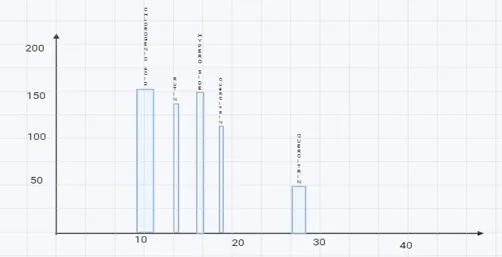
Fig.6.1
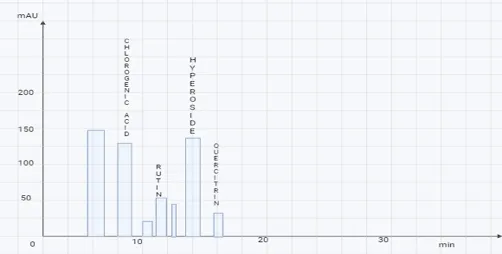
Fig.6.2
H. cordata extracts’ HPLC profile. Chemical structures of the study’s active ingredients, which are quercetin, hyperoside, rutin, chlorogenic acid, and quercitrin, in that order (A). HPLC chromatogram of standards for active compounds based on retention times, with a concentration of 50 μg/mL for each standard (B). The HcEE HPLC chromatogram was obtained at 2500 μg/mL (C). HPLC chromatogram showing 2500 μg/mL of HcEA (D). A reversed-phase C18 column was used to assess the HPLC chromatograms. Under gradient conditions, mobile phase B (MeCN)and mobile phase A (0.1% CH3COOH) made up the mobile phase. 330 nm was the detecting wavelength. 0.8 mL/min was chosen as the flow rate.
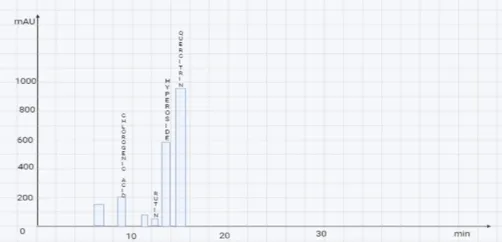
Fig.6.3
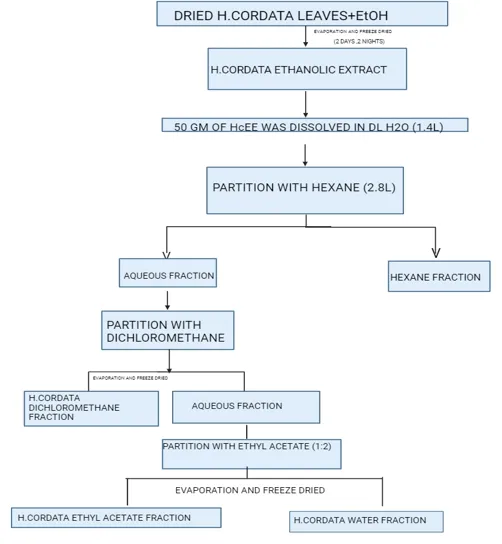
Fig.7:Flowchart
Activity of Houttuynia cordata
Without aiming to identify immune cell and skin qualities, H. Cordata extract has been investigated for potential anti-aging and anti-acne capabilities.[51]
Table.1: H.Cordata contains flavonoids and other polyphenols.[128]
|
Number |
Compounds |
Classes |
Parts |
|
1 |
Quercetin |
Flavonoids |
E,A |
|
2 |
Rutin |
Flavonoids |
A,L,SP,S |
|
3 |
Hyperin |
Flavonoids |
A,SP,L,S |
|
4 |
Afzelin |
Flavonoids |
E,A,L,SP,S |
|
5 |
Quercitrin |
Flavonoids |
A,E,L,SP,S |
|
6 |
Isoquercitrin |
Flavonoids |
A,L,SP,S |
|
7 |
Apigenin |
Flavonoids |
A |
|
8 |
Kaempferol |
Flavonoids |
E,L,R,S |
Liquid chromatography with tandem mass spectrometry (LC-MS/MS) was employed to examine the phytochemicals and assess the in vitro anti-aging and anti-acne properties of H. Cordata extracts.. Different extraction methods were used to dried aerial portions of H. Cordata. The total phenolic and flavonoid contents were screened using the aqueous and ethanolic extracts that were obtained, which were designated HCA and HCE, respectively. Scanning electron microscopy (SEM), in vitro cytotoxic, anti-aging in vitro, skin-related antibacterial, and LC-MS/MS investigations were conducted.[52].The primary cause of skin aging is a decrease in the extracellular matrix (ECM), which is mostly composed of hyaluronic acid, collagen, and elastin. Enzymes associated with aging, such as collagenase, elastase, and hyaluronidase, are responsible for the losses in the structural components.[53]Collagenase is responsible for collagen degradation, which leads to reduced skin elasticity and tensile strength of the skin.[54]The primary enzyme that breaks down elastin is elastase, which belongs to the chymotrypsin family of proteases.The major enzyme hyaluronidase regulates both the amount of hyaluronic acid that is turned over in human skin and how much moisture is retained in epideepidermis.[5]
Table.2:H.Cordata contains flavonoids and other polyphenols.[128]
|
Number |
Compounds |
Classes |
Parts |
|
1 |
Quercetin |
Flavonoids |
E,A |
|
2 |
Rutin |
Flavonoids |
A,L,SP,S |
|
3 |
Hyperin |
Flavonoids |
A,SP,L,S |
|
4 |
Afzelin |
Flavonoids |
E,A,L,SP,S |
|
5 |
Quercitrin |
Flavonoids |
A,E,L,SP,S |
|
6 |
Isoquercitrin |
Flavonoids |
A,L,SP,S |
|
7 |
Apigenin |
Flavonoids |
A |
|
8 |
Kaempferol |
Flavonoids |
E,L,R,S |
Uses of Houttuynia Cordata in cosmetics
Products that regulate skin health and appearance are divided into categories into chemicals, toners, exfoliants, lotions, specialist creams, and antiperspirants.[56]
Toners
Facial toners are utilized as cosmeceutical remedies and serve a range of purposes, notably antisepsis, pore-tightening, pH balancing, rehydrating, and reducing irritation.[57] Employing a high-pH cleaner to clean faces could cause irritation to the skin. As an outcome, toners were created to balance the pH of the skin.[58]Houttuynia cordata Asia is home to thunb (H. Cordata; Saururaceae). The heart-shaped leaves of H. Cordata, at times known as heartleaf, have been shown in studies to be beneficial for oily, dry, and acne-prone skin. Humectant-containing H. Cordata extract (HCE) is great for nourishing and preserving the moisture content of the skin.[59]In addition to being used in general medicine, H. Cordata is used in both food and cosmetic products. H. Cordata is often used as a cosmetic in conjunction with other herbal treatments in Korea and Japan. Its extraction is utilized to make cosmetic products that cure or prevent wrinkles.[60]Furthermore, H. Cordata is utilized to make a massage pack that may effectively cure freckles, chloasma, acne, and atopy without causing scarring.[61]Both a formulation with and without HCE (designated as F1 and F2) of the oil-controlling and moisture-adding face toners were created. In a bid to promote solubility and compatibility, deionized water was added in two stages (A and B).Of all the face toner formulas, the deionized water had the greatest percentage. The components were combined to create the face toners, as shown in [Table 1]. Phase A was thoroughly combined, heated to 50 °C, and stirred. After cooling to 30 °C, Phase B was gradually added and well mixed while being constantly stirred. Then Phase AB was progressively mixed with Phase C, scent, and phenoxyethanol. Using 10% citric acid, the pH values of the face toners were finally brought to 5.5. Proper face toners in this study were thoseat were lightweight, left the skin feeling supple, and did not leave the skin feeling oily. (change)[62]
Sunscreens
Skin aging is a multifaceted, intricate process that alters the skin's appearance and functionality. UV light is one of the extrinsic factors that cause these alterations.[63]UV light can cause telomere degradation and the generation of reactive oxygen species (ROS), which can lead to cellular senescence. These pro-inflammatory mediators secreted by these senescent cells have the ability to profoundly alter the structure and function of tissues.[64]While UVB radiation causes changes that are visibly dramatic in terms of photoaging, primarily within the epidermis and penetrating the upper part of the dermis, it also adversely impacts epidermal keratinocytes as well as dermal fibroblasts, resulting in long-term changes that are quite troubling in terms of skin aging characteristics.[65]Current research indicates that phytochemicals may be able to stop or even reverse the aging-related decline in the function and appearance of the skin by focusing on cellular pathways that are essential for controlling cellular senescence and lowering those inflammatory mediators.[66][67][68][69]
The goal, use, and significance of skin care products
Individuals that utilize clothes, makeup, tattoos, fading, and plastic surgery come from all over the world. Individuals today search out methods to enhance their appearance and gain from proceprocedures.[70]
But surroundings and the incredibly sophisticated world we live in also adversely impact individuals. For example, a restricted air system might provide a comfortable living space, but it might also cool the skin too much, causing dryness. It's getting more and more obvious that radiant beauty can also have a terrible effect on skin. The following advantages of using quality skin care products are understandable to those who live in such a cutting-edge environment.
Previously, it was believed that skin health management beauty care products only had three goals; however, since photoaging is likely to occur, the fourth function is now routinely included.
Uses of Houttuynia cordata other than cosmetics
1. In Treatment Of Infantile Pneumonia
One of the most prevalent causes of death for newborns globally is infantile pneumonia (IP).[72]
IP results in numerous extrapulmonary problems in addition to a variety of intrapulmonary issues. There aren’t numerous drugs being utilized therapeutically to treat IP right now.[73] Azithromycin and roxithromycin are examples of macrolide antibiotics that are first-line medications in the usual treatment for IP.[74] However, long-term administration of these medications has been limited due to gastrointestinal problems and drug resistance.[75]
IP is specifically treated with Houttuynia cordata Thunb (HCT), a classic Chinese herb with both medicinal and culinary qualities.[76] More and more research has demonstrated in recent years that HCT has anti-viral , anti-oxidative, anti-inflammatory ,and anti-bacterial activities ,providing medical evidence for HCT to alleviate pneumonia.[77] Nutraceutical prospects of Houttuynia cordata against the infectious viruses.[78] Chemical profiling of Houttuynia cordata Thunb. By UPLC-Q-TOF-MS and analysis of its antioxidant activity in C2C12 cells.[79] Two new 4-hydroxy-2-pyridone alkaloids with antimicrobial and cytotoxic activities from arthrinium sp. GZWMTZ-606 endophytic with Houttuynia cordata Thunb. For more than fifty years, Houttuynia cordata injection (HCI), a commercial product derived from HCT, has been utilized in therapeutic settings in China.[80]HCI significantly reduces the in vitro infection of pseudorabies herpesvirus and the H1N1 influenza virus in mice.[81]The effect of Houttuynia cordata injection on pseudorabies herpesvirus (PrV) infection in vitro.[82]
2. General Uses
HCT is used as an affinal medication and diet supplement to treat lung-related symptoms such lung infection, sputum, cough, dyspnea, and pneumonia, as well as to lower fever, resolve toxins, reduce swelling, and encourage urine.[83][84]It can be added to feeds as an oral supplement for folk zootherapy purposes in order to prevent or treat swine ailments, such as overcoming viruses that cause respiratory problems, poor growth performance, breeding failures, and mortality.[85]Oral supplementation of Houttuynia cordata extract reduces viremia in PRRSV-1 modified-live virus-vaccinated pigs in response to the HP-PRRSV-2 challenge.[86]In 2003, during the SARS (severe acute respiratory syndrome) virus pandemic, HCT was made widely known as a crucial element in Traditional Chinese Medicine (TCM) treatment plans for SARS patients in Taiwan and Hong Kong.[87] 2020 saw the development of two more Traditional Chinese Medicine (TCM) formulas by the National Research Institute of Chinese Medicine (NRICM), which is part of the Ministry of Health and Welfare in Taiwan (NRICM). The formulas, called Chingguan Yihau (NRICM101) and Chingguan Erhau (NRICM102), both included HCT as a major and essential ingredient. These concoctions were especially developed to reduce the symptoms of COVID-19, or coronavirus disease. The results of a clinical research showed that among individuals suffering from mild-to-severe COVID-19, NRICM101 and NRICM102 were substantially related with a decreased probability of intubation/ICU treatment or mortality. Furthermore, studies in contemporary pharmacology have demonstrated the ability of HCT to exhibit antiviral, anti-inflammatory, antitumor, antioxidant, and antibacterial properties, hence safeguarding the heart, kidneys, lungs, and digestive system.[88][89]
It is well recognized that HCT's flavonoid and flavonoid glycoside content—including hyperoside, quercetin, quercetin-3-O-rhamoside, and quercetin-7-O-rhamoside—is associated to its antiviral and anti-inflammatory propeproperties. [90][91] Flavonoids from Houttuynia cordata attenuate H1N1-induced acute lung injury in mice via inhibition of influenza virus and Toll-like receptor signalling.[93]
3. Pharmacological uses of H. cordata thunb
The term "pharmacological therapy" relates to the production and usage of medications, as well as their physiological consequences. Numerous monographs centered around pharmacological studies have been released to help with botanical identification.[94] Its pharmacological effects include anticancer, antitumor, antianaphylaxis, antimutagenic, anti-inflammatory, antiallergic, antioxidant, antiviral, antibacterial, anti-obesity, anti-diabetic, antileukemic, and antimicrobial actions.[95]
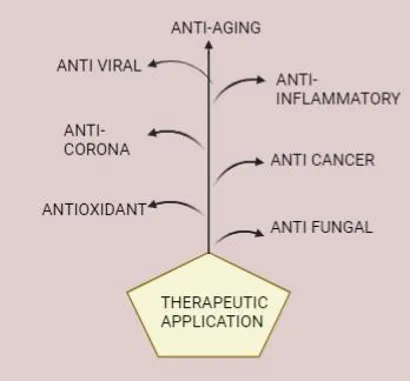
Fig.8:Therapeutic application
This research addresses the scientific and medicinal applications of H. cordata, its chemicals, and medications isolated from it, along with their impact on human health.The plant is historically used to cure numerous ailments, including as eye difficulties, dermatitis, hemorrhoids, fever, inflammation, pus discharge, stimulation of urine, and women's health concern.[96] Evaluation of antiviral activities of Houttuynia cordata Thunb. extract, quercetin, quercetrin and cinanserin on murine coronavirus and dengue virus infection[97]
Table.3:Marketed Formulations
|
Sr No. |
Type of Product |
Company |
Uses |
Price |
|
1. |
Sunscreen |
Anua |
This cream provides strong sunblock and calms your skin and provides care for sensitive skin. |
Rs.2,339 |
|
2. |
Serum |
Mary & May |
This product helps to remove impurities deep in pores , helps to alleviate troubled skin condition while also providing soothing effect. |
Rs.900 |
|
3. |
Moisturizer Cream |
Esfolio |
This cream provides deep moisturizing effect to your skin. It also helps to calm irritation and gives skin a healthy glow. |
Rs.1.199 |
|
4. |
Toner Pads |
All Natural |
This product helps reduce irritation and redness. It restores water-oil balance and instantly hydrates skin after cleansing step. |
Rs.10,692 |
|
5. |
Moisture Serum |
Goodal |
This product is used for cleansing, prepping, and strengthening troubled skin. |
Rs.2,720 |
Extraction Methods
The World Health Organization (WHO) appreciates the use of plants for medical and therapeutic reasons so let's see some examples of extraction methods of HC.[98]
1. Pressurized liquid extraction of flavonoids from Houttuynia cordata
The investigation of H. Cordata Thunb flavonoids’ pharmacological actions also demonstrated that they are beneficial components.It is of great importance to discover a reliable method for extracting and determining flavonoids in H. Cordata Thunb.[99] Pressurized liquid extraction (PLE), also known as accelerated solvent extraction, is a freshly acknowledged method of extraction which employs high pressure and temperature with a forced flow of solvent.[100] PLE is a viable alternative to traditional solvent extraction procedures for the manufacture of extracts from diverse plants or other foods.It is a solid-liquid extraction carried out at high temperatures (50-200°C) and reasonably high pressures (10-15 MPa) to function above the solvent’s boiling point.[101]In this method, solvent diffusion rises as viscosity and surface tension decrease, enabling solvent penetration into the solid sample and lowering the interaction of target chemicals with the matrix, boosting mass transfer.[102] PLE is a process that allows for little solvent usage while operating at elevated pressures and temperatures. These conditions facilitate rapid and effective extraction by boosting diffusion, lowering viscosity, and lessening surface tension when using the extraction solvent.[103]
2. Ultra-sound assisted extracted procedure
The circumstances for the ultrasound-assisted (UA) extraction of H. Cordata leaves were the same as in our earlier research. In a nutshell, the powdered H. Cordata leaf was weighed and extracted using 80% ethanol at a power of 80% for 38 minutes at 60 °C. The ratio of powder to solvent was 1:60 (g/mL). After that, the extract was concentrated using a low-pressure evaporator and filtered.[104]
3. Aqueous-two phase system for extraction
The “salting-out” phenomena and the battle between salt and ethanol for water particles constitute the causes of the phase separation process of ethanol/salt ATPS.[105] Either ethanol separates from the salt solution, or the salt crystallizes due to interactions between ethanol molecules and the differential in attraction between ion-water and ethanol-water.[106]
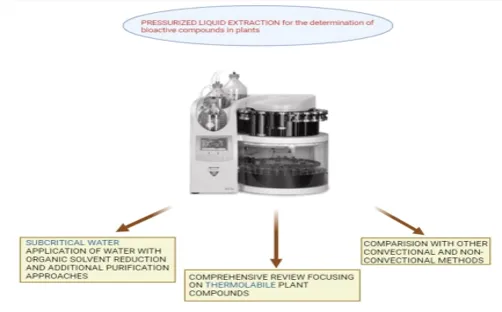
Fig.9:Pressurized liquid extraction
Because of the variations in their affinities for water and ethanol molecules, the flavonoids at different concentrations distributed in the two phases. The findings demonstrated the high solubility of all the salts; nevertheless, the remaining salts, with the exception of K2CO3 and (NH4)2SO4, are unstable and prone to crystallization in the co-solvency of ethanol and water, making them unsuitable for ATPS extraction. When ethanol is added, only the salts K2CO3 and (NH4)2SO4 show reasonable and stable phase separation. Therefore, following the UA-ATPS extraction, the ethanol/(NH4)2SO4 and ethanol/K2CO3 systems were used to examine the concentrations of flavonoids.[107]
SIDE EFFECTS
Houttuynia cordata frequently causes fever, skin rash, diarrhoea, headaches, and abdominal pain.[108] Possible Houttuynia Cordata Adverse Effects on Skincare Though frequently lauded for its possible advantages in skincare, Houttuynia cordata can occasionally result in negative side effects. Some possible adverse effects are as follows:
Sensitivity of the skin: After using products containing Houttuynia Cordata extract, some people may feel red, itchy, or burning. For people with sensitive skin in particular, this is true. Rarely, allergic responses to Houttuynia Cordata may occur in individuals. Breathing difficulties, oedema, or hives are possible symptoms. Following the use of goods containing Houttuynia Cordata, some persons may notice heightened sensitivity to sunlight. Damage to the skin, including sunburn, may result from this.[109]
1. Gastrointestinal disorders: one of the negative effects of Houttuynia cordata. Symptoms like vomiting, diarrhoea, and abdominal pain have been reported as a result. Though traditionally used to treat digestive problems, its consumption might occasionally make gastrointestinal discomfort worse, especially in sensitive people. Further raising concerns about safety are the gastrointestinal effects of aristolochic acid alkaloids, which are present in some preparations.[110][111][112]
2. Skin rashes: Happen as a result of taking Houttuynia cordata, particularly in those who are sensitive. Red patches, swelling, and itching are possible symptoms. To reduce the possibility of negative reactions, a patch test should be performed prior to complete administration. Seeking quick medical attention from a professional is advised if any unusual symptoms appear.[113]
3.Anaphylaxis: Houttuynia cordata has been reported, especially in those who may be allergic to any of its constituent parts. While its anti-allergic qualities are acknowledged, there have been documented instances of severe allergic responses, including anaphylaxis, after using it. This emphasises how dangerous Houttuynia cordata can be if used by someone who has a history of sensitivities to related herbal items or components. Anaphylaxis symptoms, such as breathing difficulties or swelling, require emergency medical intervention.[114] Organs, especially the liver and kidneys, may be toxically affected by Houttuynia cordata. High doses have been linked to nephrotoxicity and hepatotoxicity, as seen by necrosis and inflammatory cell infiltration in these organs, according to studies. Because aristo lactams can be toxic and damaging to kidney and liver cells, their presence, particularly aristolochic acid, is cause for concern. Further research on the safety profile of this substance is necessary since, although short-term trials demonstrate some safety at lower levels, long-term intake may still bring dangers.[115][116]
4. Embryotoxic: been demonstrated that Houttuynia cordata is embryotoxic, especially when it comes to substances like aristolactam AII. Research utilising zebrafish embryos revealed that H. Cordata exposure can impair embryonic development by interfering with vital signalling pathways, like the PI3K-Akt pathway. Because it may endanger the health and development of the foetus, its embryotoxicity raises questions regarding its safety during pregnancy. To completely comprehend the consequences of these impacts in humans, more research is required.[117]
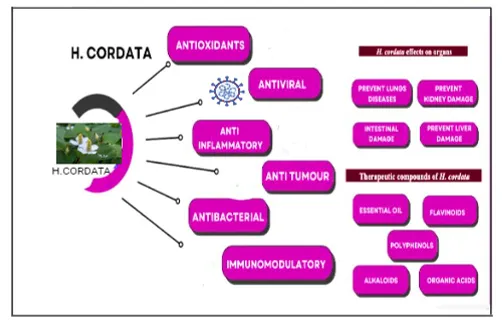
Fig.10:H.cordata effects[92]
CONCLUSION
Houttuynia Cordata is known for its rich content of antioxidants, including flavonoids and polyphenols, which can counteract oxidative stress—a major contributor to skin aging. The herb also possesses anti-inflammatory properties, which may reduce inflammation and skin irritation, further supporting its role in anti-aging skincare. The review highlights several key findings: Houttuynia Cordata’s antioxidant activity helps neutralize free radicals, which can prevent cellular damage and delay the appearance of wrinkles and fine lines. Its anti-inflammatory effects could lead to improved skin texture and reduced redness, promoting a more youthful and even complexion.Furthermore, Houttuynia cordata’s antibacterial qualities may be useful in treating skin disorders like acne or others that worsen the appearance of aging.In order to successfully incorporate Houttuynia cordata into skincare products that target ageing, further investigation is needed to ascertain the optimal concentrations, delivery methods, and possible combinations with other components. Converting its potential advantages into useful applications for consumers would need ensuring security for a long and defining precise rules for its use in cosmetics.
REFERENCES



Ishwari Koparkar, Mrunal Gharate, Durva Birari, Harnessing the Anti-Aging Benefits of Houttuynia Cordata: A Systematic Review, Int. J. of Pharm. Sci., 2026, Vol 4, Issue 9, 546-567. https://doi.org/10.5281/zenodo.22308973
 10.5281/zenodo.22308973