

We use cookies to ensure our website works properly and to personalise your experience. Cookies policy
P. R. Pote Patil College of Pharmacy, Pote Patil Road, Amravati-444602, Maharashtra, India.
Galactagogues are agents that initiate, maintain or increase milk production in lactating women. Insufficient milk production (hypogalactia) is a common concern among breastfeeding mothers, and synthetic galactagogues such as domperidone, metoclopramide and sulpiride can cause adverse effects, which has directed attention towards herbal alternatives. Medicinal plants including Moringa oleifera, Zingiber officinale, Trigonella foenum-graecum, Foeniculum vulgare, Cuminum cyminum, Asparagus racemosus, Silybum marianum, Pimpinella anisum, Galega officinalis and Glycyrrhiza glabra are traditionally used to support lactation. Their effects are attributed to phytoconstituents such as saponins, flavonoids, alkaloids and phytoestrogens that may influence prolactin and other lactation-related hormones. This review summarizes, for ten selected herbs, the botanical origin, plant part used, phytoconstituents, traditional use, proposed mechanism, preclinical and clinical evidence, safety and limitations, together with recent studies, quality-control and standardization considerations, dosage-form issues and representative marketed formulations. The available evidence is variable: some trials report improved milk volume, prolactin levels or infant-related outcomes, whereas others report no significant benefit, and many studies are small, short, use polyherbal products or lack standardized preparations. Safety data for breastfeeding mothers and infants remain limited. Herbal galactagogues should therefore not be regarded as automatically safe or effective, and well-designed clinical trials with standardized preparations are needed.
Breast milk is widely recognized as the ideal source of nutrition for infants, containing a complex composition of macronutrients and bioactive compounds essential for infant growth and immune development.1,2 Insufficient breast-milk production can result from a range of factors, including maternal stress, illness, preterm birth, hormonal imbalance and nutritional deficiencies. Prolactin, a key lactogenic hormone, plays a central role in this process: it is secreted by the anterior pituitary in response to nipple stimulation, and it initiates and maintains milk secretion by promoting mammary gland development and alveolar function.3
Most galactagogues (milk boosters) exert their effects by enhancing prolactin secretion, which correlates directly with early postpartum milk output. However, the pharmacological galactagogues domperidone, metoclopramide and sulpiride can cause adverse effects and may not align with sustainable health goals.3,4 Attention has therefore turned towards non-pharmacological, natural alternatives, including botanical galactagogues, which have received considerable attention because of their long-standing traditional use in supporting lactation. Commonly reported plants include fenugreek (Trigonella foenum-graecum), fennel (Foeniculum vulgare), shatavari (Asparagus racemosus), moringa (Moringa oleifera), anise (Pimpinella anisum) and goat’s rue (Galega officinalis).5–7 Their potential lactogenic effects may be associated with their phytochemical constituents and interactions with biological pathways involved in lactation.8
Although traditional use and preliminary clinical findings suggest potential benefits, clinical evidence for herbal galactagogues remains limited and variable, and their safety during breastfeeding is not completely established. Differences in plant materials, preparations, dosages and study methods highlight the need for standardized and well-designed studies.1 Accordingly, this review critically evaluates the available evidence on the botanical origin, plant parts used, phytoconstituents, traditional uses, proposed mechanisms, pharmacological significance, clinical evidence, safety and research gaps of herbal galactagogues used for lactation support in women.
The objectives of the review were: (i) to identify selected herbal galactagogues used for lactation support; (ii) to review their botanical characteristics, plant parts used and traditional uses; (iii) to summarize their major phytoconstituents and proposed mechanisms; (iv) to evaluate the available preclinical and clinical evidence; and (v) to assess safety, quality and dosage-form considerations.
Physiology of lactation
The mammary gland undergoes progressive structural and functional changes during puberty, pregnancy, lactation and involution. During pregnancy, hormonal stimulation promotes ductal expansion, alveolar development and secretory differentiation, preparing the gland for milk production; during lactation, the differentiated alveolar epithelium becomes functionally active for milk secretion.9 After parturition the hormonal environment changes substantially, allowing the transition from mammary development to active milk secretion (Fig. 1). Reproductive and metabolic hormones have stage-specific roles throughout mammary gland development and lactation.9
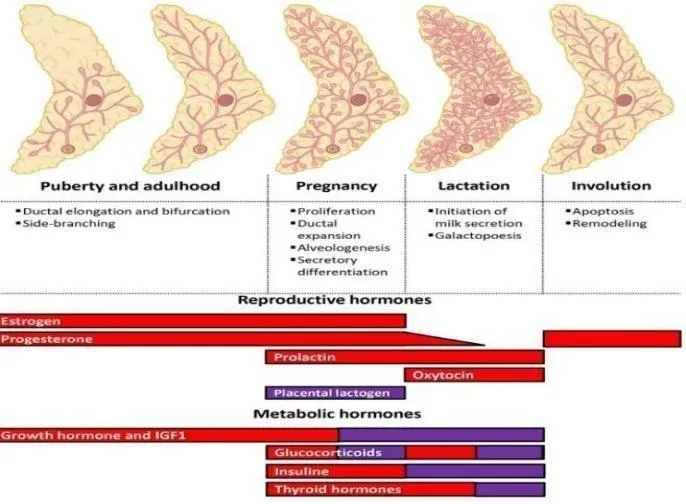
Figure 1: Major Stages of Mammary Gland Development and Lactation, with the Reproductive and Metabolic Hormones Involved at Each Stage 9
Lactation is regulated by a coordinated interaction of reproductive and metabolic hormones (Fig. 2). Luminal secretory epithelial cells, called lactocytes, synthesize and secrete milk components into the alveolar lumen. During pregnancy, high progesterone concentrations inhibit milk secretion; after parturition, the decline in progesterone initiates secretory activation and copious milk production. Prolactin plays a central role in sustaining milk synthesis and secretion, while infant suckling stimulates oxytocin release, which causes contraction of the myoepithelial cells surrounding the alveoli and promotes milk ejection into the ducts.9
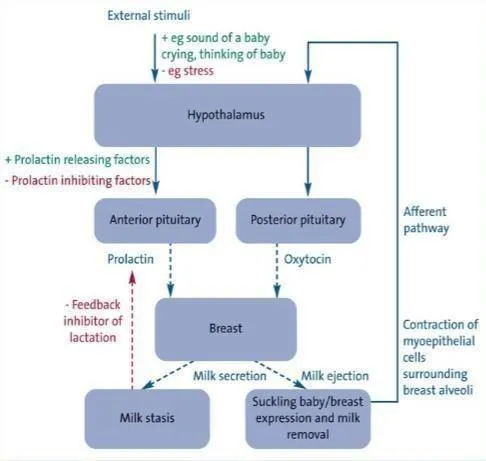
Figure 2: Physiology of Lactation: Hypothalamic–Pituitary Control of Prolactin and Oxytocin, Milk Secretion and Milk Ejection.10
Inadequate milk production and its causes
Inadequate breast-milk production refers to milk production that is insufficient for the needs of the breastfeeding infant. It may include reduced production (hypogalactia) or, in some cases, absence of milk production (agalactia). Concern about insufficient milk supply is common and may contribute to supplementation or early discontinuation of breastfeeding; however, perceived insufficient supply does not always indicate true low milk production. Maternal and neonatal health, infant suck, latch, feeding frequency and effective milk removal should be assessed before a galactagogue is considered.11 Several maternal, infant and breastfeeding-related factors may be involved (Table 1), and the underlying cause should be identified and corrected whenever possible before galactagogues are used.11
Table 1: Major Factors Affecting Breast-Milk Production
| Sr. No. | Factors | Examples |
|---|---|---|
| 1 | Maternal factors | Maternal illness, stress, fatigue and inadequate nutrition |
| 2 | Hormonal factors | Hormonal or endocrine disturbances |
| 3 | Breast-related factors | Previous breast surgery or insufficient glandular development |
| 4 | Infant-related factors | Poor suck, prematurity or ineffective feeding |
| 5 | Breastfeeding-related factors | Poor latch, infrequent feeding or inadequate milk removal |
Galactagogues: classification and rationale
Galactagogues are synthetic or plant molecules able to induce, maintain and increase milk production in women. Their use should be reserved for primary reduced milk production without a recognized and treatable cause, and for surrogate or adoptive mothers. They may be classified as pharmaceutical/synthetic agents (metoclopramide, domperidone, sulpiride and chlorpromazine) and herbal/natural agents (fenugreek, shatavari, moringa, milk thistle/silymarin and garlic).12 Plants with galactagogue properties include fenugreek, fennel, goat’s rue, shatavari, anise, milk thistle and others such as basil, mallow, verbena, cumin, grape and coffee. The galactagogue effects of plants could be mediated by a phytoestrogen action: some molecules have effects similar to 17β-estradiol, which may induce prolactin expression in anterior pituitary lactotroph cells and promote proliferation of mammary epithelial cells.5,7,13
Herbal galactagogues are widely discussed as options for lactation support, and several plants have been investigated in clinical studies. However, the evidence differs considerably between herbs because of variations in plant material, preparation, dose, treatment duration, study design and outcome measurement, and the literature indicates limitations in safety reporting and standardization of herbal preparations. A structured evaluation of selected herbal galactagogues that brings together their botanical characteristics, traditional uses, phytoconstituents, proposed mechanisms, clinical evidence, safety, quality and research gaps is therefore warranted.11
MATERIALS AND METHODS
This narrative review considered published peer-reviewed literature (clinical trials, systematic reviews and experimental studies), the NLM Drugs and Lactation Database (LactMed®) and WHO and FDA guidance on the quality control of herbal materials. Ten herbal galactagogues were selected for detailed evaluation on the basis of their traditional use in lactation support and the availability of published literature on their potential effects on breast-milk production (Table 2). For each herb, information was collated on botanical name and family, plant part used, key phytoconstituents, traditional use, proposed mechanism, preclinical evidence, clinical evidence, safety and limitations. Stinging nettle (Urtica dioica) is discussed only in the context of a combined cumin–nettle clinical trial. A formal systematic search strategy and predefined inclusion criteria were not applied; therefore, this article should be interpreted as a narrative review.
Table 2: Selected Herbal Galactagogues Included in the Review
| Sr. No. | Herbal galactagogue | Botanical name | Part commonly used | Lactation-related relevance |
|---|---|---|---|---|
| 1 | Moringa | Moringa oleifera | Leaves | Traditionally used as a lactation-supporting herb |
| 2 | Ginger | Zingiber officinale | Rhizome | Traditionally used in postpartum practices and investigated for lactation |
| 3 | Fenugreek | Trigonella foenum-graecum | Seeds | Traditionally used to support milk production |
| 4 | Fennel | Foeniculum vulgare | Fruits (seeds) | Traditionally used during lactation |
| 5 | Cumin | Cuminum cyminum | Seeds | Traditionally used in postpartum and lactation practices |
| 6 | Shatavari | Asparagus racemosus | Roots | Traditionally associated with lactation support |
| 7 | Milk thistle | Silybum marianum | Fruits (seeds) | Investigated for potential effects on milk production |
| 8 | Anise | Pimpinella anisum | Fruits (seeds) | Traditionally used as a lactation-supporting herb |
| 9 | Goat’s rue | Galega officinalis | Aerial parts | Traditionally investigated for lactation support |
| 10 | Licorice | Glycyrrhiza glabra | Roots | Purported galactagogue in some Asian herbal mixtures |
RESULTS AND DISCUSSION
Herbal Galactagogues : are medicinal plants or plant-derived preparations traditionally used to support or promote breast-milk production. Their use has been reported in different traditional systems of medicine, and several herbs have subsequently been investigated in preclinical and clinical studies. They may be used as single herbs or as combinations of several plants, and the available evidence varies among herbs and preparations because of differences in dosage, duration, preparation method, study design and outcome assessment.12 The individual herbs are reviewed below.
Table 3: Botanical Profile and Phytoconstituents of Selected Herbal Galactagogues
| Plant image | Herbal galactagogue | Botanical name / family | Part used | Traditional lactation use | Key phytoconstituents |
|---|---|---|---|---|---|
| Moringa | Moringa oleifera Family: Moringaceae | Leaves | Traditionally used to support lactation; valued for micronutrients and phytosterols. | Proteins, fatty acids, amino acids, vitamins, minerals, flavonoids, tannins, alkaloids, saponins and phytosterols.¹? | |
| Ginger | Zingiber officinale Family: Zingiberaceae | Rhizome | Used in postpartum practices and investigated for lactation support. | Gingerols, particularly 6-gingerol, and 6-shogaol.¹? | |
| Fenugreek | Trigonella foenum-graecum Family: Fabaceae | Seeds (relevant lactation part) | Traditionally used as a stimulant of milk production in breastfeeding mothers. | Diosgenin, apigenin and luteolin.²² | |
| Fennel | Foeniculum vulgare Family: Apiaceae | Fruits (commonly called seeds) | Traditionally used and included in some proprietary lactation-support mixtures. | Anethole (major volatile-oil component; phytoestrogen), fenchone, estragole and 1,8-cineole.²? | |
| Cumin | Cuminum cyminum Family: Apiaceae | Seeds | Traditionally used as a spice and in lactation-supporting preparations.²?–²? | Volatile oil mainly containing cuminaldehyde and other aldehydes; flavonoids and terpenes.²?,³? | |
| Shatavari | Asparagus racemosus Family: Asparagaceae | Roots | Traditionally used as a female tonic (Rasayana) and galactagogue.³¹ | Steroidal saponins (shatavarins I–V), asparins, asparosides, curillins, curillosides and oligospirostanoside.³¹ | |
| Milk thistle | Silybum marianum Family: Asteraceae | Fruits (seeds) | Traditionally used as a purported galactagogue; seeds provide standardized silymarin.³³,³? | Silymarin constituents: silybin, isosilybin, silydianin and silychristin.³? | |
| Anise | Pimpinella anisum Family: Apiaceae | Seeds/fruits | Traditionally used postpartum to support breast-milk production. | Anethole, anisaldehyde, methylchavicol and eugenol. | |
| Goat’s rue | Galega officinalis Family: Fabaceae | Leaves and flowering tops | Traditionally used as a herbal galactagogue. | Guanidine derivatives, particularly galegine. | |
| Licorice | Glycyrrhiza glabra Family: Fabaceae (Leguminosae) | Roots | Purported galactagogue in some Asian herbal mixtures; not clinically established alone. | Glycyrrhizin (glycyrrhizic acid), metabolized to glycyrrhetinic acid.³? |
Table 4: Proposed Mechanisms, Available Evidence and Safety of Selected Herbal Galactagogues
| Herbal galactagogue | Proposed mechanism of action | Preclinical / clinical evidence | Safety considerations | Limitations / evidence note |
|---|---|---|---|---|
| Moringa | Phytosterols/steroids may stimulate mammary secretory cells or prolactin secretion; exact pathway is not established.¹? | Some studies/review reported improved milk volume, prolactin or composition (250–800 mg/day; 3 days–1 month); an RCT (n=88) found no significant day-3 milk-volume difference.¹?–¹? | Short-term tolerability reported; long-term safety data limited. Small studies, variable doses/preparations and lack of standardization.¹? | Variable doses and preparations; no standardization; long-term data limited.¹? |
| Ginger | Specific galactagogue mechanism is not established in the reviewed text. | Steamed extract increased milk-flow rate at 36 and 48 h; other small studies reported higher expressed volume, while a post-caesarean study found no significant difference.¹?,²? | Adverse effects reported by 6% (headache, dry mouth, nausea, weight gain); possible warfarin-related bleeding interaction. Short studies and limited breastfeeding safety data.¹? | Short studies, combination products and methodological weaknesses.¹? |
| Fenugreek | Proposed sweat-gland hypothesis (breast is a modified sweat gland); diosgenin has been reported to modify endocrine activity. These mechanisms remain proposed.²³ | A randomized trial compared honey–fenugreek with fenugreek alone for breastfeeding success; the plant-specific evidence described here is limited.? | Safety and limitations are not detailed in the individual plant section of the source; avoid assuming established safety or efficacy. | Comparative trial reported; detailed plant-specific clinical evidence is limited in this section.? |
| Fennel | Anethole may compete with dopamine at receptor sites and reduce dopamine-mediated inhibition of prolactin; proposed, not confirmed.²? | Small reports: 5% infusion (n=5) slightly increased milk volume/fat; powdered fennel (n=46) increased prolactin, without direct milk-volume measurement.²? | Excess medicinal use may cause allergy, photosensitivity and GI symptoms; excessive fennel tea has been associated with infant adverse effects. Small samples and inconsistent outcomes.²? | Small samples, poor randomization, multi-herb products and inconsistent outcomes.²? |
| Cumin | Possible estrogenic activity and/or increased serum prolactin have been proposed; direct mechanism remains uncertain.³ | A 2024 randomized study (n=117) reported improved infant weight and feeding/diaper indicators with cumin drops; milk volume was not directly measured.³? | Few lactation-specific studies; limited maternal/infant safety data and some studies use multi-herb preparations.²? | Milk volume not measured in some studies; limited lactation-specific evidence.²?,³? |
| Shatavari | Experimental mammotropic/lactogenic effects include mammary-gland development, milk yield and prolactin secretion.³¹ | RCT (n=60) reported greater prolactin increase than placebo; a newer placebo-controlled study reported improvements in early lactation outcomes.?,³² | Short follow-up limits long-term conclusions; methanolic extract showed teratogenic effects in animals, so caution is advised, particularly in pregnancy.³¹ | Short observation period; long-term efficacy and safety remain uncertain.? |
| Milk thistle | Animal studies suggest a possible prolactin-related effect; human prolactin data are limited. | Study in 50 postpartum mothers: micronized silymarin 420 mg/day for 63 days increased milk production versus placebo on days 30 and 63.³? | Reported GI, skin and other effects; rare severe allergy/anaphylaxis. Evidence limited by non-randomized/unblinded studies and inconsistent findings.?,³? | Non-randomized designs, lack of blinding, combination products and limited human prolactin data.³? |
| Anise | Anethole is described as dopamine-receptor antagonist-like, potentially increasing prolactin; this is a proposed mechanism. | Animal studies reported lactation-related effects; RCT in mothers of preterm infants (<32 weeks) found higher pumped milk volume on several days with 2 g dried anise tea.³? | Maternal/infant safety details are not sufficiently described in the individual plant section; further evaluation is needed. | Further controlled studies and safety assessment are required. |
| Goat’s rue | Exact lactation mechanism is unclear; galegine may affect glucose metabolism. | Old studies are limited/poorly controlled; one study (n=5) found no effect. A combination trial showed benefit, but goat’s rue’s independent effect cannot be determined.³? | May cause hypoglycemia; caution with antidiabetic medicines. Breastfeeding safety data are very limited; no scientifically valid trial supports goat’s rue alone.³? | Combination findings cannot establish efficacy of goat’s rue alone.³? |
| Licorice | No established mechanism demonstrates direct increase in human breast-milk production.³?,³? | Evidence for licorice alone is lacking. A multi-herb decoction plus acupressure showed benefit, but the independent effect of licorice cannot be isolated.?? | May cause sodium/fluid retention, hypokalemia and hypertension; interactions with diuretics/antihypertensives. Breastfeeding safety insufficiently established.³? | Combination study cannot establish licorice’s independent effect.?? |
Summary of clinical evidence
Table 5: Summary of Clinical Evidence and Safety of the Selected Herbs
| Sr. No. | Herb | Main clinical findings | Main safety / limitation |
|---|---|---|---|
| 1 | Moringa | Improved milk volume and prolactin in some trials; no significant difference at day 3 in one placebo-controlled trial (n = 88) | Short-term use appears safe; heterogeneous doses and preparations; limited long-term data |
| 2 | Ginger | Variable; greater milk flow vs placebo at 36 and 48 h in some studies; no difference after cesarean | 6% reported adverse reactions; possible bleeding interaction with warfarin |
| 3 | Fenugreek | Mechanism proposed (diosgenin, sweat-gland hypothesis); trial of honey–fenugreek vs fenugreek reported | — |
| 4 | Fennel | Slight increase in milk volume and fat (n = 5); raised prolactin (n = 46) without measured milk volume | Allergy, photosensitivity, GI upset at high doses; infant effects with excess tea |
| 5 | Cumin | Better infant weight and feeding indicators vs placebo (n = 117); milk volume not measured | Limited lactation-specific studies and safety data |
| 6 | Shatavari | Greater prolactin rise vs placebo (n = 60); improved early lactation outcomes in a recent trial | Teratogenic effects of methanolic extract in animals; short trials |
| 7 | Milk thistle | Higher milk production vs placebo at days 30 and 63 (n = 50, silymarin 420 mg/day) | Generally well tolerated; rare anaphylaxis; non-randomized evidence |
| 8 | Anise | Higher pumped milk volume with anise tea in mothers of preterm infants | — |
| 9 | Goat’s rue | No trials of goat’s rue alone; combination product showed benefit | Hypoglycemia; very limited breastfeeding safety data |
| 10 | Licorice | No adequate clinical evidence alone; combination decoction with acupressure showed benefit | Sodium/fluid retention, hypokalemia, hypertension; drug interactions |
Recent studies and systematic reviews
A systematic review of clinical trials of herbal galactagogues in mothers of preterm infants reported potential benefits of some preparations for milk production, but the trials used different herbs, formulations and outcome measures and the certainty of evidence was limited.41 A Cochrane review of oral galactagogues, both natural therapies and drugs, in mothers of non-hospitalized term infants found the evidence to be of low or very low certainty and called for high-quality trials with standardized outcomes, doses and dosage forms.11 Earlier reviews of herbal and pharmaceutical galactagogues similarly highlighted the need for stronger clinical evidence.12,42 Randomized trials of individual herbs, such as the cumin and stinging-nettle oral drops (117 mothers, triple-blind, four weeks) that improved several milk-sufficiency indicators without directly measuring milk volume,30 and a trial of AYUSH-SS granules in exclusively breastfeeding mothers with insufficient lactation,43 add to the literature, but their findings are specific to the preparations tested.
Safety, standardization and quality considerations
Safety issues relevant to herbal galactagogues include maternal adverse effects, allergic reactions, gastrointestinal effects, possible drug–herb interactions and possible effects on the breastfed infant.44 Safety profiles differ among herbs: some may cause gastrointestinal or allergic effects, while safety information for several others remains limited, so dose, duration, product quality and available safety evidence should all be considered.11,42 Combination products contain multiple herbs, which makes it difficult to identify the effects of individual ingredients, and marketed availability does not prove effectiveness or safety.
Standardization should proceed through authentication of the plant, selection of the correct plant part, quality evaluation, identification of phytochemical markers and confirmation of batch-to-batch consistency. WHO recommends quality-control methods for confirming the identity and purity of herbal materials and detecting contaminants, and FDA guidance likewise emphasizes authentication and control of botanical raw materials to improve consistency between batches.45,46 Important quality-control tests are listed in Table 4.
Authentication of plant → correct plant part → quality evaluation → phytochemical/marker identification → batch-to-batch consistency
Table 6: Important Quality-Control Tests for Herbal Galactagogues
| Sr. No. | Quality parameter | Purpose |
|---|---|---|
| 1 | Botanical identification | Confirms correct plant |
| 2 | Microscopic examination | Helps detect adulteration |
| 3 | Moisture content | Assesses stability |
| 4 | Extractive value | Indicates extractable constituents |
| 5 | Phytochemical testing | Identifies characteristic constituents |
| 6 | Chromatographic fingerprint | Helps compare batches |
| 7 | Marker-compound assay | Supports standardization |
Herbal galactagogues are available as capsules, tablets, powders, teas and liquid preparations (Table 5). The dosage form and preparation method should be clearly reported in clinical studies because they may affect the amount of herbal constituents received.46
Table 7: Dosage-Form Considerations for Herbal Galactagogues
| Sr. No. | Dosage form | Main consideration |
|---|---|---|
| 1 | Capsules/tablets | Accurate dose and content uniformity |
| 2 | Powders | Dose variation and stability |
| 3 | Teas/infusions | Variation in preparation and extraction |
| 4 | Liquid preparations | Accurate dosing and microbial stability |
Marketed herbal galactagogue formulations
Several commercial products contain herbs traditionally used to support lactation, in forms such as capsules, powders, teas and granules; some contain a single herb and others a combination (Table 6, Fig. 13).
Table 8: Representative Marketed Herbal Galactagogue Products
| Sr. No. | Product | Manufacturer | Dosage form | Composition |
|---|---|---|---|---|
| 1 | Galactosure™ | Himalaya Wellness Company | Granules | Shatavari (Asparagus racemosus), Shigru (Moringa oleifera), saffron (Crocus sativus) 64 |
| 2 | Galact Lactation Granules | Emcure Pharmaceuticals Ltd. | Granules | Shatavari, Vidarikand, Sowa, Gokshur, Yashtimadhu, Jeera47 |
| 3. | Unilact | Uni-Labs (India) Pvt. Ltd. | Granules | Citrullus vulgaris, Hemidesmus indicus, Asparagus racemosus, Andropogon muricatus, Withania somnifera48 |
| 4. | Mamalait Herbal Shatavari Lactation Supplement | Fredun Pharmaceuticals Ltd. | Granules | Shatavari, Vidarikand, Gokhru, Yashtimadhu, Jivanti, Jeera, Suwa, Kalonji and other ingredients as listed on the label49 |
| 5. | AYUSH-SS Granules | Developed through CCRAS research; commercial manufacturer to be verified | Granules | Shatavari, Shatpushpa (Anethum graveolens), Shweta Jeerak (Cuminum cyminum), Sukshma Ela (Elettaria cardamomum)43 |
| 6. | Goat’s rue capsules (Motherlove) | Motherlove | Liquid capsules | Goat’s rue (single herb) |
| 7. | Fenugreek capsules, 600 mg (Nature’s Answer) | Nature’s Answer | Capsules | Fenugreek (single herb) |
| 8. | Moringa capsules (Go-Lacta) | Go-Lacta | Capsules | Moringa (single herb) |
| 9. | Moringa tea (Go-Lacta) | Go-Lacta | Tea | Moringa (single herb) |
Figure 3: Representative Marketed Herbal Galactagogue Products: (A) Galactosure™; (B) Galact Lactation Granules; (C) Unilact; (D) Mamalait; (E) Goat’s Rue Capsules; (F) Fenugreek Capsules (600 mg); (G) Moringa Capsules; (H) Individual Powder Packets; (I) Moringa Tea. (Images from Manufacturers’ and Vendors’ Product Listings.)
Research gaps
Although several medicinal plants are traditionally used as herbal galactagogues, important gaps remain. Clinical findings are inconsistent, and many studies have small sample sizes, short follow-up, differing designs and polyherbal formulations that make it difficult to determine the contribution of each herb. The exact mechanisms of action of many constituents are not clearly established, and the relationship between specific phytoconstituents and increased milk production requires further investigation. Differences in plant parts, extraction methods, dosage, treatment duration and product composition make results hard to compare and standard doses hard to establish. Information on long-term maternal safety, transfer of constituents into breast milk, herb–drug interactions and effects on breastfed infants is also limited for several plants. Future research should therefore focus on well-designed clinical trials with direct and consistent measurement of milk production, identification of active constituents, clarification of mechanisms, determination of appropriate doses, comprehensive safety assessment, and improved quality control and standardization of herbal preparations.
CONCLUSION
Herbal galactagogues have a long history of traditional use and may have potential as supportive agents for lactation. The literature on the selected medicinal plants indicates promising findings for certain herbs, particularly in some preclinical and clinical studies, but the current evidence is variable and insufficient to establish the effectiveness of all the herbs conclusively. Their proposed mechanisms, appropriate doses, treatment durations and long-term safety for breastfeeding mothers and infants require further investigation, and variations in plant materials, extraction methods, phytochemical composition and formulation quality affect the reliability and comparability of findings. Herbal galactagogues should therefore not be considered automatically safe or effective simply because they are natural or traditionally used. Further well-designed clinical trials, improved standardization and systematic safety evaluation are needed to support their evidence-based use in lactation support.
ACKNOWLEDGEMENT
The authors are thankful to the Principal and the Department of Pharmacognosy, P. R. Pote Patil College of Pharmacy, Amravati, for providing the necessary facilities and support, and to Rupali Gawande for guidance.
CONFLICTS OF INTEREST
The authors declare that there is no conflict of interest regarding the publication of this manuscript.
REFERENCES





Kalyani Bhoyar, Rupali Gawande, Aniket Ghusange, Ikshita Vaidya, Bhavna Rajankar, Herbal Galactagogues in Women’s Lactation Support: A Review, Int. J. of Pharm. Sci., 2026, Vol 4, Issue 11, 5278-5292. https://doi.org/10.5281/zenodo.24578720
 10.5281/zenodo.24578720