

We use cookies to ensure our website works properly and to personalise your experience. Cookies policy
Department Of Pharmacy, Galgotias University
Colorectal cancer is a disease in which cells in the colon or rectum grow out of control, necessitating the evolution of innovative treatment strategies. In 2020, we had nearly 1.9 million reported cases of CRC have been identified globally & approximately 930,000 deaths from it. Colorectal cancer ranks third in terms of prevalent form of cancer & the fourth primary reason of death from malignancies all over the world. By 2040, it is projected that there will be approximately three point two million new cases of CRC each year. In recent decades, colorectal cancer (CRC) has become a primary global well-being problem because of of its continuously increasing incidences & mortalities. Piperine, a natural compound with reported anti-cancer properties, shows potential in inhibiting thymidylate synthase (TS). However, challenges such as poor solubility and bioavailability hinder its clinical application. Thymidylate synthase (TS) has shown promise as a target for CRC therapy because of its vital significance in DNA synthesis. Ten novel piperine conjugates were designed by linking piperine with sulphanilamide and aniline derivatives (A1-A5 & B1-B5). The designed compounds were evaluated through in-silico screening against thymidylate synthase enzymes (PDB ID: 1i00). The structural modifications aimed to optimize the interaction between the conjugates and thymidylate synthase (TS), thereby increasing their anti-cancer potential. In-silico study was conducted to assess the affinity for binding of the designed piperine conjugates by using molecular docking. The methodology involved virtual screening, ligand preparation, and docking simulations to anticipate the binding energies & ways in which the conjugates and thymidylate synthase (TS) interact. In the designed piperine conjugates A3, A5, A4 and A1 exhibited significantly higher binding energies of -10.2, -10.2, -9.4 and -9.2 kcal/mol respectively as compare to -7.8 kcal/mol standard drug (Fruquintinib) and indicates a strong interaction between these compounds and thymidylate synthase (TS), suggesting their potential as potent thymidylate synthase (TS) inhibitors for CRC treatment. Furthermore, the ADMET analysis for piperine derivatives conjugates (A1-A5 & B1-B5) revealed favourable pharmacokinetic as compared to the standard drug (Fruquintinib), So warrant further investigation for therapeutic development.
Around the world, one major health concern is colorectal cancer (CRC). In the world in 2020, there were approximately 1.9 million new cases of cancer and approximately 930,000 deaths from the disease [1]. Colorectal cancer ranks third amongst the most common types of cancer is prevalent in society and the 4th leading reason of death from malignancies across the globe [2]. This is more prevalent in developed nations and growing in middle-and low-income countries too. By 2040, it is projected that there will be approximately three point two million new cases of CRC each year [2][3]. In recent decades, colorectal cancer (CRC) has become a primary global well-being problem due to its continuously increasing incidences & mortalities [4]. It is for long that extensive research has been carried out on the molecular mechanisms underlying colorectal cancer development and progression [5]. Although the improvements in methods for detection and treatment in early stages, the prognosis for CRC patients remains poor, particularly for those with metastatic disease[6]. Therefore, it is extremely significant to discover novel therapeutic possibilities as well as develop efficient CRC treatments approaches. Thymidylate synthase (TS), which is a vital enzyme for the synthesis of Deoxyribonucleic acid, has become a major aim for treatment in CRC[7]. The enzyme thymidylate synthase (TS) is needed for the de novo production of thymidine, a nucleoside necessary for DNA replication & repair [8]. It has been determined that TS might be the focus of cancer treatment, as its overexpression has been widely related to poor prognosis and chemoresistance in a range of malignancies, such as CRC [9]. Therefore, inhibiting TS activity has been the center of cancer investigation for several decades. Black pepper contains piperine, a naturally occurring alkaloid (Piper nigrum), has been research revealed to have anticancer properties against various forms of cancer, such as CRC[10] However, the bioavailability is poor and solubility reduce its application in medicine [11]. To overcome these limitations, researchers have explored the potential of piperine conjugation with sulphanilamide’s and aniline derivatives to enhance its bioavailability and therapeutic efficacy[11]. In this study, we aim to design and screen piperine conjugates targeting TS to treat CRC. We hypothesize that piperine conjugation with TS inhibitors or moieties that enhance its cellular uptake and bioavailability will improve its anticancer efficacy against CRC2]. To test this hypothesis, we have first performed a literature review to identify potential TS inhibitors and moieties that can enhance piperine's bioavailability and solubility[13]. So, we have designed the piperine conjugates using these sulphanilamide’s and aniline derivatives and perform in silico screening to evaluate their binding affinity and specificity to TS[14], [15].
Traditionally, conventional therapies for colorectal cancer have involved chemotherapy, radiation treatment, and surgery. However, these medical procedures often exhibit reduced efficacy attributed to factors such as toxicity and drug resistance [16]. As such this has necessitated investigation into new therapeutic approaches targeting specific molecular pathways that engage in the initiation of colorectal carcinoma [17]. In silico screening of potential drug candidates is now possible through recent progress in computational biology and drug discovery [18], [19]. A lot of substances have the flexibility of being screened virtually using computational tools and algorithms to identify molecules that may target specific proteins such as thymidylate synthase associated with colorectal cancer [20]. Today, research on colorectal cancer is all about tailoring treatments to each patient (personalized medicine) and using drugs that focus on specific aspects of the cancer (targeted therapies) [21]. Researchers are working on creating drugs that target thymidylate synthase, a specific protein. Their goal is to enhance the results of colorectal cancer treatment while reducing adverse consequences & overcoming the resistance that often develops with traditional chemotherapy[22], [23]. Docking of Molecule is a computational technique applied to predict the binding affinity & tiny molecules' orientation to a target protein [24]. In this research, docking of molecule will be employed to evaluate the binding affinity and specificity conjugates to TS from piperine. We use the crystal structure of TS (PDB ID: 1i00) and perform molecular docking using Auto Dock[25]. We examine the interactions and binding affinities between the piperine conjugates and TS and select the top-ranked compounds for further analysis [26]. In the future, combining computer simulations (in silico screening) with lab testing (experimental validation) might result in the creation of novel medications for treating colorectal cancer [27]. Advances in targeting thymidylate synthase, an enzyme involved in DNA synthesis, using compounds like piperine conjugates, have potential to transform the treatment of colorectal cancer, offering new and potentially more effective therapeutic options. [28]. This groundbreaking approach not only promises improved treatment results, but it also creates fresh prospects for tailored therapies that specifically target colorectal cancer[29]. Using computer simulations (in silico screening), we found that combining piperine with a drug that targets thymidylate synthase could effectively treat colorectal cancer[30]. This approach offers a new and promising direction in the search for effective cancer treatments. This research focuses on developing new and better treatments for colorectal cancer. It brings together information from the past, present, and future to create a comprehensive understanding of the disease and its effects. By doing so, researchers aim to enhance therapeutic alternatives and results for those affected by colorectal cancer. In summary, this study aims to design and screen piperine conjugates targeting TS to treat CRC. In summary, this study aims to design and screen piperine conjugates targeting TS to treat CRC. We believe that this study will provide valuable insights into the potential of piperine conjugates as a novel therapeutic strategy for CRC.
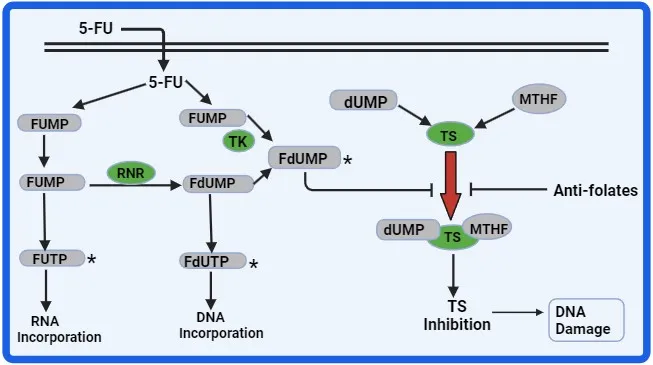
Figure 1: - Action of anti-cancer drug on thymidylate synthase enzyme
One of the main ways that 5-fluorouracil (5-FU) works is by stopping thymidylate synthase (TS) through fluorodeoxyuridine monophosphate (FdUMP). FdUMP acts as a blocker of deoxyuridine monophosphate (dUMP), which stops the creation of the ternary complex formed by dUMP, TS, and N5, N10-methylene tetrahydrofolate (MTHF). This interruption hinders the process of converting dUMP to deoxythymidine monophosphate (dTMP), which is necessary for creating DNA. As a result, it causes harmful effects on cells that are dividing quickly.
LITERATURE REVIEW
1. Sandeep Kumar et al (2018) describe the treatment of cancer, but It has the ability to show adverse consequences and the development of resistance to multiple drugs (MDR). Multiple drugs is a main challenge in successfully overcoming cancer because it enables cancer cells to survive the effects of different drugs and radiation. One way to combat chemotherapeutic resistance is to improve the drug's effectiveness by increasing its ability to be absorbed and delaying its removal from the body. This can be achieved by adjusting the enzymes that metabolize the drug, as well as the transporters that move it out of the body. Additionally, strategies can be implemented to enhance the drug's ability to target specific mechanisms like apoptosis and DNA repair. Even though the data is still limited, initial results show promise, suggesting that piperine may be effective in modulating chemotherapy and radiotherapy. Further research is needed to explore this potential [31].
2. Aki Sakatani et al (2018) describe the 5-Fluorouracil (5-FU) which has been frequently used as the initial treatment regarding staged colorectal cancer (CRC). Unfortunately, patients often develop resistance to this drug, leading to a less effective response to treatment. Melatonin, a compound that regulates circadian rhythms, has been linked to these processes. The researchers analyzed how melatonin affected cell growth in colorectal cancer (CRC) cells, Organoids generated from patients and CRC cells resistant to 5-FU. They also looked at the magnitudes of thymidylate synthase (TYMS) and microRNAs (miRNAs) that aim for TYMS in these cells. The levels of TYMS were notably reduced by melatonin. It is worth noting that this reduction was accompanied by an rise in the amount of miR-215-5p, a microRNA that directly targets TYMS[32].
3. Rasana Paul et al (2018) explain Peroxisome proliferator-activated receptor gamma (PPARγ), is a kind of protein that is encoded with the pparg gene. The PPARγ gene partners with RXRA, and mutations in the RXRA gene can lead to tumor growth and colorectal cancer. Researchers have been investigating the phytochemical components of Piper nigrum that have anti-tumor characteristics. The researchers retrieved a chemical compound from the pubchem database and studied its drug-like properties using Molecular Docking and Molecular Dynamics Simulation techniques [33].
4. Magdalena Milczarek et al (2019) revealed that 5-Fluorouracil (5-FU) is a medication utilized to treat people with colorectal cancer, although its effectiveness is somewhat limited. In a recent study, it was shown that analogs of vitamin D, specifically tacalcitol (PRI-2191), increased their effectiveness in fighting cancer in both mice and human colorectal cancer models. Goal of this research is to investigate how PRI-2191 increases the efficiency of 5-Fluorouracil against HT-29 human colorectal cancer cells. PRI-2191 enhances the effectiveness of 5--Fluorouracil against HT-29 malignant cells, mainly through its main mechanism. Moreover, it was observed that the VDR also participates in the action of 5--Fluorouracil. 5-Fluorouracil notably boosted the levels of TYMS (the gene responsible for producing thymidylate synthase) and BIRC5 (the gene responsible for producing survivin) in HT-29 cells where VDR was turned off. Additionally, PRI-2191 stimulated E-cadherin and ZO-1 expression, leading to a reduction in the levels of BIRC5 in HT-29 cell type [34].
5. Muneeb U. Rehman et al (2020) represented that the colon cancer is a prevalent cancer in both men and women around the world, claiming the lives of millions every year. While significant progress was produced in treating CRC, there remains a critical requirement that discover new targets for more successful therapy. An alkaloid found in black pepper is called piperine, has beneficial properties such as anticancer and anti-inflammatory effects. It is deemed safe and nourishing for humans to consume. In our current research, we thoroughly explored this pathway to uncover new targets for preventing chemically induced colon cancer. We used piperine to mimic the pathology of human colon cancer [35].
6. Fei Xu et al (2020) explain the treatment of patients with colorectal cancer (CRC) is often hindered by resistance to chemotherapy. Research has shown that microRNAs (miRNAs) are significantly involved in drug resistance, but the specific impact of miRNA-373-3p (miR-375-3p) on CRC is still unknown. The study focused on investigating how miR-375-3p may be involved in resistance to 5-fluorouracil (5-FU). It was discovered that miR-375-3p directly targets thymidylate synthase (TYMS), and knocking down TYMS had similar effects to overexpressing miR-375-3p in colorectal cancer cells treated with 5-FU[36].
7. Estela Fernandes e Silva et al (2020) explain Piperine, which is the main spicy compound found in black pepper fruits, plays a crucial role in research on natural anti-inflammatory treatments by investigating its relationship with COX-2 at a molecular level. This study's primary goal was to compare how colorectal cancer and piperine bind to COX-2 by means of molecular docking. The results from the AutoDock Vina simulation showed that the binding energy with COX-2 was relatively close for both compounds: -8.8 Kcal/mol for CRC and -9.0 Kcal/mol for PPR. Moreover, COX-2's binding site was found to be comparable to both Colorectal cancer and piperine [37].
8. Khaled AbouAitah et al (2020) revealed the targeted drug delivery has shown promise in the treatment of cancer. Our team has created a new system for delivering the anticancer compound piperine, derived from black pepper, with precision to the affected areas. This system holds great potential for enhancing the therapeutic effects of piperine in fighting cancer. The custom-made delivery method consists of grouped HAPs or hydroxyapatite nanoparticles, modified with groups that phosphorylate (HAP-Ps). Piperine was inserted at pH 7.2 and 9.3, forming HAPs and HAP-Ps. to create small-scale formulations. After 72 hours, the formulations at the nanoscale completely stopped the growth of colon cancer cells HCT116 monolayer when contrast to MCF7 breast cancer cells and Caco2 colon cancer cells. In contrast, the impact of free Pip was less pronounced. Based on these initial results, it appears that the specialized method of delivering HAP aggregates containing Piperine, coated with gum Arabic, and enhanced in conjunction with folic acid could be an effective treatment for colon cancer[38].
9. Sonal Srivastava et al (2021) explain the order to address these challenges, researchers are turning to natural bioactive compounds that have a reduced profile of toxicity to work in tandem with therapeutic drugs. For this reason, Natural chemo-preventive agent piperine (PIP) known for its ability to improve drug bioavailability, was selected for use alongside small doses of CXB in this study. The effectiveness of CXB and PIP, both individually and combined, was examined in colon cancer cells of the human species HT-29. The study also looked into how these substances inhibit cell growth by analyzing their impact on Wnt/β-catenin signaling pathways and apoptotic pathways[39].
10. Changwon Yang et al (2021) represented that over time, researchers have successfully created powerful medications such as 5-fluorouracil to combat aggressive carcinoma of the colon (CRC). Unfortunately, the effectiveness of these treatments is often compromised due to the emergence of 5-FU resistance within CRC cells. This resistance is caused by an increase in the levels of thymidylate synthase (TS), a protein targeted by 5-Fluorouracil, which ultimately reduces the CRC cells' susceptibility to the medication. In this research, we looked at the effectiveness of various natural compounds on cells from human colorectal cancer. Specifically, we tested these compounds on two types of cells - one with normal P53 protein and the other with mutated P53 protein. We discovered that apigenin helped improve 5-FU's capacity to reduce cell viability in the cells with normal P53. Additionally, apigenin also helped inhibit the overproduction of TS caused by 5-FU in these cells[40].
11. Sicon Mitra et al (2022) explain the main alkaloids found in black pepper are Piperine and piperidine. A heterocyclic substance, piperidine has the chemical formula (CH2)5NH. These compounds, specifically piperidine and piperine, had demonstrated various therapeutic benefits, including potential for cancer treatment. Studies have shown that piperine may have positive outcomes in combating various types of cancer, including lung, oral squamous cell carcinoma, chronic pancreatitis, prostate, rectal, cervical, gliomal, breast, ovarian, gastric, and leukemia. Piperidine has shown promise in fighting many cancer forms, including breast cancer, prostate cancer, colon cancer, lung cancer, and ovarian cancer. It can be used on its own or in conjunction with new medications as a possible treatment option[41].
12. Wojciech M. Ciszewski et al (2022) represented the thymidylate synthase (TYMS) is a key enzyme necessary for DNA production, additionally it is a major focus for various chemotherapeutic procedures, particularly for colon cancer where 5-fluorouracil (5-FU) is commonly used. It appears that TYMS is linked to the spread of cancer and the transformation of tumor cells into a more mobile form during a specific biological process. Considering this information, we chose to explore how TYMS influences the ability of colon cancer cells to invade surrounding tissues, a topic that has not been extensively researched in relation to cancer metastasis[42].
13. Sabtanti Harimurti et al (2022) describe the Piperine is a natural substance present in plants such as Piper nigrum and Piper retrofractum, which are often used to add flavor to food. Studies have shown that piperine extract may help slow the expansion of cells responsible for colon cancer. Did you know that up to 77% of colon cancer cases can be attributed up to an overabundance of the EGFR, During the development of a new medication, it is crucial to initially investigate the effectiveness of how well the substance attaches to a specific receptor within the body. Therefore, the primary goal of this research aimed to thoroughly evaluate the binding capability of piperine to the receptor associated with colon cancer by utilizing specialized molecular docking software. The analysis was conducted with the assistance of AutoDock software[43].
14. Shinan Li et al (2022) explain Pepper plants, piperine is a naturally occurring chemical that has anti-inflammatory and anti-metastasis properties. Lithocholic acid is another compound with a function in absorbing lipids and has been linked to colon cancer cells' movement and invasion. In this investigation, we explored the impact piperine's effects on angiogenesis, specifically focusing on its effects in CRC cells on the expression of IL-8 stimulated by LCA. Additionally, we delved into the possible molecular processes involved during this procedure. It demonstrated the piperine can block the growth of blood vessels in endothelial cells when exposed to certain substances, in this case LCA, using a medium collected from colorectal cells HCT-116 [44].
15. Salma Benayad et al (2023) explain the cancer is a serious worldwide health issue due to the out-of-control growth and spreading of cancerous cells. The complex progression of cancer includes detailed changes in both biochemistry and genetics of specific cells. Preventing cancer is now seen as a crucial tactic in reducing the burden of cancer on healthcare systems. This method involves using certain drugs to stop, reduce, or even reverse the proliferation of cancerous cells. Out of all these agents, piperine stands out as an active alkaloid with various therapeutic benefits like being included in immunomodulatory, anti-inflammatory, and antioxidant properties. It has attracted interest due of its potential in both preventing and treating cancer. Explore piperine's diverse role in stopping cancer development by inhibiting molecular events and signaling pathways. See how it has potential as a versatile tool in preventing cancer[45].
16. William H. Gmeiner et al (2023) reveals chemotherapy with 5-Fluorouracil-based regimens can lead to the development of chemoresistant disease, which is a significant contributor to the mortality rate of metastatic colorectal cancer (mCRC). In this document, we explore the reasons behind resistance to 5-FU, focusing on: (1) changes in metabolism that reduce the production of the key active compound Fluorodeoxyuridylate (FdUMP); (2) increased levels or functionality of the main target enzyme (TS) and (3) disrupted cell demise processes as significant factors in 5-Fluorouracil resistance. It is important to note that the resistance to 5-FU can possibly be overcome by using advanced fluoropyrimidine (FP) polymers such as CF10. These polymers have less reliance on anabolic metabolism and stronger inhibitory effects on TS, which can help in addressing the resistance issue[46].
MATERIALS AND METHODS
5.1 Preparation of target protein
The three-dimensional structure of Thymidylate Synthase (pdb:id- 1i00) was downloaded from the RCSB protein Data Bank. Water molecules, Hetatoms and co-ligand TOMUDEX, 2'-DEOXYURIDINE 5'-MONOPHOSPHATE were removed from the protein structure with the help of Discovery Studio Visualizer 4.0 software, while hydrogen atoms (Polar Only), Kollman Charges,Compute Gasteiger were added afterward using Autodock 1.5.7 [47] [48], [49]. The binding site of the Thymidylate Synthase was re- established by PyRx Tool within a 24 x 24 x 24 Å-sized gridbox, spacing of 1 Å, and (x,y,z) centre coordinates at (28.922, 47.088, 39.041). Finally, the protein structure files were saved in. pdbqt format for the docking process[50].
5.2 Preparation of Ligand
The chemical structure of piperine conjugates was prepared by ChemDraw 3D Pro12.0 and PDB format of this ligand was converted to PDBQT file using PyRx tool to generate atomic coordinates[50], [51].
5.3 Target and ligand optimization
For docking analysis, PDB coordinates of the target protein and Piperine conjugates were optimized by Discovery Studio Visualizer 4.0 software (adding missing residues). These coordinates had minimum energy and stable conformation[48].
5.4 Analysis of target active binding sites
The active sites are the coordinates of the ligand in the original target protein grids, and these active binding sites of target protein were analyzed using the Discovery Studio Visualizer 4.0 software[48].
5.5 Molecular docking analysis
A computational ligand-target docking approach was used to analyze structural complexes of the thymidylate synthase(target) with Piperine congujates (ligand) in order to understand the structural basis of this protein target specificity. Initially, protein–ligand attraction was investigated for hydrophobic/hydrophilic properties of these complexes by Autodock 1.5.7[49]. Finally, docking was carried out by PyRx based on scoring functions[50]. The energy of interaction of Piperine conjugates with the thymidylate synthase is assigned “grid point.” At each step of the simulation, the energy of interaction of ligand and protein was evaluated using atomic affinity potentials computed on a grid. The remaining parameters were set as default.
5.6 Design
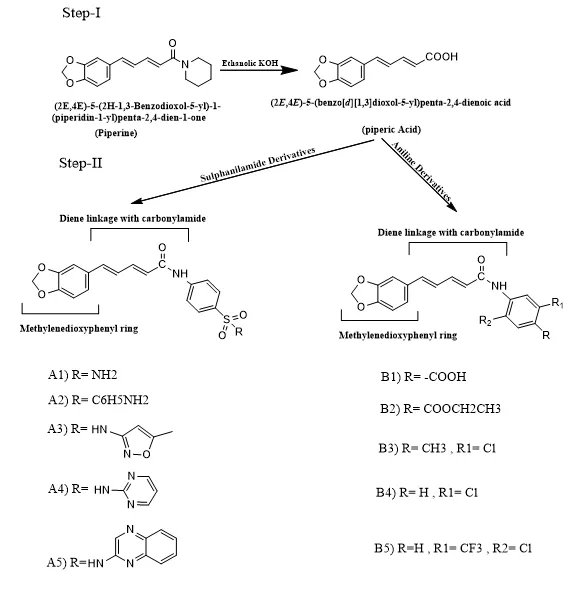
Figure 2. Design of Piperine conjugates used in the study, This structure has been drawn using ChemDraw.
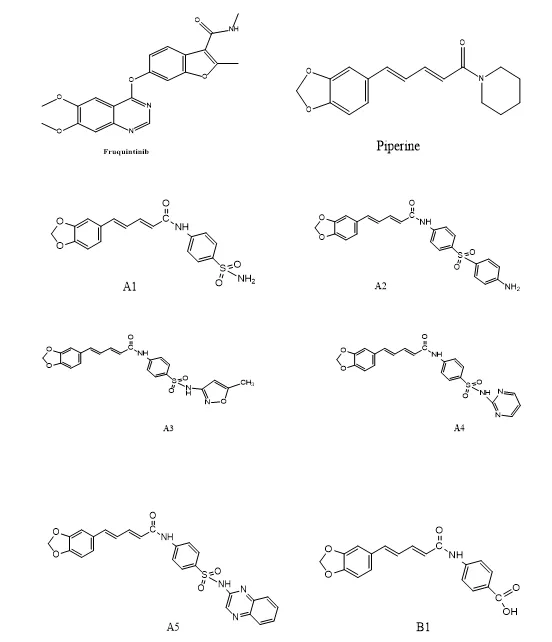
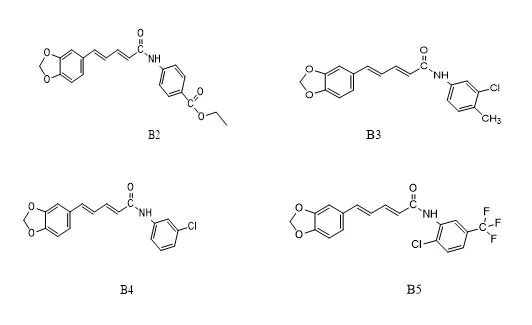
Figure 3. Structure of Fruquintininb, Piperine and Piperine Conjugates used in the study, this structure has been drawn using ChemDraw.
5.7 Preparation of Piperic acid
30ml of 20% ethanol KOH was added to 1g (0.35 mol) of Piperine, and the mixture was refluxed for 48 hours. TLC was used to monitor the reaction's completion, and the mobile phase was n-hexane: ethyl acetate (7:3 v/v). After the reaction was finished, the methanol was extracted using Rotavac (Kika Werke, HB4, Germany) at low pressure, resulting in a solid that was yellow in color. This residue produced a yellowish precipitate of Piperic acid when it was dissolved in 50 milliliters of water, filtered, and acidified with HCl. This precipitate was filtered using a light vacuum. This crude Piperic acid (800mg) was recrystallized from methanol (15ml) to give yellow needles of pure Piperic acid (750mg, 75% yield), m. p. 216 o C (Lit. 217-218 o C)[52], [53].
5.8 Preparation of (A1 to B5) compounds
Piperic acid was treated with Sulphanilamide derivatives in presence of EDCl , HOBt , THF at 0° C for 16 hours, it gives (A1-A5) Compound and Similarly Piperic acid was treated with Aniline derivatives in presence of EDCl , HOBt , THF at 0°C for 16 hours, it gives (B1-B5) Compound.
5.9 ADMET Prediction
The five factors that make up the ADMET profile—absorption, distribution, metabolism, excretion, and toxicity—are essential in indicating a compound Fruquintinib, Piperine and Piperine derivative(A1-B5) chances of succeeding as a medication. The ADMET profile was predicted in this study using PkCSM tools (http://biosig.unimelb.edu.au/pkcsm/prediction)-: table-2 [54].
5.10 Physiochemical Properties Prediction
The ten parameters that make up the Physiochemical properties of compoud Fruquintinib, Piperine & Piperine derivatives (A1-B5) are-: formula, Molecular weight, Num.heavy atoms, Num.arom.heavyatoms , fraction Csp3, Num.rotatable bonds, Num.h-bond acceptors, Num. H-bond donors, Molar Refractivity, TPSA. The Physicochemical properties were prediction in the study using SwissADME tools (http://www.swissadme.ch) –: table-3 [55].
5.11 Lipophilicity Prediction
The Six parametrs that make up the lipophilicity of compound Fruquintinib, Piperine & Piperine derivatives (A1-B5) are-: Log-(iLOGP), (XLOGP3), (WLOGP), (MLOGP), (SILICOS-IT) and Consensus Log Po/w. The lipophilicity was prediction in the study using SwissADME tools (http://www.swissadme.ch) –: table-4 [55].
5.12 Water Solubility Prediction
The parameters that make up the Water Solubility of compound Fruquintinib, Piperine & (A1-B5) are-: Log (Ali) and these parameters provides the Solubility & Class. The water solubility was in the study using SwissADME tools (http://www.swissadme.ch) –: table-5 [55].
5.13 Pharmacokinetics Predection
The Nine parameters that make up the pharmacokinetics of compounds Fruquintinib, Piperine & Piperine derivatives (A1-B5) are -: GI absorption, BBB permeant, P-gp Substrate, CYP1A2 inhibitors, CYP2C19 inhibitors, CYP2C9 inhibitors, CYP2D6 inhibitors, CYP3A4 inhibitors and Log Kp (skin permeation). The pharmacokinetics was prediction in the study using SwissADME tools (http://www.swissadme.ch) –: table-6 [55].
RESULTS AND DISCUSSION
We carried out in-silico molecular docking investigations on Piperine conjugates compound to identify their affinity towards thymidylate synthase protein for incorporating its value in colorectal cancer targeted treatment. Recent advances in thymidylate synthase inhibitors for colorectal cancer have revealed that targeting thymidylate synthase on enzyme in DNA synthesis, has emerged as a key therapeutic target in colorectal cancer.
6.1 Molecular Docking Analysis
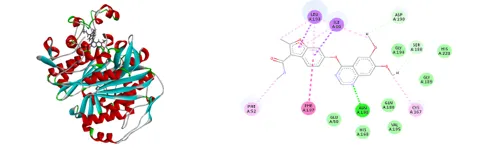
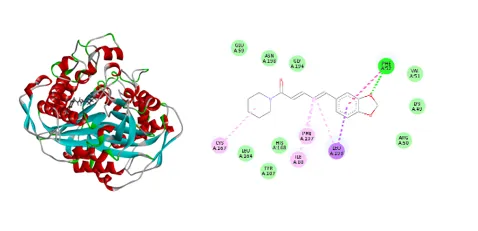
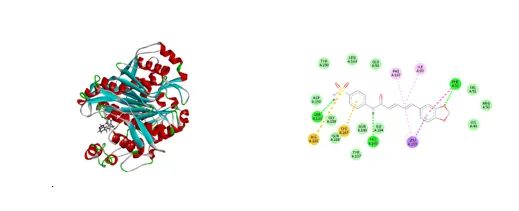
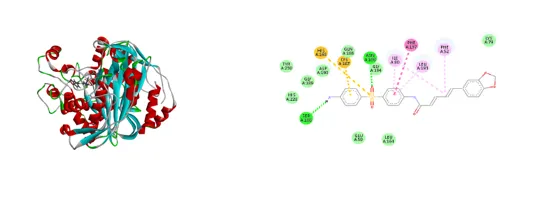
The main objective of our study to compare between the binding affinity of Fruquintinib, Piperine with the Piperine conjugates compound.
Fruquintinib
PiperineXS
A1).
A2).
A3).
A4)
A5).
B1).
B2).
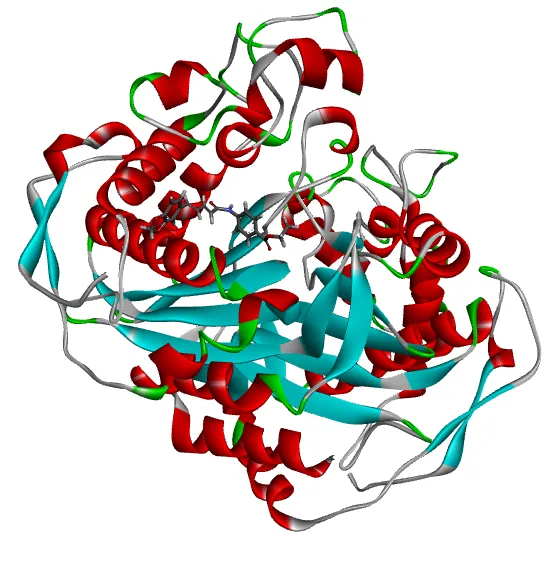
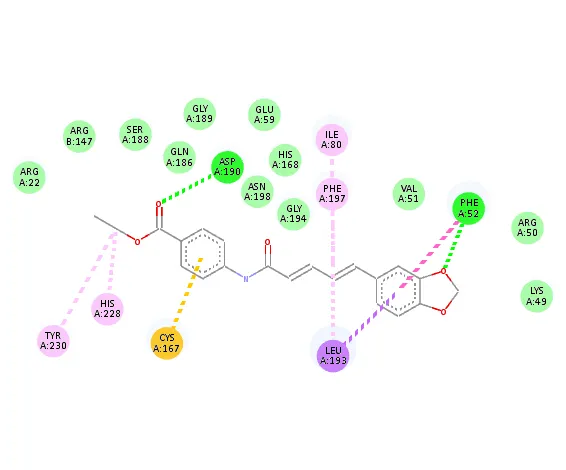
B3).
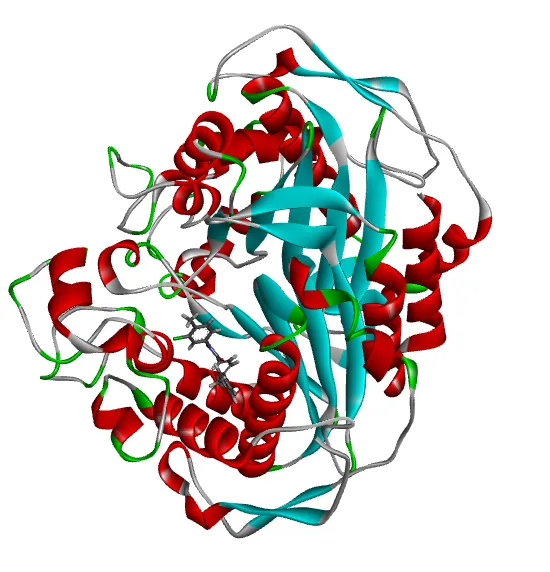
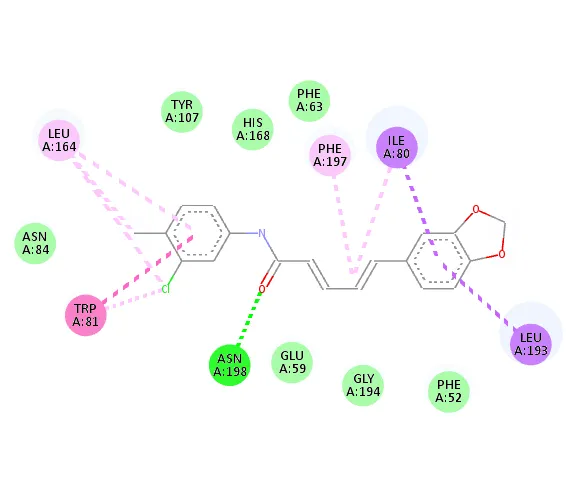
B4).
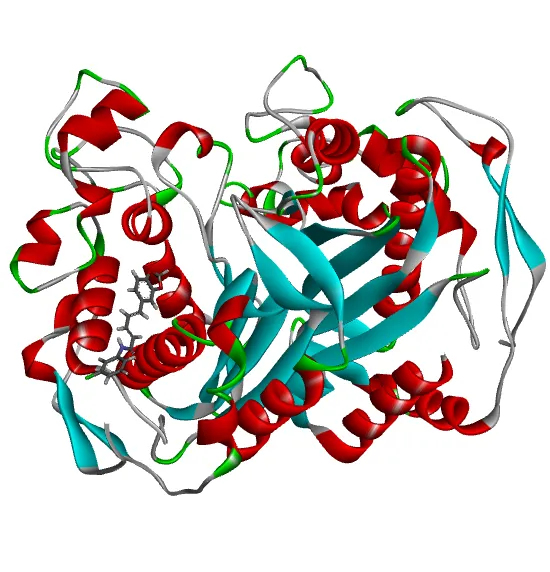
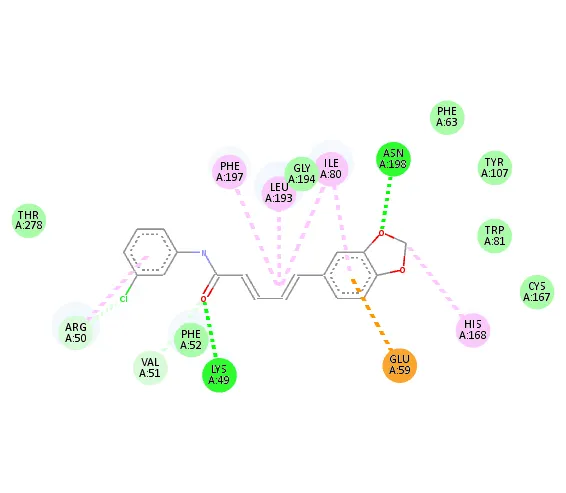
B5).
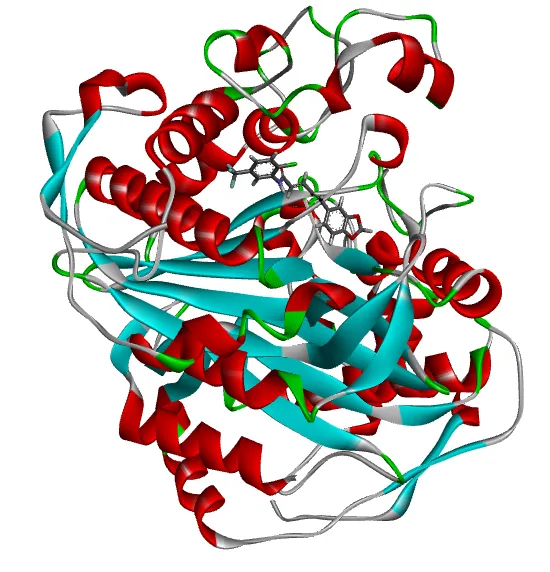
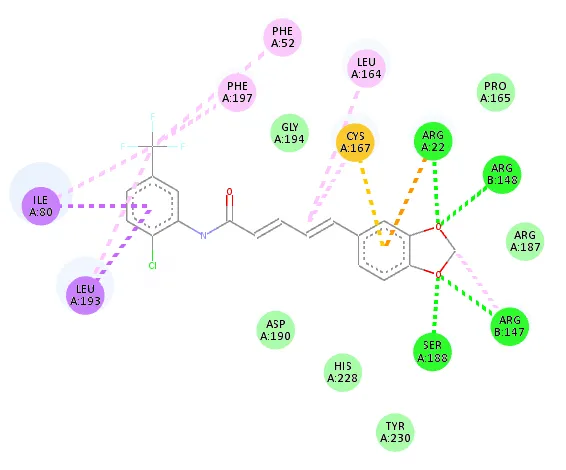
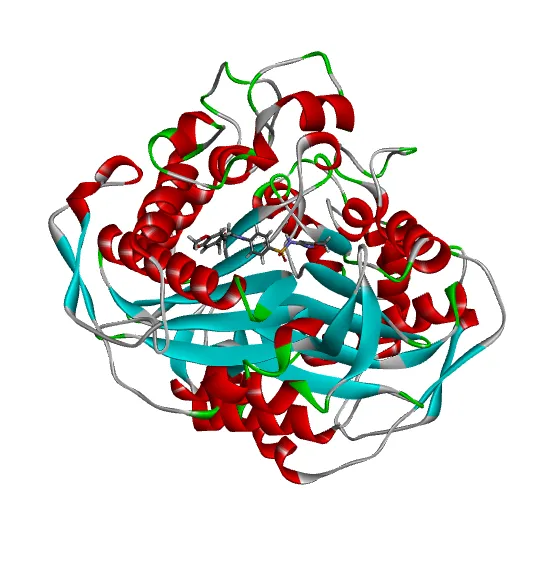
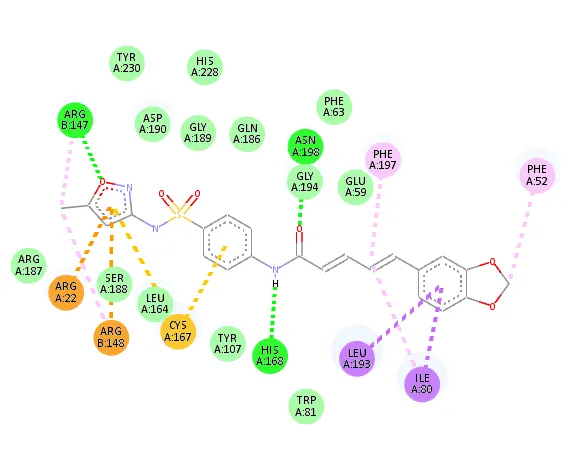
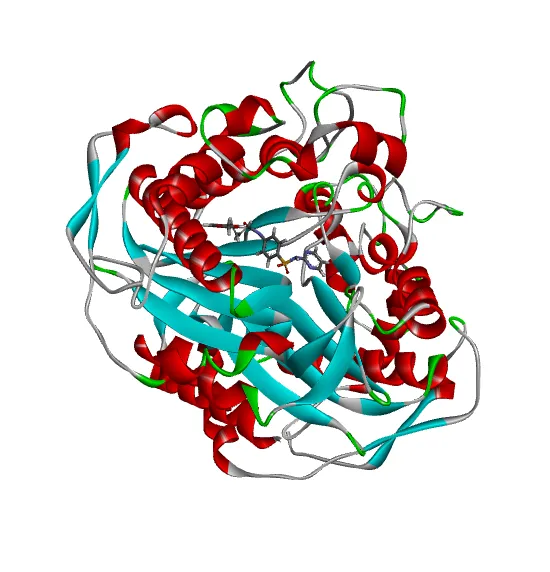
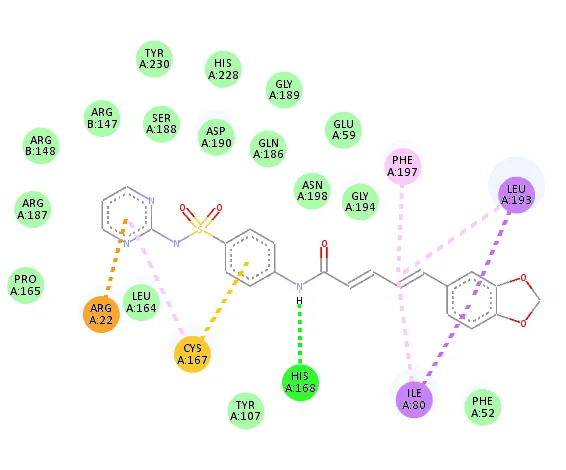
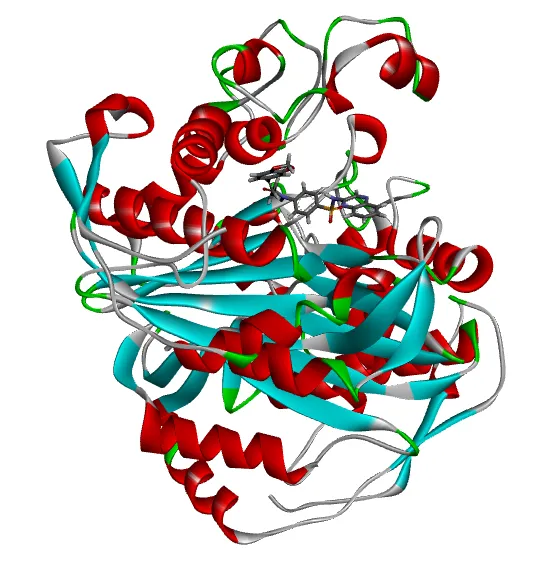
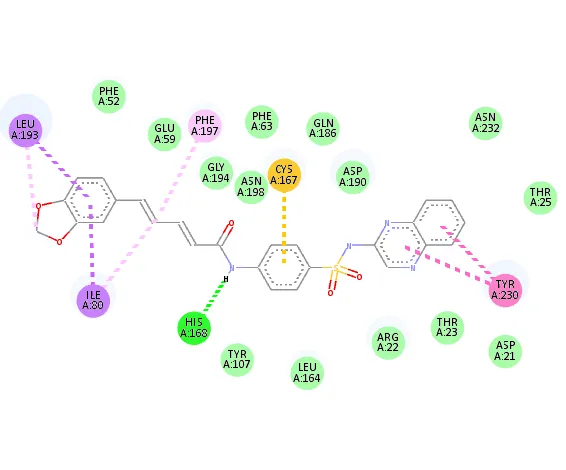
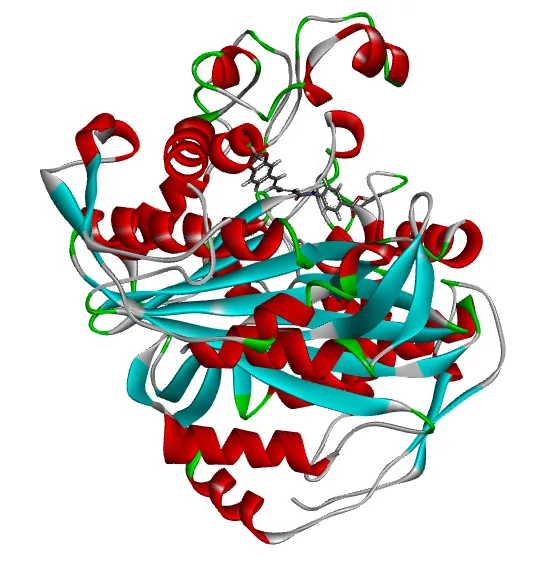
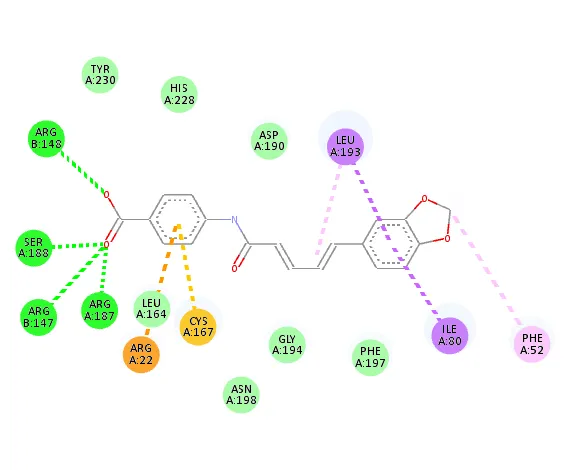
Figure 4. Interactions between Fruquintinib, Piperine & Piperine conjugates (A1 to A5 & B1 to B5) with thymidylate synthase (TS).
Tables 1: Docking results and analysis of designed compound Piperine conjugates with thymidylate synthase (PDB ID;1i00 protein)
|
S.No. |
Ligand |
SMILES |
PDB IDs |
Binding affinity of best conformer (kCal/mol) |
Surrounding Amino acid Residues |
Amino acids forming hydrogen bonds |
|
1 |
Fruquintinib(STD.DRUG) |
CNC(=O)c1c(C)oc2c1ccc(c2)Oc1ncnc2c1cc(OC)c(c2)OC |
1i00 |
-7.8 |
LEU193,ILE80,PHE52,PHE197,GLU59,HIS168,GLIN186,VAL195,CYS167,GLY189,HIS228,SER188,GLY194,ASP190 |
ASN198 |
|
2 |
Piperne |
O=C(N1CCCCC1)/C=C/C=C/c1ccc2c(c1)OCO2 |
1i00 |
-8.2 |
LEU193,PHE197,CYS167,VAL51,LYS49,ARG50,ILE80,HIS168,TYR107,LEU164,GLY194,198,GLU59 |
PHE52 |
|
3 |
A1 |
O=C(Nc1ccc(cc1)S(=O)(=O)N)/C=C/C=C/c1ccc2c(c1)OCO2
|
1i00 |
-9.2 |
VAL51,ARG50,LYS49,LEU193,ILE80,PHE197,GLY194,ASN198,TYR107,CYS167,GLN186,GLY189,HIS228,AS190,TYR230,LEU230,LEU164,GLU59 |
SER188,HIS168,PHE52 |
|
4 |
A2 |
O=C(Nc1ccc(cc1)S(=O)(=O)Nc1noc(c1)C)/C=C/C=C/c1ccc2c(c1)OCO2
|
1i00 |
-8.8 |
CYS167,HIS168,GLY194,ILE80,PHE52,LEU193,LYS79,LYS79,LEU164,GLU59,ASP190,GLY189,HIS228,TYR230 |
ASN198,SER188 |
|
5 |
A3 |
O=C(Nc1ccc(cc1)S(=O)(=O)Nc1noc(c1)C)/C=C/C=C/c1ccc2c(c1)OCO2
|
1i00 |
-10.2 |
ARG22,SER188,ARG148,LEU164,CYS167,LEU193,ILE80,PHE52,PHE197,GLY194,ARG187,TYR107,TRP81,GLU59,PHE63,GLN186,GLY189,HIS228,TYR230 |
ARG147,HIS168,ASN198 |
|
6 |
A4 |
O=C(Nc1ccc(cc1)S(=O)(=O)Nc1ncccn1)/C=C/C=C/c1ccc2c(c1)OCO2
|
1i00 |
-9.4 |
ARG22,CYS167,ILE80,LEU193,PHE197,PHE52,GLY194,GLU59,ASN198,GLY189,GLIN186,HIS228,ASP190,TYR230,SER188,ARG147,ARG148,ARG187,PRO165,LEU164,TYR107 |
HIS168 |
|
7 |
A5 |
O=C(Nc1ccc(cc1)S(=O)(=O)Nc1cnc2c(n1)cccc2)/C=C/C=C/c1ccc2c(c1)OCO2 |
1i00 |
-10.2 |
LEU193,ILE80,PHE197,CYS167,TYR230,TYR107,LEU164,ARG22,THR23,ASP21,THR25,ASN232,ASP190,GLIN186,PHE63,ASN198,GLY194,GLU59,PHE52 |
HIS168 |
|
8 |
B1 |
O=C(Nc1ccc(cc1)C(=O)O)/C=C/C=C/c1ccc2c(c1)OCO2 |
1i00 |
-8.3 |
LEU164,ARG22,CYS167,ILE80,PHE52,LEU193,ASN198,ILE197,ASP190,HIS228,THR230 |
ARG148,SER188,ARG147,ARG187 |
|
9 |
B2 |
CCOC(=O)c1ccc(cc1)NC(=O)/C=C/C=C/c1ccc2c(c1)OCO2
|
1i00 |
-8.8 |
TYR230,HIS228,CYS167,LEU193,PHE193,ILE80,LYS49,ARG50,VAL51,GLY194,ASN198,HIS168,GLU59,GLY189,GLIN186,SER188,ARG147,ARG22 |
ASP190,PHE52 |
|
10 |
B3 |
O=C(Nc1ccc(c(c1)Cl)C)/C=C/C=C/c1ccc2c(c1)OCO2 |
1i00 |
-8.7 |
LEU164,ASN84,TRP81,GLU59,GLY194,PHE52,LEU193,ILE80,PHE197,PHE63,HIS168,TYR107,LEU164ASN84,TRP81 |
ASN198 |
|
11 |
B4 |
O=C(Nc1cccc(c1)Cl)/C=C/C=C/c1ccc2c(c1)OCO2 |
1i00 |
-8.4 |
ARG50,PHE52,VAL51,GLU59,HIS168,ILE80,GLY194,LEU193,PHE197,CYS167,TRP81,TYR107,PHE63,THR278 |
ASN198,LYS49 |
|
12 |
B5 |
O=C(Nc1cc(ccc1Cl)C(F)(F)F)/C=C/C=C/c1ccc2c(c1)OCO2 |
1i00 |
-8.4 |
PHE52,PHE197,ILE80,LEU193,LEU164,CYS167,GLY194,PRO165,ARG187,ASP190,HIS228,TYR230 |
ARG22,ARG148,ARG147,SER188 |
In this study, we evaluated the interactions between the Fruquintinib,Piperine and Piperine derivatives (A1- Discovery Studio Visualizer tool, as seen in the above figure. The Piperine derivatives compound A3 & A5 have highest positive control, with a binding energy of -10.2 kcal/mol, has hydrogen bond interactions with amino acids ARG147, ASN19, HIS168 and π interactions with amino acids PHE52, ILE80, LEU193, PHE197, GLY194, CYS167, ARG148, and TYR230. All remaining compounds also showed good binding ability at the active site of the enzyme through many important amino acids are shown on the above tables 1.
Table 2. For Result of ADMET of [Fruquintinib, Piperine & Piperine derivatives (A1 to A5 & B1-B5)] compound.
|
Properties |
Fruquintinib |
Piperine |
A1 |
A2 |
A3 |
A4 |
A5 |
B1 |
B2 |
B3 |
B4 |
B5 |
|
Absorption |
|
|
|
|
|
|
|
|
|
|
|
|
|
Water solubility (log mol/l) |
-4.058 |
-3.841 |
-3.857 |
-4.87 |
-4.66 |
-4.697 |
-4.77 |
-3.098 |
-4.606 |
-4.318 |
-4.176 |
-4.901 |
|
Caco-2 permeability (log P in 10-6 cm/s)
|
1.503 |
1.893 |
1.058 |
0.586 |
0.758 |
0.816 |
1.006 |
0.892 |
0.971 |
1.457 |
1.438 |
1.053 |
|
Intestinal absorption (human) (%) |
97.274 |
94.355 |
80.341 |
89.074 |
82.878 |
79.446 |
87.667 |
99.018 |
94.193 |
89.866 |
90.703 |
87.713 |
|
Distribution |
|
|
|
|
|
|
|
|
|
|
|
|
|
VDss (human) (log l/kg) |
-0.076 |
0.268 |
-0.445 |
-0.74 |
-0.24 |
-0.383 |
-0.702 |
-2.173 |
-0.261 |
0.243 |
0.231 |
0.137 |
|
BBB permeability (log BBB) |
-0.923 |
0.274 |
-0.359 |
-0.213 |
-0.725 |
-0.799 |
-0.595 |
-0.119 |
-0.403 |
0.155 |
0.163 |
0.137 |
|
CNS permeability |
-3.193 |
-1.625 |
-2.527 |
-2.215 |
-3.105 |
-3.264 |
-3.026 |
-2.234 |
-2.287 |
-0.649 |
-0.679 |
-0.627 |
|
Metabolism |
|
|
|
|
|
|
|
|
|
|
|
|
|
CYP2D6 substrate |
No |
No |
No |
No |
No |
No |
No |
No |
No |
No |
No |
No |
|
CYP3A4 substrate |
Yes |
Yes |
Yes |
Yes |
Yes |
Yes |
Yes |
No |
Yes |
Yes |
Yes |
Yes |
|
CYP2D6 inhibitor |
No |
No |
No |
No |
No |
No |
No |
No |
No |
Yes |
Yes |
Yes |
|
CYP3A4 inhibitor |
Yes |
No |
Yes |
Yes |
Yes |
Yes |
Yes |
No |
Yes |
No |
No |
Yes |
|
Excretion |
|
|
|
|
|
|
|
|
|
|
|
|
|
Total clearance (log ml/min/kg) |
0.924 |
0.24 |
0.333 |
0.132 |
0.044 |
0.256 |
-0.003 |
0.208 |
0.298 |
-0.249 |
-0.201 |
-0.013 |
|
Toxicity |
|
|
|
|
|
|
|
|
|
|
|
|
|
AMES toxicity |
No |
No |
No |
Yes |
Yes |
Yes |
No |
No |
No |
Yes |
Yes |
No |
|
Hepatotoxicity |
No |
Yes |
No |
Yes |
Yes |
Yes |
Yes |
No |
No |
Yes |
No |
No |
In the absorption process, water solubility of a Piperine derivatives (A2, A3, A4, A5, B2 & B5) were found to be -4.87, -4.66, -4.69, -4.77, -4.66 & 4.901, So all the values are less than -4 so it insoluble as well as compared to standard drug (Fruquintinib). Two crucial factors in assessing a drug's absorption are the human colon adenocarcinoma-2 cell line (Caco2- Cancer coli-2) and human intestinal absorption (HIA). If a substance absorbs less than 30% of its total amount in the human intestine, it is deemed poorly absorbed [56]. The Piperine & Piperine derivatives (A1-B5) had intestinal absorption %s that were fairly high to medium, with B1 having the highest absorption percentage at 99.018% as compared to the standard drug (Fruquintinib). The human colon adenocarcinoma cells that make up the Caco-2 cell line. If a compound's Papp, or logPapp, is greater than 8x10⁻⁶ cm/s, it is said to have high Caco-2 permeability[56], [57]. The findings indicate that compounds—namely, fruquintinib, Piperine, Piperine derivatives-A1, A5, B2, B3, B4, and B5—have a Caco-2 permeability of more than 0.9. A substance's distribution can be determined by a number of factors, such as concentration, lipid solubility, and the ability to bind to transfer and plasma proteins.
The theoretical volume to which a drug's complete dose should be uniformly dispersed in order to achieve the same plasma concentrations is known as the steady-state volume of distribution (VDss) [56], [57]. The medicine will be transported more in tissue than in plasma when greater the VDss. Compounds are considered well dispersed in tissues if logVDss > 0.45 and poorly dispersed if logVDss < -0.15. The Piperine & Piperine derivatives (A1 & A2) have the logVDss 0.268 & 0.231, 0.137 so it considered as well dispersed to tissue as compared to the standard drug (Fruquintinib) logVDss -: 0.268. The tendency of a medicine to pass the blood-brain barrier is a consideration to consider in order to help prevent toxicity and side effects or enhance the effectiveness of drugs with pharmacological effects within the brain[56], [57]. The Piperine & Piperine derivatives(A3,A4&A5) have the logBBB values 0.274 & 0.155, 0.163, 0.137 with Cross blood-brain barrier capacity but the standard drug(Fruquintinib) and Piperine derivatives(A1, A2, B1, B2, B3, B4, & B5) have the poor blood-brain barrier capacity as compared to the standard logBBB values which are higher than -1. This improves the compound's effectiveness in treating illnesses that impact brain function, because the compound can reach its target spot in the brain. If the compound has logP S > -2 are considered to penetrate the central nervous system, while those with logP S < -3 are considered as unable to penetrate the CNS. The Piperine & Piperine derivatives (A1, A2, B1, B2, B4, B5) have the logP S-: -1.625, -2.234, -2.287, -2.527, -2.215, -0.649, -0.627) respectively so it is considered as able to penetrate the central nervous system but the Fruquintinib & Piperine derivatives (A3, A4, A5, B3) have the logP S-: -3.193, -3.105, -3.264, -3.026, -3.026 so it is considered as unable to penetrate the central nervous system. Cytochrome P450 enzymes perform an essential function in the metabolism of several medications.The results demonstrate that all substances are substrates of CYP3A4, indicating that these drugs might be metabolized by P450. Regarding elimination, we expected overall clearance which is displayed in Table 2 [57].
The results show that Piperine derivetives-A1, A4, B1, and B2 have the highest total clearance with the values 0.333, 0.256,0.258, 0.298 when compared to 0.924 standard drug (Fruquintinib).
In terms of toxicity Piperine derivatives-A1, A3, B1, B2, and B5 are nontoxic as compared to the standard drug (Fruquintinib), but the other compounds have a minimum one toxicity[57].
Table 3. For Result of Physiochemical Properties of [Fruquintinib, Piperine & Piperine derivatives (A1 to A5 & B1 to B5)] compound.
|
Physicochemical Properties |
Fruquintinib |
Piperine |
A1 |
A2 |
A3 |
A4 |
A5 |
B1 |
B2 |
B3 |
B4 |
B5 |
|
Formula |
C21H19N3O5 |
C17H19NO3 |
C18H16N2O5S |
C24H20N2O5S |
C22H19N3O6S |
C22H18N4O5S |
C26H20N4O5S |
C19H15NO5 |
C21H19NO5 |
C19H16ClNO3 |
C18H14ClNO3 |
C19H13ClF3NO3 |
|
Molecular weight |
393.39 g/mol
|
285.34 g/mol |
372.40 g/mol |
448.49 g/mol |
453.47 g/mol |
450.47 g/mol |
500.53 g/mol |
337.33 g/mol |
365.38 g/mol |
341.79 g/mol |
327.76 g/mol |
395.76 g/mol |
|
Num. heavy atoms |
29
|
21 |
26 |
32 |
32 |
32 |
36 |
25 |
27 |
24 |
23 |
27 |
|
Num. arom. heavy atoms |
19 |
6 |
12 |
18 |
17 |
18 |
22 |
12 |
12 |
12 |
12 |
12 |
|
Fraction Csp3 |
0.19
|
0.35 |
0.06 |
0.04 |
0.09 |
0.05 |
0.04 |
0.05 |
0.14 |
0.11 |
0.06 |
0.11 |
|
Num. rotatable bonds |
6 |
4 |
6 |
7 |
8 |
8 |
8 |
6 |
8 |
5 |
5 |
6 |
|
Num. H-bond acceptors |
7 |
3 |
6 |
5 |
7 |
7 |
7 |
5 |
5 |
3 |
3 |
6 |
|
Num. H-bond donors |
1 |
0 |
2 |
2 |
2 |
2 |
2 |
2 |
1 |
1 |
1 |
1 |
|
Molar Refractivity |
106.77 |
85.48 |
96.56 |
121.91 |
117.71 |
118.27 |
135.78 |
92.53 |
101.66 |
95.55 |
90.58 |
95.58 |
|
TPSA |
95.71 Ų |
38.77 Ų |
116.10 Ų |
116.10 Ų |
128.14 Ų |
127.89 Ų |
127.89 Ų |
84.86 Ų |
73.86 Ų |
47.56 Ų |
47.56 Ų |
47.56 Ų |
Physicochemical properties of the [Fruquintinib,Piperine & Piperine deerivatives(A1-A5 & B1-B5)] compound.
(This section covers clean molecular and physicochemical parameters such molecular formula, molecular weight, number of heavy atoms, number of aromatic heavy atoms, number of rotatable bonds, number of H-bond acceptors, number of H-bond donors, molar refractivity, and TPSA.The PSA is calculated using a fragmental technique known as topological polar surface area (TPSA) and the polar atoms sulfur and phosphorus[58], [59]. General properties of the compound [Fruquintinib,Piperine & Piperine derivatives- (A1-A5 & B1- B5)] compounds with molecular weights less than 500 Da, with the exception of Piperine derivative- A5, which is essential for tiny molecules to be considered drug-like[55,58,59]).
Table 4. For Result of Lipophilicity of [Fruquintinib, Piperine & Piperine derivatives (A1 to A5 & B1-B5)] compound.
|
Lipophilicity |
Fruquintinib |
Piperine |
A1 |
A2 |
A3 |
A4 |
A5 |
B1 |
B2 |
B3 |
B4 |
B5 |
|
Log Po/w (iLOGP) |
3.69 |
3.38 |
2.35 |
3.18 |
2.98 |
2.82 |
2.85 |
2.59 |
3.63 |
3.45 |
3.25 |
3.63 |
|
Log Po/w (XLOGP3) |
3.43 |
3.46 |
2.20 |
3.75 |
3.34 |
2.78 |
4.08 |
3.17 |
3.86 |
4.63 |
4.27 |
5.15 |
|
Log Po/w (WLOGP) |
3.85 |
2.51 |
3.05 |
4.83 |
4.31 |
3.80 |
4.96 |
3.02 |
3.50 |
4.29 |
3.98 |
6.15 |
|
Log Po/w (MLOGP) |
1.41 |
2.39 |
1.15 |
2.80 |
1.39 |
1.36 |
2.16 |
2.26 |
2.71 |
3.39 |
3.16 |
3.99 |
|
Log Po/w (SILICOS-IT) |
3.60 |
3.41 |
1.76 |
3.36 |
2.64 |
2.17 |
3.19 |
3.08 |
4.03 |
4.79 |
4.27 |
5.35 |
|
Consensus Log Po/w |
3.20 |
3.03 |
2.10 |
3.58 |
2.93 |
2.59 |
3.45 |
2.82 |
3.54 |
4.11 |
3.79 |
4.85 |
Lipophilicity characteristics of the [ Fruquintinib,Piperine & Piperine derivatives (A1-A5 & B1- B5)] compound.
(SwissADME provides five freely accessible models to analyze the lipophilicity character of a compound: XLOGP3, WLOGP, MLOGP, SILICOS-IT, and iLOGP. XLOGP3: an atomistic method with corrective elements and a knowledge-driven library[60]. WLOGP is a totally atomistic approach to analyze a fragmented system[61]. MLOGP, a model of the topological technique, is based on a linear interaction and implements 13 molecular descriptors. SILICOS-IT is a hybrid technique based on 27 components and seven topological descriptors[62], [63]. iLOGP is a physics-based approach that employs the generalized-born and solvent accessible surface area (GB/SA) model to determine the solvation free energies in water and n-octanol. The consensus log P o/w represents the arithmetic mean of the values anticipated by the five proposed approaches[59], [64]).
Table 5. For Result of Water Solubility of [Fruquintinib, Piperine & Piperine derivatives (A1 to A5 & B1-B5)] compound.
|
Water Solubility |
Fruquintinib |
Piperine |
A1 |
A2 |
A3 |
A4 |
A5 |
B1 |
B2 |
B3 |
B4 |
B5 |
|
|
Log S (Ali) |
-5.12 |
-3.96 |
-4.27 |
-5.88 |
-5.71 |
-5.12 |
-6.47 |
-4.62 |
-5.11 |
-5.35 |
-4.98 |
-5.89 |
|
|
Solubility |
2.98e-03 mg/ml ; 7.58e-06 mol/l |
3.16e-02 mg/ml ; 1.11e-04 mol/l |
1.99e-02 mg/ml ; 5.34e-05 mol/l |
5.90e-04 mg/ml ; 1.32e-06 mol/l |
8.88e-04 mg/ml ; 1.96e-06 mol/l |
3.40e-03 mg/ml ; 7.56e-06 mol/l |
1.69e-04 mg/ml ; 3.38e-07 mol/l |
8.04e-03 mg/ml ; 2.38e-05 mol/l |
2.85e-03 mg/ml ; 7.80e-06 mol/l |
1.51e-03 mg/ml ; 4.42e-06 mol/l |
3.42e-03 mg/ml ; 1.04e-05 mol/l |
5.05e-04 mg/ml ; 1.28e-06 mol/l |
|
|
Class |
Moderately soluble |
Soluble |
Moderately soluble |
Moderately soluble |
Moderately soluble |
Moderately soluble |
Poorly soluble |
Moderately soluble |
Moderately soluble |
Moderately soluble |
Moderately soluble |
Moderately soluble |
|
Water solubility characteristics of [Fruquintinib,Piperine & Piperine derivatives (A1-A5 & B1- B5)] compound.
(One of the 12 poorly soluble compounds, namely Piperine derivatives-A5, the most of the 12 compounds were moderately soluble and Piperine was Soluble only. SwissADME predicts water solubility using a logarithmic scale Ali (insoluble < -10, weakly <-6, moderately, < -4, soluble, < -2, very, < 0)[65]. The solubility of a substance is greatly affected by the solvent employed, as well as the surrounding temperature and pressure. The saturation concentrations is characterized as the point whereby adding more solutes does not increase their concentration in the solution[66] [67]. Highly soluble is defined as the greatest dose strength being soluble in 250 mL or less of aqueous solutions over a pH range of 1 to 7.5. The 250-mL volume assessment is based on typical bioequivalence testing protocols, which call for delivering a medicinal product to fasting healthy individuals with a glass of water[68]. The decimal logarithm of molar solubility in water is used to calculate all expected values (log S). SwissADME also provides solubility in mol/l and mg/ml units, as well as qualitative solubility classes[55][59]).
Table 6. For Result of Pharmacokinetics of [Fruquintinib, Piperine & Piperine derivatives (A1 to A5 & B1-B5)] compound.
|
Pharmacokinetics |
Fruquintinib |
Piperine |
A1 |
A2 |
A3 |
A4 |
A5 |
B1 |
B2 |
B3 |
B4 |
B5 |
|
GI absorption |
High |
High |
High |
High |
Low |
High |
Low |
High |
High |
High |
High |
High |
|
BBB permeant |
No |
Yes |
Yes |
No |
No |
No |
No |
No |
Yes |
Yes |
Yes |
No |
|
P-gp substrate |
No |
No |
No |
No |
No |
No |
No |
No |
No |
No |
No |
No |
|
CYP1A2 inhibitor |
Yes |
Yes |
No |
Yes |
Yes |
No |
No |
Yes |
Yes |
Yes |
Yes |
Yes |
|
CYP2C19 inhibitor |
Yes |
Yes |
No |
Yes |
Yes |
Yes |
Yes |
No |
Yes |
Yes |
Yes |
Yes |
|
CYP2C9 inhibitor |
Yes |
Yes |
Yes |
Yes |
Yes |
Yes |
Yes |
Yes |
Yes |
Yes |
No |
Yes |
|
CYP2D6 inhibitor |
Yes |
No |
No |
No |
No |
No |
No |
No |
No |
No |
Yes |
No |
|
CYP3A4 inhibitor |
Yes |
No |
Yes |
Yes |
Yes |
Yes |
Yes |
No |
Yes |
Yes |
Yes |
Yes |
|
Log Kp (skin permeation) |
-6.26 cm/s |
-5.58 cm/s |
-7.01 cm/s |
-6.37 cm/s |
-6.69 cm/s |
-7.07 cm/s |
-6.46 cm/s |
-6.11 cm/s |
-5.79 cm/s |
-5.10 cm/s |
-5.27 cm/s |
-5.06 cm/s |
(Pharmacokinetics in which except for Piperine derivatives A3 and A5, the ten compounds in the [Fruquintinin, Piperine and Piperine derivatives (A1-A5 & B1- B5)] exhibited high GI absorption values. This is precisely proportional to the permeable BBB, which contains 12 compounds of the [Fruquintinib,Piperine and Piperine derivatives (A1 to A5 & B1 to B5)]. This means that most of the compounds in the [Fruquintinib,Piperine & Piperine derivatives(A1-B5) have very good absorption. P-gp substrate is glycoprotein transporter for varoius activities, such as drug absorption, excretion, and other crucial functions within the body. In this there is no p-gp substrate is present in the 12 [Fruquintinib,Piperine & Piperine derivatives(A1-B5)] compound. CYP1A2 inhibitor is the substance which hinders the axctivity of CYP1A2 enzymes, which alter in the metabolism of various drug and compound, in this Nine compound have the CYP1A2 inhibitor among the 12 [Fruquintinib,Piperine & Piperine derivatives (A1-A5 & B1- B5)]. CYP-2C19, 2C9,2D6 and 3A4 inhibitor are the substance which interfere with the activity of the cytochrome P450 2C19,2C9,2D6,3A4 enzyme, which alter in the mtabolism, in these ten compounds have the CYP2C19 inhibitor, eleven compound have the CYP2C9 inhibitor, two compound have the CYP2D6 inhibitor, ten compund have the CYP3A4 inhibitor. In studies analyze that different compounds Log Kp values ranged from -10.92 cm/s to -2.08 cm/s , indicating the ability or inability to permeate the skin, in this all the compound [Fruquintinib,Piperine & Piperine derivatives (A1-A5 & B1- B5)] fallls on the ranged values as compared to standard drug(Fruquintinib) [55,59,64]).
(Fruquintinib)-IUPACNAME-:6-((6,7 dimethoxyquinazolin-4-yl) oxy)-N,2 dimethylbenzofuran-3-carboxamide, Chemical Formula: C21H19N3O5 , Molecular Weight: 393.39, m/z: 393.13 (100.0%), 394.14 (23.1%), 395.14 (3.6%), 394.13 (1.1%), Elemental Analysis: C, 64.12; H, 4.87; N, 10.68; O, 20.34, Boiling Point: 1124.37 [K], Melting Point: 924.6 [K], Gibbs Energy: 182.32 [kJ/mol], Log P: 2.61, MR: 108.92 [cm3/mol], Henry's Law: 16.06, Heat of Form: -317.3 [kJ/mol], tPSA: 90.74, CLogP: 3.03512,CMR: 10.5502, H-NMR: δ 7.61(sec.amide) , 8.46(CH-quinazoline) , 7.48(CH-benzofuran) , 3.83(CH3-methyl) , C-NMR: δ 157.7(C-benzofuran) , 177.9(C-quinazoline) , 154.2(CH-quinazoline) , 103.3(CH-benzofuran) , 167.8(1-amide) , 56.1(CH3-aliphatic).
(Piperine)-IUPACNAME-:1-((2E,4E)-5-(1,3-benzodioxol-5-yl)penta-2,4-dienoyl)piperidine, Chemical Formula: C17H19NO3, Molecular Weight: 285.34, m/z: 285.14 (100.0%), 286.14 (18.7%), 287.14 (2.3%), Elemental Analysis: C, 71.56; H, 6.71; N, 4.91; O, 16.82, Boiling Point: 785.09 [K], Melting Point: 495.01 [K], Gibbs Energy: 268.19 [kJ/mol], Log P: 2.78, MR: 85.91 [cm3/mol], Henry's Law: 10.1, Heat of Form: -81.27 [kJ/mol], tPSA: 38.77, CLogP: 3.313,CMR: 8.5514, H-NMR: δ 1.53(cyclohexane) , 6.71(d.ethylene) , 7.18(CH) , 7.22(m,C6H5) ,6.07(dioxale) C-NMR: δ 25.4(m,cyclohexane) , 166.3(C00-amide) , 125.2(1,ethylene) , 122.5(1-benzene) , 106.7(m,C6H5) , 101.2(dioxole).
A1) IUPAC NAME -: (2E,4E)-5-(benzo[d][1,3]dioxol-5-yl)-N-(4-sulfamoylphenyl)penta-2,4-dienamide, Chemical Formula: C18H16N2O5S, Molecular Weight: 372.40, m/z: 372.08 (100.0%), 373.08 (21.4%), 374.07 (4.5%), 374.08 (3.1%), Elemental Analysis: C, 58.05; H, 4.33; N, 7.52; O, 21.48; S, 8.61, Boiling Point: 950.81 [K], Melting Point: 697.15 [K], Gibbs Energy: 360.64 [kJ/mol], Log P: 2.22, MR: 101.66 [cm3/mol], Henry's Law: 11.85, Heat of Form: 8.96 [kJ/mol], tPSA: 107.72, CLogP: 2.568, CMR: 10.1622, H-NMR: δ 2.0(NH2) , 7.84(m,C6H5) , 10.12(NH) , 5.28(d.ethylene) , 7.18(CH) , 6.07(dioxole), C-NMR: δ 101.2(dioxole) , 148.7(C6H5) , 106.7(CH) , 130.5(C6H5) , 129.4(CH) , 166.7(amide) , 138.4(ethylene) , 140.8(CH).
A2)IUPAC NAME -: (2E,4E)-N-(4-((4-aminophenyl)sulfonyl)phenyl)-5(benzo[d][1,3]dioxol-5-yl)penta-2,4-dienamide, Chemical Formula: C24H20N2O5S, Molecular Weight: 448.49, m/z: 448.11 (100.0%), 449.11 (27.7%), 450.11 (6.0%), 450.12 (3.3%), 451.11 (1.2%), Elemental Analysis: C, 64.27; H, 4.49; N, 6.25; O, 17.84; S, 7.15, Boiling Point: 1134.36 [K], Melting Point: 803.71 [K], Gibbs Energy: 513.94 [kJ/mol], Log P: 3.56, MR: 126.15 [cm3/mol], Henry's Law: 11.85, Heat of Form: 110.18 [kJ/mol], tPSA: 107.72, CLogP: 4.0372, CMR: 12.6734, H-NMR: δ 6.27(NH2) , 6.50(m,C6H5) , 10.12(NH) , 5.28(d,ethylene) , 7.18(CH) , 6.07(dioxole), C-NMR: δ 101.2(dioxole) , 148.7(C6H5) , 106.7(CH) , 130.5(C6H5) , 138.4(CH) , 166.7(amide) , 142.6(C6H5) , 118.7(m,C6H5) , 113.0(C6H5).
A3)IUPACNAME-:(2E,4E)-5-(benzo[d][1,3]dioxol-5-yl)-N-(4-(N-(5-methylisoxazol-3-yl)sulfamoyl)phenyl)penta-2,4-dienamide, Chemical Formula: C22H19N3O6S, Molecular Weight: 453.47, m/z: 453.10 (100.0%), 454.10 (25.9%), 455.10 (6.2%), 455.11 (2.8%), 456.10 (1.2%), Elemental Analysis: C, 58.27; H, 4.22; N, 9.27; O, 21.17; S, 7.07, Boiling Point: 1128.85 [K], Melting Point: 851.44 [K], Gibbs Energy: 493.11 [kJ/mol], Log P: 3.11, MR: 122.8 [cm3/mol], Henry's Law: 11.85, Heat of Form: 20.31 [kJ/mol], tPSA: 115.32, CLogP: 3.7035, CMR: 12.14 , , H-NMR: δ 2.36(CH3) , 6.09(isoxazole) , 4.0(NH) , 7.84(m,C6H5) , 10.12(NH) , 5.28(d,ethylene) , 7.18(CH) , 6.07(dioxole) , C-NMR: δ 101.2(dioxole) , 148.7(C6H5) , 106.7(CH) , 130.5(C6H5) , 138.4(CH) , 166.7(amide) , 140.8(C6H5) , 118.0(m,C6H5) , 150.0(ioxozole) , 12.4(CH3).
A4)IUPACNAME-:(2E,4E)-5-(benzo[d][1,3]dioxol-5-yl)-N-(4-(N-(pyrimidin-2-yl)sulfamoyl)phenyl)penta-2,4-dienamide, Chemical Formula: C22H18N4O5S, Molecular Weight: 450.47, m/z: 450.10 (100.0%), 451.10 (26.3%), 452.10 (6.1%), 452.11 (2.8%), 453.10 (1.2%), Elemental Analysis: C, 58.66; H, 4.03; N, 12.44; O, 17.76; S, 7.12, Boiling Point: 1154.05 [K], Melting Point: 881.13 [K], Gibbs Energy: 683.77 [kJ/mol], Log P: 2.46, MR: 122.59 [cm3/mol], Henry's Law: 11.85, Heat of Form: 248.19 [kJ/mol], tPSA: 118.45, CLogP: 3.2395, CMR: 12.2512 , H-NMR: δ 6.93(pyrimidine) , 8.45(pyrimidine) , 4.0(NH) , 7.84(m,C6H5) , 10.12(NH) , 5.28(d,ethylene) , 7.18(CH) , 6.07(dioxole) , C-NMR: δ 101.2(dioxole) , 148.7(C6H5) , 106.7(CH) , 130.5(C6H5) , 138.4(CH) , 166.7(amide) , 140.8(C6H5) , 118.0(m,C6H5) , 169.3(Pyrimidine) , 157.9(pyrimidine) , 115.3(pyrimidine).
A5)IUPACNAME-:(2E,4E)-5-(benzo[d][1,3]dioxol-5-yl)-N-(4-(N-(quinoxalin-2-yl)sulfamoyl)phenyl)penta-2,4-dienamide, Chemical Formula: C26H20N4O5S, Molecular Weight: 500.53, m/z: 500.12 (100.0%), 501.12 (28.5%), 502.12 (5.5%), 502.11 (4.5%), 501.11 (2.3%), 503.11 (1.3%), Elemental Analysis: C, 62.39; H, 4.03; N, 11.19; O, 15.98; S, 6.41, Boiling Point: 1269.53 [K], Melting Point: 971.43 [K], Gibbs Energy: 814.47 [kJ/mol], Log P: 3.77, MR: 137.22 [cm3/mol], Henry's Law: 11.85, Heat of Form: 345.23 [kJ/mol], tPSA: 118.45, CLogP: 4.8335, CMR: 13.9392 , H-NMR: δ 7.67(m,C6H5)) , 8.05(pyrimidine) , 4.0(NH) , 7.84(m,C6H5) , 10.12(NH) , 5.28(d,ethylene) , 7.18(CH) , 6.07(dioxole) , C-NMR: δ 101.2(dioxole) , 148.7(C6H5) , 106.7(CH) , 130.5(C6H5) , 138.4(CH) , 166.7(amide) , 140.8(C6H5) , 118.0(m,C6H5) , 161.5(quinoxaline) , 125.8(quinoxoline).
B1) IUPAC NAME -: 4-((2E,4E)-5-(benzo[d][1,3]dioxol-5-yl)penta-2,4-dienamido)benzoic acid, Chemical Formula: C19H15NO5, Molecular Weight: 337.33, m/z: 337.10 (100.0%), 338.10 (20.9%), 339.10 (3.2%), Elemental Analysis: C, 67.65; H, 4.48; N, 4.15; O, 23.72, Boiling Point: 1046.67 [K], Melting Point: 785.76 [K], Gibbs Energy: -41.3 [kJ/mol], Log P: 3.03, MR: 94.89 [cm3/mol], Henry's Law: 15.76, Heat of Form: -395.74 [kJ/mol], tPSA: 84.86, CLogP: 4.1204, CMR: 9.5736 , H-NMR: δ 11.0(OH), 8.04(C6H5) , 10.12(NH) , 5.28(d,ethylene) , 7.18(CH) , 6.07(dioxole) , C-NMR: δ 101.2(dioxole) , 148.7(C6H5) , 106.7(CH) , 130.5(C6H5) , 138.4(CH) , 166.7(amide) , 142.8(C6H5) , 121.5(m,C6H5) , 125.8(C6H5) , 169.3(COOH).
B2)IUPACNAME-:ethyl4-((2E,4E)-5-(benzo[d][1,3]dioxol-5-yl)penta-2,4-dienamido)benzoate, Chemical Formula: C21H19NO5, Molecular Weight: 365.38, m/z: 365.13 (100.0%), 366.13 (23.1%), 367.13 (3.6%), Elemental Analysis: C, 69.03; H, 5.24; N, 3.83; O, 21.89, Boiling Point: 1005.14 [K], Melting Point: 690.03 [K], Gibbs Energy: 9.08 [kJ/mol], Log P: 3.63, MR: 105.12 [cm3/mol], Henry's Law: 13.13, Heat of Form: -404.03 [kJ/mol], tPSA: 73.86, CLogP: 5.0502, CMR: 10.5012 , H-NMR: δ 1.29(CH3), 7.88(C6H5) , 10.12(NH) , 5.28(d,ethylene) , 7.18(CH) , 6.07(dioxole) , C-NMR: δ 101.2(dioxole) , 148.7(C6H5) , 106.7(CH) , 130.5(C6H5) , 138.4(CH) , 166.7(amide) , 141.9(C6H5) , 121.5(m,C6H5) , 125.8(C6H5) , 165.9(COO) , 60.9(CH2) , 14.1(CH3).
B3)IUPACNAME-: (2E,4E)-5-(benzo[d][1,3]dioxol-5-yl)-N-(3-chloro-4 methylphenyl)penta-2,4-dienamide, Chemical Formula: C19H16ClNO3, Molecular Weight: 341.79, m/z: 341.08 (100.0%), 343.08 (32.0%), 342.09 (20.8%), 344.08 (6.7%), 343.09 (2.7%), Elemental Analysis: C, 66.77; H, 4.72; Cl, 10.37; N, 4.10; O, 14.04, Boiling Point: 943.57 [K], Melting Point: 667.6 [K], Gibbs Energy: 281.05 [kJ/mol], Log P: 4.52, MR: 98.58 [cm3/mol], Henry's Law: 11.15, Heat of Form: -72.68 [kJ/mol], tPSA: 47.56, CLogP: 5.5526, CMR: 9.8762 , H-NMR: δ 2.34(CH3), 7.87(C6H5) , 10.12(NH) , 5.28(d,ethylene) , 7.18(CH) , 6.07(dioxole) , C-NMR: δ 101.2(dioxole) , 148.7(C6H5) , 106.7(CH) , 130.5(C6H5) , 138.4(CH) , 165.4(amide) , 140.7(C6H5) , 122.3(m,C6H5) , 144.2(C6H5) , 20.7(CH3).
B4)IUPACNAME-:(2E,4E)-5-(benzo[d][1,3]dioxol-5-yl)-N-(3-chlorophenyl)penta-2,4-dienamide, Chemical Formula: C18H14ClNO3, Molecular Weight: 327.76, m/z: 327.07 (100.0%), 329.06 (32.0%), 328.07 (19.7%), 330.07 (6.4%), 329.07 (2.5%), Elemental Analysis: C, 65.96; H, 4.31; Cl, 10.82; N, 4.27; O, 14.64, Boiling Point: 915.71 [K], Melting Point: 643.81 [K], Gibbs Energy: 282.26 [kJ/mol], Log P: 4.03, MR: 92.68 [cm3/mol], Henry's Law: 11.19, Heat of Form: -40.57 [kJ/mol], tPSA: 47.56, CLogP: 5.0536, CMR: 9.4124 , H-NMR: δ 7.23(C6H5), 7.99(C6H5) , 10.12(NH) , 5.28(d,ethylene) , 7.18(CH) , 6.07(dioxole) , C-NMR: δ 101.2(dioxole) , 148.7(C6H5) , 106.7(CH) , 130.5(C6H5) , 138.4(CH) , 166.7(amide) , 137.3(C6H5) , 122.0(m,C6H5) , 134.5(C6H5).
B5)IUPACNAME-:(2E,4E)-5-(benzo[d][1,3]dioxol-5-yl)-N-(2-chloro-5-(trifluoromethyl)phenyl)penta-2,4-dienamide, Chemical Formula: C19H13ClF3NO3 Molecular Weight: 395.76, m/z: 395.05 (100.0%), 397.05 (32.0%), 396.06 (20.8%), 398.05 (6.7%), 397.06 (2.7%), Elemental Analysis: C, 57.66; H, 3.31; Cl, 8.96; F, 14.40; N, 3.54; O, 12.13, Boiling Point: 938.15 [K], Melting Point: 671.79 [K], Gibbs Energy: -300.54 [kJ/mol], Log P: 4.95, MR: 99.18 [cm3/mol], Henry's Law: 10.25, Heat of Form: -669.76 [kJ/mol], tPSA: 47.56, CLogP: 5.36996, CMR: 9.9227 , H-NMR: δ 7.30(C6H5), 8.06(C6H5) , 10.12(NH) , 5.28(d,ethylene) , 7.18(CH) , 6.07(dioxole) , C-NMR: δ 101.2(dioxole) , 148.7(C6H5) , 106.7(CH) , 130.5(C6H5) , 138.4(CH) , 166.7(amide) , 135.0(C6H5) , 118.8(m,C6H5) , 129.3(C6H5).
CONCLUSION
In conclusion, our study presents a promising avenue for the treatment of colorectal cancer (CRC) through the development of Piperine conjugates designed to inhibit thymidylate synthase (TS). Through in-silico screening, we identified ten Piperine derivatives (A1-A5 & B1-B5) that exhibited significantly higher binding energies compared to the standard drug (Fruquintinib), indicating strong interactions with thymidylate synthase (TS). Specifically, Piperine derivatives A3, A5, A4, and A1 demonstrated highest binding energies -10.2, -10.2, -9.4 and -9.2 kcal/mol as compared to the -7.8 kcal/mol standard drug (Fruquintinib) respectively, suggesting their potential as potent TS inhibitors for CRC therapy.
In the ADMET Properties, the water solubility of Piperine derivatives conjugates (A2, A3, A4, A5, B2 & B5) were found to be -4.87, -4.66, -4.69, -4.77, -4.66 & -4.901 which is less than - 4 so it is insoluble as compared to the -4.058 standard drug (Fruquintinib). In the Caco-2 permeability Piperine derivatives-A1, A5, B2, B3, B4, and B5 have a high Caco-2 permeability due to value 1.893, 1.006, 0.971, 1.457, 1.438, 1.053 are more than 0.9 as compared to the 1.503 standard drug (Fruquintinib). In the intestinal absorption, Piperine deriatives B1 having the highest absorption percentage at 99.018% as compared to the 97.274% standard drug (Fruquintinib). In the steady-state volume of distribution (VDss), Piperine & Piperine derivatives (A1 & A2) have the logVDss 0.268 & 0.231, 0.137 so it considered as well dispersed to tissue as compared to the logVDss 0.268 standard drug (Fruquintinib). In the CNS Permeability, Piperine & Piperine derivatives(A1, A2,B1,B2,B4,B5) have the logP S-: (-1.625,-2.234,-2.287,-2.527,-2.215,-0.649,-0.627) respectively so it is considered as able to penetrate the central nervous system but the Fruquintinib have logP S (-3.193) so it is considered as unable to penetrate the central nervous system. In the total clearance, Piperine derivetives- A1, A4, B1, and B2 have the highest total clearance (ml/min/kg) with the values 0.333, 0.256, 0.258, 0.298 when compared to 0.924 standard drug (Fruquintinib). In terms of toxicity, Piperine derivatives-A1, A3, B1, B2, and B5 are nontoxic as compared to the standard drug (Fruquintinib). Overall, our study provides valuable insights into the development of innovative therapeutic strategies for CRC. Further experimental validation and clinical studies will be warranted to confirm the efficacy and safety of these designed piperine conjugates as potential candidates for CRC treatment. These findings pave the way for the advancement of personalized and effective therapies for combating colorectal cancer, a significant global health burden.
REFERENCES


Kabikant Chaurasiya, Dr. Prem shankar Mishra., In-Silico Screening Of Piperine Conjugates By Targeting Thymidylate Synthase Enzyme For Colorectal Cancer Treatment, Int. J. of Pharm. Sci., 2026, Vol 4, Issue 8, 5019-5048. https://doi.org/10.5281/zenodo.22198670
 10.5281/zenodo.22198670