

We use cookies to ensure our website works properly and to personalise your experience. Cookies policy
1Assistant Professor, Department of Pharmacy Practice, Harsha College of Pharmacy, Nelamangala, Bangalore.
2,3,4,5Department of Pharmacy Practice, Harsha College of Pharmacy, Nelamangala, Bangalore.
Background: Period-delay medicines are hormonal medicines used to postpone menstruation for short periods and may be used for medical, social, cultural or personal reasons. Inadequate knowledge self-medication and use without professional guidance may raise medication-safety concerns. This study assessed knowledge, attitude, medication-use practices and self-reported adverse effects related to period delay medicines among pharmacy students. Materials and methods: A cross sectional questionnaire based observational study was conducted among pharmacy students at Harsha College of Pharmacy, Bengaluru, from June to August 2026. A structured self-administered questionnaire was distributed electronically through Google forms. A total 285 responses were included using convenience sampling, and all provided affirmative electronic consent. Data were summarized using frequencies and percentages. Exploratory associations were examined using statistical tests appropriate to the value and valuable data. Results: Of the 285 participants, 225 (78.9%) had heard of period-delay medicines. However responses to individual knowledge questions revealed gaps in understanding of their appropriate use and safety precautions. 37 participants reported previous use. Among previous users, 28 reported at least one adverse effects following medicine use. These adverse effects were self-reported, and their causal relationship with the medicines was not established. Conclusion: Although general awareness of period delay medicines was common among participating pharmacy students, important gaps in detailed medication-safety knowledge remained. Previous use and self-reported adverse effects highlight the importance of education about appropriate medication use,
An important turning point in a woman's life is0menarche. Women of all ages typically have strong memories of their first menstruation and may describe the events leading up to it in great detail1. Unquestionably, the cyclic hormonal fluctuations that control the menstrual cycle have a significant biological impact on the female body, with a wide0range of physical and psychological consequences2. The two ovarian hormones that control menstruation are progesterone and estrogen3. Progesterone also acts on numerous tissues, but the effects are more limited and less studied3. By definition, the commencement of menstrual flow on day one marks the start of the menstrual cycle (Figure 1). The thicker endometrium is lost as menstrual bleeding during the menstrual phase, which typically lasts four to six days. The follicular or proliferative phase, which ends with ovulation, lasts from days 7 through 14. Days 15 through 280makeup the luteal, or secretory phase2. A fertile adult woman's ovaries undergo morphological changes due to pituitary chemicals called follicle-stimulating hormone and luteinizing hormone (LH). Estradiol levels stay low during the menstrual cycle. However, LH works in concert with follicle-stimulating hormone to start the growth of many primary follicles that create estradiol and other estrogens; the thickened endometrium produces estrogen3.
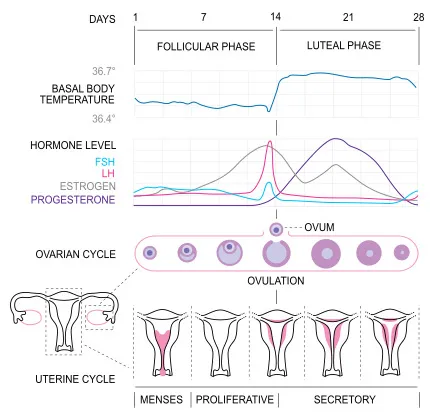
Figure 1: Phases of the Menstrual Cycle4
Among women who are of reproductive age, menstrual problems have become a common problem. Menstrual issues have been linked to an increase in gynecological consultations for women worldwide5. An disruption in the monthly cycle sequence and the appearance of certain menstruation-related bodily dysfunction are characteristics of menstrual disorders6. Premenstrual symptoms, dysmenorrhea, and abnormal uterine bleeding (AUB) are examples of menstrual disorders7. Since steroid hormone treatment became available, menstrual period suppression has been utilized to treat a number of medical disorders by relieving menstruation-related symptoms. An growing number of women are using this choice more regularly for personal taste, but it has acquired validity due to its use in relieving symptoms. Comparable contraceptive effectiveness and safety were observed in a recent Cochrane review of studies comparing 28-day and prolonged cycles8. Overall discontinuation rates and discontinuation for bleeding issues were found to be comparable in the review. Headaches, genital discomfort, fatigue, bloating, and menstruation pain all improved with prolonged cycling8. Gonadotropin-releasing hormone (GnRH) analogs, prolonged cycles or continuous use of oral combined contraceptives, different progestin delivery systems (depot medroxyprogesterone acetate administered intramuscularly [IM] or subcutaneously, oral progestins, intrauterine systems), and older medications like danazol have all been used to induce therapeutic amenorrhea9.
Although studies have investigated menstrual suppression, menstrual-management practices, and medicine-related knowledge among students, limited published evidence was identified specifically addressing knowledge, attitudes, and practices regarding period-delay medicines and self-reported adverse effects among pharmacy students. Therefore, the present study was designed to0assess these aspects among pharmacy students at Harsha College of Pharmacy, Bengaluru.
METHODS AND MATERIALS:
Research Design
To evaluate pharmacy students at Harsha college of Pharmacy, Bengaluru, Karnataka, India’s knowledge, attitudes, and practices on period-delay drugs and self-reported adverse effects, a cross- sectional, questionnaire-based observational study was carried out. June 2026 until August 2026 saw the study carried out.
Population and Sampling Study
Pharmacy students at Harsha College of Pharmacy made up the study group, Included were those 16 years and older who willingly agreed to take part and finished the survey. Excluded were participants who neglected to give permission, were not from the target group, turned in duplicate responses, or offered inadequate answers. Participant recruiting used a convenience sample approach. In the end, the study included 285 valid answers.
Study Aids
The study resource consisted of structured questionnaire created by invigilator, participant information and consent form, Google forms for digital data collecting, and Microsoft0Excel for data analysis and organization.
Questionnaire Design
The survey was created in straight forward English to evaluate awareness, factual knowledge, attitudes, behaviour regarding period-delay drugs, and self-reported side effects following review of pertinent scientific studies. Two faculty members from Pharmacy-practice, the Head of Department and an Assistant Professor reviewed the questionnaire for reverence, factual corrections, clarity, language, and mistake detection. The questionnaire thus regarded as an investigator developed, expert reviewed tool.
Information Gathering and scoring
Information was collected electronically via Google Forms using a structured self-administered questionnaire included demographic information, knowledge, attitudes, practice and self-reported negative effects connected to period delay medications.
Statistically analysis and Data Management
Before analysis, the gathered answer were downloaded to Microsoft Excel and examined for eligibility, duplicate answer, consistency, coding mistakes, and missing data. Categorical variables were analyzed using descriptive statistics that is frequencies and percentages. Total scores and knowledge groups helped to synthesize knowledge scores. For negative effect factors and practice available-ace dominators were employed since only those with past exposure to period delay medications were relevant to these questions. Person’s chi-square test was used to evaluate links between categorical variables when the expected frequency assumptions were satisfied as two side p value less than 0.05.
Ethical Issues
Voluntary involvement in the study was advised to participants before they gave consent on its goal. The gathered data was kept under confidence and no personal identifying information was disclosed. Before data gathering, official Institutional Ethics Committee clearance was not acquired.
RESULT
A total number of 285 pharmacy students took part in a study that assessed their awareness, knowledge, attitudes, practices, and their self-reported experiences with period-delay medicines. Out of these, 173 (60.7%) were female and 112 (39.3%) were male. The vast majorityOof those involved were aged between 20 and 25 years (61.4%), while 38.6% were between 16 and 20. Most of them were studying for a Bachelor of Pharmacy degree (78.2%), followed by Pharm.D (12.3%), M.Pharm (8.1%), and D.Pharm students (1.4%).
Table 1: Distribution of Study Participants According to Demographic Characteristics
| Variable | Category | n (Frequency) | % |
|---|---|---|---|
| Sex | Male | 112 | 39.3 |
| Female | 173 | 60.7 | |
| Age group | 16-20 | 110 | 38.6 |
| 20-25 | 175 | 61.4 | |
| >25 | 0 | 0.0 | |
| Year of Study | 1st year | 101 | 35.4 |
| 2nd year | 73 | 25.6 | |
| 3rd year | 60 | 21.1 | |
| 4th year | 51 | 17.9 | |
| Course | B.Pharm | 223 | 78.2 |
| M.Pharm | 23 | 8.1 | |
| Pharm.D | 35 | 12.3 | |
| D.Pharm | 4 | 1.4 |
More than three out of every four participants (78.9%) were aware of period-delay medicines, while 10.9% were unsure and 10.2% had no awareness. However, when it came to factual knowledge, there was a wide-range.
[Figure - see the formatted PDF]
Figure 2: Awareness of Period-Delay Medicines Among Participants (N=285).
Most participants understood the importance of talking to a healthcare professional before using these medicines (90.2%), and 74.0% knew what these medicines were for. Knowledge about safety was less strong, with 63.2% knowing that not everyone can use these medicines and 61.8% correctly identifying precautions related to blood clots. About 53.3% knew that bleeding might happen after stopping the medicine. Understanding of specific administration and pharmacological details was limited. Only 47.4% could correctly say when to start the medicine before their period, and 45.6% identified norethisterone as a progestogen. Only 44.2% understood that period-delay medicines are not a reliable form of contraception, and 42.5% correctly answered a question about the combined-pill method. Just 27.4% answered a question about the mini-pill schedule correctly, and only 10.2% knew the standard dosing frequency. Overall, 136 participants (47.7%) had poor knowledge, 105 (36.8%) had moderate knowledge, and 44 (15.4%) had good knowledge.
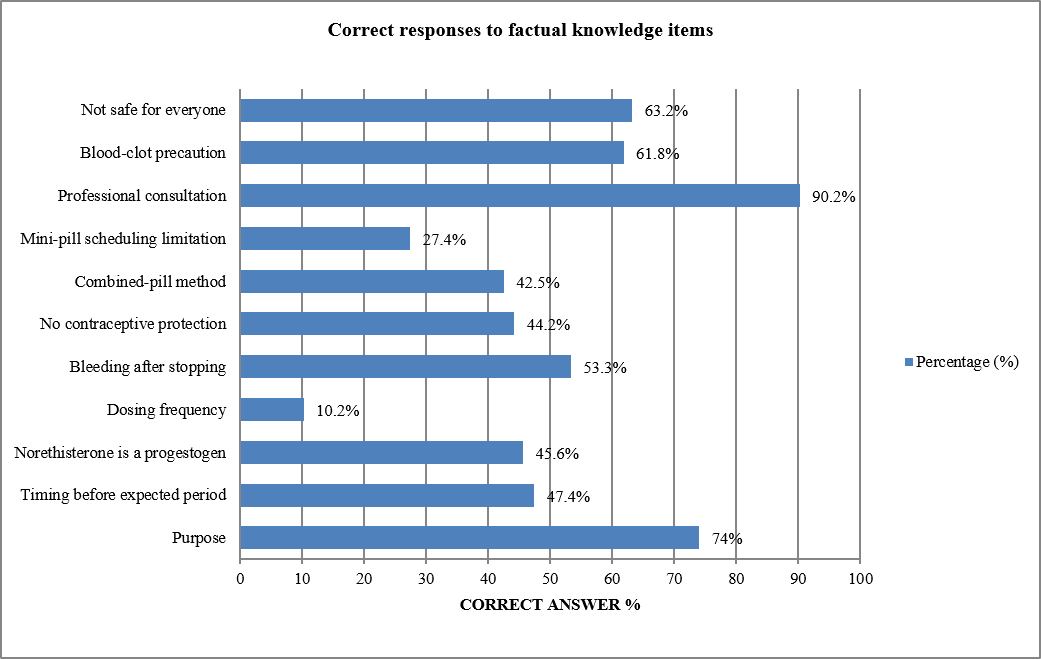
Figure 3: Percentage of Correct Responses for the 11 Factual Knowledge Items (N=285).
[Figure - see the formatted PDF]
Figure 4: Knowledge Category by Sex (N=285).
There was a significant connection between gender and knowledge level (χ² = 18.170, df = 2, p < 0.001). Male participants had poor knowledge0in 63.4% of cases compared to 37.6% of female participants. Knowledge level did not significantly0vary by age (χ² = 1.830, p = 0.401). However, there was a significant connection between academic year and knowledge level (χ² = 13.914, df = 6, p = 0.031).
Table 2: Association Between Knowledge Category and Demographic Characteristics.
| Comparison | Pearson chi-square | df | p-value | Interpretation |
|---|---|---|---|---|
| Sex x knowledge category | 18.170 | 2 | <0.001 | Statistically significant association |
| Age group x knowledge category | 1.830 | 2 | 0.401 | No statistically significant association |
| Year of study x knowledge category | 13.914 | 6 | 0.031 | Statistically significant association; exploratory |
Participants had different attitudes about period-delay medicines. They expressed opinions about the importance of discussing menstrual health, avoiding casual use of hormonal medicines, and reporting possible side effects to healthcare professionals. Opinions on the general safety of these medicines were mixed. Each attitude statement was looked at separately instead of being combined into one overall attitude score.
[Figure - see the formatted PDF]
Figure 5: Attitude Response Distribution. Percentages Are Based on Valid Responses for Each Item.
Thirty-seven participants had used period-delay medicines before, all of whom were female, making up 21.4% of the female participants. The most typical reasons for usage were religious activities or pilgrimage (48.6%) and weddings or major social events (40.5%). Travel or holidays were mentioned by 13.5%, while sports, physical exams or competitions and medical reasons were each given by 8.1%.
[Figure - see the formatted PDF]
Figure 6: Reasons for Using Period-Delay Medicines. Multiple Responses Were Permitted.
Among those who had used the medicines, 89.2% read the medicine label, and 62.2% checked for possible side effects. However, only 36.1% consulted a healthcare professional. Additionally, 41.7% had already recommended the medicine to someone else, while 13.5% said they would do so without medical advice.
[Figure - see the formatted PDF]
Figure 7: Selected Medicine-Use Practices Among Previous Users. Percentages Use the Valid Denominator for Each Item.
There was a significant link between knowledge level and previous use of period-delay medicines (χ² = 11.927, df = 2, p = 0.003; Cramer's V = 0.205).
Previous use was reported by 27.3% of those with good knowledge, 14.3% with moderate knowledge, and 7.4% with poor knowledge. However, knowledge scores0were not significantly linked to the practices of previous users. Out of the 37 previous users, 28 (75.7%) experienced at least one adverse effect, while 9 (24.3%) did not. Abdominal discomfort was identified as the most prevalent symptom (46.43%), followed by mood changes or irritability (35.71%), headache (32.14%), bloating (28.57%), vomiting (25.00%), and dizziness (21.43%). Delayed or irregular periods and leg pain or swelling were each reported by 17.86% of those with adverse effects. Nausea and breast tenderness each occurred in 14.29%, shortness of breath in 7.14%, and spotting or breakthrough bleeding in 3.57%.
[Figure - see the formatted PDF]
Figure 8: Types of Self-Reported Adverse Effects Among Participants Reporting an Adverse Effect. Multiple Responses Were Permitted.
Participants reported experiencing symptoms within one to two days after using the medicine in 46.4% of cases. Of the 26 participants who provided valid responses about hospitalization, five (19.2%) had been hospitalized, while 21 (80.8%) had not.
DISCUSSION
According to the current study, pharmacy students generally had a good awareness of period-delay medicines, their understanding of how to use them properly, including correct dosage, timing of administration, and safety measures, was still lacking. About half of the participants had poor knowledge, demonstrating that knowledge of a medication does not equate to complete comprehension of it. There was a clear link between knowledge levels and factors such as gender and academic year, but no significant connection was found with age.
Participants showed cautious attitudes towards hormonal medicines and understood the importance of informing healthcare professionals about any suspected side effects. However, opinions on the overall safety of period-delay medicines were not clear, which suggests a need for more balanced and thorough education on medication safety. The use of these medicines was often linked to events such as religious activities, pilgrimages, weddings, and other social occasions. While most users said they read medicine labels and some checked for possible side effects, only a small0number consulted0a healthcare professional. Some participants’ also0suggested these medicines to others, emphasizing the need to promote responsible use and discourage recommendations without proper medical advice.
There was a strong connection between knowledge level and prior use of period-delay medicines, with those who had good knowledge being more likely to have used them before compared to those with moderate or poor knowledge. However, the study’s cross-sectional design means the0direction of this relationship could not be determined. It is possible that prior use increases familiarity with these medicines, or those individuals with more knowledge0are more likely to use them. Common self-reported side effects among those who had used the medicines included abdominal pain, mood changes, headaches, bloating, vomiting, and dizziness. However, these symptoms0were not clinically confirmed, and their presence does not prove that the medicines caused them. Reports of leg pain or swelling and shortness of breath require careful medical attention and appropriate evaluation. No significant link0was found between knowledge level or specific medicine-use habits and the occurrence of side effects; however, the small number of previous users made it difficult to draw firm conclusions.
Overall, the results show a gap between general awareness and detailed understanding of period-delay medicines among pharmacy students. Educational efforts should focus on proper usage, dosage guidelines, timing of administration, contraceptive limitations, safety measures, the importance of consulting professionals, and recognizing and reporting possible side effects. Strengthening these areas can encourage responsible medicine use and enhance the quality of counselling provided by pharmacy students.
CONCLUSION
The present cross-sectional study among 285 pharmacy students demonstrated that although general awareness of period-delay medicines was relatively high, important gaps remained in detailed knowledge regarding their appropriate and safe use. A total of 225 (78%) participants had heard of period-delay medicines, while 37 participants reported previous use, all of whom were female. Among previous users , religious or pilgrimage-related reasons and wedding or major social events were the most commonly reported reasons for use. The finding also indicated limited professional consultation and the potential for self-medication and medicine use without adequate professional guidance. Among the 37 previous users however, 28 reported at least one negative consequence. These events were self-reported and no formal causality assessment was performed, so a causal relationship with the medicine could not be established. Overall, the findings highlight the need for targeted medication-safety education, appropriate professional counselling, awareness of contraindication and adverse effects, and improve understanding of pharmacovigilance and adverse drug reaction reporting. Further studies involving larger and more representative populations, with prospective follow-up and clinically assessed adverse events, are warranted to confirm and extend these findings.
DECLARATIONS
Funding: No funding
Conflict of interest: The authors affirm that they have no conflicts of interest, pertaining to the execution, evaluation, or publishing this research.
Ethical approval: Not required.
ACKNOWLEDGMENTS
The authors express their sincere gratitude to the Almighty for providing the strength and perseverance to complete this study. We gratefully acknowledge the Chairman, Shree S. Shivakumar, and the Management of Harsha Institutions for providing the facilities and academic environment necessary for conducting this work. We sincerely thank Dr. G. C. Mamatha, Principal, Harsha College of Pharmacy, Bengaluru, for her encouragement and support. We are especially grateful to our research guide, Dr. Vidhyashree BH, Assistant Professor, Department of Pharmacy Practice, for her continuous guidance, valuable suggestions, and supervision throughout the study. We also thank our parents, family members, faculty members, and all the pharmacy students who participated in the study and contributed to its successful completion.
REFERENCES





Vidyashree B. H., Zainab Mollick, Olivia Lambalmayum, Bogom Jai, Bijalee Moirenthem, Knowledge, Attitudes, and Practice Regarding Period-Delay Medicines and Self Reported Adverse Effects Among Pharmacy Students: A Cross Sectional Questionnaire- Based Study, Int. J. of Pharm. Sci., 2026, Vol 4, Issue 11, 1324-1332. https://doi.org/10.5281/zenodo.24002798
 10.5281/zenodo.24002798