

We use cookies to ensure our website works properly and to personalise your experience. Cookies policy
Student,Department Of Pharmacognosy,Latur College Of Pharmacy ,Hasegaon ,Latur,India.
Medicinal plants and their secondary metabolites are progressively used in the treatment of diseases as a complementary medicine. Inflammation is a pathologic condition that includes a wide range of diseases such as rheumatic and immune-mediated conditions, diabetes, cardiovascular accident, and etcetera. We introduce some herbs which their anti-inflammatory effects have been evaluated in clinical and experimental studies.
Inflammation is a defense response of our body to hazardous stimuli such as allergens or injury to the tissues.
the other hand, uncontrolled inflammatory response is the main cause of a vast continuum of disorders including allergies, cardiovascular dysfunctions, metabolic syndrome, cancer, and autoimmune diseases imposing a huge economic burden on individuals and consequently
Medicinal plants offer a rich source of anti-inflammatory agents through active compounds like flavonoids, alkaloids, and terpenoids that target inflammatory pathways. These natural remedies work by reducing oxidative stress and blocking key enzymes.
These natural remedies work by reducing oxidative stress and blocking key enzymes.
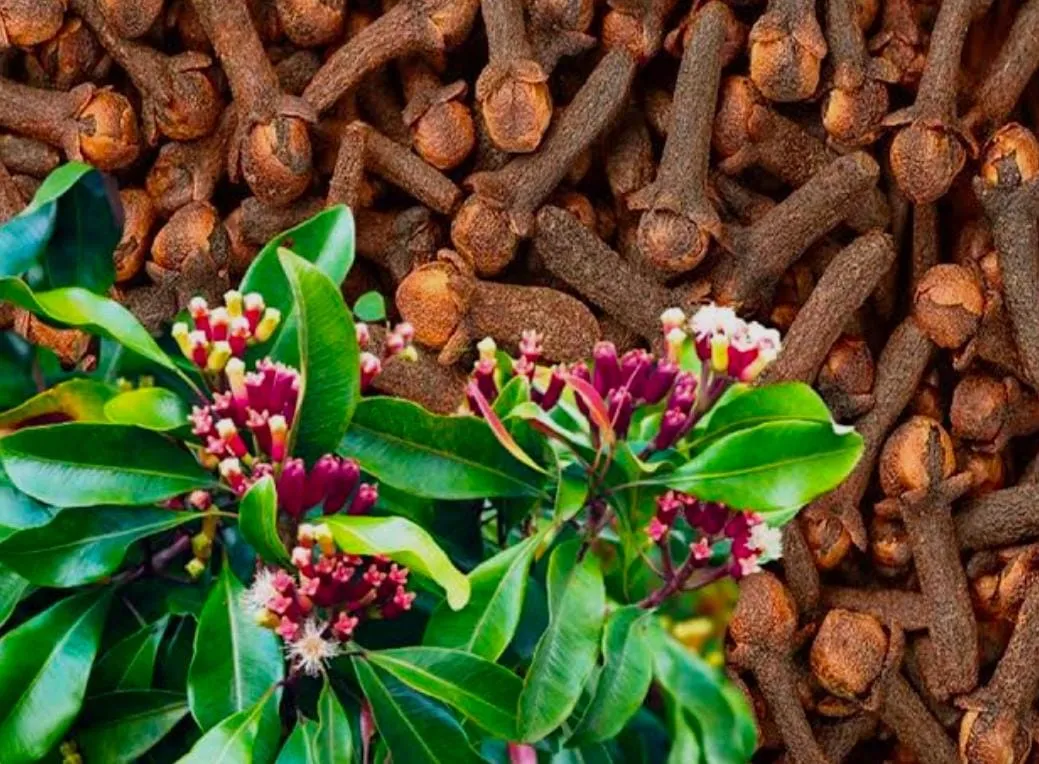
(Fig-1:- clove plant)
Synonyms :- clove flower, clove bud
Biological name:- Eugenia caryophylla
Family:- myrtaceae
Geographical sources:- The primary geographical source of clove Syzygium aromaticum is Indonesia, where the plant is indigenous to the Maluku Islands (historically known as the Spice Islands.
Macroscopic Characteristics Size & Shape:- Pharmacognostical and Macroscopical CharacteristicsSize & Shape: Buds are 12 to 17 mm long, featuring a sub-cylindrical hypanthium (stalk portion) tapering at the base, topped with a spherical head Head (Crown
Microscopic and Chemical Standards:- Microscopic and Chemical StandardsOil Glands: Contains characteristic schizolysigenous oil glands (cavities) in the outer layer of the hypanthium that hold the volatile oil .Active Constituents
Chemical constituents:- Volatile Compounds (Essential Oil)The essential oil makes up 15% to 21% of the total crude spice.
Identification test:- Potassium Hydroxide (KOH) Test: Treat a thick transverse section of the clove hypanthium or a drop of its oil with a 50% KOH solution. This reaction immediately generates distinct, needle-shaped crystals of potassium eugenate under a microscope.
Uses:- dental care, cooking, and natural healing. They contain high
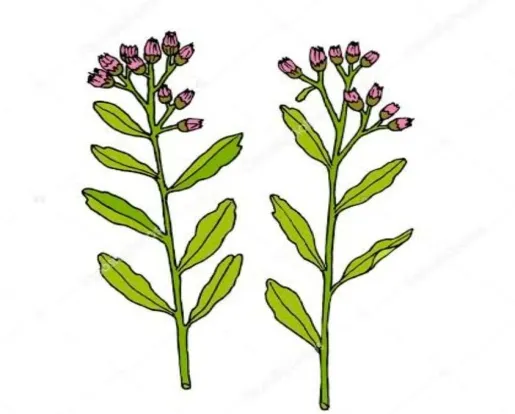
(Fig-2:- Rasna plant)
Synonyms :- elaparin, yuktarsa
Biological Source :-
Rasna consists of the dried roots and rhizomes of Pluchea lanceolata (DC.) C.B. Clarke.
Family: Asteraceae
Geographical source:- The geographical source of Rasna depends on the specific plant used, as "Rasna" is a classical Ayurvedic drug associated with multiple botanical sources across different regions of India. The primary and officially recognized botanical sources and their geographical distribution include
Macroscopic character:- Macroscopic Syzygium aromaticum clove flower buds feature a dark reddish-brown color, a nail-like shape, and a strong spicy scent. They measure about 10 to 17 mm long and sink in water due to high density. Physical and Morphological
Microscopic character:- Microscopic analysis of Rasna (most commonly Pluchea lanceolata) reveals key cellular diagnostic features including starch grains, spiral and pitted vessels, fibers, and calcium oxalate crystals.
Chemical constituent: Triterpenoids: Contains key compounds such as moretenol, neolupenol, taraxasterol, and α-amyrin, which suppress tissue swelling and inflammation. Phytosterols: Rich in β-sitosterol-D-glucoside, β-sitosterol, γ-sitosterol, and stigmasterol Flavonoids: Highly concentrated in the leaves, featuring quercetin, isorhamnetin, and daidzein to lower oxidative stress .Alkaloids & Lactones: Contains specialized markers like pluchine and choline chloride, alongside alkyl δ-lactones.
Identtification test:- Flavonoids: Contains notable concentrations of quercetin, isorhamnetin, and daidzein. Triterpenoids: Features moretenol, neolupenol, lupeol, and α amyrin. Phytosterols: Comprises β-sitosterol-D-glucoside, γ-sitosterol, and taraxasterol. Alkaloids & Lactones
Uses:- Identification tests for Rasna (Pluchea lanceolata, the standard Ayurvedic herb) involve organoleptic evaluation, powder microscopy, and chemical profiling.
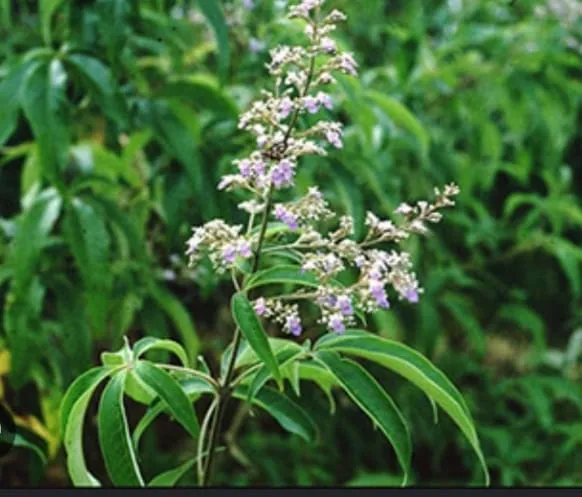
(Fig-3:- Nirgundi)
Synonyms:- Vitex negundo
Biological source:- The biological source of Nirgundi consists of the dried leaves, roots, or whole plant of Vitex negundo Linn.
Family:- Verbenaceae
Geographical source:- Native Range: Indigenous to South Asia, Southeast Asia, East Asia, and parts of Eastern and Southern Africa.
Macroscopic character :- Macroscopic details of Nirgundi (Vitex negundo) cover its external physical features: it is a large aromatic shrub with quadrangular whitish-tomentose branchlets, palmately compound 3-to-5 foliate leaves, and globose blackish-purple fruits.
Microscopic character:- Microscopic analysis of Rasna (most commonly Pluchea lanceolata) reveals key cellular diagnostic features including starch grains, spiral and pitted vessels, fibers, and calcium oxalate crystals.
Chemical constituent :-. Iridoid Glycosides (The Pain-Relievers)Negundoside: A primary diagnostic biomarker of the plant that exerts strong anti-inflammatory and cellular protective effects .Agnuside: Another core therapeutic glucoside highly responsible for targeting joint pain and reducing swelling. Flavonoids (The Antioxidants) Casticin: A major, well-studied flavone compound providing multi-targeted anti-arthritic responses .Artemetin & Luteolin: Important molecules acting as cellular shields to bring down oxidative tissue stress.
Identification test:- Flavonoids: Contains casticin, isoorientin, luteolin, chrysosplenol D, and vitelexin. Iridoid Glycosides: Key markers include negunside, agnuside, and vitedoin A .Alkaloids: Contains nishindine, hydrocotoline
Uses:- Skin Disorders, Joint and Musculoskeletal Pain, Fever and Infection Control
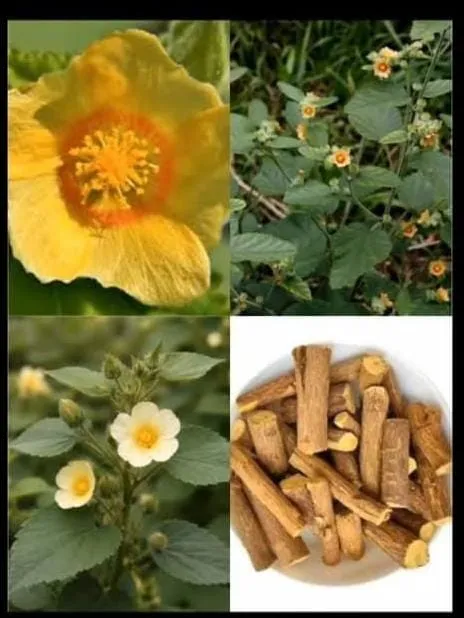
(Fig-4 :- Bala plant)
Synonyms:- Sida cordifolia
Biological source:- The biological source of the Ayurvedic herb Bala is Sida cordifolia (commonly known as Country Mallow), which belongs to the family Malvaceae.
Family:- Malvaceae
Geographical source:- Major States Found widely throughout plains and lower hills in Maharashtra, Madhya Pradesh, Gujarat, Kerala, Tamil Nadu, Karnataka, Andhra Pradesh, Uttar Pradesh, and West Bengal.
Macroscopic character:- The primary macroscopic source of Bala is the dried root of Sida cordifolia Linn., while the whole plant (leaves, stems, and seeds) holds therapeutic value
Microscopic character:- The microscopic source of Bala refers to the cellular structure of the Sida cordifolia root, which is characterized by a distinctive arrangement of cork cells, broad medullary rays, and abundant calcium oxalate crystals.
Chemical constituents:- β-Sitosterol & Stigmasterol: Highly concentrated in the roots, providing noted anti-inflammatory and immunomodulatory effects. Phytoecdysteroids: Contains unique ecdysones such as sidasterone A, sidasterone B, and 20-hydroxyecdysone.that drive its immunomodulatory, neuroprotective, and anti-inflammatory benefits.
Identification test:- Roots: Grayish-yellow taproot, 5–15 cm long, odorless, with a slightly bitter taste. Stems: Stout, strong, and covered in dense, velvety stellate hairs .Leaves: Heart-shaped (cordate-oblong), 2.5–7 cm long, with serrated margins and 7–9 prominent basal veins. Flowers: Small, solitary, axillary, and yellow or white in colour.
Uses:- Neurological & Muscular Disorders, Respiratory Support
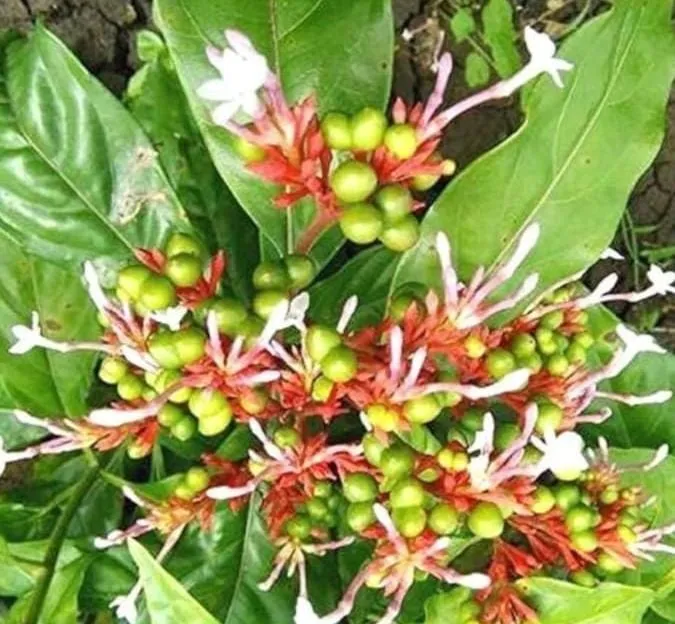
(Fig -5:- Sarpagandha plant)
Synonyms:- including Nakuli, Chandramara
biological name :-Rauvolfia serpentine
Family :- Apocynaceae
Geographical source:- the Indian subcontinent and Southeast Asia, spanning countries from India to Indonesia. It grows well in damp, shady forests.
Macroscopic source:- root include a sub-cylindrical shape, grayish-yellow to brown outer surface, and a bitter taste.
Microscopic source:- multi-layered stratified cork, parenchymatous phelloderm with calcium oxalate crystals, and a secondary phloem lacking phloem fibers. Microscopic Anatomy of the RootCork (Outer Layer
Chemical constituent:- contains over 50 pharmacologically active indole alkaloids, with the tuberous roots housing about 90% of them. Its primary therapeutic constituents are reserpine, ajmaline, rescinnamine,
Identification Tests Because Sarpagandha's therapeutic value comes from its indole alkaloids (like reserpine and ajmaline), it responds to specialized chemical color tests Vanillin-HCL Test Treat a freshly fractured surface of the root or its powder with a solution of Vanillin in Hydrochloric Acid.
Uses:- managing high blood pressure, calming anxiety, and treating sleep problems.
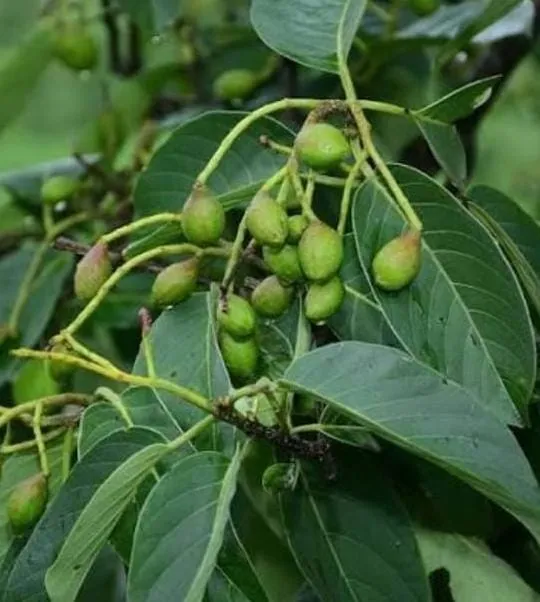
(Fig -6:- Haritaki plant)
Synonyms:- harde
Biological Source:- Myrobalan contains dried, ripe, and fully matured fruits of Terminalia chebula Retze. It contains not less than 5.0% of chebulagic acid and not less than 12.5% of chebulinic acid.
Family:-Combretaceae
Geographical source:- Haritaki is native to tropical and subtropical areas of South and Southeast Asia, primarily found across India, Nepal, and Sri Lanka .Regional Distribution in
Chemical Constituents Tannins:- Contains exceptionally high amounts (up to 40%), including chebulinic acid, chebulagic acid, and gallic acid .Flavonoids: Rich in antioxidants like rutin and quercetin .Nutrients: Packed with vitamin C, selenium, potassium, manganese, and copper.
Macroscopic source:- The macroscopic source of Haritaki is the dried mature fruit (specifically the pericarp or fruit rind) of the Terminalia chebula tree, belonging to the family Combretaceae.
Microscopic source:- The microscopic source of Haritaki is the pericarp (fruit rind) of the plant Terminalia chebula Retz. (family Combretaceae). Under microscopic and powder analysis, it reveals diagnostic cellular structures like lignified stone cells, calcium oxalate crystals, and pitted vessels.
Chemical constituent:- Haritaki (Terminalia chebula) primarily consists of hydrolyzable tannins (30-40%), phenolic acids, flavonoids, and triterpenoids.
Its key bioactive compounds include chebulic acid, chebulagic acid, chebulinic acid, gallic acid, and ellagic acid. It also contains 18 amino acids, carbohydrates like fructose, and seed oils rich in palmitic and oleic acids.
Identification test:- Form: Ovoid to ellipsoid drupes, measuring 20–35 mm long and 13–25 mm wide Surface: Wrinkled with 5 distinct longitudinal ribs. Colour Yellowish-brown to dark brown or black .Fracture Fibrous pericarp, 3–4 mm thicka.
USES:-
Myrobalan is used mainly as an laxative, astringent, stomachic and tonic.
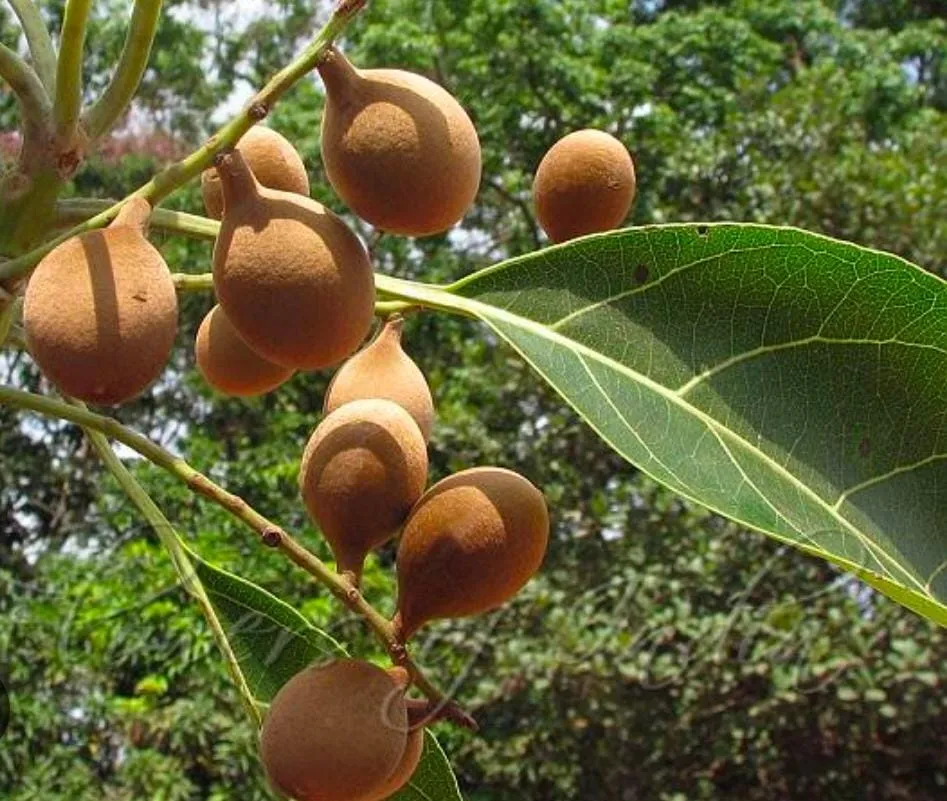
(Fig-7 :- Baheda plant)
Synonyms:- Bibhitaki, Vibhitaka, and Beleric Myrobalan.
Biological source:- Baheda consists of the dried ripe fruits of the plant Terminalia bellirica Gaertn Roxb synonym Terminalia belerica Linn. belonging
Family:- Terminalia bellirica (Gaertn.) Roxb. (also known as Terminalia
Geographical source:- Southeast Asia and the Indian subcontinent, distributed
Macroscopic source:- Shape: Ovoid to sub-globular (egg-shaped or nearly round)Size: Approximately 1.5 to 2.5 cm in diameter Color Greyish-brown, dull brown, or yellowish-green Surface: Wrinkled, finely velvety (covered with minute pale
Microscopic sources:- Epicarp (Outer Layer): Single-layered epidermis with many cells extending into hair-like unicellular trichomes with swollen bases.
Identification test:- Fruit Identification (Macroscopic Test)Shape & Size: Ovoid to sub-globular drupes, roughly 2 to 3 cm long.
Surface Texture: Covered in fine, pale, velvety hair (densely velutinous).Ridges: Faintly or obscurely 5-angled/ridged, distinguishing it from Haritaki (Terminalia chebula) which has prominent sharp ridges.
Chemical constituent Tannins:-High levels of gallic acid, ellagic acid, and chebulagic acid that give the fruit its astringent quality. Lignans & Flavonoids: Includes compounds like termilignan, thannilignan, and quercetin which supply antioxidant benefits .Other Constituents: Contains beta-sitosterol, saponins, and various beneficial fixed oils.
Uses:- Digestion Helps clear the bowels, prevents chronic constipation, and reduces bloating.
Cough and Cold Acts as a natural expectorant to clear mucus from the airways and soothe sore throats,Hair and skin Strengthens hair roots, controls dandruff, and helps manage skin irritations when applied as a paste.
CONCLUSION
Medicinal plants have been used for centuries as important sources of therapeutic agents for the management of inflammation and related disorders. Several medicinal plants, including Curcuma longa (turmeric), Azadirachta indica (neem), Withania somnifera (ashwagandha), Boswellia serrata (Indian frankincense), Zingiber officinale (ginger), and Ocimum sanctum (holy basil), possess significant anti-inflammatory properties due to the presence of bioactive phytoconstituents such as flavonoids, alkaloids, terpenoids, phenolic compounds, and essential oils. These constituents may act through various mechanisms, including inhibition of cyclooxygenase and lipoxygenase pathways, reduction of pro-inflammatory cytokines, and modulation of oxidative stress.
The growing interest in herbal medicines is mainly attributed to their natural origin, traditional use, and potential therapeutic benefits. However, variations in plant species, cultivation conditions, extraction methods, dosage, and standardization can influence their efficacy and safety. Therefore, systematic pharmacological studies, clinical trials, toxicity evaluations, and quality-control measures are necessary to establish the therapeutic potential of medicinal plants. Further research may help identify novel bioactive compounds and develop safe, effective, and standardized herbal anti-inflammatory formulations. Thus, medicinal plants represent a promising area for the discovery and development of future anti-inflammatory drugs.
ACKNOWLEDGEMENT
I would like to express my sincere gratitude to everyone who supported and guided me in the successful completion of this review work entitled “Medicinal Plants as Potential Sources of Anti-Inflammatory Agents: A Comprehensive Review of Phytoconstituents, Mechanisms, and Therapeutic Potential”
First and foremost, I am deeply grateful to my respected guide and faculty members for their valuable guidance, continuous encouragement, constructive suggestions, and support throughout the preparation of this review. Their knowledge and guidance were instrumental in completing this work successfully.
I would also like to thank the Principal and all the teaching and non-teaching staff members of the institution for providing the necessary facilities, resources, and academic support required for this work.
I am thankful to my friends and classmates for their encouragement, cooperation, and assistance during the preparation of this review.
Finally, I express my heartfelt gratitude to my parents and family members for their constant support, motivation, patience, and encouragement throughout my academic journey.
REFERENCES




Jagtap Shruti, Tubaji Revati, Swami Vinay, Karad Shrinivas, Medicinal Plants as Potential Sources of Anti-Inflammatory Agents: A Comprehensive Review of Phytoconstituents, Mechanisms, and Therapeutic Potential, Int. J. of Pharm. Sci., 2026, Vol 4, Issue 8, 2483-2490, https://doi.org/10.5281/zenodo.21934377
 10.5281/zenodo.21934377