

We use cookies to ensure our website works properly and to personalise your experience. Cookies policy
Faculty of Pharmaceutical Sciences1, Amrapali University, Haldwani, Uttarakhand, India
‘Ulcerative colitis’ is a chronic inflammatory disease that causes persistent inflammation, ulcers or sores on the inner lining of the large intestine(colon), resulting in symptoms, such as ‘abdominal pain, diarrhea, rectal bleeding and subsequent weight loss’, possibly causing pain or suffering. A significant amount of research is needed to understand both the cause and the best treatment for Ulcerative colitis. Several factors may contribute to its prevalence, including ‘genetic susceptibility, immune system irregularity, gut microbiome composition, dietary choices, and age’. Current medical procedures for Ulcerative colitis include ‘amino salicylates like Sulfasalazine, corticosteroids, such as Prednisolone, biologic drugs, such as Rituximab or anti-TNF-? (Tumor Necrosis Factor) monoclonal antibodies and immunosuppressants, including Cyclosporine and Azathioprine’. Other compounds, such as ‘alkaloids, phenylpropanoids, flavonoids, and terpenes’ alongside their derivatives, also permit investigation. These substances primarily influence lipid metabolism, oxidative stress level, immune system functionality, cell signaling pathways, and those related to cancer. Over the last five years, there has been a notable rush in the utilization of natural compounds, particularly ‘flavonoids’, in both ‘initial laboratory investigations and clinical trials’.Despite the progress made in Ulcerative colitis research, many studies have focused on overall therapeutic results and changes in biomarkers. However, specific targets and underlying processes have received less attention. We believe that an ideal strategy for managing UC requires careful selection of targeted medications and determining the appropriate dosage strategy, supported by detailed clinical assessment
Ulcerative colitis is a long-term intestinal disease of unknown underlying cause that mainly affects the distal colon and rectum, causing abdominal pain, diarrhea, and mucopurulent( mixing of mucus with pus) stools [1]. UC is marked by frequent and resolving mucosal inflammation, and thus, if not treated properly can cause recurrent UC symptoms and ongoing intestinal damage, and an increased risk of cancer [2]. Today, UC has become a worldwide disease, and according to statistics, more than1.5 and 2 million people in North America and Europe suffered from UC in the past decade, and the prevalence continues to increase, which means that the treatment of UC place a significant challenge to healthcare systems around the world. There are two major kinds of IBD: Crohn’s disease and ulcerative colitis (UC)[3] . Unlike Crohn’s disease, UC is a condition characterized by a continuous inflammation of the mucosal lining of the colon and rectum [3, 4]. In advanced stages, the inflammation will spread in a proximal direction and involve the whole colon, but it usually begins in the rectum. There are mainly four to five types of UC depending on the amount of inflammation in the area affected, namely: Ulcerative Proctitis (inflammation only affects the rectum), Proctosigmoiditis (inflammation both the rectum and the sigmoid colon), Left sided colitis (Distal colitis- inflammation enlarging from the rectum through the sigmoid colon and up to the descending colon on the abdomen’s left side), Pancolitis ( colitis that affects the whole colon) [4].
UC has a complicated etiology or pathogenesis that involves sophisticated interactions between genetic immunological dysregulation, gut microbiota changes, environmental factors, and predisposition of genes. Each of these immune system-related factors play an important role in UC [5].
For example, plants like Aloe vera (L.)Prunus humilis Bunge and Burm.f. (Asphodelaceae,aloe)(Rosaceae, pruni semen) have been successful in mending the immunological and physical barriers [6]. These herbs raise mucin expression, increase the quantity of beneficial bacteria, and increase the expression of genes linked to sIgA in rats with colitis caused by dextran sodium sulphate (DSS) . These interventions may provide UC patients with additional or alternative therapeutic options, especially those looking for natural remedies or facing negative effects of traditional drugs [7,8]. This article first summarizes current research on UC mechanisms, such as immunological response, genetic susceptibility, and changes in the gut microbiota, cell dynamics, and cytokine regulation. Second, it talks about present uses of fecal microbiota transplantation (FMT), microecologics, biologic therapy, and herbal therapy, along with their opportunities and difficulties [8].
The prevalence of UC have increased globally over the past few decades, according to epidemiological studies, especially in recently industrialized nations in Asia, South America, and the Middle East [2]. This increasing trend is thought to be caused by changes in lifestyle, westernized eating habits, exposure to antibiotics, urbanization, and environmental pollution. Although it can happen at any age, young adults between the ages of 15 and 35 are typically affected. UC places a significant financial and psychological strain on patients and healthcare systems around the world because it necessitates lifetime care and regular medical attention [9,10].
Problems such as colorectal cancer, toxic megacolon, massive blood loss, perforation, malnutrition, and extraintestinal manifestations involving joints, liver, skin, and eyes occur more frequently in UC patients with chronic UC [11,12]. Thus, timely diagnosis and effective management of the condition are vital for improving the patient’s quality of life and avoiding complications due to UC [13] . There are various ways by which UC can be diagnosed, such as clinical presentation, findings during endoscopy, biopsy, and various laboratory test results. The most appropriate diagnostic method that allows for analyzing the severity of a disease and verifying the diagnosis is considered a colonoscopy with biopsy. Diagnosis of UC generally involves the use of clinical signs, findings from endoscopy, histopathology, and laboratory investigations [14]. Colonoscopy with biopsy is still regarded as the gold standard test for confirming any diagnosis and gauging the severity of the condition. Moreover, inflammatory markers such as fecal calprotectin and C-reactive protein (CRP) are widely used for disease assessment. Also, inflammation can be measured using biomarkers such as fecal calprotectin and C-reactive protein (CRP) [13,14]. Personalized medicine and targeted therapy were considered crucial in the recent treatment of UC. With regard to enhanced effectiveness and lower toxicity, there exist a number of promising treatment options that currently undergo examination including biological agents, JAK inhibitors, S1P agonists, and microbiome therapies [15]. Nevertheless, even in light of such treatment options, a total cure for UC appears unattainable so far among the population, which indicates the need for alternative and relatively low-cost treatments like herbal medications [16]. Some of the complications that occur due to prolonged use of corticosteroid and immunosuppressive drugs include osteoporosis, hypertension, infections, liver toxicity, and metabolic disorders. Due to their natural basis, better patient acceptance, and reduced cases of side effects, herbal treatments are gaining popularity. The properties of herbs rich in polyphenolic compounds, flavonoids, alkaloids, and essential oils are known to have anti-inflammatory and antioxidant capabilities, and may thus help reduce intestinal inflammation and oxidative stress.
There are many herbs used in animal models that showed great potential in UC research in relation to anti-inflammatory, antioxidant, antibacterial, and immunomodulatory activity due to the presence of such phytoconstituents as flavonoids, tannins, alkaloids, terpenoids, and phenols [16]. These kinds of herbs may be useful in reducing side effects that come along with corticosteroid and immunosuppressant medications, and help to achieve microbial homeostasis within the intestinal tract [17,18]. Drugs which are commonly advised for the treatment of UC include,5-aminosalicylic acid medications, biological therapy, corticosteroids, and immunosuppressants [19]. Biologic treatments, primarily anti-tumor necrosis factor-alpha monoclonal antibodies against TNF-α and anti-integrin Interleukins (IL)-12/IL-23 antagonists, antibodies, and other medications have proven effective in treating moderate to severe UC. By modifying particular immune system components, these targeted treatments seek to lower inflammation and preventing disease progression. Apart from traditional treatments, there is increasing interest in the potential of herbal remedies, fecal microbiota transplantation, and microecologics as supplemental UC treatments [20].
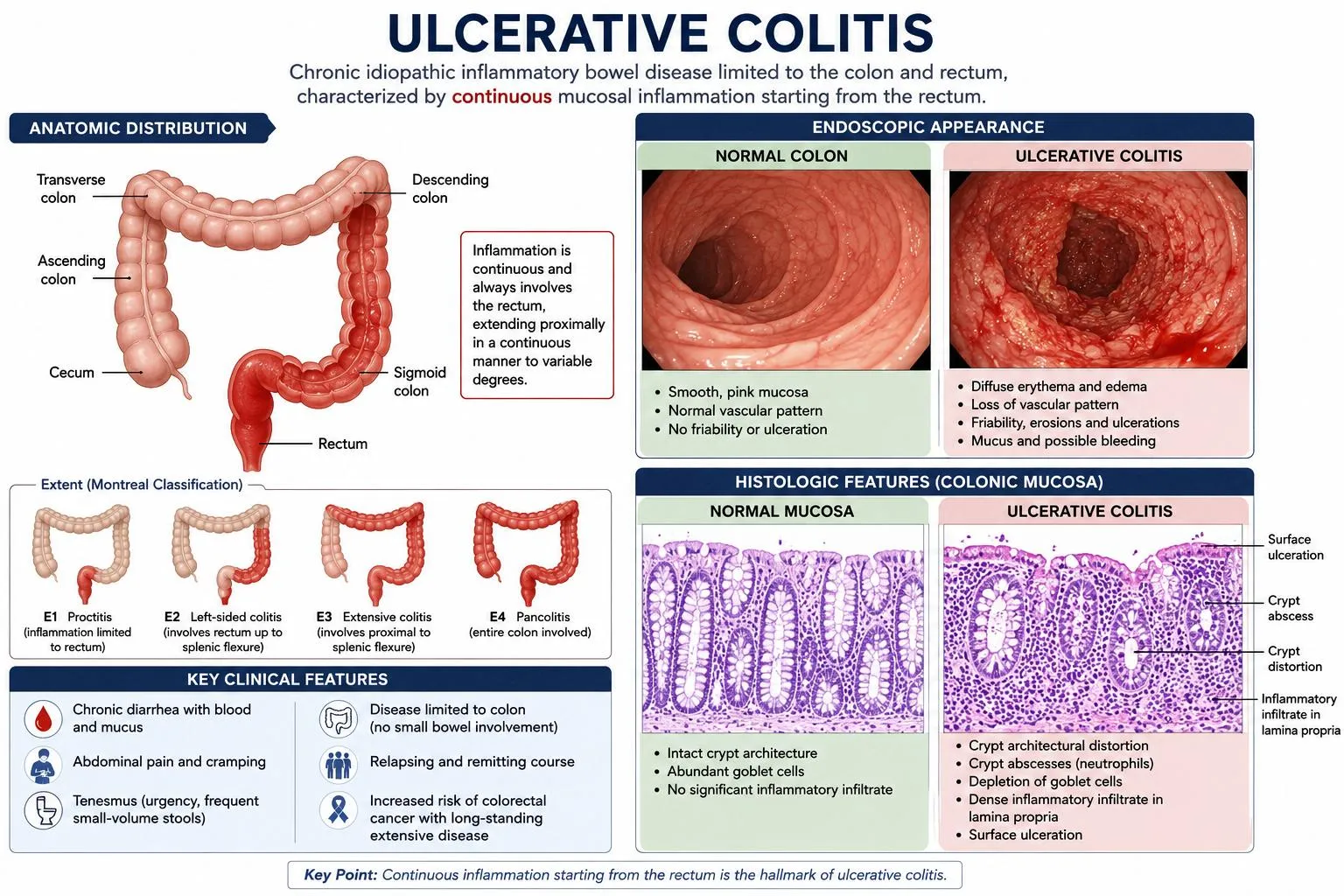
Fig 1:A diagrammatic representation of Ulcerative colitis (An overview).
Pathophysiology of Ulcerative Colitis:
Ulcerative colitis (UC) is a chronic, relapsing inflammatory disorder of the colon characterized by continuous mucosal inflammation ,starting in the rectum and enlarging proximally. Genetic susceptibility, environmental triggers, gut microbiota dysbiosis, epithelial barrier dysfunction, and dysregulated immune responses all interact closely in the multifactorial pathophysiology of ulcerative colitis (UC), ultimately resulting in tissue damage and chronic intestinal inflammation [1,2].
Vulnerability of Genes:
Numerous susceptibility loci associated with ulcerative colitis have been found by genome-wide association studies (GWAS). Important genes include those related to immune control, microbial recognition, and the integrity of the epithelial barrier. Increased susceptibility and modified immune responses are caused by major changes in genes like ECM1, IL-23R, and HLA class II. In contrast to Crohn's disease, UC exhibits stronger correlations with genes linked to mucosal immunity as opposed to innate bacterial sensing [3]
Dysfunction/ Impairment of the Epithelial Barrier:
The first line of defense against luminal antigens and microorganisms is the intestinal epithelial barrier. This barrier is weakened in UC because of Tight junction protein disruption (e.g., occludin, claudins), enhanced permeability of the intestines, depletion of goblet cells and decreased mucus production, reduced mucin expression, especially MUC2 [3] . These alterations make it possible for antigens and microbial products to enter the mucosa, resulting in inflammation and immuno logical reactions [4,5] .
Dysbiosis of the gut microbiota:
The pathophysiology of UC is largely dependent on changes in the gut microbiota's composition and function [1] . Characteristics of dysbiosis include: Decreased diversity of microorganisms ,reduced concentrations of advantageous bacteria like Faecalibacterium prausnitzii, Pro-inflammatory bacteria (like Proteobacteria) are more prevalent. Short-chain fatty acids (SCFAs), especially butyrate, which is crucial for epithelial health and anti-inflammatory effects, are produced less frequently as a result of this imbalance [6] .
Activation of Innate Immunity:
In UC, the innate immune system is overstimulated. Toll-like receptors (TLRs) and other pattern recognition receptors (PRRs) identify microbial components and start inflammatory signaling. This leads to: Pro-inflammatory cytokines (TNF-α, IL-1β, and IL-6) are produced at higher levels. Neutrophil recruitment and activation Crypt abscess formation, a histological characteristic of UC. Innate immunity is persistently activated when regulatory mechanisms fail [6,7] .
Environmental Factors' Function:
Environmental factors or triggers , influence the onset and course of disease:
Diet (high fat, low fiber), microbiota are altered by antibiotic use, smoking is detrimental to Crohn's disease but intriguingly protective in UC, lifestyle factors and stress. These elements combine with genetic susceptibility to cause illness [8] .
Let us now understand the pathophysiology of Ulcerative colitis with a diagrammatic representation.
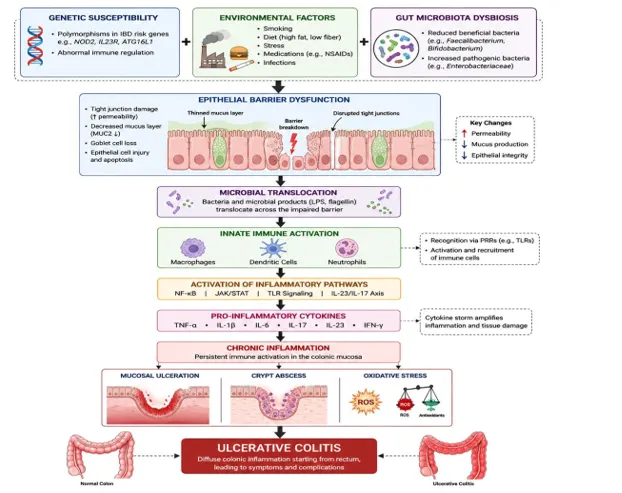
Fig.2: Pathophysiology of Ulcerative colitis (Detailed mechanism).
Etiology/ Risk factors of UC:
The accurate cause of Ulcerative colitis is not yet established. It is usually considered as a multi component disease which results due to the interaction of several factors like genetic, microbial, immunological and environmental [7] .
However , smoking can also be a risk factor for Ulcerative colitis, but several factors contribute to it’s prevalence [9] . The various risk factors of UC are listed below-
All these factors are responsible for the major prevalence of Ulcerative colitis nowadays.
We cannot control the factors, which are inherited from our ancestors, but we can control ourselves from getting in touch with all the unnecessary food items, smoking, alcohol consumption. Living in a pollution free area can also reduce the chances of Ulcerative colitis.
Overview of disease progression:
UC develops in genetically predisposed individuals following exposure to environmental factors such as diet, smoking status, antibiotic use, stress, and infections, which collectively alter host–microbiota interactions and immune homeostasis [1,14]. These factors encourage gut microbial dysbiosis, which is typified by an increase in pro-inflammatory taxa, a decrease in beneficial commensals, and a decrease in microbial diversity [6, 7]. Disruption of the intestinal epithelial barrier is an early and central event in disease initiation. Microbial antigens can move into the lamina propria due to increased intestinal permeability caused by defective tight junctions, decreased mucus secretion, and changed epithelial cell differentiation[14, 23]. Pro-inflammatory cytokines like TNF-α, IL-6, IL-1β, and IL-23 are produced in excess as a result of this breach, which activates innate immune cells, especially macrophages and dendritic cells [4, 21].Maladaptive adaptive immune responses sustain chronic immune activation, and UC differs from Crohn’s disease in that it has a predominant Th2-like and Th17 cytokine profile [12]. Tissue damage is exacerbated and inflammation resolution is hampered by aberrant macrophage polarization toward a pro-inflammatory phenotype [4]. Additionally, new research suggests that oxidative stress, mitochondrial dysfunction, and impaired autophagy contribute to immune dysregulation and epithelial damage [2, 3].NF-κB, JAK-STAT, MAPK, and IL-6 signaling are among the dysregulated signaling pathways that drive UC progression at the molecular level. These pathways promote inflammatory gene transcription and impede mucosal healing [2, 17]. In UC, non-coding RNAs—especially microRNAs and long non-coding RNAs—have become important modulators of immune responses, epithelial integrity, and cytokine production [9].Chronic cytokine exposure, genomic instability, and altered epithelial regeneration are the main causes of long-term inflammation’s increased risk of colitis-associated colorectal cancer [5, 10]. In contrast to a single pathogenic mechanism, systems biological approaches emphasize UC as a network disease involving interconnected molecular and cellular pathways [¹¹].
Molecular Mechanisms and Immunopathogenesis:
Immune dysregulation, in which innate and adaptive immune responses combine to cause intestinal inflammation, is a key component of UC pathogenesis [2, 12]. Mucosal inflammation is sustained and more immune cells are drawn to the colon by dysregulated T-cell responses and changed cytokine profiles, especially those involving interleukins and tumor necrosis factor (TNF) [12,14].
Intestinal homeostasis is protected by autophagy, a cellular process that breaks down damaged proteins and organelles. Inflammatory mediators build up and immune cell function is compromised by defects in autophagy pathways, which exacerbate colonic inflammation seen in UC [3].
Macrophages and other innate immune cells are key effectors in UC, responding to microbial and endogenous danger signals and producing pro-inflammatory cytokines that exacerbate mucosal damage [4]. They are attractive targets for new interventions due to their metabolic and signaling changes [4, 11].
The gut microbiota is now recognized as a critical contributor to UC. Reduced bacterial diversity and altered community structure are signs of dysbiosis, which compromises the integrity of the epithelial barrier and interferes with mucosal immune responses, creating an environment that is conducive to inflammation [6, 7, 8].
Long non-coding RNAs (lncRNAs) and microRNAs (miRNAs) are examples of non-coding RNAs that affect inflammation, barrier function, and disease progression by modifying gene expression in immune cells and epithelial tissues [9]. UC and its complication of colitis-associated cancer have been linked to aberrant expression of these transcripts [9, 10].
Tight Junction Proteins and Epithelial Permeability:
Comprising transmembrane proteins like occludin, claudins, and junctional adhesion molecules that are attached to intracellular scaffolding proteins, tight junctions control paracellular permeability. Increased intestinal permeability, or “leaky gut,” results from the disruption of tight junction assembly and expression caused by inflammatory cytokines such as TNF-α, IL-6, and IL-1β in ulcerative colitis [2,21].
In addition to aggravating diarrhea, altered expression of occludin and certain claudins, especially claudin-2, increases ion and water flux across the epithelium and facilitates the translocation of microbial antigens into the lamina propria [14]. Innate immune cells like dendritic cells and macrophages are activated by this breach, increasing the release of cytokines and maintaining chronic inflammation [4,12]. Defects in autophagy exacerbate mucosal damage in active UC by reducing epithelial cell turnover.
Role of Goblet Cells and MUC2 Mucus Layer:
Specialized epithelial cells called goblet cells are in charge of producing and secreting mucins, especially mucin-2 (MUC2), which serves as the structural foundation of the mucus layer in the colon. By acting as a physical and biochemical barrier, this mucus layer prevents intestinal microorganisms from coming into direct contact with the epithelial surface [14,15]. A thinner, discontinuous mucus layer is the result of goblet cell depletion and altered mucin glycosylation in UC, which makes it easier for bacteria to penetrate and expose the underlying immune cells to antigens [6,7].
Increased epithelial vulnerability and chronic inflammation are caused by reduced MUC2 expression and impaired mucus secretion, which have been regularly seen in active UC [2,14]. By changing goblet cell differentiation and function, microbial metabolites linked to dysbiosis further impair mucus integrity, resulting in a vicious cycle of immune activation and barrier disruption [6,13]. Additionally, epithelial stress, abnormal regeneration, and heightened vulnerability to colorectal cancer linked to colitis are linked to continuous mucus layer dysfunction [5,10].
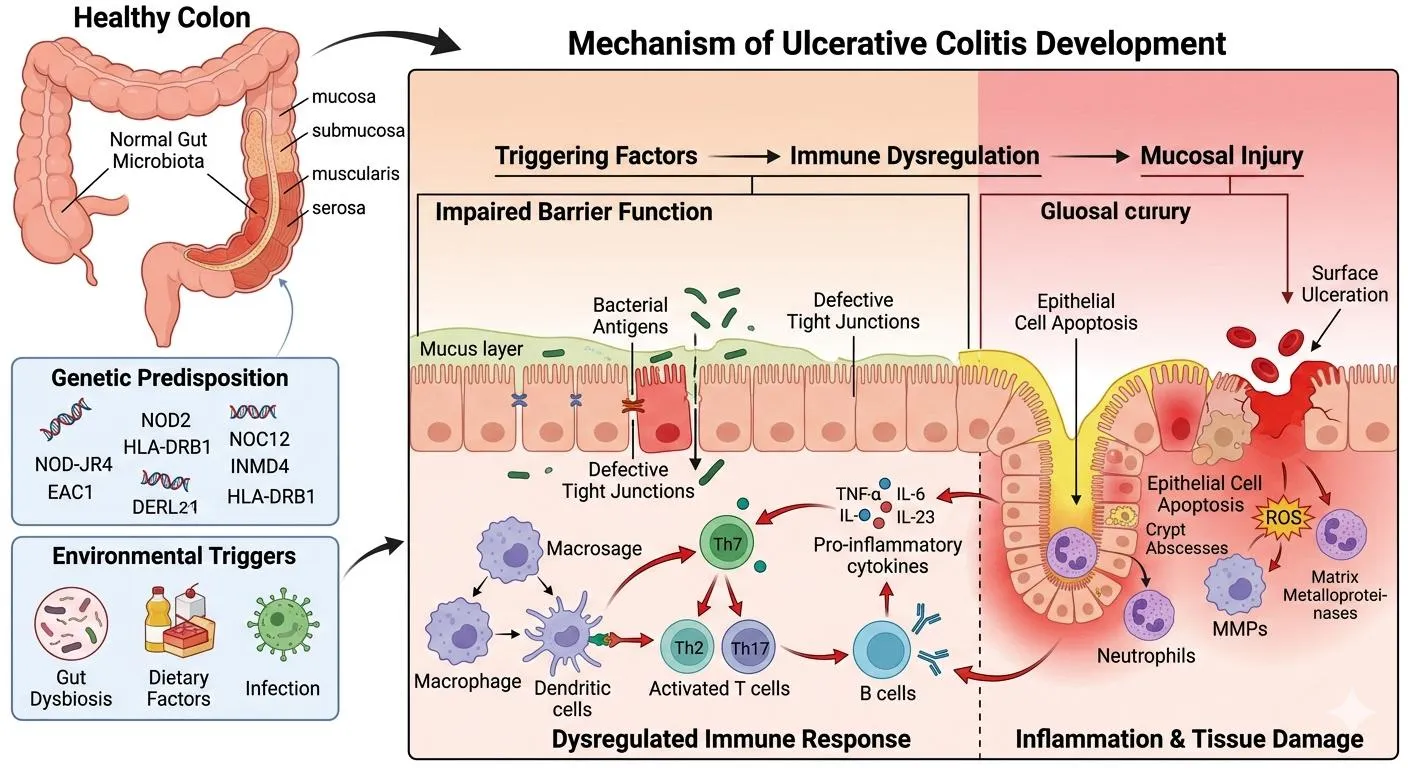
Signaling Pathways and Cellular Networks:
Various signaling pathways that regulate immune responses and cytokine production, such as NF-κB, JAK/STAT, Toll-like receptor (TLR), and IL-23/IL-17 axes, are dysregulated in UC [12, 14]. These pathways contribute to chronic inflammation by connecting immune activation and defects in the epithelial barrier [11, 12].
Disease severity is further shaped by interactions between the immune system and the microbiota. Immune cells' pattern recognition receptors identify microbiological components and initiate inflammatory signaling cascades that prolong mucosal damage [6, 8].
Significantly, dysfunction of the epithelial barrier is intimately associated with these intracellular signaling events. Intestinal permeability is increased and additional microbial translocation is facilitated by inflammatory cytokines and signaling mediators that change tight junction protein expression and cause epithelial apoptosis. As a result, a vicious cycle is created whereby microbial products persistently trigger immune signaling pathways, thereby maintaining chronic inflammation. When taken as a whole, the complex interactions between these cellular networks and signaling pathways highlight the complexity of UC pathogenesis and offer several possible targets for therapeutic intervention.
Complementary and Experimental Areas:
Beyond immune-targeted strategies, new research emphasizes the potential for cellular and tissue-based therapies by highlighting the role of intestinal stem cells and regenerative mechanisms in mucosal healing [23]. These pathways may eventually support immune-modulating therapies in restoring intestinal integrity, despite their early stages [14, 23].
Regenerative and stem cell therapies:
Recent developments demonstrate the therapeutic potential of mesenchymal stem cells (MSCs) and intestinal stem cells (ISCs) in promoting mucosal repair. These cells support immune response regulation, barrier integrity restoration, and epithelial regeneration[13] . By secreting bioactive factors, MSCs in particular demonstrate Immunomodulators and anti-inflammatory qualities. Despite their potential, these treatments are still in the early phases of clinical and experimental research, necessitating additional confirmation of their long-term safety and effectiveness[15] .
Treatments Based on Microbiomes:
Microbiota-targeted therapies are becoming more popular because gut dysbiosis plays a major part in UC[16]. Restoring a healthy microbial balance is the goal of fecal microbiota transplantation (FMT). Prebiotics and probiotics support the growth of beneficial bacteria. Microbial metabolites, or postbiotics, are being investigated for their potential to reduce inflammation. Even though some studies show clinical benefit, lack of standardization and outcome variability continue to be significant obstacles[16,18] .
Strategies for Increasing Barriers:
Treatments aimed at maintaining the integrity of the epithelial barrier are another promising field. Among them are: Tight junction function-enhancing agents, treatments for mucus layer restoration, substances that promote mucin synthesis and epithelial repair. These strategies seek to stop antigen penetration and lower immune activation early in the course of a disease[20] .
RNA-Based and Epigenetic Treatments:
Non-coding RNAs and epigenetic changes are essential for controlling inflammatory pathways. New therapeutic strategies consist of: Modulators of DNA methylation, inhibitors of histone deacetylase (HDAC), treatments based on microRNA that target the expression of pro-inflammatory genes[20] . These interventions offer the possibility of highly targeted and customized treatment approaches, even though they are still primarily experimental [21,22] .
Clinical and Histological Features:
Clinically, UC manifests as urgency, tenesmus, rectal bleeding, bloody diarrhea, and abdominal pain. The disease can range in severity from mild intermittent symptoms to fulminant colitis [14, 24]. Extra-intestinal manifestations affecting the skin, joints, liver, and eyes are common and reflect systemic immune dysregulation.
Histologically, UC is characterized by persistent colon-specific mucosal inflammation that is not transmural. Goblet cell depletion, mucosal ulceration, crypt architectural distortion, crypt abscesses, and dense inflammatory cell infiltration in the lamina propria are important microscopic characteristics [14]. Active disease is characterized by neutrophil accumulation within crypts, whereas chronic disease exhibits epithelial atrophy and basal plasma cytosis.
Molecular indicators of inflammation, epithelial stress, and immune activation are correlated with disease activity and are being investigated more and more as biomarkers for therapeutic response and disease monitoring. The development of focused and precision-based treatment approaches is made possible by an understanding of these clinical and histopathological characteristics. [2,18]
Diagnosis :
Ulcerative colitis is diagnosed using a combination of gastrointestinal symptoms, pathology, colonoscopy, and biochemical markers [16] .. The results of the blood work may be normal, but with more severe illness activity, thrombocytosis(a high level of platelets in blood), leukocytosis(an increased level of white blood cells in the blood), anemia(deficiency of blood) etc. It is possible to identify an increased level of C-reactive protein. 25 stool biomarkers, including the neutrophil-released protein calprotectin, can differentiate functional disorders like irritable bowel from UC. Syndrome.[19]
The sensitivity of fecal calprotectin is 0.89 (95% CI, 0.86-0.91) and specificity of 0.81 (95% CI, 0.78-0.84) in distinguishing IBD from non-IBD diagnoses with a cutoff of 50 μg/g. 27. Less than 1% of people who consistently exhibit symptoms[21,22] .
IBD is brought on by the fecal calprotectin. 40 μg/g or less is the level.
Therapeutic treatment interventions for Ulcerative colitis:
Treatment advancements for ulcerative colitis focus on particular molecules involved in immune regulation and inflammation [16,18]. Biologic therapies: These involves monoclonal antibodies directed against cytokines (e.g., IL-23), have shown efficacy in inducing remission in moderate to severe UC [16]. Mirikizumab, an IL-23p19 antagonist, has demonstrated improved clinical outcomes and a favorable safety profile, reshaping the therapeutic landscape [16].
JAK inhibitors: They mainly includes sphingosine-1-phosphate receptor modulators, and other signaling mediators are among the emerging small molecules and targeted inhibitors [17, 19].Additional therapeutic potential is provided by novel molecular agents. For instance, afimkibart, an anti-TL1A antibody, neutralizes pro-inflammatory cytokine signals and may regulate immune activation in UC, whereas alicaforsen, an antisense oligonucleotide that targets ICAM-1, interferes with leukocyte trafficking and inflammation [20, 21].
A novel class of molecular therapies that modulate immune responses is represented by oral agents such as Obefazimod, which have demonstrated clinical benefits in patients with refractory ulcerative colitis [17, 18].
5-ASA (Aminosalicylates): These are First-line therapy for mild to moderate UC. These drugs have Anti-inflammatory action on the colonic mucosa.
Corticosteroids: They reduce inflammation but can’t be used long-term basis , Immunomodulators : This class includes those agents which modify, i.e., either increase or decrease the activity of the immune system, Azathioprine, 6-mercaptopurine, Methotrexate are the drugs used in this category, which maintains remission by suppressing immune overactivity.
The variety of UC medications grows as drug development progresses. The following sections of this article discuss new therapies that have emerged as important research hotspots, including biological agents, herbal therapies, microecologics etc .Other than these medications, Supportive supportive & Adjunct Therapies, Probiotics, diet modifications, iron supplementation can also be used to reduce the risk of Ulcerative colitis.
Now, let us understand some of the treatment interventions for Ulcerative colitis with the help of previous data:
Table 1
|
Name of drug |
Method used |
Result/Outcome |
Reference number |
|
Mesalamine (5-Aminosalicylic acid),5-ASA category |
It has anti-inflammatory effect on the colonic mucosa and is used most commonly through oral and rectal routes. |
This drug is effective in promoting (inducing) and maintaining individual’s remission rates in mild to moderate Ulcerative colitis. Individuals showed positive response after the usage of this drug. |
[25] |
|
Vedolizumab (Biologic monoclonal antibody) |
It is an antagonist of the Integrin- receptor , helpful in targeting the gut-specific inflammation. |
This drug have shown effectiveness in maintenance therapy and endoscopic improvement. |
[26] |
|
Tofacitinib (JAK inhibitor) |
It is a Janus Kinase (JAK) inhibitor, which is used orally. |
This drug produces steroid -free (no steroid) remission in the patients suffering from mild to moderate Ulcerative colitis. |
[27] |
|
Mirikizumab (Interlekuin-23 inhibitor) |
It is an IL-23 inhibitor category biologic drug ,which is given through intravenous and subcutaneous routes. |
This drug showed favorable (good) response in safety and efficacy of chronic Ulcerative colitis. |
[28] |
|
Ustekinumab (Monoclonal antibody) |
It is a drug of monoclonal antibody, effective against IL-12/23 and is given through intravenous route. |
This drug is effective especially in patients exposed with biologics with a favorable drug safety profile. |
[29] |
|
Upadacitinib (JAK inhibitor) |
It is a selective JAK-1 inhibitor ,used commonly through oral route. |
This drug is highly ranked in maintaining and inducing the clinical remission. |
[30] |
CONCLUSION :
This article analyses the available intervention treatments and provides a summary of the current molecular mechanisms related to Ulcerative colitis [1,5] . It should be noted that the occurrence of Ulcerative colitis is increasing yearly, and problems such as continuous bloody stools have largely affected the quality of life of individuals, which made Ulcerative colitis one of the most serious global health issues that exist. For this reason, many scientists and researchers decided to conduct their studies on Ulcerative colitis [5] .
Pathways including NF-κB, JAK/STAT, cytokines, oxidative stress, and impairment of epithelial barrier function contribute significantly to disease pathogenesis [2,3] . New treatment options include biologic therapy, JAK inhibitors, sphingosine-1-phosphate pathway modifiers, TL1A antagonists, microbiome therapy, and stem cell therapy. Long-term results and UC patients’ quality of life may be further enhanced by ongoing studies into molecular mechanisms and tailored treatment strategies. All things considered, ongoing developments in molecular research, creative therapeutic approaches, and integrative treatment methods may enhance mucosal healing, improve disease management, reduced complications, and significantly improve the quality of life for the patients suffering from ulcerative colitis [7] . The prognosis and course of UC patients are significantly dictated by herbs. Numerous in vitro and/or in vivo experiments revealed the curative potential of these remedies or their ingredients for colitis and can be regarded as valuable alternatives/additions for developing pharmaceutical treatments [2].
So, ulcerative colitis can be managed with utmost care, proper diet and appropriate usage of all the prescribed medications [10] .
Future prospectives:
Precision medicine, which implies the use of therapies selected based on the analysis of genetic, immunological, phenotypic, and microbiome data on an individual patient basis, is expected to play a significant role in the management of ulcerative colitis in the future [3]. It should become possible, due to the progress in molecular biology and biomarker discovery, to diagnose the disease earlier and more accurately, predict the clinical course of the disease, and select the most appropriate treatment. The ongoing development of new biologics and small molecule drugs with increased efficacy and safety will allow tighter control over the disease and reduce side effects. The use of probiotics, prebiotics, postbiotics, and fecal microbiota transplantation is expected to be useful in ulcerative colitis to reduce chronic inflammation and restore the eubiosis of the intestinal microbiome [3,4].
In order to bridge mechanistic understanding with clinical translation for precision medicine in UC management, future therapeutic directions may also include single cell omics application in co-culture models and nanotechnology enabled targeted delivery. While macrophage targeted approaches have demonstrated promising pre-clinical efficacy in inflammatory models, a number of factors limit their clinical translation. The phenomenon of “loss of response (LoR)” wherein initially responsive patients lose efficacy on treatment over time a challenge, observed with biologics such as anti-TNF monoclonal antibodies (226) [4].
REFERENCES





Gaurav Budhlakoti*, Jyoti Joshi, Abhijeet Ojha,Arun Kumar Singh, Vikas Bhatt, Molecular Mechanisms Underlying Ulcerative Colitis: Recent Advances And Emerging Therapeutic Interventions, Int. J. of Pharm. Sci., 2026, Vol 4, Issue 8, 1446-1460. https://doi.org/ 10.5281/zenodo.21843010
 10.5281/zenodo.21843010