

We use cookies to ensure our website works properly and to personalise your experience. Cookies policy
School of Pharmacy and Pharmaceutical Sciences, Cardiff University, Cardiff, CF103NB, United Kingdom.
Background: Herpes simplex virus type 1 (HSV-1) causes recurrent herpes labialis and lifelong latent infection. Rising antiviral resistance has increased interest in natural product therapies. Objective: To assess the in vitro antiviral activity of Taraxacum officinale (dandelion) leaf extract, honey and propolis against HSV-1, and evaluate their inclusion in a prototype lip balm. Methods: Antiviral activity was measured in HSV-1-infected Vero cells using an MTT viability assay. Virus was incubated with non-cytotoxic concentrations of dandelion extract, honey or propolis for up to 4 h before infection. A lip balm containing these ingredients with coconut and sweet almond oils was also tested. Results: All products inhibited HSV-1. Dandelion extract showed the strongest activity and acted immediately on virus exposure. Longer contact times increased antiviral effects. After 4 h, honey, propolis and dandelion extract significantly reduced infectivity (p < 0.05). Local honey was more active than medical-grade Manuka honey. The lip balm showed time-dependent activity, achieving up to 46% inhibition after 6 h. Conclusion: Dandelion extract, honey and propolis exhibit anti-HSV-1 activity and may have potential as topical treatments for recurrent herpes labialis.
Herpes simplex virus type 1 (HSV-1) infects approximately 67% of the global population and is the leading cause of recurrent herpes labialis (cold sores) [1,2]. Although antiviral agents such as acyclovir remain the standard treatment, recurrent infections and the emergence of drug-resistant viral strains continue to highlight the need for alternative therapeutic approaches.
Natural products represent a rich source of pharmacologically active compounds and have historically contributed to the discovery and development of novel antiviral agents [3].
Among these, Taraxacum officinale (dandelion), honey, and propolis have attracted increasing attention because of their reported antiviral, anti-inflammatory, and wound-healing properties [4-6]. Dandelion extracts have demonstrated activity against several enveloped viruses, while honey and propolis have shown efficacy against HSV-associated lesions and other viral infections [7-9]. In this pilot study we investigated the antiviral activity of dandelion extract, honey, and propolis against HSV-1 and explored their incorporation into a prototype topical lip balm formulation intended for the management of recurrent cold sores.
Dried dandelion leaves were extracted using 70% ethanol, concentrated, freeze-dried, and reconstituted in water. Locally sourced honey collected from Cardiff University beehives (Redwood honey), commercial Manuka honey, and propolis extracts were also evaluated. Antiviral activity was assessed using HSV-1 (ATCC VR-260) infectivity studies in Vero cells (ATCC CCL-81), with cell viability determined using an MTT assay [10]. Prior to antiviral testing, non-cytotoxic concentrations were established as 2 mg/mL for Redwood honey, 1 mg/mL for Manuka honey and dandelion extract, and 0.4 mg/mL for propolis. HSV-1 was incubated with each natural product for 0, 2, or 4 h before infection of Vero cells [11]. A prototype lip balm formulation containing dandelion extract, honey, propolis, coconut oil, and sweet almond oil was subsequently evaluated using the same assay format.
All experiments were performed in triplicate (n = 3), and data are presented as the mean ± standard deviation (SD). Statistical analyses were conducted using one-way analysis of variance (ANOVA) followed by Tukey’s multiple-comparison test. Experiments involving multiple exposure times were analysed using two-way ANOVA, with statistical significance defined as p < 0.05. The antiviral activity of all natural products increased with prolonged contact time between HSV-1 and the test materials (Table I).
TABLE 1. SUMMARY OF ANTIVIRAL ACTIVITY OF NATURAL PRODUCTS AGAINST HSV-1
|
Treatment |
Concentration (mg/mL) |
Activity at 0 h |
Activity at 2 h |
Activity at 4 h |
|
Dandelion extract |
1.0 |
Significant |
Significant |
Highest activity |
|
Redwood honey |
2.0 |
NS |
Significant |
Significant |
|
Manuka honey |
1.0 |
NS |
NS |
Significant |
|
Propolis |
0.4 |
NS |
NS |
Significant |
NS = not significant; n = 3; all significant comparisons p < 0.05.
Dandelion extract exhibited the strongest antiviral activity and was the only treatment to significantly reduce viral infectivity immediately after exposure to HSV-1 (p < 0.05). After 2 h of incubation, both dandelion extract and Redwood honey significantly reduced viral infectivity compared with untreated controls (p < 0.05). Following 4 h of exposure, all tested natural products significantly inhibited HSV-1 infectivity (p < 0.05), with dandelion extract consistently producing the greatest antiviral effect. These findings indicate that antiviral efficacy is both agent-dependent and influenced by the duration of virus exposure.
The particularly strong activity observed for dandelion extract aligns with previous studies reporting the antiviral potential of polyphenols and flavonoids found in Taraxacum species. Likewise, the antiviral effects of honey and propolis support earlier reports demonstrating the bioactivity of bee-derived products against HSV-1 and other viral pathogens [12]. Collectively, these results suggest that dandelion extract, honey, and propolis warrant further investigation as natural antiviral agents and support incorporation into topical formulations for the management of recurrent herpes labialis.
To investigate potential effects on host cell susceptibility, Vero cells were pre-treated with the natural products for either 12 or 24 h prior to HSV-1 infection. Pre-treatment for 12 h did not significantly alter susceptibility to infection, whereas 24 h exposure produced modest reductions in virus-mediated cytotoxicity for all treatments except Redwood honey. These observations suggest that the principal antiviral activity is likely mediated through direct interactions between natural-product constituents and viral particles, or through interference with the early stages of viral attachment and entry, rather than induction of cellular antiviral mechanisms.
The prototype lip balm formulation remained non-cytotoxic at a dilution of 10⁻¹⁰ and demonstrated clear time-dependent antiviral activity. At this dilution, HSV-1 inhibition increased from approximately 16 ± 10.5% immediately following virus exposure (0 h) to 60 ± 18.3% after 6 h of incubation. Similarly, at a dilution of 10⁻¹¹, antiviral activity increased from 16 ± 11.8% at 0 h to 40 ± 13.8% after 6 h of treatment (Figure I). These results indicate that the antiviral properties of the natural ingredients were retained following incorporation into the lip balm formulation.
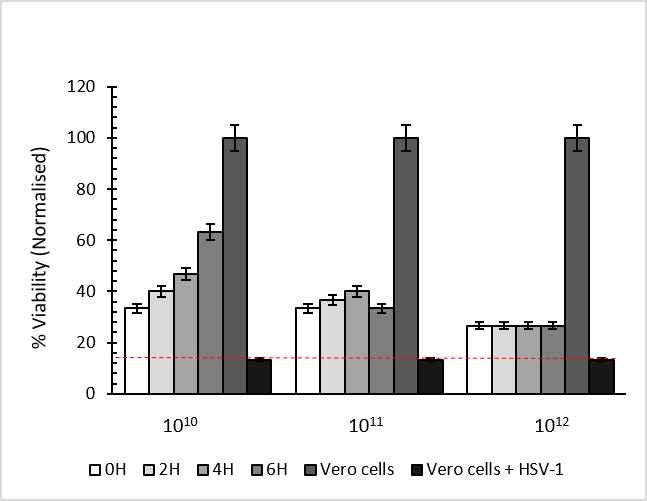
FIGURE I. ANTIVIRAL ACTIVITY OF LIP BALM FORMULATION AGAINST HSV-1.
The antiviral activity of non-cytotoxic dilutions (10¹⁰-10¹²) of lip balm formulation was tested against HSV-1. The virus was mixed with lip balm formulation for 0, 2, 4 and 6 hours and then added to Vero cells. The cells were incubated for 72 hours at 37°C in 5% CO₂. Viability of Vero cells were determined by the MTT assay. Data represents mean of 3 replicates.
Importantly, combining dandelion extract, honey, and propolis within a pharmaceutically relevant topical preparation maintained measurable antiviral activity while potentially providing additional therapeutic benefits. Beyond their antiviral effects, honey and propolis possess well-documented wound-healing and anti-inflammatory properties that may contribute to improved management of herpes labialis lesions [4,5].
In conclusion, dandelion extract, honey, and propolis demonstrated significant in vitro activity against HSV-1, with dandelion extract exhibiting the greatest antiviral effect. Furthermore, a prototype lip balm formulation containing these natural products achieved substantial inhibition of viral infectivity, highlighting its potential for further pharmaceutical development. Future studies should focus on optimising formulation performance and evaluating efficacy in clinically relevant models.
This work was supported by funding from the Celtic Advanced Life Science Innovation Network and the MRC Proximity to Discovery Scheme.
REFERENCES


E. K. Ahortor, Leslie William James Baillie, Dandelion, Honey and Propolis: Development of an Antiviral Lip Balm Against HSV-1, Int. J. of Pharm. Sci., 2026, Vol 4, Issue 10, 1089-1092. https://doi.org/10.5281/zenodo.23212224
 10.5281/zenodo.23212224