

We use cookies to ensure our website works properly and to personalise your experience. Cookies policy
Dayanand Institute Of Pharmacy, Latur.
Obesity is a chronic, relapsing, multifactorial disease associated with type 2 diabetes mellitus, cardiovascular disorders, metabolic dysfunction-associated steatotic liver disease, and reduced quality of life. Glucagon-like peptide-1 receptor agonists (GLP-1 RAs) have emerged as important pharmacological agents for weight management because they regulate appetite, enhance glucose-dependent insulin secretion, suppress inappropriate glucagon secretion, and delay gastric emptying. However, many established GLP-1 receptor agonists are peptide-based medicines administered by injection. Oral semaglutide provides an oral alternative but remains a peptide drug that requires specialized absorption-enhancing technology. The development of orally bioavailable, non-peptide small-molecule GLP-1 receptor agonists represents a distinct advancement in medicinal chemistry and pharmaceutical drug development.This review examines the physiological role of GLP-1, the pharmacological mechanisms of receptor activation, the structural and pharmacokinetic advantages of small-molecule agonists, and the clinical evidence for investigational and clinically advanced compounds, particularly orforglipron, danuglipron, and aleniglipron. It also discusses gastrointestinal adverse effects, dose optimization, long-term safety, cardiovascular outcomes, receptor-signalling selectivity, manufacturing considerations, and accessibility. Phase 3 evidence published in 2025 demonstrated significant weight reduction with orforglipron in adults with obesity without diabetes. More recent evidence from 2026 has further advanced the field. Nevertheless, results from different compounds and clinical trials cannot be directly compared without accounting for differences in study design, populations, duration, and statistical methods.
Obesity is a chronic disease characterized by excessive or abnormal adipose tissue accumulation that may impair health. Its development involves interactions among genetic susceptibility, neuroendocrine regulation, food environment, physical activity, sleep, psychological factors, medications, and socioeconomic conditions. It should not be regarded simply as a consequence of insufficient willpower because biological mechanisms can actively promote hunger, energy conservation, and weight regain after weight loss.Obesity is associated with an increased risk of type 2 diabetes mellitus, hypertension, dyslipidaemia, cardiovascular disease, obstructive sleep apnoea, osteoarthritis, and several other complications. Lifestyle modification remains a foundation of treatment; however, many individuals require additional pharmacological or surgical interventions to achieve and maintain clinically meaningful weight reduction .Glucagon-like peptide-1 (GLP-1) is an incretin hormone released primarily by intestinal enteroendocrine L cells following nutrient intake. It participates in glucose homeostasis and appetite regulation. GLP-1 receptor activation stimulates insulin secretion in a glucose-dependent manner, reduces glucagon secretion when appropriate, and influences central and peripheral pathways involved in satiety and gastric motility .Native GLP-1 has a short circulating half-life because of rapid degradation by dipeptidyl peptidase-4 (DPP-4) and other clearance mechanisms. Therapeutic GLP-1 receptor agonists have been developed to overcome these limitations and provide more sustained pharmacological activity.The first widely used GLP-1 receptor agonists were peptide-based injectable medicines. Oral semaglutide subsequently demonstrated that oral delivery of a peptide GLP-1 receptor agonist was possible through an absorption-enhancing formulation. However, its formulation and administration requirements differ substantially from those of conventional small-molecule tablets .Small-molecule GLP-1 receptor agonists are non-peptide chemical compounds designed to activate the GLP-1 receptor. Their potential advantages include oral administration, chemical stability, scalable chemical synthesis, and the possibility of simpler storage and dosing requirements. Orforglipron has become a particularly important clinical example, with phase 3 obesity results reported in 2025 and further regulatory developments in 2026.This review therefore evaluates the pharmacological basis, clinical evidence, pharmaceutical development, limitations, and future prospects of oral small-molecule GLP-1 receptor agonists for obesity.
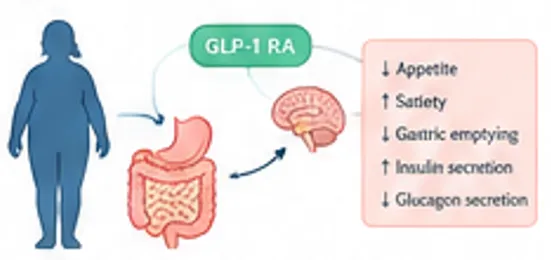
Mechanism of Action of GLP-1 Receptor Agonists in Obesity
1.1 Aim
To review the pharmacological mechanisms, clinical efficacy, safety profile, and drug-development challenges associated with oral small-molecule GLP-1 receptor agonists for obesity management.
1.2 Objectives
1. To explain the physiological role of GLP-1 and its receptor in appetite regulation and glucose metabolism.
2. To describe the molecular pharmacology and mechanisms of action of small-molecule GLP-1 receptor agonists.
3. To evaluate available clinical evidence for orforglipron, danuglipron, and other relevant candidates.
4. To discuss pharmacokinetic, pharmaceutical formulation, and medicinal chemistry considerations.
5. To identify important safety concerns, clinical evidence gaps, and future research opportunities.
2. Review Methodology
2.1 Study design
This article was structured as a narrative review of published scientific literature on oral small-molecule GLP-1 receptor agonists and their potential application in obesity management. The approach focuses on integrating pharmacological, medicinal chemistry, pharmaceutical development, and clinical evidence.
Important methodological note: The following describes the proposed review approach. It should not be represented as a completed systematic review or as a reproducible database search unless the searches and screening process have actually been performed and documented.
2.2 Literature sources
The following databases and scientific resources are appropriate for conducting the review:
2.3 Search strategy
A search can be conducted using combinations of the following terms:
Boolean operators such as AND and OR can be used to combine terms. The final search should include a defined date range and the date on which the search was performed.
2.4 Inclusion criteria
Literature suitable for inclusion comprises:
2.5 Exclusion criteria
Sources that may be excluded include unrelated GLP-1 therapies, duplicate publications, unsupported promotional material, studies without relevant pharmacological or clinical outcomes, and sources whose findings cannot be adequately verified.
Peptide-based GLP-1 receptor agonists can be included as background or comparators but should not be misclassified as small-molecule agents.
2.6 Data extraction and synthesis
Relevant information should be extracted into a literature table containing the author, publication year, compound, study design, population, treatment duration, principal findings, adverse effects, and limitations.
The findings should be synthesized qualitatively. A formal meta-analysis is not appropriate unless sufficiently comparable studies, prespecified statistical methods, and suitable outcome data are available.
3. Biological Background of GLP-1
3.1 Physiological role of GLP-1
GLP-1 is produced through the processing of proglucagon in intestinal L cells and selected neurons. Following food intake, its release contributes to the incretin effect, whereby oral nutrient intake stimulates a greater insulin response than an equivalent intravenous glucose exposure.
The principal physiological actions relevant to obesity and diabetes include:
The magnitude of these effects varies according to the molecule, dose, treatment duration, baseline metabolic status, and individual response .
3.2 GLP-1 receptor
The GLP-1 receptor (GLP-1R) is a class B G protein-coupled receptor. It is expressed in pancreatic islet cells and in several neural and other tissues relevant to metabolic regulation.
Receptor activation involves conformational changes that enable intracellular signalling. Although the Gs–cyclic AMP pathway is central to many established GLP-1 actions, additional signalling pathways and receptor trafficking processes can influence the overall response.
Small molecules do not necessarily interact with the receptor in the same way as the native peptide. They may occupy distinct binding pockets and induce different receptor conformations, making structural biology and functional pharmacology important components of drug development .
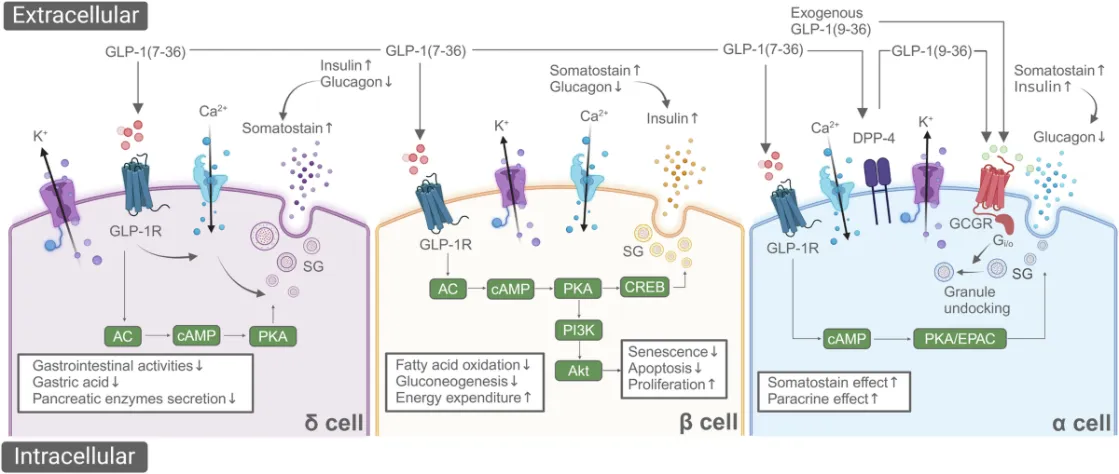
Molecular Mechanisms of GLP-1 Receptor Signalling and Hormonal Regulation in Pancreatic Islet Cells.
4.1 Receptor binding and activation
Small-molecule agonists bind to the GLP-1 receptor and stabilize receptor conformations capable of initiating intracellular signalling. Unlike peptide agonists, which interact extensively with the receptor's extracellular domain and transmembrane region, non-peptide molecules can exploit alternative receptor-binding interactions.
The discovery of danuglipron showed that non-peptide compounds could activate the human GLP-1 receptor with substantial potency. Structural investigations demonstrated that the interaction between a small molecule and the receptor can differ from peptide-mediated activation and may exhibit species-specific characteristics .
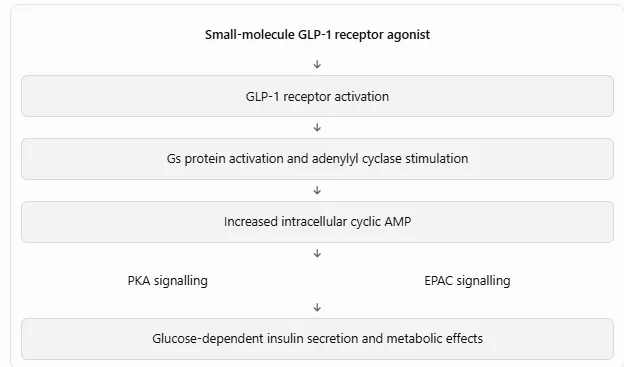
Adenylate cyclase produces cyclic adenosine monophosphate (cAMP), which activates protein kinase A (PKA) and exchange proteins directly activated by cAMP (EPAC). These pathways influence calcium handling, insulin granule exocytosis, and other cellular responses.
GLP-1 receptor agonism enhances insulin secretion when glucose levels are elevated. This glucose dependence helps distinguish incretin-based treatment from agents that stimulate insulin secretion independently of blood glucose.
4.3 Regulation of insulin and glucagon
GLP-1 receptor activation enhances insulin secretion from pancreatic beta cells in a glucose-dependent manner. It also suppresses inappropriate glucagon release, helping reduce hepatic glucose production.
These effects improve glycaemic control in patients with type 2 diabetes. In people without diabetes, the glucose-lowering effects are generally less pronounced because endogenous glucose regulation is already functioning more effectively.
4.4 Appetite suppression and energy intake
GLP-1 receptor signalling influences neural networks involved in hunger, satiety, food reward, and energy balance. Treatment may reduce hunger, increase the feeling of fullness, and decrease the quantity of food consumed.
Weight loss is therefore not explained solely by delayed gastric emptying. Changes in central appetite regulation and energy intake are important components of the overall response.
4.5 Gastric emptying
GLP-1 receptor agonists can delay gastric emptying, thereby slowing the movement of food from the stomach into the small intestine. This can contribute to earlier satiety and postprandial glucose control.
The effect may diminish over time with some therapies. Nevertheless, gastrointestinal tolerability and gastric motility remain important considerations during dose escalation and clinical monitoring.
4.6 Receptor signalling bias
Different agonists may stabilize distinct receptor conformations and produce different patterns of G protein signalling, beta-arrestin recruitment, receptor internalization, and signal duration.
Such differences are of interest because they may influence efficacy, receptor desensitization, and tolerability. However, laboratory evidence of biased signalling should not automatically be interpreted as proof of superior clinical safety or greater weight loss. These relationships require direct clinical investigation.
5. Small-Molecule Versus Peptide GLP-1 Receptor Agonists
| Characteristic | Small-molecule GLP-1 RAs | Peptide GLP-1 RAs |
|---|---|---|
| Chemical nature | Non-peptide organic compounds | Peptide-based molecules |
| Oral delivery | Designed for conventional oral absorption | Oral delivery may require specialized formulation |
| Examples | Orforglipron; investigational danuglipron and aleniglipron | Semaglutide, liraglutide, dulaglutide |
| Enzymatic degradation | Generally less susceptible to peptide-cleaving enzymes | Susceptibility depends on molecular modifications |
| Manufacturing | Chemical synthesis may support scalable production | Peptide synthesis or recombinant processes, depending on product |
| Dosing convenience | Potential for simple oral dosing | Injectable formulations or specialized oral administration |
| Principal limitations | Receptor selectivity, absorption, metabolism, tolerability, safety | Injection burden for injectable products; formulation-dependent absorption for oral products |
Oral semaglutide must not be classified as a small-molecule GLP-1 receptor agonist. It is a peptide that uses an absorption-enhancing technology to facilitate gastrointestinal uptake .
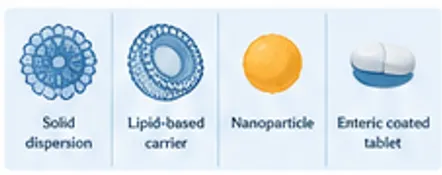
Oral Drug Delivery Systems for Enhanced Bioavailability
6. Major Small-Molecule Candidates
6.1 Orforglipron
Orforglipron is a non-peptide, orally administered GLP-1 receptor agonist studied extensively for obesity and type 2 diabetes. Its clinical programme includes the phase 2 obesity study and phase 3 ATTAIN trials. The ATTAIN-1 trial reported significant weight reduction over 72 weeks in adults with obesity without diabetes .
6.2 Danuglipron
Danuglipron was developed through small-molecule screening and medicinal chemistry optimization. Research demonstrated oral bioavailability and activation of the human GLP-1 receptor. Its development history provides valuable information about receptor structure, compound optimization, pharmacokinetics, and clinical tolerability .
6.3 Aleniglipron (GSBR-1290)
Aleniglipron is another orally administered non-peptide GLP-1 receptor agonist investigated for obesity and overweight. Its development illustrates continued interest in structure-based drug discovery, oral exposure, and the optimization of efficacy and tolerability. A phase 2b trial reported in 2026 provides additional clinical evidence .
6.4 Other development candidates
Other compounds, including lotiglipron and DA-302168S, have been discussed in the small-molecule GLP-1 receptor agonist research landscape. Their development stages and current status must be verified separately using primary publications, trial registries, and regulatory sources.
The existence of a compound in the literature does not establish that it is approved, commercially available, or still actively under development.
7. Clinical Evidence
7.1 Orforglipron: Phase 2 evidence
A phase 2 randomized trial evaluated daily oral orforglipron in adults with obesity or overweight. In the study, treatment was associated with dose-dependent weight reduction over 36 weeks. The reported mean changes in body weight ranged from approximately −9.4% to −14.7% across active-treatment dose groups at week 36, compared with approximately −2.3% with placebo under the reported efficacy analysis .
These results established proof of concept for a non-peptide oral GLP-1 receptor agonist in obesity. However, phase 2 findings should be interpreted in light of sample size, treatment duration, participant selection, and the statistical estimand used.
7.2 Orforglipron: ATTAIN-1 phase 3 trial
The ATTAIN-1 trial was a multinational, randomized, double-blind, placebo-controlled phase 3 study involving 3,127 participants with obesity or overweight and weight-related complications, without diabetes.
At week 72, mean body-weight changes using the treatment-regimen estimand were:
| Treatment group | Mean change in body weight |
|---|---|
| Orforglipron 6 mg | −7.5% |
| Orforglipron 12 mg | −8.4% |
| Orforglipron 36 mg | −11.2% |
| Placebo | −2.1% |
All three active-treatment groups showed significantly greater mean weight reduction than placebo. Improvements were also reported in waist circumference, systolic blood pressure, triglycerides, and non-HDL cholesterol. Gastrointestinal adverse events were among the most frequently reported side effects, and treatment discontinuation due to adverse events was more common in active-treatment groups than in the placebo group .
These findings support the clinical potential of orforglipron as an oral treatment for obesity. Nevertheless, the results do not establish that it is superior to injectable GLP-1 therapies because the study did not directly compare it with every available alternative.
7.3 Orforglipron in type 2 diabetes
The ACHIEVE-1 phase 3 programme evaluated orforglipron in adults with early type 2 diabetes. The trial provides evidence relevant to glycaemic efficacy and safety in a population that differs from participants without diabetes .
It is important to separate evidence from diabetes trials from evidence in obesity trials without diabetes. Although both populations may experience weight reduction, their baseline metabolic characteristics, treatment goals, and risk profiles differ.
7.4 Danuglipron: clinical development lessons
Early human studies demonstrated that danuglipron could achieve systemic exposure following oral administration and activate the human GLP-1 receptor. Its development also highlighted the challenges of translating receptor potency into a medicine that can be administered conveniently and tolerated over extended periods .
The broader lesson is that receptor agonism alone is insufficient. A successful drug must combine pharmacodynamic activity with a practical dosing regimen, acceptable adverse effects, and adequate long-term adherence.
7.5 Aleniglipron: emerging phase 2b evidence
A phase 2b randomized, double-blind, placebo-controlled study of aleniglipron in people with overweight or obesity was published in Nature Medicine in 2026 .
This study is relevant to the emerging evidence base for small-molecule GLP-1 receptor agonists. Before incorporating exact numerical results, including individual dose-group weight changes and adverse-event rates, the full primary publication and its statistical tables should be checked. These figures should not be inferred from the trial's headline conclusions.
7.6 Interpretation of the clinical evidence
Current evidence suggests that oral small-molecule GLP-1 receptor agonists can produce clinically meaningful weight reduction. However, the following considerations remain essential:
8. Pharmacokinetic Considerations
8.1 Absorption
Oral small-molecule drugs must dissolve in gastrointestinal fluids, cross the intestinal epithelium, and achieve sufficient systemic exposure. Their absorption may be influenced by aqueous solubility, intestinal permeability, formulation, food effects, and gastrointestinal transit.
Unlike oral semaglutide, small-molecule candidates are designed to achieve oral exposure without relying on peptide-specific absorption-enhancing technology. However, this does not mean that all small molecules have high bioavailability or are free from food effects.
8.2 Distribution
After absorption, a candidate drug distributes through the bloodstream and tissues. Important parameters include plasma protein binding, apparent volume of distribution, tissue penetration, and the relationship between systemic exposure and receptor activation.
For obesity treatment, exposure must be sufficient to maintain pharmacological activity over the intended dosing interval without causing unacceptable adverse effects.
8.3 Metabolism
Small-molecule GLP-1 receptor agonists may undergo hepatic metabolism and other biotransformation processes. The extent to which particular metabolic enzymes or transporters influence exposure is compound-specific.
Drug-development studies must assess metabolite profiles, potential drug interactions, and the effects of hepatic impairment when relevant.
8.4 Excretion
Renal and biliary pathways may contribute to elimination, depending on the molecule and its metabolites. Renal impairment can influence drug exposure directly or indirectly, particularly when it coexists with dehydration or other complications.
8.5 Half-life and dosing frequency
The elimination half-life is an important determinant of dosing frequency. A compound with suitable absorption and a sufficiently long effective half-life may support once-daily oral administration.
However, a long half-life is not automatically advantageous if adverse effects are difficult to manage or persist after dose reduction.
9. Drug-Development Challenges
9.1 Medicinal chemistry and receptor selectivity
The GLP-1 receptor is structurally complex, and small molecules may bind differently from native peptide ligands. Medicinal chemists must optimize potency, selectivity, physicochemical properties, metabolic stability, and oral exposure simultaneously.
A compound with excellent receptor affinity may still fail because of poor solubility, rapid clearance, off-target activity, or inadequate tolerability.
9.2 Species-specific pharmacology
A major difficulty is that receptor pharmacology may differ among species. Findings in rodents may not predict the human response if receptor-binding interactions or receptor expression differ substantially.
Danuglipron research demonstrated the importance of species-specific receptor characteristics, including a human-relevant binding interaction involving tryptophan 33 .
Consequently, preclinical models should be selected with careful consideration of receptor homology, functional activity, and the intended clinical question.
9.3 Gastrointestinal tolerability
Nausea, vomiting, diarrhoea, constipation, and abdominal discomfort are important tolerability concerns for GLP-1 receptor agonists.
Potential strategies to improve tolerability include:
These strategies require validation for each candidate. They should not be assumed to eliminate adverse effects.
9.4 Long-term safety
Obesity pharmacotherapy may be required for extended periods. Long-term studies should therefore evaluate treatment persistence, nutritional adequacy, body composition, weight regain, gallbladder-related events, pancreatitis-related concerns, and other clinically relevant outcomes.
Potential class-related risks and contraindications should be assessed according to the specific product label and available evidence. Safety conclusions from one GLP-1 receptor agonist cannot automatically be transferred to another.
9.5 Cardiovascular outcomes
Improvements in weight, blood pressure, and lipid parameters are encouraging but are not equivalent to proof of reduced cardiovascular events.
Dedicated cardiovascular outcome trials may be needed to establish whether a particular small-molecule agonist reduces major adverse cardiovascular events or offers other clinically important benefits beyond weight loss and metabolic risk-factor changes.
9.6 Drug interactions and special populations
Potential interactions may arise from concomitant medicines, changes in gastric emptying, dehydration, or alterations in glycaemic control. Dedicated studies should examine relevant populations, including older adults and individuals with renal or hepatic impairment.
The safety and effectiveness of a candidate in pregnancy, breastfeeding, and other special populations must be assessed according to the evidence and regulatory recommendations for that drug.
9.7 Manufacturing and pharmaceutical formulation
Small molecules may be amenable to conventional chemical synthesis and tablet manufacturing. Potential benefits include scalable production and the possibility of avoiding peptide-specific absorption technologies.
However, manufacturing advantages are compound-dependent. Process yield, impurity control, solid-state properties, stability, dissolution, and batch consistency must be demonstrated before a product can be manufactured reliably at commercial scale.
9.8 Cost, access, and adherence
Oral administration may reduce injection-related barriers and improve convenience for some patients. Yet convenience alone does not guarantee adherence, and oral treatment is not necessarily less expensive.
Affordability depends on manufacturing costs, pricing, reimbursement, supply, health-system infrastructure, and competition. Real-world studies will be needed to determine whether oral small-molecule therapies improve treatment access and persistence.
10. Comparative Assessment of Clinical Development
| Evaluation parameter | Orforglipron | Danuglipron | Aleniglipron |
|---|---|---|---|
| Drug class | Oral non-peptide GLP-1 RA | Oral non-peptide GLP-1 RA | Oral non-peptide GLP-1 RA |
| Key research contribution | Phase 2 and phase 3 obesity evidence | Early human pharmacology and development lessons | Emerging phase 2b obesity evidence |
| Clinical evidence maturity | Advanced, including phase 3 obesity trials | Development history must be interpreted using current programme status | Phase 2b evidence reported in 2026 |
| Main evaluation priorities | Long-term efficacy, tolerability, safety, and outcomes | Current programme status, tolerability, and dosing feasibility | Confirmation of efficacy, tolerability, and durability |
| Important limitation | Cross-trial comparisons may mislead | Early evidence does not establish comparative efficacy | Long-term and confirmatory evidence remain necessary |
The table is a qualitative comparison rather than a ranking. Exact clinical outcomes should be compared only after reviewing primary trial publications and accounting for differences in study design.
11. Future Perspectives
11.1 Structure-guided drug discovery
Advances in structural biology, molecular modelling, and high-throughput screening may support the identification of new receptor-binding chemotypes. These approaches can help researchers optimize receptor affinity, selectivity, metabolic stability, and oral bioavailability.
11.2 Improved tolerability
Future compounds may aim to preserve appetite suppression and weight reduction while minimizing nausea and other gastrointestinal adverse effects. Achieving this goal will require a better understanding of receptor signalling, exposure-response relationships, and the neural pathways responsible for therapeutic and unwanted effects.
11.3 Combination pharmacotherapy
Combination approaches targeting more than one metabolic pathway may improve weight reduction for selected patients. However, combining therapies can also increase cost, complexity, and safety risks. Each combination requires evidence of additional benefit and an acceptable overall risk profile.
11.4 Personalized obesity treatment
Future research may investigate how baseline metabolic status, genetic variation, concomitant medications, tolerability, and individual response influence treatment outcomes. Personalized treatment should be based on validated predictors rather than unsupported assumptions about which drug will work best for a particular person.
11.5 Research opportunities for pharmacy students
Potential literature-based research questions include:
1. Comparison of oral small-molecule and peptide GLP-1 receptor agonists in obesity.
2. Structure–activity relationships of non-peptide GLP-1 receptor agonists.
3. Pharmacokinetic and pharmacodynamic factors influencing oral GLP-1 receptor agonist efficacy.
4. A structured comparison of gastrointestinal adverse events across GLP-1 receptor agonist trials.
5. The role of receptor-signalling bias in the development of next-generation GLP-1 therapies.
A student review should select a specific question, define a transparent search method, and critically evaluate primary research rather than merely compiling drug descriptions.
12. Limitations of the Review
This manuscript is a narrative synthesis rather than a completed systematic review. It does not provide a fully reproducible search log, a verified count of screened and included articles, or a formal risk-of-bias assessment.
Clinical trials differ in participant selection, dosing, treatment duration, outcome definitions, statistical estimands, and handling of missing data. These differences limit direct comparisons among compounds.
Furthermore, clinical development and regulatory status can change rapidly. Any final manuscript submitted for academic evaluation or publication should verify the latest regulatory information and the complete primary publications for every clinical claim.
SUMMARY
Oral small-molecule GLP-1 receptor agonists represent an important development in obesity pharmacotherapy. They are designed to activate the GLP-1 receptor without using a peptide drug structure and may provide practical advantages in oral administration and pharmaceutical manufacturing.
Their principal pharmacological actions include glucose-dependent insulin secretion, regulation of glucagon, appetite suppression, and effects on gastric emptying. Through these mechanisms, they can improve metabolic control and reduce body weight.
Orforglipron has generated substantial clinical evidence, including phase 3 results demonstrating significant weight reduction over 72 weeks. Danuglipron has contributed important insights into non-peptide receptor agonism and human receptor pharmacology, while aleniglipron represents a further development in this therapeutic class.
Despite promising findings, important challenges remain. These include optimization of receptor selectivity and pharmacokinetics, gastrointestinal tolerability, long-term safety, cardiovascular outcomes, manufacturing quality, affordability, and sustained weight management.
Further well-designed randomized trials, long-term follow-up, comparative studies, and real-world research are needed to determine the place of these medicines in routine obesity care.
CONCLUSION
Oral small-molecule GLP-1 receptor agonists represent a promising direction in the treatment of obesity because they combine incretin-based pharmacology with the potential convenience of conventional oral medicines. Advances in medicinal chemistry and receptor structural biology have demonstrated that non-peptide compounds can activate the GLP-1 receptor and produce clinically meaningful weight reduction.
The strongest evidence in this field includes the phase 3 clinical programme for orforglipron, while other candidates continue to contribute to the understanding of efficacy, safety, and drug design. Nevertheless, clinical promise must be distinguished from proof of long-term superiority. Oral administration does not inherently establish better adherence, lower cost, or greater safety than injectable alternatives.
Future development should prioritize durable weight reduction, acceptable tolerability, robust cardiovascular and long-term safety evidence, scalable manufacturing, and equitable access. With these requirements addressed, small-molecule GLP-1 receptor agonists may expand the available options for chronic obesity management.
REFERENCES



Ganesh Todkar, Shredatta Shetkar, Dnyaneshwari Marlapalle, Nikita Kale, Anvirappa Katte, Ramprasad Kandare, Amarja Bhoge, Oral Small-Molecule GLP-1 Receptor Agonists for Obesity: Pharmacological Mechanisms, Clinical Evidence, and Drug-Development Challenges, Int. J. of Pharm. Sci., 2026, Vol 4, Issue 11, 508-520. https://doi.org/10.5281/zenodo.23924311
 10.5281/zenodo.23924311