

We use cookies to ensure our website works properly and to personalise your experience. Cookies policy
1Assistant professor SMVEC School of Pharmacy, Puducherry, India.
2,3,4,5SMVEC School of Pharmacy, Puducherry, India.
6Dean SMVEC School of Pharmacy, Puducherry, India.
Drug delivery in children can be challenging due to the physiological changes that occur during growth and development, different pharmacokinetics and lack of suitable formulations to administer to children. Formulation specific to children are required to ensure correct dosing with safety and to encourage compliance. This review discusses the physiological and pharmacokinetic factors that affect paediatric drug delivery, as well as dosage form issues such as poor taste, difficulty swallowing and non-compliance. Traditional and novel drug delivery systems will be discussed. These include oral, parenteral, transdermal, topical and pulmonary routes of drug delivery are described. The use of nanoparticle-based drug delivery systems including liposomes, polymeric nanoparticles, solid lipid nanoparticles and nano emulsion will be discussed and how they can improve drug solubility, increase bioavailability, improve targeting and control drug release. Patient centred drug delivery, excipients, incorrect dosing and regulation will be discussed. Challenges still phase the development of drug for children such as limited clinical data in children, incorrect dosing, stability issue and manufacturing problems. New methods of drug delivery such as 3D printed, tailor made dosage form, genomic guided drug delivery and digital monitoring have potential to improve paediatric drug delivery, however it’s vital to develop safe, effective and palatable dosage for children, with evidence clinical trials. Collaboration between researcher healthcare professional, pharmaceutical companies and regulatory bodies and are key to improving treatment outcomes in children.
Paediatrics drug delivery focuses on the treatment needs of patients from birth through adolescence 1,2. Children cannot be treated the same way as adults, because they bodies change constantly as their grow. Physiological differences, organ immaturity, and altered pharmacokinetics change how a drug is absorbed, distributed, metabolized, and eliminated 1,3,4. For example, gastric pH is higher in neonates and infants and reaches adult levels only after two to three years, and gastric emptying in early infants is slow and unpredictable 3,4. Because of it, you cannot just reduce adult doses for children. Children need flexible, age-appropriate formulations that make it possible to adjust the dose by body weight or surface area 4-6.
Even so, very few age-specific products are available on the market 2,6,7. Tablets and capsules are tough for young children to swallow, may cause choking, and come in fixed strengths. Caregivers therefore split or crush tablets or use pharmacy-compounded preparations and both practices can affect dose accuracy and stability 2,6,7. Oral liquids are easier to swallow and allow the dose to be tailored, but they bring problems their own, including chemical instability, microbial contamination, the need for preservatives, and poor solubility of many drugs 6,7.
Tastes is another major concern. Children often refuse bitter medicines or spit them out, which leads to missed or incomplete dose, so taste masking through sweeteners, Flavors, polymer coating, or microencapsulation is an important part of formulation design 1,2. Excipient choice needs equal care. Ingredients that are safe for adults, such as propylene glycol at high concentration or benzyl alcohol, can be harmful to neonates because their metabolism and elimination are still immature 2,4.
To fill these gaps, new ways of delivering medicine have been created. These include tablets that dissolve in the mouth, tiny tablets, chewable tablets, films that go on the tongue, and systems made of small pellets or granules.
These forms are easier to give and are often better accepted by children. How well these forms work depend on how medicine these forms can hold, how strong these forms are, and the age of the child 6-8. Pharmacogenomics -guided. 3D-printed personalized dosage forms look promising but need standardization and stronger clinical evidence 1.
Medications errors are a serious and largely available cause of harm in children, mostly arising from weight-based dose calculations off-label prescribing, and liquid preparation 9. Limited paediatric trial data further slows progress, and regulations such as the paediatric research equity act (PREA) and best pharmaceuticals for children act (BPCA) encourage dedicated studies in children rather than reliance on adult data 2,9,10. Overcoming these challenges requires cooperation between scientists, clinicians, industry and regulators 1,2,10.
CONSIDERATIONS RELATING TO PHARMACOKINETICS AND PHARMACODYNAMICS IN CHILDREN
The ADME of medicines is different in children compared to adults. These differences have a greater impact in children younger than 2 years old. Preterm infants also have different metabolic and excretion abilities compared to term infants. Other factor such as illness, genetic, development, drug interactions and environmental factors can also influence drug handling in children 11,12. Absorption: By 2 years of age children will develop a more acid stomach meaning that basic drugs will not be as well absorbed. Differences in gastrointestinal function and biliary excretion can also alter drug absorption. Variations in the gut functionality and biliary excretion can also cause changes in drug absorption. Insoluble drugs and modified release drugs can exhibit delayed absorption in children 11. Distribution and Metabolism: Newborns have increased water content and decreased fat content causing increased distribution of water-soluble drugs. Plasma protein binding is decreased in newborns meaning free fraction of protein bound drugs will increase. Newborns also have decreased enzymes for drug metabolism. Infants may have enhanced metabolism of certain drugs compared to adults. Preschool children may have delayed metabolism of certain drugs compared to adults 11. Elimination and Dosing Consideration: Renal functionality is immature in newborns. Drug elimination is improved with renal development in the first 2 years of life. Newborns may require lower doses of drugs based on their body weight as drug distribution and clearance may not always increase proportionally. Drug clearance in children may be increased compared to adults using allometric scaling and PBPK modelling 11,12.
DOSAGE FORM-ASSOCIATED BARRIERS TO MEDICATION ADHERENCE IN PAEDIATRICS
Children encounter several difficulties with oral medicines, and most of them arise from the characteristics of the dosage form. The foremost difficulty is an unpleasant, chiefly bitter, taste. Many active drugs are bitter by nature, and paediatricians regard poor taste as one of the main obstacles to completing a course of therapy 13,14. Besides taste, the odour and flavour of a preparation also decide whether a child will accept it 15.
Swallowing difficulty is another major concern. Over half of children aged six years or younger struggle to swallow oral formulations, mainly because of the size and shape of solid forms such as tablets and capsules 14,15.
Mouthfeel further influences acceptance. Thick, viscous liquids are less appealing to children, and suspensions with very fine particles can leave a lingering after-taste in the mouth 15. In addition, children differ in how strongly they perceive bitterness because of genetic variation in their taste receptors 15.
Liquid preparations have an added shortcoming: the taste-masking effect of a polymer coating may weaken gradually while a suspension is stored, allowing the bitterness to re-emerge 13.
Consequently, children may refuse or spit out the medicine, which lowers adherence and can result in treatment failure, such as persistent infection or later, antibiotic resistance 15.
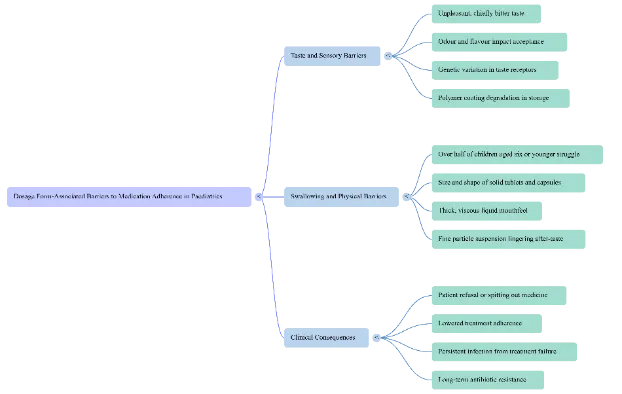
Figure 1: Dosage Form-Associated Barriers to Medication Adherence in Paediatric Patients and Their Potential Clinical Consequences.
CONVENTIONAL DRUG DELIVERY SYSTEMS
Oral Drug Delivery Systems
The administration of these drugs can be problematic due to growth. The way the drug is handled by the body changes as the child gets older 16,17. Often in adult formulations, tablets will be crushed or liquid formulations will be produced leading to incorrect dosing issues 6,17. There are initiatives such as the Paediatrics Formulation Initiative in the US, the European Paediatric Formulation Initiative and the WHO ‘Make Medicines Child Size’ campaign to create a more suitable drug for children, however suitable paediatric friendly drugs are limited 16-18. Taste can be an issue so different techniques such as flavourings, sweeteners, cyclodextrins and coatings can be used to make the taste. However, coatings can affect how the drug is absorbed. Disintegrants and films (ODTs and ODFs can be difficult to mask the taste 6,16-18. Flexible dosing can be difficult in children due to ADME processes changing with age. Tablets can be split but this leads to incorrect dosing issues. Special tablets/ODFs can be manufactured to help dose control 6,16,17. Excipients can also be an issue in young children (<6 months) due to reduced metabolisms leading to the risk of toxicity when taking compounds like benzyl alcohol, ethanol and propylene glycol 3,7.
Tablets can be large. Smaller tablets or multiparticulate systems can be useful. It may be necessary to give a number of units 6,16-19. Liquid products can be useful in neonates due to ease of swallowing but are often unstable, costly to transport and lack sustained release options 6,16,17. Solid Dosage forms are usually very convenient, stable and cheap. They are often chosen as they have long shelf lives and are cheap. Multiparticulates, orally disintegrating tablets and mini tablets can be used to help administer the drug to the patient. This helps mask the taste and makes children more likely to take the drug. Children appreciate easy administration. Functionalized Calcium Carbonate (FCC) has been looked at for fast disintegrating tablets. ODFs provide administration but contain less drug. Chewing formulations can be useful but there are issues with choking with chewing gum 6,16-18. Overall, there isn’t any one formulation that will be ideal for every child. Factors to consider when choosing a drug for a child are the age, dose, swallow ability, drug properties and safety. Research is required and working with regulatory bodies, research and pharmaceutical industries can help create more child friendly drugs 6,16,17.
Parenteral Drug Delivery System
Parenteral drug delivery includes IV, IM, SC and ID administration. It is important for when oral formulations aren’t working or when rapid treatment is required for very ill or emergency children 19. Extra care must be taken when administering paediatric medicines. The volume, pH, quantity, viscosity, quality of needle, site and state of the child must be considered. The less excipients in the medication the safer it will be with less irritation 19.
Some excipients that would be fine in adults may not be safe for infants and young children. Solubilisers such as propylene glycol, polyethylene glycol and ethanol can accumulate in the body and cause issues with the brain and heart as their systems aren’t fully developed. Emulsifiers, preservatives, antioxidants and other balancing agents can cause reactions. Modified forms of β-cyclodextrins such as SBE- β-CD and HP- β-CD are a safer option and less likely to cause kidney damage. Tools such as the STEP database and PERA framework can help choose the best excipients 19.
Tools to help parents. Infusion pumps, dose error reduction, barcoding medication administration systems (BCMA) and HER connectivity can all reduce drug errors. Needle free injection systems can help reduce anxiety around needles. Closed system transfer devices (CSTDs) help reduce contamination and exposure to hazardous drugs 20.
Examples of formulation methods. I am fascinated by new formulation methods such as liposomes, solid lipid nanoparticles, nanostructured lipid carriers, nano emulsions, nano suspensions and polymeric nanoparticles such as PLGA based carriers. These could help with drug delivery, increased therapeutic effects and controlled drug release. In situ depot forming technology can help prolong drug release 21.
Training using simulations and continuous training for health care professionals can help ensure safe administration. Overall, excipient safety, improved administration tools and innovative drug carriers are prioritised in paediatric parenteral drug delivery 19-21.
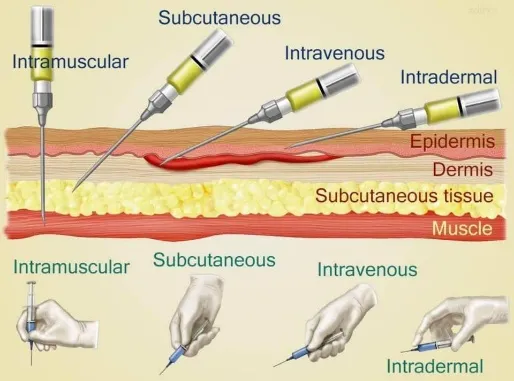
Figure 2: Routes of Parenteral Drug Administration (Intravenous, Intramuscular, Subcutaneous, and Intradermal) Showing Needle Angle and Depth of Injection in Skin Layers.
Transdermal and Topical Drug Delivery System
Transdermal drug delivery can be an alternative to injections and tablets 22,23. It doesn’t cause pain to the patient and avoids any issues associated with the systems. It provides a constant drug level in the body and reduces the number of doses. Patients/caregivers can easily control the drug by removing the patch 22-24. This can be a good option for patients who cannot take medication. It can include those who feel unwell, vomit or have issues swallowing 23,24. Topical drug delivery usually provides localised effects. Usually, the effect on the body will be minimal. This also applies to transdermal 24. Both can be limited by the layer of skin, the stratum corneum. They work best with lipophilic drugs that aren’t too large 23,24. The barrier in children changes with age. Premature babies have an incomplete skin barrier meaning more medication can enter the body. Older children will have a skin barrier. Children will also process drugs differently so careful consideration of dosing is required 22. Fentanyl and buprenorphine patches can be used for long term pain but aren’t ideal for post-surgery pain as they have a slow onset and can cause breathing issues. They can also be difficult to remove 22. Fentanyl patches are approved for children aged 2 years and above. Only if the medication is currently in use of children 22. When you become hot from exercise your body temperature can rise. This can increase drug release by 30% 22. Side effects can occur including nausea, vomiting, constipation and dermatological problems. Using liposomal nanoparticles, such as nano-emulsion, SLNs, NLCs, liposomes, transferosome and ectosomes can help increase permeability of the drug through the skin 23,24. Particles less than 300nm can penetrate hair follicles 24.
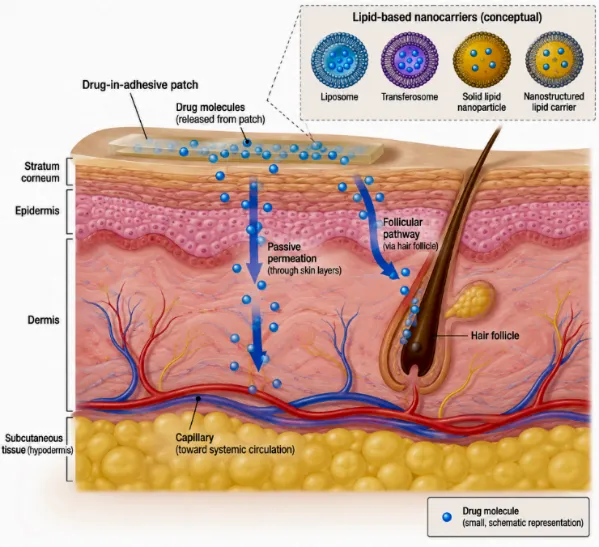
Figure 3: Schematic Representation of Transdermal Drug Delivery Through Skin Layers, Illustrating Passive Permeation, Follicular Transport, and Lipid-Based Nanocarriers.
Pulmonary Drug Delivery System
Drugs administered to the lungs can act quickly due to a large surface area and very thin layer of tissue meaning the drugs can quickly enter the bloodstream 25,26. Often administering drugs directly to the lungs is a safer and more comfortable option as the drug goes straight to where it is required and avoids the rest of the body 25,27. Side effects can include drugs becoming stuck in the throat or mucous 27. These tend to occur more in younger patients and can depend on the device used. Some issues with different devices include poor dosing and low patient acceptance 25,27. A study on paediatric patients has shown that 80% of the dose could be administered to the lungs with a dry powder inhaler 25. Drugs available for paediatric patients for pulmonary hypertension are very limited 26. Drugs used in adults may be used but are not always appropriate 26. This may be a big issue in paediatrics. Often doctors have to prescribe drugs that haven’t been designed for children 26. It is generally accepted that children aren’t just small adults but there are certain drugs that have been designed specifically for children 26. There are gaps in research and development to address these. Therefore, in the Us there are only a couple of drugs approved to treat high blood pressure in the lungs in children 26. There is only one drug approved to help neonates breathe 26. Therefore, there is a huge need to develop more drugs and devices specifically for children. Research into childhood diseases and conditions alongside innovation in paediatric drugs and devices can help improve paediatric outcomes 25,26.
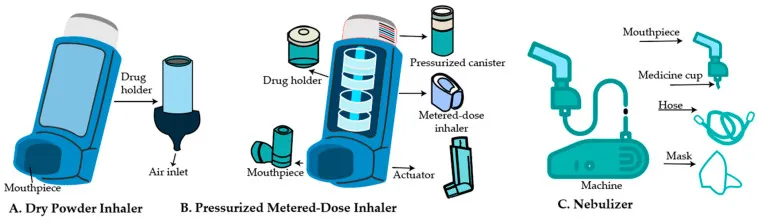
Figure 4: Types of Pulmonary Drug Delivery Devices
NOVEL DRUG DELIVERY SYSTEM FOR PAEDIATRIC PATIENTS
Children differ from adults in terms of their pharmacokinetics. This is because they have less acidity in their stomach, a slower or quicker GI transits time, and more water content and less fat content. Children also have less protein to bind drug within the blood stream. In addition, the kidneys and liver do not fully develop meaning they cannot eliminate medicines as well as adults. This means that many adult formulations are unsuitable for children and need to be modified by clinicians off label 3,10. An ideal paediatric formulation needs to have accurate dosing based on the child’s weight. This must be palatable by masking the bitter or unpleasant taste of the medicine. It also must be suitable for swallowing by the child along with only using excipients deemed safe for children 3,10. Liquid formulation can be unstable, promote microbial growth and may have inaccurate dosing. This has resulted in the development of orally disintegrating tablets and mini tablets. These can be easily administered, are stable and can be used in infants 3,10. Dosage devices such as medicated straws, pens and the Medi-bottle can help with children accepting their medication 3. Other alternatives include transdermal patches, painless microneedles, oral films and rectal dosage forms. Nanocarriers can target the drug and give controlled release 3,10. Standardisation and age-appropriate labelling will be required. In future research will focus on personalised dosage using 3D printing, smart dosage devices and designing biologics for children 3,10.
Nanotechnology - Based Drug Delivery System
The pharmacokinetics and pharmacodynamic profiles of paediatric patients differ from adult patients due to various factors such as developing status of their body organs, immature liver enzymes, and a low level of renal clearance 28. Other challenges posed by the current formulation include the unpleasant taste, inability to adjust dosage to suit the patient (e.g., paediatric patients), and a higher likelihood of mistakes while administering the drugs, ultimately affecting compliance 28. The employment of nanotechnology in drug delivery improves bioavailability by tackling solubility issues and increasing the ability of the drugs to cross biological barriers. Furthermore, controlled and targeted release leads to a reduction in systemic toxicity and frequency of administration 28. The major carriers of nanotechnology used in the drug delivery systems include liposomes, polymeric nanoparticles, SLNs, LNPs, polymeric micelles, dendrimers, nanocrystals, and nano emulsions 28-30. Liposomes are the most advanced, and liposomal amphotericin B was used to treat leukaemia in paediatric patients 29. Other uses of nanotechnology in drug delivery systems in paediatric patients include liposomal doxorubicin to prevent cardiotoxicity; CPX-351, a liposomal combination of cytarabine and daunorubicin, to treat paediatric AML; and liposomal bupivacaine to provide prolonged analgesia in paediatric patient 29. Other uses of nanotechnology in the field of paediatrics remain preclinical, for instance, the use of SLNs to deliver efavirenz in the treatment of HIV and the use of polymeric nanoparticles to cross the blood-brain barrier in the treatment of brain tumours. Other uses include nasal administration of RSV vaccines 28. Safety and manufacturing concerns, particularly the ethical dilemmas involving paediatric research, lack of alignment in regulations, and a death of large, randomized studies, remain the barriers to further advancement in the use of nanotechnology in drug delivery systems in paediatric patients 28,29.
Patient-Centric Drug Delivery Approaches
Patient-centric drug delivery systems for paediatric patients. There are many differences between adults and children at various ages, including physiological needs and the ability to self-administer medicines. There are also differences in the way the body absorbs, distributes, metabolizes, and excretes medicines. Therefore, paediatric medicines cannot simply be made by reducing adult medicines 31,32. The type of medicine dosage form given in partly dependent on the age of the patient. There are several types of administration dosage forms from which to choose, including oral liquids and films and mini and dispersible tablets. There are several techniques to improve acceptance of medications. Excipients should be evaluated for safety in children, and caregivers should be educated on the safe use of medicines 31,32. Paediatric regulatory guidance such as that offered by the European Medicines Agency (EMA) and the U.S. Food and Drug Administration (FDA) supports the development of age-appropriate medicines. There are other technologies that help achieve better flexibility and compliance in treatment, such as 3D printing. Other technologies such as nanocarriers and novel release systems are still in their early phases of development. It is expected they will help achieve better treatment compliance soon 31,32.
SAFETY AND REGULATORY CONSIDERATIONS
Because of various rapid changes in several physiological functions in the very young, mostly at the age of 2 years, a low dose may become very dangerous 33. It has been suggested that beyond the age of 2 years, there is adequate dose scaling by body weight. Therefore, for children below 2 years of age, the first doses are given following a population pharmacokinetics/pharmacodynamics (PP/PD) model and gradually increasing the doses for the older children based on individual pharmacokinetics 33,34. Safety of the formulation is of great importance. Ethanol, benzyl alcohol, and propylene glycol, which are used as preservatives, can be very toxic to the very young 33. Dosage forms should be such that the entire dose is given without manipulation. There are several physiological systems that still undergo maturation; hence, as a part of safety, follow-up beyond the traditional 30 to 90 days may be necessary 33. Many areas of the world have legislation to mandate the generation of paediatric evidence. In the U.S., the Paediatric Research Equity Act (PREA) is mandatory, with some exceptions. The Best Pharmaceuticals for Children Act (BPCA) offers voluntary incentives. In the EU, companies can receive an extra 6 months of patent protection if they follow the paediatric investigation plans approved by the POCD. In the EU, various ethical safeguards are permitted for paediatric clinical trials, including sparse sampling, parental/guardian consent, and a Data Monitoring Committee. The agency may experiment with a drug from paediatric clinical trials if there is not enough evidence to show that it’s safe or effective in adults.
RECENT ADVANCES AND FUTURE PERSPECTIVE
Paediatric care is shifting toward personalised, technologically supported, family-centred care. Omnic methods such as next-generation sequencing and microarrays can chart a child’s genetic susceptibility and response to therapy. This allows drugs to be personalized to each individual patients, which leads to fewer adverse effects in medical conditions such as asthma, heart disease, and cancer 35,36. In paediatric oncology, targeted medicines, immunotherapy, and CAR-T cell therapy are used along with genetically guided “basket” and “umbrella” studies, which assign children to treatment based on cancer genetics rather than a disease site 36. Newer preventive treatments include nirsevimab, a monoclonal antibody that protects infants against RSV infection, and mRNA vaccine technology that is being studied for more infants’ viral infections 36. Asthma and insulin diary apps, wearable sensors, and telemedicine help manage home treatments by enabling dose modifications, monitoring, and specialist contact 35,36. Besides diagnostics and new biomarkers are cutting result wait times and improving decision-making 35. Clinical-decision support software that uses AI helps make accurate diagnoses and improves care processes, like deciding when to use antibiotics 35,36. In the future, AI, genomics, and remote surveillance will become more prevalent in paediatrics, and engaging caregivers to participate actively in their child’s care is anticipated to lead to better outcomes 35. These innovations pose risks to patient’s safety, algorithmic transparency, liability, regulatory oversight, and data privacy for children and their families and should be adopted by paediatricians after thorough consideration 35,36. Collaboration with healthcare providers and local communities will make such solutions relevant and accessible, ensuring that innovation supports rather than replaces compassionate, personalized care 35,36.
CHALLENGES IN PAEDIATRIC DRUG DELIVERY SYSTEM
Paediatric patients range between neonates (preterm and full-term) to adolescents. They experience changes in their development that impact on ADME of drugs 18. Preterm neonates will have immature enzymatic activity in their liver, kidney and other tissues which can cause up to a 100-fold difference in drug administration 37. The majority of drugs are developed and tested in adults. As such less than half of drugs on the market have been clinically tested in children 18. Suitable drug formulations for children can be lacking causing off label use, incorrect dosing and variable bioavailability 18,37. Many children suffer from an unpleasant taste with 84-91% failing to adhere to treatment. Tablets can be difficult to swallow with around 54% of children aged 6-11 struggling to take them 18,37. Certain excipients like benzyl alcohol, propylene glycol and ethanol can be toxic in infants and young children 37. New dosage forms can be difficult to produce as they are fragile, have a low drug load and often have patent protected processes 37. In low and middle income countries drugs in liquid form can be limiting due to increased temperature and humidity, and unreliable supply chains 18. Drug development can be slowed down due to small markets, challenging clinical trials, consent issues and costs of regulation 37,38.
CONCLUSION
In terms of the delivery of medicines to children, the paradigm of modification of adult drugs is becoming obsolete in Favor of the development of formulations, especially for children. Given that the process of growing and developing organs influences the absorption, distribution, metabolism, and elimination of drugs, and that it occurs in neonates and infants, adult dosage cannot be easily adjusted by weight. Allometric scaling and PBPK modelling are used to avoid underdosing and toxicity, while the lack of paediatric trials means that off-label use is common 11,12,15,33,34,37,38. Acceptability is the main factor linking the formulation of a drug to the success of treatment, since a bitter taste and difficulty in swallowing lead to refusal and treatment failure 13,14,37,39. Orally disintegrating tablets, mini-tablets, and multiparticultes provide stability and allow for flexible dosing, but the form must be appropriate for the child’s age, the dose, and the properties of the drug 6,16-18. Non-oral routes, such as parenteral, transdermal, and pulmonary delivery, meet certain specific needs, while nanocarriers enhance solubility and targeting; however, problems with safety, technique, and large-scale production still exist 19-30,40. Excipients like benzyl alcohol, propylene glycol, and ethanol may result in toxicity in neonates, so their use must be justified 19,33,37. A patient-centred approach considers palatability, the accuracy of the dose, ease of use, and the involvement of caregivers 31,32. BPCA, PREA, and the EU Paediatric Investigation Plan all help to generate evidence for use in children 33,34. Future developments will involve 3D-printing doses, smart devices, genomic profiling, digital monitoring, and AI-based assistance, although concerns regarding safety, privacy, and regulation need to be assessed 3,10,35,36. Cooperation between regulators, researchers, the industry, clinicians, and families are necessary if accurate, acceptable, and safe medicines are to be made available to all children.
ACKNOWLEDGEMENT
We thank our respected Dean for the opportunity to prepare this review article and our guide for valuable guidance and support. We express our gratitude for our faculty members and batchmates for the cooperations. We also acknowledge the researchers and image source that contribute to this review article.
REFERENCES




S. Vishvaja, J. Ranjini, R. Tamilarasi, R. Ragul, P. Aravind, M. Dhanalakshmi, Paediatrics Drug Delivery Systems: Conventional Approaches, Novel Technologies and Future Perspectives, Int. J. of Pharm. Sci., 2026, Vol 4, Issue 11, 54-64. https://doi.org/10.5281/zenodo.23876560
 10.5281/zenodo.23876560