

We use cookies to ensure our website works properly and to personalise your experience. Cookies policy
1,2,3,4,5Research Scholar, Siddhi's Institute of Pharmacy, Nandgaon, Murbad, Thane – 421401, Maharashtra, India.
6Assistant Professor, Siddhi's Institute of Pharmacy, Nandgaon, Murbad, Thane – 421401, Maharashtra, India.
Herbal medicines are rich in diverse bioactive compounds, but the delivery of some phytochemicals is limited by poor aqueous solubility, low membrane permeability, gastrointestinal instability, extensive metabolism, or variable extract composition. Phytosomes are phyto-phospholipid complexes developed to overcome selected delivery barriers, associating plant-derived constituents (flavonoids and other polyphenols) with phospholipids (usually phosphatidylcholine). This association can alter the physicochemical behaviour and enhance compatibility with lipid-rich biological membranes. Herein, the review provides an overview of the structure and composition of phytosomes, proposed mechanisms of formation and delivery, main preparation methods, advantages and limitations, some pharmaceutical applications, evaluation techniques and recent development directions. Commonly used methods such as thin-film hydration, solvent evaporation and anti-solvent precipitation are discussed with the focus on process selection and analytical confirmation. Representative examples are silymarin, curcumin, quercetin and green tea polyphenols. Evidence is graded . Biological plausibility is provided by laboratory and animal findings . Pharmacokinetic studies may show altered exposure . However, these findings alone do not prove clinical efficacy . Characterisation usually includes particle size, polydispersity index, zeta potential, complexation assessment, FTIR, DSC, in vitro release and stability studies. Phytosomes hold promising potential for formulation, but challenges remain, including lipid oxidation, residual solvents, manufacturing costs, variability of the extract, standardisation, and the need for more robust clinical trials. Phytosomes should therefore be considered as a formulation strategy whose merit has to be assessed for each phytoconstituent and product.
1.1 What are Phytosomes?
Phytosomes are phospholipid-based delivery systems, in which plant-derived bioactive substances are combined with phospholipids, particularly phosphatidylcholine (PC), to form a phyto-phospholipid complex. Standardised herbal extracts with flavonoids, polyphenols and marker chemicals are suitable ingredients. The interaction between the polar area of the phospholipid and the functional groups of the phytoconstituent will lead to a complex with both polar and lipid compatible properties, often by hydrogen bonding and other non-covalent forces [1-5].
A phytosome is not the same as a liposome, although product literature sometimes uses "phytosome" in a generic sense. Phytosome The phospholipid in the phytosome interacts at molecular scale with the phytoconstituent. In a conventional liposome the active ingredient is usually attached to a lipid bilayer or encapsulated in an aqueous compartment. This distinction is important because performance, analytical evidence and formulation structure should all be evaluated independently [1, 2]. [6–9]
1.2 The demand for advanced methods of herbal medication delivery
The biological activity of a plant constituent does not necessarily imply delivery of an effective concentration to the site of action. The efficacy of a formulation is determined by its solubility, dissolution, membrane permeability, stability, metabolism, dosage and mode of administration. However, despite low systemic exposure following traditional oral dosing, a number of phytochemicals demonstrate promise in experimental systems. Advanced delivery systems (e.g. phospholipid complexes, liposomes, emulsions and nanoparticles) are being explored to overcome specific formulation challenges rather than improving all herbal products in general [2, 3, 6–11].
1.3 Limitations of Traditional Herbal Formulations
The quantities of active ingredients in traditional powders, extracts, pills and capsules may differ. Some phytochemicals are liable to breakdown in gastrointestinal conditions, have a large molecular size, low aqueous solubility, poor lipid compatibility, or extensive first-pass metabolism. Also, chemical composition of an extract can be influenced by species identity, growing conditions, plant part, harvesting, extraction and storage . Such problems can lead to inconsistent absorption and complicate product comparisons [1-3, 10].
These restrictions are chemical specific. Not all herbal remedies have poor bioavailability. It should be demonstrated that the chosen ingredient has a formulation problem before deciding on a delivery method. Standardised starting materials, suitable analytical techniques and comparison with an uncomplexed control are essential to determine whether phytosome formation offers a significant benefit [1, 3].
1.4 Contribution of Phytosomes to Improve Drug Delivery
Phosphatidylcholine is formed by attaching a hydrophilic phosphocholine head group to hydrophobic fatty acid chains. Interaction with appropriate phytoconstituents can alter the interaction of the constituent with lipid and aqueous environments and may also favour partitioning into biological membranes. [1-3] Phospholipid complexes have shown better exposure or improved formulation performance in experimental and pharmacokinetic studies. But claims of dose reduction require direct comparable proof and increased absorption does not mean better clinical results.
2. Structure and Composition of Phytosomes
2.1 Phyto-constituents
The phytoconstituent could be a chemically standardised plant extract or a purified entity . Formononetin has also been investigated as specific phytosome payload in formulation research [12]. Its molecular framework, purity, polarity and functional groups all affect how it interacts with phospholipids. Flavonoids such as quercetin, rutin, hesperidin and silybin have been studied because their hydroxyl and other polar groups may be involved in intermolecular interactions. Other polyphenols, such as rosmarinic acid and curcumin, are also studied. The presence of a polyphenol does not guarantee that a stable or even a beneficial complex will form [1-3]. [6–9, 11–13]
Standardisation is especially important when an extract contains more than one constituent. Chromatographic fingerprinting and quantification of marker compounds can be used to characterise raw materials and evaluate batch-to-batch consistency. The composition of the extract can vary, which in turn can influence the ratio of phytoconstituents to phospholipid and the physicochemical characteristics of the finished product [2, 3].
2.2 Phospholipids, in particular phosphatidylcholine
Phospholipids are molecules which are amphiphilic . They have polar and nonpolar fatty acid chains . PC is often chosen for phytosome production since it can interact with appropriate polar groups and give a lipid compatible part. Complex formation, stability, dispersibility and repeatability can be influenced by the source, purity, fatty acid profile and quality of the phospholipid [1, 2].
2.3 Preparation of Phytoconstituent-Phospholipid Complex
A phospholipid and a suitable phytoconstituent are brought into contact under controlled conditions. The final substance is affected by solvent, temperature, processing time, mixing and molar ratio. Hydrogen bonding may be involved in association, but the interaction pattern will depend on the chemical structures involved. A typical development sequence includes selection and standardisation of the plant material, selection of the phospholipid, controlled mixing, isolation of the result and characterisation by complementary methods .
Information on functional groups, thermal behaviour, crystallinity and molecular interactions can be obtained by FTIR, DSC, X-ray diffraction and nuclear magnetic resonance. No one result should be taken as a definite evidence of complex formation, the interpretation should be considered on basis of the pure components, their physical combination and prepared complex [1, 2, 6, 13].
2.4 Scheme of labelled phytosome structure
Figure 1 shows a simplified scheme of a phytoconstituent–phospholipid complex. It is not intended to demonstrate a general structure for all phytosomes, but molecular interaction.
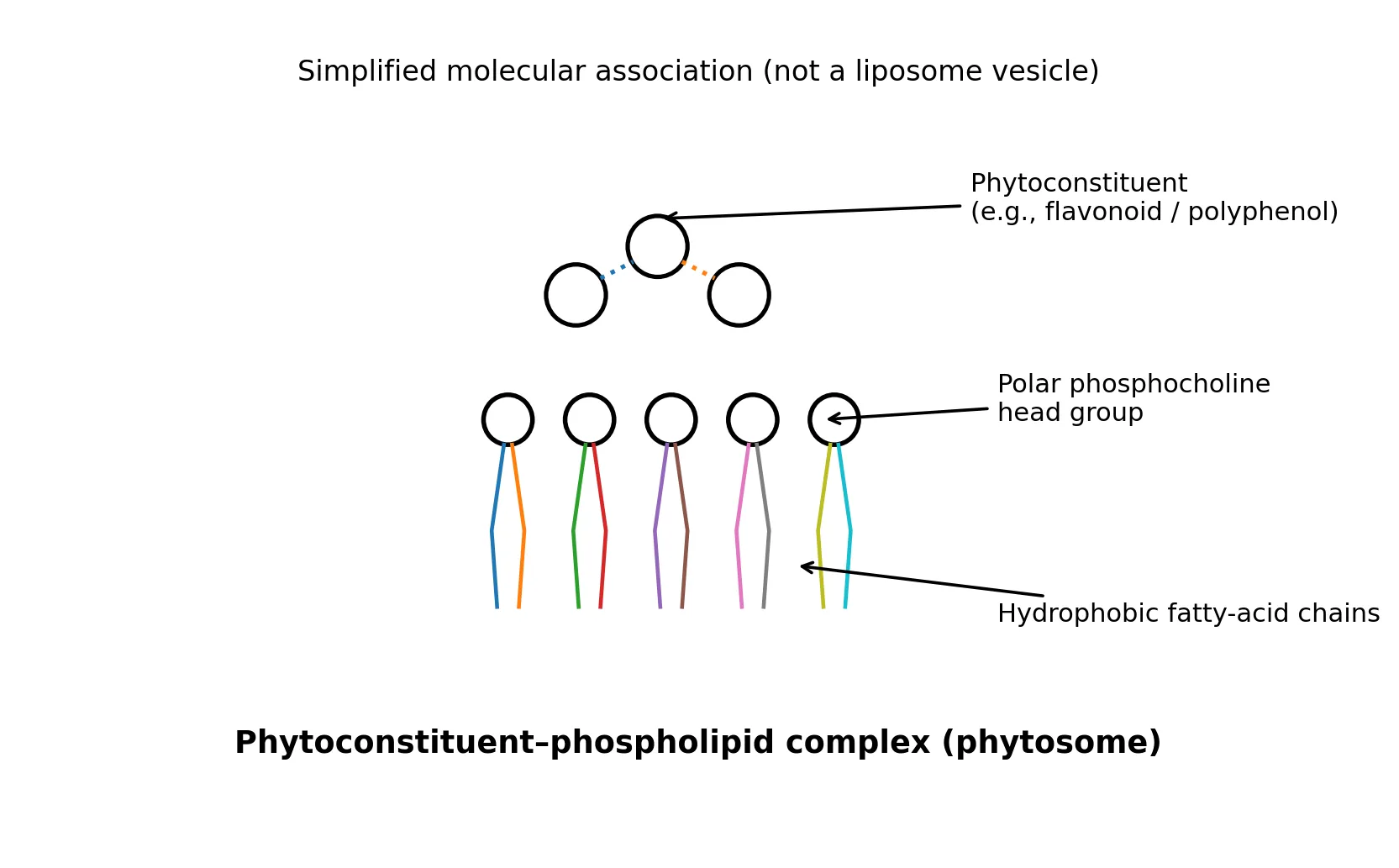
Figure 1: Scheme of Labelled Phytosome Structure
2.5 Factors affecting composition and structure
The type and quality of phospholipids, the ratio of the same, the solvent, temperature, time and the method of recovery all influence the final product. Therefore product development must be reproducible and optimise these factors. The formation of a molecular complex can not be judged solely by the size of particles or by the appearance of a dispersion [1-3]. [6, 12, 13]
3. Formation Mechanism and Drug Delivery
3.1 Interaction of phospholipids with phytoconstituents
The development of phytosomes often involves noncovalent interactions between phospholipids and suitable plant-derived chemicals. The phosphocholine head group may interact with hydroxyl and other polar groups of phytoconstituents, mostly through hydrogen bonding. The effectiveness of this interaction depends on the chemical structure, the molar ratio, the solvent environment and the processing conditions. Complex-forming abilities of plant chemicals are different [1, 2].
3.2 Formation of lipid-compatible complexes
Upon attachment, the complex may possess both polar and lipophilic properties. This may make some phytoconstituents more compatible with lipid-rich environments than the uncomplexed molecule. Phytosomes are not simple mixtures but are designed to produce a complex. Therefore, simple mixing of the materials without proper characterisation cannot be considered as effective complexation [1-3].
3.3 Interaction with biological membrane
Biological membranes have phospholipid bilayers that control the transport of molecules. Even if a phytoconstituent has in vitro activity, its absorption can be limited due to poor membrane partitioning. Association with phospholipids may aid partitioning from aqueous environments and encourage contact with membrane lipids. The skin barriers are discussed within the framework of relevant principles for topical preparations [14]. These mechanisms are formulation-dependent and may not assure improved transport in all systems [2, 3].
3.4 Possible improvement in bioavailability and absorption
Bioavailability: is the rate and extent of availability of active drug at the site of drug action. For systemic delivery, bioavailability is usually determined by exposure in the blood circulation. Phytosomes may increase exposure if absorption is limited by solubility or membrane contact. Assumptions based on formulation design alone are less useful than pharmacokinetic information such as changes in peak concentration or area under the concentration-time curve (AUC). Some quercetin and curcumin phospholipid formulations have shown human pharmacokinetic results, but increased exposure does not imply a therapeutic effect, unless supported by appropriate clinical results [1-3, 15–17].
The chain of events in the proposed process is plant-derived constituent selection, phospholipid interaction, complex formation, improved lipid compatibility, interaction with biological barriers and possibly increase in absorption. Biological or analytical data appropriate to the respective step should be evaluated.
3.5 Interpretation of evidence
While preclinical data from animal studies may not directly translate to humans, lab results can help identify possible processes. Altered exposure can be shown in pharmacokinetic studies for a particular formulation.Controlled clinical trials must establish both safety and clinically significant efficacy. Instead of generalising findings to all phytosomes, it is essential that claims specify the particular formulation tested, the comparator used, the population or model examined, and the endpoint assessed [2, 3].
4. Methods of Preparation
Preparation conditions affect complexation, particle properties, residual solvent, stability and recovery. Below are summarised three main strategies. The ideal method depends on the properties required for the final product, the intended dosage form, solvent compatibility, heat sensitivity and solubility of the constituents [1–3, 10].
4.1 Thin film hydration technique
The concept is that the phytoconstituent and phospholipid are dissolved or dispersed in a suitable solvent and the solvent is evaporated to form a thin film. The film is hydrated to form a dispersion. Sonication or churning may be used to improve uniformity.
This method is well suited for the generation of dispersed phospholipid systems. But, thin-film hydration is generally related to the preparation of vesicles and its application does not necessarily indicate the formation of a real phytosome complex. Further analytical evidence is needed [1,3,10].
4.2 Method of solvent evaporation
The basic concept is that the phytoconstituents and phospholipids are dissolved or dispersed in a suitable solvent and then made to associate under controlled conditions. The solvent is then removed, often under reduced pressure, to recover a dry phyto-phospholipid complex.
The process can leave a dry complex but insufficient evaporation can leave residual solvent and too much heat can damage thermolabile components. The residual solvent levels and process conditions should be controlled as per the pharmaceutical quality guidelines [1, 2, 18–25]. [18–25]
4.3 The technique of anti-solvent precipitation
The basic idea is that the phospholipid and the phytoconstituent are first dissolved in a suitable solvent. Precipitation is induced by the addition of an anti-solvent in which the complex is poorly soluble.
The choice of solvent and anti-solvent, addition rate, temperature, mixing and ratio of ingredients can influence the yield and features of the product. For each formulation the procedure should be optimised [1-3].
4.4 Comparison of preparation techniques
Table 1: Comparison of Preparation Techniques
| Method | Main principle | Key consideration |
|---|---|---|
| Thin-film hydration | Film formation followed by hydration | Useful for dispersions; complexation must be confirmed. |
| Solvent evaporation | Interaction followed by solvent removal | Dry complex can be recovered; control heat and residual solvent. |
| Anti-solvent precipitation | Solubility reduction induces precipitation | Recovery depends on solvent selection, mixing, and precipitation conditions. |
4.5. Process Controls
Critical controls include the identity of the raw material, the phytoconstituent-to-phospholipid ratio, the quality of the solvent, the mixing time, temperature, solvent removal, drying, yield, and batch uniformity. Include stability assessment and, if appropriate, residual-solvent testing. Process changes should not alter performance and composition on scale-up.
5. Advantages of Phytosomes
5.1 Improved bioavailability of some phytoconstituents
Some phytochemicals have low solubility, poor membrane permeability, instability or metabolism that limits their systemic exposure. Complexation with phospholipids may increase the exposure to some chemicals and alter their physicochemical behaviour. Silybin–phospholipid complexes are a commonly cited example, although the extent of effect is dependent on the specific formulation and comparator [1–3, 26, 27]. [26, 27]
5.2 Increased uptake and potential medicinal effect
Improved absorption may increase the availability of a constituent to the body. Such modification may help to improve pharmacological performance if minimal exposure is a major limitation. But an improvement in a pharmacokinetic parameter does not translate into improved patient outcomes. Efficacy should be evaluated with proper endpoints and well designed trials [2, 3].
5.3 Better lipid membrane compatibility
Polar phytoconstituents may associate with phospholipids and be more easily accessible to lipid rich environments. This is a major reason for the development of phytosomes and may be applicable for both topical or oral administration. Actual permeability is influenced by molecular arrangement, complex characteristics, formulation and biological barrier.
5.4 Protection of delicate components (optional)
As a consequence of complex formation some ingredients may be less exposed to unfavourable conditions, e.g. some gastrointestinal conditions or storage conditions. But just having phospholipids doesn’t mean they’re protected. [1, 3] In an effort to show a protective effect of the formulation, stability testing, marker-compound assays and degradation investigations are necessary.
5.5 Possible optimisation of dose
In some cases, dose optimisation may be possible if a formulation leads to a higher exposure. Lower dose should not be suggested as the sole reasons for preparation of phytosome or increase in AUC. For the specific product, similar pharmacological effects, safety and, when appropriate, clinical results have to be demonstrated [2, 26].
6. Limitations of Phytosomes
6.1 Storage and stability problems
Sensitive phytoconstituents may be degraded on exposure to light, air, moisture, heat, or an inappropriate pH, but phospholipids may be hydrolysed or oxidised. Dispersions may also change during storage in terms of dispersibility, aggregation or particle size. Stability studies to demonstrate the effects of packaging, drying and protective excipients [1, 3] are needed to monitor the appearance, marker content, degradation products and physical features.
6.2 Choice and rejection of solvents
The solvent influences complex formation and the solubility of the ingredients. A wrong solvent can lead to poor product homogeneity or incompleteness of the association. Residual solvents may impact the quality and safety of the product; consequently, it is crucial to monitor the conditions for their removal and the levels that remain. Temperature and pressure can be adjusted so that solvents are removed without damaging heat-sensitive chemicals. Safety and relevant quality guidelines should also be observed in the choice of a solvent [1, 2].
6.3 Costs of Formulation and Production
Different constituents like phospholipids, organic solvents, specialized processing equipment, analytical testing, stability studies and process validation can be utilized in the development of phytosomes. Scale-up can impact on mixing, heat transfer, solvent removal and batch to batch consistency. Optimization and scalability processing can lower expenses, but cost reduction should not compromise quality or reproducibility.
6.4 Variation in herbal-extract composition
The composition of an extract can be changed by different factors such as the plant species, environment, the harvest season, part of the plant, the extraction technique, drying and storage. These variations can affect the amount of marker chemicals available to complex in the multi-component extracts and influence the characteristics of the product. Consistency requires chromatographic fingerprinting, marker quantification, botanical verification and predefined raw-material standards [3, 28].
6.5 Necessity for standardisation and clinical research
The data are heterogeneous, and often relate to a specific chemical, formulation, or preclinical model. Clinical superiority has not been demonstrated for each application and results from one phytosome cannot be easily extrapolated to another product . A well-designed trial should compare a defined phytosome with a suitable conventional formulation to evaluate safety, pharmacokinetics, dosage and clinically significant results. Standardisation [3, 7, 8, 19–25, 28–32] should cover marker content, phospholipid content, preparation technique, analytical validation, stability and batch uniformity.
7. Pharmaceutical and Therapeutic Applications
For phytosome uses, the evidence available for that specific drug and formulation should be taken into account. And laboratory tests showing antioxidant activity do not mean prevention or treatment of human disease.The examples below are areas of study and not general clinical guidance.
7.1 Silymarin: Liver health applications
Silymarin is a mixture of flavonolignans from milk thistle (Silybum marianum) , one of which is silybin (silibinin) . Its hepatoprotective, anti-inflammatory and antioxidant activities were studied. In order to address restricted absorption, silybin–phosphatidylcholine complexes have been produced and their pharmacokinetic performance and liver-related consequences have been studied [1, 26].
Evidence level: Preclinical research offers mechanistic support, whereas specific human pharmacokinetic and formulation investigations suggest increased exposure for particular phospholipid complexes. Milk-thistle products are only effective if they are tied to the exact formulation and clinical data for specific liver diseases, where there is currently conflicting clinical evidence.
7.2. Investigation of anti-inflammatory and antioxidant activity of curcumin
The polyphenol curcumin from Curcuma longa has been studied for its anti-inflammatory and antioxidant activity. Conventional oral delivery may have low systemic exposure, rapid metabolism, and poor water solubility. Complexation with phospholipids has been studied to improve delivery. Oxidative-stress pathways and inflammatory signaling have been studied in experiments [2, 3, 16, 17, 33, 34]. [16, 17, 33, 34]
Evidence level: biological plausibility is supported by laboratory and animal data; human studies are available for certain enhanced-bioavailability curcumin formulations, but the findings cannot be automatically applied to all curcumin phytosomes. Additional formulation-specific controlled trials are required.
7.3 Quercetin: antioxidant and other pharmacological studies
Numerous fruits, vegetables, and medicinal plants contain the flavonol quercetin. It has been investigated in experimental cardiovascular and metabolic models as well as for its anti-inflammatory and antioxidant properties. To enhance oral exposure and membrane contact, quercetin–phospholipid complexes have been studied. Increased exposure to a specific lecithin-based formulation was found in a randomised crossover pharmacokinetic investigation in healthy volunteers; this finding is product-specific and should not be applied to all quercetin phytosomes [1, 15]. [15]
Evidence level: Pharmacokinetic data that suggest some complexes have improved bioavailability and laboratory and animal data that support a number of proposed mechanisms.Currently, there are limited clinical data demonstrating precise therapeutic benefits of quercetin phytosomes.
7.4 Uses of green tea polyphenols as anti-oxidants
Epigallocatechin gallate (EGCG) is a catechin in green tea (Camellia sinensis). These substances have been studied for their anti-inflammatory and antioxidant properties and for possible metabolic uses. To enhance the delivery of specific polyphenols, phospholipid complexes of green tea extracts have been investigated [3].
Evidence level: some human studies have assessed specific green-tea extract–phospholipid products, and laboratory and animal studies support biological activity. Evidence for specific clinical benefits remains product-dependent. In-vitro antioxidant activity does not mean prevention or treatment of human disease.
7.5 Comparative evidence summary
Table 2: Comparative Evidence Summary
| Example | Research focus | Evidence interpretation |
|---|---|---|
| Silymarin / silybin | Liver-related applications; exposure | Human pharmacokinetic evidence for selected complexes; clinical efficacy varies by condition and product. |
| Curcumin | Anti-inflammatory and antioxidant research | Strong preclinical rationale; human evidence depends on formulation and indication. |
| Quercetin | Antioxidant activity and delivery | Preclinical findings and selected pharmacokinetic data; therapeutic clinical evidence limited. |
| Green tea polyphenols | Antioxidant and metabolic research | Preclinical evidence and some product-specific human studies; no general clinical claim is justified. |
8. Evaluation and Characterization
Physical features should be appropriately defined, evidence of complex formation should be substantiated, release behaviour should be outlined and storage stability should be assessed. The test you use will depend on the composition and the intended route. Complexation efficiency can be more appropriate than entrapment efficiency in some studies as phytosomes are molecular complexes instead of the classical drug loaded vesicles [1-3].
8.1 Particle size and polydispersity index
Dynamic light scattering is frequently used to estimate hydrodynamic particle size and polydispersity index (PDI) [30]. PDI is an indicator of the width of the size distribution, with a smaller value often indicating a more homogeneous dispersion. Although a PDI < ~ 0.3 is sometimes used as a practical guidance, it is not a universal acceptance for all phytosomes. Temperature, medium, dilution and measurement circumstances have to be reported.
8.2 Zeta potential
Zeta potential gives information about the interaction of the particles and stability of dispersion by estimating the electrical potential near sliding plane. Larger absolute values might be more favourable for electrostatic repulsion, but stability also depends on steric effects, phospholipids, pH, ionic strength and dispersion medium. A single value of zeta potential is not enough to prove stability.
8.3 Efficiency of Complexation or Entrapment
The system chooses the right parameter. Entrapment efficiency differentiates a related or entrapped fraction from a free constituent. “Complexation efficiency” may be a more appropriate term for the desired process of a molecular phytoconstituent–phospholipid complex. An example of the typical EE (%) expression is: EE (%) = [(W? − Wf) / W?] × 100 Where Wf is the measured free quantity and W? is the total initial quantity. Assay and separation techniques are required to be validated for interference and recovery.
8.4 FTIR analysis
FTIR is compared for the characteristic absorption bands of the phytoconstituent, phospholipid, physical combination and produced complex. Band shifts, changes in intensity or broadening may indicate interactions such as hydrogen-bonding. FTIR alone is not conclusive and should be interpreted along with known analytical procedures and other techniques [20, 21, 23]. [1, 2, 20, 21, 23]
8.5 Differential scanning calorimetry
DSC measures thermal behaviour by noting changes in heat flow during controlled heating or cooling. Shifts, decreases or loss of a characteristic melting endotherm may indicate changes in solid state behaviour or component interaction. Thermogravimetric analysis (TGA) of the synthesised complex, physical mixture and individual elements.
8.6 In vitro drug release
In vitro release studies are designed to ascertain the rate and extent to which a component is released from a formulation under defined conditions. The medium, pH, temperature, agitation, sampling schedule, sink conditions and analytical technique have to be reported. Release profiles are not direct measures of clinical efficacy or bioavailability, but they do enable comparisons between formulations.
8.7 Stability Research
Stability studies are used to observe changes over time under defined storage conditions . Relevant criteria are, for example, appearance, particle size, PDI, zeta potential, content of marker compound, degradation products, release behaviour and residual solvent if relevant. Accelerated studies may be helpful for formulation development [18, 19, 21-23, 25, 31] but longer term studies are required to determine shelf life. [18–23, 25, 31]
8.8 Summary of evaluation parameters
Table 3: Summary of Evaluation Parameters
| Test | Primary purpose | Interpretation caveat |
|---|---|---|
| Particle size / PDI | Size and distribution uniformity | Method and dispersion conditions affect results. |
| Zeta potential | Surface charge and aggregation tendency | Not a stand-alone stability test. |
| Complexation / entrapment efficiency | Estimate associated versus free constituent | Choose definition appropriate to the formulation. |
| FTIR | Functional groups and possible interactions | Cannot alone prove complex formation. |
| DSC | Thermal behaviour and solid-state changes | Interpret alongside other characterization results. |
| In-vitro release | Release profile under specified conditions | Not a direct substitute for in-vivo evidence. |
| Stability studies | Changes during storage | Conditions and acceptance criteria should be predefined. |
9. Recent Developments and Future Scope
9.1 Phytosomes for topical and oral use
Oral distribution remains a major area of research as some phytochemicals have low absorption after traditional dosing. Also, topical approaches are being explored to improve formulation and local delivery of specific bioactives. The suitability of a route depends on the active substance, intended site of action, excipients and safety profile [9, 11, 14, 35]. Evidence from one path does not necessarily translate to another [2, 3].
9.2 Phytosome-based gels, creams and capsules
Some topical formulations may be gels or creams. Phytosome complexes may be included in capsules or other oral dosage forms. The compatibility of the excipients, the uniformity of dosage, the release performance, the microbiological quality where applicable, and the stability should be established during product development. Spreadability, skin compatibility and appropriate permeation testing may also be required for topical products. The dosage form should not be chosen just because the substance is a phytosome; it should be designed with the planned purpose in mind.
9.3 Integration with Other Delivery Channels
Phytosome complexes may be used in conjunction with other technologies such as nanosizing, gels, or other carrier systems to meet other formulation needs. Combination technologies may add complexity, may change requirements for release, stability, safety or production. Each component should be assessed for its contribution with appropriate controls; more complex does not mean better.
9.4 Clinical trials and safety and standardisation
Future work should focus on reproducible production, verified analytical techniques, authenticated and standardised botanical raw materials and well-defined standards [7–9, 11, 23, 24, 28, 29, 32]. Safety must be assessed considering the phytoconstituent, phospholipid, excipients, residual solvents, dose, route and any interactions. In clinical comparative studies, the composition of the formulation and the clinical outcomes of interest and not surrogate outcomes or in-vitro antioxidant assays should be reported. Transparent reporting would allow for evidence-based product claims and increase comparability between studies [3, 28, 29]. [7–9, 11, 22–25, 28–32]
9.5 Priority research questions
CONCLUSION
Phytosomes are phospholipid complexes designed for better delivery of specific plant derived bioactive compounds. The interaction of phytoconstituents with phospholipids especially phosphatidylcholine is the main reason for their formation. This could enhance lipid compatibility and change the absorption. Studies on silymarin, curcumin, quercetin and green tea polyphenols have been performed using this approach, and results ranging from laboratory and animal findings to specific pharmacokinetic and human studies are available. Each indication and product has a different level of proof.
Possible advantages include improved exposure of some contents, compatibility with lipid membranes and possibly protecting delicate chemicals. Not everyone shares these advantages. Important remaining constraints are still stability problems, solvent control, cost, extract variability, scale-up and lack of formulation specific clinical evidence. Appropriate characterisation including particle-size analysis, zeta potential, complexation assessment, FTIR, DSC, release testing and stability tests can determine a formulation’s reproducibility and suitability for further testing. Phytosomes must be evaluated not only on the basis of the delivery concept but also on the basis of standardised content, safety, comparative pharmacokinetics and well designed clinical results.
REFERENCES





Sahil Shirose, Avadhoot Partole, Aditya Jamghare, Harshali Shelar, Suyog Vishe, Monika Vinchu, Phytosomes: A NOVEL Approach for HERBAL Drug Delivery – Review Article, Int. J. of Pharm. Sci., 2026, Vol 4, Issue 11, 1562-1574. https://doi.org/10.5281/zenodo.24034598
 10.5281/zenodo.24034598