

We use cookies to ensure our website works properly and to personalise your experience. Cookies policy
IPS Academy College of Pharmacy, Indore.
Irritable bowel syndrome (IBS) is a gastrointestinal disturbance characterized by recurrent abdominal discomfort and shifting of bowel behaviour without that involve the absence of a structural defect. In addition, IBS involves a disturbance in the gut-brain-interaction, leading to multiple pathophysiologic mechanisms, including dysbiosis of the microbiome, immune activation, dysfunction of the epithelial barrier, heightened sensitivity in the viscera, and disruption of the gut-brain axis. Prebiotics encourage the development of beneficial bacteria such as Bifidobacteria, Lactobacillus etc. They facilitate the production of short-chain fatty acids, and also support proper mucosal and immune function. Probiotics are live microorganisms that can enhance gut health by inhibiting the actions of pathogenic (bad) microorganisms, enhance the integrity of the gut barrier and modulating the immune response and gut-to-brain signalling pathway. Clinical studies have indicated that probiotics are effective at reducing the numerous signs and symptoms of IBS, including abdominal pain, distension and alterations in bowel habit. The variability in response to probiotic use can be explained by differences in strain, dosage, duration of treatment etc. Further investigation is needed to formulate proven microbiome-based treatments for IBS.
Irritable bowel syndrome (IBS) is a chronic, often debilitating, and very common disorder of gut-brain interaction, formerly categorized among the functional gastrointestinal disorders. From a clinical perspective, IBS is characterized by the presence of recurrent abdominal pain accompanied by changes in bowel habits, such as variations in the frequency and consistency of stools, in the absence of overt structural or biochemical abnormalities. Notwithstanding its functional nature, IBS represents a significant physical, psychological, and socioeconomic burden for affected patients and healthcare systems around the world [1].
The prevalence rate of irritable bowel syndrome (IBS) ranges between 4.4% and 4.8% in developed nations such as the United States, the United Kingdom, and Canada, with women being more likely to suffer from IBS than men. Also, the disorder is prevalent among people below the age of 50 years. IBS affects the quality of life negatively, making it difficult for patients to live a productive life [2].
IBS classification is performed based on the individual's current bowel habits. Thus, IBS can be classified into four subtypes: diarrhoea-predominant IBS (IBS-D), constipation-predominant IBS (IBS-C), mixed bowel habits (IBS-M), and unclassified IBS. The differences in the pathophysiology and response to treatment illustrate the necessity of personalized therapeutic approaches [3].
From the recent set of experiments carried out with respect to the gut microbiota among IBS patients, there is evidence to suggest that apart from a compositional change in the gut microbiota, a functional change was also observed in relation to these microorganisms, thereby necessitating a change in approach to the treatment of patients using III, which proved to be effective for individuals affected by IBS [4].
In this regard, prebiotics and probiotics have been recognized as novel and promising therapeutic approaches. Prebiotics can be described as substrates that are selectively used by
the host microorganisms, which in turn provide a health benefit, while probiotics are live microorganisms that, when given in adequate amounts, provide health benefits to the host [35]. Although the word “prebiotic” has its roots in chemistry literature in relation to primordial molecular structures that existed before life itself, the current nutritional definition of prebiotics focuses on selective microbial stimulation and gastrointestinal health benefits [5].
Probiotics and prebiotics are developing treatments available for irritable bowel syndrome. They work via changing the microbiota of the gut; subsequent production of short chain fatty acids; and changes in the gut barrier and gastrointestinal immune function. They also play a role in modulating the gut-brain axis resulting in decreases in both abdominal pain and abdominal bloating. However, due to differences in strain type, dosage, treatment duration and study bias the effectiveness of treatment can vary widely [6].
In this review, there is an overview of the role played by pre- and pro-biotics in Irritable Bowel Syndrome, taking into consideration some essential mechanisms of action such as the gut-brain axis, visceral hyperalgesia, intestinal epithelial barrier, and immunomodulation. Some traditional and innovative treatment methods, such as HMO analogs, engineered prebiotics, and novel probiotics, are considered for their importance in creating personalized interventions for IBS based on the microbiome. By making a connection between mechanisms of action and results in clinical practice, the review aims to close some knowledge gaps in this field.
2. IRRITABLE BOWEL SYNDROME
Irritable bowel syndrome (IBS) is a functional gastrointestinal disorder (FGID) characterized by recurrent abdominal pain or discomfort associated with the alteration in stool frequency, stool consistency or its passage. It is an epidemic disorder with a high prevalence within the society, which causes significant morbidity, absenteeism from work or diminution of productivity and economic burden to society). Commoner symptoms include bloating (abdominal distention) or flatulence. It is a gastrointestinal disorder characterized by abdominal pain, changes in stool consistence and frequency [7].
2.1 Mechanism of action
Irritable Bowel Syndrome is a multifactorial condition with various causes yet to be uncovered completely. It is a disorder associated with the gut-brain axis, connecting the brain to the enteric nervous system. The connection makes emotions affect gut movement, secretion, and barrier function, whereas gut activity impacts brain function [8]. Important pathways involve alteration in gastrointestinal movement, impaired absorption of bile acids, shifts in gut microbiota composition, and enteric nervous system dysfunction. Furthermore, there is evidence for inflammation of the intestinal lining, leading to functional gut disorders in IBS patients [9,38].
2.2 Gut-Microbiota in the Pathophysiology of IBS
Current developments in microbiome studies have enhanced the knowledge on IBS. This brain-gut-microbiome pathway consists of interlinked functions of the CNS, gut microbiota, and immune and endocrine systems. Stress can affect the microbial makeup via the CNS pathway, whereas the enteric nervous system controls the gastrointestinal tract functions [10].Several components can cause IBS, such as genetic susceptibility, food allergy, immunological disorder, and disruptions in the gut-brain pathway. The gut microbiome has been identified as an important component because of its significance in maintaining gut homeostasis, signalling, and immune function [11].
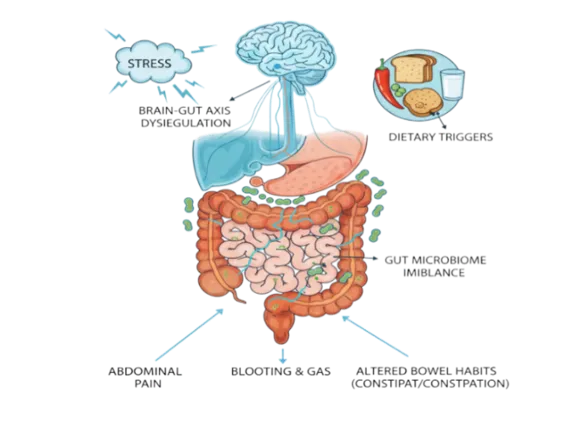
(A) Pathophysiology of IBS: Brain-Gut Axis Dysregulation, Microbiome Imbalance, and Symptoms
2.3 The Role of Visceral Hypersensitivity in IBS
The control of bowel function and gut sensitization is mediated by neurons and hormones in the cortex and subcortex. In Irritable Bowel Syndrome (IBS), visceral hypersensitivity (VH) is one of the factors that plays a role. Visceral hypersensitivity refers to the heightened sensitivity to pain due to rectal distention [12]. Experimental results in animals demonstrate that gut microbiota affect visceral pain, which is influenced by antibiotic modifications. Early life treatment with antibiotics can predispose individuals to VH, whereas restoring the gut microbes can alleviate symptoms[13].
The gut microbiota is greatly impacted by the presence of probiotics. Probiotics are living organisms that have positive effects on human health. The primary effect of probiotics is to influence the gut microbiota towards a more healthy state, improve the intestinal barrier, and help regulate the immune system. The most common genera of probiotics are Lactobacillus and Bifidobacterium. Many of these strains also affect intestinal signalling[14].
3. PREBIOTICS IN IBS
The prebiotic concept was previously thought to have been well known, but researchers agreed that they could be defined in both the scientific literature as well as in a way that makes it possible to better understand how they affect the health of the gut. There are now many definitions of prebiotics that have been provided over the years, which have been criticized and misunderstood. The original definition of prebiotic, as defined in the science of chemistry, refers to building-block structures that exist before the development of living organisms. By definition, prebiotics are usually food carbohydrate sources with the most widely studied prebiotics being inulin-type fructans (ITF) (how we tell if it is fructose-based or not) and galacto-oligosaccharides GOS (how to tell if it is from galactose based). There are also many new classes of prebiotic studies presently taking place. Prebiotics have been shown in large numbers of studies to have very specific effects on the growth and proliferation of Bifidobacterium in healthy adults [15].
3.1 Mechanism of action
Uncontroversial prebiotics are those fibres that are fermented by gut microbes to increase microbial diversity and produce short-chain fatty acids (SCFAs) in the human colon, but there is limited data on this effect specifically for humans and the evidence remains mixed. For instance, Liu et al. (2015) indicated that short-term supplementation of FOS and GOS increased Bifidobacteria but decreased butyrate-producing bacteria, likely due to increased lactic acid levels. But the study’s relatively short duration underscores the need for longer-term studies to better understand those effects [16].
Irritable bowel Syndrome, or IBS, is a condition in which the gut microbiome negatively impacts the functioning of the body. This negative impact can be associated with the nervous system, mucosal barrier system, neurotransmitters, hormones, and immune system. The following graphic depicts how the microbiota-gut-brain axis works together in irritable bowel syndrome, or IBS, is a condition that negatively affects the normal functioning of the gut microbiome. The gut microbiome has been shown to be connected to the brain through numerous pathways, most of which are thought to be through the action of these negative impacts from the gut microbiome on the overall health of the body. Symptoms such as bloating and abdominal pain, among others, are directly affected by diet. The incorporation of prebiotics into the daily diet can help to alleviate many of the negative effects that are associated with IBS by modifying the gut microflora. Many studies have shown that when prebiotics are incorporated into the daily diet, the gut microflora will be modified and, as a result, symptoms and negative impacts associated with IBS can be decreased [17].
3.2 Types of Prebiotics
3.2.1 Inulin
Inulin is an oligosaccharide that can’t break down via digestion, which gives inulin the ability to act as soluble fibre in the diet and occurs naturally. In the gastrointestinal tract, inulin will not be hydrolyzed (chemically altered), meaning it will pass through the GI intact and travel to the colon, where it will be fermented by colonic microflora. The most common source of commercial inulin is chicory root. As a result of inulin's physical, chemical, and nutritional characteristics, it has been used in many common foods and beverages [18].
Inulin is not digested and is fermented by gut microbiota, improving bowel function and microbial balance. In constipation-predominant IBS, it may also support mental well-being via the gut–brain axis [19].
3.2.2 Galacto-Oligosaccharides
The Low FODMAP diet serves as the primary treatment method for IBS which is becoming increasingly popular with patients. The Low FODMAP diet removes some types of food from the diet which includes fermentable carbohydrates that contain oligosaccharides and fructans and galacto-oligosaccharides. The low dose of fermentable carbohydrates (FODMAPs) in our small intestine causes symptoms in two ways: 1. via malabsorption of the carbohydrate compounds which creates an osmotic force that moves excess water into the intestine 2. The large intestine microbes rapidly ferment the carbohydrate which results in gas production [20].
3.2.3 Fructo oligosaccharides
Fructooligosaccharides (FOS) are short chain fructans which have a β (1→2) linkage, which is not digestible but can be metabolized by probiotic microflora such as Bifidobacteria. As a result, they provide less energy [21]. FOS, made up of 3 to 5 units of D-fructose and D-glucose, is a prebiotic which is well studied. Besides GOS (9:1 ratio in breast milk), FOS is fermented quickly in the proximal colon, while inulin is mostly fermented in the distal colon[22].
3.3 Novel and Next-Generation Prebiotics
3.3.1 HMO & Prebiotic Roles in IBS
Dysbiosis is a hallmark of IBS, with low levels of bifidobacteria in both faecal and mucus-associated gut microbiome being documented. B. longum subspp. infantis have the ability to degrade a range of human milk oligosaccharides (HMOs) intracellularly and act as a major cross-feeder, producing acetate.[39].The acetate produced via cross-feeding has been shown to alter the broader community of gut microbiota, resulting in an increase in butyrate and propionate-producing bacteria, such as Faecalibacterium spp. and Rosebcea spp. Therefore, as these beneficial bacteria increase, they may help support gut barrier integrity [23].
Table 1: Prebiotic Compounds and Synbiotics in IBS Symptom Relief
|
Type/ Compound |
Combined With (if Synbiotic) |
Key Benefits |
|
Galacto-oligosaccharides (GOS) |
Probiotics (Bifidobacterium) |
The treatment results in two effects which include increased stool production and decreased gas production together with the stabilization of intestinal bacteria [35] |
|
Fructo-oligosaccharides (FOS) |
Lactobacillus strains |
The treatment improves all symptoms and decreases abdominal pain in IBS-C patients according to existing evidence [36] |
|
Inulin-type fructans |
Multi-strain probiotics |
Their use leads to better Bifidobacteria results and reduced bloating according to minimal clinical trial evidence [37] |
3.3.2 Synthetic and engineered prebiotics
Synthetic and engineered prebiotics are being rapidly developed, making it possible to create new, specialized compounds with different health characteristics. Prebiotics that are created synthetically have been chemically developed to either match or improve the function of their naturally occurring counterparts. Advances in the fields of carbohydrate chemistry and glycoscience have provided the ability to accurately create prebiotic compounds such as GOS and XOS that can be engineered to selectively stimulate certain groups of beneficial bacteria in our gut [24].
3.4 Clinical Evidence of Prebiotics in IBS
microbiota selection via the production of several key functional metabolites and subsequently leading to improved intestinal barrier function, mucosal immunity and treatment of specific GI diseases [25]. Those treated with the highest dosage demonstrated significantly higher levels of clinical response and remission from UC compared to those receiving the lower doses. An additional randomized, double-blind controlled trial, comparing sodium butyrate to a placebo, involved 77 children with either UC or CD over a period of 12 weeks [26].
4. PROBIOTICS IN IBS
Probiotics are now the leading component in the functional food industry, with their use as a functional food ingredient. Probiotics have historically been a critical dietary component and have been widely marketed for their possible health benefits. [40]
Werner Kollath introduced the term 'probiotic' in the year 1953. The word 'pro' comes from the Latin language meaning 'for' & 'bios' comes from the Greek language meaning 'life'. The original use of probiotics was attributed to Kollath who defined it as active agents, performing different physiological functions in the body supporting wellness [27].
4.1 Mechanism of action
There are several ways in which probiotics work, including balancing the microbial population in the gut, prevention of adherence of pathogens to the intestinal lining by secreting molecules like bacteriocins and SCFAs, improvement in the integrity of the intestinal lining, and reducing inflammation [28].
The mechanism through which probiotics affect the immune system involves their action on dendritic cells, thereby stimulating their capacity for presenting antigens and controlling the actions of T-cells and B-cells. Probiotics also induce the formation of regulatory T-cells, which is responsible for their anti-inflammatory properties[29].
4.2 Types of Probiotics
4.2.1 Lactobacillus
There are many probiotic species (Lactobacilli and Bifidobacteria) with varying levels of the lab group is investigated most frequently. Lactobacillus is important for research into how they affect the human body because they play an important role in the human digestive tract (they make vitamins, amino acids, help with minerals etc) and because their presence can improve intestinal microecology by reducing the number of harmful organisms that inhibit good growth[30].
4.2.2 Low-FODMAP Diet
The Low-FODMAP diet can be used to help treat IBS and various other gastrointestinal disorders through the use of FODMAP (Fermentable Oligosaccharides, Disaccharides, Monosaccharides and Polyols (the different types of carbohydrates are poorly absorbed through the small intestine) as a source of fermentable substrate for Gut Bacteria, leading to gas production, bloating, and changes to bowel habits.) The 3 Phases of all Low-FODMAP diets include Elimination Phase (removal of all FODMAPs); Reintroduction Phase (gradually re-introduction of FODMAPs); Personalisation (will involve each individual determining what level/type of FODMAPs can be consumed without triggering unwanted symptoms) [31].
4.2.3 Bifidobacterium
The anaerobic gastrointestinal tract is conducive for the proliferation and metabolism of Bifidobacterium in the Frontiers in Nutrition middle & lower small intestine (ileum) and lower large intestines (colon). It also produces and secretes bifidogenes that have probiotic properties, thus maintaining intestinal health [30].
4.3 Probiotics: New and Emerging Probiotics
Probiotics have the potential to regulate bowel movements, thus providing relief from both constipation and diarrhea, and short-chain fatty acids and enhanced intestinal permeability could help overcome IBS. Bacterial strains like B. pseudopodon, L. rhamnosus, L. acidophilus, and Lactobacillus sp. exert an impact on the serotonergic pathway, promoting gut motility. Further, the strain F. prausnitzii was proven to reduce intestinal permeability, serotonin, and cytokines [32].
4.4. Clinical Evidence of Probiotics in IBS
The outcomes of clinical trials involving the use of probiotics as an adjunct treatment for IBS were systematically reviewed by Ford and included research studies published between 1946 and 2013. There were overall improvements found by all of the trials in IBS symptoms with more pronounced improvements being associated with the use of multiple strain probiotic formulations. A more recent systematic review by the same author group looked at the efficacy of probiotics, prebiotics, and antibiotics for IBS and revealed that certain combinations of probiotics either individually or as a collection of specific strains led to improvements in overall symptomatology related to IBS as well as reductions in general GI symptoms such as abdominal pain. Unfortunately, the authors were unable to determine the best potential combinations to optimize symptom relief. The effects of probiotic supplementation on lower GI issues associated with IBS were evaluated in a systematic review by Hungin and the authors found significant variations in regard to the types and strains of probiotics available in the marketplace[33].
5. CONCLUSION
Prebiotics and probiotics represent two novel non-drug-based options in the treatment of IBS. The ingestion of prebiotics such as inulin, FOS, and GOS facilitates the proliferation of friendly bacteria in the gut. This leads to an increase in the synthesis of short-chain fatty acids, which promotes better health and stability of the gut lining. Similarly, the use of probiotics including Lactobacillus and Bifidobacterium restores the balance of gut bacteria. They improve the stability of epithelial tight junctions and regulate immune responses. Consequently, the reduction in abdominal pain, bloating, and altered bowel movements is noted. Several clinical studies have shown symptomatic improvements in IBS following the administration of specific probiotic strains. Unfortunately, the findings are inconsistent due to variations in experimental design and the therapeutic regimens used. Other innovative strategies under development include HMO analogs and designed prebiotics. Second generation probiotics provide additional benefits in terms of personalization.
REFERENCES

Anima Upadhyay, Dr. Neelam Balekar, Prebiotics and Probiotics in Management of Irritable Bowel Syndrome, Int. J. of Pharm. Sci., 2026, Vol 4, Issue 8, 2351-2360. https://doi.org/10.5281/zenodo.21927338
 10.5281/zenodo.21927338