

We use cookies to ensure our website works properly and to personalise your experience. Cookies policy
Department of Pharmacology, RBVRR Women’s College of Pharmacy (Affiliated to Osmania University) Barkatpura, Hyderabad-500027.
Metabolic Dysfunction-Associated Steatotic Liver Disease (MASLD) is a multifactorial hepatic disorder ranging from simple steatosis to steatohepatitis, fibrosis, cirrhosis, and hepatocellular carcinoma, closely linked to obesity, insulin resistance, dyslipidaemia, and type-2 diabetes. Since no single experimental model fully replicates the human disease spectrum, this review compiles and compares the major preclinical rodent models used in MASLD research, including diet-induced (high-fat, high-fat–high-sucrose/fructose, methionine-choline deficient, high-fat–high-cholesterol, Western diet), genetic, chemical (STZ, CCl?, TAA, tetracycline), and combined (genetic+diet, chemical+diet, composite, and stress-associated) models. Each model is evaluated for its induction protocol, advantages, and limitations in reproducing key MASLD features such as steatosis, inflammation, insulin resistance, and fibrosis. The review highlights that model selection should be guided by the specific research question, as diet-induced models better capture metabolic risk factors, chemical models offer rapid fibrosis induction, and combined models more closely mimic the multifactorial pathogenesis of human disease. Understanding the merits and translational limitations of each model is essential for advancing MASLD pathogenesis research and evaluating candidate therapeutic and hepatoprotective agents.
Metabolic Dysfunction-Associated Steatosis Liver Disease (MASLD) is a complex metabolic liver disorder characterised by excessive fat accumulation in hepatocytes.[1] It may progress from simple steatosis to steatohepatitis, fibrosis, cirrhosis, and hepatocellular carcinoma. The inflammatory reaction referred to as NASH is caused by a decrease in the export, or oxidation, of free fatty acids leading to hepatic steatosis. There are still questions about the origin of pathogenicity in MASLD. In order to study the development of the disease, animal models that express the exact pathology of each stage of MASLD are employed. This review will cover the various animal models which are commonly used for MASLD, the identified targets for NAFLD treatment, as well as the increased incidence of MASLD.[2] The disease is strongly associated with metabolic abnormalities such as obesity, insulin resistance, dyslipidaemia, and type-2 diabetes.
To understand the pathogenesis and evaluate potential therapeutic agents, various preclinical models including diet-induced, genetic, chemical, and combined rodent models have been developed.[3] These models attempt to mimic different stages of MASLD and reproduce metabolic features observed in humans, such as hepatic steatosis, inflammation, insulin resistance, and fibrosis. However, since MASLD is a multifactorial disease involving metabolic, genetic, and environmental factors, no single experimental model can fully replicate the entire spectrum of human disease.[4]
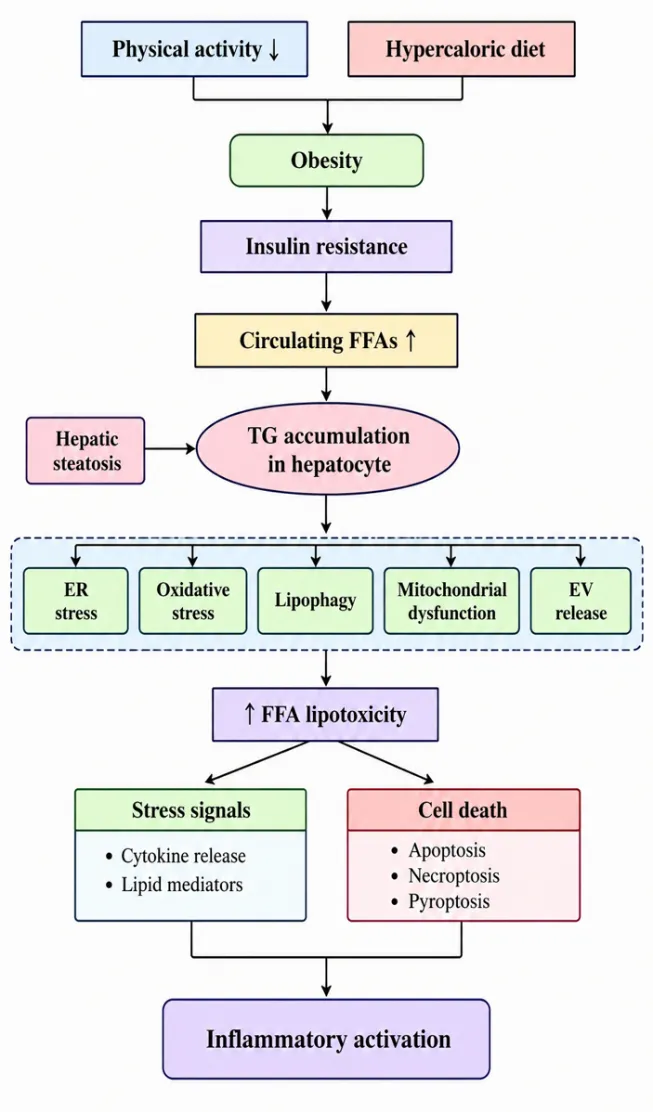
Figure 1: Pathophysiology of MASLD
PRECLINICAL MODELS OF MASLD
High fat diet (HFD)[5-11]
A high-fat diet (HFD) for 8 weeks ~60% fat (often using lard or beef tallow), ~20% protein, and ~20% carbohydrate, to induce metabolic dysfunction-associated steatotic liver disease (MASLD).
Advantages: HFD is a simple and practical dietary model for inducing diet-related obesity and hepatic steatosis. It effectively produces fat accumulation in the liver, along with hyperlipidaemia and biochemical evidence of liver injury.
Disadvantages: HFD alone may not consistently reproduce the complete spectrum of human MASLD, particularly advanced inflammation and fibrosis. Disease severity can also depend on the fat content, diet composition and duration of feeding. Thus, longer or combined dietary models may be required when advanced MASLD features are the objective.
High fat-high sucrose/fructose diet (HFHSD)[12-18]
High-Fat Diet (Solid component): Provides roughly 40% to 60% of total calories from fat (frequently utilising saturated fats like lard or butter), 15% to 20% protein, and 20% to 35% carbohydrate.
High-Sucrose / High-Fructose Supplement: Administered as 10% to 30% w/v sucrose or fructose dissolved in drinking water, or incorporated directly into a custom pelleted diet formulation, ensuring simple sugars comprise a major fraction of total caloric intake.
Advantages: Mimics human diets, produces stronger steatosis, reproduces multiple metabolic features together, extendable to inflammation/fibrosis signatures (NASH-like) with longer duration or added liquid sugar, no genetic manipulation required.
Disadvantages: Limited histological severity, time- and resource-intensive, Poor standardization across studies, Sex-dependent variability, confounded by obesity itself.
Methionine-Choline Deficient (MCD) diet [19-27]
Methionine-Choline Deficient (MCD) Diet for 4 to 10 weeks 40% carbohydrates, usually around 10% fat; protein source: Amino acid-defined base lacking methionine and choline.
Advantages: Rapidly induces hepatic steatosis, inflammation and liver injury within 4–10 weeks. Produces prominent oxidative stress, hepatocyte damage and fibrotic changes. Simple, relatively inexpensive and easy to administer. Useful for studying MASH/NASH pathology and screening hepatoprotective/antifibrotic agents.
Disadvantages: Causes marked body-weight loss and malnutrition. Fails to reproduce important MASLD features such as obesity, systemic insulin resistance and dyslipidaemia. Produces low glucose, insulin, triglycerides and cholesterol, which differs from typical metabolic disease. Therefore, it has limited translational relevance for metabolic aspects of human MASLD.
High-Fat + High-Cholesterol (HFHC) diet [28-30]
High-Fat + High-Cholesterol (HFHC) diet for 9 to 24weeks 65% of calories from fat, 1% cholesterol and 0.25% cholate.
Advantages: Produces marked hepatic steatosis, inflammation and hepatocyte ballooning, promotes rapid and significant fibrosis compared with HFD alone, Useful for studying cholesterol-induced lipotoxicity, inflammation and fibrogenesis, Suitable for evaluating hepatoprotective and anti-fibrotic agents.
Disadvantages: Diet composition is not standardized between studies, added cholic acid can independently influence liver injury and confound results, May not adequately reproduce obesity, insulin resistance and metabolic syndrome seen in human MASLD, very high cholesterol/cholic acid levels can cause non-physiological, excessively severe liver injury.
Western diet [31-36]
Western diet for 16 to 24 weeks typically contains high fat + high refined carbohydrates/fructose, often with cholesterol. Common rat formulations may contain approximately 16–40% fat, 40–45% carbohydrate (often fructose/sucrose), and 1–2% cholesterol.
Advantages: More closely mimics human dietary patterns associated with MASLD than nutrient-deficient models. Can induce obesity, insulin resistance and hepatic steatosis. Promotes hepatic inflammation and, in some formulations, fibrosis, resembling progression of human MASLD/MASH. Useful for studying the combined effects of dietary fat, fructose and cholesterol on metabolic dysfunction and liver injury.
Disadvantages: No standardized composition; fat, fructose, sugar and cholesterol levels vary considerably between studies. Usually requires a longer feeding period to develop advanced steatohepatitis/fibrosis. Disease severity varies with rat strain, diet composition and duration, reducing reproducibility. Some Western-diet formulations produce steatosis and inflammation without significant fibrosis, limiting their use for advanced MASLD studies.
Genetic models [37-39]
Genetic models use naturally occurring or engineered mutations affecting metabolic pathways rather than a specific disease-inducing diet. Common rat models include Zucker fatty (fa/fa), OLETF, SHRSP5/Dmcr, WBN/Kob and SREBP-1a transgenic rats.
Advantages: Reproduces important metabolic abnormalities such as obesity, insulin resistance, hyperinsulinemia and dyslipidaemia. Disease develops spontaneously, avoiding chemical toxicity or nutrient-deficient diets. Useful for studying the role of specific genes and metabolic pathways in MASLD development. Provides a useful model for investigating the relationship between metabolic syndrome and hepatic steatosis.
Disadvantages: Slow disease progression, particularly for advanced steatohepatitis and fibrosis. Many genetic models do not spontaneously progress from steatosis to significant fibrosis. A single mutation may not represent the complex, polygenic nature of human MASLD. Genetically modified rats can be expensive and less readily available than conventional diet-induced models.
Genetic + Diet Models [3]
Genetic + Diet Models combines a genetically susceptible rat strain with a disease-promoting diet. The genetic susceptibility provides the metabolic background, while the diet accelerates hepatic steatosis, inflammation and fibrosis.
Advantages: Produces rapid and progressive MASLD/MASH-like pathology. Better reproduces the interaction between genetic susceptibility and environmental/dietary factors. Can produce advanced fibrosis and cirrhosis within a relatively short period. Useful for studying metabolic dysfunction, inflammation, fibrogenesis and disease progression.
Disadvantages: Genetic background is strain-specific, which may limit generalization to humans. Requires specialized/less commonly available rat strains, increasing cost and complexity. Diet composition and genetic susceptibility can both influence disease severity, making standardization difficult. The combination may produce more severe or accelerated disease than the usual human MASLD progression.
Chemical Models [40-42]
Chemical Models use hepatotoxic or metabolic chemicals to induce liver injury and steatosis. Common agents include streptozotocin (STZ), carbon tetrachloride (CCl₄), thioacetamide (TAA) and tetracycline.
Advantages: Rapid induction of liver injury, inflammation and fibrosis. Produces consistent and severe hepatic damage. Useful for studying fibrosis, oxidative stress and inflammatory pathways. Suitable for rapid screening of hepatoprotective and antifibrotic drugs.
Disadvantages: Poorly mimics the natural metabolic origin of human MASLD. CCl₄/TAA-induced fibrosis is primarily toxin-mediated, rather than metabolically driven. May cause weight loss and systemic toxicity instead of obesity and insulin resistance. Therefore, limited translational relevance when used alone; combination with dietary models is often preferred.
Chemical + Diet Models [43-45]
Chemical + Diet Models combines a metabolic diet such as HFD/Western diet with a low dose of a chemical inducer. The diet promotes steatosis/metabolic dysfunction, while the chemical accelerates inflammation, hepatocyte injury and fibrosis.
Advantages: Produces faster and more severe MASLD/MASH-like liver injury than diet alone. Can reproduce steatosis + inflammation + fibrosis in a relatively short period. HFD + STZ provides metabolic dysfunction/insulin resistance with hepatic steatosis. Useful for studying oxidative stress, inflammation and fibrogenesis and for screening hepatoprotective/antifibrotic agents.
Disadvantages: Chemical toxicity may produce non-physiological liver injury. CCl₄/STZ dose and timing strongly influence disease severity and reproducibility. CCl₄-induced fibrosis does not itself reproduce the metabolic origin of human MASLD. Chemical administration increases experimental complexity and potential systemic toxicity.
Composite Models [35]
Composite models combine two or more disease-promoting factors, usually high-fat + high-fructose/sucrose + high-cholesterol, sometimes with an additional chemical or genetic component. A commonly used dietary combination is approximately 40% fat + 20% fructose + 2% cholesterol; exact composition varies between studies.
Advantages: Better reproduces the multifactorial nature of human MASLD by combining dietary risk factors. Can produce steatosis, metabolic dysfunction, inflammation and fibrosis. Useful for studying progression from steatosis → MASH → fibrosis. More closely resembles human dietary/environmental risk factors than deficiency or toxin-based models.
Disadvantages: No standardized composition, making comparison between studies difficult. Usually requires a longer induction period to develop advanced fibrosis. Disease severity varies with rat strain, fat source, fructose/sugar and cholesterol concentration. Multiple dietary factors make it difficult to determine which component is responsible for a particular effect.
Novel NAFLD + Skin Inflammation Model [46]
Novel NAFLD + Skin Inflammation model High-fat diet (HFD): 60% kcal from fat + high-fructose liquid (HFL): 40% kcal in drinking water to induce metabolic syndrome/NAFLD. Oxazolone: 1% for skin sensitization followed by repeated 0.5% topical challenge to induce skin inflammation.
Advantages: Mimics the association between metabolic syndrome/NAFLD and chronic skin inflammation. Produces obesity, hyperglycaemia, hyperinsulinemia and hepatic steatosis. Demonstrates enhanced NF-κB activation and inflammatory response in NAFLD-associated skin inflammation. Useful for studying liver–skin inflammatory crosstalk and evaluating therapeutic interventions.
Disadvantages: Developed in mice, not rats, limiting direct application to rat MASLD studies. Oxazolone produces an experimentally induced skin inflammation, which does not completely reproduce human psoriasis. Requires multiple disease-inducing components, increasing experimental complexity. Primarily designed to study NAFLD–skin inflammation interaction, rather than progression to advanced liver fibrosis/cirrhosis.
Chronic Unpredictable Stress (CUS) [47]
Chronic Unpredictable Stress (CUS) model animals are exposed to random, unpredictable stressors such as restraint, food/water deprivation, altered light–dark cycle, wet bedding, temperature stress, swimming or mild electric shock.
Advantages: Represents chronic psychological stress, an emerging risk factor associated with MASLD. Can induce hepatic steatosis, oxidative stress and inflammation without relying exclusively on hepatotoxic chemicals. CUS + HFD can produce more severe NAFLD than either factor alone. Useful for studying stress–liver interactions, glucocorticoid signalling and inflammatory pathways.
Disadvantages: Stress protocol is not standardized; the type, intensity and sequence of stressors vary between studies. Results can be influenced by handling, housing conditions and individual stress susceptibility. CUS alone may not reproduce the major metabolic features of MASLD such as obesity and insulin resistance. More suitable for investigating stress-related mechanisms than for reproducing the complete metabolic pathogenesis of human MASLD.
CUS + High-Sucrose diet [48-49]
High-Sucrose intake: 30% sucrose solution in drinking water, with standard chow. Chronic Unpredictable/Chronic Restraint Stress: repeated restraint stress, typically 1 h/day, 5 days/week. The combination promotes hepatic steatosis, oxidative stress, inflammation and fibrosis.
Advantages: Combines dietary metabolic stress and chronic psychological stress, reflecting multiple risk factors for NAFLD/MASLD. Produces hepatic steatosis, oxidative stress, inflammation and fibrosis-related changes. Useful for studying stress–liver interactions and glucocorticoid-related mechanisms. Relatively simple and does not require hepatotoxic chemicals.
Disadvantages: Stress protocols are difficult to standardise, which may affect reproducibility. High-sucrose intake alone may produce steatosis but does not consistently reproduce obesity and insulin resistance. Stress can alter food intake, body weight and hormonal levels, potentially confounding results. Evidence for this specific CUS + high-sucrose combination in rats is limited, compared with conventional HFD/HFHC models.
SIGNIFICANCE OF PRECLINICAL MODELS OF MASLD
1. Understanding disease pathogenesis: Models help investigate mechanisms involved in hepatic lipid accumulation, insulin resistance, oxidative stress, inflammation and fibrosis, which collectively drive MASLD progression.[3]
2. Mimicking different stages of MASLD: Different models can reproduce specific stages such as steatosis, MASH/NASH, fibrosis, cirrhosis and HCC, allowing stage-specific research.[50]
3. Evaluation of potential drugs and herbal treatments: Preclinical models provide a controlled platform to evaluate efficacy, dose-response and possible toxicity of candidate drugs or plant extracts before clinical studies. The literature identifies animal models as important tools for therapeutic development and drug discovery.[3]
4. Investigation of metabolic risk factors: Diet-induced models can reproduce important human risk factors such as obesity, insulin resistance, hyperlipidaemia and excessive dietary fat/sugar intake, making them useful for studying metabolically driven MASLD.[3]
5. Study of molecular mechanisms and therapeutic targets: Genetic and chemically induced models allow researchers to investigate specific metabolic, inflammatory, oxidative and fibro genic pathways involved in disease development.[3]
6. Assessment of biomarkers and biochemical changes: Preclinical models permit repeated and controlled assessment of ALT, AST, lipid profile, glucose/insulin, oxidative-stress markers, inflammatory mediators and histopathology, helping identify potential biomarkers of disease and treatment response.[50]
7. Controlled experimental conditions: Factors such as diet composition, dose, duration, genetic background and environmental conditions can be controlled, allowing researchers to determine cause–effect relationships that are difficult to establish in humans.[3]
8. Translational research: Appropriate models help bridge the gap between basic mechanistic findings and clinical development. However, no single model reproduces the complete human MASLD spectrum, so model selection must be based on the specific research question.[3]
9. Comparison of therapeutic strategies: Different models can be selected according to the desired endpoint—for example, HFD for early steatosis, cholesterol/fructose-containing diets for metabolic injury, and combination/toxin models for accelerated fibrosis.[51]
SUMMARY OF PRECLINICAL MODELS OF MASLD WITH REPORTED BIOMARKERS
|
Model Type |
Duration |
Treatment/Diet |
Assessed Parameters |
No. of Articles presented |
||
|
High-Fat Diet (HFD) |
3–16 weeks |
High-fat diet |
Body weight, liver weight, lipid profile (TG, TC), ALT, AST, glucose, NAFLD activity score (NAS) |
5-11 |
||
|
HFD + Fructose/Sucrose |
4–16 weeks |
High fat + fructose/sucrose |
Body weight, TG, TC, glucose, ALT, AST, NAS, fibrosis assessment |
12-18 |
||
|
Methionine-Choline Deficient (MCD) Diet |
4–10 weeks |
MCD/CDAA diet |
ALT, AST, TG, TC, severe NAS, fibrosis assessment (minimal effect on body weight, glucose) |
19-27 |
||
|
High-Fat + High-Cholesterol (HFHC) |
9–24 weeks |
High fat + cholesterol |
Lipid profile (TG, TC), ALT, AST, liver weight, NAS, fibrosis score |
28-30 |
||
|
Western Diet Model |
16–24 weeks |
Fat + fructose + cholesterol |
Body weight, glucose, lipid profile, ALT, AST, NAS, fibrosis assessment |
31-36 |
||
|
Genetic models |
12-40 weeks |
(ob/ob), (db/db), (foz/foz) |
Body weight, glucose, TG, TC, ALT, AST, NAS, fibrosis |
37-39 |
||
|
Genetic + Diet Models |
6–14 weeks |
Genetic mutation + HFD |
Body weight, glucose, TG, TC, ALT, AST, NAS |
3 |
||
|
Chemical Models |
4–16 weeks |
CCl₄, STZ, DEN, TAA |
|
40-42 |
||
|
Chemical + Diet Models (CCl₄/STZ) |
8–16 weeks |
HFD + chemical |
ALT, AST, TG, TC, liver weight, fibrosis assessment, NAS |
43-45 |
||
|
Composite Models |
Short duration |
Western diet + additional factors (genetic, chemical or dietary) |
Body weight, lipid profile, ALT, AST, glucose, advanced fibrosis scoring, NAS |
35 |
||
|
Novel NAFLD + Skin Inflammation Model |
8–12 weeks |
HFD + fructose + inducer |
Body weight, glucose, TG, TC, ALT, AST, inflammatory markers, NAS |
46 |
||
|
Chronic Unpredictable Stress (CUS) |
8–12 weeks |
Exposure to multiple stressors (restraint stress, electric shock, environmental stress) |
Body weight, liver weight, TG, TC, ALT, AST, glucose, NAS, fibrosis assessment, inflammatory markers (IL-6, TNF-α), oxidative stress (MDA, SOD) |
47
|
||
|
CUS + High-Sucrose Diet |
8 weeks |
Chronic stress + high sucrose diet |
Body weight, glucose, TG, TC, ALT, AST, liver fat accumulation, NAS |
48-49
|
CONCLUSION
MASLD is a multifactorial disease driven by the interplay of metabolic, genetic, and environmental factors, and no single preclinical rodent model can fully capture its entire spectrum, from simple steatosis to steatohepatitis, fibrosis, and hepatocellular carcinoma. Diet-induced models (HFD, HFHS/fructose, MCD, HFHC, Western diet) most closely reproduce the metabolic drivers of human disease, particularly obesity, dyslipidaemia, and insulin resistance, but often require extended feeding durations to achieve advanced fibrotic changes. Genetic models offer mechanistic insight into specific molecular pathways but may not reflect the typical metabolic context of human MASLD. Chemical models (STZ, CCl₄, TAA, tetracycline) enable rapid and reproducible induction of hepatocellular injury and fibrosis, though they bypass the natural metabolic progression of the disease. Combined models — integrating dietary, genetic, chemical, and stress-based approaches — most effectively mimic the multifactorial pathogenesis of human MASLD and are increasingly valuable for studying disease progression and evaluating hepatoprotective or therapeutic interventions. Ultimately, model selection should be guided by the specific research objective, whether that is studying early metabolic dysfunction, advanced fibrosis, or the interaction of stress and metabolic factors, since a well-matched model is essential for generating clinically translatable findings in MASLD research. Future research directions should shift towards translating these experimental research works into clinical applications that have the potential to better manage MASLD/NAFLD patients’ conditions.
REFERENCES


M. Tejasree, Jorige Archana, Preclinical Models of Metabolic Dysfunction Associated Steatotic Liver Disease (MASLD): Merits and Translational Constraints, Int. J. of Pharm. Sci., 2026, Vol 4, Issue 9, 2093-2105, https://doi.org/10.5281/zenodo.22816089
 10.5281/zenodo.22816089