

We use cookies to ensure our website works properly and to personalise your experience. Cookies policy
Department of Pharmaceutics, Shri Sant Gajanan Maharaj College of Pharmacy (SSGMCOP), Buldhana, Maharashtra, India
Solid lipid nanoparticles (SLNs) are advanced lipid-based nanocarriers that have gained significant attention for enhancing the delivery of poorly water-soluble drugs. They consist of a solid lipid core stabilized by surfactants and offer advantages such as improved solubility, enhanced bioavailability, controlled drug release, and protection of drugs from degradation. SLNs combine the benefits of other nanoparticulate systems while being biocompatible, biodegradable, and suitable for large-scale production. This review summarizes the composition, preparation methods, characterization techniques, advantages, limitations, and pharmaceutical applications of SLNs. Common preparation methods include hot and cold homogenization, microemulsion, and ultrasonication, while characterization involves particle size analysis, zeta potential, morphology, entrapment efficiency, and in-vitro drug release studies.Numerous studies have demonstrated that SLNs improve the therapeutic efficacy of drugs used in oral, topical, ocular, and targeted delivery systems. Overall, SLNs represent a promising and versatile platform for enhanced drug delivery, with strong potential for future development and clinical application.
Drug delivery systems play a crucial role in modern pharmaceutical sciences by ensuring that therapeutic agents are delivered to the desired site of action at an appropriate rate and concentration. The primary objective of any drug delivery system is to achieve maximum therapeutic efficacy while minimizing adverse effects and improving patient compliance. Conventional dosage forms such as tablets, capsules, injections, and topical preparations are widely used; however, many drugs suffer from poor aqueous solubility, low bioavailability, rapid metabolism, instability in biological environments, and the need for frequent dosing. These limitations often lead to inconsistent therapeutic outcomes and reduced patient adherence to treatment.
To overcome these challenges, Novel Drug Delivery Systems (NDDS) have been developed to improve the pharmacokinetic and pharmacodynamic performance of drugs. NDDS are designed to enhance solubility, protect drugs from degradation, provide controlled and sustained release, and enable site-specific or targeted delivery. Such systems help reduce dosing frequency, minimize side effects, and improve overall therapeutic effectiveness. Examples of NDDS include liposomes, niosomes, polymeric nanoparticles, nanoemulsions, dendrimers, and lipid-based nanoparticles.
Nanotechnology has revolutionized pharmaceutical formulation by enabling the design of carrier systems in the nanometer size range. Nanoparticles possess a large surface area, improved dissolution characteristics, and the ability to cross biological barriers more effectively than conventional systems. These properties make them highly suitable for delivering poorly soluble and unstable drugs. Nanotechnology-based formulations have been extensively investigated for oral, topical, transdermal, ocular, pulmonary, and targeted drug delivery applications.
Among various nanocarrier systems, lipid-based carriers have gained particular attention because of their excellent biocompatibility, biodegradability, and low toxicity. Lipids are physiologically accepted materials capable of incorporating lipophilic as well as certain hydrophilic drugs. Lipid-based carriers also protect drugs from chemical degradation and can provide controlled release. Major lipid-based delivery systems include liposomes, solid lipid nanoparticles (SLNs), nanostructured lipid carriers (NLCs), and self-emulsifying systems.
Solid lipid nanoparticles represent one of the most promising lipid-based nanocarriers for enhanced drug delivery. They combine the advantages of polymeric nanoparticles, emulsions, and liposomes while overcoming many of their limitations. SLNs consist of a solid lipid core stabilized by surfactants and are capable of improving drug solubility, bioavailability, stability, and controlled release. Owing to these unique properties, SLNs have emerged as a versatile and effective platform for the delivery of a wide range of therapeutic agents.
Solid Lipid Nanoparticles (SLNs)
Solid lipid nanoparticles (SLNs) are submicron-sized colloidal carriers composed of physiologically acceptable solid lipids stabilized by one or more surfactants. The particle size of SLNs generally ranges from 50 to 1000 nm. In these systems, the drug is incorporated within a solid lipid matrix that remains solid at both room and body temperatures. SLNs were developed to combine the advantages of polymeric nanoparticles, liposomes, and emulsions while minimizing their limitations, such as toxicity, instability, and the use of organic solvents. Because of their lipidic composition and nanoscale size, SLNs offer improved solubility, enhanced bioavailability, protection of drugs from degradation, and controlled or sustained drug release.
The concept of SLNs was first introduced in the early 1990s by Müller and co-workers as an alternative to polymeric nanoparticles. Since then, SLNs have attracted considerable attention in pharmaceutical research because they are prepared using biocompatible and biodegradable lipids that are generally recognized as safe. Over the past three decades, significant advancements have been made in formulation strategies, manufacturing methods, surface modification, and targeted delivery applications, making SLNs one of the most extensively studied lipid-based nanocarrier systems.
The basic structure of SLNs consists of a solid lipid core surrounded by a stabilizing surfactant layer. The solid lipid core may be composed of triglycerides, fatty acids, waxes, or glyceride mixtures such as stearic acid, glyceryl monostearate, tristearin, and cetyl palmitate. This core acts as a reservoir for the incorporated drug and controls its release. The outer surfactant layer, formed by agents such as Tween 80, Span 60, and Poloxamer 188, reduces interfacial tension and prevents aggregation of nanoparticles, thereby enhancing physical stability and uniform dispersion.
Drug incorporation into SLNs can occur through three principal models. In the homogeneous matrix model, the drug is uniformly distributed throughout the lipid matrix, resulting in sustained and controlled release. In the drug-enriched shell model, the drug is concentrated near the outer shell of the nanoparticle, often leading to an initial burst release followed by slower diffusion. In the drug-enriched core model, the drug is concentrated in the central core and surrounded by a lipid shell, providing prolonged release and better protection from external conditions. The mechanism of incorporation depends on factors such as drug solubility in the lipid, preparation method, cooling rate, and lipid crystallization behavior.
Due to their unique structural characteristics and versatile drug incorporation patterns, SLNs have emerged as a highly effective and adaptable platform for improving the delivery of a wide variety of therapeutic agents through oral, topical, transdermal, ocular, pulmonary, and targeted drug delivery routes.
Materials Used in SLN Formulation
Materials Used
|
Sr. No. |
Material |
Category |
Supplier |
|
1 |
Ibuprofen |
Active Pharmaceutical Ingredient (API) |
Yarrow Chem Products, Mumbai |
|
2 |
Tristearin / Stearic acid / Glyceryl monostearate |
Lipid |
Loba Chemie Pvt. Ltd., Mumbai |
|
3 |
Beeswax / Carnauba wax |
Lipid |
SD Fine Chemicals Ltd., Mumbai |
|
4 |
Tween 80 (Polysorbate 80) |
Surfactant |
Loba Chemie Pvt. Ltd., Mumbai |
|
5 |
Span 60 |
Co-surfactant |
HiMedia Laboratories Pvt. Ltd., Mumbai |
|
6 |
Poloxamer 188 |
Surfactant |
BASF India Ltd. |
|
7 |
Distilled Water |
Aqueous Phase |
Prepared in laboratory |
|
8 |
Ethanol / Methanol |
Solvent |
Merck Specialities Pvt. Ltd., India |
|
9 |
Phosphate Buffer (pH 6.8 / 7.4) |
Dissolution Medium |
Prepared in laboratory |
|
10 |
Hydrochloric Acid (0.1N HCl) |
Dissolution Medium |
Loba Chemie Pvt. Ltd., Mumbai |
|
11 |
Carbopol 934 / HPMC |
Polymer |
Loba Chemie/ Colorcon Asia Pvt. Ltd. |
|
12 |
Triethanolamine |
Neutralizer |
SD Fine Chemicals Ltd., Mumbai |
|
13 |
Preservatives (Methyl paraben) |
Additive |
Loba Chemie Pvt. Ltd., Mumbai |
Equipment and Instruments Used
|
Sr. No. |
Equipment |
Use in Practical Work |
|
1 |
Analytical Balance |
Accurate weighing of drug and excipients |
|
2 |
Magnetic Stirrer with Hot Plate |
Mixing and heating during formulation |
|
3 |
High-Speed Homogenizer |
Reduction of particle size |
|
4 |
Ultrasonicator |
Further size reduction and dispersion |
|
5 |
High-Pressure Homogenizer (if available) |
Preparation of SLNs at large scale |
|
6 |
UV–Visible Spectrophotometer |
Drug analysis and release studies |
|
7 |
FTIR Spectrophotometer |
Drug–excipient compatibility studies |
|
8 |
Differential Scanning Calorimeter (DSC) |
Thermal analysis |
|
9 |
Particle Size Analyzer (DLS) |
Measurement of particle size and PDI |
|
10 |
Zeta Potential Analyzer |
Determination of surface charge |
|
11 |
Scanning Electron Microscope (SEM) |
Morphological analysis |
|
12 |
Transmission Electron Microscope (TEM) |
Detailed nanoparticle imaging |
|
13 |
pH Meter |
Measurement of pH of formulation |
|
14 |
Centrifuge |
Separation of nanoparticles for analysis |
|
15 |
Dissolution Apparatus (USP Type II) |
In-vitro drug release studies |
|
16 |
Brookfield Viscometer (if gel) |
Measurement of viscosity |
|
17 |
Glassware (beakers, flasks, pipettes) |
Routine laboratory work |
Drug Profile of Ibuprofen
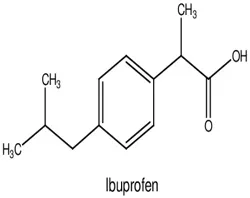
Ibuprofen is a widely used nonsteroidal anti-inflammatory drug (NSAID) belonging to the propionic acid derivative class. It is chemically known as (RS)-2-(4-(2-methylpropyl)phenyl) propanoic acid and has the molecular formula C₁₃H₁₈O₂ with a molecular weight of 206.28 g/mol. Ibuprofen is a white to off-white crystalline powder that is practically odorless and exhibits a melting point of 75–78°C. It is practically insoluble in water but readily soluble in organic solvents such as ethanol, methanol, acetone, and chloroform. The drug has a pKa of approximately 4.9 and a log P value of about 3.5, indicating its lipophilic nature. According to the Biopharmaceutics Classification System (BCS), ibuprofen is classified as a Class II drug, characterized by low aqueous solubility and high intestinal permeability.
Ibuprofen exerts its therapeutic action by reversibly inhibiting cyclooxygenase (COX-1 and COX-2) enzymes, thereby suppressing the synthesis of prostaglandins responsible for pain, inflammation, and fever. Owing to this mechanism, it possesses potent analgesic, anti-inflammatory, and antipyretic properties and is extensively used in the treatment of rheumatoid arthritis, osteoarthritis, ankylosing spondylitis, dysmenorrhea, musculoskeletal disorders, dental pain, postoperative pain, migraine, and mild to moderate fever. Following oral administration, ibuprofen is rapidly absorbed from the gastrointestinal tract, with an oral bioavailability of approximately 80–100%. It is highly bound to plasma proteins (about 99%) and undergoes extensive hepatic metabolism, primarily through the CYP2C9 enzyme, producing inactive metabolites that are mainly eliminated via the kidneys. The elimination half-life of ibuprofen is approximately 2 hours, necessitating multiple daily doses for sustained therapeutic effects.
Despite its excellent pharmacological efficacy, the poor aqueous solubility of ibuprofen limits its dissolution rate, which can affect the onset and consistency of drug absorption. Furthermore, conventional oral formulations may cause gastrointestinal irritation, ulceration, and bleeding, particularly during long-term therapy. To overcome these limitations, advanced drug delivery systems such as solid lipid nanoparticles (SLNs) have gained considerable attention. SLNs can enhance the solubility, dissolution rate, stability, and bioavailability of ibuprofen while providing controlled drug release and reducing gastrointestinal adverse effects. These advantages make ibuprofen an ideal candidate for lipid-based nanoparticulate drug delivery systems aimed at improving therapeutic efficacy and patient compliance.
METHODOLOGY
1. Procurement of Materials
All required materials, including ibuprofen, solid lipids, surfactants, solvents, and other excipients, were procured from authenticated pharmaceutical suppliers. The materials were verified using their Certificates of Analysis (CoA) and stored under recommended conditions to maintain quality and stability.
2. Preformulation Studies
Preformulation studies were performed to determine the physicochemical properties of ibuprofen and its compatibility with selected excipients. The studies included:
3. Preparation of Solid Lipid Nanoparticles (SLNs)
Ibuprofen-loaded SLNs were prepared using the optimized hot homogenization followed by ultrasonication technique. Suitable lipids and surfactants were selected based on drug solubility and compatibility studies. The molten lipid phase containing the drug was emulsified with the aqueous surfactant phase and subsequently homogenized and sonicated to obtain nanosized particles.
4. Formulation Development and Optimization
Different formulation batches were prepared by varying lipid concentration, surfactant concentration, and processing parameters. The formulations were optimized based on particle size, polydispersity index, zeta potential, entrapment efficiency, and drug release characteristics.
5. Characterization of Solid Lipid Nanoparticles
The optimized SLN formulation was characterized for its physicochemical properties using standard analytical techniques, including:
6. Incorporation into Final Dosage Form
The optimized SLN dispersion was incorporated into a suitable pharmaceutical dosage form to improve patient acceptability and therapeutic performance. Uniform mixing was carried out to ensure homogeneous distribution of nanoparticles throughout the formulation.
7. Evaluation of SLN-Loaded Formulation
The final formulation was evaluated for its pharmaceutical quality by determining:
8. Stability Study
The optimized formulation was subjected to stability studies under recommended storage conditions. Samples were periodically evaluated for changes in physical appearance, particle size, drug content, entrapment efficiency, pH, and drug release profile to assess formulation stability over time.
RESULTS AND DISCUSSION
Preformulation Study
Organoleptic Properties
Table 1: Organoleptic Properties of Drug (Ibuprofen)
|
Parameter |
Observation |
|
Color |
White to off-white |
|
Odor |
Odorless or faint characteristic odor |
|
Appearance |
Crystalline powder |
|
Nature of Drug |
Fine, free-flowing powder |
Solubility Studies
Table 2 : Solubility of Drug (Ibuprofen) in Different Solvents and Lipids
|
Solvent / Lipid |
Solubility |
|
Distilled Water |
Practically insoluble |
|
Methanol |
Freely soluble |
|
Ethanol |
Freely soluble |
|
Phosphate Buffer (pH 6.8) |
Slightly soluble |
|
0.1N HCl |
Very slightly soluble |
|
Stearic Acid |
Soluble |
|
Glyceryl Monostearate |
Moderately soluble |
Melting Point
Table 3: Observed and Reported Melting Point of Ibuprofen
|
Parameter |
Value (°C) |
|
Observed Melting Point |
74 – 76°C |
|
Reported Melting Point |
75 – 77°C |
Drug–Excipient Compatibility Studies

Figure 1: FTIR Spectra of Ibuprofen
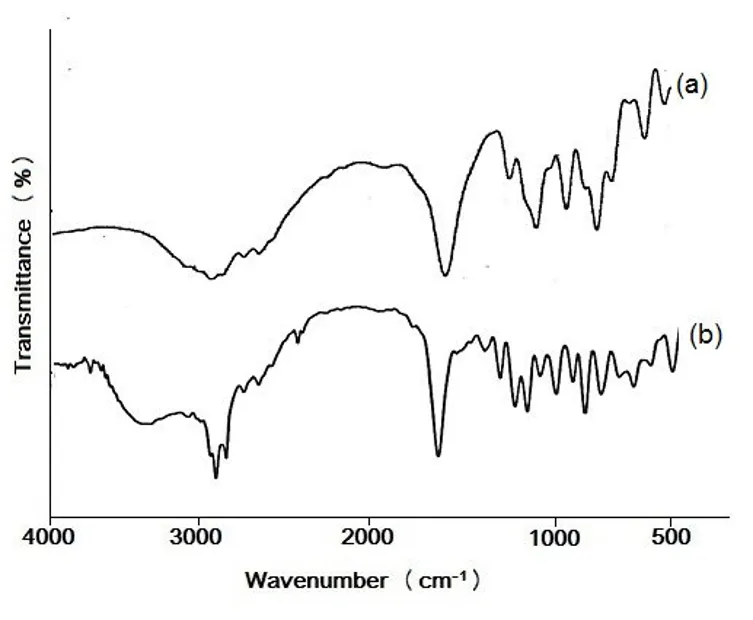
Figure 2: FTIR Spectra of drug Excipient
The FTIR spectrum of pure Ibuprofen showed characteristic peaks corresponding to its functional groups, such as:
The FTIR spectra of excipients exhibited their respective characteristic peaks. The spectrum of the physical mixture showed all major peaks of the drug without any significant shift, disappearance, or formation of new peaks.
DSC
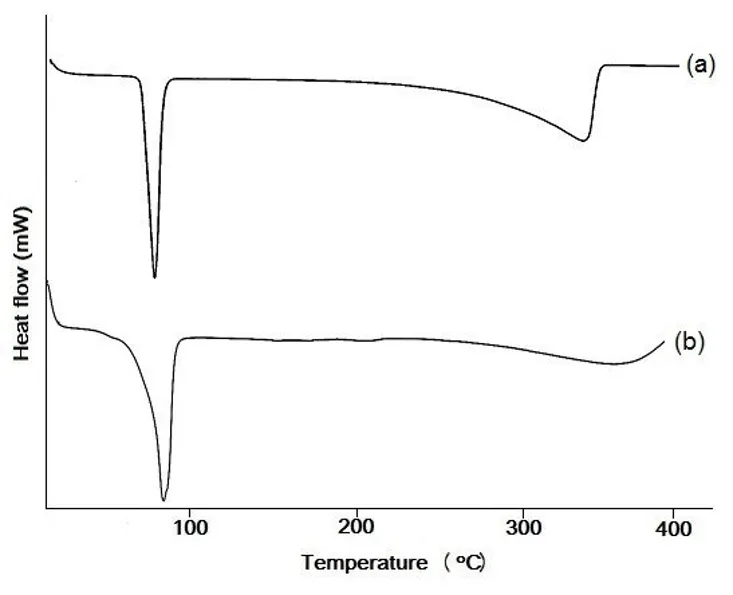
Figure 6.3: DSC thermogram of pure drug and physical mixture
Melting Peak Comparison
The DSC thermogram of pure Ibuprofen showed a sharp endothermic peak at around ~75–77°C, corresponding to its melting point. The physical mixture also exhibited a similar peak with slight variation in intensity but without significant shift.
Formulation Table
Table 6.4: Composition of SLN Formulations (F1–F6)
|
Formulation |
Lipid (%) |
Surfactant (%) |
Process Parameter |
|
F1 |
2 |
1 |
10,000 rpm, 5 min |
|
F2 |
3 |
1 |
10,000 rpm, 5 min |
|
F3 |
4 |
1 |
10,000 rpm, 5 min |
|
F4 |
2 |
2 |
12,000 rpm, 10 min |
|
F5 |
3 |
2 |
12,000 rpm, 10 min |
|
F6 |
4 |
2 |
12,000 rpm, 10 min |
A series of SLN formulations (F1–F6) were prepared by varying the concentration of lipid and surfactant, along with process parameters such as homogenization speed and time. These variations were carried out to study their effect on particle size, stability, entrapment efficiency, and drug release profile, and to identify the optimized formulation.
Evaluation of SLNs
Particle Size and Polydispersity Index (PDI)
Table 5: Particle Size and PDI of SLN Formulations
|
Batch |
Particle Size (nm) |
PDI |
|
F1 |
210.5 |
0.412 |
|
F2 |
185.3 |
0.365 |
|
F3 |
162.7 |
0.298 |
|
F4 |
145.2 |
0.256 |
|
F5 |
132.6 |
0.221 |
|
F6 |
158.9 |
0.305 |
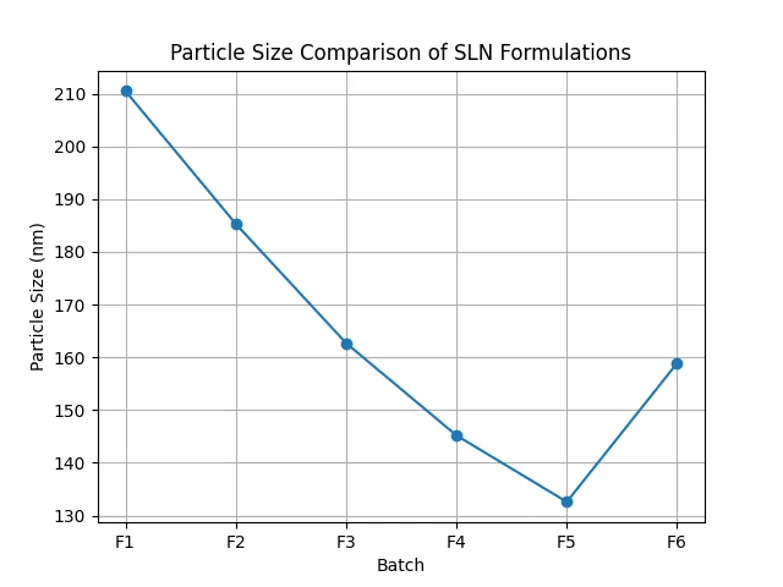
Figure 4: particle size comparison
The particle size analysis of SLN formulations revealed that the particle size ranged from 132.6 nm to 210.5 nm. Among all batches, formulation F5 exhibited the smallest particle size, while F1 showed the largest size.
Zeta Potential
Table 6: Zeta Potential Values of SLN Formulations
|
Batch |
Zeta Potential (mV) |
|
F1 |
-18.5 |
|
F2 |
-22.3 |
|
F3 |
-27.6 |
|
F4 |
-31.2 |
|
F5 |
-34.8 |
|
F6 |
-29.1 |
Morphological Analysis


Figure 5 : Morphological Analysis
Drug Content
Table 7: Drug Content of SLN Formulations
|
Batch |
Drug Content (%) |
|
F1 |
91.2 |
|
F2 |
93.5 |
|
F3 |
95.1 |
|
F4 |
96.8 |
|
F5 |
98.2 |
|
F6 |
94.6 |
The drug content of the prepared SLN formulations was found to be in the range of 91.2% to 98.2%. Among all the batches, formulation F5 exhibited the highest drug content, indicating efficient incorporation of the drug within the lipid matrix.
In-vitro Drug Release Study
Dissolution Data
Table 8: In-vitro Drug Release Data (% Cumulative Drug Release)
|
Time (hr) |
F1 (%) |
F2 (%) |
F3 (%) |
F4 (%) |
F5 (%) |
|
0 |
0 |
0 |
0 |
0 |
0 |
|
1 |
18.2 |
15.6 |
12.4 |
10.2 |
8.5 |
|
2 |
32.5 |
28.3 |
24.1 |
20.6 |
18.2 |
|
4 |
48.6 |
44.2 |
39.8 |
35.7 |
31.4 |
|
6 |
62.3 |
58.7 |
54.2 |
49.6 |
45.8 |
|
8 |
75.4 |
71.8 |
68.3 |
63.5 |
59.2 |
|
10 |
86.2 |
83.5 |
80.1 |
76.4 |
72.8 |
|
12 |
94.5 |
92.8 |
90.6 |
88.2 |
85.7 |
The in-vitro drug release study showed that all SLN formulations exhibited a controlled release pattern over a period of 12 hours. Formulation F1 showed the fastest drug release, indicating lower lipid concentration, while F5 exhibited the slowest release, suggesting higher lipid content and stronger matrix formation.
Among all formulations, F4 and F5 demonstrated a more sustained release profile, indicating their suitability for controlled drug delivery. The variation in drug release among formulations confirms the influence of lipid and surfactant concentration on the release behavior.
Drug Release Profile
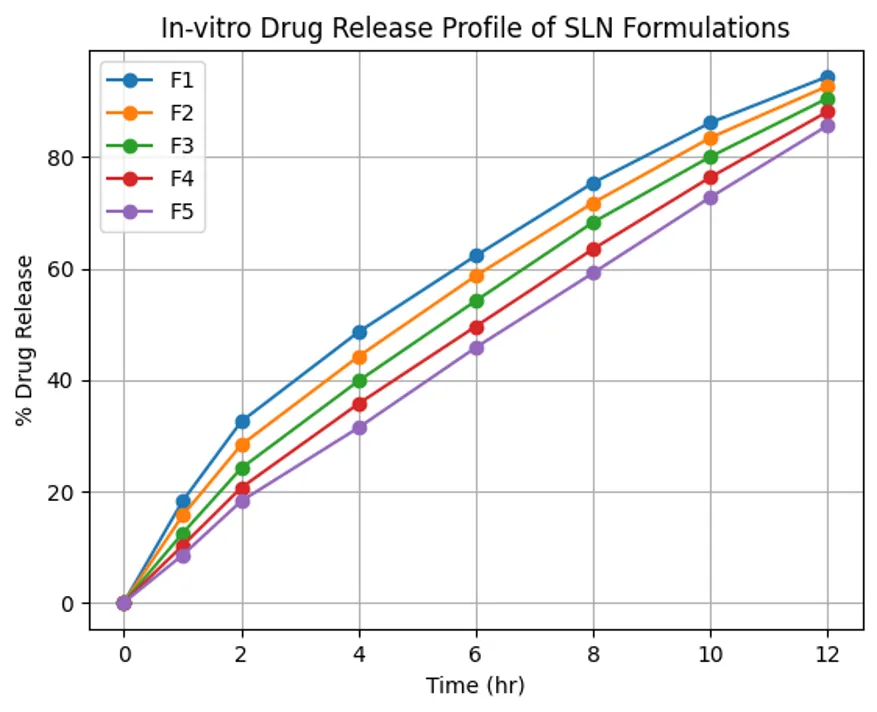
Figure 5: In Vitro drug release profile
The in-vitro drug release profiles of all SLN formulations (F1–F5) demonstrated a controlled release pattern over a period of 12 hours. It was observed that formulation F1 showed the fastest drug release, which may be attributed to lower lipid concentration and weaker matrix structure.
As the lipid concentration increased from F1 to F5, the drug release rate gradually decreased, indicating a more sustained release behavior due to the formation of a stronger lipid matrix. Formulations F4 and F5 exhibited a comparatively slower and more controlled release profile, suggesting better drug retention within the lipid core.
Among all formulations, F4 showed an optimal balance between initial release and sustained drug delivery, while F5 exhibited a slower release that may delay therapeutic action. Therefore, formulation F4 was selected as the optimized batch based on its controlled release profile, suitable drug release rate, and overall performance.
Drug Release Kinetics
Table 9: R² Values for Drug Release Kinetic Models (Optimized Batch F4)
|
Model |
R² Value |
|
Zero Order |
0.921 |
|
First Order |
0.964 |
|
Higuchi |
0.978 |
|
Korsmeyer–Peppas |
0.989 |
The in-vitro drug release data of the optimized formulation (F4) were fitted into different kinetic models to understand the mechanism of drug release. Among all models, the Korsmeyer–Peppas model showed the highest R² value (0.989), indicating the best fit.
The high correlation with the Korsmeyer–Peppas model suggests that the drug release follows a diffusion-controlled mechanism, which may involve both diffusion and erosion of the lipid matrix (non-Fickian or anomalous transport).
The Higuchi model also showed a high R² value, indicating that drug release is largely governed by diffusion from the lipid matrix.
Optimization of formulation
All prepared SLN formulations were compared on the basis of particle size, PDI, zeta potential, drug content, entrapment efficiency, and in-vitro drug release profile. The purpose of optimization was to select the formulation showing small particle size, uniform size distribution, good stability, high drug loading, and controlled drug release.
Table 10: Optimization Parameters of SLN Formulations
|
Batch |
Particle Size (nm) |
PDI |
Zeta Potential (mV) |
Drug Content (%) |
Drug Release at 12 hr (%) |
|
F1 |
210.5 |
0.412 |
-18.5 |
91.2 |
94.5 |
|
F2 |
185.3 |
0.365 |
-22.3 |
93.5 |
92.8 |
|
F3 |
162.7 |
0.298 |
-27.6 |
95.1 |
90.6 |
|
F4 |
145.2 |
0.256 |
-31.2 |
96.8 |
88.2 |
|
F5 |
132.6 |
0.221 |
-34.8 |
98.2 |
85.7 |
|
F6 |
158.9 |
0.305 |
-29.1 |
94.6 |
— |
Among all formulations, F1 and F2 showed comparatively larger particle size and higher PDI values, indicating less uniformity and lower physical stability. F3 showed improvement in particle size and PDI, but its zeta potential was slightly below the desired stability range.
Formulations F4 and F5 showed better results with smaller particle size, lower PDI, and good negative zeta potential. F5 showed the smallest particle size and highest drug content; however, its drug release was comparatively slower. F4 showed an optimum balance between particle size, stability, drug content, and controlled release.
Therefore, formulation F4 was selected as the optimized formulation because it showed desirable particle size, narrow size distribution, adequate zeta potential, good drug content, and sustained drug release up to 12 hours.
REFERENCES


Rupali Tayde, S. G. Dhanmane, Dr. Vijay Borkar, Solid Lipid Nanoparticles (SLNs): A Promising Approach for Enhanced Drug Delivery, Int. J. of Pharm. Sci., 2026, Vol 4, Issue 7, 5000-5013. https://doi.org/10.5281/zenodo.21586375
 10.5281/zenodo.21586375