

We use cookies to ensure our website works properly and to personalise your experience. Cookies policy
Department of Pharmaceutical Chemistry, College of Pharmaceutical Sciences, Government Medical College, Thiruvananthapuram-695011, Kerala, India.
Quinazolinones represent an essential class of fused heterocyclic scaffolds in medicinal chemistry with their wide spectrum of pharmacological profiles. Among these, styryl quinazolinones, characterized by the incorporation of a styryl moiety primarily at the C-2 position, have significant properties and biological activities. This structural modification extends the conjugated pi-system, thereby enhancing the electronic parameters and also improving the lipophilic profile and binding interactions within diverse biological targets. This review provides different biological activities of the styryl group incorporated quinazolinone ring system that opens a new way to develop different derivatives with better activities in the biological system, highlighting their potential as anti-cancer, anti-microbial, and anti-protozoal therapeutic agents.
Heterocyclic ring systems include diverse molecules, which have various activities in biological systems. Quinazoline is one of the best compounds in heterocyclic chemistry, and it also possesses different types of biological activities. The benzene ring fused with a pyrimidine ring system also exhibits beneficial actions such as anticancer, anti-inflammatory, and antibacterial effects.
Quinazolinones are oxidized quinazolines, which also improve the properties of the quinazolinone ring system. The quinazoline or quinazolinone forms of the scaffold are also present as various derivatives in different plants, so these molecules are excessively available as natural compounds or phytochemical derivatives. Thus, the quinazoline scaffold is one of the most available molecules in drug discovery and development. Plant-based derivatives and their modifications to develop new drugs also provide a safer profile.
The incorporation of a styryl moiety into the quinazolinone framework also improves molecular activity in a different way. The substitution of different groups is also possible with the styryl structure, which opens the way to develop diverse scaffolds with improved activities and attracts considerable attention for their interesting biological activity and pharmacological properties as anticancer, anticonvulsant, sedative-hypnotic, antibacterial, and antifungal agents.[1] The styryl group is a monovalent functional group in organic chemistry derived from styrene, structurally represented as C6H5-CH2=CH-R. It consists of a phenyl ring attached to an ethenyl (vinyl) side chain. This structure extends conjugation, which enhances resonance, improves chemical stability, and increases lipophilicity. [2] The styryl group is widely represented in medicinally important compounds, including drugs, clinical candidates, and molecular probes, as it positively impacts the lipophilicity, oral absorption, and biological activity. It occurs widely among pharmaceuticals, agrochemicals, fluorophores, polymers, dyes, and materials. It is one of the most frequently encountered functionalities in biologically active organic compounds. [2]
This review provides a comprehensive overview of styryl quinazolinones, focusing on their pharmacological actions as anticancer, antibacterial, and antiprotozoal agents.
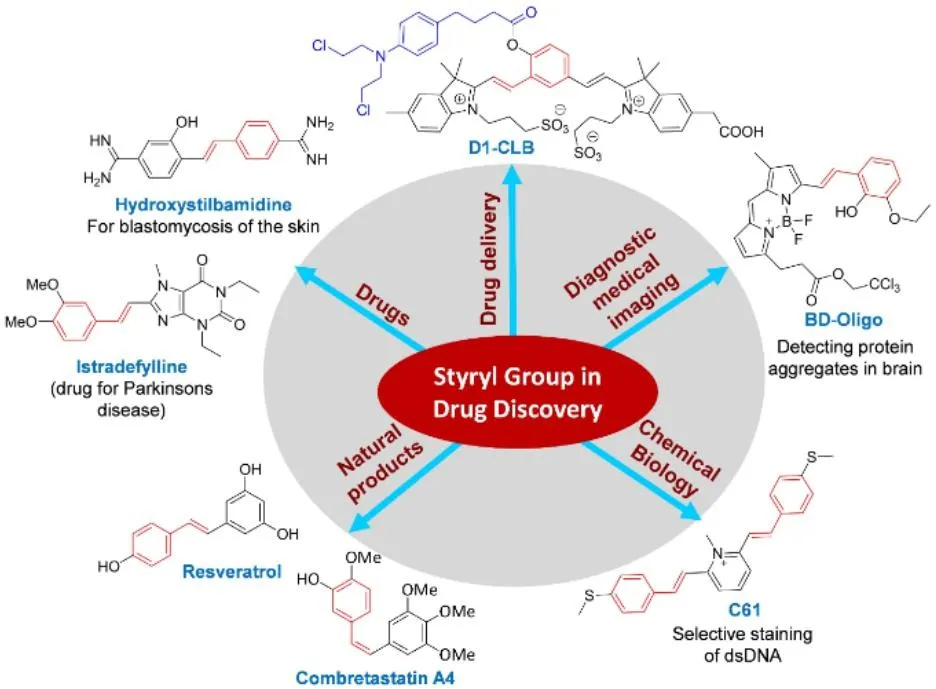
Figure 1: Occurrences of Styryl Functionality (Marked in Red) in Small Molecules That Finds Applications in Various Facets of Drug Discovery.[2]
2. BIOLOGICAL ACTIVITY OF STYRYL QUINAZOLINONE
Quinazolinone, the nitrogen-containing compound, an oxidized derivative of quinazoline, is one of the building blocks of approximately 150 quinazolinone-based alkaloids that have been isolated from diverse sources across the kingdoms of plants, animals, and micro-organisms.[3]
Both natural and synthetic quinazolinones have considerable interest in organic and medicinal chemistry owing to their diverse pharmacological properties, including antimalarial, antimicrobial, antifungal, antiviral, anti-inflammatory, antitubercular, antidepressant, anticonvulsant, herbicidal, anticancer, antidiabetic, sedative, analgesic, and antitussive activities.[4]
2.1. Styryl Quinazoline as Antioxidant, Cytotoxic and Anticancer activities.
Same as quinazoline and quinazolinone derivatives, the Styryl quinazolinone analogues represent a highly promising class of heterocyclic scaffolds for cancer chemotherapeutics, exhibiting diverse anti-tumor and other pharmacological properties. [4] Biological screenings of different functionalized styryl derivatives have demonstrated notable anticancer activities against solid tumors and hematological malignancies. Mechanistically, these compounds act through a complex mode of action. In which fluorinated 2-styryl-4 (3H)-quinazolinones have been identified as exceptional therapeutic hits for oral cancers, specifically oral squamous cell carcinoma (OSCC); they successfully block the cell transition from the G1 to the S phase, induce apoptosis pathways (such as TNF signaling through NF-kB and p53 pathways), prompt cell differentiation, and suppress cellular growth via KRAS signaling inhibition. In hematological cancers like acute myeloid leukemia (AML), styryl quinazolinones serve as potent anti-leukemic agents and senescence inducers by upregulating the expression of the tumor suppressor transcription factor CCAAT/enhancer-binding protein α (C/EBPα),
effectively driving granulocytic and myeloid differentiation in leukemic cells (such as HL-60 cells). Additionally, the wider class of quinazoline-based entities actively achieves anticancer outcomes through the targeted inhibition of critical protein pathways, including topoisomerase, lysine methyltransferase, tyrosine kinases, vascular endothelial growth factor receptor-2 (VEGFR-2), poly (ADP-ribose) polymerase-1 (PARP-1), and tubulin polymerization.
2.1.1. Anticancer Efficacy against Oral Cancer:
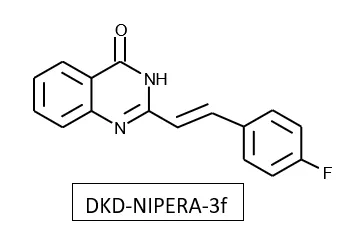
Identification of fluorinated 2-styryl 4 (3H)-quinazolinone [DKD-NIPERA-3f [(E)-2-(4-fluorostyryl)quinazolin-4 (3H)-one]]as a potential hit for oral squamous cell carcinoma (OSCC) that halts cell cycles at the G1/S phase, promotes apoptosis via p53 and TNF pathways, and suppresses KRAS cell-growth signals. The compound exhibited selective cytotoxicity toward CAL-27 and SCC-131 oral cancer cells with IC50 values of approximately 12–13 µM, while showing lower toxicity toward normal oral epithelial cells, indicating selective anticancer potential. The activity increased with longer exposure time, suggesting time-dependent inhibition of cancer cell growth. In colony formation and wound healing assays, the compound markedly reduced cancer cell proliferation and migration, confirming both antiproliferative and anti-migratory properties. Flow cytometric analysis revealed that styryl quinazolinone induced G1/S phase cell cycle arrest by blocking the transition from the G1 phase to the S phase, thereby preventing DNA synthesis and cell division in cancer cells. RNA-sequencing analysis further showed activation of apoptosis-related pathways such as TNF/NF-κB and p53 signaling, while suppressing cellular growth pathways, including KRAS signaling and cell cycle pathways. Additionally, computational ADME studies suggested favorable drug-like properties and metabolic stability, likely enhanced by the presence of the fluorine atom. Overall, the study identified fluorinated styryl quinazolinone derivatives as promising therapeutic candidates for oral cancer treatment. [5]
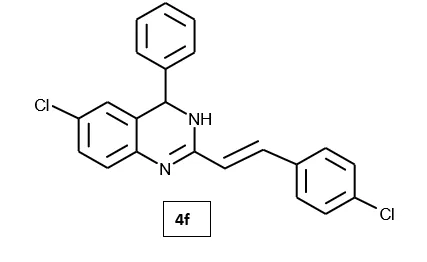
The biological evaluations of newly synthesized styryl derivatives confirmed distinct anticancer and anti-inflammatory activities through metal-free functionalization by Suresh S et.al.,. The synthesized functionalized styryl quinazoline and quinazolinone derivatives demonstrated favourable pharmacological properties, including strong protein denaturation inhibition, effective IL-1β cytokine suppression, and promising anticancer potential against human breast cancer cells (MDA-MB-231). Among the synthesized compounds, derivative 4f showed remarkable biological activity, exhibiting 64% anti-inflammatory inhibition in the egg albumin denaturation assay and strong IL-1β inhibition of 70.6%, while also displaying notable anticancer activity with an IC50 value of 346.8 ± 2.55 µg/mL against breast cancer cells. [5]
Molecular docking studies further revealed strong binding interactions of styryl quinazoline derivatives with anti-inflammatory and binding to estrogen receptor targets, indicating their therapeutic potential. In addition, DFT and TD-DFT studies established a correlation between electronic properties such as HOMO–LUMO energy gaps, electrophilicity, dipole moment, and biological activity, suggesting that these compounds possess favourable reactivity and stability for drug development. The study concludes that styryl quinazoline scaffolds represent promising lead molecules for the design of new anti-inflammatory and anticancer agents with potential pharmaceutical applications. [6]
Manhas et.al., reported the Compounds 125–127 contained a substituted styryl group at C-2. These compounds were active against Human renal (TK10) and Melanoma and Breast cancer (MCF-7) with IC50 values between 0.62–7.72μM. [7]
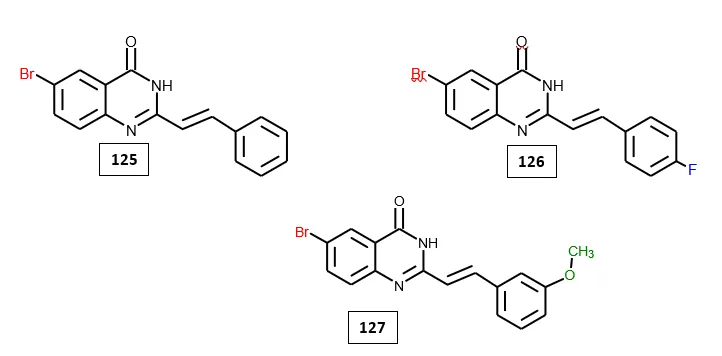
In which the bromine derivative of styryl quinazolinone increases the anticancer activity, but the phenyl or the F- phenyl substitution decreases the activity. And also the Fluorine as the R group at the para position, increases the anticancer activity and the methoxy group at the meta-position shows the highest potency against anticancer activity. [7]
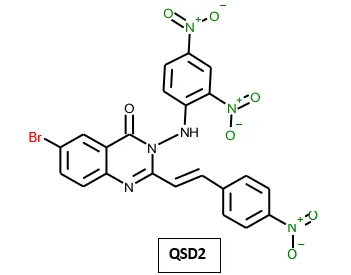
Kasimayan K et.al., evaluates the In vitro Antioxidant, Cytotoxicity Study on EAC Cell Line of Quinazolin-4 (3H)-one Derivatives in which one of the compound, the QSD2 representing
the styryl quinazolinone analogue, 2-(4-nitrosyl)3-(2,4-dinitro phenyl amino)quinazoline-4-one along with the significant molecules, the QSD2 also possess significant antioxidant activity with IC50 value of 2.77 μg/mL. [8]
Alkaoud et.al., develops a new compound containing sulfonamide and 4 (3H)-quinazolinone to inhibit the hCA-IIX enzyme using in silico methods by develops the styryl quinazolinone containing molecule has a good pharmacological nature and could potentially be an efficient drug against hCAIX enzymes. Human carbonic anhydrase (hCA) isoforms range from hCA-I to hCA-XV, representing sixteen different isoforms. These isoforms are related to many essential biological processes and are widely distributed throughout various organs and tissue types. Inhibitors of several isoforms of hCA have been used in medical applications to treat a range of diseases, including cancer, epilepsy, retinopathy, hemolytic anaemia, and osteoporosis.
[8]
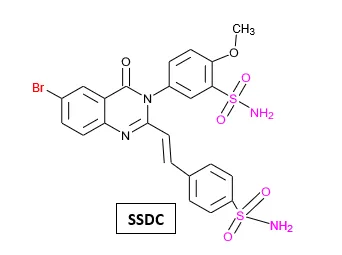
The studied compound proved superior inhibitory action against the human carbonic anhydrase II enzyme. The compound scored a binding energy in a molecular docking study by using a target protein 5FLA, which is stronger than other previous finds of comparable compounds against the same enzyme, and also than the standard drugs like Acetazolamide (AZA). [8]
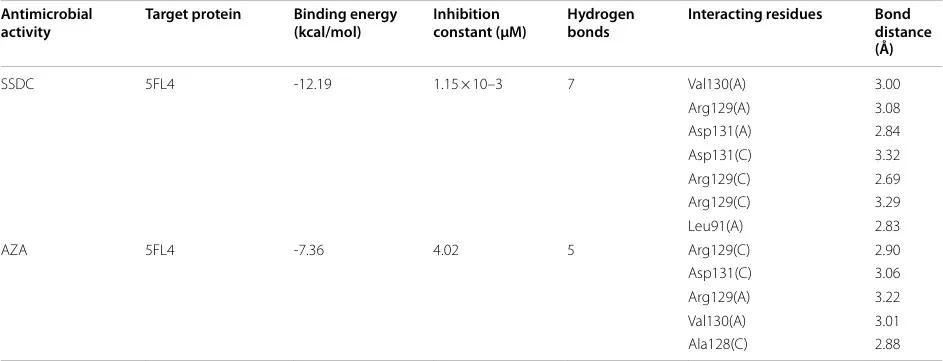
Table 1: Docking Results for SSDC and AZA with the Target Protein of Human Carbonic Anhydrase 5FL4.[8]
The docking results were assessed with regard to the binding energy, inhibition constant, and number of hydrogen bonds. These parameters are individually listed in Table 4. The docking results showed stable bonding interactions via seven strong hydrogen bonds and high binding energy compared to other pre-screened inhibitor. Therefore, the efficiency of the sulfonamide derivative of styryl quinazolinone molecule inhibiting the hCA IIX enzyme has been verified by this study, which could be used as a framework for further clinical studies. [9]
Haggag et al. designed twenty-nine novel quinazolinone derivatives evaluated by the National Cancer Institute (NCI) for cytotoxicity across 60 cancer cell lines and for their inhibitory effect on BLM-deconjugating enzymes.[10]The upregulation of RecQ helicases has been associated with cancer cell survival and resistance to chemotherapy, making them appealing targets for therapeutic intervention. RecQ helicases are a family of highly conserved ATP-dependent DNA helicases that play a crucial role in maintaining genomic integrity and DNA repair. RecQ helicases are involved in a variety of cellular processes, including DNA replication, recombination, repair, and transcription regulation. The overexpression of RecQ helicases has been implicated in cancer cell survival and resistance to chemotherapy, making them attractive therapeutic targets in certain cancer types. [11]
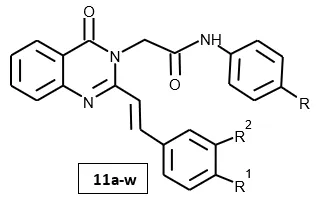
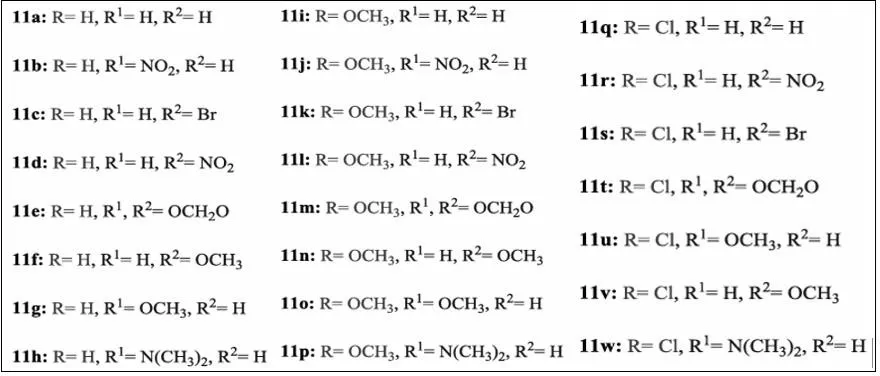
Table 2: Compounds 11A-W [11]
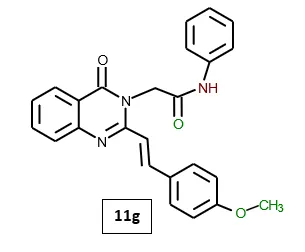
Compounds 11a-w in which 6 compounds showed superior cytotoxic activity , namely 11f, 11g, 11k, 11n, 11p, and 11q were selected for the 5-dose assay. Among them, compound 11g exhibited superior cytotoxic activity against most examined cell lines. 11g showed pan-inhibitory activity against all three RECQ helicases tested, in an ATP-competitive mechanism. 11g revealed its apoptotic activity in both HCT-116 and MDA-MB-231 cells. Compound 11g arrested the cell cycle of HCT-116 cells in the G2/M phase. Compound 11g was found to be safe on the normal colon FHC cells with a selectivity greater than 100. [11]
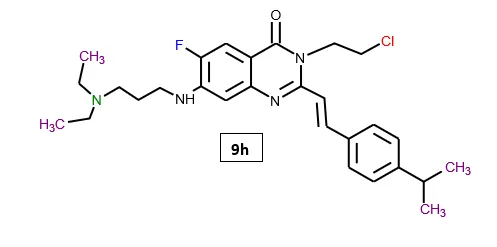
DNA damage response (DDR) pathways are crucial for the survival of cancer cells and are reactive targets for cancer therapy. Bloom syndrome protein (BLM) is a DNA helicase that performs important roles in DDR pathways. Chen-XiWang et.al., designed a series of new derivatives, synthesised, and evaluated. Among them compound 9h exhibited nanomolar inhibitory activity and binding affinity for BLM. 9h could effectively disrupt BLM recruitment to DNA in cells. Furthermore, 9h inhibited the proliferation of the colorectal cell line HCT116 by significantly trigger DNA damage in the telomer region and inducing apoptosis, especially in combination with a poly (ADP-ribose)polymerase (PARP) inhibitor.[12]
This result suggested a synthetic lethal effect between the BLM and PARP inhibitors in DDR pathways. 9h itself could induce cellular apoptosis and cause proliferation arrest. [12]
2.2. Styryl quinazolinone as antibacterial agent
The increase in antibiotic resistance and the emergence of superbugs has become a serious global public health crisis. The introduction of new antibacterial agents into clinical practice has been much slower than the spreading of antibiotic resistance, resulting in a large gap between the development of new antibiotics and medical needs. This growing occurrence of difficult-to-treat infectious disease has resulted in longer hospital days, higher medical expenses, and mortality rates. [13] Methicillin-resistant S. aureus (MRSA), one of the 12 deadliest pathogens listed by WHO, being resistant to all known β-lactam antibiotics is the major cause of both hospital and community-acquired infection globally and a chief cause of morbidity and mortality. It has been reported that some clinical MRSA strains have shown resistance to vancomycin, linezolid, and daptomycin. [14] The development of non β-lactam antibiotics are very important in this present crisis to overcome the antibiotic resistance.
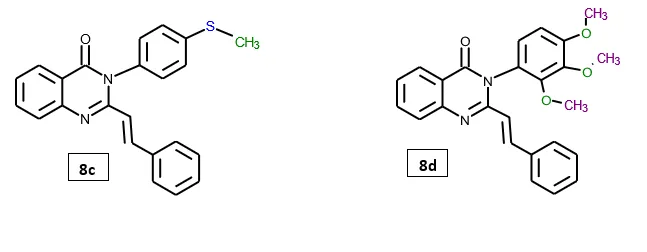
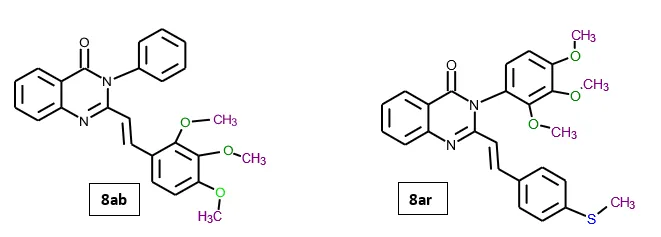
2-Styrylquinazolones are reported as a novel class of potent anti-mycobacterial agents. Pradeep S Jadavar et.al., has been synthesised Forty-six target compounds of 2-styrylquinazolone scaffold. The anti-mycobacterial potency of the compounds was determined against H37Rv strain. Twenty-six compounds exhibited anti-Mycobacterial activity in the range of 0.40–6.25 µg/mL. Three compounds 8c, 8d and 8ab showed MIC of 0.78 µg/mL and were found to be non-toxic . The most potent compound 8ar showed MIC of 0.40 g/mL with the therapeutic index >125. And also, the computational studies indicates the possibility of these compounds binding to the penicillin binding proteins (PBPs). [15]
In the face of the clinical challenge posed by resistant bacteria, the present needs for novel classes of antibiotics are genuine. Renee Bouley et.al., involved the In silico docking and screening of some compounds, followed by chemical synthesis of a library of quinazolinones, the compound 1 & compound 2, led to the discovery of better chemical molecule, (E)-3-(3-carboxyphenyl)-2 (4-cyanostyryl) quinazolin-4 (3H)-one (compound 2) as an antibiotic effective in vivo against methicillin-resistant Staphylococcus aureus (MRSA). [16]
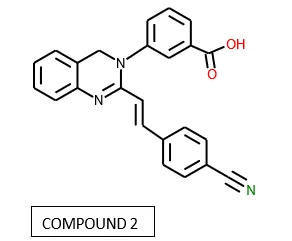
Antibiotic 2 had an IC50 of 63 ± 1 μg/mL, a value well above the concentration range that manifested the antibacterial activity. They showed that the antibiotic was not an alkylating agent, did not form glutathione adducts, and showed no hemolysis of red blood cells at 50μg/mL, indicating that the compound was not toxic at concentrations in which antibacterial activity was documented. They described the discovery of a new antibiotic that exhibits in vitro and in vivo activity against S. aureus, and its problematic kin MRSA and its resistant variants to other antibiotics. β-Lactam antibiotics are known inhibitors of PBPs, which are essential enzymes in cell-wall biosynthesis. Resistance to β-lactam antibiotics is widespread among pathogens, and in the case of MRSA, it encompasses essentially all commercially available drugs. [16]
Methicillin-resistant Staphylococcus aureus (MRSA) is one of the most widespread and virulent nosocomial pathogens. The Quinazolinone class of antibacterial is of particular importance; because they do not β-lactam ring but able to inhibit PBPs. This Quinazolinone class of antibacterial has mechanism of action similar to ceftaroline, first they bind non-covalently to allosteric site which then result in opening of active site and then another molecule of Quinazolinone bind to active site and cause cell wall inhibition. [17]
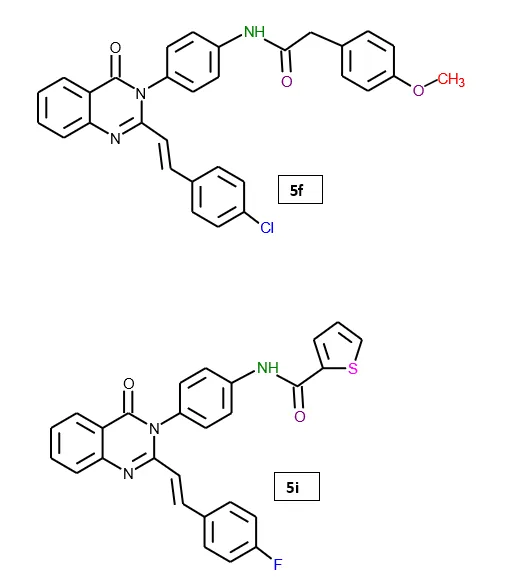
Shahnawaz I. Qureshi et.al., designed and developed Quinazolinone analogues including styryl quinazolinone derivatives effective against MRSA strains. Out of 26 designed ligands, 10 best
ranked ligands have been selected depend upon their docking, MM-GBSA, and ADME prediction which then considered for synthesis and followed by biological screening of anti-bacterial activity. Molecules were screened for biological activity against three bacterial strains namely E. coli, S. aureus, Methicillin resistant Staphylococcus aureus. All of these ligands show weak activity against gram negative organism E.Coli, while shows moderate to good activity against gram positive organism S.Aureus of which ligand 5f has shown most potent activity with MIC≥15.625μg/mL against S.Aureus. These ligands were also tested against resistant strain of S.Aureus i.e. MRSA, the ligand 5f and5i shows good activity with MIC≥31.25μg/mL. [17]
Lan Yang et.al., A series of novel (E)-2-(4-(1H-1,2,4-triazol 1-yl)styryl)-4-(alkyl/arylmethyleneoxy) quinazoline derivatives (4a–4s) were synthesized in good to excellent yields, and their structures were fully characterized by 1HNMR, 13C NMR, HRMS and IR spectra. The bioassay results indicated that compounds 4s, 4q and 4n inhibit phytopathogenic bacterium Xanthomonas axonopodis pv. citri (Xac) more potently than commercial bactericide Bismerthiazol.[18]
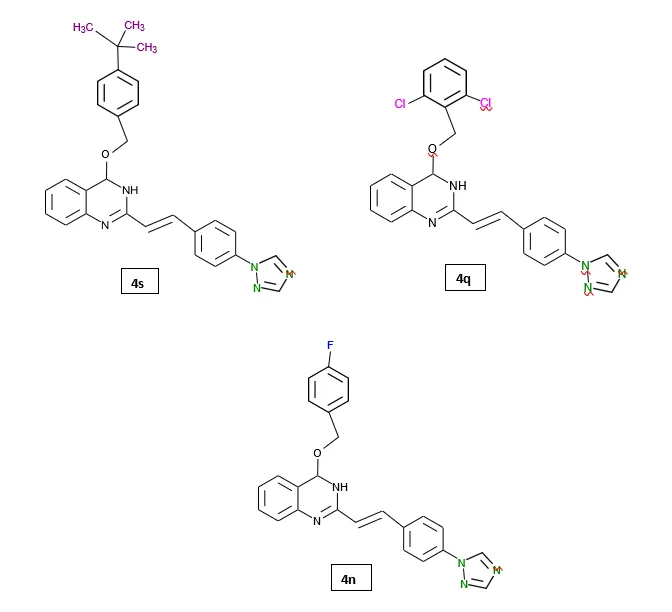
Compounds 4s, 4q, and 4n exhibited the EC50 values of 53.2, 67.7, and 70.7 µg/mL, respectively, which were significantly better than or similar to that of control BMT (87.7µg/mL). styryl linked 1,2,4 triazole ring in compounds in which 4s, 4q and 4n played an important role in the antibacterial activity against the pathogen Xac. [18]
2.3. Styryl quinazolinone as antiprotozoal agent
Girma Worku Seifu et.al., developed some 3-aryl-2-styryl substituted-4 (3H)-quinazolinone derivatives, the in vivo antimalarial and invitro antileishmanial activities of the synthesized compounds were investigated using mice infected with Plasmodium berghi ANKA and Leishmania donovani strain, respectively. In the case of antimalarial activities using a mouse model which is ideal to elucidate the prodrug effects of the target compounds triggered by metabolic activation and eradication of infection due to the potential involvement of the immune system. [19]
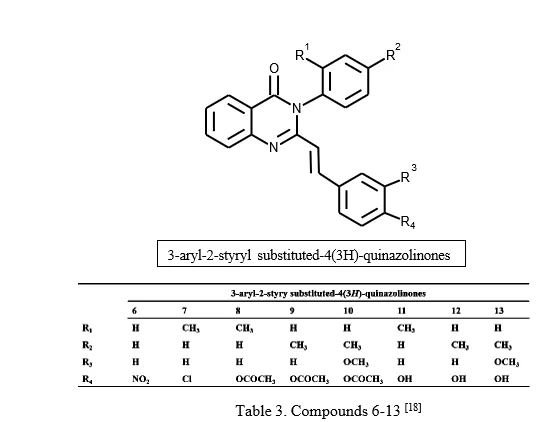
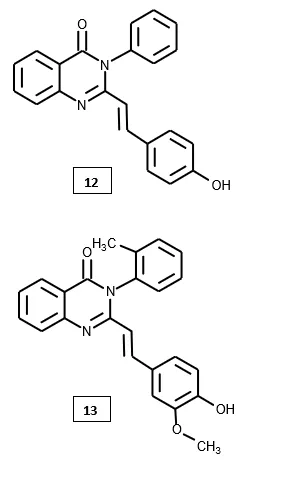
The test compounds, 8, 10, 11, 12, and 13 exhibited a mean percent suppression of greater than 50%, in which the Compounds 8 and 10 showed pronounced antimalarial activities with percent suppression of 70.01 and 74.18 respectively. [19]
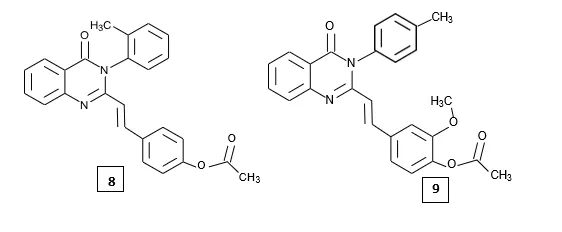
The mean parasitemia level of mice treated with 8 (19.57±0.77) and 10 (16.85±0.39) was found to be approximately four times lower than the negative control group (65.25±0.73) showing the compounds have greatly reduced the parasite load. The better antimalarial activities of these compounds (8 and 10) are supported by a relative increment in mean survival time of 9.4±0.37 and 9.8±0.24, respectively. The presence of acetyl groups at para-position compounds 8 and 10 might have played a potential role in their intestinal absorption and thereby improved antimalarial activities as compared to the deacetylated counterparts. The result suggested that compounds 8 and 10 might elicit their antimalarial activities as prodrugs, which can be activated through cleavage of the acetyl moieties by enzymes once absorbed into the systemic circulation of test mice. [20]
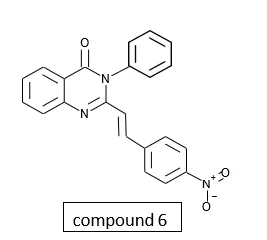
The anti-promastigote activities of the synthesized compounds and the existing antileishmanial drugs (miltefosine and amphotericin B deoxycholate) were assessed by the clinical isolate of the Leishmania donovani strain, which is known to cause VL worldwide. Synthesized compounds in which the compound 6 (IC50=0.021 µg/mL), compounds revealed lower inhibitory activities than the reference drug amphotericin B (IC50=0.046 µg/mL). Interestingly, (E)-2-(4-nitrostyryl)-3-phenylquinazolin-4 (3H)-one (6) is two times and 150 times more active than the standard drugs amphotericin B and miltefosine respectively. [21]
The presence of strong interactions such as hydrogen bonding between compound 6 and amino acid residues in the active site of the enzyme that is responsible for survival and replication of the Leishmania donovani strain may be implicated in the superior anti-promastigote activity. Moreover, the molecular simulation study revealed the presence of favorable interaction between compound 6 and the Lm-PTR1 active site, justifying its strong in vitro antileishmanial activity. Overall 3-aryl-2-styryl substituted-4 (3H)-quinazolinone derivatives may represent an appealing class of heterocyclic compounds for the development of a new class of antimalarial and antileishmanial agents. [21]
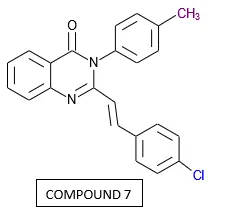
Yihenew Simegniew Birhan et.al., developed some 3-aryl-2-(substitutedstyryl)-4 (3H)-quinazolinones, and evaluated their antileishmanial activity by using clinical isolate of Leishmania donovani strain. Most of the synthesized compounds displayed better antileishmanial activities as compared to the standard drug miltefosine. Compound 7 (E)-2-(4-chlorostyryl)-3-p-tolyl-4 (3H)-quinazolinone) showed pronounced antileishmanial activities as compared to miltefosine and amphotericin B deoxycholate. Thus, 2,3-disubstituted-4 (3H)-quinazolinones containing an aromatic substitution at 3-position and substituted styryl moiety at 2-position represent a promising matrix for the development of antileishmanial agents. [22]
Yihenew Simegniew Birhan et.al., evaluated the in vivo antimalarial activities of some 2,3-disubstituted-4 (3H)-quinazolinone derivatives were investigated using the 4-day suppressive standard test in mice infected with chloroquine-sensitive Plasmodium berghei ANKA strain. The tested compounds showed significant antimalarial activities with mean percentage suppression of 43.71–72.86 % which is significantly higher than the negative control group (p < 0.05). [23] The in vivo model was employed for this study because it takes into account the possible pro-drug effects and possible involvements of immune system in eradication of infection. [24]
P. Berghei ANKA stain was used in the prediction of treatment outcomes [32] and hence it was an appropriate parasite for the study. The standard 4-day suppressive test, which mainly evaluates the antimalarial activity of candidate drugs on early infections is commonly used for antimalarial screening. All the tested compounds showed significant antimalarial activities as compared to the negative control group (p < 0.05). Better antimalarial activities were observed for compound 12 and 13 with mean percentage suppression of 72.86 and 67.60 % respectively. Thus, 2,3-disubstituted-4 (3H)-quinazolinine containing an aromatic substitution at 3-position and substituted styryl moiety at 2-position represent a possible scaffold for the development of new antimalarial agents. [25]
2.4. Antifungal activity of Styryl Quinazolinone
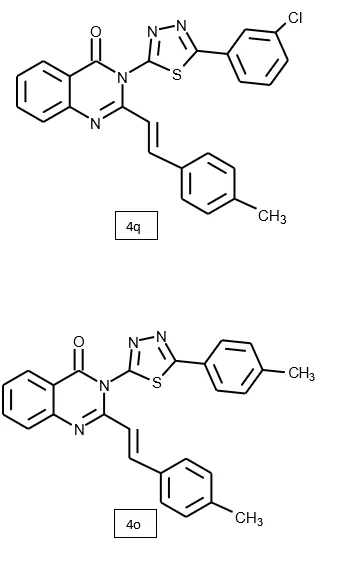
Varsha Jatav et.al., synthesized a series of novel 3-[5-substituted phenyl-1,3,4-thiadiazole-2-yl]-2-styryl quinazoline-4 (3H)-ones (4a-4r) and evaluated for antifungal activity against Aspergillus niger, Candida albicans and Fusarium oxysporum. Compounds were screened for antifungal activity against the listed fungi. Results indicated that higher concentrations of the compounds were required in order to inhibit fungal growth. The MIC range was 13 µg/mL to 17µg/mL for A. niger,17 µg/mL to 23 µg/mL for C. albicans, and 15 µg/mL to 20 µg/mL for F. oxysporum. The order of sensitivity was A. niger, then F. oxysporum, then C. albicans, from the most to the least sensitive.[27]
The MIC values of all the compounds were below 40 µg/mL, therefore the calculated percentage inhibition of the growth zone at 40 µg/mL for fungi. Percentage inhibition was calculated with reference to standard drug Clotrimazole.The molecule 4q posses MIC value
13.70 ±0.77 µg/mL on A.nigers (MTCC-1344), 17.07±1.09 µg/mL on C.albican (MTCC-227), and 4o possess 15.01±0.97 µg/mL on F.oxysporum (MTCC-), better activity than the other synthesized molecules.[27]
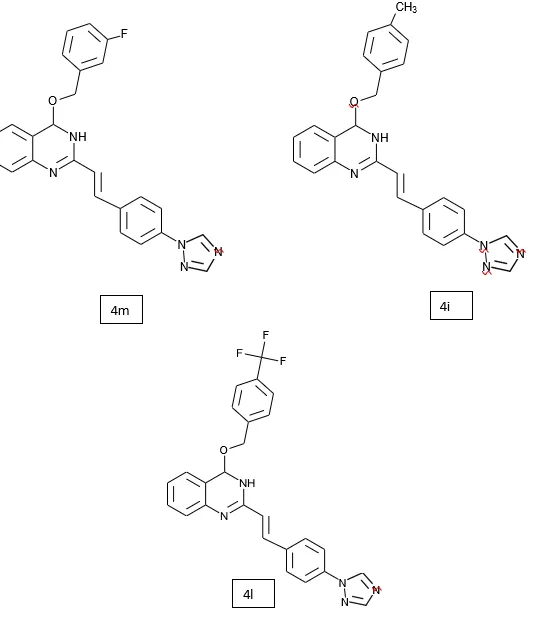
Lan Yang et.al., developed a series of novel (E)-2-(4-(1H-1,2,4-triazol 1-yl)styryl)-4-(alkyl/arylmethyleneoxy)quinazoline derivatives (4a–4s) were synthesized in good to excellent yields, and their inhibition activities against some selected phytopathogenic bacteria and fungi were evaluated in detail in vitro. Antifungal activities of compounds 4a–4s in-vitro were also evaluated against three phyto-pathogenic fungi (Fusariumoxysporum, Sclerotinia sclerotiorum and Verticillium dahliae), based on the method of mycelial growth rate. some of the target compounds exhibited modest inhibition activities against S. sclerotiorum at 50µg/mL, such as compounds 4b,4d,4n and 4r having an inhibition rate of>40%. However, weak or no inhibition activity was found for compounds 4a–4s against the other two fungi (F.oxysporum and V.dahliae) under the same experimental conditions.[28]
Mycelial growth rate method[29] was utilized to assess antifungal activities of target compounds against three phytopathogenic fungi, namely F. oxysporum, S. sclerotiorum and V. dahlia, using commercial agricultural fungicide (Hymexazol) as control agent. The 4m posses MIC value 16.0±4.8 µg/mL on F.oxysporum, 4i posses 16.3±4.2 µg/mL on V.dahliae, and 4l posses 7.0±1.0 µg/mL on S.sclerotiorum as better antifungal activity than others.[28]
CONCLUSION
The present review is related to the Styryl quinazolinones molecule, have emerged as a promising class of heterocyclic compounds with significant biological activities, including anticancer, antibacterial, antiprotozoal such as antimalarial, and antileishmanial effects. Numerous studies have demonstrated that styryl quinazolinone derivatives can inhibit cancer cell proliferation through multiple mechanisms, such as induction of apoptosis, cell-cycle arrest, and interference with key signaling pathways. Similarly, their antibacterial activity against both Gram-positive and Gram-negative pathogens highlights their potential as candidates for combating antimicrobial resistance.
In the field of protozoal diseases, styryl quinazolinones have shown encouraging antimalarial and antileishmanial activities, often exhibiting potent inhibitory effects against pathogenic parasites while maintaining acceptable selectivity toward host cells. The conjugated styryl moiety contributes to enhanced biological interactions, making these compounds attractive scaffolds for the development of novel therapeutic agents against neglected tropical diseases.
Overall, the broad-spectrum pharmacological profile of styryl quinazolinones underscores their importance in medicinal chemistry and drug discovery. Their ability to target diverse biological systems suggests that they may serve as valuable lead compounds for the development of next-generation therapeutics addressing both infectious diseases and cancer.
REFERENCES


Aneesha M. J., Meera Mohan, Dr. Aravind A., Styryl Quinazolinone as an Emerging Scaffold with Diverse Pharmacological Activities, Int. J. of Pharm. Sci., 2026, Vol 4, Issue 11, 1388-1400. https://doi.org/10.5281/zenodo.24004620
 10.5281/zenodo.24004620