

We use cookies to ensure our website works properly and to personalise your experience. Cookies policy
Department of Pharmacy, Vikas Group of Institutions, Nunna, Vijayawada, Andhra Pradesh -521212, India.
The blood-brain barrier (BBB) is a selective interface between the circulation and the central nervous system (CNS) that protects the brain but also limits the entry of most therapeutic agents, large biologics in particular. This focused narrative review summarises the organisation of the BBB as part of the neurovascular unit and describes the physiological routes of transport across it: passive diffusion, carrier-mediated transport, receptor-mediated transcytosis and active efflux by ABC transporters. It introduces the pharmacokinetic parameters and physicochemical properties that govern brain exposure of small molecules, outlines how the barrier changes with ageing and neurodegenerative disease, and compares four groups of delivery strategies: chemical and efflux-directed approaches, nanocarriers, receptor-mediated "Trojan horse" systems, and physical or alternative-route methods such as focused ultrasound and intranasal delivery. Recent review articles were complemented by landmark preclinical and early clinical studies, including a transferrin-receptor antibody shuttle, a transferrin-receptor-targeted enzyme approved in Japan, and focused-ultrasound studies in Alzheimer's disease. The evidence indicates that receptor-mediated transport and focused ultrasound have reached human testing, whereas nanocarriers still need preclinical validation; that no strategy is free of limitations; that standardised preclinical models and head-to-head comparisons are lacking; and that combination approaches guided by imaging and computational modelling are the most promising direction. The review also proposes a cargo-based framework for matching a delivery strategy to the molecule to be delivered. Because it rests on a deliberately limited set of sources, it is intended as a focused synthesis rather than an exhaustive survey. Understanding BBB physiology is the starting point for the rational design of CNS therapeutics.
Disorders of the brain, including Alzheimer's disease, Parkinson's disease, stroke and brain tumours, are among the hardest conditions to treat pharmacologically. A major reason is not the lack of effective molecules but the difficulty of delivering them to their site of action. The BBB restricts the passage of molecules larger than about 400-500 Da, and it has been estimated that only about 0.1% of a circulating monoclonal antibody (approximately 150 kDa) crosses it [1].
The BBB is therefore both a physiological safeguard and a central bottleneck in CNS drug development [2,3]. Therapies for neurological conditions such as Alzheimer's and Parkinson's disease are hampered by its presence [3]. Because delivery strategies are rational only when the structure and transport behaviour of the barrier are understood, this review moves from physiology towards technology: it first describes the barrier and its transport routes, then its changes in disease, and finally the strategies used to improve drug delivery, with a critical comparison of their strengths and limitations. The aim is a focused synthesis rather than an exhaustive survey, and its distinct contribution is a cargo-based framework for matching a delivery strategy to the molecule to be delivered (Section 6).
1.1 Search strategy and methodology
This is a narrative review. Literature was identified from PubMed/MEDLINE, PubMed Central and open-access publisher platforms using combinations of the terms "blood-brain barrier", "neurovascular unit", "efflux transporters", "receptor-mediated transcytosis", "nanoparticles", "focused ultrasound" and "CNS drug delivery". The first search gave priority to freely available, peer-reviewed review articles from 2021 to 2025, with one older paper retained for historical concepts [4].
Because review articles are secondary sources, a second, targeted search was carried out in October 2026 for landmark and clinically relevant primary studies. Search terms paired each strategy with its disease context (for example "focused ultrasound Alzheimer's disease", "transferrin receptor antibody brain delivery" and "CNS multiparameter optimisation"). Foundational papers on BBB structure and brain pharmacokinetics, pivotal clinical trials, and preclinical and clinical reports on receptor-mediated and ultrasound-based delivery were added. Bibliographic details of every source were checked against the PubMed or publisher record, and the sources are listed in the References.
Articles were included if they addressed BBB structure, transport physiology, brain pharmacokinetics or delivery strategies, appeared in a peer-reviewed journal and were written in English. Conference abstracts, non-peer-reviewed web pages and items that could not be verified in a bibliographic database were excluded. No formal systematic protocol was followed, so selection bias cannot be excluded. Quantitative statements taken from secondary reviews should be traced to the primary studies cited within them before being relied on.
1.2 Relevance to pharmaceutical science
The BBB is a practical example of how anatomy and physiology set the limits of pharmacology. Whether a drug acts in the brain depends not only on its affinity for a target but on whether it can reach it, which links the barrier to drug distribution, formulation design and the choice of delivery route [2,3]. The strategies reviewed here, from small-molecule design to nanocarriers and antibody shuttles, are therefore applications of pharmaceutical science to a physiological constraint.
2. Organisation of the BBB
The BBB is best understood not as a single wall but as part of a neurovascular unit (NVU), in which brain endothelial cells interact with surrounding cells to regulate exchange between the blood and the brain [2]. The endothelial cells are the principal site of restriction, and adjacent cells are joined by tight junctions that are a target for approaches designed to open the barrier [1].
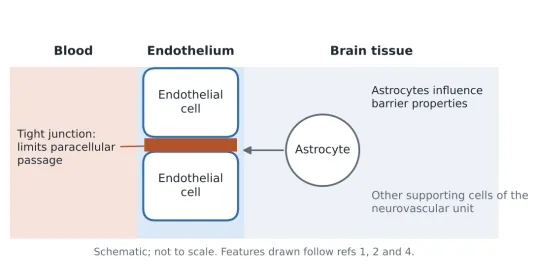
Figure 1: Schematic of the BBB as Part of the Neurovascular Unit. Endothelial Cells Are Joined by Tight Junctions, and Astrocytes Influence Barrier Properties [1,2,4]. Not to Scale.
2.1 A dynamic rather than rigid barrier
Early work treated the BBB as a purely physical barrier represented by the cerebrovascular endothelium. Later work showed that transport of drugs to the brain may also be limited by the metabolic activity of the barrier, that the BBB is better regarded as dynamic, that it can be influenced by astrocytes and probably by neuronal and hormonal stimuli, and that its properties are affected by diseases of the CNS [4]. This matters for drug delivery because it implies that barrier function can in principle be modulated, a point exploited by several strategies discussed in Section 5.
2.2 Implications of the neurovascular unit concept
Three practical points follow from this description. First, because the endothelium is the principal site of restriction [1], delivery strategies must either use its transport systems or temporarily alter it. Second, because tight junctions limit paracellular movement, they are a recognised target for approaches that open the barrier [1]. Third, because supporting cells influence the barrier [4], any disease that affects them may also change the properties of the barrier [4,7]. These points explain why the same barrier can behave differently in a healthy person and in a patient with neurodegenerative disease, a theme taken up in Section 4.
2.3 Cellular components of the neurovascular unit
The classical description of the BBB centres on the brain microvascular endothelium, which is the major site of blood-CNS exchange [9]. Endothelial tight junctions form the physical barrier, whereas membrane transporters and vesicular mechanisms form the transport barrier [9]. Associated cells, namely the end-feet of astrocytes, pericytes and microglia, contribute to the formation and regulation of these properties [9]. Table 1 summarises these components. For readers who wish to study the barrier in more depth, Sweeney et al. follow it from physiology to disease and back [10].
Table 1: Cellular and Structural Components of the BBB and Their Reported Roles
| Component | Role described in the sources | Refs |
|---|---|---|
| Brain microvascular endothelium | Major site of blood-CNS exchange; carries both the physical and the transport barrier | 9 |
| Tight junctions | Join adjacent endothelial cells and restrict paracellular passage; a target for barrier-opening approaches | 1, 9 |
| Membrane transporters and vesicular mechanisms | Form the transport barrier through which selected substrates enter or leave the brain | 9 |
| Astrocyte end-feet | Associated cells that influence barrier properties | 4, 9 |
| Pericytes | Associated cells outlined as part of the neurovascular unit | 9 |
| Microglia | Associated cells outlined as part of the neurovascular unit | 9 |
2.4 The BBB among the brain barriers
Three interfaces separate the blood from the CNS: the BBB, the blood-CSF barrier and the arachnoid barrier, of which the BBB at the level of the brain microvessel endothelium is the major site of exchange [9]. This explains why most delivery strategies reviewed here are aimed at the endothelium. The embryonic development of the BBB, and its short- and long-term regulation, are further features that may be disturbed in pathology [9]. Regulation of this kind is the biological basis for the idea, developed in Section 5, that barrier function can be modulated for therapeutic purposes.
3. Physiology of Transport Across the BBB
Whether a drug reaches the CNS depends on whether it can cross by passive diffusion or through carrier or receptor systems [4]. The main routes are summarised in Table 2 and illustrated in Figure 2.
Table 2: Principal Routes of Transport Across the BBB
| Route | Basic features | Relevance to drug delivery | Refs |
|---|---|---|---|
| Passive diffusion | Some small lipophilic molecules cross by paracellular or transcellular diffusion | Molecules above about 400-500 Da are largely excluded | 1 |
| Carrier-mediated transport | Endogenous carrier systems move substrates across the endothelium | A route that drugs can in principle exploit | 1, 4 |
| Receptor-mediated transcytosis (RMT) | Receptor-dependent transport, e.g. via transferrin and insulin receptors | Allows larger cargo to cross an otherwise intact barrier | 1, 5 |
| Active efflux | ABCB1 and ABCG2 limit brain entry of many drugs | A major cause of poor brain exposure | 6 |
| Metabolic barrier | Metabolic activity of the barrier can limit drug transport | Adds to limits set by the physical barrier | 4 |
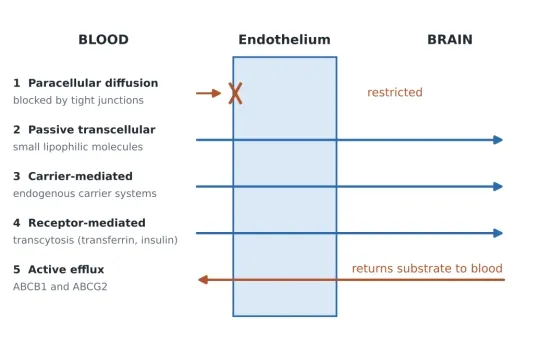
Figure 2: Routes of Transport Across the Brain Endothelium. Paracellular Passage Is Restricted by Tight Junctions, Whereas Passive Transcellular, Carrier-Mediated and Receptor-Mediated Routes Carry Molecules Towards the Brain; Efflux Transporters Return Substrates to the Blood [1,4,5,6].
3.1 Passive diffusion
Some small lipophilic molecules can enter the brain passively by paracellular or transcellular diffusion, whereas others pass by carrier-, receptor- or adsorptive-mediated transport [1]. Size is a major limit: the barrier is reported to restrict molecules larger than about 400-500 Da [1].
Figure 3 shows the scale of the size problem for antibodies, using the two figures reported in reference 1.
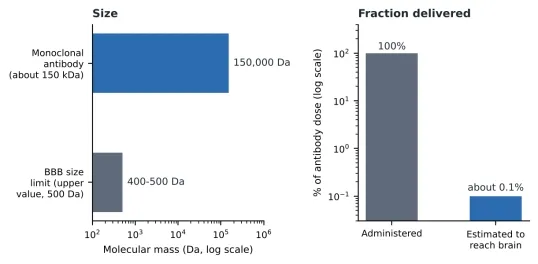
Figure 3: Size Restriction and Estimated Delivery of Monoclonal Antibodies. Left: The BBB Restricts Molecules Above About 400-500 Da (the Upper Value Is Plotted), Whereas an Antibody Is About 150 kDa. Right: Only About 0.1% of an Antibody Dose Is Estimated to Pass the BBB. Both Figures Are from Reference 1; Logarithmic Scales Are Used.
3.2 Carrier-mediated and receptor-mediated transport
Carrier and receptor systems allow selected molecules to cross the barrier [4]. Receptor-mediated transcytosis through receptors such as the transferrin and insulin receptors is an endogenous pathway that can be used to bypass an intact barrier [5].
3.3 Efflux transporters
ABCB1 and ABCG2 are efflux transporters at the BBB that limit how many drugs reach the brain [6]. Earlier attempts to overcome this by direct inhibition have largely failed, which has turned attention to the signalling pathways that regulate these transporters, including nuclear receptors, inflammatory and oxidative stress signalling, and receptor tyrosine kinase and growth factor signalling [6]. This is a key link between BBB physiology and pharmacokinetics, because efflux contributes to poor and variable CNS exposure.
3.4 Integrating the routes
Taken together, the routes in Table 2 act as separate design levers. Size and lipophilicity govern passive entry [1], carrier and receptor systems provide selected entry points [4,5], and efflux transporters act against accumulation [6]. This implies that a drug candidate should be assessed against all three questions: can it diffuse, can it use a transport system, and is it a substrate for efflux? A molecule that fails the first test must rely on the second, and a molecule that passes the first may still fail the third. This framework is a synthesis of references [1], [4], [5] and [6] and is developed further in Section 6.
3.5 Pharmacokinetic principles: rate versus extent of delivery
Hammarlund-Udenaes and colleagues argue that brain drug delivery should be described by separating the rate of transport across the BBB from the extent of delivery [11]. They propose three parameters: Kp,uu, the concentration ratio of unbound drug in brain to that in blood; CLin, the permeability clearance into the brain; and Vu,brain, the distribution of unbound drug within the brain [11] (Table 3). They also state that the permeability of the BBB is less relevant to drug action within the CNS than the extent of delivery, because most drugs are administered repeatedly or continuously [11].
This corrects a common simplification: a compound that crosses the barrier quickly is not automatically a good CNS drug. What matters is how much unbound drug eventually reaches the site of action, and a low Kp,uu may point to restricted entry or active efflux [6].
Table 3: Pharmacokinetic Parameters Describing Brain Drug Delivery [11]
| Parameter | Meaning | Question it answers (interpretation) |
|---|---|---|
| Kp,uu | Concentration ratio of unbound drug in brain to unbound drug in blood | How much active drug reaches the brain at steady state (extent of delivery)? |
| CLin | Permeability clearance into the brain | How fast does the drug cross the BBB (rate of delivery)? |
| Vu,brain | Distribution of unbound drug within the brain | Where does the drug go once it is inside the brain? |
3.6 Physicochemical determinants and CNS multiparameter optimisation
Passive entry depends on molecular properties. Wager and colleagues combined six physicochemical parameters into a central nervous system multiparameter optimisation (CNS MPO) score on a scale of 0 to 6. The parameters are calculated lipophilicity (ClogP), the calculated distribution coefficient at pH 7.4 (ClogD), molecular weight, topological polar surface area, the number of hydrogen-bond donors and the pKa of the most basic centre [12]. Applied to 119 marketed CNS drugs and 108 Pfizer CNS candidates, 74% of the marketed drugs and 60% of the candidates achieved a score of 4 or more [12] (Figure 4). The authors also reported that increasing scores were associated with more favourable in vitro permeability, P-glycoprotein efflux, metabolic stability and safety attributes [12].
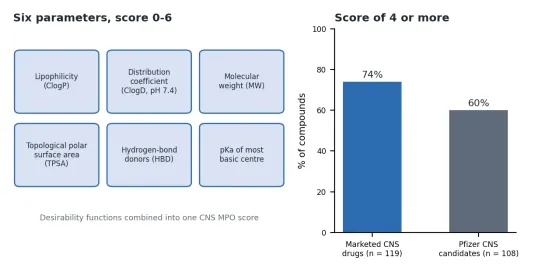
Figure 4: CNS Multiparameter Optimisation. Left: The Six Physicochemical Parameters Combined into the Score (0-6). Right: Percentage of Compounds with a Score of 4 or More Among 119 Marketed CNS Drugs and 108 Pfizer CNS Candidates, as Reported in Reference 12.
The score is a design aid rather than a guarantee. It was developed by one company's research group, so its predictive value for a new chemical series should be confirmed experimentally, and it applies to small molecules only. Antibodies and nanocarriers fall outside its scope, which is why the strategies in Section 5 are needed (interpretation).
4. The BBB in Ageing and Disease
4.1 Normal ageing
The BBB weakens with normal ageing, with capillaries most affected through tight junction loss, altered transporters and remodelling of the neurovascular unit [7]. Table 4 lists these changes together with possible implications for drug delivery.
Table 4: Reported Barrier Changes in Ageing and Possible Implications for Delivery
| Change reported [7] | Possible implication for drug delivery (interpretation) | Related refs |
|---|---|---|
| Loss of tight junction integrity | Barrier restriction may be reduced, but this does not by itself mean that large biologics are delivered efficiently | 1, 7 |
| Altered transporters | Carrier and efflux handling of drugs may differ from that in young adults | 6, 7 |
| Remodelling of the neurovascular unit | Regulation of the barrier by supporting cells may change | 4, 7 |
4.2 Neurodegenerative disease and dementia
The changes seen in ageing are worse in Alzheimer's disease, cerebral amyloid angiopathy and vascular dementia [7]. It has been argued that BBB dysfunction may contribute to neurodegeneration and may itself be a therapeutic target, through improved drug delivery, enhanced clearance of neurotoxins, barrier protection and blood biomarkers [7]. Delivery to the brain in neurodegenerative disease has become a focus of recent work on receptor-mediated transcytosis, focused ultrasound, exosomes and mRNA lipid nanoparticles [5].
Alzheimer's disease illustrates the delivery problem clearly. Two anti-amyloid monoclonal antibodies have received approval from the US Food and Drug Administration, and many further compounds are in development, but only about 0.1% of an antibody dose is estimated to pass the BBB, which greatly hampers the efficacy of treatment [1].
4.3 Implications for drug delivery
An altered barrier does not by itself solve the delivery problem. Because the fraction of antibody reaching the brain remains very small even in a disease in which the barrier is altered [1,7], delivery still has to be engineered. This reasoning is the author's synthesis of references [1] and [7]. A second implication is that results obtained in healthy animals may not transfer directly to patients whose neurovascular unit has changed [4,7].
4.4 Worked example: delivering anti-amyloid antibodies
Anti-amyloid monoclonal antibodies illustrate both the promise and the delivery limits of biologics in CNS disease. In the phase 3 CLARITY AD trial, 1795 participants with early Alzheimer's disease received intravenous lecanemab (10 mg/kg every two weeks) or placebo for 18 months [13]. Lecanemab reduced markers of amyloid and resulted in moderately less decline on measures of cognition and function. The adjusted mean change from baseline at 18 months on the primary clinical endpoint was 1.21 with lecanemab and 1.66 with placebo (difference -0.45; 95% confidence interval -0.67 to -0.23) [13]. Treatment was also associated with infusion-related reactions in 26.4% of participants and amyloid-related imaging abnormalities with oedema or effusions in 12.6% [13].
These results have to be read against the delivery problem. Wong and colleagues note that more than 98% of small-molecule drugs and almost 100% of large-molecule drugs are precluded from reaching the brain [14], and only about 0.1% of an antibody dose is estimated to cross the BBB [1]. De Koning et al. state that delivery mechanisms are being sought precisely to enhance efficacy and to lower the drug dose needed [1]. Whether improved delivery would reduce adverse effects such as amyloid-related imaging abnormalities is not established in the sources reviewed here and remains an open question.
5. Strategies to Overcome the BBB
Current approaches either use endogenous transport pathways to cross an intact barrier, or create temporary breaches in it under image guidance [5]. Four groups are shown in Figure 5 and compared in Table 6.
A broader overview of strategies for delivering therapeutics across the BBB is provided by Terstappen et al., which readers may consult for the wider field [15].
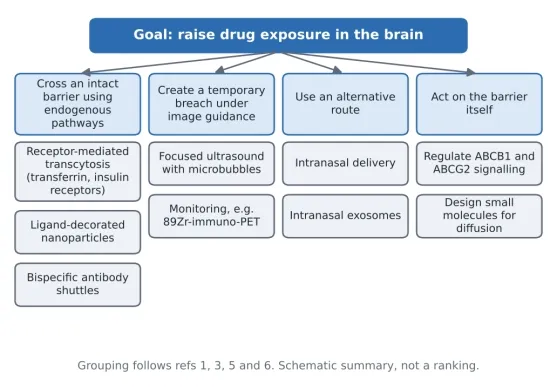
Figure 5: Groups of Strategies Used to Raise Drug Exposure in the Brain, Based on References 1, 3, 5 and 6. the Figure Summarises the Literature and Does Not Rank the Strategies.
5.1 Chemical and efflux-directed approaches
Small molecules can be improved through the physicochemical features that allow diffusion and through attention to efflux, where regulation of ABCB1 and ABCG2 signalling is being explored as an alternative to direct pump inhibition [1,6]. These approaches do not address large biologics, for which only a very small fraction crosses the barrier [1].
5.2 Nanocarriers
Nanotechnology-based systems are a major focus of current brain-delivery research, and recent reviews compare them with other approaches [2]. Carrier systems discussed include liposomes, polymeric nanoparticles and extracellular vesicles, which can improve BBB permeability [1], as well as lipid nanoparticles, ligand-decorated nanoparticles and mRNA lipid nanoparticles [2,5]. Standardised preclinical models are still needed to evaluate them [2].
Reviews of Alzheimer's-directed delivery describe polymeric nanoparticles, liposomes, metallic nanoparticles and cyclodextrins as the most promising systems developed in recent years [14]. In the analysis of de Koning et al., nanoparticle carrier systems still need further preclinical validation before clinical application in humans, whereas focused ultrasound and receptor-mediated transcytosis have shown promising preclinical results and are now being tested in humans [1].
5.3 Receptor-mediated "Trojan horse" strategies
In this approach a ligand or antibody directed at a receptor on the brain endothelium, such as the transferrin or insulin receptor, carries a therapeutic cargo across by transcytosis [5]. Ligand-decorated nanoparticles and bispecific antibody shuttles are the main formats [5]. Multivalency, the presentation of several ligands on a nanoparticle, has been highlighted as a way to improve targeting specificity and transport efficacy, and mathematical and computational models can assist optimisation [8].
A preclinical proof of concept came from a "Brain Shuttle" module in which an antibody fragment binds the transferrin receptor (TfR) in a monovalent mode. Fused to an anti-amyloid antibody, this module increased amyloid target engagement 55-fold compared with the parent antibody in a mouse model of Alzheimer's disease, and the authors reported that monovalent binding favoured transcellular transport whereas bivalent binding led to lysosomal sorting [16]. These findings come from mice and are not evidence of equivalent benefit in patients.
A clinical example is pabinafusp alfa, a fusion of iduronate-2-sulfatase with an anti-human TfR antibody developed for mucopolysaccharidosis II (MPS II, Hunter syndrome). In a multicentre, single-arm, open-label phase 2/3 trial in 28 Japanese patients, 2.0 mg/kg was given intravenously for 52 weeks, and the primary endpoint, the concentration of heparan sulfate in cerebrospinal fluid, fell significantly from baseline (p < 0.001) [17]. An integrated analysis reports that the drug received regulatory approval for general use in Japan in March 2021 as the first BBB-crossing enzyme replacement therapy [18]. Because the trial had no control group and its primary endpoint was a biomarker, benefit on neurocognitive outcomes needs confirmation in controlled studies (interpretation based on [17]).
5.4 Physical and alternative-route methods
Focused ultrasound (FUS) with intravenous microbubbles can transiently open the BBB under image guidance [1,5]. Intranasal delivery, including intranasal exosomes, is another route under investigation [1,5]. Combining receptor-targeted nanoparticles with MRI-guided FUS has been proposed as a promising theranostic strategy [3], and 89Zr-immuno-PET provides a way to monitor and quantify brain delivery non-invasively [1].
Clinical data for focused ultrasound are still very limited. In a phase 1 safety trial, Lipsman et al. used MR-guided focused ultrasound with intravenous microbubbles to open the BBB in five patients with early to moderate Alzheimer's disease. The barrier within the target volume was opened safely, reversibly and repeatedly, with no serious clinical or radiographic adverse events and no clinically significant worsening of cognitive scores at three months; exploratory analysis suggested no group-wise change in amyloid after sonication [19]. Rezai et al. later applied focused ultrasound together with each of six monthly aducanumab infusions in three participants, and the reduction in amyloid on florbetaben PET was numerically greater in sonicated regions than in the homologous untreated regions of the other hemisphere [20]. Both studies are very small, so they establish feasibility and short-term safety rather than clinical benefit.
5.5 Combination approaches and monitoring
The strategies above are not mutually exclusive. Functionalised nanoparticles that target receptor-mediated transcytosis can be combined with MRI-guided focused ultrasound, an approach proposed as a promising theranostic tool for delivering drugs, neurotrophic factors or antibodies into the brain parenchyma [3]. Because the amount of drug that reaches the brain is so small, measuring it is also part of the strategy: 89Zr-immuno-PET has been described as a way to monitor and quantify novel delivery methods non-invasively [1].
5.6 Clinical-stage evidence at a glance
Table 5 and Figure 6 place the studies discussed above side by side. The purpose is to show the stage of evidence, not the size of effect: the studies differ in disease, design, endpoint and size, so their results cannot be ranked against one another.
Table 5: Key Preclinical and Clinical Studies Discussed in This Review
| Study | Strategy | Design and population | Key reported finding | Main caveat | Ref |
|---|---|---|---|---|---|
| Niewoehner 2014 | RMT (anti-TfR shuttle) | Preclinical; mouse model of AD | 55-fold higher amyloid target engagement than the parent antibody | Mouse data only | 16 |
| Okuyama 2021 | RMT (anti-TfR enzyme fusion) | Phase 2/3, single-arm, open-label; 28 patients with MPS II | CSF heparan sulfate fell significantly over 52 weeks | No control group; biomarker primary endpoint | 17, 18 |
| Lipsman 2018 | FUS with microbubbles | Phase 1 safety trial; 5 patients with early to moderate AD | BBB opened safely, reversibly and repeatedly; no serious adverse events | Safety study; no group-wise amyloid change in exploratory analysis | 19 |
| Rezai 2024 | FUS with aducanumab | Open-label; 3 participants, six monthly infusions | Amyloid reduction numerically greater in sonicated regions | Three participants; numerical difference only | 20 |
| van Dyck 2023 | Systemic antibody, no delivery technology (context) | Phase 3, randomised, double-blind; 1795 participants | Moderately less decline than placebo; ARIA with oedema or effusions in 12.6% | Only about 0.1% of an antibody dose is estimated to reach the brain | 1, 13 |
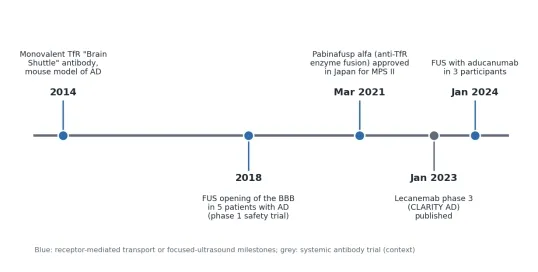
Figure 6: Milestones Discussed in This Review, 2014-2024: A Preclinical Receptor-Mediated Shuttle [16], FUS Opening of the BBB in Patients with AD [19], Approval of Pabinafusp Alfa in Japan [18], the Phase 3 Lecanemab Trial [13] and FUS with Aducanumab [20]. Dates Are Publication or Approval Dates Reported in the Cited Sources.
DISCUSSION
6.1 Matching the strategy to the cargo
The literature supports a clear logic, summarised in Figure 7. Small molecules can be improved through physicochemical design and attention to efflux [1,6], whereas large biologics need either a transport shuttle or a controlled opening of the barrier [1,5]. Nanocarriers can be combined with both, for example through receptor ligands or with FUS [3,5]. Figure 7 is a teaching aid built from references [1], [5] and [6], not a validated decision algorithm.
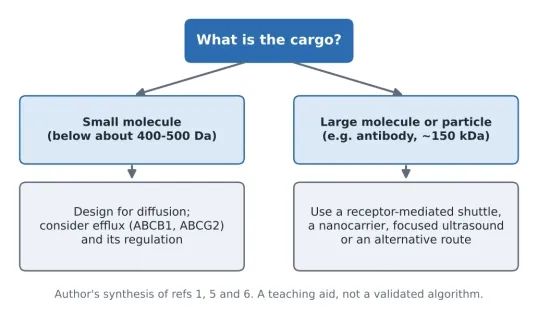
Figure 7: Author's Synthesis of a Cargo-Based Framework for Choosing Among Delivery Approaches, Based on References 1, 5 And 6.
6.2 Strength and consistency of the evidence
Three weaknesses in the evidence should be acknowledged. First, most of the sources used here are reviews [1-11,14,15], and two are described by their authors as narrative reviews [1,2], so the choice of underlying studies cannot be assumed to be unbiased. The primary clinical studies added (Table 5) are few and small and, apart from the phase 3 antibody trial [13], open-label and uncontrolled [17,19,20]. Second, standardised preclinical models are lacking [2], which makes strategies hard to compare between laboratories and to translate to humans. Third, the very low brain fraction of antibodies, about 0.1% [1], shows how large the gap between administered and delivered dose remains. Direct head-to-head comparisons of the four strategy groups were not found in the sources reviewed, so a ranking cannot be made on current evidence.
6.3 Translational considerations
Barrier biology also affects interpretation. Because the BBB is dynamic and altered in ageing and disease [4,7], results from healthy animals may not transfer to patients with a changed neurovascular unit. The regulation of efflux transporters by inflammatory and oxidative stress signalling [6] suggests that disease state may modify the performance of a given delivery method. Imaging methods that quantify brain delivery [1] and computational models that help optimise multivalent systems [8] may reduce this uncertainty, but they have yet to replace standardised experimental models [2].
6.4 Limitations of this review
This review draws on a limited set of open-access secondary sources, supplemented by a small number of landmark primary studies. It is a narrative review without a formal systematic protocol, and it does not include a systematic appraisal of trial outcomes. Its conclusions are therefore provisional, and the comparison of strategies reflects how the included sources describe them rather than a pooled analysis of results. The reference list is deliberately restricted to a small number of verified sources, so the review should be read as a focused synthesis and not as a comprehensive survey of the field.
6.5 Pharmaceutical perspective: questions to ask of a CNS candidate
Taken together, the sources suggest a short sequence of questions for a pharmaceutical scientist who is considering a CNS drug candidate. This sequence is the review's own synthesis and not a validated algorithm.
6.6 Practical comparison of the strategy groups
Table 6 compares the strategy groups using practical criteria. It combines what the sources report with the review's interpretation, and it should be read as a map of the literature and not as a ranking.
Table 6: Practical Comparison of BBB Delivery Strategy Groups
| Strategy | Cargo it suits | Route or invasiveness | Stage of evidence in the sources | Main unresolved issue | Refs |
|---|---|---|---|---|---|
| Chemical / efflux-directed | Small molecules | Systemic, non-invasive | Most marketed CNS drugs score 4 or more on the CNS MPO scale; efflux regulation is being explored | Direct efflux inhibition has largely failed; no help for biologics | 1, 6, 12 |
| Nanocarriers | Varied cargos, depending on the platform | Systemic | Still need further preclinical validation | Standardised preclinical models | 1, 2 |
| Receptor-mediated (Trojan horse) | Antibodies, enzymes and ligand-decorated particles | Systemic | Mouse proof of concept; one enzyme fusion approved in Japan for MPS II | Specificity and transport efficacy; controlled trials | 8, 16, 17, 18 |
| Focused ultrasound | Large molecules and nanoparticles | Procedure under image guidance | Phase 1 and very small studies in AD | Needs image guidance; long-term safety unknown | 5, 19, 20 |
| Intranasal | Small molecules and exosomes are being studied | Non-invasive | Under investigation | Not compared head-to-head with other routes | 1, 5 |
7. Challenges and Future Perspectives
In the short term, the most realistic advances are likely to come from refining receptor-mediated shuttles and from larger, controlled studies of focused ultrasound; in the longer term, nanocarriers and gene or RNA delivery will depend on better preclinical models and on imaging that can show how much drug reaches the brain (interpretation based on [1,2,5,8,16,17,19,20]).
Table 7 sets out questions, derived from the research gaps described above, that could be addressed in a follow-up review or research project. The entries are the author's proposals and are not taken from a single source.
Table 7: Suggested Directions for Future Work (Author's Proposals)
| Question | Suggested approach | Reason (related sources) |
|---|---|---|
| How do the efficacy and safety of focused-ultrasound-assisted delivery compare across human studies? | Systematic review once more trials have reported | Current studies are very small [19, 20] |
| Can better delivery of anti-amyloid antibodies lower the dose needed and reduce imaging abnormalities? | Dose-finding studies that pair a delivery method with imaging endpoints | Low brain fraction of antibodies [1]; adverse events reported [13] |
| Which preclinical models best predict human brain exposure of biologics? | Benchmarking of models across laboratories with a common reference antibody | Standardised models are lacking [2] |
| Does disease stage change the performance of shuttles and carriers? | Comparative studies in young, aged and diseased models | Barrier changes in ageing and dementia [4, 7] |
| Can computational models of multivalency guide nanocarrier design? | Iterative modelling with experimental validation | Proposed to speed optimisation [8] |
CONCLUSION
The BBB is a dynamic structure whose endothelial barrier, transport systems and efflux pumps together decide whether a drug reaches the brain. Delivery strategies are most convincing when matched to these features: physicochemical design and efflux regulation for small molecules, and receptor-mediated shuttles, nanocarriers or focused ultrasound for large molecules. Clinical-stage evidence is encouraging but limited: a transferrin-receptor-targeted enzyme has been approved in Japan [18], whereas focused ultrasound has so far been tested only in very small studies in Alzheimer's disease [19,20]. Persistent gaps include poorly standardised preclinical models, the low brain fraction of large biologics and the lack of direct comparisons between strategies. Progress is likely to depend on combination approaches guided by imaging and computational modelling, and on understanding how disease alters the barrier.
Acknowledgement
Conflict of interest: The authors declare no conflict of interest associated with this manuscript.
Key points
Abbreviations
| Term | Meaning |
|---|---|
| BBB | Blood-brain barrier |
| CNS | Central nervous system |
| NVU | Neurovascular unit |
| RMT | Receptor-mediated transcytosis |
| ABC | ATP-binding cassette (family of efflux transporters; ABCB1 and ABCG2 are discussed here) |
| FUS | Focused ultrasound |
| mAb | Monoclonal antibody |
| 89Zr-immuno-PET | Positron emission tomography using zirconium-89-labelled antibodies |
| AD | Alzheimer's disease |
| ARIA | Amyloid-related imaging abnormalities |
| CNS MPO | Central nervous system multiparameter optimisation (score) |
| CSF | Cerebrospinal fluid |
| Kp,uu | Ratio of unbound drug concentration in brain to that in blood |
| MPS II | Mucopolysaccharidosis type II (Hunter syndrome) |
| TfR | Transferrin receptor |
REFERENCES




Dr. K. Narendra Kumar Reddy, P. Sunil Kumar, Thumati. Sandhya Rani, Chinnam. Christy Mary Josmitha, The Blood-Brain Barrier: Anatomical Organisation, Transport Physiology, and Strategies to Overcome It for CNS Drug Delivery: A Focused Narrative Review, Int. J. of Pharm. Sci., 2026, Vol 4, Issue 11, 1225-1240. https://doi.org/10.5281/zenodo.24000654
 10.5281/zenodo.24000654