

We use cookies to ensure our website works properly and to personalise your experience. Cookies policy
Sri Venkateswara Dental College and Hospital, Chennai, Tamil Nadu, India
The enzyme-linked immunosorbent assay (ELISA) remains the dominant technique for quantifying peptides, proteins and inflammatory mediators in gingival crevicular fluid (GCF) and saliva. This review synthesises principles, protocols and best laboratory practice of ELISA and its application to periodontal biomarker research. Drawing on a methodological overview of ELISA and a systematic review of GCF sampling and analytical methods, supplemented by ten recent articles [2023–2025] on biomarker discovery, systemic associations and point-of-care diagnostics, we review historical development, working principles, protocol variants and sources of error, and compare ELISA with emerging active MMP-8 [aMMP-8] chairside tests. ELISA remains indispensable for research-grade quantification of IL-1?, MMP-8 and TNF-?, but inter-laboratory and inter-kit variability limits universal diagnostic thresholds, creating an unmet need for validated point-of-care platforms in routine periodontics.
Periodontal disease is a chronic multifactorial inflammatory disease driven by subgingival biofilm-host interactions culminating in destruction of the attachment apparatus. Conventional diagnosis relies on probing depth, clinical attachment loss, bleeding on probing and radiographic bone loss, which record cumulative damage rather than ongoing activity. This limitation has driven three decades of research into biochemical markers of inflammation and tissue breakdown in gingival crevicular fluid [GCF] and saliva.[1][2][3]
Among analytical platforms, ELISA has been and remains dominant. A systematic review of 97 GCF studies found 73.1% used ELISA, far outstripping microcapillary electrophoresis or immunofluorometry. Understanding its principles, variants and sources of error is therefore essential for postgraduate researchers. This review integrates an updated ELISA overview and a GCF systematic review with ten recent primary and review articles addressing salivary biomarkers, systemic links and point-of-care immunoassays.[2][1]
2. Historical Development of ELISA
ELISA evolved from radioimmunoassay. In 1971 Engvall and Perlmann conjugated antigens/antibodies to enzymes rather than radioisotopes, removing radioactive handling. By 1980, the microtiter-plate format was established for influenza, parainfluenza and mumps diagnosis. Subsequent adoption across endocrinology, oncology and periodontology reflects high sensitivity [picogram/mL], low cost, long reagent shelf-life and compatibility with microlitre GCF volumes.[1][3]
3. Principles and Components
ELISA detects antigen-antibody interaction coupled to enzymatic colour change read at 450 nm against a standard curve from serial dilutions of reference standard. Essential components are: solid-phase matrix [96-well polystyrene plate]; enzyme conjugate [horseradish peroxidase or alkaline phosphatase]; chromogenic substrate [TMB][OPD][PNPP] with distinct sensitivity and interference profiles; wash buffer [PBS]; stop solution [dilute acid]; microplate reader.[1][a][b][c][d][e][f]
3.1 Protocol Variants
Four formats exist:[1]
Direct ELISA: Simplest, single enzyme-labelled antibody to immobilised antigen; least sensitive, prone to background noise. [Fig. 1]
Indirect ELISA: Secondary enzyme-linked antibody against primary antibody amplifies signal; used for antibody titre.
Competitive ELISA: Patient antigen competes with labelled reference antigen for limited antibody sites; signal inversely proportional to concentration. [Fig. 2]
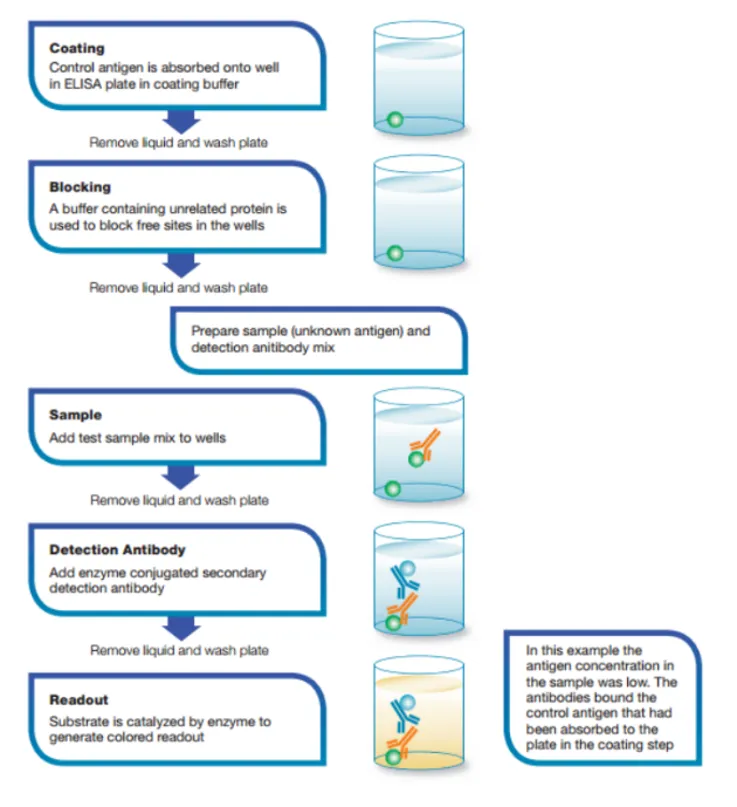
Sandwich ELISA: Capture antibody plus differently-epitope-directed detection antibody confers 2–5-fold greater sensitivity than direct ELISA; preferred when limited antigen or highly specific pairs available. Standard kits [Quantikine R&D Systems; Bender; RayBiotech; Biosource] have been used in most GCF studies for IL-1β, MMP-8, TNF-α. [Fig. 3: Coating → Blocking → Sample → Detection Antibody → Substrate → Readout][2]
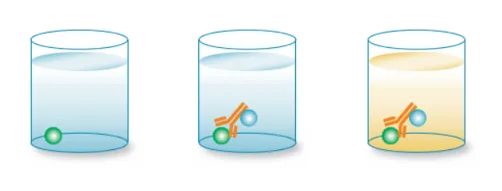
Direct ELISA
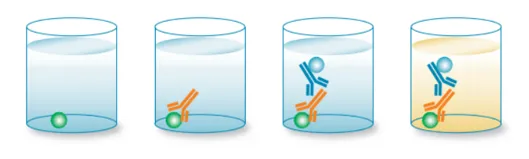
Indirect ELISA
Competitive ELISA
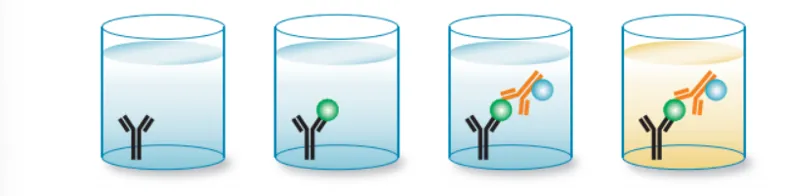
Sandwich ELISA
4. GCF as Substrate for ELISA
GCF is a serum-derived inflammatory exudate in the sulcus/pocket carrying enzymes, cytokines, antibodies and bacterial products, most proximal to the lesion. In 97 studies, paper-strip absorption dominated [71.1%], followed by microcapillary pipetting [24.7%] and washing [4.1%]. Extracrevicular placement minimises trauma-induced blood/saliva contamination versus intracrevicular placement, where >30 seconds increases contamination risk.[2][3]
Recent synthesis confirms GCF sampling [paper strip/Periotron device] remains most site-specific, minimally invasive route and correlates better with local activity than serum. A scoping review extended this to jawbone turnover diseases including medication-related osteonecrosis and osteoporosis.[3][4]
GCF applications now extend to systemic research. Abouzaid et al. showed Periopaper 30-sec protocol can predict adverse pregnancy outcomes prospectively. Nicolae et al. in gastric cancer patients used GCF ELISA for cathepsin K with qPCR for Fusobacterium nucleatum, finding probing depth correlated with both bacterial load and cathepsin K, and cathepsin K correlated with tumour dimension. This illustrates expansion beyond traditional cardio-metabolic links.[5][6]
5. ELISA-Quantified Biomarkers in Periodontal Disease
Three biomarkers dominate GCF literature: IL-1β [22.6%], MMP-8 [19.5%], TNF-α [18.5%] of studies. IL-1β, central to osteoclastogenesis, rises consistently from health to gingivitis to chronic/aggressive periodontitis, though health vs gingivitis difference is often non-discriminatory. MMP-8 [neutrophil collagenase] is principal collagenolytic enzyme; GCF levels are substantially higher in periodontitis and baseline levels predict treatment outcome. TNF-α shows variable elevation attributed to collection method, volume and kit.[2]
Even with identical kit and method, absolute IL-1β and MMP-8 concentrations varied appreciably between groups due to number of strips per subject [1 vs 4], manufacturer antibody pair/calibrator and cohort severity. This limits meta-analysis and universal cut-offs.[2]
Beyond these three, literature implicates OPG/RANKL, calprotectin, cystatin C, 8-hydroxydeoxyguanosine and VEGF, mostly quantified by sandwich ELISA. Buduneli et al. 2024 synthesis catalogues diagnostic performance and concludes no single molecule achieves sensitivity/specificity to replace clinical examination, supporting multi-marker panels.[2][3]
6. Salivary Biomarkers as Alternative
Saliva is less invasive than site-specific GCF. A 2023 scoping review identified MMP-8, IL-1β, RANKL, OPG, suPAR and IL-17 as most consistently reported salivary markers, ELISA remaining predominant despite proteomics emergence. A mass-spectrometry proteomics systematic review concluded ELISA remains validation method of choice after candidate discovery.[7][8]
A 2025 narrative review argued combining ELISA inflammatory markers with microbiome profiling may enable biomarker-guided individualised therapy. Salivary IL-1β, IL-18 and gasdermin-D have been investigated as shared biomarkers linking periodontitis to atherosclerotic coronary heart disease, with periodontitis and concurrent coronary disease patients showing higher concentrations than healthy controls.[9][10]
7. ELISA vs Point-of-Care: aMMP-8 Chairside Test
Laboratory ELISA requires transport, batch processing and dedicated equipment, unsuited to same-visit decisions. This drove lateral-flow aMMP-8 tests in saliva, oral rinse or GCF readable in minutes.[2][11]
Lähteenmäki et al. concluded aMMP-8 detects early active collagenolysis more reliably than clinical parameters registering past damage, proposing <20 ng/mL in peri-implant sulcus fluid as healthy threshold. Wei et al. 2024 meta-analysis found fair overall accuracy for periodontitis detection, sensitivity/specificity varying by threshold [10, 20, 25 ng/mL] but no difference between saliva vs rinse. Griffith et al. review of paper-based and lab-on-a-chip platforms concluded several POC systems meet WHO REASSURED criteria, but collection standardisation remains barrier mirroring ELISA inter-laboratory variability.[11][12][13]
ELISA and POC are complementary: ELISA as reference for research-grade quantification, POC aMMP-8 as chairside screening and treatment monitoring adjunct with currently moderate accuracy.[11-13]
8. Advantages, Limitations and Refinements
Advantages: Wide availability, low per-sample cost, sandwich sensitivity to pg/mL, applicability to GCF/saliva/serum/peri-implant fluid, large benchmark evidence base [73.1% of studies].[1][2][3]
Limitations: Hook effect, non-specific binding, cross-reactivity, substantial inter-kit variability complicating thresholds, inability to multiplex [one analyte/well], turnaround unsuited to chairside.[1][2]
Emerging Refinements: Digital ELISA in femtolitre microwells enabling single-molecule detection with thio-NAD signal-cycling amplification has pushed detection to zeptomole range, ~15-fold more sensitive than conventional high-sensitivity ELISA. Validated aMMP-8 and multiplex lab-on-a-chip platforms represent future trajectory.[1][11][13]
CONCLUSION
ELISA accounts for majority of GCF/salivary biomarker studies and remains principal technique for low-abundance cytokines/enzymes in microlitre volumes. Persistent variability, lack of multiplexing and delay constrain routine diagnostic translation. Validated POC aMMP-8 offers complementary chairside tool with fair accuracy [11-13]. For researchers, practical implications are: standardise collection volume/technique, use single validated kit throughout, run positive/negative controls, and interpret absolute values cautiously across literature.[2][7][8][1]
REFERENCES




Iswarya T, Jenifer Cynthia R A, Arunmozhi U, Mano Gayathri S, The Enzyme-Linked Immunosorbent Assay (ELISA) in Periodontal Diagnostics: Principles, Applications, and Current Evidence — A Review, Int. J. of Pharm. Sci., 2026, Vol 4, Issue 9, 2566-2571. https://doi.org/10.5281/zenodo.22878635
 10.5281/zenodo.22878635