

We use cookies to ensure our website works properly and to personalise your experience. Cookies policy
Ashvin College of Pharmacy, Manchi Hill, Sangamner, Ahilyanagar, Maharashtra, India.
Glioblastoma (GBM) is an aggressive primary malignant brain tumour characterized by extensive cellular heterogeneity, diffuse invasion, metabolic adaptation, and profound immunosuppression. Despite maximal safe surgical resection followed by radiotherapy and temozolomide-based chemotherapy, disease recurrence remains a major therapeutic challenge. Increasing evidence suggests that the gut microbiota can regulate systemic immunity, host metabolism, and inflammatory signalling through the microbiota–gut–brain axis [1–3]. However, the extent to which these mechanisms directly influence human glioblastoma remains incompletely established. This review examines the proposed gut microbiota–microglia–glioblastoma axis through an integrated framework encompassing microbial metabolites, peripheral immune signalling, blood–brain barrier regulation, microglial plasticity, and glioblastoma-associated macrophage (GAM) metabolism. Particular emphasis is placed on short-chain fatty acids, tryptophan–kynurenine metabolism, aryl hydrocarbon receptor signalling, microbial-associated molecular patterns, and inflammatory pathways involving Toll-like receptors, NF-?B, NLRP3 inflammasomes, and colony-stimulating factor 1 receptor (CSF1R). Pharmacological opportunities include myeloid-cell reprogramming, selective inflammatory pathway modulation, microbiome-directed interventions, and rational combinations with standard anticancer therapies. Recent reviews published in 2025–2026 have further highlighted the potential relationship between microbiome-associated signals and glioblastoma immunobiology [4–8]. Nevertheless, evidence differs substantially across human observational studies, experimental models, and mechanistic investigations. Confounding by antibiotics, corticosteroids, diet, treatment exposure, and tumour-associated physiological changes remains important.
Glioblastoma is one of the most aggressive primary malignant tumours of the adult central nervous system. Its biological complexity arises from infiltrative growth, intratumoral heterogeneity, molecular alterations, abnormal vasculature, metabolic adaptation, and an immunosuppressive tumour microenvironment. Although multimodal treatment has improved disease management, recurrence and treatment resistance remain major challenges [9].
The glioblastoma microenvironment contains malignant cells, endothelial cells, astrocytes, lymphocytes, resident microglia, and recruited peripheral macrophages. Among these populations, microglia and glioblastoma-associated macrophages regulate inflammatory signalling, immune surveillance, angiogenesis, extracellular matrix remodelling, and interactions with tumour cells. Recent studies emphasize that these myeloid populations are heterogeneous and cannot be adequately described using a simple pro-inflammatory versus anti-inflammatory classification [10,11].
In parallel, the gut microbiota has emerged as an important regulator of immune homeostasis and host metabolism. Microbial products can influence intestinal barrier integrity, circulating inflammatory mediators, immune-cell differentiation, and communication between peripheral tissues and the central nervous system [1–3]. Experimental research has demonstrated that gut microorganisms can influence microglial maturation and function, although these findings do not automatically establish an equivalent mechanism in human glioblastoma [12].
Recent reviews have specifically examined the gut microbiome in glioblastoma, including its potential effects on tumour–immune interactions, metabolic signalling, and treatment response [4–8]. Research on microbiota-associated metabolites and glioma risk has also raised questions about whether particular metabolic pathways contribute to disease susceptibility [13]. However, the presence of an association between microbiota composition and a clinical outcome does not establish causality.
The central hypothesis of this review is that microbiota-associated signals may modify the functional state of microglia and other tumour-associated myeloid cells, thereby influencing neuroinflammation, immune surveillance, and glioblastoma behaviour. This hypothesis should be treated as a testable mechanistic framework rather than an established linear pathway.
The distinctive focus of this review is the integration of four domains: microbial function, host and tumour metabolism, microglial plasticity, and pharmacological targetability. Particular attention is given to the evidence required to move from an observed microbial association to a validated therapeutic mechanism.
1.1 Review scope and literature approach
This article presents a critical narrative synthesis of literature concerning the gut microbiota, neuroinflammation, microglia, and glioblastoma. Relevant publications include experimental investigations, human observational studies, mechanistic research, pharmacological studies, and recent reviews [4–8, 10, 11].
For a reproducible journal submission, the authors should document the final search date, databases searched, exact search strings, inclusion and exclusion criteria, and screening process. Searches should cover PubMed/MEDLINE, Scopus, and Web of Science, with additional reference-list screening where appropriate. The literature search should be updated immediately before submission.
This manuscript is not presented as a completed systematic review or meta-analysis because a fully documented screening and study-selection process has not yet been performed.
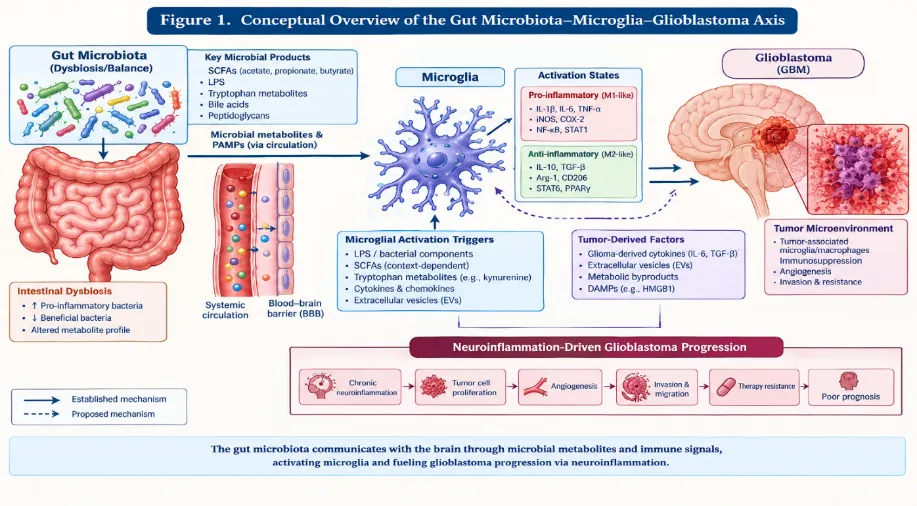
Figure 1: Conceptual Overview of the Gut Microbiota–Microglia–Glioblastoma Axis
2. Biological Foundations of the Gut–Brain–Tumour Axis
2.1 Gut microbiota and systemic immune homeostasis
The gut microbiota comprises microorganisms that interact with intestinal epithelial cells, immune populations, dietary substrates, and host metabolic pathways. Its functions include nutrient transformation, production of bioactive metabolites, regulation of mucosal immunity, and maintenance of intestinal barrier function [1,2].
Microbial composition and function vary with diet, age, medication exposure, geography, comorbidities, and host genetics. Antibiotics can alter microbial diversity and metabolic output, while dietary substrates influence the production of short-chain fatty acids and other microbial metabolites [1,2].
These factors are particularly relevant in glioblastoma because patients may receive corticosteroids, antiseizure medications, surgery, radiotherapy, and chemotherapy. Such exposures may independently alter immunity, nutrition, and microbial community structure.
Dysbiosis describes an alteration in microbial composition or function associated with a physiological disturbance. It does not represent a single universal microbial state. Consequently, a microbial signature associated with glioblastoma may reflect the disease, its treatment, lifestyle factors, or a combination of these influences rather than an initiating cause [4, 5,7].
2.2 Communication pathways between the gut and brain
The microbiota–gut–brain axis is a bidirectional network involving neural, endocrine, immune, and metabolic communication [1–3]. Several mechanisms may be relevant to glioblastoma:
Foundational research supports communication between gut microorganisms and microglia, particularly in experimental systems [12]. However, the relative contribution of these mechanisms to human glioblastoma remains uncertain.
The blood–brain barrier is also heterogeneous in glioblastoma. Tumour-associated vessels may exhibit abnormal permeability, whereas infiltrative regions may retain partially functional barrier properties. Therefore, systemic detection of a microbial metabolite does not establish its penetration into tumour tissue or its availability to microglia at a biologically active concentration.
2.3 From microbial signals to tumour-associated immune responses
The proposed gut microbiota–microglia–glioblastoma axis is not necessarily a direct anatomical connection between intestinal microorganisms and malignant brain cells. Instead, it may involve circulating metabolites, inflammatory mediators, peripheral myeloid cells, endothelial signalling, and changes in central nervous system immune responses.
These signals may interact with tumour-derived cytokines, hypoxia, nutrient availability, extracellular acidity, and metabolic reprogramming. Recent reviews of the gut microbiome in glioblastoma identify these interactions as important research directions while emphasizing the limited direct causal evidence [4–8].
A convincing causal mechanism would demonstrate that a defined microbial function alters a measurable metabolite, that this metabolite modifies a specific myeloid-cell pathway, and that the resulting cellular change influences tumour behaviour. Ideally, experimental rescue or pathway-specific intervention would confirm the proposed sequence.
3. Microglia and Glioblastoma-Associated Macrophages
3.1 Microglial origin and physiological functions
Microglia are resident immune cells of the central nervous system involved in immune surveillance, phagocytosis, synaptic maintenance, tissue repair, and responses to neurological injury. They respond to changes in their environment through pattern-recognition receptors, cytokine receptors, metabolic sensors, and cell–cell communication pathways [10,12].
In glioblastoma, microglia encounter tumour-derived chemokines, growth factors, metabolites, and damage-associated molecular patterns. Their responses may initially contribute to immune surveillance but can subsequently become modified by persistent tumour-associated signals.
The resulting cellular states vary according to tumour location, disease stage, metabolic conditions, and treatment exposure. Consequently, microglia should not be regarded as a uniform population.
3.2 Distinction between microglia and recruited macrophages
Glioblastoma-associated macrophages include resident microglia and peripheral monocyte-derived macrophages recruited into the tumour. Although these populations share several markers and functions, their origins, transcriptional profiles, spatial distributions, and responses to treatment differ [10,11].
Microglia may be enriched at infiltrative tumour margins, whereas recruited macrophages can be prominent in vascular, hypoxic, or necrotic regions. These patterns are not absolute, and considerable heterogeneity exists within each population [10].
The traditional M1/M2 classification offers a simplified description of inflammatory and immunoregulatory states. However, human glioblastoma contains diverse myeloid-cell states that cannot be adequately represented by a binary classification. Modern investigations increasingly use single-cell and spatial approaches to characterize these populations [10,11,14].
3.3 Tumour-supportive and antitumour functions
Glioblastoma-associated myeloid cells may contribute to antitumour activity through phagocytosis, antigen presentation, inflammatory mediator production, and support of adaptive immune responses. Conversely, they may promote tumour persistence through immunosuppressive signalling, angiogenesis, extracellular matrix remodelling, and suppression of effective antitumour immunity [10,11].
The relative contribution of these activities depends on the local environment and the specific cellular state. This complexity supports the investigation of strategies that selectively modify myeloid-cell function rather than indiscriminately eliminating or activating all macrophage populations.
3.4 Molecular pathways regulating microglial activation
Several signalling pathways are relevant to the proposed axis:
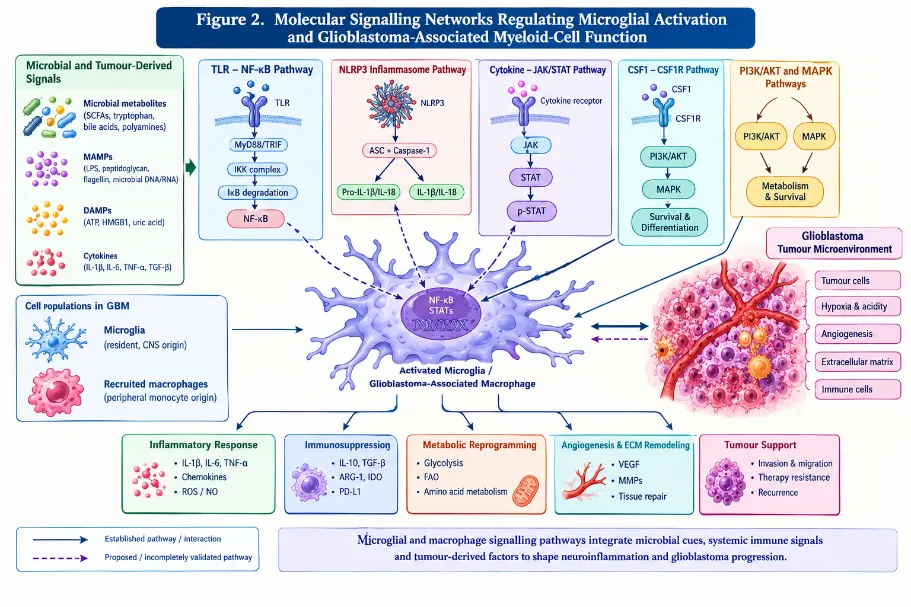
Figure 2: Molecular Signalling Networks Regulating Microglial Activation and Glioblastoma-Associated Myeloid-Cell Function
4. Microbial Metabolites and Neuroinflammation
4.1 Short-chain fatty acids
Short-chain fatty acids (SCFAs), particularly acetate, propionate, and butyrate, are generated through microbial fermentation of dietary substrates. They can influence intestinal physiology, immune-cell activity, metabolic signalling, and gene regulation through mechanisms that include G-protein-coupled receptors and histone deacetylase inhibition [2].
Their potential relevance to glioblastoma is complex. SCFAs may support intestinal barrier integrity and regulate inflammatory responses, but they can also modify immune-cell differentiation and cellular metabolism. Their effects depend on the specific metabolite, concentration, target cell, and surrounding environment.
Accordingly, SCFAs should not be classified universally as protective or tumour-promoting. Glioblastoma-specific research must determine whether particular metabolites alter microglial function, reach relevant tumour compartments, and influence treatment response.
4.2 Tryptophan metabolism and the kynurenine pathway
Tryptophan is an essential amino acid involved in protein synthesis and the production of several bioactive compounds. Host and microbial metabolic processes contribute to tryptophan-derived metabolites, including indole derivatives and compounds associated with the kynurenine pathway.
The kynurenine pathway is relevant to cancer immunology because its metabolites may influence immune-cell activity, cellular metabolism, and aryl hydrocarbon receptor (AhR) signalling. In glioblastoma, altered tryptophan metabolism may contribute to immunoregulatory conditions and impaired antitumour responses [4,7].
However, host enzymes such as indoleamine 2,3-dioxygenase and tryptophan 2,3-dioxygenase must be distinguished from microbial metabolic pathways. An altered circulating kynurenine concentration does not establish a microbial origin.
Future studies should integrate microbial functional profiling, targeted metabolomics, and measurements of host metabolic enzymes to determine the relative contribution of microbial and host pathways.
4.3 Bile acids and secondary microbial metabolites
Gut microorganisms transform primary bile acids into secondary bile acids that interact with host receptors and metabolic pathways. These metabolites can influence inflammatory and metabolic processes in several physiological settings.
Their specific contribution to human glioblastoma remains uncertain. Studies should investigate whether defined bile-acid profiles are associated with reproducible changes in myeloid-cell activity, tumour-associated immunity, or treatment outcomes.
4.4 Microbial-associated molecular patterns
Microbial-associated molecular patterns (MAMPs), including bacterial cell-wall components and microbial nucleic acids, can activate pattern-recognition receptors. In contrast, damage-associated molecular patterns (DAMPs) originate from stressed, injured, or dying host cells.
Both classes of signals may influence systemic inflammation and local immune responses. However, detecting microbial nucleic acids in tumour tissue does not automatically demonstrate the presence of viable microorganisms, active infection, or a causal role in tumour biology.
Studies of low-biomass tumour samples require rigorous negative controls, contamination assessment, independent replication, and methods capable of distinguishing genuine biological signals from environmental or reagent contamination [4,5,7].
4.5 Integrated interpretation of microbial metabolites
The most useful framework is to consider microbial metabolites as context-dependent modulators of host immunity rather than assigning each metabolite a fixed beneficial or harmful role.
Table 1: Microbiota-Associated Signals and Their Potential Relevance to Glioblastoma
| Signal or pathway | Established biological activity | Potential relevance to GBM | Major evidence limitation |
|---|---|---|---|
| Acetate, propionate and butyrate | Immune and metabolic regulation | May modify myeloid-cell activity | Direction of effect varies by context |
| Tryptophan-derived metabolites | Host and microbial metabolic signalling | Potential modulation of AhR-associated pathways | Microbial and host contributions are difficult to separate |
| Microbial-associated molecular patterns | Pattern-recognition receptor activation | May influence inflammatory signalling | Direct causal role in human GBM is unestablished |
| Secondary bile acids | Receptor-mediated metabolic signalling | Potential effects on immune regulation | GBM-specific evidence is limited |
| Microbiota-associated intestinal barrier changes | Regulation of exposure to microbial products | Potential alteration of circulating inflammatory signals | Human causal pathways require further study |
| Microbial polyamine metabolism | Cellular growth and metabolic regulation | Potential interaction with tumour and myeloid-cell metabolism | Requires pathway-specific validation |
GBM: glioblastoma; AhR: aryl hydrocarbon receptor.
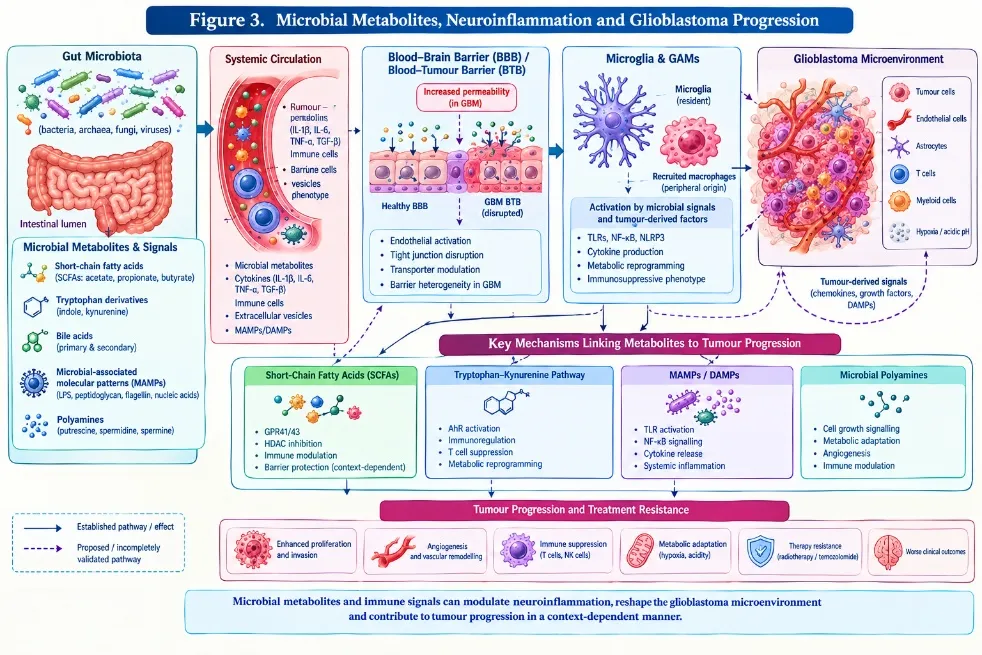
Figure 3: Proposed Interactions Between Microbial Metabolites, Neuroinflammation, and Glioblastoma Progression
5. Neuroinflammation and the Glioblastoma Tumour Microenvironment
5.1 Inflammatory cytokines and immune regulation
Inflammatory cytokines mediate communication among malignant cells, immune cells, vascular structures, and surrounding neural tissue. Interleukin-1β, interleukin-6, tumour necrosis factor-α, transforming growth factor-β, and other mediators can influence immune-cell recruitment, survival signalling, angiogenesis, and tumour-associated inflammation [10, 11].
Their effects depend on concentration, exposure duration, receptor distribution, and cellular context. An inflammatory mediator may support immune activation under one condition while contributing to tumour-associated signalling under another.
Therefore, cytokine inhibition should not be assumed to improve glioblastoma outcomes without evidence that the targeted pathway is functionally important and that its inhibition preserves beneficial antitumour immunity.
5.2 Blood–brain barrier and blood–tumour barrier
The blood–brain barrier regulates the movement of molecules and cells between the circulation and central nervous system. Glioblastoma-associated vasculature can produce a heterogeneous blood–tumour barrier, with permeability varying between tumour regions.
Microbial metabolites and inflammatory mediators could potentially influence endothelial function and barrier-associated signalling. Nevertheless, systemic detection of a metabolite does not establish its penetration into tumour tissue or its capacity to reach microglia at pharmacologically relevant concentrations [1,4].
Candidate therapies should therefore be evaluated for brain and tumour exposure, unbound drug concentration, transporter interactions, metabolism, and target engagement.
5.3 Metabolic reprogramming and immune suppression
Glioblastoma exhibits substantial metabolic heterogeneity. Hypoxia, altered glucose utilisation, amino-acid metabolism, lipid signalling, and extracellular acidity influence malignant cells and tumour-associated immune populations.
Recent reviews emphasize reciprocal metabolic interactions between glioblastoma cells and GAMs, including the possibility that tumour-associated metabolic changes support immunosuppressive myeloid-cell functions [16].
Microbiota-associated metabolites could intersect with these pathways, but direct causal relationships require validation. Strong mechanistic evidence would demonstrate that manipulating a defined microbial function changes a specific metabolite, alters a relevant myeloid-cell pathway, and produces a reproducible tumour-related outcome.
5.4 Spatial heterogeneity and treatment-associated changes
The glioblastoma microenvironment differs between the tumour core, infiltrative margins, vascular niches, and regions of necrosis. Myeloid-cell populations and inflammatory signals may also change after surgery, radiotherapy, chemotherapy, and corticosteroid exposure [10, 11, 14].
These variations create challenges for biomarker development. A single stool sample or tumour biopsy may not capture the complete spatial and temporal biology of the disease.
Future studies should integrate spatial profiling, serial sampling where feasible, treatment histories, and cell-type-specific analyses to identify microbial and inflammatory signals that are reproducibly associated with clinically meaningful outcomes.
6. Pharmacological Strategies Targeting the Gut–Microglia–Glioblastoma Axis
Pharmacological interventions require a clear distinction between strategies supported by glioblastoma preclinical research, agents investigated in other indications, and microbiome-directed approaches that remain experimental. None of the microbiome-directed interventions discussed below is an established glioblastoma treatment.
6.1 Targeting CSF1–CSF1R signalling
Colony-stimulating factor 1 receptor (CSF1R) signalling supports the survival, differentiation, and recruitment of macrophage-lineage cells. CSF1R inhibition has been investigated in glioblastoma models as a strategy to modify tumour-associated myeloid populations.
Pexidartinib is a CSF1R-targeting kinase inhibitor used in a different clinical indication; it is not an established glioblastoma treatment. Other CSF1R-directed agents have also been investigated experimentally [14,15].
A key limitation is that suppressing selected macrophage populations may provoke compensatory changes in tumour-cell signalling or immune-cell recruitment. Resident microglia and recruited macrophages may also respond differently to the same intervention.
Future development should identify which myeloid-cell states depend on CSF1R signalling, determine whether the inhibitor reaches relevant brain compartments, and evaluate combinations with standard glioblastoma therapy.
6.2 Reprogramming tumour-associated myeloid cells
An alternative to eliminating all GAMs is to modify their functional state. Potential approaches include improving antigen presentation, restoring phagocytic activity, reducing immunosuppressive signalling, and enhancing coordination with adaptive immune responses.
The objective is not to force every microglial cell into a single inflammatory phenotype. Excessive inflammation may damage neural tissue, while some inflammatory pathways may support tumour progression. Selective restoration of effective antitumour immunity is therefore a more appropriate research goal [10,14].
Potential targets include cytokine signalling, transcriptional regulators, metabolic pathways, and interactions between myeloid cells and malignant cells. These strategies remain investigational and require validation in models that reflect human tumour heterogeneity.
6.3 Toll-like receptor and NF-κB pathway modulation
TLR and NF-κB signalling regulate inflammatory cytokine production and immune-cell activation. Modulating these pathways may alter the balance between antitumour inflammation and tumour-supportive immune regulation.
However, TLR activation does not invariably promote tumour growth, and NF-κB inhibition may affect multiple cell types. The consequences of treatment depend on receptor selectivity, tissue distribution, timing, and downstream targets.
Pathway-directed therapies should therefore be assessed using pharmacodynamic biomarkers, cell-type-specific analyses, and functional outcomes rather than inflammatory marker changes alone.
6.4 NLRP3 inflammasome and cytokine signalling
NLRP3 inflammasome activation can promote caspase-1-dependent processing of interleukin-1β and interleukin-18. These mediators participate in inflammatory responses but may have different consequences depending on the tumour microenvironment.
Selective modulation of inflammasome activity or downstream cytokine signalling is a potential research strategy. However, the direction and clinical importance of these pathways in human glioblastoma require further validation.
6.5 Microbiome-directed interventions
Microbiome-directed approaches include dietary modification, prebiotics, probiotics, defined microbial consortia, postbiotics, and faecal microbiota transplantation.
Their potential value lies in modifying microbial functions or metabolite production rather than simply increasing the abundance of selected bacterial taxa. Effects may depend on baseline microbiota composition, diet, concomitant medications, and host immune status [4–8].
Important limitations include:
Microbiome manipulation should be investigated within appropriately designed clinical studies and must not replace established glioblastoma treatment.
6.6 Rational combinations with standard therapy
Potential combinations include microbiome-directed interventions with radiotherapy, temozolomide, immune-modulating agents, or myeloid-cell-directed therapies. The rationale is that treatment response may be influenced by interactions among malignant-cell stress, systemic immunity, and tumour-associated myeloid populations [4,6,8].
However, combination studies introduce additional challenges. Antibiotics may alter microbial communities while also producing direct immunological and metabolic effects. Corticosteroids can modify immune responses, while nutritional status and treatment-associated toxicity may confound microbiome analyses.
Studies should incorporate appropriate controls, drug exposure measurements, longitudinal microbiome sampling, and clinically meaningful endpoints. Synergy should be demonstrated experimentally rather than inferred from theoretical compatibility.
Table 2: Pharmacological Strategies Relevant to the Gut–Microglia–Glioblastoma Axis
| Strategy | Representative approach | Intended effect | Evidence status and limitation |
|---|---|---|---|
| CSF1R inhibition | Pexidartinib; investigational inhibitors | Modify selected macrophage-lineage populations | GBM efficacy remains unestablished |
| Myeloid-cell reprogramming | Investigational immune-modulating agents | Improve antitumour myeloid-cell function | Heterogeneous cell states complicate target selection |
| NF-κB modulation | Experimental pathway inhibitors | Alter inflammatory and survival signalling | May impair beneficial immune responses |
| NLRP3 modulation | Investigational inflammasome inhibitors | Modify inflammasome-associated inflammation | GBM-specific efficacy remains uncertain |
| Cytokine pathway modulation | Targeted cytokine or receptor inhibitors | Alter immunosuppressive or inflammatory signalling | Context-dependent effects require evaluation |
| Microbiome modulation | Defined probiotics, prebiotics and dietary interventions | Modify microbial functions and metabolite production | No established microbiome-based GBM treatment |
| Faecal microbiota transplantation | Protocol-controlled experimental intervention | Transfer a microbial community | GBM-specific safety and efficacy remain unestablished |
| Combination therapy | Standard therapy plus an investigational intervention | Improve tumour control or immune response | Requires controlled clinical evaluation |
These strategies represent research directions, not recommendations for clinical use in glioblastoma.
7. Translational Challenges and Clinical Research Priorities
7.1 Association versus causation
The principal challenge is the gap between biological plausibility and clinical causality. Microbiome-associated differences in patients may reflect age, diet, antibiotic exposure, corticosteroid use, antiseizure medications, surgery, tumour burden, or treatment-related changes [4–8].
Preclinical studies can establish mechanisms under controlled conditions, but results from animal models may not reproduce the diversity of human microbiota or the complexity of clinical glioblastoma.
Low-biomass sequencing of tumour tissue is particularly susceptible to contamination. Microbial signatures must therefore be supported by rigorous controls and independent confirmation before biological or clinical conclusions are drawn [4,7].
7.2 Human cohort design
Future clinical studies should collect relevant covariates, including:
Prospective longitudinal studies should obtain samples before treatment and at defined follow-up points where feasible. Such designs can help distinguish baseline associations from changes induced by therapy.
7.3 Multi-omics integration
Metagenomics can characterize microbial genes and functional potential, while metabolomics measures microbial and host-associated metabolites. Transcriptomics and proteomics can identify cellular responses, and spatial technologies can reveal where particular immune states occur within the tumour [7,10,14].
Combining these methods may help determine whether a microbial pathway is associated with a reproducible metabolite profile, whether that profile is linked to a specific myeloid-cell state, and whether the association relates to clinical outcomes.
Nevertheless, multi-omics integration alone does not prove causality. Experimental perturbation, independent replication, and appropriately controlled clinical validation remain essential.
7.4 Pharmacokinetics and brain exposure
Candidate pharmacological agents must reach their intended targets in the relevant brain or tumour compartment. Total plasma concentration alone is inadequate because protein binding, metabolism, transporters, tissue penetration, and local drug availability influence pharmacological activity.
Target engagement should be demonstrated through appropriate molecular or functional biomarkers. Safety evaluation must consider neurological toxicity, infection risk, systemic immune effects, and interactions with standard treatment.
7.5 Precision neuroimmunopharmacology
A future precision approach could stratify patients according to tumour-associated myeloid-cell states, inflammatory signatures, microbiome function, and relevant metabolic profiles. Such stratification might identify subgroups in which a particular pathway is therapeutically relevant.
At present, no validated clinical algorithm establishes that a specific gut microbiome profile should determine glioblastoma treatment. Biomarker panels and treatment-selection algorithms remain research objectives rather than routine clinical tools.
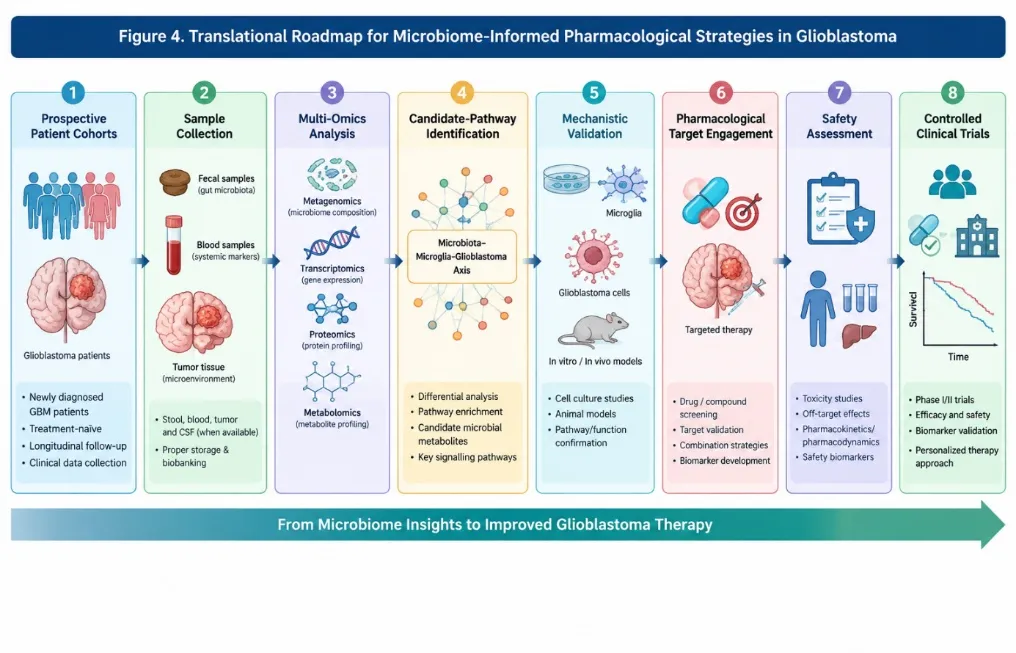
Figure 4: Translational Roadmap for Microbiome-Informed Pharmacological Strategies in Glioblastoma
8. Future Perspectives: A Testable Framework for Causal Validation
To move beyond descriptive microbiome associations, future studies should investigate the proposed axis as a sequence of testable biological events.
First, prospective studies should identify reproducible microbial functions associated with defined clinical or molecular characteristics of glioblastoma. Microbial taxonomy should be supplemented by functional metagenomics and targeted metabolomics.
Second, candidate metabolites should be tested at physiologically relevant concentrations in appropriate microglial and macrophage models. Experiments should distinguish direct effects on immune cells from indirect effects mediated by tumour cells or endothelial cells.
Third, mechanistic validation should determine whether receptor blockade, gene perturbation, or metabolic rescue reverses the observed cellular effect. This would provide stronger evidence that a particular pathway mediates the association.
Fourth, validated mechanisms should be assessed in relevant glioblastoma models, followed by independent replication and careful evaluation of drug exposure, target engagement, toxicity, and tumour-related outcomes.
Finally, promising findings should be examined in prospective human cohorts before they are used to guide clinical decisions. This staged approach could reduce the risk of translating associations into unsupported treatment claims [4,7,14–16].
CONCLUSION
The gut microbiota–microglia–glioblastoma axis represents a promising framework for investigating how intestinal microbial activity, systemic immune regulation, neuroinflammation, and tumour-associated myeloid cells may interact in glioblastoma. Microbial metabolites, inflammatory mediators, barrier-associated signalling, and myeloid-cell metabolic adaptation provide plausible connections between these biological systems.
Pharmacological approaches targeting CSF1R signalling, myeloid-cell function, inflammatory pathways, and microbial metabolism may provide opportunities to investigate these interactions and potentially improve existing treatment strategies. Nevertheless, the direction and clinical significance of microbiome-associated effects remain context-dependent, and many proposed connections have not been established in human glioblastoma.
The central research priority is to distinguish association from causation through rigorous experimental design, longitudinal clinical sampling, spatial and single-cell analysis, and pharmacological validation. Ultimately, the therapeutic value of this axis will depend on whether specific, reproducible mechanisms can be identified and safely modified to improve clinical outcomes. Until such evidence is available, microbiome-directed interventions should be regarded as investigational strategies rather than established glioblastoma treatments.
Declarations
Funding:
No specific external funding was received for the preparation of this review article.
Conflict of Interest:
The authors declare that they have no known competing financial interests or personal relationships that could have influenced the work reported in this article.
Author Contributions:
Dr. Pankaj N. Shirsath conceptualised and supervised the review, contributed to the literature review and evidence synthesis, critically revised the manuscript, and approved the final version. The student co-authors contributed to literature searching, evidence collection, manuscript drafting, and revision according to their respective contributions. All authors reviewed and approved the final manuscript.
Data Availability: Not applicable. This narrative review is based on previously published literature and does not generate new datasets.
Ethics Approval:
Not applicable. This review is based on published literature and does not involve new human participant recruitment or animal experiments.
Acknowledgements:
The authors sincerely acknowledge the management of Ashvin College of Pharmacy, Manchi Hill, Sangamner, for providing institutional support and an academic environment conducive to research. The authors express their gratitude to Dr. Dhananjay B. Deshmukh, Principal, and Prof. Prashant Palghadmal, Academic Head, for their encouragement, guidance, and support during the preparation of this review article.
REFERENCES





Dr. Pankaj Shirsath, Mahesh Gavande, Parmeshwar Bhosale, Sagar Sanap, Govardhan Shriram, Unveiling the Gut–Microbiota–Microglia–Glioblastoma Axis: Pharmacological Strategies and Molecular Insights into Neuroinflammation-Driven Brain Tumors, Int. J. of Pharm. Sci., 2026, Vol 4, Issue 11, 246-258. https://doi.org/10.5281/zenodo.23878105
 10.5281/zenodo.23878105