View Article

Abstract

Oromucosal drug delivery is swiftly revolutionising the face of patient-centric therapies, giving a rapid, sophisticated, and scientifically robust alternative to conventional oral approaches. Among these improvements, oral thin films (OTFs) have progressed from simple breath-freshening strips into polymeric platforms capable of precise dose and superior transmucosal absorption. Contemporary OTFs are driven by a wide range of polymers from natural to highly engineered synthetic varieties like chitosan, pullulan, HPMC, Eudragits, nanocellulose, thiolated polymers, and enhanced gellan derivatives designed to promote fast disintegration, faster permeation, and strong structural performance. Emerging excipient families such as cyclodextrin-based systems further unlock solubility and stability for challenging molecules. Parallel innovations in manufacturing techniques, including electrospinning, hot-melt extrusion, and 3D printing, have turned OTFs into customizable, scalable, and high-precision dosage forms. Commercial solutions like Soluleaves™, Foamburst™, and Xgel™ continue growing in creative flexibility and industrial practicality. Rigorous evaluation—spanning mechanical testing, mucoadhesion, spectroscopic profiling, and stability studies ensures global regulatory compliance. Looking to the future, OTFs are expected to exceed traditional constraints, enabling the delivery of biologics, vaccines, nanocarriers, and even CRISPR-based therapeutics powered by AI-guided development and advanced manufacturing technologies. With industry forecasts reaching USD 5 billion by 2030, oromucosal films stand at the forefront of next-generation pharmaceutical delivery. .
Keywords

Orodispersible films (ODFs), Oral thin films (OTFs), Polymer science, Mucoadhesive polymers, Thin-film drug delivery, Advanced polymeric platforms

Introduction


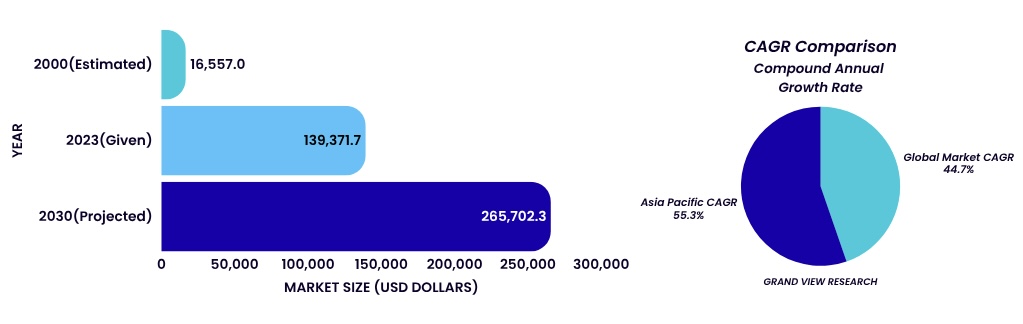
Figure 1: Market growth of oral thin films from 2000 to 2030 with global and Asia Pacific CAGR comparison.


These films are intriguing because of their mucoadhesive properties, which are detailed in the European Pharmacopoeia monograph on oromucosal preparations.[4] These films, which adhere closely to the mucosal surface, not only enable longer contact and exact dosage, but they also improve drug absorption, opening up new possibilities for both local and systemic therapy. Above all, biocompatible and biodegradable mucoadhesive films are the perfect buccal dose form because they are flexible, lightweight, patient-friendly, and scalable while remaining robust enough to endure mechanical stress.[5] In a nutshell, oral thin films turn medication administration into a sleek, efficient, and patient-centred platform.  By virtue of their ease of administration and enhanced bio-adhesion during absorption, along with USFDA approvals for buprenorphine, fentanyl and lidocaine buccal films, they have resulted in higher patient compliance than standard bio-adhesive tablets. [6] Fast-dissolving buccal films are appropriate for paediatric, geriatric, psychiatric, immobile, and recalcitrant patients, offering higher safety. Furthermore, their immediate drug release speeds the achievement of steady-state concentration, increasing therapeutic efficacy. While the restricted dosage load on a tiny surface area remains a restriction, developments such as multilayered design and 3D printing show promise in overcoming this barrier, paving the path for larger clinical applications. [7,8] Vaccines may be intelligently engineered by adjusting antigen size, surface charge, and receptor ligands, and particle form protects against breakdown in saliva. Adsorbing antigens onto chitosan particles is a straightforward technique, with sodium alginate coatings increasing stability and regulating release.[9] Building on this, therapeutic vaccinations have been investigated as rapid-dissolving buccal films with systemic or topical administration. Notably, films have been developed for pneumococcal, salmonella, and influenza vaccines, representing the platform's assuring potential. [10, 11] Thin films are particularly useful for site-specific targeting, when tablets and liquids may fall short.[12]  Oral films, which originated in the 1970s to address swallowing issues, are now available in a variety of forms, including buccal, sublingual, ophthalmic, orodispersible, wafers and strips. [13] Oral disintegrating/dissolving films or strips can be defined as drug delivery systems that quickly release the drug by dissolving or adhering in the mucosa with saliva within a few seconds, as they contain water-soluble polymers when placed in the mouth cavity or on the tongue.  Their quick breakdown in saliva, facilitated by water-soluble polymers, allows for rapid drug release and efficient mucosal absorption—especially useful for medicines with high permeability. [14].
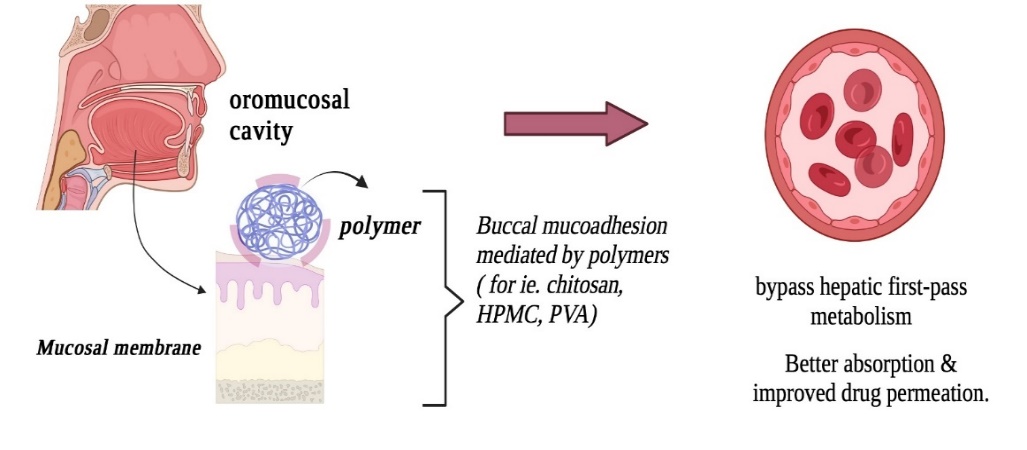


Figure 2: Polymer–Oromucosa Interaction


Fast-melting oral films are ultra-thin (50–150 µm) in size and postage-stamp sized, and they dissolve in the oral cavity in less than one minute upon contact with saliva. This produces fast drug absorption and instant bioavailability.[15,16] It is necessary to differentiate buccal films, which must sit on the cheek mucosa for an extended duration, from orodispersible films.  Therefore, it is necessary to properly differentiate among different oral film genres to avoid misclassification.[17]

CLASSIFICATION OF OTF 

There are three subtypes of oral fast-dissolving films:

Flash release. 

Mucoadhesive melt-away wafer.

Mucoadhesive sustained release wafers. [18]

PRACTICAL RELEVANCE 

Orodispersible films (ODFs) differ fundamentally from buccal films, as they disintegrate rapidly in the oral cavity without prolonged mucosal adhesion [19, 20]. By overcoming the instability and dosing challenges of aqueous formulations[21], ODFs ensure precise drug delivery with superior patient safety, particularly in paediatric, geriatric, psychiatric, and uncooperative populations. Their rapid onset of action makes them highly suitable for acute conditions such as motion sickness, asthma, and allergic episodes, while their adaptability extends to therapeutic areas including pain, gastro-oesophageal reflux, sleep disorders, and nutritional supplementation. [22] Additionally, the films' high surface area and fast disintegration enhance dissolution and bioavailability of poorly water-soluble drugs, underscoring their potential in modern pharmacotherapy.


Table 1. Commercially Available Oromucosal Products [23,24]

PRODUCT NAME

API

INDICATION

COMPANY

Listerine

pocketpaks


Cool Mint

Kill 99% of bad breath germs


Pfizer Inc


Setofilm

Ondansetron

Prevention of Nausea and Vomiting


Bioalliance Pharma


Onsolis


Fentanyl

Pain in opioid-tolerant patients


BioDelivery Sciences International


Theraflu

Dextromethorphan Hbr

Anti allergic

Novartis


ADVANCED POLYMERS FOR THE DESIGN AND DEVELOPMENT OF ORAL THIN FILMS

Rapid dissolution Hydrophilic polymers are used to create the film, which dissolves quickly on the tongue or buccal cavity and releases the medication into the bloodstream upon exposure to fluids. For orodispersable films, water-soluble polymers are employed as film formers. The water-soluble mucoadhesive polymers provide the films their mechanical qualities, pleasant mouthfeel, and quick disintegration. Increasing the molecular weight of polymer film bases slows down the pace at which the polymers break down. [25]

Traditional Polymers:

Natural Polymers:

 Chitosan

After cellulose, chitosan (β-(1, 4)-2-amino-2-deoxy-D-glucopyranose), which mainly comes from crab shells, is the second most prevalent naturally occurring non-toxic polymer. However, chitosan's limited solubility in neutral liquids is a significant disadvantage. Products made with chitosan are very viscous and are similar to natural gums. In general, pure chitosan films are compact, cohesive, and have a smooth surface devoid of holes or fissures. Like many polysaccharide-based films, chitosan films often show selective permeability to gases and resistance to fat and oil, but they do not show resistance to water transfer.[26]

Pullulan

Pullulan is a natural, extracellular microbial polysaccharide that is made by Aureobasidium pullulans, a yeast that looks like a fungus. Bearing resemblance to amylose, dextran, and cellulose, it is a neutral glucan whose chemical structure varies to some extent depending on the fermentation circumstances, the carbon supply, and the generating microbe. It has a straight α-glucan structure, with three glucose units linked ±-(1,4) and maltotriose units linked ±-(1,6). [27] Maltotriose has three glucose units linked by an α- (1,4) glycosidic bond, whereas subsequent units are linked by an α-(1,6) glycosidic bond. The regular alternation of (1 → 4) and (1 → 6) bonds lead to two unique properties: structural flexibility and increased solubility. Pullulan's unique linking pattern also gives it unusual physical characteristics, adhesive qualities, and the ability to form fibers, compression mouldings, and robust, oxygen-impermeable coatings. This polysaccharide's flexible conformation and resulting amorphous nature in the solid state are caused by the α-(1,6) connections that connect the repeating maltotriose units along the chain.[28,29]

Gelatin

Collagen, which is separated from fish, animal, and bone skins, is thermally denatured to create gelatin. A mixture of pure protein fractions produced by partially hydrolyzing animal collagen with acid (type A gelatin) or partially hydrolyzing it with alkali (type B gelatin)—or maybe a combination of the two—is referred to as

gelatin.[30]

Sodium Alginate

Alginate can also be considered a source of dietary fiber because it is an indigestible biomaterial produced by brown seaweeds (Phaeophyceae, primarily Laminaria). Sodium alginate is mostly made up of the sodium salt of alginic acid, a blend of polyuronic acids made up of leftovers from D-mannuronic acid and L-guluronic acid.[31]

Pectin

Pectin is a category of acidic polysaccharides found in fruits and vegetables, mostly derived from citrus peel and apple pomace. The uronic acid carboxyls in this complex anionic polymer are either fully (HMP, high methoxy pectin) or partially (LMP, low methoxy pectin) methyl esterified. It is made up of β-1,4-linked d-galacturonic acid residues. HMP or LMP produces good films when combined with chitosan. In fact, chitosan's cationic character makes it possible to benefit from electrostatic interactions with anionic polyelectrolytes like pectin.

Pointing out the use of edible coatings based on LMP as a pre-treatment in osmotic dehydration to improve dehydration efficiency is also intriguing. Lastly, a recent study showed that using an edible film containing pectin prevented the crumb ageing of dietetic sucrose-free sponge cake. The freshness of this sponge cake was better retained, particularly until the fifth day of storage.[32]

Synthetic Polymers:

 HPMC

The increased hydroxypropoxyl/methoxyl ratio in HPMC (commercial product Type K) causes a gel barrier to form quickly, which may postpone the release of the drugs. Rather, a high viscosity and methoxyl content (lower hydroxypropoxyl/methoxyl ratio; commercial product Type E) results in a decrease of potential hydrophilic hydroxypropyl group interactions and the formation of more extensible, rigid, and resistant polymeric matrices. By combining HPMC with different polymers, its properties may be altered. For instance, it has been found that adding glycerine and PEG 400 decreases the films' tensile strength while increasing their flexibility. Rather, the addition of PVP improved the films' tensile strength and flexibility. [33]

Eudragit

Eudragits are artificial polymers made by polymerizing methacrylic acids or their esters, such as butyl ester or dimethylaminoethyl ester, with acrylic acid (prop 2-enoic acid; CH2=CHCOOH). Eudragit RS 100 (Type B) – poly(ethyl acrylate, methyl methacrylate, trimethyl aminoethyl methacrylate chloride) mostly comes as granules with low permeability and has sustained release applications[34]

Eudragits are widely used as pH-dependent coating polymers to provide colon targeting or enteric impact for medications. The commonly held belief that the pH of the human gastrointestinal tract rises gradually from the stomach (2.0–3.0), small intestine (6.5–7.0), and colon (7.0–8.0) forms the basis for the usual design of pH-dependent systems.[35] Eudragit RL (very permeable), Eudragit RS (low permeable), Eudragit NE (permeable), and Eudragit NM (permeable) are among the grades of Eudragit that are water insoluble yet swellable across the physiological pH range, making them appropriate for sustained release film coating applications.[36]

 Advanced & Chemically Modified Polymers:

Gellan Gum derivatives

The microbial fermentation of Sphingomonas elodea or Pseudomonas elodea produces gellan gum (GG), a naturally occurring anionic polysaccharide that is non-toxic, biodegradable, and economical. GG is a heteropolysaccharide that comes in two forms and is made up of D-glucose, D-glucuronic acid, and L-rhamnose in a 2:1:1 ratio. [37] By using different production techniques, chemical alterations, mechanical agitation, or polymer and additive mixes, different physical, mechanical, and biological characteristics can be obtained. Gellan gum has been used in research on a variety of form factors for biomedical applications, such as hydrogels, films, beads, and nanohydrogels.[33] These gellan gum derivatives are mostly used in cancer treatment in the form of patches, hydrogels or various other forms. Through chemical alterations, Tsai et al. created a unique gellan gum patch for localised clioquinol administration, with the goal of treating early-stage oral cancer and facilitating wound healing following tumour excision. A solution of glucosamine and clioquinol was mixed with gellan gum, dried into a thin film, then crosslinked with EDC. The addition of glucosamine improved the mechanical strength and stability of the resultant cross-linked films. [38]

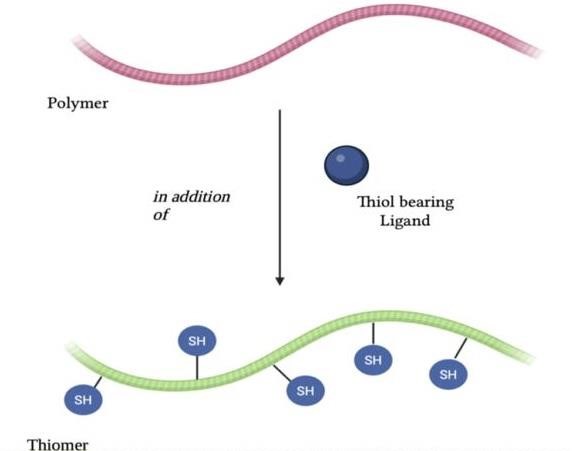
Thiolated Polymers (Thiomers)

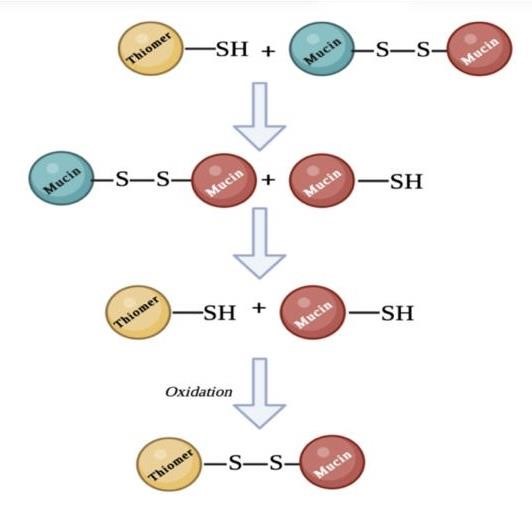
Thiolated polymers, often known as thiomers, are a presumed new class of mucoadhesive polymers [39]. Either thiol/disulfide exchange processes or a straightforward oxidation process of free thiol groups are used to create disulfide connections between the thiomer and the mucus gel layer. A review of the many kinds of mucus glycolproteins, also known as specified mucins, that display cysteine-rich subdomains has already been

conducted.[40]


Figure 4: Thiolated Polymers [Thiomers].


Mucins with cysteine-rich subdomains are typically found on all mucosal surfaces. Disulfide bonds, in contrast to noncovalent bonds, are unaffected by variables like pH and ionic strength. The quantity of thiolate anions, the reactive form for thiol/disulphide exchange reactions and oxidation processes, determines the rate and magnitude of disulphide bond formation.[39]

Recently, there has been evidence that thiomers and the mucus gel layer create covalent connections. (Leitner et al.) were able to demonstrate the creation of disulfide connections between thiolated polymers and mucus glycoproteins using four distinct techniques: rheological, diffusion, gel penetration, and specific mucoadhesion

tests.[40]

Carboxymethylcellulose – Grafted Polymers

A matrix that can sustain bacterial viability and metabolic activity while permitting the rapid and effective release of the cells is necessary for probiotic administration via OTFs. 

A naturally occurring polymer made from cellulose, carboxymethyl cellulose (CMC) dissolves readily in water and is harmless. [41] Compared to other cellulose derivatives, CMC differs in two keyways. First, the hydrophilic groups (CH2COO−) affect hydrogen bonding and water absorption; second, inhomogeneous substitution of the CH2COO− groups in both substituted position and degree enhances the complexity of hydrogen bonds. Because of its great hydrophilicity, thermogravimetric measurement reveals that CMC retained water molecules even after being dried in a vacuum oven for 24 hours at 50°C. [42] The presence of water causes hydrogen bonds to form between polymer chains (hydrophilic OH and COO− groups) and water molecules. [43] It has been discovered that CMC is a polyanionic polymer with bioadhesive qualities. CMC can stick to some biological surfaces more firmly than most non-ionic cellulose derivatives. Because of this characteristic, CMC is a desirable platform for transdermal and transmucosal uses. [44]

Cyclodextrin-polymers

In the scientific world, cyclodextrins (CDs) are widely recognized for their ability to solubilize poorly soluble medications. Additionally, CD exhibits inherent bioactivity to treat conditions including Niemann-Pick type C and atherosclerosis[45]. With six, seven, and eight glucose units, respectively, the natural α, β, and γ-CDs are the most prevalent. The CD ring is an amphiphilic conical cylinder with a lipophilic interior and a hydrophilic outer layer made primarily of hydroxyl groups. It has been demonstrated that several chemically produced derivatives (such as hydroxypropyl-β-CD or methyl-β-CD, among others) and polymers have superior complexation efficiency or release compared to natural CDs, which may be used to enhance the characteristics of CD monomers[46] At the same medication concentration, the right formulation may improve the efficacy of treatments. Certain effects of complexation, such as increased bioaccessibility, drug stabilization, or target delivery, may impact the overall efficacy of the therapy, in contrast to the effects of increasing the amount of drug to achieve the dosage; CD monomers and polymers have shown genuine capacities in this area[47]. The design of polymeric cyclodextrins is based on their ability to form host-guest complexes with polymeric chains or with the side chains of a polymeric backbone through hydrophobic forces, or on the reactivity of their OH groups. Such polymers are expected to have used in catalysis, separation procedures, and the regulated release of bioactive substances. The following methods have been used to create cyclodextrin polymers:

Using bi- or multifunctional reagents for crosslinking 

Acrylic monomers with pendant cyclodextrin units polymerized 

Attaching to a backbone of polymers

physical trapping in various polymeric chains; covalent bonding [48].

Chitosan derivatives (e.g., Trimethyl chitosan):

The absorption-enhancing characteristics of trimethylated chitosan (TMC), a partly quaternized chitosan derivative, have been widely investigated (Kotzé et al. 1999).[49] TMC is effective in neutral and basic conditions, where normal chitosan salts fail, making it easier to transport hydrophilic medicines like proteins and peptides. Another derivative, Mono-N-carboxymethyl chitosan (MCC), has been studied for its absorption enhancing properties [50]

Despite its microfibrillar structure, chitin is insoluble in ordinary organic solvents, resulting in the production of chitosan (CS), an N-deacetylated derivative [51]. Chitosan easily produces quaternary nitrogen salts at low pH and dissolves in organic acids, including lactic, formic, and acetic acids (often 1% acetic acid, pH ~4.0). It dissolves in diluted nitric acid and 1% hydrochloric acid but is insoluble in phosphoric and sulphuric acid. Chitosan may be depolymerised by high temperatures or concentrated acetic acid. It is soluble at low acetylation (DA) with an average ionisation of ~0.5, comparable to pH 4.5-5 in HCl [50].

Nanocellulose-based films:

Nanocellulose, a nanoscaled, renewable, and biodegradable natural substance, comes from a range of sources, including bacteria, plants, and animals, making it ideal for drug delivery applications (Babu et al. 2013).[52] Its high degree of polymerisation and wide surface area-to-volume ratio give good loading and binding capabilities, enabling precise regulation of drug release processes. Cellulose nanocrystals (CNC) are made from natural cellulose found in a variety of sources, including wood, hemp, cotton, flax, wheat straw, mulberry bark, ramie, avicel, potato tuber, sugar beetroot, tunicin, and algae.[53]

Nanocellulose's exceptional features, including its unique surface chemistry, superior physicochemical strength, and plenty of hydrophilic groups for modification, have sparked widespread interest. Beyond its mechanical benefits, nanocellulose has biological advantages such as recyclability, bioactivity, and non-toxicity, as well as being ecologically benign.[54] To produce micro-reinforcing materials, intense shear pressures are used to break cellulose fibres along their longitudinal axis. The most often used mechanical procedures are ultrasonication, high-pressure homogenisation, and ball milling.[55]

FORMULATION APPROACH 

Solvent Casting Method

Solvent casting, the most popular technique for fast-dissolving oral films, dissolves water-soluble polymers in an aqueous medium, then mixes in the API and excipients, casts the solution onto a backing layer, dries it, and packages it in moisture-resistant laminates to ensure uniformity and stability.[56]

Hot Melt Extrusion.

Hot melt extrusion involves mixing the medicine with solid carriers, melting it in an extruder, and shaping it into films using dies. The benefits include fewer processing stages, improved content consistency, and an anhydrous process.[57]

Rolling Process

Polymers, plasticisers, solvents, and APIs are combined, blended, and fed into rollers to form controlled-thickness films, which are then dried and cut to the required size.[58]

Solid Dispersion Method 

The Solid Dispersion Method involves dispersing APIs in inert carriers (often using HME) and forming films with dies to improve drug solubility and homogeneity.[59]

Electrospinning Method

A drug-polymer solution is extruded through a needle under ~15 kV voltage, resulting in ultrafine nanofibers and fast-dissolving films. Film characteristics are determined by flow rate, distance, and humidity.[60]

Innovative technology

 BioProgress has created platform technologies such as  

SoluleavesTM is a vegetable-based polymer film that contains extremely few active ingredients and flavour. It dissolves rapidly on the tongue, conceals flavours better, and is easier to use and move around. Evidently, there is a sugar-free variant that is suitable for diabetics, is aqueous and solvent-free, and may be combined with a range of vitamins, flavourings, and APIs. The technology is patent-protected, ensuring the new formulation's integrity. 

Foamburst™ is a version of Soluleaves™ that injects inert gas during film creation. This creates a honeycombed structure that melts quickly and delivers a unique feeling, increasing patient tolerability. 

XgelTM films, made from safe, water-soluble polymers, may encapsulate any oral dosage form and dissolve in either cold or hot water, providing versatility in drug delivery applications. [61,62]

3D printing

The 3D printing process is reinventing oral film technology. By accurately depositing APIs onto a pre-formed base and fine-tuning the dosage using stacked API-loaded inks.[63] it provides unprecedented control. Flexographic printing distinguishes itself from other processes because of its exceptional consistency and scalability. What makes this strategy particularly fascinating is its safety advantage—APIs are delivered only during the printing process, reducing hazards when working with powerful or dangerous medications. But the true innovation is its adaptability: personalised dosage, multi-drug combinations, and on-demand production, all suited to patient needs. Far from merely being innovative, 3D printing is emerging as a game changer in the era of patient-driven medication delivery – a technology that piques interest and has the potential to influence the future of medicine. [64]

DRUG SELECTION CRITERIA FOR BUCCAL PATCHES/OTF [65]

Moderate lipophilicity (log P 1-3)

High solubility in saliva (for fast release)

Non-irritant to oral mucus 


Table 2. Drug Selection Parameters FOR BUCCAL PATCHES/OTF

CRITERIA

IDEAL CHARACTERISTICS

Dose

50 mg

Log P

2.0 - 2.3

pH

6.6 - 6.8

Stability

Stable in saliva content

Molecular weight

240.75 g/mol


MECHANICAL PROPERTIES OF ORODISPERSIBLE FILMS 

Tensile Strength:

The maximum tensile load that a thin film can withstand before breaking is known as its tensile strength. It is calculated by multiplying the result by 100% and dividing the force at the failure point by the cross-sectional area of the film.

Measurement: Tensile strength (TS) is measured using a tensiometer. A 2 cm x 2 cm film sample is held longitudinally and loaded gradually. The initial cross-sectional area (A) of the film should be recorded for each sample, along with the amount of elongation. This test helps to determine the film's resistance to mechanical

stress.[66]

Drug content uniformity:

To assess content uniformity of a drug, the standard assay procedure outlined in the pharmacopoeia for the API is deployed. Each strip's estimated API content is used to calculate content uniformity. Only 90–11% of the content is uniform. For determination, Gas Chamber (GC) Chromatography is advised by the US Pharmacopoeia.[67]

Moisture content:

Films with too much water become sticky, while those with too little become fragile and brittle. Since it affects the mechanical properties, time of disintegration, and stability of orodispersible film formulations, water content is a fundamental parameter. Residual water in the films is typically measured with different techniques, including Karl Fischer titration, loss on drying, or dynamic vapour permeability.[68]

Mucoadhesion:

Despite its complexity, the mucoadhesion phenomenon is often broken down into two distinct phases: the contact phase and the consolidation phase. The primary determinants in the contact stage are the material's capacity to hydrate and spread as well as the interfacial forces between the material and substrate. The film will begin to dehydrate the mucus gel layer during the contact process and hydrate itself, which will start the polymeric chains' penetration into the mucus and vice versa.[69]

Thickness:

Calibrated digital vernier callipers are utilised to measure the film thicknesses. Each film is ought to be measured four times, and the average value must be reported.[70]

 Transparency:

A simple UV spectrophotometer can be used to determine the transparency of the film. Slice the film sample into rectangles, then place them on the inside of the spectrophotometer's cell. The transmittance of the film should be determined at 600nm [71]                                                                  

Folding endurance:

The number of times a film can be folded at the same spot without tearing is known as folding endurance. The technique is used to measure the mechanical properties of the film. The film's mechanical strength and folding endurance are directly related. Since the mechanical strength of the film is affected by the concentration of plasticizer, the amount in turn has an indirect impact on its ability to fold.[72]

 FT-IR Interaction study:

Using potassium bromide (KBr) pellet technique and the Fourier Transform Infrared (FTIR) spectrometer, the likely mechanisms involving U. tomentosa extract and FDOFs were predicted. The 4000–400 cm?¹ wave number was used to scan the sample [73]

Stability:

According to ICH guidelines, the OTFs are stored for three months at 40?C ± 2?C/75 ± 5% RH for stability testing. The physical appearance, tackiness, surface pH, disintegration time, and dissolution profiles are required to be examined while they are being stored.[73]

In vitro cytotoxicity studies:

C20A4 chondrocyte culture and maintenance: The chondrocytes are cultivated in an incubator at 37°C with 5% CO? in RPMI-1640 (10% foetal bovine serum (FBS), 10 U antibiotic/ml) (Sigma Aldrich) medium. Every three days, the growth medium must be replaced, and the chondrocytes should be passaged using a 1:3 trypsin-EDTA solution (0.05%). For cell culture studies, chondrocytes from the first passage are employed.[73]

 In vitro disintegration time:

A setup of a glass Petri dish filled with 10 mL of distilled water, and the film meticulously being positioned at the centre should be undisturbed; the duration for the film to entirely disintegrate into fine particles is documented. Each formulation is tested in four replicates, and the average disintegration time is to be determined. The mean disintegration times are statistically analysed using a nonpaired Student’s t-test (Data Analysis Tool, MS Excel 2000). A difference in means was deemed statistically significant at P < 0.05.[74]

X-ray diffraction:

The physical form of the films and starting materials—whether crystalline or amorphous is examined using the XRD method. A Goebel mirror is used as a monochromator to generate a focused monochromatic CuK α1&2 primary beam (λ = 1.54184 Å) with exit slits measuring 0.6 mm, in conjunction with a Lynx eye detector for experimental assessment.[75]

Differential scanning colorimetry (DSC):

Using DSC, the thermal behaviour of optimised films is examined in order to investigate how the addition of excipients and medication to the films affected their characteristics. A Q2000 (TA Instruments) calorimeter was used to analyse the films and raw materials. A constant nitrogen purge (100 ml/min) is used to heat 2.5 mg of each sample from -40 to 180°C at a rate of 10°C/min in hermetically sealed T0 aluminium pans with a pinhole in the lid.[75]

Scanning electron microscopy:

Scanning electron microscopy (SEM) is utilised to analyse the morphology of raw materials and films. This technique involves cryo-fracturing the film by immersing it in liquid nitrogen and affixing it to an aluminium stub with a double-sided conductive adhesive. Each sample must be generally analysed at an accelerating voltage of 20 kV and a magnification of 200×.[76]

REGULATORY ASPECT

A product can use the simplified ANDA method to avoid long clinical trials in the US if it matches the performance of an existing oral medication. By strictly adhering to the GMP principles outlined in Schedule M and the purity and strength criteria outlined in the Indian Pharmacopoeia, the CDSCO in India maintains the public's faith in the pharmaceutical industry. [77]

In a similar vein, the Therapeutic Goods Administration (TGA) of Australia safeguards the public by imposing rigorous Good Manufacturing Practice (GMP) regulations and checking that all medicinal products are up to par with the country's exacting standards for both reliability and effectiveness. Tolerability, local irritation, and in vivo behaviour evaluations are just a few of the areas that the European Medicines Agency (EMA) insists on seeing in novel oral therapeutic factors (OTFs). [78] Manufacturing, registration, and transparent labelling are all closely monitored by Brazil's ANVISA, while every health product fulfils South Africa's SAHPRA's rigorous standards for quality and informed use.[79]

All these international standards concur that OTFs can't contain any excipients that aren't GRAS-certified, which shows how seriously everyone takes patient safety and pharmaceutical quality.

FUTURE PROSPECTS 

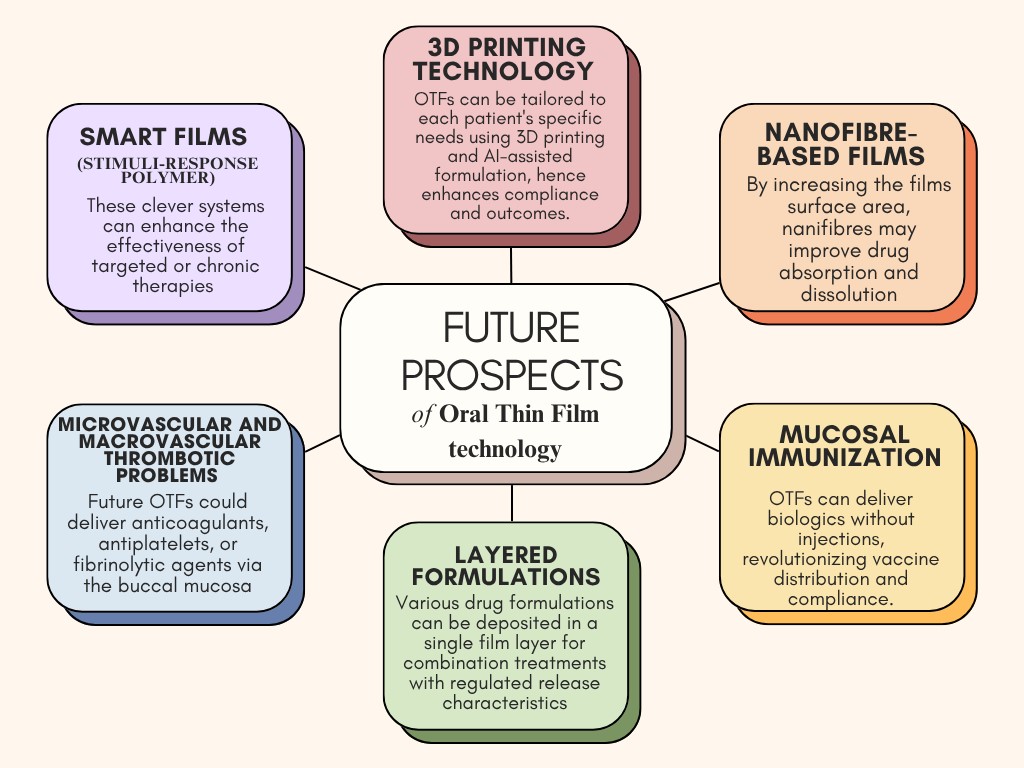
Orodispersible films (ODFs)/OTFs are at the forefront of next-generation pharmaceutical discovery, having enormous potential to transform medication delivery by providing patient-centred, environmentally sustainable, and customisable options. Emerging technologies, such as AI integration, digital health platforms, nanotechnology, and advanced polymer science, are likely to broaden their focus beyond traditional pharmaceuticals to encompass biologics, peptides, vaccines, and poorly soluble compounds, with potential for paediatric, geriatric, and psychiatric treatment.[80]

This expanding technical environment not only broadens the reach of ODFs in both traditional and novel pharmaceutical classes, but it also links with cutting-edge gene-based approaches. In this context, recent discoveries in gene therapy indicate CRISPR's potential use in OTF technology. CRISPR tools are now being studied for their potential to control oral infections and host tissues while also allowing for tissue engineering and regenerative repair. These advances may eventually lead to the development of oral thin films capable of targeted, rapid, or gene-mediated therapeutic action.[81]

The worldwide oral thin films market is expected to rise from USD 3.30 billion in 2025 to USD 5.21 billion by 2030, suggesting increased acceptance in pharmaceutical and nutraceutical applications (Mordor Intelligence, 2025).[82] This aligns with earlier projections by Grand View Research et al[2].


REFERENCES

  1. Kraisit P, Imtiaz SM, Kraisit P, Phaechamud T, Rojanarata T, Ngawhirunpat T, et al. Preparation and characterization of hydroxypropyl methylcellulose/polycarbophil mucoadhesive blend films using a mixture design approach. Chem Pharm Bull. 2017;65(3):284-294
  2. Grand View Research. Buccal Drug Delivery Systems Market Size Report, 2024–2030 [Internet]. 2024 Oct 31 [cited 2025 Nov 17]. Available from: https://www.grandviewresearch.com/industry-analysis/buccal-drug-delivery-systems-market.
  3. Bala R, Pawar P, Khanna S, Arora S, Bansal M, Kaur J, et al. Orally dissolving strips: A new approach to oral drug delivery system. Int J Pharm Investig. 2013;3(2):67.


  1. Preis M, Knop K, Breitkreutz J. Oromucosal film preparations: classification and characterization methods. Expert Opin Drug Deliv. 2013;10(9):1303-1317.
  2. Semalty M, Semalty A, Kumar G. Formulation and characterization of mucoadhesive buccal films of glipizide. Indian journal of pharmaceutical sciences. 2008 Jan;70(1):43.
  3. Montero-Padilla, Soledad, Sitaram Velaga, and Javier O. Morales. "Buccal dosage forms: general considerations for pediatric patients." AAPS PharmSciTech 18 (2017): 273-282.
  4. Montenegro-Nicolini, Miguel, Víctor Miranda, and Javier O. Morales. "Inkjet printing of proteins: an experimental approach." The AAPS journal 19 (2017): 234-243.
  5. Palem, Chinna Reddy, et al. "Development, optimization and in vivo characterization of domperidonecontrolled release hot-melt-extruded films for buccal delivery." Drug development and industrial pharmacy 42.3 (2016): 473-484.
  6. Borges, Olga, et al. "Preparation of coated nanoparticles for a new mucosal vaccine delivery system." International journal of pharmaceutics 299.1-2 (2005): 155-166.
  7. Uddin, Mohammad Nasir, et al. "Overview and future potential of fast dissolving buccal films as drug delivery system for vaccines." Journal of Pharmacy & Pharmaceutical Sciences 22 (2019): 388-406.
  8. Kraan, Heleen, et al. "Buccal and sublingual vaccine delivery." Journal of controlled release 190 (2014): 580-592.
  9. Karki, Sandeep, et al. "Thin films as an emerging platform for drug delivery." asian journal of pharmaceutical sciences 11.5 (2016): 559-574.
  10. Irfan, Muhammad, et al. "Orally disintegrating films: A modern expansion in drug delivery system." Saudi pharmaceutical journal 24.5 (2016): 537-546.
  11. Hao, Jinsong, and Paul WS Heng. "Buccal delivery systems." Drug development and industrial pharmacy 29.8 (2003): 821-832.
  12. Juluru, Naga Sowjanya. "Fast dissolving oral films: A review." Int. J. Adv. Pharm. Biol. Chem 2.1 (2013): 108-112.
  13. Siddiqui, M. N., Garima Garg, and Pramod Kumar Sharma. "A short review on “A novel approach in oral fast dissolving drug delivery system and their patents”." Adv Biol Res 5.6 (2011): 291-303.
  14. Hoffmann, Eva Maria, Armin Breitenbach, and Jörg Breitkreutz. "Advances in orodispersible films for drug delivery." Expert opinion on drug delivery 8.3 (2011): 299-316.
  15. Arya, Arun, et al. "Fast dissolving oral films: an innovative drug delivery system and dosage form." Int J ChemTech Res 2.1 (2010): 576-83.
  16. Borges, Ana Filipa, et al. "Oral films: Current status and future perspectives: I—Galenical development and quality attributes." Journal of Controlled Release 206 (2015): 1-19.
  17. Amin, Prakruthi M., A. B. Gangurde, and Pranali V. Alai. "Oral film technology: challenges and future scope for pharmaceutical industry." Int J Pharm Pharm Res 3.3 (2015): 184-203.
  18. Reddy, Muthadi Radhika. "An Introduction to Fast Dissolving Oral Thin Film Drug Delivery Systems: A Review." Journal of Pharmaceutical Sciences and Research 12.7 (2020): 925-940.
  19. ?Patel, Viralkumar F., Fang Liu, and Marc B. Brown. "Advances in oral transmucosal drug delivery." Journal of controlled release 153.2 (2011): 106-116.
  20. Sri, Manisha & Sultana, Sk & Mahathi, K & Parveen, P & Prathima, B & Seethadevi, A. (2019). Novel Oral Drug Delivery System: Fast Dissolving Buccal Films.
  21. Mahboob, Muhammad Bilal Hassan, et al. "Oral films: A comprehensive review." International Current Pharmaceutical Journal 5.12 (2016): 111-117.
  22. Pathare, Yogyata S., Vishakha S. Hastak, and Amruta N. Bajaj. "Polymers used for fast disintegrating oral films: a review." Polymer 14 (2013): 169-178.
  23. Skurtys, Olivier, et al. Food hydrocolloid edible films and coatings. Hauppauge: Nova Science Publishers, Incorporated, 2014.
  24. Cheng, Kuan-Chen, Ali Demirci, and Jeffrey M. Catchmark. "Enhanced pullulan production in a biofilm reactor by using response surface methodology." Journal of industrial microbiology and biotechnology 37.6 (2010): 587-594.
  25. Kulkarni, A. S., et al. "Exploration of different polymers for use in the formulation of oral fast dissolving strips." J Curr Pharm Res 2.1 (2010): 33-35.
  26. Islam, M. Shahidul, et al. "Fabrication of pullulan/silver nanoparticle composite nanospheres using electrospray technique for antibacterial applications." Int. J. Basic & Appl. Sci 11.1 (2011): 36-40.
  27. Gómez-Guillén MC, Giménez B, López-Caballero ME, Montero MP. Functional and bioactive properties of collagen and gelatin from alternative sources: A review. Food Hydrocolloids. 2011;25(8):1813-27.
  28. Wu, Y., et al. "Moisture loss and lipid oxidation for precooked ground?beef patties packaged in edible starch?alginate?based composite films." Journal of food science 66.3 (2001): 486-493.
  29. Korhonen, Kristiina. "Development of thin film formulations for poorly soluble drugs." (2017).
  30. Villarreal-Otalvaro, Carolina, and Jeannine M. Coburn. "Fabrication methods and form factors of gellan gum-based materials for drug delivery and anti-cancer applications." ACS Biomaterials Science & Engineering 9.7 (2021): 3832-3842.
  31. Thakral, Seema, Naveen K. Thakral, and Dipak K. Majumdar. "Eudragit®: a technology evaluation." Expert opinion on drug delivery 10.1 (2013): 131-149.
  32. Davenport HW. Physiology of the digestive tract. 3rd edition. Year Book Medical Publishers; New York: 1971.
  33. Liu, Fang, and Abdul W. Basit. "A paradigm shift in enteric coating: achieving rapid release in the proximal small intestine of man." Journal of controlled release 147.2 (2010): 242-245.
  34. Modi, A., Sanal, R., Suresh, A., & Saraswathy, M. (2025). Enhanced mucoadhesive properties of ionically cross-linked thiolated gellan gum films. Journal of Biomaterials Science, Polymer Edition, 36(2), 137-151.
  35. Tsai, Wanchi, et al. "Preparation and characterization of gellan gum/glucosamine/clioquinol film as oral cancer treatment patch." Materials Science and Engineering: C 82 (2018): 317-322.
  36. Bernkop-Schnürch, A. (2005). Thiomers: a new generation of mucoadhesive polymers. Advanced drug delivery reviews, 57(11), 1569-1582.
  37. Leitner, V. M., Walker, G. F., & Bernkop-Schnürch, A. (2003). Thiolated polymers: evidence for the formation of disulphide bonds with mucus glycoproteins. European Journal of Pharmaceutics and Biopharmaceutics, 56(2), 207-214.
  38. Saha, S., Tomaro-Duchesneau, C., Daoud, J. T., Tabrizian, M., & Prakash, S. (2013). Novel probiotic dissolvable carboxymethyl cellulose films as oral health biotherapeutics: in vitro preparation and characterization. Expert opinion on drug delivery, 10(11), 1471-1482.
  39. Javanbakht, S., & Shaabani, A. (2019). Carboxymethyl cellulose-based oral delivery systems. International journal of biological macromolecules, 133, 21-29.
  40. Adinugraha, M. P., & Marseno, D. W. (2005). Synthesis and characterization of sodium carboxymethylcellulose from cavendish banana pseudo stem (Musa cavendishii LAMBERT). Carbohydrate Polymers, 62(2), 164-169.
  41. Jiménez-Castellanos, M. R., Zia, H., & Rhodes, C. T. (1994). Design and testing in vitro of a bioadhesive and floating drug delivery system for oral application. International Journal of Pharmaceutics, 105(1), 65-70.
  42. Matencio, A., Hoti, G., Monfared, Y. K., Rezayat, A., Pedrazzo, A. R., Caldera, F., & Trotta, F. (2021). Cyclodextrin monomers and polymers for drug activity enhancement. Polymers, 13(11), 1684.
  43. Salazar, S., Guerra, D., Yutronic, N., & Jara, P. (2018). Removal of aromatic chlorinated pesticides from aqueous solution using β-cyclodextrin polymers decorated with Fe3O4 nanoparticles. Polymers, 10(9), 1038.
  44. Matencio, A., Hernández-García, S., García-Carmona, F., & López-Nicolás, J. M. (2019). A way to increase the bioaccesibility and photostability of roflumilast, a COPD treatment, by cyclodextrin monomers. Polymers, 11(5), 801.
  45. Mocanu, G., Vizitiu, D., & Carpov, A. (2001). Cyclodextrin polymers. Journal of bioactive and compatible polymers, 16(4), 315-342.
  46. Kotzé AF, Thanou M, Luessen HL, de Boer BG, Verhoef JC, Junginger HE. Effect of the degree of quaternization of N-trimethyl chitosan chloride on the permeability of intestinal epithelial cells (Caco-2). Eur J Pharm Biopharm. 1999 May;47(3):269-74. doi: 10.1016/s0939-6411(99)00006-5.
  47. Kumar, M. R., Muzzarelli, R., Muzzarelli, C., Sashiwa, H., & Domb, A. J. (2004). Chitosan chemistry and pharmaceutical perspectives. Chemical reviews, 104(12), 6017-6084.
  48. Rathke, T. D., & Hudson, S. M. (1994). Review of chitin and chitosan as fiber and film formers. Journal of Macromolecular Science, Part C: Polymer Reviews, 34(3), 375-437.
  49. Babu SS, O'Connor K, Seeram R. Cellulose-Based Biomaterials for Energy Applications. Materials. 2013 Jul;6(7):3538-72. doi:10.3390/ma6073538.
  50. Hasan, N., Rahman, L., Kim, S. H., Cao, J., Arjuna, A., Lallo, S., ... & Yoo, J. W. (2020). Recent advances of nanocellulose in drug delivery systems. Journal of pharmaceutical investigation, 50(6), 553-572.
  51. Valsalan, A., & Sivaranjana, P. (2022). Development of biodegradable films using nanocellulose for food packaging application. Analytical Methods in Environmental Chemistry Journal, 5(04), 20-42.
  52. Amara, C., El Mahdi, A., Medimagh, R., & Khwaldia, K. (2021). Nanocellulose-based composites for packaging applications. Current Opinion in Green and Sustainable Chemistry, 31, 100512.
  53. Chandramouli, Manasa, et al. "Oral thin-films from design to delivery: a pharmaceutical viewpoint." Biointerface Res Appl Chem 13.2 (2022): 177-0.
  54. Kaur R., Bala R., Malik D., A Novel Approach In Oral Fast Dissolving Drug Delivery System- A Review, American Journal of PharmaTech Research 2012; 2:1: 88 – 104
  55. Jangra, P.K.; Sharma, S.; Rajni, B.; ?Fast dissolving oral films: novel way for oral drug delivery?,International journal of universal pharmacy and bio sciences, 2014; 03(01): 06-29. 12.
  56. C. Fankhauser, G. Slominski, S. Meyer, Disintegrable oral films, Google Patents, 2007.
  57. Qin, Ze-yu, et al. "Fast dissolving oral films for drug delivery prepared from chitosan/pullulan electrospinning nanofibers." International journal of biological macromolecules 137 (2019): 224-231.
  58. Kushwaha, Vanksha, et al. "A review on fast dissolving formulation technologies." World Journal of Pharmacy and Pharmaceutical Sciences 4.7 (2015): 574-85.
  59. Singh, Mahaveer, and Hemant R. Jadhav. "Fast dissolving oral films." Current Advances in Drug Delivery Through Fast Dissolving/Disintegrating Dosage Forms. Bentham Science Publishers, 2017. 318-356.
  60. Janen EM, Schliephacke R, Breitenbach A, et al. Drug-printing by flexographic printing technology- A new manufacturing process for orodispersible films. Int J Pharm 2012;441:818-25
  61. Buanz ABM, Saunders MH, Basit AW, et al. Preparation of personalised-dose salbutamol sulphate oral films with thermal ink-jet printing. Pharm Res 2011;28:2386-92
  62. Renoux, Gérard. "The general immunopharmacology of levamisole." Drugs 20.2 (1980): 89-99.
  63. Bhattacharyya S, Rangarao BG. Formulation development of oral disintegrating film of fexofenadine hydrochloride. Acta Pharm. Sci. 2022;60(4):346. doi: 10.23893/1307-2080.APS6023
  64. Liew, Kai Bin, et al. "Orally Disintegrating Film: A Review of Its Formulation and Manufacturing Method." Malaysian
  65. Bhaskar R, Ola M, Khade S, Pawar A, Tikhe R, Madwe V, et al. Oral Thin Films: A Modern Frontier in Drug Delivery Systems. J. Drug Delivery Ther. [Internet]. 2025 Apr. 15 [cited 2025 Jun. 23];15(4):150-64.
  66. Boddupalli, Bindu M et al. “Mucoadhesive drug delivery system: An overview.” Journal of advanced pharmaceutical technology & research vol. 1,4 (2010): 381-7. doi:10.4103/0110-5558.76436
  67. Kumar, Prem & Sanganal, Jagadeesh & Manohara, C & Kb, Swamy & Shridhar, Dr & Hd, Narayana & Sg, Ramachandra & Ayalasomayajula, Phani. (2014). Preparation, Characterization and In Vitro Drug Release Studies of 6-mercaptopurine Thin Film. Science, Technology and Arts Research Journal. 3. 63-67. 10.4314/star.v3i2.8.
  68. Sharma, Deepak & Kaur, Daljit & Verma, Shivani & Singh, Davinder & Singh, Mandeep & Singh, Gurmeet & Garg, Rajeev. (2015). Fast Dissolving Oral Films Technology: A Recent Trend For An Innovative Oral Drug Delivery System. International Journal of Drug Delivery. 7. 60-75.
  69. Kittipongpatana, Ornanong S et al. “Fabrication and Characterization of Orodispersible Composite Film from Hydroxypropylmethyl Cellulose-Crosslinked Carboxymethyl Rice Starch.” Membranes vol. 12,6 594. 4 Jun. 2022, doi:10.3390/membranes12060594
  70. Sowjanya, J. Naga, and P. Raja Rao. "Development, optimization, and invitro evaluation of novel fast dissolving oral films (FDOF's) of Uncaria tomentosa extract to treat osteoarthritis." Heliyon 9.3 (2023).
  71. G. Prem Kumar, A.R. Phani, R.G.S.V. Prasad, Jagadeesh S. Sanganal, N. Manali, R. Gupta, N. Rashmi, G.S. Prabhakara, C. Paul Salins, K. Sandeep, D.B. Raju, Polyvinylpyrrolidone oral films of enrofloxacin: Film characterization and drug release,International Journal of Pharmaceutics,Volume 471, Issues 1–2, 2014
  72. Khan, Sajjad, et al. "Formulation, characterisation and stabilisation of buccal films for paediatric drug delivery of omeprazole." Aaps Pharmscitech 16.4 (2015): 800-810.
  73. Tejada, G., et al. "Development and evaluation of buccal films based on chitosan for the potential treatment of oral candidiasis." Aaps Pharmscitech 18.4 (2017): 936-946.
  74. Patel RP, Deshmukh P, Patel S. Regulatory landscape of pharmaceuticals in India: An overview. Regulatory Toxicology and Pharmacology. 2021 Sep; 124:104930. doi: 10.1016/j.yrtph.2021.104930.
  75. Karagianni A, Vlachou M, Bikiaris D. Regulatory aspects and quality control strategies of oral thin films for drug delivery: An overview. European Journal of Pharmaceutical Sciences. 2021 May;157:105603. doi:10.1016/j.ejps.2020.105603.
  76. Moeti, Lerato et al. “The Implementation of a Risk-Based Assessment Approach by the South African Health Products Regulatory Authority (SAHPRA).” Pharmaceutical medicine vol. 37,1 (2023): 71-91. doi:10.1007/s40290-022-00452-w
  77. Sagili SP, Deepika PP, Pavuluri E, Bai NJL, Priyadarshini KS, Kumar MS, Ramu B. Design and Characterization of Fast-Dissolving Oral Film of Apixaban. Zhongguo Ying Yong Sheng Li Xue Za Zhi. 2024 Aug 28;40:e20240022. doi: 10.62958/j.cjap.2024.022. PMID: 39191637.
  78. Preksha Patel, Anuradha Prajapati, Sachin B. Narkhede, Shailesh Luhar, Pooja Patel. Crispr-Based Drug Delivery and Therapeutics in Gene Therapy: A Comprehensive Review. Research Journal of Pharmaceutical Dosage Forms and Technology. 2025; 17(4):273-8. doi: 10.52711/0975-4377.2025.00038
  79. Mordor Intelligence. Oral Thin Films Market Size, Trends & Forecast Report [Internet]. 2025 Jul 29 [cited 2025 Nov 18]; Available from: https://www.mordorintelligence.com/industry-reports/oral-thin-films-market

Reference

  1. Kraisit P, Imtiaz SM, Kraisit P, Phaechamud T, Rojanarata T, Ngawhirunpat T, et al. Preparation and characterization of hydroxypropyl methylcellulose/polycarbophil mucoadhesive blend films using a mixture design approach. Chem Pharm Bull. 2017;65(3):284-294
  2. Grand View Research. Buccal Drug Delivery Systems Market Size Report, 2024–2030 [Internet]. 2024 Oct 31 [cited 2025 Nov 17]. Available from: https://www.grandviewresearch.com/industry-analysis/buccal-drug-delivery-systems-market.
  3. Bala R, Pawar P, Khanna S, Arora S, Bansal M, Kaur J, et al. Orally dissolving strips: A new approach to oral drug delivery system. Int J Pharm Investig. 2013;3(2):67.


  1. Preis M, Knop K, Breitkreutz J. Oromucosal film preparations: classification and characterization methods. Expert Opin Drug Deliv. 2013;10(9):1303-1317.
  2. Semalty M, Semalty A, Kumar G. Formulation and characterization of mucoadhesive buccal films of glipizide. Indian journal of pharmaceutical sciences. 2008 Jan;70(1):43.
  3. Montero-Padilla, Soledad, Sitaram Velaga, and Javier O. Morales. "Buccal dosage forms: general considerations for pediatric patients." AAPS PharmSciTech 18 (2017): 273-282.
  4. Montenegro-Nicolini, Miguel, Víctor Miranda, and Javier O. Morales. "Inkjet printing of proteins: an experimental approach." The AAPS journal 19 (2017): 234-243.
  5. Palem, Chinna Reddy, et al. "Development, optimization and in vivo characterization of domperidonecontrolled release hot-melt-extruded films for buccal delivery." Drug development and industrial pharmacy 42.3 (2016): 473-484.
  6. Borges, Olga, et al. "Preparation of coated nanoparticles for a new mucosal vaccine delivery system." International journal of pharmaceutics 299.1-2 (2005): 155-166.
  7. Uddin, Mohammad Nasir, et al. "Overview and future potential of fast dissolving buccal films as drug delivery system for vaccines." Journal of Pharmacy & Pharmaceutical Sciences 22 (2019): 388-406.
  8. Kraan, Heleen, et al. "Buccal and sublingual vaccine delivery." Journal of controlled release 190 (2014): 580-592.
  9. Karki, Sandeep, et al. "Thin films as an emerging platform for drug delivery." asian journal of pharmaceutical sciences 11.5 (2016): 559-574.
  10. Irfan, Muhammad, et al. "Orally disintegrating films: A modern expansion in drug delivery system." Saudi pharmaceutical journal 24.5 (2016): 537-546.
  11. Hao, Jinsong, and Paul WS Heng. "Buccal delivery systems." Drug development and industrial pharmacy 29.8 (2003): 821-832.
  12. Juluru, Naga Sowjanya. "Fast dissolving oral films: A review." Int. J. Adv. Pharm. Biol. Chem 2.1 (2013): 108-112.
  13. Siddiqui, M. N., Garima Garg, and Pramod Kumar Sharma. "A short review on “A novel approach in oral fast dissolving drug delivery system and their patents”." Adv Biol Res 5.6 (2011): 291-303.
  14. Hoffmann, Eva Maria, Armin Breitenbach, and Jörg Breitkreutz. "Advances in orodispersible films for drug delivery." Expert opinion on drug delivery 8.3 (2011): 299-316.
  15. Arya, Arun, et al. "Fast dissolving oral films: an innovative drug delivery system and dosage form." Int J ChemTech Res 2.1 (2010): 576-83.
  16. Borges, Ana Filipa, et al. "Oral films: Current status and future perspectives: I—Galenical development and quality attributes." Journal of Controlled Release 206 (2015): 1-19.
  17. Amin, Prakruthi M., A. B. Gangurde, and Pranali V. Alai. "Oral film technology: challenges and future scope for pharmaceutical industry." Int J Pharm Pharm Res 3.3 (2015): 184-203.
  18. Reddy, Muthadi Radhika. "An Introduction to Fast Dissolving Oral Thin Film Drug Delivery Systems: A Review." Journal of Pharmaceutical Sciences and Research 12.7 (2020): 925-940.
  19. ?Patel, Viralkumar F., Fang Liu, and Marc B. Brown. "Advances in oral transmucosal drug delivery." Journal of controlled release 153.2 (2011): 106-116.
  20. Sri, Manisha & Sultana, Sk & Mahathi, K & Parveen, P & Prathima, B & Seethadevi, A. (2019). Novel Oral Drug Delivery System: Fast Dissolving Buccal Films.
  21. Mahboob, Muhammad Bilal Hassan, et al. "Oral films: A comprehensive review." International Current Pharmaceutical Journal 5.12 (2016): 111-117.
  22. Pathare, Yogyata S., Vishakha S. Hastak, and Amruta N. Bajaj. "Polymers used for fast disintegrating oral films: a review." Polymer 14 (2013): 169-178.
  23. Skurtys, Olivier, et al. Food hydrocolloid edible films and coatings. Hauppauge: Nova Science Publishers, Incorporated, 2014.
  24. Cheng, Kuan-Chen, Ali Demirci, and Jeffrey M. Catchmark. "Enhanced pullulan production in a biofilm reactor by using response surface methodology." Journal of industrial microbiology and biotechnology 37.6 (2010): 587-594.
  25. Kulkarni, A. S., et al. "Exploration of different polymers for use in the formulation of oral fast dissolving strips." J Curr Pharm Res 2.1 (2010): 33-35.
  26. Islam, M. Shahidul, et al. "Fabrication of pullulan/silver nanoparticle composite nanospheres using electrospray technique for antibacterial applications." Int. J. Basic & Appl. Sci 11.1 (2011): 36-40.
  27. Gómez-Guillén MC, Giménez B, López-Caballero ME, Montero MP. Functional and bioactive properties of collagen and gelatin from alternative sources: A review. Food Hydrocolloids. 2011;25(8):1813-27.
  28. Wu, Y., et al. "Moisture loss and lipid oxidation for precooked ground?beef patties packaged in edible starch?alginate?based composite films." Journal of food science 66.3 (2001): 486-493.
  29. Korhonen, Kristiina. "Development of thin film formulations for poorly soluble drugs." (2017).
  30. Villarreal-Otalvaro, Carolina, and Jeannine M. Coburn. "Fabrication methods and form factors of gellan gum-based materials for drug delivery and anti-cancer applications." ACS Biomaterials Science & Engineering 9.7 (2021): 3832-3842.
  31. Thakral, Seema, Naveen K. Thakral, and Dipak K. Majumdar. "Eudragit®: a technology evaluation." Expert opinion on drug delivery 10.1 (2013): 131-149.
  32. Davenport HW. Physiology of the digestive tract. 3rd edition. Year Book Medical Publishers; New York: 1971.
  33. Liu, Fang, and Abdul W. Basit. "A paradigm shift in enteric coating: achieving rapid release in the proximal small intestine of man." Journal of controlled release 147.2 (2010): 242-245.
  34. Modi, A., Sanal, R., Suresh, A., & Saraswathy, M. (2025). Enhanced mucoadhesive properties of ionically cross-linked thiolated gellan gum films. Journal of Biomaterials Science, Polymer Edition, 36(2), 137-151.
  35. Tsai, Wanchi, et al. "Preparation and characterization of gellan gum/glucosamine/clioquinol film as oral cancer treatment patch." Materials Science and Engineering: C 82 (2018): 317-322.
  36. Bernkop-Schnürch, A. (2005). Thiomers: a new generation of mucoadhesive polymers. Advanced drug delivery reviews, 57(11), 1569-1582.
  37. Leitner, V. M., Walker, G. F., & Bernkop-Schnürch, A. (2003). Thiolated polymers: evidence for the formation of disulphide bonds with mucus glycoproteins. European Journal of Pharmaceutics and Biopharmaceutics, 56(2), 207-214.
  38. Saha, S., Tomaro-Duchesneau, C., Daoud, J. T., Tabrizian, M., & Prakash, S. (2013). Novel probiotic dissolvable carboxymethyl cellulose films as oral health biotherapeutics: in vitro preparation and characterization. Expert opinion on drug delivery, 10(11), 1471-1482.
  39. Javanbakht, S., & Shaabani, A. (2019). Carboxymethyl cellulose-based oral delivery systems. International journal of biological macromolecules, 133, 21-29.
  40. Adinugraha, M. P., & Marseno, D. W. (2005). Synthesis and characterization of sodium carboxymethylcellulose from cavendish banana pseudo stem (Musa cavendishii LAMBERT). Carbohydrate Polymers, 62(2), 164-169.
  41. Jiménez-Castellanos, M. R., Zia, H., & Rhodes, C. T. (1994). Design and testing in vitro of a bioadhesive and floating drug delivery system for oral application. International Journal of Pharmaceutics, 105(1), 65-70.
  42. Matencio, A., Hoti, G., Monfared, Y. K., Rezayat, A., Pedrazzo, A. R., Caldera, F., & Trotta, F. (2021). Cyclodextrin monomers and polymers for drug activity enhancement. Polymers, 13(11), 1684.
  43. Salazar, S., Guerra, D., Yutronic, N., & Jara, P. (2018). Removal of aromatic chlorinated pesticides from aqueous solution using β-cyclodextrin polymers decorated with Fe3O4 nanoparticles. Polymers, 10(9), 1038.
  44. Matencio, A., Hernández-García, S., García-Carmona, F., & López-Nicolás, J. M. (2019). A way to increase the bioaccesibility and photostability of roflumilast, a COPD treatment, by cyclodextrin monomers. Polymers, 11(5), 801.
  45. Mocanu, G., Vizitiu, D., & Carpov, A. (2001). Cyclodextrin polymers. Journal of bioactive and compatible polymers, 16(4), 315-342.
  46. Kotzé AF, Thanou M, Luessen HL, de Boer BG, Verhoef JC, Junginger HE. Effect of the degree of quaternization of N-trimethyl chitosan chloride on the permeability of intestinal epithelial cells (Caco-2). Eur J Pharm Biopharm. 1999 May;47(3):269-74. doi: 10.1016/s0939-6411(99)00006-5.
  47. Kumar, M. R., Muzzarelli, R., Muzzarelli, C., Sashiwa, H., & Domb, A. J. (2004). Chitosan chemistry and pharmaceutical perspectives. Chemical reviews, 104(12), 6017-6084.
  48. Rathke, T. D., & Hudson, S. M. (1994). Review of chitin and chitosan as fiber and film formers. Journal of Macromolecular Science, Part C: Polymer Reviews, 34(3), 375-437.
  49. Babu SS, O'Connor K, Seeram R. Cellulose-Based Biomaterials for Energy Applications. Materials. 2013 Jul;6(7):3538-72. doi:10.3390/ma6073538.
  50. Hasan, N., Rahman, L., Kim, S. H., Cao, J., Arjuna, A., Lallo, S., ... & Yoo, J. W. (2020). Recent advances of nanocellulose in drug delivery systems. Journal of pharmaceutical investigation, 50(6), 553-572.
  51. Valsalan, A., & Sivaranjana, P. (2022). Development of biodegradable films using nanocellulose for food packaging application. Analytical Methods in Environmental Chemistry Journal, 5(04), 20-42.
  52. Amara, C., El Mahdi, A., Medimagh, R., & Khwaldia, K. (2021). Nanocellulose-based composites for packaging applications. Current Opinion in Green and Sustainable Chemistry, 31, 100512.
  53. Chandramouli, Manasa, et al. "Oral thin-films from design to delivery: a pharmaceutical viewpoint." Biointerface Res Appl Chem 13.2 (2022): 177-0.
  54. Kaur R., Bala R., Malik D., A Novel Approach In Oral Fast Dissolving Drug Delivery System- A Review, American Journal of PharmaTech Research 2012; 2:1: 88 – 104
  55. Jangra, P.K.; Sharma, S.; Rajni, B.; ?Fast dissolving oral films: novel way for oral drug delivery?,International journal of universal pharmacy and bio sciences, 2014; 03(01): 06-29. 12.
  56. C. Fankhauser, G. Slominski, S. Meyer, Disintegrable oral films, Google Patents, 2007.
  57. Qin, Ze-yu, et al. "Fast dissolving oral films for drug delivery prepared from chitosan/pullulan electrospinning nanofibers." International journal of biological macromolecules 137 (2019): 224-231.
  58. Kushwaha, Vanksha, et al. "A review on fast dissolving formulation technologies." World Journal of Pharmacy and Pharmaceutical Sciences 4.7 (2015): 574-85.
  59. Singh, Mahaveer, and Hemant R. Jadhav. "Fast dissolving oral films." Current Advances in Drug Delivery Through Fast Dissolving/Disintegrating Dosage Forms. Bentham Science Publishers, 2017. 318-356.
  60. Janen EM, Schliephacke R, Breitenbach A, et al. Drug-printing by flexographic printing technology- A new manufacturing process for orodispersible films. Int J Pharm 2012;441:818-25
  61. Buanz ABM, Saunders MH, Basit AW, et al. Preparation of personalised-dose salbutamol sulphate oral films with thermal ink-jet printing. Pharm Res 2011;28:2386-92
  62. Renoux, Gérard. "The general immunopharmacology of levamisole." Drugs 20.2 (1980): 89-99.
  63. Bhattacharyya S, Rangarao BG. Formulation development of oral disintegrating film of fexofenadine hydrochloride. Acta Pharm. Sci. 2022;60(4):346. doi: 10.23893/1307-2080.APS6023
  64. Liew, Kai Bin, et al. "Orally Disintegrating Film: A Review of Its Formulation and Manufacturing Method." Malaysian
  65. Bhaskar R, Ola M, Khade S, Pawar A, Tikhe R, Madwe V, et al. Oral Thin Films: A Modern Frontier in Drug Delivery Systems. J. Drug Delivery Ther. [Internet]. 2025 Apr. 15 [cited 2025 Jun. 23];15(4):150-64.
  66. Boddupalli, Bindu M et al. “Mucoadhesive drug delivery system: An overview.” Journal of advanced pharmaceutical technology & research vol. 1,4 (2010): 381-7. doi:10.4103/0110-5558.76436
  67. Kumar, Prem & Sanganal, Jagadeesh & Manohara, C & Kb, Swamy & Shridhar, Dr & Hd, Narayana & Sg, Ramachandra & Ayalasomayajula, Phani. (2014). Preparation, Characterization and In Vitro Drug Release Studies of 6-mercaptopurine Thin Film. Science, Technology and Arts Research Journal. 3. 63-67. 10.4314/star.v3i2.8.
  68. Sharma, Deepak & Kaur, Daljit & Verma, Shivani & Singh, Davinder & Singh, Mandeep & Singh, Gurmeet & Garg, Rajeev. (2015). Fast Dissolving Oral Films Technology: A Recent Trend For An Innovative Oral Drug Delivery System. International Journal of Drug Delivery. 7. 60-75.
  69. Kittipongpatana, Ornanong S et al. “Fabrication and Characterization of Orodispersible Composite Film from Hydroxypropylmethyl Cellulose-Crosslinked Carboxymethyl Rice Starch.” Membranes vol. 12,6 594. 4 Jun. 2022, doi:10.3390/membranes12060594
  70. Sowjanya, J. Naga, and P. Raja Rao. "Development, optimization, and invitro evaluation of novel fast dissolving oral films (FDOF's) of Uncaria tomentosa extract to treat osteoarthritis." Heliyon 9.3 (2023).
  71. G. Prem Kumar, A.R. Phani, R.G.S.V. Prasad, Jagadeesh S. Sanganal, N. Manali, R. Gupta, N. Rashmi, G.S. Prabhakara, C. Paul Salins, K. Sandeep, D.B. Raju, Polyvinylpyrrolidone oral films of enrofloxacin: Film characterization and drug release,International Journal of Pharmaceutics,Volume 471, Issues 1–2, 2014
  72. Khan, Sajjad, et al. "Formulation, characterisation and stabilisation of buccal films for paediatric drug delivery of omeprazole." Aaps Pharmscitech 16.4 (2015): 800-810.
  73. Tejada, G., et al. "Development and evaluation of buccal films based on chitosan for the potential treatment of oral candidiasis." Aaps Pharmscitech 18.4 (2017): 936-946.
  74. Patel RP, Deshmukh P, Patel S. Regulatory landscape of pharmaceuticals in India: An overview. Regulatory Toxicology and Pharmacology. 2021 Sep; 124:104930. doi: 10.1016/j.yrtph.2021.104930.
  75. Karagianni A, Vlachou M, Bikiaris D. Regulatory aspects and quality control strategies of oral thin films for drug delivery: An overview. European Journal of Pharmaceutical Sciences. 2021 May;157:105603. doi:10.1016/j.ejps.2020.105603.
  76. Moeti, Lerato et al. “The Implementation of a Risk-Based Assessment Approach by the South African Health Products Regulatory Authority (SAHPRA).” Pharmaceutical medicine vol. 37,1 (2023): 71-91. doi:10.1007/s40290-022-00452-w
  77. Sagili SP, Deepika PP, Pavuluri E, Bai NJL, Priyadarshini KS, Kumar MS, Ramu B. Design and Characterization of Fast-Dissolving Oral Film of Apixaban. Zhongguo Ying Yong Sheng Li Xue Za Zhi. 2024 Aug 28;40:e20240022. doi: 10.62958/j.cjap.2024.022. PMID: 39191637.
  78. Preksha Patel, Anuradha Prajapati, Sachin B. Narkhede, Shailesh Luhar, Pooja Patel. Crispr-Based Drug Delivery and Therapeutics in Gene Therapy: A Comprehensive Review. Research Journal of Pharmaceutical Dosage Forms and Technology. 2025; 17(4):273-8. doi: 10.52711/0975-4377.2025.00038
  79. Mordor Intelligence. Oral Thin Films Market Size, Trends & Forecast Report [Internet]. 2025 Jul 29 [cited 2025 Nov 18]; Available from: https://www.mordorintelligence.com/industry-reports/oral-thin-films-market

Photo
Uday S. H.
Corresponding author

Department of Pharmaceutics, Acharya & BM Reddy College of Pharmacy, Bengaluru, Karnataka, India

Photo
Moumita Banerjee
Co-author

Assistant professor, Department of Pharmaceutics, Acharya & BM Reddy College of Pharmacy, Bengaluru, Karnataka, India

Photo
Chetan Savukar
Co-author

Department of Pharmaceutics, Acharya & BM Reddy College of Pharmacy, Bengaluru, Karnataka, India

Photo
Umaymah Iqbal Syed
Co-author

Department of Pharmaceutics, Acharya & BM Reddy College of Pharmacy, Bengaluru, Karnataka, India

Photo
Prithwiraj Jana
Co-author

Department of Pharmaceutics, Acharya & BM Reddy College of Pharmacy, Bengaluru, Karnataka, India

Photo
Sonali Behera
Co-author

Department of Pharmaceutics, Acharya & BM Reddy College of Pharmacy, Bengaluru, Karnataka, India

Moumita Banerjee, Uday S. H.*, Umaymah Sayed Iqbal, Sonali Behera, Prithwiraj Jana, Chetan Savukar,, Advanced Polymeric Platforms for Oromucosal Drug Delivery: Innovations, Design and Future Directions , Int. J. of Pharm. Sci., 2026, Vol 4, Issue 2, 1050-1067. https://doi.org/10.5281/zenodo.18513511

More related articles
Ayurvedic Management of Sandhivata (Osteoarthritis...
Kailash Tada, Gyan Prakash Sharma, Deelip Kumar Vyas, Vaidya Sadh...
An Overview of Nanocochleates for Improving Oral A...
Vajir Shaikh, Dipak Bade, Anuradha Salunkhe, Pravin Patil, Omkar ...
Related Articles
A Review on Smart Inhalers: A Smart Approach to COPD and Asthma...
Zalak Prajapati, Sifa Meman, Mona Gupta, Nisha Patel , Sandhya Bodhe, C. Patel, ...
Pharmacological Properties and Therapeutic Potential of Date Palm (Phoenix Dacty...
Sourabh Kumar, Kavita Singh, Surya Thayana, Om Prakash, ...
Ayurvedic Management of Sandhivata (Osteoarthritis): A Comprehensive Review of P...
Kailash Tada, Gyan Prakash Sharma, Deelip Kumar Vyas, Vaidya Sadhana Dadhich, Jitendra Pal, ...
More related articles
Ayurvedic Management of Sandhivata (Osteoarthritis): A Comprehensive Review of P...
Kailash Tada, Gyan Prakash Sharma, Deelip Kumar Vyas, Vaidya Sadhana Dadhich, Jitendra Pal, ...
An Overview of Nanocochleates for Improving Oral Absorption of Antifungal Drugs ...
Vajir Shaikh, Dipak Bade, Anuradha Salunkhe, Pravin Patil, Omkar Bhagat, Ajinkya Nalawade, Shivanjal...
Ayurvedic Management of Sandhivata (Osteoarthritis): A Comprehensive Review of P...
Kailash Tada, Gyan Prakash Sharma, Deelip Kumar Vyas, Vaidya Sadhana Dadhich, Jitendra Pal, ...
An Overview of Nanocochleates for Improving Oral Absorption of Antifungal Drugs ...
Vajir Shaikh, Dipak Bade, Anuradha Salunkhe, Pravin Patil, Omkar Bhagat, Ajinkya Nalawade, Shivanjal...