Artificial Intelligence (AI) has emerged as a transformative technology in the pharmaceutical sector, reshaping drug discovery, development, manufacturing, clinical practice, and patient care. AI-driven computational models—ranging from traditional expert systems to advanced neural networks—enable rapid analysis of complex biological and chemical datasets, significantly enhancing the accuracy, affordability, and efficiency of pharmaceutical processes. In drug discovery, AI accelerates target identification, predicts pharmacokinetic and pharmacodynamic profiles, and supports de novo drug design. In clinical development, AI optimizes patient recruitment, improves trial design, and enables real-time monitoring through predictive analytics. Within pharmacy practice, AI enhances personalized medicine, medication therapy management, clinical decision support, and patient engagement. Additionally, AI strengthens supply chain operations, inventory control, and automated dispensing systems. Despite its benefits, challenges persist, including data privacy concerns, integration difficulties within legacy systems, regulatory constraints, ethical considerations, and skill gaps among healthcare professionals. The future of AI in pharmacy is promising, driven by innovations such as explainable AI, advanced molecular modeling, adaptive clinical trials, and AI-enabled patient monitoring. Overall, AI is positioned to create a more efficient, precise, and patient-centric pharmaceutical ecosystem.
Keywords
Artificial intelligence; Machine learning; Pharmacy practice; Drug discovery; Drug development; Clinical decision support; Personalized medicine; Neural networks; Digital health; Automation; Pharmacogenomics; Supply chain management; Telepharmacy; Explainable AI; Pharmaceutical manufacturing
Introduction
×
A specialized branch of computer science known as artificial intelligence (AI) focuses on problem-solving through symbolic programming and data-driven approaches. In recent years, AI has demonstrated remarkable potential in disease diagnosis and medical analysis, both of which are fundamental for developing effective therapies and ensuring patient well-being. Its integration into the healthcare sector has been rapid, with AI increasingly recognized as a vital tool in supporting efforts to treat and control infectious diseases. Within the biotechnology field, experts highlight its capacity to accelerate discovery processes, suggesting that AI can contribute to solutions much faster than conventional methods alone.
In pharmacy, AI has gone beyond the stage of theoretical interest and hype, emerging as a practical and hopeful innovation in areas such as drug discovery, drug delivery system design, formulation development, and broader healthcare applications. Through predictive modeling, AI can estimate in vivo responses, pharmacokinetic behaviors of therapeutics, and appropriate dosage levels, offering significant advantages for drug research. The adoption of in silico models based on AI enhances the efficiency, affordability, and accuracy of pharmaceutical development.
Advancements in AI applications within healthcare and pharmacy can be broadly divided into two categories. The first involves traditional computational methods, including expert systems that replicate human decision-making and generate conclusions based on encoded knowledge. The second involves more advanced approaches such as artificial neural networks (ANNs), which are designed to mimic the functioning of the human brain, enabling systems to recognize complex patterns, learn from large datasets, and improve predictions over time.
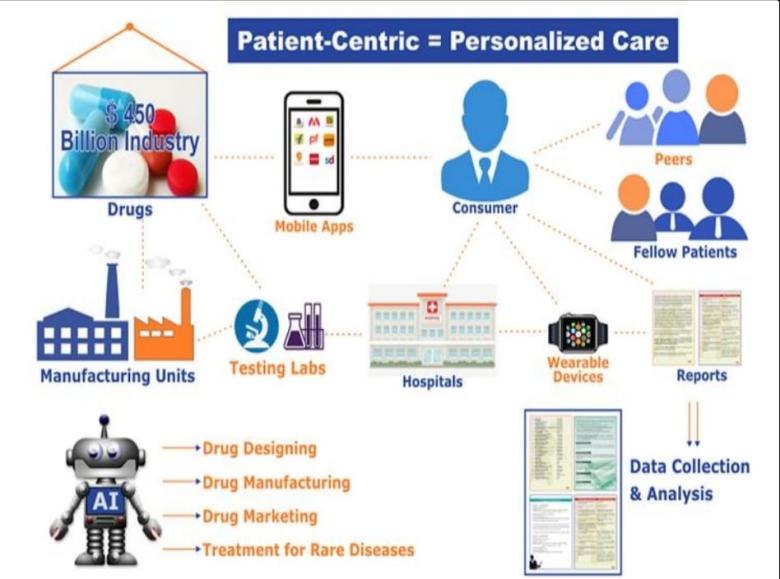
Figure 1: Benefits of using artificial intelligence in drug development.
Digital technologies are reshaping the global pharmacy sector, with the primary aim of boosting productivity, efficiency, and flexibility in healthcare services. Within this industry, the adoption of automation, computerization, and robotics has become a critical strategy for reducing operational costs while simultaneously improving the quality of service delivery. The digital pharmacy market is projected to grow at an annual rate of 14.42%, reaching an estimated value of $35.33 billion by 2026, a trend that highlights the increasing dependence of the pharmacy sector on digital innovations.
Traditionally, pharmacy services have relied heavily on in-person interactions and paper-based systems. However, the demand for more efficient, transparent, and patient-centered healthcare models has accelerated the shift toward digital transformation. Emerging technologies such as mobile communication, cloud-based platforms, advanced data analytics, and the Internet of Things (IoT) are revolutionizing healthcare delivery. These innovations, which have already reshaped industries like banking, retail, and media, hold great promise for improving patient outcomes in pharmacy practice as well.
Several driving forces are propelling this digital transition in pharmacy. Key motivations include the pursuit of cost-effectiveness, improved patient care, greater transparency, and streamlined drug development and manufacturing processes. The urgency of this shift was further amplified by the COVID-19 pandemic, which underscored the critical need for robust digital solutions to overcome challenges in delivering healthcare during crises.
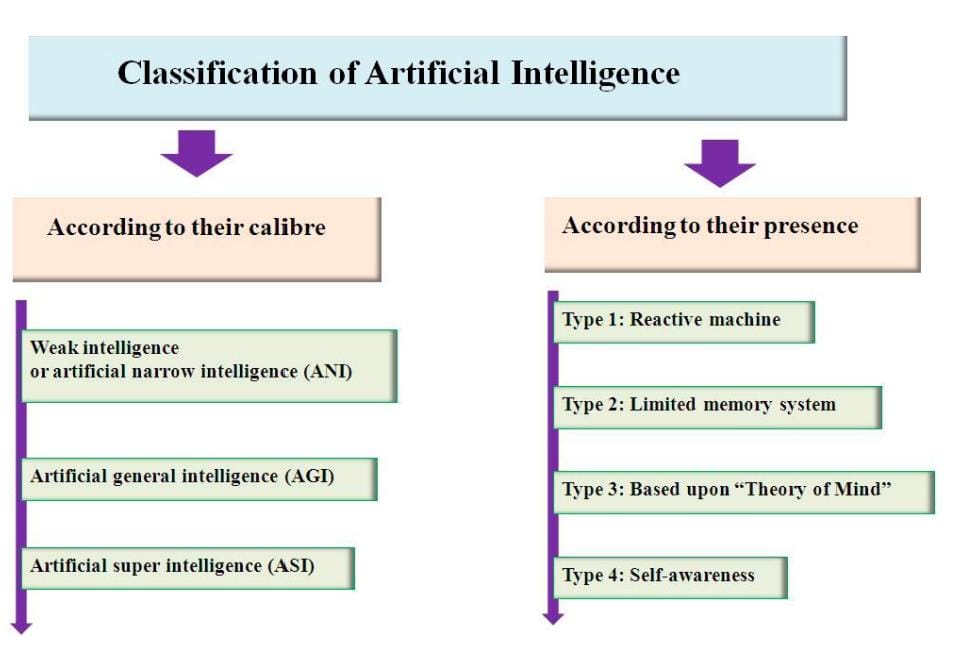
Classification of Artificial Intelligence (AI)
Figure 2: Classification of artificial intelligence.
Classification by Capability (Caliber)
Weak AI / Artificial Narrow Intelligence (ANI): These systems are specialized for specific tasks and cannot perform beyond them. Examples include facial recognition, traffic control, virtual assistants like Apple’s Siri, and tagging features on social media.
Artificial General Intelligence (AGI) / Strong AI: Also known as Human-Level AI, AGI has the ability to learn, reason, and solve problems similar to humans. It can adapt to unfamiliar situations and perform a wide range of tasks just like people do.
Artificial Super-intelligence (ASI):This is a theoretical level of AI that surpasses human intelligence in all fields—from science and engineering to arts and creativity. ASI could range from being slightly more capable than humans to being trillions of times smarter.
Classification of AI Based on Presence
Type 1 – Reactive Machines: These systems are designed for specific tasks and do not have memory to utilize past experiences. They simply react to the current input. A well-known example is IBM’s chess program, which could identify pieces on a chessboard and predict possible moves, but could not learn beyond that.
Type 2 – Limited Memory: This type of AI can make use of previous data for decision-making, though the information is stored only temporarily. For example, self-driving cars apply recorded observations—such as lane changes or traffic patterns—to assist with future actions, but the data is not retained permanently.
Type 3 – Theory of Mind: This level of AI is still hypothetical. It would be capable of understanding that humans have their own thoughts, emotions, intentions, and desires, which influence their decisions.
Type 4 – Self-Aware AI:This is the most advanced and currently non-existent form of AI. It would possess consciousness and self-awareness, allowing machines to recognize their own state as well as interpret the mental states of others.
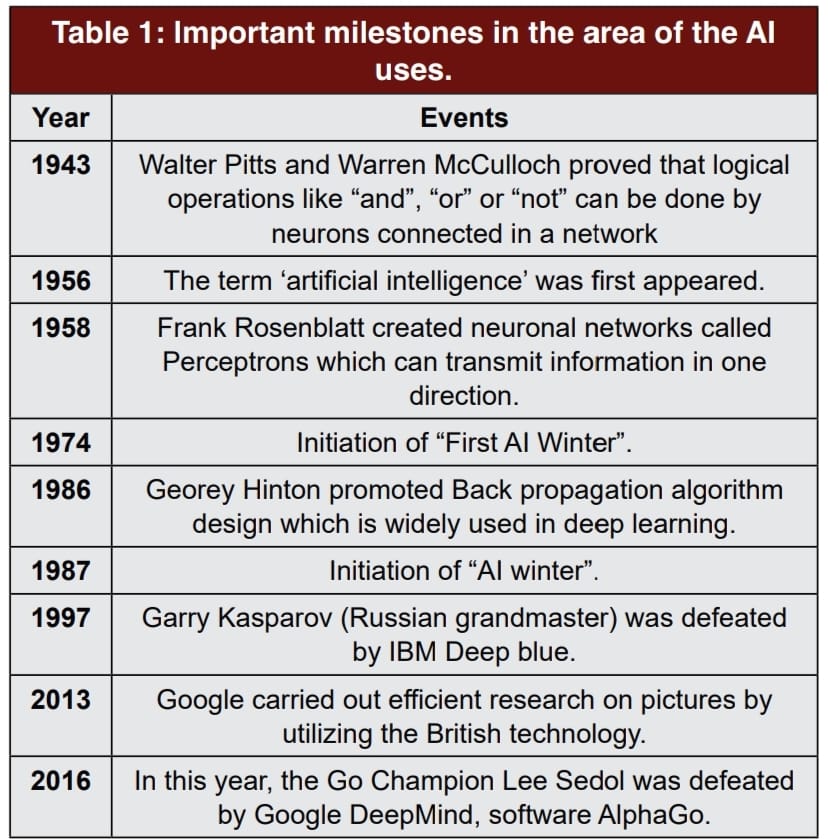
Figure 3: Important milestone in the area of AI uses.
History of Artificial Intelligence (AI)
The Beginning – John McCarthy
John McCarthy, an American computer scientist, played a central role in shaping the field devoted to creating intelligent machines. He is often referred to as the “Father of Artificial Intelligence.”
Early Development (1943–1952)
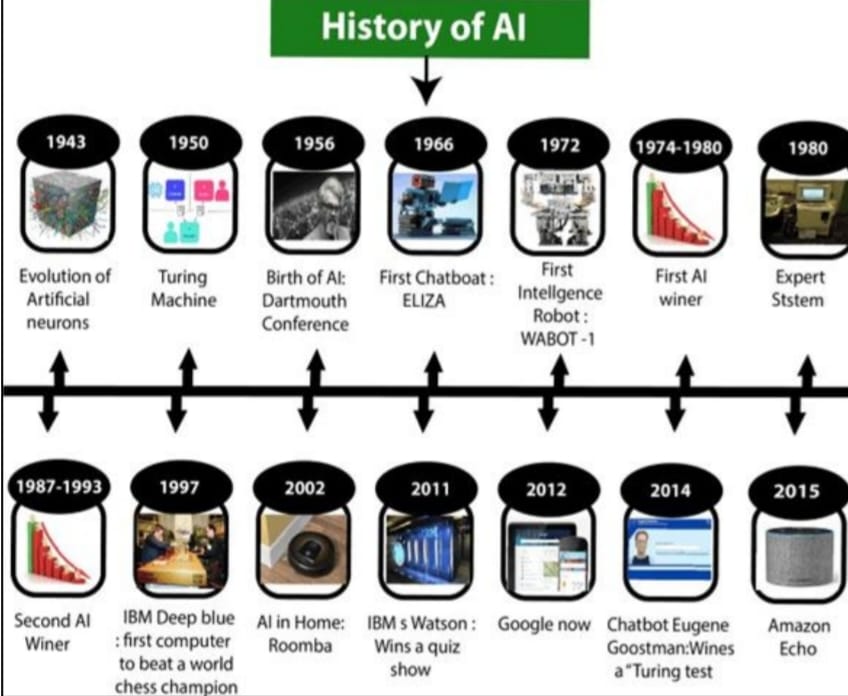
1943: Warren McCulloch and Walter Pitts introduced a model of artificial neurons, considered the first recognized step toward AI.
1949: Donald Hebb proposed a rule for strengthening or weakening neural connections, which became known as Hebbian learning.
1950: Alan Turing, a British mathematician, published “Computing Machinery and Intelligence” and introduced the Turing Test to measure whether a machine can mimic human-like intelligence.
Birth of AI (1952–1956)
1955: Allen Newell and Herbert A. Simon developed the first AI program, Logic Theorist, capable of proving mathematical theorems and even providing simpler proofs.
1956: John McCarthy coined the term “Artificial Intelligence” during the Dartmouth Conference, marking the birth of AI as an academic discipline.
The Golden Years (1956–1974)
1966: Joseph Weizenbaum created ELIZA, the first chatbot, designed to simulate human conversation.
1972: Japan introduced the first humanoid robot, WABOT-1.
The First AI Winter (1974–1980)
This period saw declining interest and reduced funding for AI research, as progress failed to meet expectations.
Revival – Expert Systems (1980–1987)
1980: AI research regained momentum with the rise of expert systems—programs that mimicked the decision-making ability of human specialists.
The same year, Stanford University hosted the first national conference of the American Association for AI.
The Second AI Winter (1987–1993)
Once again, AI funding and interest fell due to high costs and limited results. Expert systems such as XCON were powerful but expensive, leading to disillusionment.
Rise of Intelligent Agents (1993–2011)
1997: IBM’s Deep Blue defeated world chess champion Garry Kasparov, a historic milestone.
2002: AI reached households with the launch of the Roomba robotic vacuum.
2006: Major tech companies like Facebook, Twitter, and Netflix began integrating AI into their platforms.
Deep Learning, Big Data, and Modern AI (2011–Present)
2011: IBM’s Watson won the quiz show Jeopardy!, demonstrating natural language understanding and problem-solving.
2012: Google introduced Google Now, an AI-powered predictive assistant.
2014: The chatbot Eugene Goostman passed a version of the Turing Test by convincing judges it was human.
2018: IBM’s Project Debater successfully argued on complex topics against professional debaters. The same year, Google unveiled Duplex, an AI assistant capable of making phone calls, even booking appointments, with speech so natural that humans often did not realize they were speaking to a machine
Figure 4: History of artificial intelligence.
Roles:
Drug Discovery and Development: AI and machine learning accelerate the identification of drug targets, predict drug efficacy, and optimize clinical trials by analyzing large datasets, leading to faster and more efficient drug development.
Supply Chain Management: AI improves inventory control and demand forecasting, streamlines delivery processes, and helps manage potential shortages, creating a more efficient and responsive supply chain.
Personalized Patient Care: AI analyzes patient data to provide personalized medication recommendations, reduce errors, and improve adherence.
Clinical Decision Support: AI tools offer pharmacists real-time analysis of drug interactions, assist in medication therapy management, and monitor patient progress, enhancing patient safety.
Patient Engagement and Support: Digital tools, including telehealth, provide 24/7 patient access to information and support, expanding pharmacist services like immunizations and disease management.
Operational Efficiency: Digital platforms and AI-driven automation can streamline pharmacy operations, improve data accuracy, and reduce administrative burdens. Shifts in Pharmacy Roles
Focus on Clinical Expertise: With AI handling routine tasks, pharmacists can focus on more complex clinical activities, such as medication therapy management and interprofessional collaboration.
Data-Driven Practice: Pharmacists will increasingly use AI-generated insights to inform clinical decisions and personalize patient care.
Digital Literacy and Training: Professionals must become proficient in using digital tools and AI systems, necessitating new educational and training programs at all levels of pharmacy education.
Expansion of Services: Digital transformation enables pharmacists to offer a wider range of services, such as chronic disease management, telehealth consultations, and personalized health coaching.
Challenges:
Data-Related Challenges
Security and Privacy: Protecting sensitive patient and research data from breaches and unauthorized access is paramount, especially with new digital processes and AI models that handle large datasets.
Data Availability and Bias: A lack of sufficient, high-quality, and representative data can hinder AI model accuracy and lead to biased outcomes, potentially causing unfair treatment or unequal access to care.
Interpretation of Results: Understanding and accurately interpreting complex data and AI-driven insights, which can be difficult to explain, is crucial for making sound clinical decisions.
Technology & Infrastructure Challenges:
Legacy Systems: Many pharmaceutical companies operate on outdated IT infrastructure, making it difficult and costly to integrate new digital tools and AI solutions.
Integration Complexity: Seamlessly incorporating new AI tools with existing workflows and systems requires significant effort and a well-compatible IT backbone across the organization.
People & Process Challenges
Skill Gaps: Employees need new digital and AI-related skills to effectively use next-generation tools, requiring substantial investment in upskilling and proper onboarding.
Change Management: Overcoming internal resistance to new digital processes and fostering a culture of innovation is essential for successful adoption.
Regulatory & Ethical Challenges:
Regulatory Compliance: Digital transformation must align with drug regulations and requirements from bodies like the FDA, ensuring patient safety and product quality are not compromised.
Ethical Considerations: Implementing AI ethically is critical, especially regarding patient data use and ensuring that AI-driven decisions are fair, transparent, and do not lead to discrimination.
Application
Drug Discovery & Development: AI and machine learning accelerate the identification of potential drug candidates by analyzing vast datasets to predict efficacy and toxicity, reducing the time and cost of traditional research.
Personalized Patient Care: AI can analyze a patient’s medical history, genetic information, and medication usage to provide personalized recommendations, improve medication management, and help prevent adverse drug events.
Clinical Decision Support: AI-powered systems can help pharmacists and physicians identify potential risks, such as inappropriate medication orders, and assist in making more informed clinical decisions.
Supply Chain & Distribution: AI and machine learning optimize drug distribution by improving supply chain management, streamlining inventory control, predicting demand, and minimizing errors in logistics.
Patient Engagement & Adherence: AI-enabled mobile applications and telehealth platforms can improve patient adherence to medication regimens by providing personalized reminders and monitoring tools.
Pill Identification: AI models, particularly those that process images, can identify unlabelled pills and tablets, improving accuracy and safety in pharmacies.
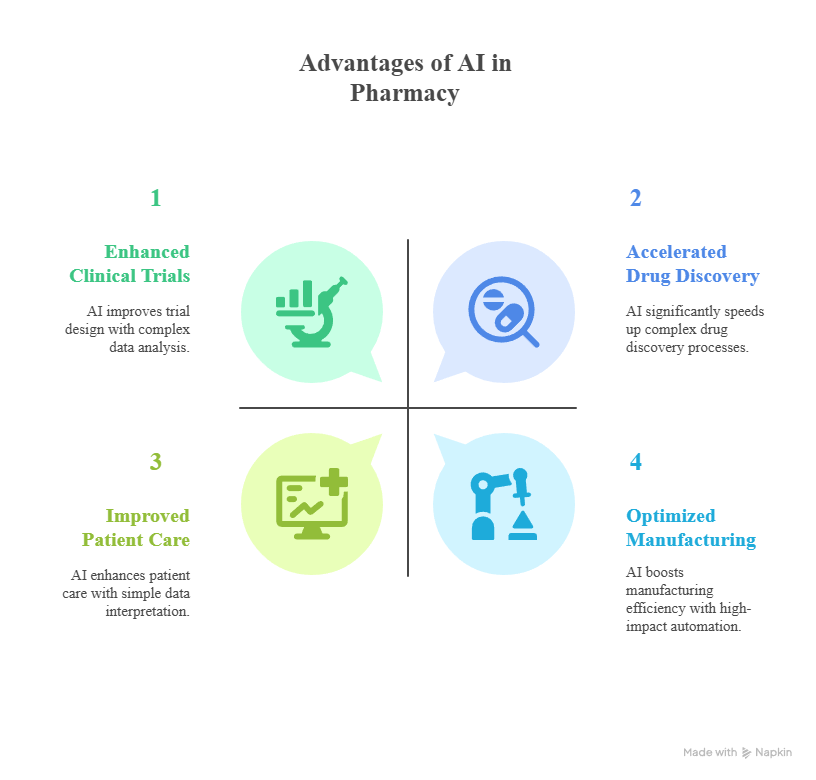
Advantages of AI in Pharmacy:
Artificial Intelligence (AI), a branch of computer science, is fundamentally changing how machines operate effectively and how complex data is processed. In the pharmaceutical industry, AI's application has significantly expanded, leading to enhanced workflow efficiency, reduced operational costs, and improved safety, precision, and productivity . Following are an advantage of AI in Pharmacy:
Accelerated Drug Discovery and Development:
AI speeds up the lengthy and expensive drug discovery process by identifying promising compounds and new drug molecules faster than manual analysis
Enables efficient identification of biomolecules as potential drug targets.
Assists in molecular simulations, predicting drug properties, and creating drugs de novo.
Forecasts feasible synthetic routes for drug-like molecules and predicts pharmacological properties, efficacy, and drug-target associations .
Reduces operational costs associated with manual compound investigation. Example: Novartis uses ML algorithms to analyse images and predict valuable untested compounds
Enhanced Clinical Trials and Research:
Identifies suitable patient groups through analysis of medical records and social media data
Improves trial design by reducing population differences and enabling predictive enrichment.
Uses Bayesian nonparametric models (BNMs) for adaptive dose selection in diverse populations.
Monitors trial progress, patient adherence, and endpoint detection via AI tools.
Example: AI mobile apps have improved medicine adherence in Phase II studies
Improved Patient Care and Personalized Medicine:
Enhances disease diagnosis by analysing and interpreting key data for accurate treatment decisions
Supports personalized treatments via digital therapeutics and behavioural modifications. Example: In ophthalmology, high-resolution retinal imaging combined with AI aids personalized therapy plans.
Plays a crucial role in cancer diagnosis and treatment (e.g., IBM Watson for Oncology)
Creates virtual medical assistants for chronic disease monitoring (e.g., optimizing insulin therapy).
Offers virtual nursing assistants (such as Molly) to support patients by giving guidance and tracking their health status.
Reduces medical mistakes and prevents hospital readmissions
Identifies genomic patterns to link mutations with diseases and predict cellular changes
Optimized Manufacturing and Operations:
Enhances workflow efficiency, reduces costs, and increases productivity
Improves quality control, predictive maintenance, waste reduction, and process automation. Example: UCSF Medical Centre uses robotic technology for flawless medication preparation.
Deploys specialized robots (e.g., MEDi for pediatric pain management, TUG for autonomous delivery).
Figure 5: Advantages of AI in Pharmacy.
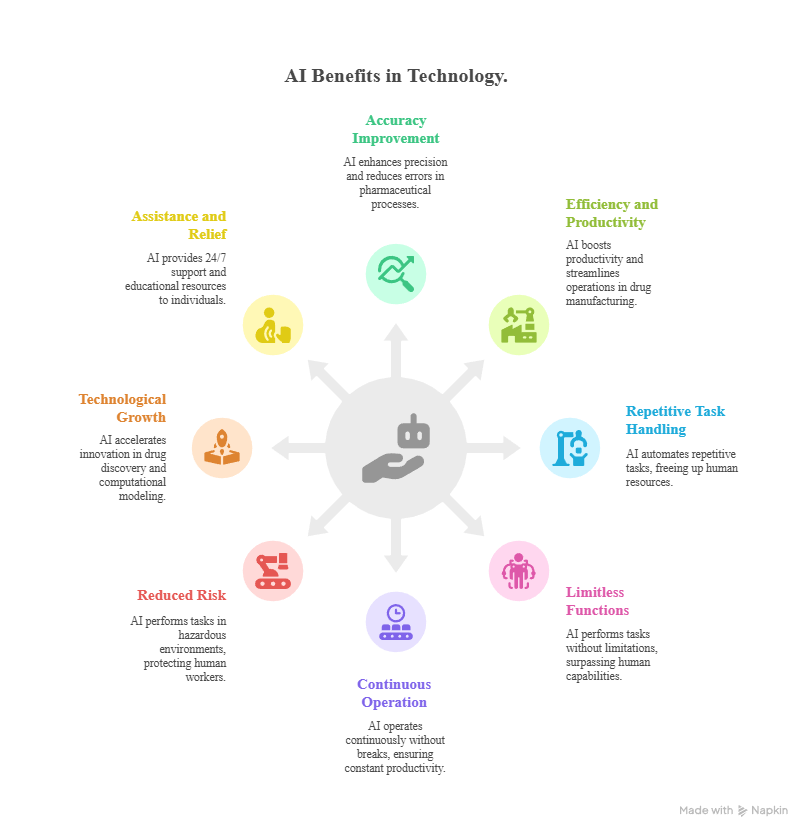
Advantages of AI Technology:
Accuracy Improvement: Reduces errors and enhances precision
Efficiency and Productivity: Increases output speed and overall efficiency
Repetitive Task Handling: Enables multitasking and faster information processing
Limitless Functions: Operates without emotional interference, outperforming humans in many tasks
Continuous Operation: Works for extended periods without fatigue.
Reduced Risk in Hazardous Environments: Performs dangerous tasks, minimizing harm to humans
Technological Growth Acceleration: Supports molecule creation and modelling innovations.
Assistance and Relief: Offers round-the-clock support to all age groups
Figure 6: Advantages of AI in Technology.
Future Trends of AI in Pharmacy
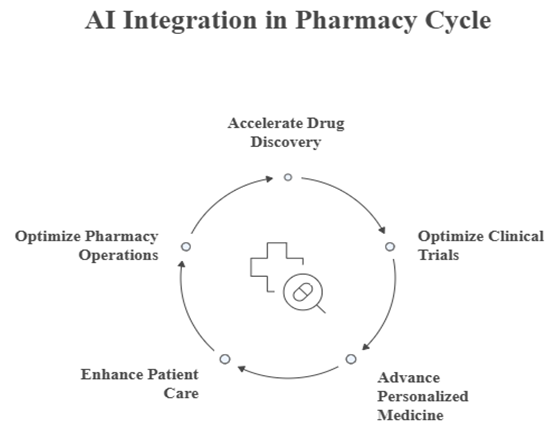
AI's integration across the pharmaceutical sector is driving a pivotal shift towards a more connected, efficient, and patient-centric healthcare system. This includes advancements in drug discovery, clinical development, manufacturing, pharmacovigilance, and personalized medicine
Accelerated Drug Discovery and Design: The future will see AI playing an even more critical role in expediting the identification and optimization of drug candidates, significantly reducing time and costs traditionally associated with this lengthy process
De Novo Design and Molecular Optimization:AI will increasingly enable the invention of significantly newer drug molecules with desired/optimal qualities through advanced techniques like generative adversarial networks (GANs) and reinforcement learning (RL) (2). This includes designing novel discoidin domain receptor 1 (DDR1) kinase inhibitors and covalent inhibitors for oncogenic targets like KRAS-G12C
Enhanced Screening and Target Identification : AI will continue to revolutionize virtual screening, molecular simulations, and drug property predictions, leading to more efficient and accurate identification of biologically active compounds and promising therapeutic targets This will be further supported by AlphaFold-driven protein modeling, which has already enabled in silico drug design for neglected diseases by predicting 3D protein structures with near-experimental accuracy. Future research aims to overcome current limitations in modeling conformational changes and protein-ligand complexes
Comprehensive Data Analysis: AI will continue to analyze vast amounts of complex biological, chemical, and clinical data (genomic, proteomic, pharmacological) to uncover nuanced patterns, predict efficacy and toxicity, and optimize drug designs, far quicker than human analysis .
Optimized Clinical Development and Trials: AI will transform clinical trials, making them faster, more cost-effective, and more precise by leveraging predictive analytics and automation
Intelligent Patient Recruitment: AI-powered tools will streamline patient identification and recruitment by analyzing electronic health records (EHRs) and other data sources (including social media content) to match patients to trial eligibility criteria, drastically reducing manual effort and improving participant selection based on genetic and clinical data
Adaptive Trial Design: AI will enable innovative trial designs and real-time protocol adjustments through continuous data analysis and predictive modeling, including determining appropriate dosages and patient cohorts (1). This includes the use of Bayesian nonparametric models for accurate optimal dose selection, even with patient heterogeneity
Enhanced Monitoring and Predictive Analytics:AI will improve monitoring trial patient adherence, and endpoint detection (1). Predictive models will forecast the outcome of created drugs, on and off-targets, and identify potential adverse effects, helping to minimize the need for extensive experimental trials and reduce physical testing costs
Advanced Personalized Medicine:AI is poised to revolutionize personalized medicine by enabling highly tailored treatment plans based on individual patient data, leading to improved outcomes and reduced side effects.
Pharmacogenomics-Driven Therapies: AI will enhance personalized medicine by linking genetic variants to drug responses, allowing for the prediction of optimal dosing and identification of likely responders. Tools like PharmCAT already automate the extraction of key pharmacogenomic variants for dosing guidelines
Tailored Treatment Plans: By analyzing patient-specific information, including genetic data, medical history, and lifestyle details, AI will generate customized treatment plans, ensuring patients receive optimal care tailored to their specific needs and improving adherence
Predictive Health Management: AI-powered predictive models will identify individuals at high risk for specific illnesses, enabling preventive measures that promote population health and reduce long-term healthcare costs
Optimized Pharmacy Operations and Manufacturing: AI will continue to transform pharmacy operations and pharmaceutical manufacturing by driving efficiencies, improving accuracy, and enhancing quality consistency
Smart Inventory Management: AI-driven solutions will redefine inventory management by using machine learning algorithms to analyze historical sales patterns, seasonal trends, and market fluctuations, ensuring stock levels align with real-time demand and preventing overstocking or shortages. This includes automation of reordering processes
Automated Dispensing Systems (ADSs): The integration of AI and robotics into dispensing will deliver unparalleled accuracy and efficiency in prescription filling, reducing human error, and freeing pharmacists to focus on patient-centered activities like counseling and medication reviews
Enhanced Patient Care and Engagement:AI will play a significant role in improving direct patient care and fostering greater engagement.
Advanced Diagnostics: AI-based tools, particularly in medical imaging and genomic analysis, will continue to enhance diagnostic precision, outperforming traditional methods in identifying diseases like cancer and heart conditions earlier and more accurately, thereby reducing human error and supporting clinician decision-making
Remote Monitoring and Virtual Assistants:AI-powered variables will enable remote patient monitoring for chronic and life-threatening diseases. Virtual medical assistants and chatbots will provide personalized medication advice, reminders, and educational resources, improving adherence and patient satisfaction
Public Health Monitoring: AI will be leveraged to predict the timing and locations of potential epidemic outbreaks with reasonable accuracy by learning from historical data. It will also help identify health disparities to support tailored healthcare initiatives.
Enhanced Patient Care and Engagement:
AI will play a significant role in improving direct patient care and fostering greater engagement.
Advanced Diagnostics:AI-based tools, particularly in medical imaging and genomic analysis, will continue to enhance diagnostic precision. They will outperform traditional methods in identifying diseases like cancer and heart conditions earlier and more accurately. This will reduce human error and support clinician decision-making
Remote Monitoring and Virtual Assistants:AI-powered wearables will enable remote patient monitoring for chronic and life-threatening diseases. Virtual medical assistants and chatbots will provide personalized medication advice, reminders, and educational resources. This will improve adherence and patient satisfaction
Focus on Explainable AI (XAI):
As AI models become more complex, the demand for transparency and interpretability will become paramount, especially in sensitive healthcare applications.
Building Trust and Accountability:Future AI development will prioritize XAI techniques that provide clear and intelligible justifications for AI predictions and decisions. This is crucial for critical decision-making processes like lead optimization and toxicity prediction. It will help build trust among researchers, doctors, and regulatory bodies
Bias Mitigation and Interpretability Tools:XAI will focus on identifying and mitigating potential biases in AI models through diverse and balanced datasets. Appropriate model selection and human oversight will be ensured. Efforts will continue to improve interpretability through visualization, explanations, and feature importance
Dynamic and Domain-Specific Explanations:Future research will explore dynamically adapting XAI explanations as models and data evolve. Domain-specific languages will be designed to translate complex AI insights for stakeholders.
Figure 7: AI Integration in Pharmacy
REFERENCES
Spiegel, B. M., Khanna, D., Bolus, R., Agarwal, N., Khanna, P., & Chang, L. (2011). Understanding gastrointestinal distress: a framework for clinical practice. The American journal of gastroenterology, 106(3), 380–385. https://doi.org/10.1038/ajg.2010.383.
Fikree, A., & Byrne, P. (2021). Management of functional gastrointestinal disorders. Clinical medicine (London, England), 21(1), 44–52. https://doi.org/10.7861/clinmed.2020-0980.
Ried, K., Travica, N., Dorairaj, R., & Sali, A. (2020). Herbal formula improves upper and lower gastrointestinal symptoms and gut health in Australian adults with digestive disorders. Nutrition Research, 76, 37–51. https://doi.org/10.1016/j.nutres.2020.02.008.
Karole, S., Shrivastava, S., Thomas, S., Soni, B., Khan, S., Dubey, J., et al. (2019). Polyherbal formulation concept for synergic action: A review. Journal of Drug Delivery and Therapeutics, 9(1-s), 453–466.
Bairwa, R., Sodha, R. S., & Rajawat, B. S. (2012). Trachyspermum ammi. Pharmacognosy reviews, 6(11), 56–60. https://doi.org/10.4103/0973-7847.95871.
Rather, M. A., Dar, B. A., Sofi, S. N., Bhat, B. A., & Qurishi, M. A. (2016). Foeniculum vulgare: A comprehensive review of its traditional use, phytochemistry, pharmacology, and safety. Arabian Journal of Chemistry, 9(Suppl. 2), S1574–S1583. https://doi.org/10.1016/j.arabjc.2012.04.011.
Shakeel, A., Naqvi, S., Arif, A., Farid, M., Khan, A. M. A., Iqbal, U., & Liaqat, I. (2025). Cumin (Cuminum cyminum L.): A hidden gem in functional food. https://doi.org/10.47278/book.HH/2025.406.
Mahendran, G., Verma, S. K., & Rahman, L.-U. (2021). The traditional uses, phytochemistry, and pharmacology of spearmint (Mentha spicata L.): A review. Journal of Ethnopharmacology, 278, 114266. https://doi.org/10.1016/j.jep.2021.114266.
Di, X., Wang, X., & Liu, Y. (2015). Effect of piperine on the bioavailability and pharmacokinetics of emodin in rats. Journal of Pharmaceutical and Biomedical Analysis, 115, 144–149. https://doi.org/10.1016/j.jpba.2015.06.027.
Amalraj, A., & Gopi, S. (2017). Biological activities and medicinal properties of asafoetida: A review. Journal of Traditional and Complementary Medicine, 7(3), 347–359. https://doi.org/10.1016/j.jtcme.2016.11.004.
Peterson, C. T., Denniston, K., & Chopra, D. (2017). Therapeutic Uses of Triphala in Ayurvedic Medicine. Journal of alternative and complementary medicine (New York, N.Y.), 23(8), 607–614. https://doi.org/10.1089/acm.2017.0083.
Bali, S., & Khan, A. (2024). The untold health benefits of herbal black salt (Kala Namak): A scientific overview. Current Research in Complementary & Alternative Medicine, 8, Article 100234. https://doi.org/10.29011/2577-2201.100234.
Garg, V., Narang, P., & Taneja, R. (2022). Antacids revisited: review on contemporary facts and relevance for self-management. The Journal of International Medical Research, 50(3), 3000605221086457. https://doi.org/10.1177/03000
Athnikar, H. (2023). Chapter 8 – Organoleptic and sensory evaluation. In Handbook of Herbal Drug Technology.
Webster, D. (2003). pH – Principles and measurement. In B. Caballero (Ed.), Encyclopedia of food sciences and nutrition (2nd ed., pp. 4501–4507). Academic Press. https://doi.org/10.1016/B0-12-227055-X/00913-5.
Ismail, B. P., & Nielsen, S. S. (2024). Moisture content determination. In B. P. Ismail & S. S. Nielsen (Eds.), Nielsen’s food analysis laboratory manual. Springer. https://doi.org/10.1007/978-3-031-44970-3_13.
United States Pharmacopeial Convention. (2015). <616> Bulk density and tapped density of powders. In United States Pharmacopeia and National Formulary (USP 38–NF 33) (Stage 6 Harmonization, Official August 1, 2015). United States Pharmacopeial Convention.
Nandi, K., Sen, D. J., Patra, F., Nandy, B., Bera, K., & Mahanti, B. (2020). Angle of repose walks on its two legs: Carr index and Hausner ratio. World Journal of Pharmacy and Pharmaceutical Sciences, 9(5), 1565–1579. ISSN 2278–4357.
Ortega-Rivas, E. (2011). Unit operations of particulate solids: Theory and practice (1st ed.). CRC Press. https://doi.org/10.1201/b11059.
Abubakar, A. R., & Haque, M. (2020). Preparation of Medicinal Plants: Basic Extraction and Fractionation Procedures for Experimental Purposes. Journal of pharmacy & bioallied sciences, 12(1), 1–10. https://doi.org/10.4103/jpbs.JPBS_175_19.
Reference
Spiegel, B. M., Khanna, D., Bolus, R., Agarwal, N., Khanna, P., & Chang, L. (2011). Understanding gastrointestinal distress: a framework for clinical practice. The American journal of gastroenterology, 106(3), 380–385. https://doi.org/10.1038/ajg.2010.383.
Fikree, A., & Byrne, P. (2021). Management of functional gastrointestinal disorders. Clinical medicine (London, England), 21(1), 44–52. https://doi.org/10.7861/clinmed.2020-0980.
Ried, K., Travica, N., Dorairaj, R., & Sali, A. (2020). Herbal formula improves upper and lower gastrointestinal symptoms and gut health in Australian adults with digestive disorders. Nutrition Research, 76, 37–51. https://doi.org/10.1016/j.nutres.2020.02.008.
Karole, S., Shrivastava, S., Thomas, S., Soni, B., Khan, S., Dubey, J., et al. (2019). Polyherbal formulation concept for synergic action: A review. Journal of Drug Delivery and Therapeutics, 9(1-s), 453–466.
Bairwa, R., Sodha, R. S., & Rajawat, B. S. (2012). Trachyspermum ammi. Pharmacognosy reviews, 6(11), 56–60. https://doi.org/10.4103/0973-7847.95871.
Rather, M. A., Dar, B. A., Sofi, S. N., Bhat, B. A., & Qurishi, M. A. (2016). Foeniculum vulgare: A comprehensive review of its traditional use, phytochemistry, pharmacology, and safety. Arabian Journal of Chemistry, 9(Suppl. 2), S1574–S1583. https://doi.org/10.1016/j.arabjc.2012.04.011.
Shakeel, A., Naqvi, S., Arif, A., Farid, M., Khan, A. M. A., Iqbal, U., & Liaqat, I. (2025). Cumin (Cuminum cyminum L.): A hidden gem in functional food. https://doi.org/10.47278/book.HH/2025.406.
Mahendran, G., Verma, S. K., & Rahman, L.-U. (2021). The traditional uses, phytochemistry, and pharmacology of spearmint (Mentha spicata L.): A review. Journal of Ethnopharmacology, 278, 114266. https://doi.org/10.1016/j.jep.2021.114266.
Di, X., Wang, X., & Liu, Y. (2015). Effect of piperine on the bioavailability and pharmacokinetics of emodin in rats. Journal of Pharmaceutical and Biomedical Analysis, 115, 144–149. https://doi.org/10.1016/j.jpba.2015.06.027.
Amalraj, A., & Gopi, S. (2017). Biological activities and medicinal properties of asafoetida: A review. Journal of Traditional and Complementary Medicine, 7(3), 347–359. https://doi.org/10.1016/j.jtcme.2016.11.004.
Peterson, C. T., Denniston, K., & Chopra, D. (2017). Therapeutic Uses of Triphala in Ayurvedic Medicine. Journal of alternative and complementary medicine (New York, N.Y.), 23(8), 607–614. https://doi.org/10.1089/acm.2017.0083.
Bali, S., & Khan, A. (2024). The untold health benefits of herbal black salt (Kala Namak): A scientific overview. Current Research in Complementary & Alternative Medicine, 8, Article 100234. https://doi.org/10.29011/2577-2201.100234.
Garg, V., Narang, P., & Taneja, R. (2022). Antacids revisited: review on contemporary facts and relevance for self-management. The Journal of International Medical Research, 50(3), 3000605221086457. https://doi.org/10.1177/03000
Athnikar, H. (2023). Chapter 8 – Organoleptic and sensory evaluation. In Handbook of Herbal Drug Technology.
Webster, D. (2003). pH – Principles and measurement. In B. Caballero (Ed.), Encyclopedia of food sciences and nutrition (2nd ed., pp. 4501–4507). Academic Press. https://doi.org/10.1016/B0-12-227055-X/00913-5.
Ismail, B. P., & Nielsen, S. S. (2024). Moisture content determination. In B. P. Ismail & S. S. Nielsen (Eds.), Nielsen’s food analysis laboratory manual. Springer. https://doi.org/10.1007/978-3-031-44970-3_13.
United States Pharmacopeial Convention. (2015). <616> Bulk density and tapped density of powders. In United States Pharmacopeia and National Formulary (USP 38–NF 33) (Stage 6 Harmonization, Official August 1, 2015). United States Pharmacopeial Convention.
Nandi, K., Sen, D. J., Patra, F., Nandy, B., Bera, K., & Mahanti, B. (2020). Angle of repose walks on its two legs: Carr index and Hausner ratio. World Journal of Pharmacy and Pharmaceutical Sciences, 9(5), 1565–1579. ISSN 2278–4357.
Ortega-Rivas, E. (2011). Unit operations of particulate solids: Theory and practice (1st ed.). CRC Press. https://doi.org/10.1201/b11059.
Abubakar, A. R., & Haque, M. (2020). Preparation of Medicinal Plants: Basic Extraction and Fractionation Procedures for Experimental Purposes. Journal of pharmacy & bioallied sciences, 12(1), 1–10. https://doi.org/10.4103/jpbs.JPBS_175_19.
Salve Ekta
Corresponding author
Vidya Niketan Institute of Pharmacy Research and Centre.
Borkar Sudarshan
Co-author
Vidya Niketan Institute of Pharmacy Research and Centre.
Salve Ekta*, Borkar Sudarshan, Artificial Intelligence (AI) in Pharmacy, Int. J. of Pharm. Sci., 2025, Vol 3, Issue 12, 1522-1537 https://doi.org/10.5281/zenodo.17862426



 10.5281/zenodo.17862426