View Article

  • Brief Understanding and Treatment of Congestive Heart Failure

  • Faculty of Pharmacy, Sigma University, Bakrol, Vadodara, Gujarat, India. -390019

Abstract

Introduction: Overview of the global health and significance of CHF. Definition and classification system (e.g.-HFrEF, HFpEF, etc.). Impact of CHF, complication occurring due to CHF, the management of CHF. Epidemiology and Etiology: Prevalence and incidence of CHF. Major risk factor (e.g. Hypertension, coronary artery disease, diabetes, obesity). underlying causes (e.g. ischemic heart disease, valvular heart disease, cardiomyopathies). Pathophysiology: A section explaining the mechanism of cardiac remodelling, cellular dysfunction with the result of pulmonary and peripheral Edema. Clinical manifestations and Diagnosis: Signs and symptoms (e.g. shortness of breath, oedema, fatigue). Diagnostic modalities (e.g. clinical assessment, biomarkers, Imaging techniques like echocardiography, MRI). Management strategies/ therapeutic intervention: Lifestyle modifications (e.g. Diet, exercise, Fluid Retention). Medication (e.g. ACE inhibitor, beta blocker, diuretics). Device therapy (CRT-D device). Some other management. Conclusion: It is a summary of key finding and their implication. Early diagnosis, individualized therapy and integration of emerging treatments are essential to improving long-term outcomes in CHF patients.

Keywords

Heart failure, HFrEF, HFpEF, Diagnostic modalities, Medication.

Introduction

Chronic Heart Failure (CHF) or Heart Failure (HF) is identified as a major clinical syndrome and public health problem that has persisted as an "emerging epidemic" since its designation in 1997.

In 2005 approximately 30% of global deaths (17.5 million) were attributable to cardiovascular disease (CVD). Chronic heart failure (CHF) significantly contributes to this disease burden and is the leading cause of all hospitalizations and readmissions in older people, accounting for a large proportion of developed countries’ national health care expenditure.

CHF is a complex clinical syndrome resulting from any functional or structural cardiac disorder that reduces the ventricle's ability to fill or expel blood. This chronic condition means the heart cannot pump enough blood required for the body’s normal functioning, leading to threatened blood supply and ineffective myocardial performance.

Stages of CHF—

  • Stages A and B: These are considered pre-clinical stages.
  • Stages C and D: These stages are characterized by the presence of overt clinical HF of increasing severity. Which is further classified in,
  • HF with Preserved Ejection Fraction (HFpEF)
  • HF with Reduced Ejection Fraction (HFrEF)

HF imposes a heavy burden on health care systems. Key statistics regarding its impact include

Prevalence: The estimated prevalence of CHF in people aged 45 years or more ranges between 3% and 5% worldwide. In India, it is estimated that 8–10 million people over 20 years of age suffer from heart failure. Although the true prevalence of CHF may be higher due to under diagnosis of mild to moderate CHF.

Mortality: Despite a decline in the overall incidence of HF reported across recent studies, the burden of mortality and hospitalization remains mostly relentless. There is no cure for CHF. In its most severe form, CHF has over 50% one-year mortality. Management targets symptoms and lifestyle modifications.

CHF leading to multiple physical, psychological, and clinical complications.

Physical: Patients experience dyspnoea, fatigue, weakness, reduced exercise tolerance, and frequent respiratory symptoms such as orthopnoea and paroxysmal nocturnal dyspnoea, resulting in unpredictable life-threatening crises and repeated hospital admissions.

Psychologically: CHF imposes a significant emotional burden. Many patients suffer from social isolation, fear of symptom worsening, anxiety, depression, and loss of control over daily activities.

Comorbidities: such as diabetes, chronic kidney disease, depression, arthritis, and asthma commonly coexist, complicating disease management and worsening outcomes.

The management of Chronic Heart Failure (CHF) focuses on relieving symptoms and preventing the progression of the disease, as there is currently no specific treatment that cures the condition. Treatment plans are highly individualized, depending on the stage, type of heart failure (e.g., HFrEF or HFpEF), condition, and specific symptoms of the patient.

CLASSIFICATION

From the ‘90s clinical trials began to select patients based on left ventricular ejection fraction (LVEF), usually measured using echocardiography. To define heart failure with preserved (HFpEF), mid-range (HFmrEF) and reduced ejection fraction (HFrEF) according to ESC guidelines.

HFpEF (Heart Failure with Preserved Ejection Fraction): Ejection fraction is 50% or greater, causes due to heart’s diastolic function is impaired

HFrEF (Heart Failure with Reduced Ejection Fraction): Ejection fraction is less than 40 %, Causes due to systolic dysfunction

HFmrEF (Heart Failure with Mid-Range Ejection Fraction): Ejection fraction between 41-49%

There are another two types of heart failure, which include acute and chronic heart failure. Acute heart failure involves sudden and rapid onset, which needs a medical emergency, and chronic heart failure is developed over time, which requires long-term and manageable treatment.
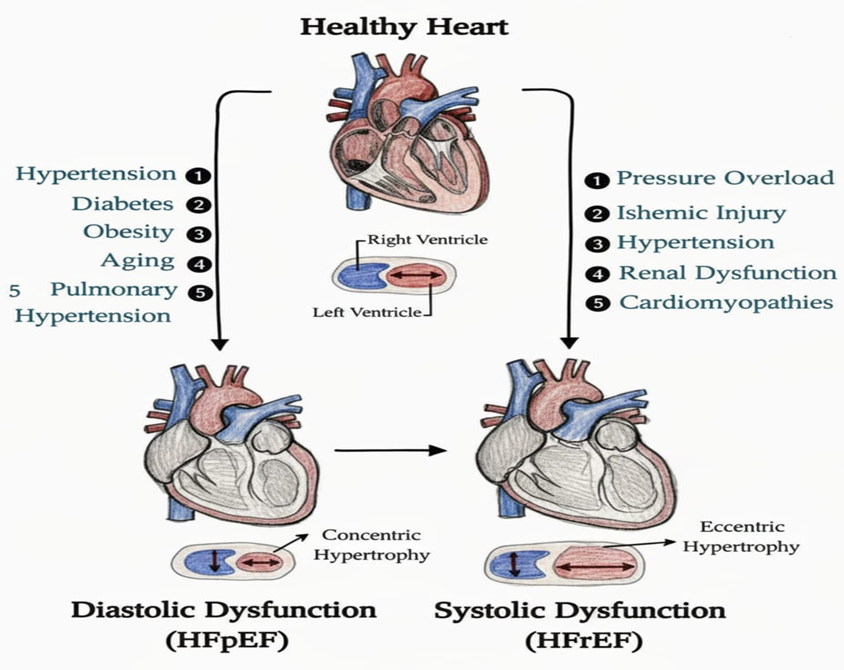
Fig.1: showing causes of HFpEF and HFrEF

ETIOLOGY OF CHF:

CHF results from abnormalities of the myocardium, valves, pericardium, rhythm, or systemic condition. Various conditions that cause heart failure:

  1. Ischemia Heart Disease:

Ischemic heart disease is the main cause of CHF. It is a condition in which, due to a lack of or decrease in blood supply. The heart muscles get damaged. It is caused due to coronary artery disease.

  1. Hypertension:

Hypertension may also cause CHF. When the heart works harder to pump blood, then it can lead to congestive heart failure. Hypertension induces structural and functional changes in myocardium, this includes hypertrophy of the left ventricle.

  1. Cardiomyopathy:

Cardiomyopathy is a disorder that affects the heart muscle. It makes it stiffen, enlarge or thicken. Cardiomyopathy makes it difficult to pump blood effectively. That's why it can lead to heart failure.

  1. Lifestyle Factor:

Factors like obesity, diabetes, smoking and heavy alcohol use contributes to developing heart failure.

  1. Heart Valve Disease:

When heart valve does not function properly, they force the heart to work harder to move blood forward.

  1. Infection:

Certain viral infections can lead to damage, to the heart muscles directly. 

EPIDEMIOLOGY

CHF is a cardiac disorder that may be caused by a variety of cardiac disorders. Five million Americans should suffer from CHF. Approximately 550,000 new cases of CHF should register every year, and nearly 250,000 die every year. 2.5% of the total population has this disease. The risk for death is 5% to 10% annually in patients with mild symptoms and increases to approximately 30% to 40% annually in patients with advanced disease. Asian patients with HF are younger and have different risk factors compared with Western patients. In an analysis of the ASIAN-HF registry, the prevalence of diabetes ranged between 34.1% in Japanese/Koreans and 51.9% in Malaysian patients.

RISK FACTORS:

Like many other non-communicable diseases, HF is a preventable disease.

  1. Hypotension
  2. Bradycardia
  3. Heart attack
  4. Fluid retention
  5. Age and family history
  6. Smoking tobacco
  7. Coronary Artery Disease
  8. High B.P.
  9. Obesity
  10. Infections such as HIV or COVID-19
  11. Diabetes

Women with diabetes are at high risk for developing HF. Although there may be uncertainty in the quantity of alcohol ingested and the probability of developing HF, heavy use of alcohol has been associated with increased risk for development of HF. Treating both systolic and diastolic hypertension in the long run according to contemporary guidelines reduces the risk of HF by approximately 50 percent.

PATHOPHYSIOLOGY

The pathophysiology of Chronic Heart Failure (CHF) is understood through a combination of structural and functional heart impairments, which lead to ineffective myocardial performance and the eventual failure of compensatory neurohormonal mechanisms.

Congestive heart failure can occur from two main causes that are

  • First, when there are clogged arteries (coronary artery disease).
  • Second, when there is afterload due to the congestive hypertension.

This all indeed leads to the decrease in the stroke volume (blood pump in each beat). Therefore, future cause to decrease in a cardiac output (blood pump in each minute). To overcome this condition, the body does a process that increases the heart rate. But that now causes less filling time.

How did this happen?

There occur some structural changes to increase the stroke volume. For that there are two changes that can occur:

  1. Dilated cardiomyopathy (In this, the heart is getting enlarged, but at the same time, the heart is even getting weaker; hence, it fails to pump well).
  2. Hypertrophic cardiomyopathy (It gets thicker, but at the same time it gets stiffer; thus, it doesn’t fill well).

When it fails to increase the stroke volume, it creates the pressure on the kidney. That leads the kidney to release renin, which further releases angiotensin, which stimulates the release of Aldosterone hence causing Na+ (salt) and water retention, therefore causing volume overload.

As a result, if the left side of the heart fails first, it will term pulmonary oedema, and if the right side of the heart fails first, it will term peripheral oedema.

CLINICAL MANIFESTATION AND DIAGNOSIS

Sign and Symptoms –

The signs and symptoms of Chronic Heart Failure (CHF) are central to its definition as a complex clinical syndrome. These manifestations vary depending on the clinical severity and whether the patient is experiencing left ventricular or right ventricular failure.

Heart failure is clinically diagnosed based on a patient's history and physical examination. The core manifestations are primarily related to exercise intolerance and fluid retention.

 The most common clinical signs and symptoms of CHF include:

  • Shortness of Breath (Dyspnoea): This is a key symptom, often occurring on exertion, or in advanced cases, at rest.
  • Orthopnoea: Difficulty breathing when lying flat.
  • Wheezing
  • Fatigue and Weakness: These symptoms are common, particularly on exertion, and may contribute to exercise intolerance.
  • Swelling (Oedema) and Weight Gain: These are signs of fluid retention, which manifest as ankle swelling, peripheral oedema, swelling in the legs, ankles, or feet, or abdominal swelling (ascites).
  • Weight gain due to fluid buildup is a specific sign.
  • Coughing: Specifically, a persistent cough.
  • Nocturia: Increased need to urinate at night.

Category

Sign / Symptoms

Brief description

Respiratory

Exertional dyspnoea, orthopnoea, paroxysmal nocturnal dyspnoea.

Shortness of breath on exertion due to pulmonary congestion.

Respiratory

wheezing

Often dry or producing frothy white/pink sputum because of fluid in lungs.

Circulatory

Tachycardia

Rapid or irregular heartbeat as compensation for reduced cardiac output. (Sensitivity% =7, Specificity% =99).

Circulatory

Elevated JVP (Jugular Venous Pressure)

Raised jugular venous pressure indicating systemic venous congestion. (Sensitivity% =10, Specificity% =97).

Oedema

Generalized ascites

Swelling of abdomen and sometimes hands, sacrum due to systemic congestion.

Weight

Rapid weight gain

Sudden increase in weight over days from fluid accumulation.

Fluid

Nocturia

Increased urination at night as recumbence improves renal perfusion.

Diagnostic Modelist: The diagnosis of Chronic Heart Failure (CHF) relies on a combination of clinical evaluation and diagnostic testing to confirm the presence of structural or functional cardiac abnormalities, assess the severity of the syndrome, and determine the underlying cause. As there is no conclusive diagnostic test for CHF, it is primarily diagnosed clinically based on history and physical examination

Parameter

Diagnose

History

Presence of symptoms such as shortness of breath (including Orthopnoea and paroxysmal nocturnal Dyspnoea), nocturia, mental status changes. Recent or previous hospitalization and symptoms suggesting Transient Ischemic Attack (TIA) are also checked.

Physical Examination

Assessment for fluid retention/congestion using markers like jugular venous pressure, peripheral oedema, pulmonary crackles, and hepatomegaly/ascites.

  1. Clinical evaluation- First the evaluation is based on the history and physical examination.
  2. Diagnostic testing and imaging- Diagnostic examinations help to get appropriate treatment further.

Test

Purpose and value

Echocardiogram

Considered the most valuable initial diagnostic test. It determines the presence of pericardial, endocardial, valvular, and vascular abnormalities. It is used to evaluate the pumping function of heart and assess systolic and diastolic abnormalities.

Ejection Fraction (EF) Measurement

EF test is very important for classifying into HF into category: HF with reduced EF (HFrEF) (≤40%) and HF with preserved EF (HFpEF) (≥50%).

Electrocardiogram (ECG)

ECG should be done compulsory because It is a basic tool for screening but ECG alone cannot give a significant diagnosis of CHF.

Chest X-ray

It is usually recommended for patients with acute, or new-onset HF to determine heart size and pulmonary oedema and to reveal other cardiopulmonary causes contributing to symptoms.

Biomarkers (BNP/NT-proBNP)

BNP and NT-proBNP are simple blood tests that help doctors check for heart failure (HF) in people short of breath. It helps to Predicts risk: Higher levels mean worse outlook or advanced HF needing special treatments.

Blood Tests

It includes complete blood count, serum electrolytes, blood urea nitrogen (BUN), serum creatinine, glucose, liver function tests, and thyroid-stimulating hormone. A high sensitivity Troponin-T test helps diagnose a heart attack.

MANAGEMENT OF THE CHF

There is no specific treatment that cures the congestive heart failure. The main objective of the treatment is to relieve the symptoms and to prevent the progression of CHF.

  1. Lifestyle Modification:
  • Diet: patients with CHF should focus on limiting sodium and fluids and choosing healthy food like fruits and vegetables.
  • Exercise: regular or moderate exercise to improve quality of life.
  1. Medication:

ACE Inhibitors: Ex: Captopril, Enalapril, Ramipril. These drugs inhibit angiotensin-converting enzymes, so they are used in congestive heart failure. ACE catalyses the conversion of angiotensin I to pharmacologically active angiotensin II.

Beta Blocker: Ex: - Metoprolol and Carvedilol. Beta-blockers have recently emerged as a new class of drugs for heart failure patients. B-blockers prevent stimulation of the sympathetic nervous system by inhibiting the action of a catecholamine at B-adrenergic receptors; by this, they improve left ventricular function.

Diuretics: Diuretics are effective for controlling fluid retention and reducing symptoms of congestion by reducing preload, but they do not prevent disease progression.

Cardiac Glycosides: E.g., digoxin, digitoxin. Cardiac glycosides are called cardiotonic agents. They increase the mechanical efficiency of the heart as a pump without increasing oxygen consumption.

  1. Device Therapy:
  • Implantable cardioverter-defibrillators
  • CRT-D device
  • Pulmonary artery pressure sensors
  1. Other Management:
  • Regular contact with your healthcare
  • Monitor the health
  • Mental health
  • Stay informed

CONCLUSION

The provided source offers a comprehensive overview of heart failure (HF), Focusing on its classification, management, and recent research findings. Its and academic review details the pharmacological and device-based therapies for HF with reduced ejection fraction (HFrEF), efficiency of the medication and some other management, another part is review establishes the epidemiological burden of HF, emphasizing classification and outlining Standard treatments. Finally, a clinical trial sub-analysis investigates the impact of personalized nutritional intervention in chronic HF patient who are at risk of malnutrition, it helps us to know the Signs and symptoms of CHF, and its Diagnosis devices.

Hence it collectively, from source highlight the complete information about CHF and its Management and Diagnosis.

REFERENCES

  1. Jeon, YH., Kraus, S.G., Jowsey, T. et al. The experience of living with chronic heart failure: a narrative review of qualitative studies. BMC Health Serv Res 10, 77 (2010).
  2. Isabelle Vedel, MD, PhD and Vladimir Khanassov, MD, MSc Transitional Care for Patients with Congestive Heart Failure: A Systematic Review and Meta-Analysis. The Annals of Family Medicine 13(6):562-571, (2015).
  3. Scarborough P, Bhatnagar P, Wickramasinghe K. Coronary Heart Disease Statistics. London, England: British Heart Foundation; 2010.
  4. Gomberg-Maitland M, Baran DA, Fuster V. Treatment of congestive heart failure: guidelines for the primary care physician and the heart failure specialist. Arch Intern Med. 2001 Feb 12;161(3):342-52. doi: 10.1001/archinte.
  5. Khole Nikhil Santosh, Bansode Sakshi Vijay, Thombre Mamata Bhausaheb, Fand Varun Sanjay and Asst. Prof. Suraj Gholap Sir. A Comprehensive Review of Congestive Heart Failure. World Journal of Pharmaceutical and Medical Research. (2024)
  6. Daniela Tomasoni, Marianna Adamo, Carlo Mario Lombardi and Marco Metra. Highlights in heart failure. Brescia, Italy: ESC Heart Failure 2019; 6: 1105-1127.
  7. Nikolovska Vukadinovic A, Vukadinovic D, Borer J, Cowie M, Komajda M, Lainscak M, Swedberg K, Bohm M. Heart rate and its reduction in chronic heart failure and beyond. Eur J Heart Fail 2017; 19: 1230–1241.
  8. Gorter TM, Hoendermis ES, van Veldhuisen DJ, Voors AA, Lam CS, Geelhoed B, Willems TP, van Melle JP. Right ventricular dysfunction in heart failure with preserved ejection fraction: a systematic review and meta-analysis. Eur J Heart Fail 2016; 18:1472–1487.
  9. Muyassar Gafurdjanovna Mukhamedova, Dildora Saidjanovna Narzulloeva and Guzal Alisherovna Nosirova. Chronic heart failure: Clinical trends and modern approaches. Research Journal of Biology and Pharmacy, 2022, 05(02), 001–006.
  10. Coronel R, de Groot JR, Van Lieshout JJ. Defining heart failure. Cardiovascular research. 2011; 50(3): 419–422.
  11. Mitja Lainscak, Ilaria Spoletini, Andrew JS Coats. Definition and Classification of Heart Failure. International Cardiovascular Forum Journal 10 (2017).
  12. King M, Kingery J, Casey B. Diagnosis and Evaluation of Heart Failure. Am Fam Physician. 2012 Jun 15; 85(12): 1161–1168.
  13. Brit Long, MD, Alex Koyfman, MD, and Michael Gottlieb, MD, RDMS. Management of heart failure in the emergency department setting: an evidence-based review of the literature. The Journal of Emergency Medicine, Vol.-, No.-, pp. 1–12, 2018.
  14. Bui AL, Horwich TB, Fonarow GC. Epidemiology and risk profile of heart failure. Nat Rev Cardiol 2011; 8:30-41.
  15. Maheedhar Gedela, MD; Muhammad Khan, MD; and Orvar Jonsson, MD. Heart Failure. South Dakota journal of medicine 2015.
  16. Cohn J. The management of chronic heart failure. N Engl J Med. 1996; 335:490-498.
  17. Seiko N Doi, Adelina Yafasova, Jens Jakob Thune, Jens C Nielsen, Niels E Bruun, Lars Videbæk, Hans Eiskjær, Christian Hassager, Jesper H Svendsen, Dan E Høfsten, Steen Pehrson, Lars Køber, Jawad H Butt, Atrial fibrillation and implantable cardioverter-defibrillator in non-ischaemic heart failure with reduced ejection fraction: insights from the DANISH trial, EP Europace, Volume 27, Issue 9, September 2025.
  18. Ortiz-Cortés, C.; Rey-Sánchez, P.; Gómez-Turégano, P.; Bover-Freire, R.; Calderón-García, J.F.; Gómez-Barrado, J.J.; Rico-Martín, S. Effectiveness of a Nutritional Intervention in Patients with Chronic Heart Failure at Risk of Malnutrition: A Prespecified Subanalysis of the PACMAN-HF Trial. Nutrients 2025, 17, 2899. https://doi.org/10.3390/nu17172899 .
  19. Bozkurt, B.; Ahmad, T.; Alexander, K.; Baker, W.L.; Bosak, K.; Breathett, K.; Carter, S.; Drazner, M.H.; Dunlay, S.M.; Fonarow, G.C.; et al. HF STATS 2024: Heart Failure Epidemiology and Outcomes Statistics an Updated 2024 Report from the Heart Failure Society of America. J. Card. Fail. 2024, 31, 66–116.
  20. Iskhakov S, Uzokov J, Kamilova S. Comparative analysis of the inflammatory biomarkers in patients with stable coronary artery disease and metabolic syndrome. Atherosclerosis. 2019; 287: e171.
  21. Butman SM, Ewy GA, Standen JR, Kern KB, Hahn E. Bedside cardiovascular examination in patients with severe chronic heart failure: Importance of rest or inducible jugular venous distension. J Am Coll Cardiol. 1993 Oct; 22(4):968-74.
  22. Véronique L. Roger. Epidemiology of Heart Failure. Rochester, Open Researcher and Contributor ID, (2021).
  23. Upadhya B, Pisani B, Kitzman DW. Evolution of a geriatric syndrome: pathophysiology and treatment of heart failure with preserved ejection fraction. J Am Geriatr Soc. 2017; 65:2431–2440. doi: 10.1111/jgs.15141.
  24. Kevin C. King; Samuel Goldstein.Congestive Heart Failure and Pulmonary Edema.Treasure Island (FL): StatPearls Publishing; 2025.
  25. Gedela M, Khan M, Jonsson O. Heart Failure. S D Med. 2015 Sep;68(9):403-5, 407-9. [PubMed: 26489162].
  26. William McFate Smith MD.Epidemiology of congestive heart failure. The american journal of cardiology. January 1985.
  27. Pirbhat Shams; Ahmad Malik; Lovely Chhabra; Chaddie Doerr.Heart Failure (Congestive Heart Failure) (Nursing),(2025).
  28. Ziaeian B, Fonarow GC. Epidemiology and aetiology of heart failure. Nat Rev Cardiol. 2016 Jun;13(6):368-78.
  29. McMurray JJ, Adamopoulos S, Anker SD et al. ESC Guidelines for the diagnosis and treatment of acute and chronic heart failure 2012: The Task Force for the Diagnosis and Treatment of Acute and Chronic Heart Failure 2012 of the European Society of Cardiology. Developed in collaboration with the Heart Failure Association (HFA) of the ESC. Eur Heart J. 2012; 33: 1787–1847.
  30. Borlaug B, Paulus W. Heart failure with preserved ejection fraction: pathophysiology, diagnosis, and treatment Eur Heart J. 2011 Mar; 32(6): 670–679.
  31. Hsiao R Greenberg B. Contemporary Treatment of Acute Heart Failure. Prog cardiovasc dis 2016; 58:367-78.
  32. McGowan JH, Cleland JG. Reliability of reporting left ventricular systolic function by echocardiography: a systematic review of 3 methods. Am Heart J. 2003; 146:388–397. doi: 10.1016/S0002-8703(03)00248-5.
  33. Djoussé L, Driver JA, Gaziano JM. Relation between modifiable lifestyle factors and lifetime risk of heart failure. JAMA. 2009 Jul 22; 302(4):394-400.
  34. Cleland JG. Heart failure: a medical hydra. Lancet. 1998;352(suppl 1):SI1-SI2.
  35. Parmley W. Pathophysiology of congestive heart failure. Clin Cardiol. 1992; 15:5-12.
  36. DeBusk RF, Miller NH, Parker KM, et al. Care management for low risk patients with heart failure: a randomized, controlled trial. Ann Intern Med. 2004;141(8):606-613.
  37. Stull DE, Starling R, Haas G, Young JB: Becoming a patient with heart failure. Heart & Lung: The Journal of Acute and Critical Care 1999, 28:284-292.
  38. Groenewegen A, Rutten FH, Mosterd A, Hoes AW. Epidemiology of heart failure. Eur J Heart Fail. 2020; 22:1342–1356. doi: 10.1002/ejhf.1858.
  39. Dunlay SM, Roger VL, Redfield MM. Epidemiology of heart failure with preserved ejection fraction. Nat Rev Cardiol. 2017; 14:591–602. doi: 10.1038/nrcardio.2017.65.
  40. Jessup M, Brozena S. Heart failure. N Engl J Med, 2003; 348(20): 2007–2018.

Reference

  1. Jeon, YH., Kraus, S.G., Jowsey, T. et al. The experience of living with chronic heart failure: a narrative review of qualitative studies. BMC Health Serv Res 10, 77 (2010).
  2. Isabelle Vedel, MD, PhD and Vladimir Khanassov, MD, MSc Transitional Care for Patients with Congestive Heart Failure: A Systematic Review and Meta-Analysis. The Annals of Family Medicine 13(6):562-571, (2015).
  3. Scarborough P, Bhatnagar P, Wickramasinghe K. Coronary Heart Disease Statistics. London, England: British Heart Foundation; 2010.
  4. Gomberg-Maitland M, Baran DA, Fuster V. Treatment of congestive heart failure: guidelines for the primary care physician and the heart failure specialist. Arch Intern Med. 2001 Feb 12;161(3):342-52. doi: 10.1001/archinte.
  5. Khole Nikhil Santosh, Bansode Sakshi Vijay, Thombre Mamata Bhausaheb, Fand Varun Sanjay and Asst. Prof. Suraj Gholap Sir. A Comprehensive Review of Congestive Heart Failure. World Journal of Pharmaceutical and Medical Research. (2024)
  6. Daniela Tomasoni, Marianna Adamo, Carlo Mario Lombardi and Marco Metra. Highlights in heart failure. Brescia, Italy: ESC Heart Failure 2019; 6: 1105-1127.
  7. Nikolovska Vukadinovic A, Vukadinovic D, Borer J, Cowie M, Komajda M, Lainscak M, Swedberg K, Bohm M. Heart rate and its reduction in chronic heart failure and beyond. Eur J Heart Fail 2017; 19: 1230–1241.
  8. Gorter TM, Hoendermis ES, van Veldhuisen DJ, Voors AA, Lam CS, Geelhoed B, Willems TP, van Melle JP. Right ventricular dysfunction in heart failure with preserved ejection fraction: a systematic review and meta-analysis. Eur J Heart Fail 2016; 18:1472–1487.
  9. Muyassar Gafurdjanovna Mukhamedova, Dildora Saidjanovna Narzulloeva and Guzal Alisherovna Nosirova. Chronic heart failure: Clinical trends and modern approaches. Research Journal of Biology and Pharmacy, 2022, 05(02), 001–006.
  10. Coronel R, de Groot JR, Van Lieshout JJ. Defining heart failure. Cardiovascular research. 2011; 50(3): 419–422.
  11. Mitja Lainscak, Ilaria Spoletini, Andrew JS Coats. Definition and Classification of Heart Failure. International Cardiovascular Forum Journal 10 (2017).
  12. King M, Kingery J, Casey B. Diagnosis and Evaluation of Heart Failure. Am Fam Physician. 2012 Jun 15; 85(12): 1161–1168.
  13. Brit Long, MD, Alex Koyfman, MD, and Michael Gottlieb, MD, RDMS. Management of heart failure in the emergency department setting: an evidence-based review of the literature. The Journal of Emergency Medicine, Vol.-, No.-, pp. 1–12, 2018.
  14. Bui AL, Horwich TB, Fonarow GC. Epidemiology and risk profile of heart failure. Nat Rev Cardiol 2011; 8:30-41.
  15. Maheedhar Gedela, MD; Muhammad Khan, MD; and Orvar Jonsson, MD. Heart Failure. South Dakota journal of medicine 2015.
  16. Cohn J. The management of chronic heart failure. N Engl J Med. 1996; 335:490-498.
  17. Seiko N Doi, Adelina Yafasova, Jens Jakob Thune, Jens C Nielsen, Niels E Bruun, Lars Videbæk, Hans Eiskjær, Christian Hassager, Jesper H Svendsen, Dan E Høfsten, Steen Pehrson, Lars Køber, Jawad H Butt, Atrial fibrillation and implantable cardioverter-defibrillator in non-ischaemic heart failure with reduced ejection fraction: insights from the DANISH trial, EP Europace, Volume 27, Issue 9, September 2025.
  18. Ortiz-Cortés, C.; Rey-Sánchez, P.; Gómez-Turégano, P.; Bover-Freire, R.; Calderón-García, J.F.; Gómez-Barrado, J.J.; Rico-Martín, S. Effectiveness of a Nutritional Intervention in Patients with Chronic Heart Failure at Risk of Malnutrition: A Prespecified Subanalysis of the PACMAN-HF Trial. Nutrients 2025, 17, 2899. https://doi.org/10.3390/nu17172899 .
  19. Bozkurt, B.; Ahmad, T.; Alexander, K.; Baker, W.L.; Bosak, K.; Breathett, K.; Carter, S.; Drazner, M.H.; Dunlay, S.M.; Fonarow, G.C.; et al. HF STATS 2024: Heart Failure Epidemiology and Outcomes Statistics an Updated 2024 Report from the Heart Failure Society of America. J. Card. Fail. 2024, 31, 66–116.
  20. Iskhakov S, Uzokov J, Kamilova S. Comparative analysis of the inflammatory biomarkers in patients with stable coronary artery disease and metabolic syndrome. Atherosclerosis. 2019; 287: e171.
  21. Butman SM, Ewy GA, Standen JR, Kern KB, Hahn E. Bedside cardiovascular examination in patients with severe chronic heart failure: Importance of rest or inducible jugular venous distension. J Am Coll Cardiol. 1993 Oct; 22(4):968-74.
  22. Véronique L. Roger. Epidemiology of Heart Failure. Rochester, Open Researcher and Contributor ID, (2021).
  23. Upadhya B, Pisani B, Kitzman DW. Evolution of a geriatric syndrome: pathophysiology and treatment of heart failure with preserved ejection fraction. J Am Geriatr Soc. 2017; 65:2431–2440. doi: 10.1111/jgs.15141.
  24. Kevin C. King; Samuel Goldstein.Congestive Heart Failure and Pulmonary Edema.Treasure Island (FL): StatPearls Publishing; 2025.
  25. Gedela M, Khan M, Jonsson O. Heart Failure. S D Med. 2015 Sep;68(9):403-5, 407-9. [PubMed: 26489162].
  26. William McFate Smith MD.Epidemiology of congestive heart failure. The american journal of cardiology. January 1985.
  27. Pirbhat Shams; Ahmad Malik; Lovely Chhabra; Chaddie Doerr.Heart Failure (Congestive Heart Failure) (Nursing),(2025).
  28. Ziaeian B, Fonarow GC. Epidemiology and aetiology of heart failure. Nat Rev Cardiol. 2016 Jun;13(6):368-78.
  29. McMurray JJ, Adamopoulos S, Anker SD et al. ESC Guidelines for the diagnosis and treatment of acute and chronic heart failure 2012: The Task Force for the Diagnosis and Treatment of Acute and Chronic Heart Failure 2012 of the European Society of Cardiology. Developed in collaboration with the Heart Failure Association (HFA) of the ESC. Eur Heart J. 2012; 33: 1787–1847.
  30. Borlaug B, Paulus W. Heart failure with preserved ejection fraction: pathophysiology, diagnosis, and treatment Eur Heart J. 2011 Mar; 32(6): 670–679.
  31. Hsiao R Greenberg B. Contemporary Treatment of Acute Heart Failure. Prog cardiovasc dis 2016; 58:367-78.
  32. McGowan JH, Cleland JG. Reliability of reporting left ventricular systolic function by echocardiography: a systematic review of 3 methods. Am Heart J. 2003; 146:388–397. doi: 10.1016/S0002-8703(03)00248-5.
  33. Djoussé L, Driver JA, Gaziano JM. Relation between modifiable lifestyle factors and lifetime risk of heart failure. JAMA. 2009 Jul 22; 302(4):394-400.
  34. Cleland JG. Heart failure: a medical hydra. Lancet. 1998;352(suppl 1):SI1-SI2.
  35. Parmley W. Pathophysiology of congestive heart failure. Clin Cardiol. 1992; 15:5-12.
  36. DeBusk RF, Miller NH, Parker KM, et al. Care management for low risk patients with heart failure: a randomized, controlled trial. Ann Intern Med. 2004;141(8):606-613.
  37. Stull DE, Starling R, Haas G, Young JB: Becoming a patient with heart failure. Heart & Lung: The Journal of Acute and Critical Care 1999, 28:284-292.
  38. Groenewegen A, Rutten FH, Mosterd A, Hoes AW. Epidemiology of heart failure. Eur J Heart Fail. 2020; 22:1342–1356. doi: 10.1002/ejhf.1858.
  39. Dunlay SM, Roger VL, Redfield MM. Epidemiology of heart failure with preserved ejection fraction. Nat Rev Cardiol. 2017; 14:591–602. doi: 10.1038/nrcardio.2017.65.
  40. Jessup M, Brozena S. Heart failure. N Engl J Med, 2003; 348(20): 2007–2018.

Photo
Taksh Patel
Corresponding author

Faculty of Pharmacy, Sigma University, Bakrol, Vadodara, Gujarat, India.-390019

Photo
Trupti Rajput
Co-author

Faculty of Pharmacy, Sigma University, Bakrol, Vadodara, Gujarat, India.-390019

Trupti Rajput, Taksh Patel, Brief Understanding and Treatment of Congestive Heart Failure, Int. J. of Pharm. Sci., 2025, Vol 3, Issue 12, 3553-3561. https://doi.org/10.5281/zenodo.18046043

More related articles
AI-Powered Pharmacovigilance: Revolutionizing Drug...
Rutuja Aher, Pratiksha Bairagi, Prerna Pawar, Mayuri Sali, Dr. M....
Formulation and Evaluation of Herbal Hair Serum...
Yashraj Khanvilkar , Sakshi Kodre , Shraddha Kamble, ...
Artificial Intelligence in Drug Discovery: Applica...
Aarya Gawali , Unnati Patil, Monali Gangurde , Ravina Khandekar ,...
Uterine Fibroids: From Pathogenic Signalling and Molecular Classification to Pre...
Dr. Subashini R, Abinaya S, Anupama Sankar, Christy Immaculate J, Abitha P, ...
A Review Article on Tablet Defects and Their Remedies...
Sofiya Pathan, Asmita Ingale, Vidya Kapse, Dr. V. M. Dharashive, ...
Related Articles
Systematic Literature Review of Abutilon indicum: Pharmacognosy, Phytochemistry,...
Sareesh Kankanaka, Pavani Nikshipta, Poloju Mukesh, Mir Saad Akram, N. Bhargavi, ...
Heart Attack: An Overview Etiology, Symptoms and Prevention...
Ashwini Bankar, Dr. Ashwini Shewale, Rohini Jethe, Aashukuvar Deora, Sonu Koli, ...
Holistic Management of Pediatric ENT Diseases: Integrating Embryology, Clinical ...
Dr. Srinivas Babu Kathi, Dr. Kavya Boini, Dr. Nagavath Swetha, Dr. Gangadari Srilekha, Dr. Budharapu...
Swasthya Chatushtaya and Yoga: Achieving Complete Health...
Dr. Shilpa Kumari, Dr. Anupam Pathak, Dr. Sudesh Kumar Bhambu, ...
AI-Powered Pharmacovigilance: Revolutionizing Drug Safety and Signal Detection...
Rutuja Aher, Pratiksha Bairagi, Prerna Pawar, Mayuri Sali, Dr. M. R. N Shaikh, ...
More related articles
AI-Powered Pharmacovigilance: Revolutionizing Drug Safety and Signal Detection...
Rutuja Aher, Pratiksha Bairagi, Prerna Pawar, Mayuri Sali, Dr. M. R. N Shaikh, ...
Formulation and Evaluation of Herbal Hair Serum...
Yashraj Khanvilkar , Sakshi Kodre , Shraddha Kamble, ...
Artificial Intelligence in Drug Discovery: Applications, Challenges, and Future ...
Aarya Gawali , Unnati Patil, Monali Gangurde , Ravina Khandekar , Snehal Ukhade , ...
AI-Powered Pharmacovigilance: Revolutionizing Drug Safety and Signal Detection...
Rutuja Aher, Pratiksha Bairagi, Prerna Pawar, Mayuri Sali, Dr. M. R. N Shaikh, ...
Formulation and Evaluation of Herbal Hair Serum...
Yashraj Khanvilkar , Sakshi Kodre , Shraddha Kamble, ...
Artificial Intelligence in Drug Discovery: Applications, Challenges, and Future ...
Aarya Gawali , Unnati Patil, Monali Gangurde , Ravina Khandekar , Snehal Ukhade , ...