
Department of Pharmacy, Shri Sarvajanik, Pharmacy College, Gujarat, India
Cough syrups are liquid formulations intention to treat various cough types and exploiting active ingredients which carries Dextromethorphan Hydrobromide, Phenylephrine Hydrochloride, and Chlorpheniramine Maleate for the symptomatic treatment of dry cough and common cold. Chlorpheniramine is an antihistamine that relieves allergic indications such as sneezing and runny nose. Dextromethorphan acts as a centrally acting antitussive that suppresses the cough reflex. Phenylephrine is a nasal decongestant that impairs nasal congestion by vasoconstriction. The admixture therapy provides effective relief from dry cough, nasal blockage, and allergy- associated symptoms in upper respiratory tract infections. The formulation is predominantly administered orally in syrup form, ensuring rapid absorption and advanced patient compliance, notably in pediatric and geriatric populations. Consequently, this multidrug cough syrup offers a comprehensive and synergistic approach for the management of cough and common cold symptoms
The intentional or reflexive action that clears the throat and breathing route of foreign particles, bacteria, irritants, fluids, and mucus is simply cough. "Tussis" is the precursor of "cough." Liquid medicinal formulations designed to alleviate cough symptoms are called cough syrups.
It contains active chemicals that inhibit or loosen coughing and comes in a variety of forms.
Effective symptom control requires an understanding of its utilization.
Depending on the kind of cough you have, they often fall into one of two categories:
suppressants (for "dry" hacking coughs) and expectorants (for "wet" productive coughs). Expectorants are used to treat wet cough or coughing up mucus. They facilitate the mucus's easier removal from the body by loosening it. It facilitates more productive coughing and opens the airways.
Another name for suppressants is "antitussive." By working on the cough center in the brain's medulla, it suppresses both the cough impulse and the cough reflex.
DRUG PROFILE [3-10]:
Dextromethorphan Hydrobromide:
History:
Due to its effectiveness and reduced risk for abuse at therapeutic dosages, dextromethorphan hydrobromide, a non-opioid antitussive that was developed in 1949 and approved by the FDA in 1958, has supplanted codeine in many cough medications. It suppresses coughs by acting on the medulla and is frequently used as an over-the-counter treatment. At large dosages, it may also have dissociative effects.
Structure:
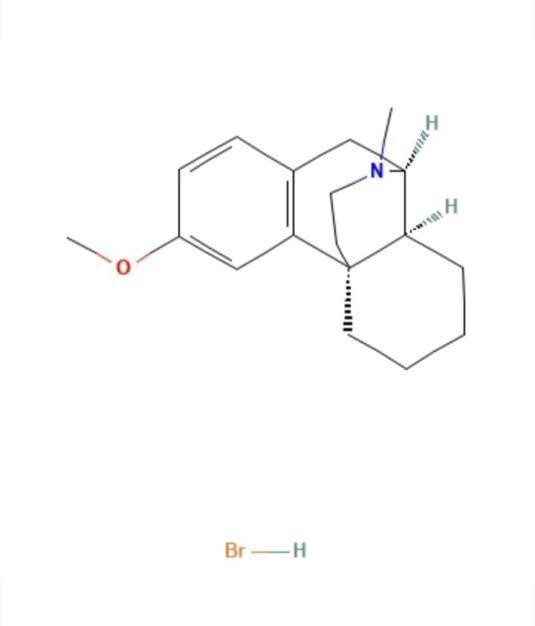
Mechanism of Action:
In addition to having moderate serotonin reuptake inhibitory effects, dextromethorphan HBr suppresses cough via acting centrally on the cough center in the medulla, mostly through NMDA receptor antagonism and sigma-1 receptor agonism.
Phenylephrine Hydrochloride:
History:
Explicated in 1933, phenylephrine hydrochloride began to be used in medicine in 1938 as a synthetic, non-addictive vasoconstrictor to lower blood pressure. It changed previous stimulants like ephedrine and was utilized as a nasal decongestant in several over-the-counter (OTC) cold medications. But in 2023–2024, the FDA concluded that oral tablets are essentially ineffectual after decades of research.
Structure:
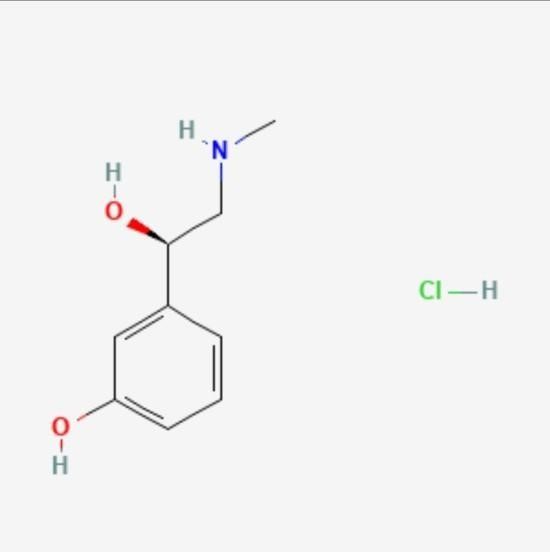
Mechanism of Action:
Vasoconstriction and pupil dilatation (mydriasis) are brought on by phenylephrine's direct activation of alpha-1 adrenergic receptors. By narrowing the majority of arterial beds, including the renal and hepatic arteries, it increases blood pressure and peripheral vascular resistance. Bradycardia may result from the vagal reflex being triggered by this vasoconstriction.
Chlorpheniramine Maleate:
History:
Introduced in the early 1950s following its 1948 patent, chlorpheniramine maleate is a traditional "first-generation" antihistamine that works by inhibiting histamine to treat cold symptoms, hay fever, and allergies. It reduces sneezing, runny nose, and itching fast (within 30 to 60 minutes), however it frequently causes drowsiness.
Structure:
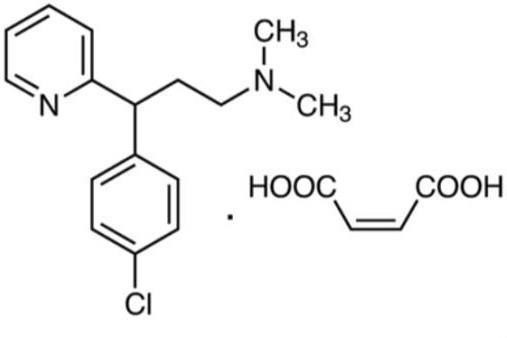
Mechanism of Action:
Chlorpheniramine maleate blocks histamine's effects at the body's H1 receptors, making it a powerful antihistamine. By attaching itself to these receptors, it prevents histamine from causing allergic reactions, including runny nose, itchy eyes, and sneezing.
SIDE EFFECTS [11]:
Blurred vision Headache
Increased heart rate Nausea
PRECAUTIONS [11]:
The drug is used to treat colds and coughs, and it should be taken with sufficient caution to prevent any negative effects. The syrup effectively relieves pain when used as prescribed.
CONCLUSION
An efficient, quick-acting medication for the short-term alleviation of dry cough, nasal congestion, and allergy symptoms is the combination of dextromethorphan HBr (cough suppressant), phenylephrine Hcl (decongestant), and chlorpheniramine maleate (antihistamine).
REFERENCES
https://share.google/1Q8F6wmYRWBo9RkQx
https://share.google/sRJpEXFSWXiRaAjnM
After Compelling Evidence of Its Ineffectiveness as a Decongestant?”. Ann Pharmacother; 56 (11): 1275–1278.
https://share.google/XipoDSjDvObvVqXEC
0and,from%20sneezing%20and%20runny%20nose
https://share.google/1Q8F6wmYRWBo9RkQx
https://share.google/sRJpEXFSWXiRaAjnM
After Compelling Evidence of Its Ineffectiveness as a Decongestant?”. Ann Pharmacother; 56 (11): 1275–1278.
https://share.google/XipoDSjDvObvVqXEC
0and,from%20sneezing%20and%20runny%20nose



Varsha Chaudhary, Chaudhary Priyanshi, Patel Happy, Patel Jiya, Patel Kavya, Patel Nirva, Cough Syrup: An Extensive Review on Types, Drug Profile, Mechanism of Action, Side Effects and Precautions, Int. J. of Pharm. Sci., 2026, Vol 4, Issue 3, 2012-2015. https://doi.org/10.5281/zenodo.19088411
 10.5281/zenodo.19088411
