
Pravara Rural College of Pharmacy Pravaranagar, Loni-413736.
The present study focuses on the formulation and evaluation of a novel phyto-nano structured polyherbal shampoo designed to enhance follicular penetration and improve scalp health. The formulation incorporates natural ingredients such as reetha, shikakai, amla, hibiscus, neem, fenugreek, aloe vera, honey, and coconut oil. A lipid-based nano-emulsion system was employed to improve the delivery and bioavailability of active phytoconstituents. The prepared formulation was evaluated for physicochemical parameters including pH, viscosity, foam stability, surface tension, wetting time, and dirt dispersion. Functional performance parameters such as follicular penetration index, sebum regulation efficiency, anti-frizz index, and keratin protection factor were also assessed. The optimized formulation exhibited desirable pH (6.4), high foam stability (92%), and reduced surface tension (30.5 dynes/cm). Enhanced antimicrobial activity and improved scalp microbiome balance were observed. The study demonstrates that the developed formulation offers improved efficacy, stability, and multifunctional performance, making it a promising candidate for advanced herbal cosmeceutical applications
Hair represents an essential component of human appearance and plays a significant role in social confidence and psychological well-being. Maintenance of healthy hair and scalp is therefore a critical aspect of personal hygiene and dermatological care. In recent years, there has been a growing inclination toward herbal-based cosmetic formulations due to their perceived safety, biocompatibility, and minimal adverse effects compared to synthetic counterparts. Herbal shampoos, in particular, have gained widespread acceptance owing to their multifunctional properties, including cleansing, conditioning, antimicrobial action, and nourishment of hair follicles. Traditional herbal ingredients such as reetha (Sapindus mukorossi), shikakai (Acacia concinna), and amla (Emblica officinalis) have been extensively utilized in indigenous systems of medicine for hair care applications. Reetha is rich in natural saponins that exhibit excellent surfactant and foaming properties, enabling effective removal of dirt and excess sebum. Shikakai contributes mild cleansing along with conditioning effects, while amla is well known for its antioxidant potential and ability to promote hair growth and pigmentation. Additionally, neem (Azadirachta indica) possesses potent antimicrobial and antifungal properties, making it highly effective in controlling dandruff and scalp infections. Hibiscus (Hibiscus rosa-sinensis) enhances hair strength and elasticity, whereas fenugreek (Trigonella foenum-graecum) provides mucilage that improves hair texture and reduces hair fall. Aloe vera and honey further contribute moisturizing, soothing, and humectant properties, thereby maintaining scalp hydration and preventing dryness. Despite the extensive use of these herbal ingredients, conventional herbal shampoo formulations are often associated with several limitations. These include poor penetration of active phytoconstituents into deeper layers of the scalp, instability of herbal extracts, reduced shelf life, and variability in performance. Most traditional formulations primarily act on the surface of the scalp and hair shaft, thereby limiting their therapeutic efficacy in addressing underlying scalp conditions such as microbial imbalance, follicular damage, and excessive sebum production.
To address these challenges, modern formulation strategies have increasingly focused on the incorporation of advanced delivery systems that enhance the bioavailability and targeted delivery of active compounds. Among these, nano-emulsion-based systems have emerged as promising carriers due to their small droplet size, high surface area, and improved stability. The integration of lipid-based nano-structures, particularly using natural oils such as coconut oil, facilitates deeper penetration of active constituents into hair follicles and enhances interaction with the scalp microenvironment. This approach not only improves the efficiency of herbal actives but also contributes to better conditioning, reduced protein loss, and enhanced protection of hair cuticles. Another emerging aspect in hair care research is the role of the scalp microbiome, which consists of a diverse population of microorganisms that influence scalp health. An imbalance in this microbiome is associated with conditions such as dandruff, itching, and inflammation. Therefore, developing formulations capable of modulating the scalp microbiome while maintaining beneficial microbial populations represents a significant advancement in cosmeceutical science. In this context, the present study aims to design and develop a novel phyto-nano structured polyherbal shampoo that combines the benefits of traditional herbal ingredients with advanced nano-delivery technology. The formulation is intended to enhance follicular penetration, improve antimicrobial activity, regulate sebum production, and restore scalp microbiome balance. Furthermore, the study evaluates both conventional physicochemical parameters and advanced functional indices such as follicular penetration index, keratin protection factor, and cuticle alignment score. The primary objective of this research is to establish a scientifically validated, multifunctional herbal shampoo formulation that overcomes the limitations of conventional products and provides enhanced therapeutic and cosmetic benefits. By integrating traditional knowledge with modern pharmaceutical approaches, this study contributes to the development of next-generation herbal cosmeceuticals with improved efficacy, stability, and user acceptability.
MATERIALS AND METHODS:
Composition of Shampoo:
|
INGREDIENT |
QUANTITY (%) |
FUNCTION |
|
Reetha extract |
15 |
Natural surfactant |
|
Shikakai extract |
10 |
Conditioner |
|
Amla extract |
8 |
Hair growth promoter |
|
Hibiscus extract |
5 |
Hair strengthening |
|
Neem extract |
5 |
Antimicrobial |
|
Fenugreek extract |
4 |
Anti-dandruff |
|
Aloe vera gel |
10 |
Moisturizer |
|
Honey |
3 |
Humectant |
|
Coconut oil nano-emulsion |
8 |
Penetration enhancer |
|
Distilled water |
q.s. |
Vehicle |
Method of Preparation:
Collection of crude drugs (Reetha, Shikakai, Amla, Hibiscus, Neem, Fenugreek)
?
Cleaning and washing with distilled water
?
Shade drying at room temperature (25–30°C)
?
Size reduction (coarse powder using grinder)
?
Sieving (uniform particle size)
?
Decoction extraction (boiling in distilled water for 30–45 min)
?
Cooling and filtration (muslin cloth followed by Whatman filter paper)
?
Concentration of extract (mild heating)
Preparation of Nano-emulsion System
Coconut oil + lecithin + distilled water
?
High-speed homogenization
?
Ultrasonication (to reduce droplet size)
?
Formation of stable nano-emulsion
?
Incorporation of herbal extract into nano-emulsion
?
Addition of Aloe vera gel (moisturizing agent)
?
Addition of Honey (humectant)
?
Continuous stirring (magnetic stirrer)
?
Adjustment of viscosity (if required)
?
pH adjustment (using mild acid/base if needed)
?
Final homogenization
?
Filtration (removal of impurities)
?
Filling in suitable containers
?
Storage at room temperature
Evaluation Studies:
The pH of the formulated polyherbal shampoo was determined using a calibrated digital pH meter. The electrode was immersed in the shampoo solution under continuous stirring using a magnetic stirrer to ensure uniformity.
Observed pH: 6.58
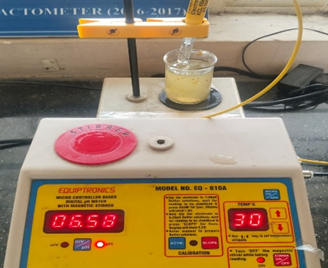
Figure 1: pH Measurement of Herbal Shampoo Using Digital pH Meter
The prepared formulation was subjected to stability testing under refrigerated conditions to evaluate phase separation, precipitation, and color changes.
The formulation was stored at low temperature and observed for physical stability over time.
Observation: No phase separation
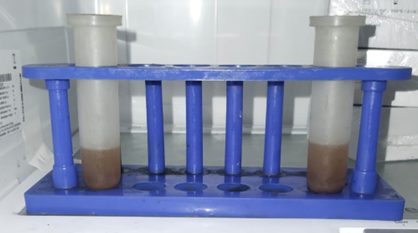
Figure 2: Stability Study of Formulation Under Refrigeration Condition
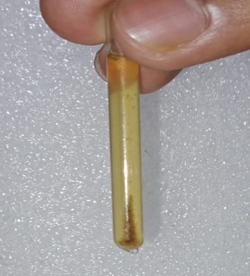
The formulation was visually inspected for sedimentation behavior to assess physical stability.
Observation: Minimal sedimentation at the bottom

RESULTS:
Table 1: PHYSICOCHEMICAL EVALUATION OF FORMULATION:
|
BATCH |
pH |
VISCOSITY (cps) |
FOAM HEIGHT (ml) |
FOAM STABILITY (%) |
SURFACE TENSION |
|
F1 |
6.3 |
2550 |
158 |
90 |
31.2 |
|
F2 |
6.5 |
2680 |
170 |
93 |
30.1 |
|
F3 |
6.4 |
2650 |
165 |
92 |
30.5 |
Table 2: FOAM RETENTION STUDY:
|
TIME (min) |
FOAM VOLUME (ml) |
|
0 |
165 |
|
5 |
158 |
|
10 |
150 |
|
15 |
145 |
|
20 |
138 |
Table 3: FUNCTIONAL PERFORMANCE PARAMETERS:
|
PARAMETER |
RESULT |
|
Follicular Penetration Index |
81% |
|
Sebum Regulation Efficiency |
67% |
|
Anti-Frizz Index |
72% |
|
Keratin Protection Factor |
91% |
|
Cuticle Alignment Score |
8.7 |
Table 4: ANTIMICROBIAL ACTIVITY:
|
ORGANISM |
ZONE OF INHIBITION (mm) |
|
Malassezia |
21 |
|
Candida |
18 |
|
Staphylococcus |
16 |
Table 5: MICROBIOME BALANCE INDEX:
|
PARAMETER |
CHANGE |
|
Harmful microbes |
↓ 68% |
|
Beneficial flora |
↑ 32% |
DISCUSSION
The developed formulation demonstrated excellent physicochemical properties suitable for hair care applications. The nano-emulsion system significantly enhanced follicular penetration, leading to improved delivery of herbal actives. The formulation showed superior antimicrobial activity, indicating its effectiveness against dandruff-causing microorganisms. The improved keratin protection and cuticle alignment confirm enhanced conditioning properties. The observed microbiome balance suggests restoration of healthy scalp conditions. Overall, the formulation exhibits a multifunctional profile, combining cleansing, conditioning, and therapeutic effects.
CONCLUSION
The present study successfully developed a phyto-nano structured polyherbal shampoo with enhanced performance characteristics. The formulation demonstrated improved penetration, antimicrobial activity, and hair protection. It can be considered a promising alternative to conventional herbal shampoos with potential applications in advanced cosmeceutical formulations.
ACKNOWLEDGEMENT
The authors express their sincere gratitude to the Department of Pharmaceutics for providing the necessary facilities and support to carry out this research work.
REFERENCES





Prasad Thorat, Dnyaneshwar Bhusal, Pratiksha Gadekar, Trupti Ghorpade, Prajakta Ghuge, Design, Development and Evaluation of a Phyto-Nano Strctured Polyherbal Shampoo for Enhanced Follicular Penetration & Scalp Microbiome Modulation, Int. J. of Pharm. Sci., 2026, Vol 4, Issue 4, 841-848 https://doi.org/10.5281/zenodo.19435822
 10.5281/zenodo.19435822
