

We use cookies to ensure our website works properly and to personalise your experience. Cookies policy
B.R. Harne College of Pharmacy, Maharashtra, India
Sunscreen is a topical product (lotion, spray, gel) that protects the skin by absorbing or reflecting the sun’s ultraviolet (UV) radiation to prevent sunburn and reduce the risk of skin cancer and premature aging. Some active ingredients in the sunscreen most primarily the organic compounds, absorb the UV radiation and convert it into a small amount of heat. While, Other active ingredients, typically mineral-based like zinc oxide and titanium dioxide, work by scattering and reflecting UV rays away from the skin. Due to the increasing incidence of skin related problem such as Skin cancer and the photo-damaging effects of UV radiation, the use of sunscreen has grown. These agents helps in minimizing symptoms associated with sun damage. An ideal sunscreen must be non-hazardous, non-irritating, non-toxic, and capable of providing complete protection against radiation of the Sun. This formulation of sunscreen lotion contains ingredients such as aloe vera and turmeric, which are skin friendly. Evaluation criteria such as pH, spreadability, and skin feel were used for testing.
A substance that helps protect the skin from the sun's harmful rays. Sunscreens reflect, absorb, and scatter both ultraviolet A and B radiation to provide protection against both types of radiation. Using lotions, creams, or gels that contain sunscreens can help protect the skin from premature aging and damage that may lead to skin cancer.
With increasing awareness of the protection afforded by sunscreens against Sunburns, skin aging and melanomas, the demand for sunscreen formulations will invariably Increase, and there exists a significant opportunity for pharmaceutical industries to fulfill This demand by manufacturing quality, efficacious, safe and aesthetically appealing Sunscreen formulations. Sunscreen lotion is a sort of product that protects against the sun’s Harmful rays by containing ultraviolet radiation (UV rays), which is divided into
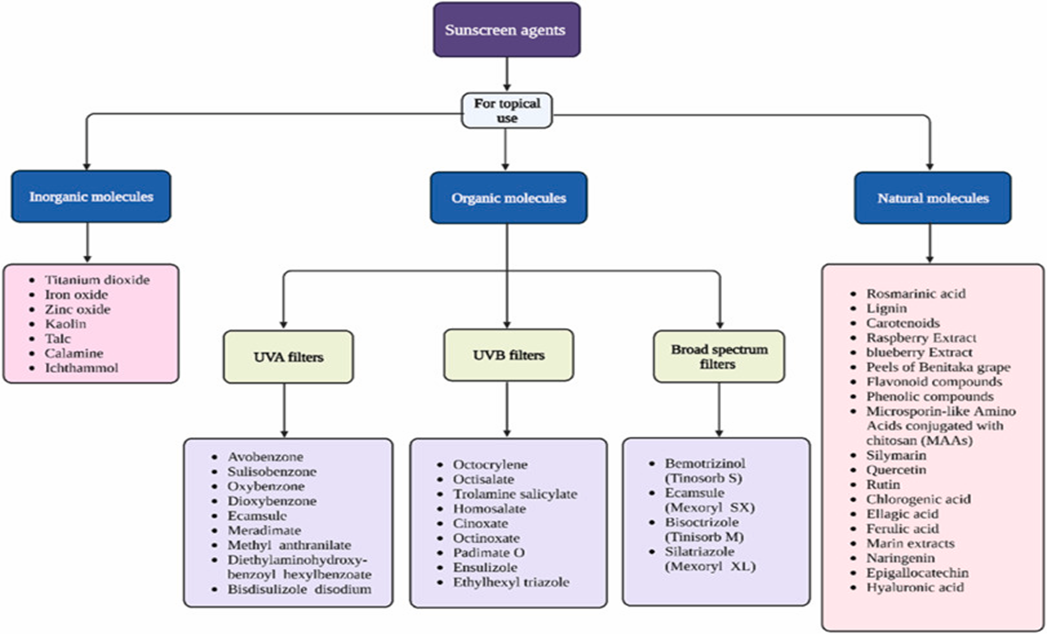
Sunscreens are usually categorized into inorganic and organic UV filter. Inorganic agents reflect and
Classification of sunscreen agents:-
Physical Sunscreen –
Those that reflects the sunlight. Physical sunlight contain inert mineral particles that reflects the UV rays like a mirror. The most common type is ultrafine titanium oxide, made up of minute particle only 20-30 mm3 in size . these products have advantage over chemical sunscreen in that they are inert substances that do not break down over time. They are far liable to cause skin irritation, since they are in the form of insoluble particles that are not absorbed through the skin. Because of the small size of the particles, modern physical sunscreen reflects the radiation in the UVB and short UVA regions better than earlier products.
Chemical Sunscreen –
Those that absorbs the UV light sunscreen agents for external use only the use of sunscreen as photo protecting agents for UV protection. The sunscreen formulation which when applied topically protect the treated area from sunburn sunscreen depends on ability to protect against UV induced sunburn and their chemo-preventive activity. The main mechanism of the skin damage by UV radiation is formation of Reactive Oxygen Species (ROS) that interact with proteins lipids and subsequently alter them. UVB and to a lesser extent UVA are responsible for inducing skin damages.
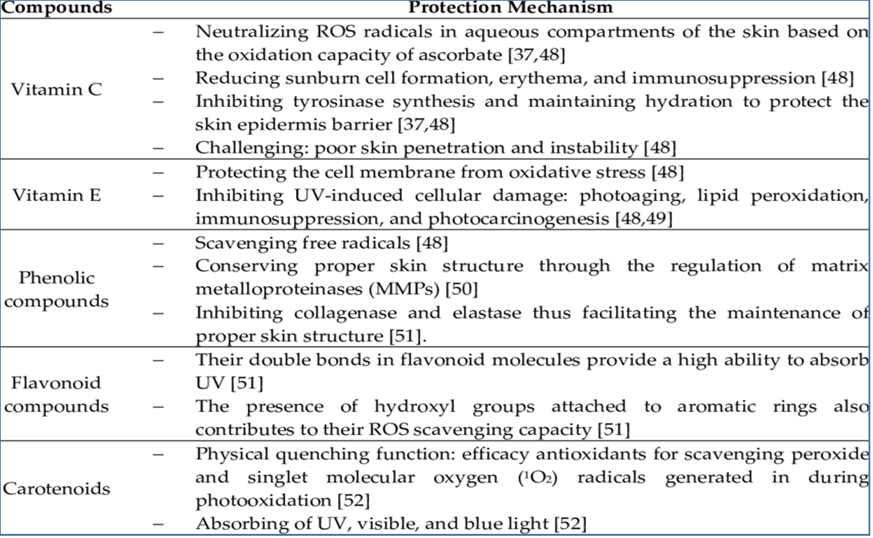
The photo protective mechanism of Anti-oxidant compounds are given below as –
The Sunscreen can be formulated in various formulations such as –
An emulsion is a two-phase liquid dosage form where one liquid is dispersed as tiny droplets within another immiscible liquid, such as oil in water (O/W) or water in oil (W/O). The emulsion can be a lotion or cream depending upon its viscosity. The emulsion sunscreen are very cost effective and these formulation have great ability to spread on the skin and disperse from the bottles. The emulsion also provide an elegant medium that give the skin a smooth and silky feeling without greasy shine.
A pharmaceutical gel is a semisolid preparation that consists of a liquid phase (aqueous, hydro-alcoholic, or non-aqueous) that has been thickened and immobilized by a three-dimensional network of small inorganic particles or large organic molecules, known as a gelling agent. It seems to be an ideal vehicle due to its purity and elegance. The aqueous gel must be composed of water and solubilizers (e.g., nonionic surfactants, Organic agents, and phosphate esters) at sufficient proportions to ensure the gel will be transparent at all temperatures.
An Aerosol is a pressurized dosage form that uses a compressed or liquefied gas propellant to expel a medicament as a fine dispersion of liquid and/or solid particles in a gaseous medium. In addition to lotions and creams, Aerosols are topically applied on the skin to protect skin from harmful sunlight and UV Radiation. They are typically oil-based, making them Quite expensive and often reducing their effectiveness. In addition, it is hard observe where the Sunscreen has been applied. Caution must be taken to avoid accidentally spraying sunscreen into the eyes.
The sun stick is undoubtedly one of the most convenient products due to its small size and Light weight. The sun stick is produced by two main emulsion components, namely oil and oil-Soluble components, through the incorporation of petrolatum and waxes. Thus, it tends to have a Greasy feel on the skin.
AIM – Formulation and Evaluation of Herbal Sunscream containing Aloe-vera and Turmeric
OBJECTIVES :
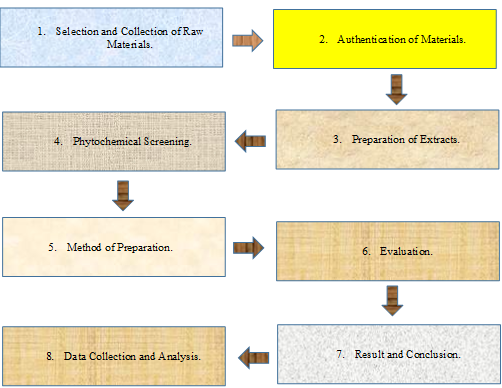
PLAN OF WORK
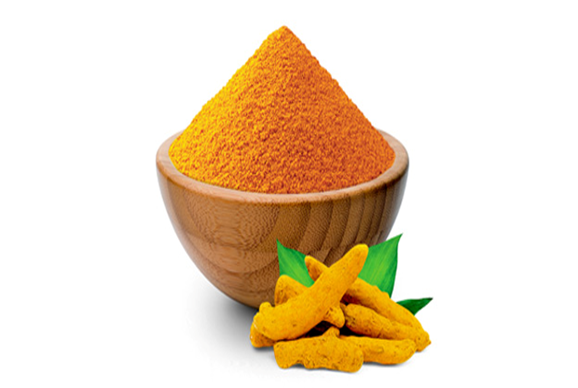
In this Research, we are using Turmeric and Aleo-vera as a main Extract.
Biological Source
Morphological Description
Microscopical Description
Chemical Constituents
Uses – Anti-inflammatory, antioxidant, antimicrobial, coloring agent and digestive stimulant
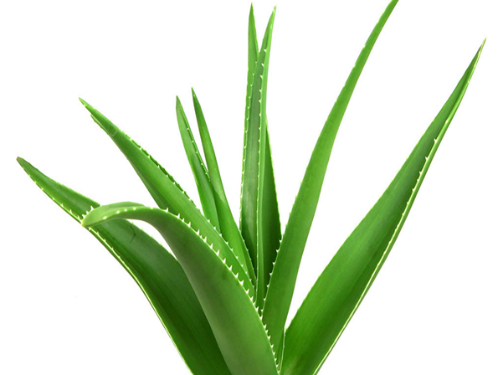
Biological Source
Macroscopic Characteristics
Microscopic Characteristics
Chemical Constituent –
USES -used as laxative, wound healing agent, anti-inflammatory, moisturizer and sun-protective skin soothing agent
MATERIALS AND METHODOLOGY
Raw Materials - Aloe-Vera, Curcuma Longa
Ingredients - Liquid Paraffin for oil base, Propylene Glycol, PEG, Carbopol 940/934 or HOMC, Methyl paraben / Propyl paraben as a preservatives, NAOH, Distilled water, Ethanol.
Chemicals - DPPH, Methanol, PBS, Buffer, Nutrient Agar
Instruments - pH meter, Magnetic stirrer with hotplate, Ultra-sonicator, High-shear homogenizer or rotor-stator homogenizer, Particle size analyzer / Dynamic Light Scattering (DLS) instrument, Zeta potential analyzer, UV–Vis spectrophotometer (capable 200–800 nm), Brookfield viscometer, Centrifuge (4000–10,000 rpm),Hot air oven, Analytical balance, glassware, syringes, filters (0.45 µm), beakers, conical flasks
|
Ingredients |
Quantity |
|
Aloe Vera |
20 gm |
|
Turmeric Extract |
2 gm |
|
Titanium dioxide |
5 gm |
|
Zinc Oxide |
5 gm |
|
Ingredients |
Quantity |
|
Coconut Oil |
8 gm |
|
Olive oil |
5 gm |
|
Bess-wax |
4 gm |
|
Cetostearyl Alcohol |
3 gm |
Fresh Aloe vera leaves and Curcuma longa (turmeric) rhizomes were collected from the local market. Both samples were authenticated in the Department of Pharmacognosy.
Both Aloe vera and Turmeric extracts were subjected to preliminary phytochemical tests for flavonoids, alkaloids, tannins, phenolics, and curcuminoids.
Light liquid paraffin, stearic acid, and cetyl alcohol were weighed and heated to 70°C until melted.
Distilled water was heated to 70°C. Glycerin and preservatives (methylparaben & propylparaben) were dissolved in the warm water.
1. The hot aqueous phase was slowly added to the hot oil phase with continuous stirring.
2. The mixture was stirred until a uniform cream base was formed.
1. Aloe vera extract and turmeric extract were added to the cream base at 45–50°C.
2. The mixture was stirred continuously until a smooth and homogenous herbal sunscreen cream was obtained.
3. The cream was packed in airtight containers.
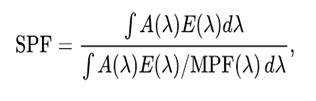
The cream was observed for 30 days for any changes in pH, color, odor, phase separation, or consistency.
RESULT AND DISCUSSION
The herbal sunscreen formulation containing Aloe vera gel (soothing and moisturizing agent) and Turmeric extract (UV-protective antioxidant) was successfully prepared as an oil-in-water emulsion using standard cosmetic formulation techniques.
The final formulation showed:
Physicochemical Properties –
SPF & Sun Protection –
Exhibited an in-vitro SPF value of approximately 12–15 (depending on concentration of turmeric extract), indicating moderate UV protection suitable for daily use.
Stability Studies –
Safety Profile –
CONCLUSION
The study confirms that a safe, stable, and effective herbal sunscreen can be successfully formulated using Aloe vera and Turmeric as the main active ingredients. The product offers moderate SPF protection, antioxidant benefits, enhanced skin hydration, and good user acceptability.
Because it uses natural plant extracts instead of synthetic UV filters, the formulation is: Eco-friendly Skin-friendly and less irritant, Cost-effective, Suitable for routine daily use
Overall, the research demonstrates that Aloe vera and Turmeric can serve as potent natural photo-protective agents, making the herbal sunscreen a promising alternative to chemical sunscreens.
REFERENCES

Sharayu Tumbada, Vinita Yadav, Formulation and Evaluation of Herbal Sun Screen, Int. J. of Pharm. Sci., 2025, Vol 3, Issue 12, 1920-1928. https://doi.org/10.5281/zenodo.17885315
 10.5281/zenodo.17885315