
Department of Pharmaceutics, Triveni Institute of Pharmacy, Kecheri, Thrissur, Kerala, India.
The present study aimed to formulate and evaluate an herbal kajal using cyanthillium cinereum and Ocimum tenuifloram and to assess its antimicrobial activity. Kajal is used as a cosmetic preparation to enhance the appearance of the eyes. It was prepared by the traditional soot collection method using natural base ingredients such as ghee, castor oil, coconut oil, almond oil, vitamin E and camphor. The kajal is evaluated by different parameters like such as physical description, pH, spreadability, stability studies, evaluation of bases. Phytochemical screening confirmed the presence of flavonoids, phenols, tannins, saponins, glycosides, carbohydrates and alkaloids. The formulation exhibited significant antimicrobial activity against staphylococcus aureus with a zone of inhibition is more when comparable to a marketed product. The pH (6.7) was suitable for ocular application, and no irritation was observed. The result indicated that the herbal kajal is safe, stable and effective.
Herbal kajal has been a part of traditional beauty routines for centuries, especially in Indian culture. But it’s more than just a cosmetic when prepared with natural, medicinal ingredient, it becomes medicated herbal kajal, combining the charm of beauty with the power of healing. Unlike synthetic kajal, herbal kajal is made using natural substances like camphor, almond oil, ghee, and soothing herbs. These ingredients not only enhance the appearance of the eyes but also offer various therapeutic benefits cooling the eyes, protecting them from infections, and even improving vision over time. The eye is a highly sensitive sensory organ responsible for vision and is protected by structures such as the eyelids and conjunctiva. It consists of outer (sclera and cornea), middle (choroid), and inner layers that enable protection, nourishment, and visual function, while the eyelids maintain moisture and protect the ocular surface through blinking. Herbal kajal is considered safer than synthetic kajal due to its reduced chemical content. Hence, the present study focuses on the formulation and evaluation of herbal kajal prepared using medicinal plants Cyanthillium cinereum and Ocimum tenuiflorum, selected for their antimicrobial properties, with soot obtained from plant-extract–soaked cotton wicks serving as the base material.
OBJECTIVES
MATERIALS AND METHODS
MATERIALS
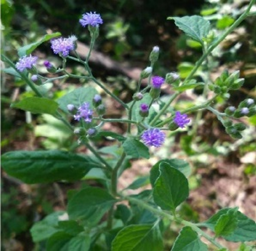
Fig.no.1: Cyanthillium Cinereum (L) H. Rob.
Botanical name: Cyanthillium Cinereum (L) H. Rob.
Chemical constituents: flavonoids, phenolics, alkaloids, terpenoids, tannins, saponins, and steroids, which together give it antioxidant, antimicrobial, anti-inflammatory, and wound-healing properties.
Pharmacological properties: Anti-microbial activity, anti-oxidant, analgesics, anti-inflammatory etc.
Uses:
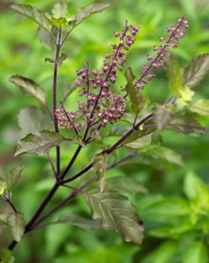
Fig.no. 2: Ocimum Tenuiflorum L.
Botanical name: Ocimum Tenuiflorum L.
Chemical constituents: Tulsi composed of approximately 70% of eugenol, other components include ursolic acid, linalool, carvacrol, caryophyllene, Apigenin, Luteolin and Vitamin C, calcium, iron, Zinc.
Pharmacological properties: Anti-microbial, Anti-bacterial, Anti-diabetic activity etc.
Uses:
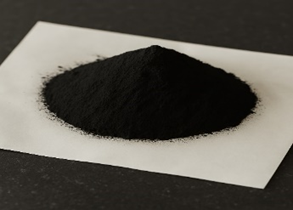
Fig.no. 3: Lamp black (soot)
Source: lamp black is obtained by the controlled burning of cotton cloth impregnated with herbal extract of Cyanthillium cinereum and Ocimum tenuiflorum.
Description: Lamp black is a fine, black carbon powder obtained by the incomplete combustion of oils, ghee, or plant-based materials.
Use: it is used as a natural black pigment in herbal kajal formulation.
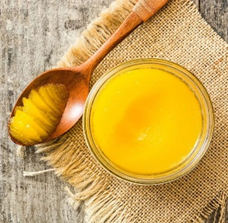
Fig.no.4: Ghee
Description: Ghee is a purified fat. Obtained from butter by removing water and milk solids. it is a clear, stable lipid with a mild nutty aroma and long shelf life.
Use: Emollient and moisturizer in pharmaceutical and cosmetic preparation, improve skin hydration.
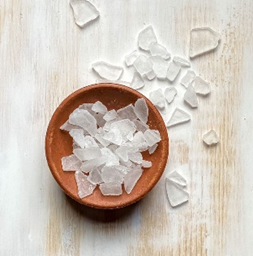
Fig.no. 5: Camphor
Description: It is a crystalline, wax-like, transparent solid that is combustible in nature and possesses a strong, sharp, slightly musty characteristic odor.
Use: Use in various cosmetics and topical formulation due its cooling and soothing effect.
Medicinaly, it is used as an anti-pruritic, analgesics and anti- inflammatory agent for skin application. [4]
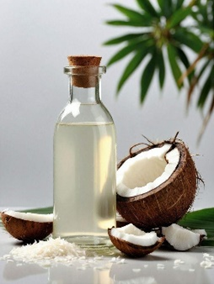
Fig no.6 : Coconut oil
Description: A white or pale yellow solid or semi solid fatty substance extracted from coconut palm fruit.
Use: Traditionally utilized to nourish the skin and protect it from dryness. Used in cosmetic formulations due to its moisturizing, calming and soothing effect. [5]
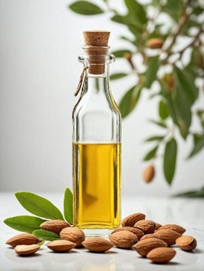
Fig.no. 7: Almond oil
Description: A pale to golden yellow oily liquid with a mild, nutty odor; insoluble in water but soluble in oils and organic solvents.
Use: used as an emollient and carrier oil in creams, lotions and bath oils to improve skin softness and spreadability. [6]
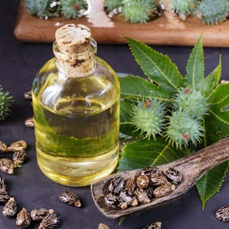
Fig.no.8: Castor oil
Description: it is a pale yellow to nearly colorless, transparent and viscous liquid with a faint, mild odor and a slightly unpleasant taste.
Use: widely used as a makeup remover and moisturizing agent. It promotes wound healing and exhibits anti-inflammatory, anti-bacterial, and anti- fungal activity. [7]
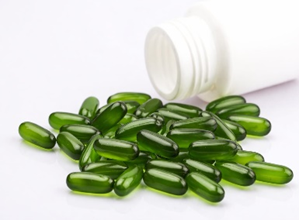
Fig.no. 9: Vitamin E
Description: It is a fats soluble nutrient appearing as a pale yellow, oily liquid with little or no characteristic odor or taste.
Use: It functions as a potent anti-oxidant and preservative. It helps to sooth and protect the skin, reduce the formation of wrinkles and lightens dark spots. [8]
METHEDOLOGY
The fresh whole plant of Cyanthillium cinereum and Ocimum tenuiflorum were collected from Thrissur district and authenticated.
The plants were thoroughly rinsed using clean water to remove dirt and impurities. Then leaves were crushed and juice was extracted hygienically. The extract was filtered using a clean cotton cloth to remove solid particles.
Clean cotton cloth was soaked in the herbal juice and kept in a well closed container for 8 hrs to allow proper absorption of the extract.
The soaked cotton has been removed from the liquid and then placed in natural drying until the product was completely lose the water content in it.
The dried cotton cloth containing extract was used as a wick and was lightened in a mud lamp containing ghee. An inverted copper plate was placed above the flame. The black soot deposited on the copper plate was carefully scraped and collected. [9] [10]

Fig.no: 10 Lit the lamp and put the inverted copper plate
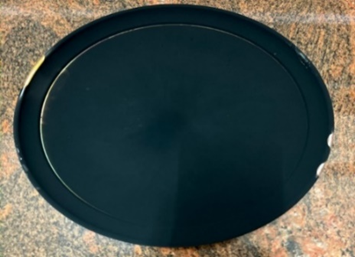
Fig.no: 11 Black soot is obtained on copper
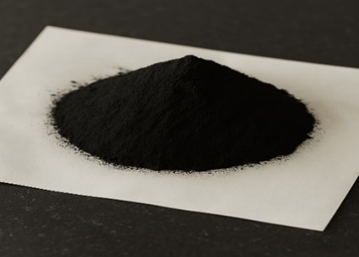
Fig.no: 12 Collection of soot
Preparation of wax base
Ghee was weighed and taken in a china dish.
Almond oil, castor oil, coconut oil is mixed together in a separate china dish.
The wax base and oil phase are mixed together and gently heated using the double-boiling method for a few minutes until the mixture becomes uniform and melts completely. Once the mixture is well-melted, black soot is added slowly and stirred thoroughly to ensure even dispersion of the pigment throughout the base. After proper mixing, adding Vitamin E capsules as a preservative, camphor which provides a cooling and soothing effect on the eyes. The mixture is stirred well until all ingredients are completely blended to form a smooth kajal paste. The prepared kajal is allowed to cool and then transferred into a clean, airtight container.
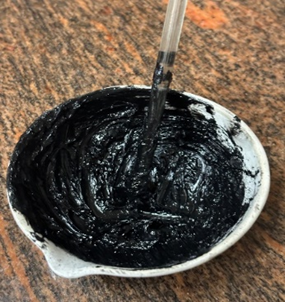
Fig.no: 13 Formulated herbal kajal
Table no.1: formulation of herbal kajal
|
SL .NO |
INGREDIENTS |
F (3g) |
|
|
Ghee |
1.2 g |
|
|
Lamp soot |
0.9 g |
|
|
Castor oil |
0.31ml |
|
|
Coconut oil |
0.33ml |
|
|
Almond oil |
0.27ml |
|
|
Vitamin E |
0.03ml |
|
|
Camphor |
0.02 g |
RESULT AND DISCUSSION
Physical evaluation test: The formulated product is shiny black color, with a characteristic odour. It was non- gritty and smooth in texture with a semisolid consistency.
Table no. 2: Physical evaluation
|
SR. NO |
PARAMETER |
F |
MARKETED PRODUCT |
|
1 |
Color |
Deep-black |
Black |
|
2 |
Oduor |
Pleasant |
mild |
|
3 |
Texture |
Smooth |
Smooth |
|
4 |
Consistency |
Fine |
Fine |
|
5 |
State |
Semi solid |
Semi solid |
Table no. 3: pH
|
SR.NO |
FORMULATION |
PH |
|
1 |
F |
6.7 |
|
2 |
Marketed Product |
7.1 |
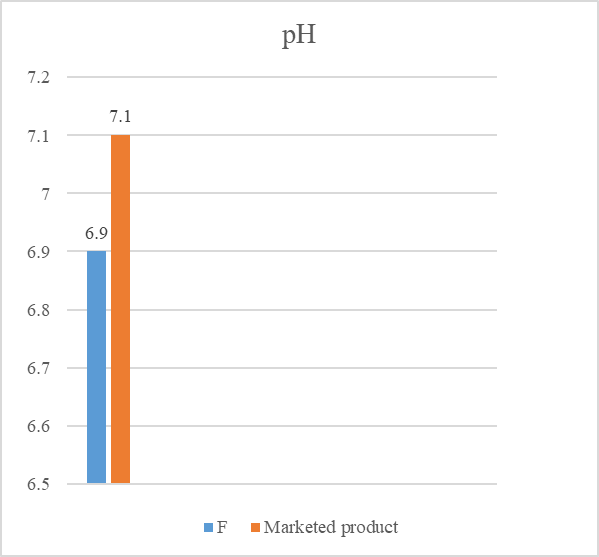
Graph no.1: pH determination
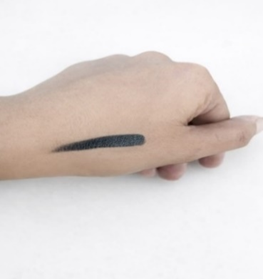
Fig.no. 14: Skin irritation test
Table no. 4: Skin irritation test
|
SR. NO |
FORMULATION |
IRRITABILITY |
|
1 |
F |
No Irritability |
|
2 |
Marketed Product |
No Irritability |
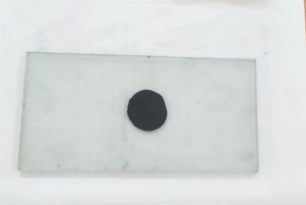
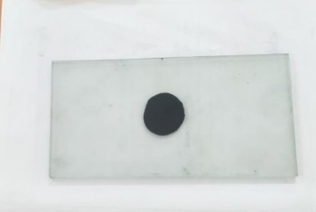
Fig.no.15: Product spreadability Fig.no. 16: marketed product spreadability
Table no. 5: Spreadability test
|
SR. NO |
FORMULATION |
DIAMETER (cm) |
SPREADABILITY |
|
1 |
F |
4.6 |
Good |
|
2 |
Marketed Product |
3.9 |
Average |
Table no. 6: Stability studies
|
SR. NO |
PARAMETER |
PRODUCT |
MARKET PRODUCT |
||
|
Room temperature |
At 40°C |
Room temperature |
At 40°C |
||
|
1 |
Colour |
No change |
No change |
No change |
No change |
|
2 |
Odour |
No change |
No change |
No change |
No change |
|
3 |
Texture |
No change |
No change |
No change |
No change |
|
4 |
Consistency |
No change |
No change |
No change |
No change |
The evaluation of base that is ghee was evaluated by Acid value and Saponification value.
The acid value is to neutralize the free acid in 1 g of substance the number of mg of potassium hydroxide is required. Determined by the following method weigh accurately about 10 g of the substance in the 250 ml of conical flask and add 50 ml of alcohol and add 1 ml of phenolphthalein. Warm up on water bath if necessary until substance was dissolved. Titrate with 0.1 N potassium hydroxide. Shake constantly shake until pink colour is obtained. Note the number of ml required and calculate the acid value by using the formula:
Acid value = a x 0.00561 x 1000/W
Where, a = number of ml of 0.1 potassium hydroxide required
W = weight of g of substance taken.
The Saponification value is the number of mg of potassium hydroxide required to neutralized fatty acid determined by following method. Add 40 gm of potassium hydroxide in 20 ml water and add sufficient alcohol to make volume 1000ml. Allow it overnight. Weigh 4g of ghee in 250 ml of conical flask add alcoholic solution of potassium hydroxide, attach to the reflux condenser set another reflux condenser as blank with reagents except ghee.1hr boil on water bath. Add 1ml of phenolphthalein. Titrate with 0.5 N HCl. Note the number of ml required and calculate the Saponification value by using the formula:
Saponification value = (b-a) x28.05/W
Where, W = weight in g of substance taken
a = sample solution reading.
b = blank solution reading [12]
Table no. 7: Evaluation of base
|
Acid Value |
a=2.5ml |
W=10 ml |
1.402 mg KOH/g |
|
Saponification Value |
b=54.6 ml |
a= 22.3 ml |
226.503 mg KOH/g |
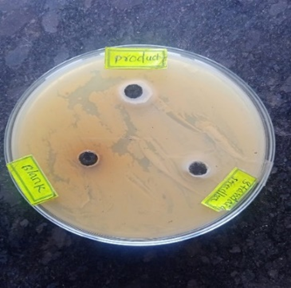
Fig.no. 17: Anti-microbial activity of kajal
Table no. 8: Anti-microbial activity
|
SR. NO |
FORMULATION |
TEST ORGANISM |
ZONE OF INHIBITION (mm) |
|
1 |
F |
S. Aureus |
18 |
|
2 |
Marketed product |
S. Aureus |
17.2 |
|
3 |
Control |
S. Aureus |
Nil |
DISCUSSION
The present study successfully formulated and evaluated a herbal kajal using Cyanthillium cinereum and Ocimum tenuiflorum with the objective of developing a safe and effective eye cosmetic. Phytochemical screening confirmed the presence of bioactive constituents such as flavonoids, phenols, tannins, saponins, and alkaloids, which are responsible for antimicrobial activity. The formulated kajal showed effective antibacterial action against Staphylococcus aureus, comparable to the marketed formulation. The formulation exhibited acceptable pH, smooth texture, good spreadability, and satisfactory stability under storage conditions. Overall, the results demonstrate that the herbal kajal is safe, stable, and effective, supporting its use as a natural alternative to synthetic kajal products.
CONCLUSION
Herbal cosmetics form an important part of the Indian health and beauty sector, widely used due to their cultural acceptance, affordability, and safety. Herbal kohl (herbal kajal) is a prominent example, developed by applying scientific principles in the selection and processing of ingredients. Its formulation generally includes natural waxes, vegetable oils, plant?based pigments, herbal leaves, and natural fragrances, which not only provide cosmetic appeal but also impart therapeutic benefits such as cooling, antimicrobial, and protective effects for the eyes.
Compared to synthetic products, herbal kohl is preferred because it is eco?friendly, cost?effective, and associated with minimal side effects. It avoids harmful chemicals and preservatives, making it suitable for long?term use and safe for sensitive groups such as children. Growing consumer awareness of sustainability, natural product safety, and cruelty?free testing has further increased its demand in both rural and urban markets.
ACKNOWLEDGEMENT
We sincerely acknowledge the valuable contributions of the researchers and scientists whose dedicated efforts helped in the formulation and evaluation of the herbal kajal with antimicrobial activity. We also express our heartfelt gratitude to our institution, Triveni Institute of Pharmacy, for providing the essential academic support and resources that enabled the successful completion of this research.
CONFLICT OF INTEREST
This research article was conducted and prepared without any conflicts of interest on the part of the authors.
REFERENCES


Raisey Jose, Sandeepa Sadhan, Femi C S, Jalwa Shameer, Jeseena K H, Rashidha M A, Herbal Kajal Formulation from Cyanthillium Cinereum and Ocimum Tenuiflorum for the Evaluation of Anti-Microbial Properties, Int. J. of Pharm. Sci., 2026, Vol 4, Issue 2, 2676-2685. https://doi.org/10.5281/zenodo.18671259
 10.5281/zenodo.18671259
