

We use cookies to ensure our website works properly and to personalise your experience. Cookies policy
Department of Pharmaceutics, Mar Dioscorus College of Pharmacy, Alathara, Sreekaryam, Thiruvananthapuram
Mango seed kernel (MSK), a mango processing by-product, is a sustainable, unexplored source for bioactive compounds, finding significant applications in the cosmetic industry. The emphasis of this review is on the Soxhlet apparatus extraction procedure for the mango seed kernel, emphasizing its applications in face serum. Mango seed kernel contains unexplored carbohydrates, proteins, lipids, and polyphenols, like tannins, gallic acid, mangiferin, flavonoids, coumarins, and catechins, possessing potent antioxidant activities, finding significant applications in dermal protection and anti-aging. Ethanol Soxhlet extraction is emphasized, a cost-effective, eco-friendly process, facilitating efficient extraction of heat-stable, valuable phytochemicals. Phytochemical analysis verifies the presence of alkaloids, saponins, glycosides, steroids, and tannins, validating the versatile cosmetic applications of the herb. The review introduces the physiology of the dermal tissue, establishing the significance of serum delivery systems, like their higher penetration, compound content, and dermal hydration. Thus, the mango seed kernel finds potential applications as a natural, cost-effective, antioxidant-rich cosmetic agent, presenting a novel source for herbal cosmetic products.
Mango seed kernel (MSK) is a common by-product of mango processing. It is a valuable but often overlooked source of bioactive compounds. This review focuses on extracting MSK using the Soxhlet apparatus and looks at its nutritional, phytochemical, and functional properties. Mango seed kernels are rich in carbohydrates, proteins, and lipids. They also contain important phenolic compounds like tannins, gallic acid, mangiferin, coumarins, flavonoids, and catechins, which provide strong antioxidant activity. The Soxhlet extraction method is highly efficient because it recycles the solvent continuously, allowing for effective recovery of high-boiling and thermally stable compounds. Ethanol is commonly used as the extraction solvent because it improves yield, is safe, and is environmentally friendly. Research shows that finding the right ethanol concentration and solvent volume is key to achieving good extraction efficiency. The extracts obtained have pleasing sensory qualities and contain various phytochemicals that can be applied in nutraceuticals, pharmaceuticals, and cosmetics.
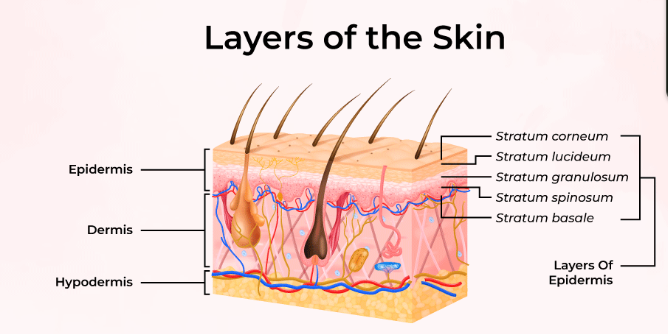
Overall, making good use of mango seed kernel through effective extraction offers a sustainable way to manage waste while revealing significant industrial potential. This review highlights the importance of the Mango seed kernel as a natural, cost-effective source of antioxidants and functional ingredients for future product development. The phytochemical analysis confirmed the presence of various phytochemical constituents such as carbohydrates, amino acids, protein, alkaloids, saponins, glycosides, steroids, and tannins. The skin is the largest organ of the body, accounting for about 15% of adult total body weight. It has three layers: the epidermis, the dermis, and the hypodermis. Epidermis The epidermis, the skin's outermost layer, is composed of several strata and various cell types crucial for its function. Layers of the epidermis: From the deepest to the most superficial, the epidermal layers are the stratum basale, stratum spinosum, stratum granulosum, stratum lucidum, and stratum corneum. The stratum basale, also known as stratum germinativum, is separated from the dermis by the basement membrane (basal lamina) and attached to it by hemidesmosomes. The cells in this layer are cuboidal to columnar, mitotically active stem cells that constantly produce keratinocytes. This layer also contains melanocytes. The stratum spinosum, comprising 8 to 10 cell layers, is also called the prickle cell layer. This layer contains irregular, polyhedral cells with cytoplasmic processes, sometimes called spines, that extend outward and contact neighboring cells by desmosomes. Dendritic cells can be found in this layer. The stratum granulosum has 3 to 5 cell layers and contains diamond-shaped cells with keratohyalin and lamellar granules. Keratohyalin granules contain keratin precursors that aggregate, cross-link, and form bundles. The lamellar granules contain the glycolipids secreted to the cell surfaces, functioning as an adhesive to maintain cellular cohesion. The stratum lucidum comprises 2 to 3 cell layers and is present in thicker skin on the palms and soles. This thin and clear layer consists of eleidin, a transformation product of keratohyalin. The stratum corneum has 20 to 30 cell layers and occupies the uppermost epidermal layer. The stratum corneum is composed of keratin and dead keratinocytes (anucleate squamous cells) that form horny scales. This layer has the most variable thickness, especially in callused skin. Dead keratinocytes release defensins within this layer, which are part of our first line of immune defense mechanisms. DermisThe dermis is connected to the epidermis by the basement membrane. The dermis consists of 2 connective tissue layers, papillary and reticular, which merge without clear demarcation. The papillary layer is the upper dermal layer, which is thinner and composed of loose connective tissue that contacts the epidermis. The reticular layer is the deeper layer, which is thicker and less cellular. This layer consists of dense connective tissue composed of collagen fiber bundles. The dermis houses the sweat glands, hair, hair follicles, muscles, sensory neurons, and blood vessels.
Hypodermis
The hypodermis, also known as the subcutaneous fascia, is located beneath the dermis. This layer is the deepest skin layer and contains adipose lobules, sensory neurons, blood vessels, and scanty skin appendages, such as hair follicles.
Skin Serum is a skincare product that you apply to your skin after washing but before moisturising with the goal of quickly delivering potent nutrients to the skin. Skin care treatments called serums are made to deliver concentrated amounts of specific active ingredients to the skin. There are numerous unique varieties of serums available that perform special tasks, from hydration to skin lightening. The serum is especially well-suited for this endeavour since it is composed of tiny molecules that may permeate the skin deeply and provide an extremely high awareness of active components. This makes them an exceptional tool for concentrating on particular skincare issues, such as pigmentation and ageing signs.[1]
Serum is defined as a light, easily absorbed oil or water-based liquid that spreads on the skin. It gets rapidly absorbed and easily penetrates into the deeper layers of the skin. Also has a non-greasy finish and an intensive formula that contains a high concentration of active substances. It contains skin-smoothing ingredients that enhance skin texture and make skin soft, silky smooth, and fair. The formulation has good spread ability, making the pores appear smaller and increasing the moisture level. Face serum delivers the active ingredient into the skin, eliminating the need for hazardous chemicals to achieve instant results.
Ideal properties of face serum [2]
Uses
CLASSIFICATION OF FACE SERUM [2]
Based on Function / Skin Concern
1. Hydrating Serums
2. Brightening Serums
3. Anti - Aging Serums
4. Acne Control Serums
5. Soothing / Anti - Inflammatory Serums
6. Pigmentation / Spot Removal
7. Firming & Lifting Serums
8. Antioxidant Serum
Based on Active Ingredients
1. Ayurvedic - Based Serums
2. Botanical Extract - Based Serums
3. Fruit / Enzyme - Based Serums
4. Floral Water - Based Serums
Based on Formulation Type [3]
1) Oil-based serum: Oil serums are among the simplest facial serums to create. They typically begin with a base of high-quality, highly absorbent carrier oils, often referred to as "dry" oils. These premium oils not only provide moisturising and barrier-repairing benefits but also contain polyphenols, essential fatty acids, and other substances that can be absorbed and utilised by the skin.
2) Gel serum: Gel serums offer the skin a "tightening" sensation, temporarily lifting or tightening specific areas of the face. Their water-based formulation allows for the inclusion of excellent hydrophilic (water-loving) plant extracts, enhancing their effectiveness in providing hydration and other benefits to the skin.
3) Water-Based Serum: Water-based serums typically contain minimal or no gums or thickeners. They are ideal for delivering potent hydrophilic plant extracts that can linger on the skin beneath creams and lotions. This technique enhances the effectiveness of skincare products.
4) Emulsion-based Serum: Emulsion-based serums act as moisturisers that not only strengthen the skin's barrier function but also deliver potent ingredients to the skin. These serums combine two "immiscible" phases, such as oil and water, using emulsifiers to bind them together and maintain stability. However, the combination of oil and water in emulsions facilitates this remarkable performance.
5) The pressed balm serum: Balm serums are based on a traditional balm base of butters, waxes, and oils, but also contain oil-soluble (lipophilic) active ingredients to help the skin. Butters and waxes form an occlusive barrier on the skin, moisturising and nourishing it while the active ingredients in the pressed serum work together
Advantages of face serum
Disadvantages of Face Serum:
Materials:
Ripe mango seeds were collected from the local market. The seeds were washed with tap water to remove their impurities.
Sample preparation:
Mango seeds were washed and then split as the first step in sample preparation, and the covering layer of the core was removed to obtain the maximum kernel portion. The kernels were then chopped, dried, and made into flour to obtain a small particle size for better solvent penetration. Kernel flour was packaged and placed in the freezer to await the extraction process. [5]
Extraction procedure
Soxhlet extractor: A Soxhlet extractor is a piece of laboratory apparatus invented in 1879 by Franz Von Soxhlet. The Soxhlet extractor is divided into three parts.
1) Boiling flask
2) Thimble
3) Condenser [6]
The extraction process uses a Soxhlet apparatus (Figure 1). For each experimental unit, 50 g of mango kernel flour was used, wrapped in cotton and filter paper, and then placed in a Soxhlet sleeve. This sleeve was inserted into the Soxhlet thimble facing upwards. The solvent was put into the thimble until it was full and flowed into a 3-neck flask of 1000 mL that was under the thimble. The solvent continued to be added until it covered the Soxhlet sleeve. The reflux condenser, which has been connected to a water pump, was then connected to the Soxhlet thimble. The flask was heated using a heating mantle at 80? and adjusted using a thermometer setting. The extraction process continues until the solvent in the thimble becomes clear. The sleeve was removed from the thimble, and the mango seed kernel and solvent were separated by heating the flask until the solvent evaporated and separated from the thimble. The mango seed kernel product in the flask was transferred to a dark packaging container and stored in the freezer.[5]
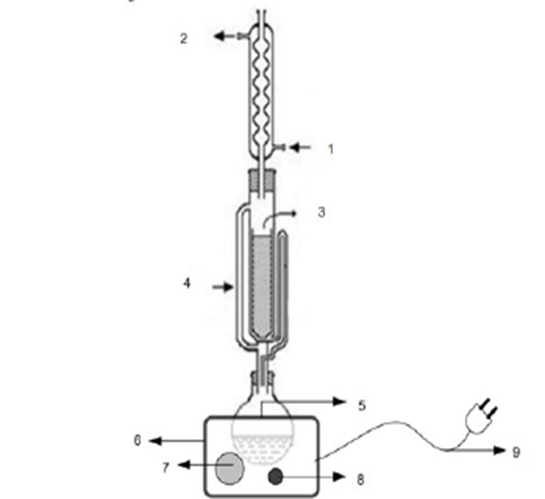
Figure 1. Soxhlet extractor. [5]
1: cooling water enters the condenser
2: cooling water out of the condenser
3: thimble
4: steam line rises
5: capillary pipes
6: heating mantle
7: heat regulator
8: indicator light
9: power cord.
FORMULATION OF FACIAL SERUM
The formulation of facial serum involves carefully selecting and combining ingredients to create a product that addresses specific skincare concerns and delivers desired benefits. Here’s a basic outline of the formulation process;
Active ingredient selection: Identify key active ingredients based on their skin care benefits. These could include botanical extract, vitamins, and other compounds known for their moisturizing, anti-aging, brightening, or soothing properties. The formulation of a facial serum involves carefully selecting and combining ingredients to create a product that addresses specific skincare concerns and delivers desired benefits.
Base Ingredients: Choose a base or carrier for the serum, such as water, glycerin, or a combination of water and glycerin. This forms the bulk of the product and helps deliver the active ingredients to the skin. Emulsifiers and Stabilizers: Add emulsifiers and stabilizers to ensure that the ingredients blend smoothly and maintain their stability over time.
Preservatives: Incorporate preservatives to prevent microbial growth and extend the shelf life of the serum. Examples of preservatives include phenoxyethanol.
Fragrance and Colour: Optionally, add fragrance or natural essential oils for scent, and colorants for aesthetic appeal. Keep in mind that fragrance can be sensitizing for some individuals, so consider using minimal amounts or opting for fragrance-free formulations. [11]
METHOD OF PREPARATION
Preparation of the oil phase
The oil-soluble ingredients, such as jojoba oil and olive oil, are taken into one beaker and melted at 70°c
Preparation of the water phase
The water phase is prepared at the same time by mixing mango seed extract and phenoxyethanol in another beaker.
Preparation of emulsion
Emulsion was prepared by adding the oil phase into the water phase dropwise under mechanical stirring at 700 to 800 rpm to obtain an O/W biphasic emulsion [11].
CONCLUSION
Mango seed kernel (Mangifera indica) is a promising, sustainable, and cost-effective source of bioactive phytochemicals for herbal face serum formulations. It is rich in phenolic compounds like tannins, mangiferin, gallic acid, flavonoids, and catechins. It also contains essential nutrients such as carbohydrates, proteins, and lipids. Mango seed kernel has strong antioxidant and skin-protective properties. This review emphasizes Soxhlet extraction with ethanol as an effective, eco-friendly, and reproducible method for obtaining these valuable phytochemicals with high yield and stability. Adding mango seed kernel extract to facial serums meets modern cosmetic needs. These serums have a lightweight formula, improved skin penetration, and the ability to deliver concentrated active ingredients to deeper skin layers. Such formulations provide various dermatological benefits, including hydration, anti-aging effects, protection against oxidative stress, and improvements in overall skin texture and appearance. Using mango seed kernel not only adds value to agro-industrial waste but also promotes the creation of clean-label, plant-based cosmetic products. Overall, mango seed kernel-based herbal face serums offer a new and practical approach for sustainable cosmetic innovation. More work is needed on formulation optimization, stability studies, and clinical evaluations to fully realize their potential in cosmeceutical applications.
REFERENCES




Anupama Jayaraj, Sheri P. S., Neenu Reji*, uksana S., Shabna B. S., Mango Seed Kernel (Mangifera indica): A Sustainable Source of Antioxidants for Herbal Face Serum Applications – A Review, Int. J. of Pharm. Sci., 2026, Vol 4, Issue 2, 1784-1790. https://doi.org/10.5281/zenodo.18619379
 10.5281/zenodo.18619379