

We use cookies to ensure our website works properly and to personalise your experience. Cookies policy
Department of Pharmaceutics, Annasaheb Dange College of B. Pharmacy, Ashta, Tal. Walwa, Dist. Sangli, Maharashta India 416301.
Azadirachta indica (Neem) is a biologically significant medicinal plant recognized for its profound ethnomedicinal importance and diverse phytochemical composition. This work comprehensively examines its botanical features, geographical distribution, and traditional applications, along with extensive array of bioactive constituents such as limonoids (azadirachtin, nimbin, salanin), flavonoids, terpenoids, and phenolic compounds. These phytoconstituents contribute to a broad spectrum of pharmacological activities, including antimicrobial, anti-inflammatory, antioxidant, antidiabetic and wound healing effects.[1][2][3] Modern scientific investigations substantiate traditional uses by elucidating complex mechanisms involving regulation of oxidative stress, inflammatory pathways, enzymatic activity, and intracellular signalling processes.[4][3] Moreover, neem’s resilience and role as a natural biopesticide highlight its importance in sustainable agricultural systems.[5][6] The study also highlights recent progress in extraction methodologies, such as microwave-assisted, ultrasound-assisted and supercritical fluid extraction techniques, which improve efficiency, selectivity and stability of bioactive compounds while supporting environmentally sustainable practices. Despite encouraging preclinical evidence, significant challenges remain regarding standardization, safety assessment, dose optimization and translation into clinical applications. Ensuring regulatory compliance and robust quality control is essential for the safe incorporation of neem into pharmaceutical and nutraceutical products. Furthermore, emerging strategies including nanotechnology-based formulations, bio-adhesive delivery platforms, and biotechnological approaches present promising opportunities to enhance therapeutic efficacy and bioavailability. Overall, neem stands as a valuable natural resource that necessitates continued interdisciplinary research to maximize its potential in healthcare and sustainable development.
Neem (Azadirachta indica) is an internationally esteemed multipurpose tree whose ecological adaptability and pharmacological significance have drawn the attention of researchers, policymakers, and communities throughout tropical and subtropical regions. Indigenous to the Indian subcontinent, neem has become naturalized across South and Southeast Asia, Africa, and parts of Central and South America, where it plays a vital role in agroforestry systems, local economics, and urban greenery. Traditionally hailed as the “village pharmacy,” neem holds a central place in ethnomedicine, with its leaves, bark, seeds, fruits, and oil employed in treating wounds, skin conditions, oral infections, digestive disorders, and fevers through diverse cultural preparations.[3][7] Contemporary phytochemical studies have uncovered neem’s rich spectrum of bioactive compounds particularly triterpenoid limonoids (such as azadirachtin, salannin, and nimbin), flavonoids, terpenes, and essential oils responsible for its wide ranging biological effects, including antimicrobial, antiviral, anti-inflammatory, immunomodulatory, antiparasitic, anticancer, and insecticidal properties.[8][3] This chemical diversity forms the foundation for neem’s applications in suitable agriculture as a complementary therapeutic in dermatology, wound management, and infectious diseases.[9][10]
Ecological distribution and agronomic context: Neem’s ecological success stems from its exceptional resilience to diverse tropical and subtropical conditions. Originating in arid and semiarid zones of Indian subcontinent, it thrives under drought, high temperature, and nutrient-poor soils, making it suitable for agroforestry, boundary planting, and urban greening. Environmental variables such as soil type, rainfall, microclimate, and cultivation practices influence neem’s growth and concentration of its phytochemicals. Factors like harvest season, irrigation, and post-harvest processing (including drying and storage) further affect bioactive yield and efficacy. Ecologically, neem supports biodiversity and ecosystem health by reducing pest loads through natural formulations, through attention must be given to minimizing unintended effects on beneficial organisms. Therefore, standardized cultivation and processing protocols are necessary to ensure consistent quality and maximize both productivity and pharmacological potential.
Safety considerations and toxicity: Although neem has been used safety for centuries in traditional medicine, modern toxicological research emphasizes the importance of dose regulation and formulation precision. Neem products can produce variable effects depending on plant part, extract concentration, and preparation method. While low dosas are generally well tolerated, high or improperly processed doses may cause gastrointestinal irritation, allergic reac16tion, or, in rare cases, serious toxicity particularly in children, pregnant woman, or individuals with metabolic disorders.[11][12][13] The toxicological profile largely depends such as azadirachtin and possible solvent residues. Hence, careful standardization, accurate dosage labelling and stringent safety testing are crucial for clinical, nutraceutical, or agricultural applications.[14][15] Moreover, potential interactions with pharmaceuticals or other botanicals must be evaluated, particularly in integrative medical or agricultural applications. Moreover, potential interactions with pharmaceuticals or other botanicals must be evaluated, particularly in integrative medical or topical treatments.
Regulatory perspectives and quality assurance: Regulatory governance of neem based products differ globally across categories such as biopesticides, nutraceuticals, cosmetics and pharmaceuticals. Key regulatory priorities include standardization of active ingredients, control of impurities, and evaluation of environmental and human safety through pre and post market monitoring. Ensuring product quality relies on validated analytical methods for chemical profiling (e.g.., quantifying azadirachtin and related limonoids), adherence to good manufacturing practices, and transparent labelling of active content and recommended use. Increasingly, international bodies advocate harmonized quality standards, validated extraction protocols, and consistent safety assessments to build consumer trust and scientific credibility. Collaboration between researchers, regulators, and industries is vital to generate reliable efficacy, toxicology, and environmental data that can guide responsible innovation in agriculture and healthcare. Collectively, these facets ecological adaptability, safety assurance and regulatory alignment create a comprehensive understanding of neem as a unifying link between ancestral knowledge and modern scientific inquiry. Integrating regional agronomic insights dimensions, provides a balanced foundation for in depth literature analysis and future advancements in neem-based research and applications.
Table 1: Varieties of Neem[8][3][7]
|
Common Name |
Biological Name |
Region/Origin |
|
Indian Neem |
Azadirachta indica A. Juss. |
India, South Asia |
|
Philippine Neem |
Azadirachta excelsa (Jack) Jacobs |
Malaysia, Indonesia, Philippins |
|
Thai Neem |
Azadirachta siamensis Valeton |
Thailand, Laos, Cambodia |
|
Chinaberry Tree |
Melia azedarach L. |
South Asia, Africa |
|
Siamese Varient |
Azadirachta indica var. siamensis |
Thailand, Myanmar |
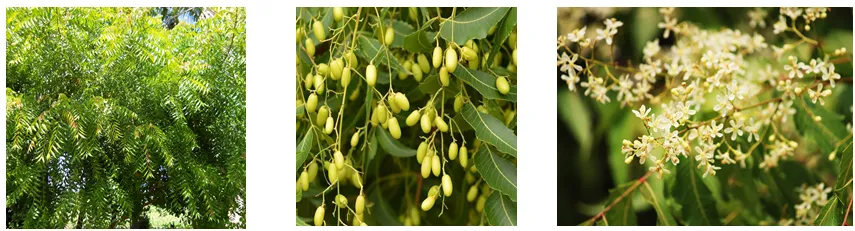
Fig 1: Different parts of Azadirachta indica A. Juss.
2. Morphology of Neem (Azadirachta indica)
Growth form and habit: Neem is a fast growing, evergreen species that typically reaches 15-20 meters in height under cultivation, with some trees exceeding 25 meters under ideal conditions.[3][7] It develops a wide, rounded canopy supported by a sturdy, dark grey to brown trunk. The wood is light and relatively soft, composed mainly of tracheids and parenchyma in the secondary xylem which allows rapid height growth but may limit mechanical stability in areas exposed to strong winds. In managed agroforestry systems, neem often exhibits a coppiced or multi-stemmed growth habit when regulatory pruned, influencing canopy density, light distribution, and overall tree architecture.
Root system: Neem possesses a deep, well-defined taproot during early development, later complemented by an exclusive network of fibres lateral roots in mature trees. This dual root structure provides remarkable drought resistance and facilitates access to deep soil moisture, allowing establishment even in nutrient poor environments.[3] Association with arbuscular mycorrhizal fungi are frequently observed, improving phosphorus uptake, enhancing soil exploration, and potentially affecting the synthesis of bioactive compounds.
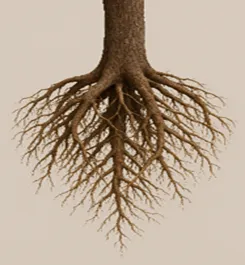
Fig 2: Root system
Bark and Phloem: The bark becomes coarse and fissured with age, usually grey to dark brown in colour. The underlying phloem is responsible for translocating assimilates from photosynthetic tissues to developing organs and tissue sites. Secondary growth contributes to trunk thickening and bark roughness, and the inner bark often accumulates tannins and phenolic compounds, which are utilized in medicinal and industrial extracts.[3][16]
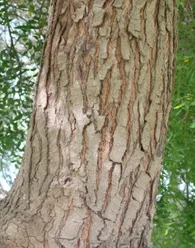
Fig 3: Bark
Leaves (phyllotaxy, anatomy, and morphology): Neem bears alternate, pinnately compound leaves composed of terminal leaflet and 2-6 pairs of lateral leaflets that create a feathery appearance. The leaflets are elliptic to lanceolate, measuring approximately 2-7 cm in length and 0.5-2.5 cm in width, though dimensions vary with plant age, season, and environmental conditions, hydrenchyma may develop to conserve water. The lower (abaxial) surface may contain stomatal crypts to reduce transpiration. Venation is distinctly pinnate with pronounced midrib and visible lateral veins, while the presence of glandular dots suggests regions of secondary metabolite synthesis, particularly limonoids within mesophyll tissues.[2][3]
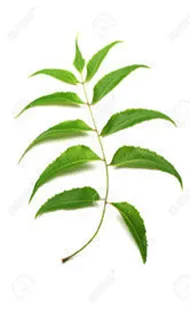
Fig 4: Leaves
Flowers and inflorescence: Neem is monoecious, bearing both the male and female flowers on the same plant, typically arranged in branched panicles. The flowers are small, aromatic, and white to pale yellow, consisting of five petals and multiple stamens. Flowering seasons vary with reginal climate but generally occur between late winter and early summer in tropical and subtropical zones. Pollination is primarily entomophilous where bees and other insects play an essential role in development and seed set.
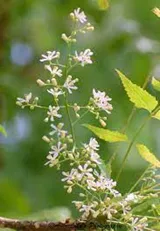
Fig 5: Flowers
Fruits and seeds: The fruit is smooth, olive like drape, avoid to ellipsoidal in shape, and measures around 1.5-3 cm in length. It encloses a single seed surrounded by a thin, fleshy pulp. The seed, protected by a hard endocarp, contains high oil reserves and is a main source of azadirachtin and other limonoids. Seed dispersal occurs naturally through frugivorous animals and gravity, and the ripened fruit’s thin pericarp facilitates seed and germination.
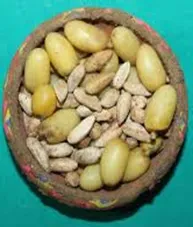
Fig 6: Fruits & Seeds
Wood anatomy and application: Neem wood consists primarily of fibres, parenchyma, and vessel elements, giving it moderate strength and workability. These anatomical traits also influence the efficiency of phytochemical extraction from various plant parts particularly during industrial processing of seeds, bark, and leaves for bioactive compounds.[3]
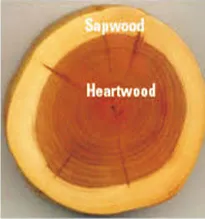
Fig 7: Wood anatomy
Seasonal and ontogenetic variation: The concentration of neem’s key bio-actives, including azadirachtin and related limonoids, fluctuates with plant age, environmental conditions, seasonal stress, and nutrient status.[2][4] Young leaves often exhibit distinct phytochemical profiles compared to mature ones, affecting their therapeutic potential and safety in formulations.
Reproductive biology and genetic variation: Significant genetic variabilities exist among neem populations, influencing morphological traits such as leaf shape, serration, and overall tree stature. These variations correlate with differences in metabolite composition, making morphological characterization valuable for germplasm selection, breeding programs, and conservation efforts.
3. Botanical Profile of Azadirachta indica
Table 2: Botanical description of Neem (Azadirachta indica) [3][4]
|
Common Names |
Neem, Indian lilac, Marginal neem, Margosa |
|
Kingdom |
Plantae |
|
Subkingdom |
Tracheobionta |
|
Super-division |
Spermatophytina |
|
Division |
Magnoliophyte |
|
Class |
Eudicos |
|
Subclass |
Rosids |
|
Order |
Sapindales |
|
Family |
Meliaceae |
|
Genus |
Azadirachta |
|
Species |
Azadirachta indica A. JUSS |
4. Global Overview of Neem (Azadirachta indica) Cultivation:
Primary drives of cultivation: Neem is cultivated worldwide for its wide-ranging applications, primarily as a source of biopesticides and bioactive raw materials such as azadirachtin and related limonoids. Other key motivations include oil extraction from seeds, utilization of leaf biomass for medicinal and industrial extracts, and integration into agroforestry systems to enhance soil fertility, provide shade, and support rural livelihoods.
Geographic distribution and production footprint: Neem cultivation is concentrated across tropical and subtropical zones with favourable climatic conditions. The main production hubs include South Asia; particularly India, along with Nepal and Bangladesh followed by parts of Southeast Asia (Indonesia, Vietnam), Africa (notably Ghana, Nigeria, Kenya, and Tanzania), and emerging regions in Latin America (Brazil, Colombia, Peru). Cultivation in these areas continues to expand due to rising global demand for eco-friendly pesticides, natural plant-based chemicals, and sustainable farming inputs.[9][10]
Major producing regions and contexts
5. History of Neem (Azadirachta indica) Uses:
Traditional medicinal heritage: In ancient Indian medical traditions particularly Ayurveda, Siddha, and Unani- neem has been revered for over two millennia as a potent healing plant. Classical Ayurvedic texts describe it as a purifier and protector, used for its cooling, bitter, and astringent qualities that align with traditional therapeutic classifications. Its documented uses include cleansing, anti-inflammatory, fever-reducing, antiparasitic, and antimicrobial purposes, reflecting a broad spectrum of medicinal applications.
Traditional uses across body systems
Agricultural and non-medicinal uses: Historically, neem’s natural pesticidal and insect-repellent properties were utilizes in agriculture to safeguard crops and stored grains. Its wood served as fuel and construction material, while its seeds and leaves were used in traditional grain storage and as household repellents to deter pests.
Transition to modern pharmacognosy and ethnopharmacology: By the 19th and early 20th centuries, scientific exploration of neem intensified, leading to the isolation of key bioactive compounds such as azadirachtin and related limonoids.[8] During the mid to late 20th century, neem gained international attention through integrated pest management (IPM) programs and studies highlighting its potential pharmacological benefits. Entering the 21st century, research expanded into neem’s antimicrobial, anti-inflammatory, anticancer, hepatoprotective, and other therapeutic effects, alongside the creation of standardized extracts for use in medicine, cosmetics, and agriculture.
Globalization and contemporary applications: Today, neem is globally marketed in diverse forms including leaf extracts, seed oil, and oleoresins and incorporated into medicinal, nutraceutical, and organic agricultural products. Modern research increasingly focuses on validating therapeutic claims, improving safety and quality standards, and developing region- specific regulatory frameworks to ensure efficacy and consumer protection.
Cultural significance: Neem holds deep symbolic and cultural importance across South Asia. In many Indian traditions, it represents purity, longevity and protection from disease. Beyond its medicinal and agricultural value, neem trees are cherished for providing shade, enhancing biodiversity, and supporting the ecological and economic well-being communities.
6. Phytoconstituents Present in Different Parts of Azadirachta indica
Table 3: Phytoconstituents Present in Different Parts of Azadirachta indica [3][8]
|
Leaves |
Rich in limonoids, flavonoids, terpenoids; used topically and internally. |
|
Seeds and Kernel |
Rich in limonoids, flavonoids, terpenoids; used topically and internally. |
|
Fruit |
Pulp contains limonoids; contributes to overall phytochemical profile. |
|
Bark, Roots |
Contain additional limonoids and triterpenoids less commonly used due to toxicity concerns. |
|
Oil |
Extracted from seeds; widely studied for pharmacological activities and as a biopesticide.[9][3] |
|
Whole plant extracts |
Used in traditional formulation. |
Table 4: Chemical Constituents Present in Neem
|
Limonoid |
Azadiradione, salannin, nimbin, gedunin, epoxyazadiradione, and misin.[8][3] |
|
Triterpenoids and Protolimonoids |
Various ring-opened and rearranged limonoids |
|
Quinones and Flavonoids |
Quercetin, kaempferol derivatives; phenolic acids in leaves[2][4] |
|
Essential oils |
Terpenes such as eucalyptol, beta-elemene[3] |
|
Fatty acids and Triglycerides |
Major components of neem oil (oleic, stearic, linoleic acids, others)[3] |
|
Other constituents |
Alkaloids, sterols, saponins, and coumarins reported in certain extracts[3] |
7. Medicinal Values of Neem (Azadirachta indica):
Antimicrobial activity (antibacterial, antifungal, antiviral): Neem leaf extracts exhibit broad-spectrum antimicrobial properties in laboratory studies, showing inhibitory effects against various bacteria (such as Staphylococcus aureus and Escheria coli), fungi (Candida spp., Aspergillus spp.), and certain viruses.[14][17] These activities are primarily attributed to presence of triterpenoids (limonoids) and flavonoids.[4][18]
Mechanisms: The antimicrobial effects are believed to involve disruption of microbial cell membranes, suppression of biofilm formation, enzyme inhibition, and interference with microbial replication processes.
Antioxidant and anti-inflammatory effects: Neem leaves contain bioactive compounds such as phenolics, flavonoids, and terpenoids that display strong free-radical scavenging activity.[4][18] Experimental studies demonstrate their ability to modulate inflammatory mediators in cell-based and animal models
Potential benefits: These properties may help mitigate oxidative stress, reduce inflammation, and support management of inflammatory disorders.
Immunomodulatory effects: Preclinical research indicates that neem extracts can influence immune responses by modulating macrophage activity and cytokine release in vitro and in animal systems.[19][20]
Potential benefits: This suggests a supportive role in enhancing immune function and resistance to infections, though human clinical data remain limited.
Antidiabetic potential: Preliminary in vitro and animal studies report that neem extracts may improve glucose regulation and reduce oxidative stress. Experimental models show improved glycemic control following neem supplementation.[21][22][23]
Hepatoprotective and hepatomodulatory effects: Animal studies show that neem leaf and seed extracts can protect against chemically induces liver damage, likely though antioxidant and anti-inflammatory mechanisms.[24]
Translation: Human trials are necessary to confirm these protective effects and establish safe therapeutic parameters.
Wound healing and dermatological effects: Neem has a long-standing traditional role in treating skin ailments and wounds. Experimental evidence supports the efficacy of neem-based topical formulations (creams, gels, or ointments) in promoting wound healing, reducing inflammation, and preventing infection.[25][26][27]
Considerations: Effectiveness depends on formulation design, concentration, and application frequency.
Anticancer potential: In vitro investigations reveal that neem-derived compounds can induce cytotoxicity in specific cancer cell lines, suggesting potential anticancer activity. However, animal and clinical data are limited and inconclusive.[28]
Gastrointestinal health: Traditionally, neem has been used for treating digestive disturbances. Experimental models suggest antimicrobial action against gastrointestinal pathogens and anti-ulcer properties. [29]
Caution: Limited clinical validation necessitates medical consultation before therapeutic use.
Neurological and analgesic effects: Early preclinical studies indicate that neem compounds may possess neuroprotective and pain-relieving effects, though evidence in humans is minimal. [30]
Antiparasitic activity: Neem extracts have shown inhibitory effects on certain parasites under laboratory conditions, but their relevance in clinical settings remain uncertain. [31]
8. Future Research Areas on Neem (Azadirachta indica)
Phytochemical and Molecular Studies:
Extraction and Process Optimization
Formulation Development and Nanotechnology:
Pharmacological and Clinical Validation:
Toxicological and safety evaluation
Industrial and Commercial Applications:
Integrative and Multidisciplinary Approaches:
CONCLUSION:
Azadirachta indica (neem) represents a highly valuable medicinal and industrial plant with multifaceted applications spanning healthcare, agriculture and environmental management. Its rich phytochemical profile, dominated by limonoids, flavonoids, terpenoids and phenolic compounds, underpins a wide spectrum of pharmacological activities, including antimicrobial, anti-inflammatory, antioxidant, antidiabetic, immunomodulatory, hepatoprotective and wound healing effects. Additionally, its role as a natural biopesticide and eco-friendly agricultural input highlights its significance in promoting sustainable and organic farming practices. Despite promising preclinical findings, the clinical application of neem-based products is limited by variability in phytochemical composition, lack of standardized formulations, inadequate toxicological data and insufficient large-scale clinical studies.
Future advancements require improved quality control, standardized extraction methods, and regulatory guidelines to ensure safety and efficacy. Emerging approaches such as green extraction technologies, nanotechnology-based delivery systems, and bio-adhesive formulations may enhance therapeutic performance and bioavailability. Further mechanistic, pharmacokinetic, and clinical studies are essential to support evidence-based use of neem in medicine and healthcare.
REFERENCES



Pranita Gaikwad*, Saloni Tipugade, Dipti Patkale, Azadirachta indica (Neem): A Comprehensive Insight into Phytochemistry, Pharmacological Potential and Future Perspectives., Int. J. of Pharm. Sci., 2026, Vol 4, Issue 5, 7709-7721. https://doi.org/10.5281/zenodo.20428466
 10.5281/zenodo.20428466