

We use cookies to ensure our website works properly and to personalise your experience. Cookies policy
1,2,3,5 Department of pharmaceutics, GM Institute of Pharmaceutical Sciences and Research, Davangere- 577006, Karnataka.
4 Department of Pharmaceutics, PA College of Pharmacy, Mangalore-574153, Karnataka.
Oral dispersible films (ODFs) have emerged as a viable patient-centric drug delivery technology due to their quick disintegration, simplicity of administration without water, and increased compliance, particularly in pediatric and geriatric populations. Recent advances in formulation strategies have focused on increasing drug loading, stability, and palatability by the introduction of innovative carriers such as niosomes, microparticles, and nano capsules. Choosing appropriate film-forming polymers, plasticizers, and excipients is crucial in determining the mechanical strength, disintegration time, and overall performance of ODFs. Taste masking remains a key challenge, addressed through flavoring agents and advanced technologies aiming to enhance user tolerance and increase the rate of drug absorption addressed by flavoring compounds and new technology to increase patient acceptance and bioavailability. Several manufacturing techniques, like solvent casting and hot-melt extrusion, have been extensively investigated for efficient film manufacture. Recent advancements emphasize the combination of nanotechnology and personalized techniques to optimize medicine administration. Despite significant advances, difficulties such as dose limitation, moisture sensitivity, and regulatory compliance still exist. Regulatory considerations emphasize the usage of safe, food-grade excipients as well as adherence to established requirements to assure product quality and safety. Overall, flavored ODFs provide a diverse and developing platform with significant potential in modern pharmaceuticals.
Oral dispersible films (ODFs) have evolved as a novel and patient-friendly medication delivery technology, designed to disintegrate swiftly when administered orally without hydration. These films provide a critical alternative for pediatric and geriatric patients who struggle with standard solid oral dosages like pills. ODFs have attracted extensive interest in recent years in the pharmaceutical sector, driven by their accelerated onset, superior drug absorption, and ease of use. The matrix generally comprises a blend of water-soluble polymers, softening agents, therapeutic compounds, and additives such sweeteners and flavoring compounds. Flavoring, for example, is important in concealing the disagreeable taste of medications, increasing patient acceptability and patient consistency. Effective taste-masking strategies, including microencapsulation, are vital for neutralizing bitter medicinal notes and nanocarrier-based systems, has improved the palatability and effectiveness of ODF formulations[1,2].
Recent advances in formulation techniques, including as hot-melt extrusion and solvent casting, have allowed for the creation of ODFs with higher mechanical strength, homogeneity, and drug release profiles[3]. Furthermore, novel techniques integrating nanotechnology and multifunctional excipients have broadened the potential of ODFs for delivering synthetic medicines and active ingredients [1,4].
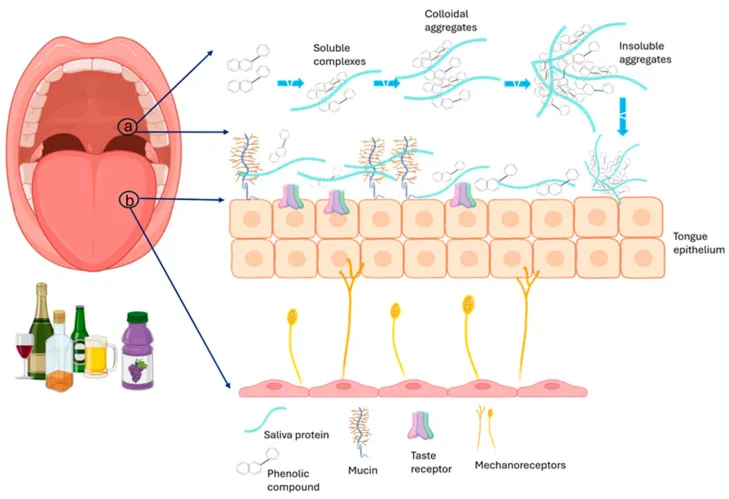
Figure 1: Overview of oral cavity
(Image reproduced from the Source: https://cdn.ncbi.nlm.nih.gov/pmc/blobs/8545/11858154/94250c8a7532/molecules-30-00800-g003.jpg)
Furthermore, ongoing advances and new trends in ODF technology show its versatility as a platform for personalized medicine and targeted drug administration. However, issues such as drug loading restrictions, stability concerns, and regulatory considerations continue to be researched and developed [5,6].
In summary, flavored Orodispersible films represent a significant leap in oral drug delivery, successfully merging ease of use with improved clinical outcomes and user-focused design.
Composition of Flavored Oral Dispersible Films:
Flavored oral dispersible films (ODFs) are made up of a blend of film-forming polymers, active pharmaceutical ingredients (APIs), and excipients that work together to provide quick disintegration, acceptable mechanical strength, and increased palatability. The precise selection of these components is critical to obtain peak performance and
patient compliance[3,5,7].
Film-forming Polymers:
The structural backbone of ODFs is made up of film-forming polymers, which are responsible for the formation of thin, flexible films Hydroxypropyl methylcellulose (HPMC), pullulan, and PVA are standard industry choices due to their superior film-forming properties, rapid wetting, and swift breakdown in the mouth [6–8]. The choice of polymer has a considerable impact on the film's dissolving rate and drug release properties [8] as shown in Table 1.
Table 1: List of the erodible polymers used in ODF:
|
Polymer Name |
Type / Source |
Key Properties |
|
Hydroxypropyl Methylcellulose (HPMC) |
Semi-synthetic (cellulose derivative) |
Excellent film-forming, non-toxic, biodegradable |
|
Pullulan |
Natural (fungal polysaccharide) |
High water solubility, transparent films, tasteless |
|
Sodium Alginate |
Natural (algae-derived) |
Biodegradable, gel-forming, hydrophilic |
|
Pectin |
Natural (plant polysaccharide) |
Biocompatible, gel-forming |
|
Gelatin |
Natural (protein from collagen) |
Good film-forming, biodegradable |
|
Chitosan |
Natural (from chitin) |
Mucoadhesive, biodegradable, antimicrobial |
|
Carboxymethyl Cellulose (CMC) |
Semi-synthetic |
Water-soluble, biodegradable |
|
Polyvinyl Alcohol (PVA) |
Synthetic (biodegradable under specific conditions) |
Good mechanical strength, flexible films |
|
Maltodextrin |
Natural (starch-derived) |
Water-soluble, bland taste |
|
Xanthan Gum |
Natural (microbial polysaccharide) |
High viscosity, biodegradable |
|
Guar Gum |
Natural (plant-derived) |
Biodegradable, thickening |
|
Starch (Modified/Native) |
Natural |
Biodegradable, hydrophilic |
Active Pharmaceutical Ingredient (API):
The Active Ingredient is used in modest doses and should be stable, uniformly dispersed, and compatible with various excipients. ODFs are ideal for powerful medications with a quick beginning of action, such as anti-allergic or antiemetic agents [3,9]. A homogeneous dispersion of the drug is vital for meeting strict pharmacopeial standards for dosage accuracy[1].
Suitable drugs for formulation in ODFs include Chlorpheniramine, Loratadine, Phenylephrine, Diphenhydramine, Dextromethorphan, Ketoprofen, Sumatriptan, Zolmitriptan, Loperamide, Famotidine, Nicotine, Pseudoephedrine, Atorvastatin, Amlodipine, Sertraline, Ziprasidone, and Eletriptan[10].
Plasticizers:
Plasticizers like glycerol, polyethylene glycol (PEG), and propylene glycol are used to upsurge film flexibility and decrease brittleness. They increase mechanical characteristics by reducing the polymer's glass transition temperature, which prevents cracking during handling [6,7].
Flavoring Agents:
Flavoring components are integral to pharmaceutical formulations for their ability to mask offensive organoleptic properties of APIs and increasing patient acceptance. Both natural and synthetic flavors, such as mint, citrus, and fruit flavors, are commonly used. Flavor selection is based on drug compatibility and processing stability [5,11]. Advanced flavor masking techniques, such as encapsulation, enhance palatability [2].
Sweetening agents:
Sweeteners including aspartame, sucralose, and mannitol are used to boost the flavor profile of ODFs. These compounds operate together with flavoring ingredients to effectively conceal bitterness and improve mouthfeel [7,8]. Some FDA-Approved Sweetening Agents are given in table 2 [10]
Table 2: list of sweetening agents
|
Sl. No. |
FDA-Approved Sweetening Agent |
Category |
FDA Acceptable Daily Intake (ADI) |
|
1 |
Aspartame |
Artificial sweetener |
50 mg/kg body weight/day |
|
2 |
Sucralose |
Artificial sweetener |
5 mg/kg body weight/day |
|
3 |
Acesulfame potassium (Ace-K) |
Artificial sweetener |
15 mg/kg body weight/day |
|
4 |
Saccharin |
Artificial sweetener |
15 mg/kg body weight/day |
|
5 |
Neotame |
Artificial sweetener |
0.3 mg/kg body weight/day |
|
6 |
Advantame |
Artificial sweetener |
32.8 mg/kg body weight/day |
|
7 |
Steviol glycosides (Stevia) |
Natural high-intensity sweetener |
4 mg/kg body weight/day (as steviol equivalents) |
Saliva Stimulating Agents:
Saliva-stimulating chemicals, such as malic acid and citric acid, are used to speed up film degradation by boosting saliva output. This allows for quicker medication release and breakdown in the oral cavity [7].
Coloring Agents:
Coloring compounds are used to enhance the cosmetic appeal and patient acceptance of ODFs. To ensure safety and conformity with regulations, only certified food-grade colorants are used [8].
Techniques for formulating the Flavored Oral Dispersible Films (ODFs):
Oral dispersible films (ODFs) are manufactured using a variety of procedures with the goal of ensuring homogeneous drug distribution, quick disintegration, acceptable mechanical strength, and better patient acceptance. The proper procedure is determined by the physicochemical parameters of the drug and excipients, as well as the desired characteristics of the completed product.
Solvent Casting Method:
This method represents the most prevalent technique for the preparation of ODFs. This approach involves dissolving water-soluble polymers in a suitable solvent, followed by the amalgamation of plasticizers, active pharmaceutical ingredients (APIs), flavoring agents, and additional excipients. The resulting homogeneous solution is cast onto a flat surface and then dried to produce a thin film, which is then sliced into uniform units. This method facilitates the production of films characterized by uniform thickness, a smooth texture, and consistent drug distribution. However, it may not be suitable for moisture-sensitive medications due to the utilization of solvents [5–7].
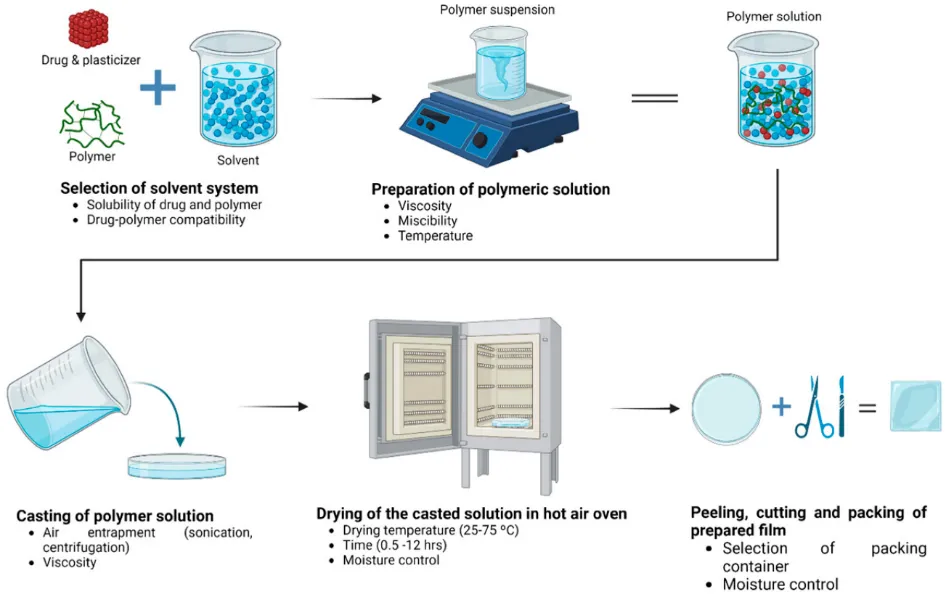
Figure 2: Solvent casting method
(Source: https://www.mdpi.com/2380342)
Hot-Melt Extrusion (HME):
Hot-melt extrusion is a solvent-free technique where in polymers are melted and blended with the drug and excipients under precise temperature and pressure conditions. The consequential mixture is squeeze out through a die to form thin films. This method enhances the solubility and uniform distribution of poorly aqueous soluble drugs while obviating the requirement for solvents. Nevertheless, it may not be suitable for heat sensitive drugs due to the preeminent processing temperatures involved [3].
Semi-Solid Casting Method:
The semi-solid casting method entails the preparation of a viscous gel through the dissolution of water-soluble polymers, followed by the addition of acid-insoluble polymers to enhance film properties. The gel mass is then cast onto an appropriate surface and dried to yield films. This method backs to the production of films exhibiting improved mechanical strength and controlled disintegration properties [6,9].
Solid Dispersion Extrusion:
Using this method, the medication is created as a solid dispersion in a polymer matrix, which is then processed into films. By keeping the drug in an amorphous state, it increases the rate of solubility and bioavailability of poorly soluble medications. Additionally, it is important for masking flavour and enhancing medication release properties[11].
Rolling Method:
This method consists of spreading a drug-containing solution or suspension onto a carrier using rollers, followed by drying and cutting into films. This technique is advantageous for large-scale production and ensures uniform thickness along with improved process control. However, it necessitates specialized equipment and precise regulation of processing parameters[6].
Role of Flavoring Agents in Orodispersible Films (ODFs):
Flavoring agents serve a pivotal function in the preparation of oral dispersible Films (ODFs) by enhancing patient acceptability and compliance, particularly within pediatric and geriatric demographics. Given that ODFs rapidly disintegrate in the oral cavity, the taste receptors are directly exposed to the active pharmaceutical ingredient (API), rendering taste masking a significant formulation challenge. Numerous APIs possess an inherently bitter or unpleasant taste, which can adversely affect patient adherence if not properly addressed[7,9].
Flavoring agents, in conjunction with sweeteners, are primarily utilized to mask the disagreeable taste of medications and to improve the inclusive organoleptic properties of the film. The selection of suitable flavors is contingent upon various factors, including the characteristics of the drug, compatibility with excipients, and stability throughout processing and storage. Commonly employed flavors include fruit-based options (e.g., orange, strawberry) and mint flavors, which provide a pleasant mouthfeel and immediate sensory appeal[6,7].
Beyond the masking of bitterness, flavors also contribute to the perception of freshness and can influence the disintegration experience within the oral cavity. Advanced taste-masking techniques, such as microencapsulation and nanocarrier systems, are frequently employed alongside flavoring agents to further enhance palatability. For example, the inclusion of drug-loaded microparticles or nano capsules has demonstrated efficacy in reducing drug–taste receptor interactions, thereby augmenting the effectiveness of flavoring systems[2,4]. Some of the flavouring agents are given in table 3 [12].
Table 3: list of flavouring agents used in ODFs:
|
Sl. No. |
Flavouring Agent Used in Oral Dispersible Films (ODFs) |
Category |
|
1 |
Peppermint oil |
Mint flavour |
|
2 |
Cinnamon oil |
Spice flavour |
|
3 |
Vanilla |
Sweet flavour |
|
4 |
Chocolate flavour |
Sweet flavour |
|
5 |
Citrus flavours |
Fruit flavour |
|
6 |
Apple flavour |
Fruit flavour |
|
7 |
Cherry flavour |
Fruit flavour |
|
8 |
Pineapple flavour |
Fruit flavour |
Additionally, it is important to choose flavoring agents carefully so they do not negatively interact with the API or jeopardize the film's physicochemical stability. These agents' concentrations should be maximized to attain a balance between effective taste masking and formulation stability. Regulatory considerations necessitate that flavoring agents utilized in ODFs are safe, non-toxic, and compliant with established guidelines[5].
In conclusion, flavouring agents are crucial to the creation of ODFs. significantly impacting patient compliance, product acceptability, and therapeutic outcomes their incorporation with modern taste-masking technology is advancing the creation of oral film formulations that are more efficient and patient-friendly[11].
Evaluation Parameters of Flavored Oral Dispersible Films (ODFs):
The assessment of oral dispersible films is crucial for ensuring their quality, efficacy, and acceptability among patients. Usually, the following parameters are assessed:
Physical Appearance and Surface Morphology:
To ensure consistency in colour, transparency, smoothness, and the lack of air bubbles or flaws, the films should be visually inspected. Improving patient acceptability and compliance requires a consistent and attractive appearance[7,9].
Thickness and Weight Variation:
Film thickness is measured using a micrometer screw gauge at various points to verify uniformity. Weight variation is assessed by weighing individual films and calculating the average weight. Consistent thickness and weight are essential for ensuring dose accuracy and reliability [6,7].
Folding Endurance:
A film is repeatedly folded at a predetermined spot until it breaks in order to measure folding endurance. The film's mechanical strength and flexibility are reflected in this characteristic. Better film integrity is indicated by a higher folding endurance value[3,7].
Tensile Strength and Percent Elongation:
Tensile strength measures the maximum stress the film can endure before rupture, while percent elongation assesses the film's elasticity. These mechanical properties are critical for handling, packaging, and transportation [3,6].
Surface pH:
The surface pH of the film is measured to identify compatibility with the oral mucosa. Ideally, it should approximate neutrality to prevent irritation within the buccal cavity [9,13].
Disintegration Time:
For ODFs, disintegration time is a crucial factor. It is evaluated by submerging the film in distilled water or artificial saliva and timing how long it takes for it to completely disintegrate. ODFs should typically dissolve in 30 seconds [5,13].
In Vitro Dissolution Study:
To assess the rate and degree of drug release, dissolving tests are carried out using conventional dissolution equipment. One major benefit of ODFs is that a faster rate of dissolution allows for a speedier commencement of action[3,5].
Content Uniformity:
Drug content uniformity is determined by dissolving individual films in an appropriate solvent and analyzing the drug concentration. This procedure guarantees that the active medicinal ingredient is present in each film at the recommended dosage[3,14].
Moisture Content and Moisture Uptake:
The stability of the film is evaluated by measuring its moisture content. Excessive moisture can adversely affect mechanical properties and drug stability. Moisture uptake studies are conducted to analyze the film’s susceptibility to environmental humidity [6,13].
Organoleptic Evaluation (Taste and Mouthfeel):
Organoleptic properties, including taste, flavor, mouthfeel, and aftertaste, are assessed through human volunteers or electronic tongue systems. Effective taste masking is critical, particularly for bitter pharmaceuticals, to enhance patient compliance [4,11,13].
Stability Studies:
To assess changes in physical appearance, drug content, and disintegration characteristics over time, stability studies are carried out in compliance with regulatory criteria under a range of temperature and humidity settings[5,13].
Regulatory Considerations:
In order to ensure the safety, effectiveness, and patient acceptability of flavoured oral dispersible films (ODFs), regulatory compliance is an essential part of their development. The FDA, EMA, and CDSCO are just a few of the national and international regulatory organizations that provide thorough standards for the approval and quality control of these dosage forms [5,7].
Flavouring agents used in ODFs are usually categorized as Generally Recognized as Safe (GRAS) compounds and are subject to safety regulations. These substances must be non-irritating, non-toxic, and compatible with other ingredients in the formulation. Additionally, in order to minimize potential negative effects, especially in paediatric and elderly populations, the amount of flavouring and sweetening chemicals must be under acceptable daily intake (ADI) levels[5,7].
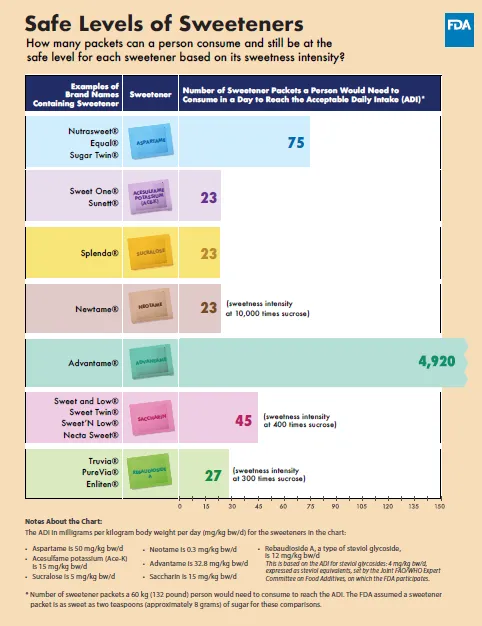
Figure.3: Safe level of sweeteners according to FDA
Source: Safe Levels of Sweeteners (https://www.fda.gov/media/168517/download)
The excipients utilized in ODFs, such as polymers, plasticizers, and saliva-stimulating agents, must conform to pharmacopeial standards and demonstrate compatibility with the active pharmaceutical ingredient (API). Any interactions that may influence drug stability, taste, or bioavailability necessitate thorough evaluation[6,8].
In order to evaluate the impact of environmental conditions, such as temperature and humidity, on film characteristics, drug content, and flavour integrity, stability studies are essential and should be carried out in compliance with established international norms. To protect the films from moisture and mechanical damage, adequate packing is also crucial.[1,3]
Furthermore, in order to promote openness and guarantee patient safety, labelling regulations require the disclosure of all excipients, including flavoring and coloring ingredients. Taste-masking methods need special consideration because they shouldn't change the drug release profile or reduce therapeutic efficacy[4,11].
In conclusion, following regulations is essential to guaranteeing that flavored ODFs are safe, efficient, and suitable for patient usage while upholding constant quality standards over the course of their shelf life[5,13].
Recent Advances in Flavoured Oral Dispersible Films
The technology of oral dispersible films (ODFs) has advanced significantly in recent years, with a focus on increasing drug delivery effectiveness, boosting patient compliance, and guaranteeing formulation stability.
The incorporation of nanotechnology-based systems, like niosomes, nano capsules, and microparticles, which enable better drug loading and efficient flavour masking, is a noteworthy advancement in this sector. For instance, films loaded with nisin employing nano capsule systems and niosomal technologies have shown improved bioavailability, controlled release, and stability[1,2]. Likewise, the incorporation of microparticles has proven effective in masking the bitter taste of medications while ensuring rapid disintegration[4].
Advancements in taste masking technologies have markedly improved the palatability of ODFs. Techniques such as polymer coating, encapsulation, and the utilization of advanced sweeteners and flavoring agents have contributed to the reduction of bitterness and enhancement of mouthfeel, all without compromising drug release [11].These innovations are particularly relevant for pediatric and geriatric populations.
Hot-melt extrusion, electrospinning, and 3D printing are examples of contemporary manufacturing processes that have attracted a lot of interest. Compared to conventional solvent casting techniques, these methods offer better content uniformity, scalability, and solvent-free processing. Notably, fast-dissolving films with enhanced mechanical strength and consistent drug distribution have been successfully produced via hot-melt extrusion[3].
The creation of patient-centric and customized drug delivery systems is another significant breakthrough. ODFs are made to guarantee quick start of action, improved bioavailability, and simplicity of administration, especially for people who have trouble swallowing. Additionally, research has focused on using novel polymers and optimum excipient combinations to improve the mechanical strength, flexibility, and disintegration time of films[5,6,13].
Recent investigations also emphasize the expanding applications of ODFs beyond traditional pharmaceuticals, extending into nutraceuticals and functional delivery systems, thereby broadening their potential within the healthcare sector[15]. Overall, these advancements signify that ODFs are evolving into a versatile and highly efficient drug delivery platform with considerable future prospects.
FUTURE PERSPECTIVES
In order to improve patient compliance and palatability while preserving the integrity of drug release mechanisms, future research will concentrate on nano-encapsulation, the use of microparticles, and novel flavouring techniques[1,2,4,11].
The application of nanocarriers, the bioavailability, stability, and therapeutic efficacy of oral dispersible films are expected to be enhanced by niosomes and nano capsules[1,2].
It is anticipated that methods like solvent-free techniques and hot-melt extrusion would become more important for improved quality control, large-scale production, and consistency[3].
Customized dosage forms featuring tailored drug combinations and flavors are expected to enhance treatment results and patient adherence [5,13].
The broader application of ODFs across various therapeutic areas, coupled with harmonized global regulatory guidelines, will facilitate expedited development and commercialization processes [5,13,15].
CONCLUSION
Flavoured oral dispersible films (ODFs) are a cutting-edge, patient-focused medication delivery system that is distinguished by quick disintegration, simplicity of use, and improved patient adherence, especially in younger and older patients. Optimizing formulation elements, such as polymers, plasticizers, and, most importantly, flavouring and taste-masking agents, which improve palatability and therapeutic acceptability, is necessary for ODFs to be effective. Recent studies highlight the use of cutting-edge technologies to enhance drug stability, bioavailability, and taste masking, such as niosomes, microparticles, and nano capsules. However, issues including dose restrictions, moisture sensitivity, and flavour stability persist, as does the need to adhere to safety and legal requirements. In conclusion, flavoured ODFs have a lot of potential, and future research is expected to focus on better regulatory alignment and sophisticated formulation techniques
REFERENCES


Dr. Pradeep H K, Gururaj, Siddartha B S, Nishmitha, Prashanth K U, Flavored Oral Dispersible Films: A Comprehensive Review of Formulation Approaches and Regulatory Guidelines, Int. J. of Pharm. Sci., 2026, Vol 4, Issue 5, 7629-7639, https://doi.org/10.5281/zenodo.20426030
 10.5281/zenodo.20426030