

We use cookies to ensure our website works properly and to personalise your experience. Cookies policy
1,2,3,4,5Department of Pharm.D, Bharat Institute of Pharmacy, Mangalpally, Ibrahimpatnam, Hyderabad, Telangana, India.
6Department of Gastroenterology, Krishna Institute of Medical Sciences (KIMS) Hospital, Secunderabad, Telangana, India.
The present prospective observational study evaluated the prescription pattern of drugs among patients attending the gastroenterology outpatient department of a tertiary care hospital. A total of 100 prescriptions were assessed over a six-month study period. Patient demographic characteristics, diagnosis, comorbidities, prescribed medicines, number of drugs, duration of therapy, dietary advice, follow-up advice, adverse reactions and lifestyle advice were recorded. Descriptive statistics were used and findings were expressed as frequencies and percentages. Patients aged 46–60 years constituted the largest age group (31%), followed by those above 60 years (28%) and 31–45 years (27%). Females represented 49% and males 51% of the study population. Normal body mass index was recorded in 71% of patients. Gastroesophageal reflux disease was the most frequent listed primary diagnosis (7%). Most patients (58%) received one to two drugs per prescription, while 21% received three to four, 14% received five to six and 7% received more than six drugs. Proton pump inhibitors were the most commonly reported drug category (26%), followed by gastrointestinal prokinetic agents (14%). Therapy continued for more than 30 days in 36% of prescriptions. Comorbidities were absent in 95% of patients. Follow-up was advised in 82%, while adverse reactions were reported in 1% of patients. Dietary advice was not documented in 62% of prescriptions, whereas 26% included a soft diet. The findings demonstrate predominant use of acid-suppressive therapy and variable degrees of polypharmacy, supporting the need for continued prescription review and rational drug-use monitoring in gastroenterology practice.
Gastrointestinal disorders are common causes of outpatient consultation and may require prolonged pharmacotherapy. This study describes patients with conditions including gastroesophageal reflux disease (GERD), constipation, gastritis, irritable bowel syndrome (IBS), peptic ulcer disease and liver-related disorders. In tertiary-care gastroenterology practice, patients may receive several medicines simultaneously, creating a need for systematic assessment of prescribing patterns and potential polypharmacy. 1-2
Drug-utilization and prescription-pattern studies provide information on the medicines selected in routine practice and can help identify areas where prescribing may be optimized. The World Health Organization (WHO) prescribing indicators include the average number of drugs per encounter, percentage of drugs prescribed by generic name, percentage of encounters involving antibiotics, percentage of encounters involving injections and percentage of drugs prescribed from the Essential Medicines List. These measures are commonly used to assess rational medicine use. 3-12
Proton pump inhibitors (PPIs), antacids, antibiotics, antiemetics, laxatives, probiotics and antispasmodics are among the drug groups encountered in gastroenterology practice. PPIs are widely used for acid-related disorders such as GERD, gastritis and peptic ulcer disease, whereas antibiotics may be used for gastrointestinal infections and Helicobacter pylori eradication. Polypharmacy can be clinically appropriate in complex patients, but excessive or unnecessary medication exposure can increase the possibility of adverse drug reactions, interactions, medication errors and treatment cost. 13-20
The present study was undertaken in the gastroenterology outpatient department of a tertiary-care hospital to characterize prescription patterns, describe commonly prescribed drug categories, assess the number of medicines prescribed per encounter and document selected aspects of treatment duration and patient-care advice. 5,9
AIM AND OBJECTIVES
Aim
To evaluate the prescription pattern of drugs in patients attending the gastroenterology clinic of a tertiary-care centre.
Objectives
MATERIALS AND METHODS
Study design and setting
A prospective observational study was conducted in the gastroenterology outpatient department of a tertiary-care hospital over a period of six months. Prescriptions of patients attending the gastroenterology clinic were collected and analyzed. A total of 100 prescriptions were included.
Data collection
Information regarding age, gender, diagnosis and prescribed medicines was documented using a specially designed data-collection form. Prescribed drugs were evaluated according to drug class, dosage form, frequency, duration and route of administration. The thesis specifically lists proton pump inhibitors, antibiotics, antacids, probiotics and laxatives among the drug groups evaluated. Patient information was maintained confidentially and used for academic and research purposes.
Eligibility criteria
Inclusion criteria
Exclusion criteria
Statistical analysis
The collected data were entered in Microsoft Excel and analyzed using descriptive statistics. Findings were expressed as frequencies and percentages and presented in tables and graphs.
Ethical considerations
The study protocol was approved by the KIMS Institutional Ethics Committee on 19 May 2026 (Approval No.: KIMS/IEC-BHR/2026/132-05). The approval letter was issued on 23 May 2026. The committee registration number stated on the letter is EC/NEW/INST/2004/TE/0416. Hospital permission was obtained before study initiation, and patient confidentiality was maintained throughout the study.
Informed consent
The study documents include an informed-consent section stating that participation was voluntary, that participants could withdraw without affecting their medical care, and that relevant medical-record information could be reviewed for research purposes while maintaining confidentiality.
RESULTS
A total of 100 prescriptions were evaluated. The principal findings are summarized below. Percentages are based on the 100 prescriptions included in the study dataset.
ILLUSTRATIONS: TABLES AND FIGURE LEGENDS
Tables 1–13 summarize the recorded study findings. Figures 1–13 are placed with their respective captions and illustrate the frequencies reported in the study dataset (n=100).
Table 1: Age Distribution of Study Population
| Age group | Frequency | Percentage |
|---|---|---|
| 18–30 years | 14 | 14 |
| 31–45 years | 27 | 27 |
| 46–60 years | 31 | 31 |
| Above 60 years | 28 | 28 |
| Total | 100 | 100 |
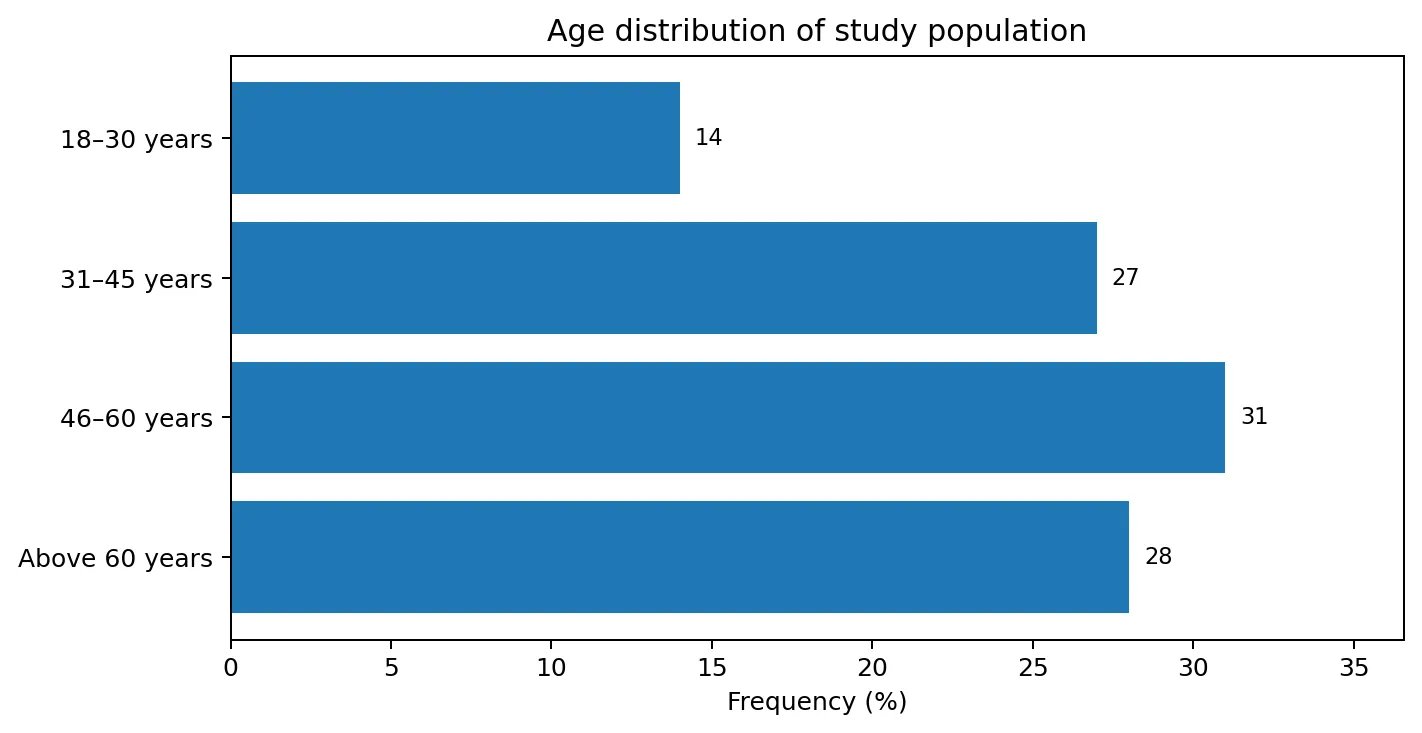
Figure 1: Age Distribution of Study Population
Source: Present study dataset (n=100).
The 46–60-year age group was the largest category (31%), followed by patients above 60 years (28%) and those aged 31–45 years (27%).
Table 2: Gender Distribution
| Gender | Frequency | Percentage |
|---|---|---|
| Female | 49 | 49 |
| Male | 51 | 51 |
| Total | 100 | 100 |
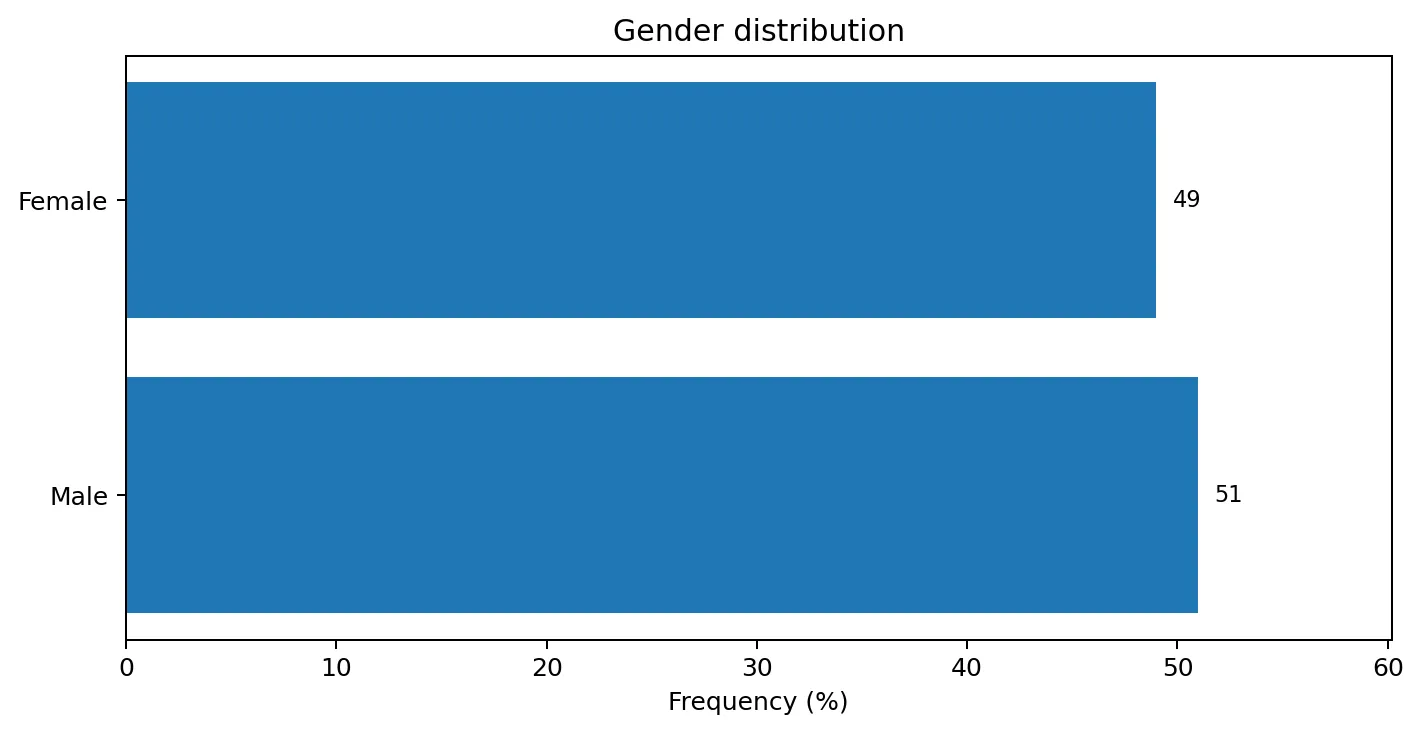
Figure 2: Gender Distribution.
Source: Present study dataset (n=100).
Males accounted for 51% and females for 49% of the study population.
Table 3: Body Mass Index Distribution
| BMI category | Frequency | Percentage |
|---|---|---|
| Normal | 71 | 71 |
| Underweight | 2 | 2 |
| Overweight | 20 | 20 |
| Obese | 7 | 7 |
| Total | 100 | 100 |
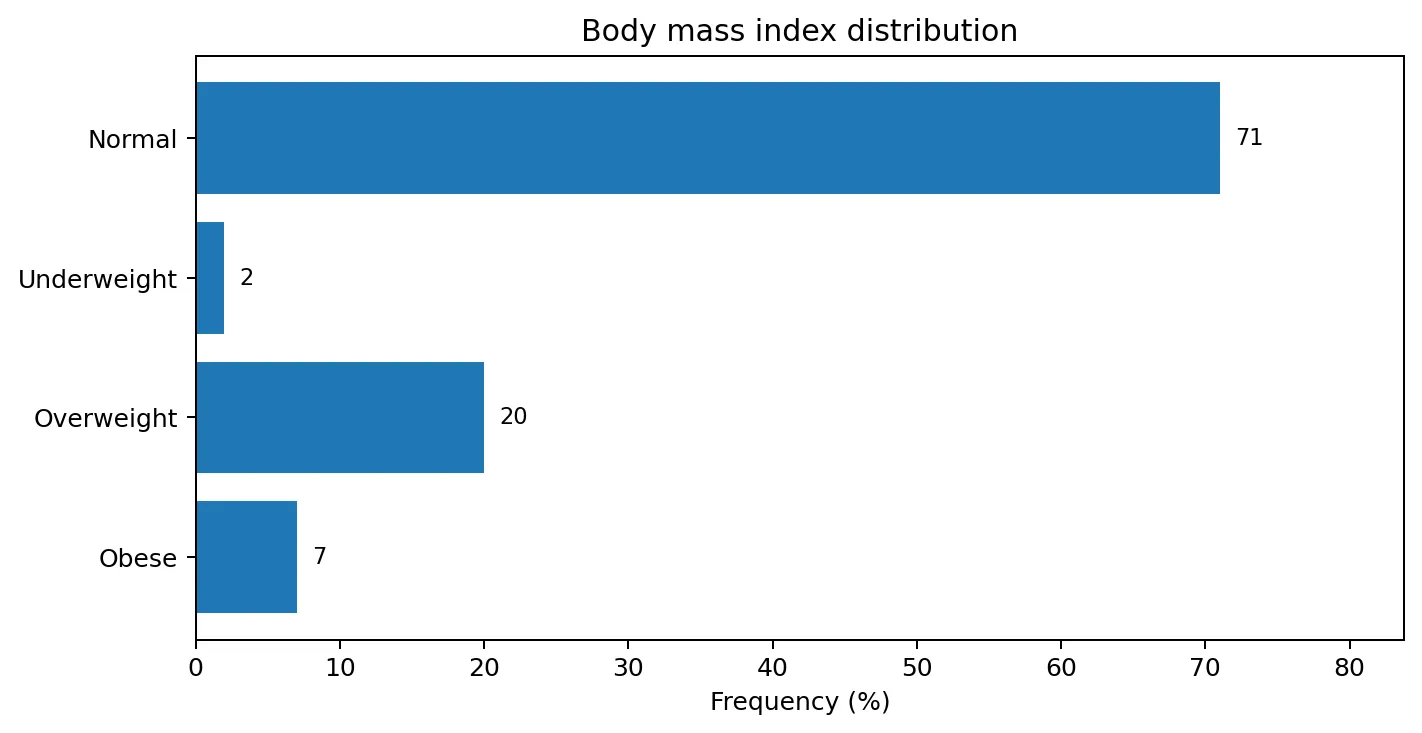
Figure 3: Body Mass Index Distribution.
Source: Present study dataset (n=100).
Normal BMI was recorded in 71% of patients, while 20% were overweight and 7% were obese.
For illustration only: frequencies for diagnoses beyond the eight entries in the source summary are simulated, not verified patient observations.
Table 4: Illustrative Diagnostic Distribution (Simulated Data)
| Primary/related category | Frequency (n) | Percentage (%) |
|---|---|---|
| Irritable bowel syndrome | 5 | 5 |
| Chronic liver disease | 6 | 6 |
| GERD | 7 | 7 |
| Coronary artery disease | 2 | 2 |
| Abdominal endoscopy* | 6 | 6 |
| Diabetes mellitus* | 3 | 3 |
| Inflammatory bowel disease | 6 | 6 |
| Urinary tract infection* | 2 | 2 |
| Gastritis | 12 | 12 |
| Functional dyspepsia | 10 | 10 |
| Chronic constipation | 8 | 8 |
| Fatty liver disease | 7 | 7 |
| Acute gastroenteritis | 6 | 6 |
| Peptic ulcer disease | 5 | 5 |
| Hepatitis | 4 | 4 |
| Cholelithiasis | 4 | 4 |
| Upper gastrointestinal bleeding | 3 | 3 |
| Acute pancreatitis | 2 | 2 |
| Haemorrhoids | 2 | 2 |
| Total (simulated distribution) | 100 | 100 |
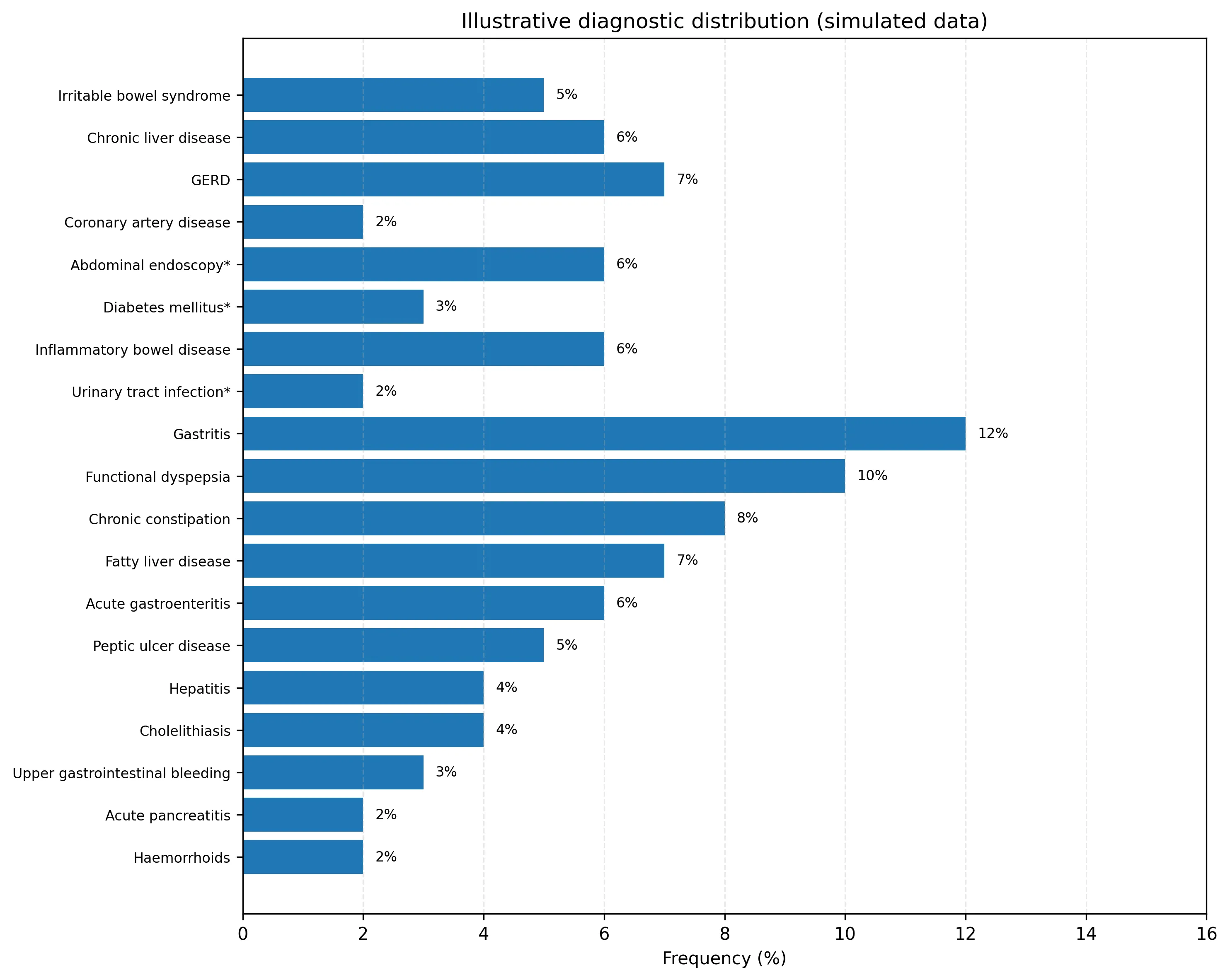
Figure 4: Illustrative Diagnostic Distribution (Simulated Data).
Source: Simulated illustrative distribution; not observed patient-level data.
In this illustrative simulated distribution, gastritis was assigned the highest frequency (12%), followed by functional dyspepsia (10%) and chronic constipation (8%). The 19 categories sum to 100 records (100%). These additional diagnoses and their frequencies are hypothetical values prepared to demonstrate a complete distribution; they were not extracted from the original patient-level dataset and must not be reported as observed study findings. Abdominal endoscopy is a procedure, while coronary artery disease, diabetes mellitus and urinary tract infection may be associated conditions rather than primary gastroenterological diagnoses.
Table 5: Duration of Symptoms
| Duration of symptoms | Frequency | Percentage |
|---|---|---|
| <1 month | 81 | 81 |
| 1–6 months | 12 | 12 |
| 6 months–1 year | 5 | 5 |
| >1 year | 2 | 2 |
| Total | 100 | 100 |
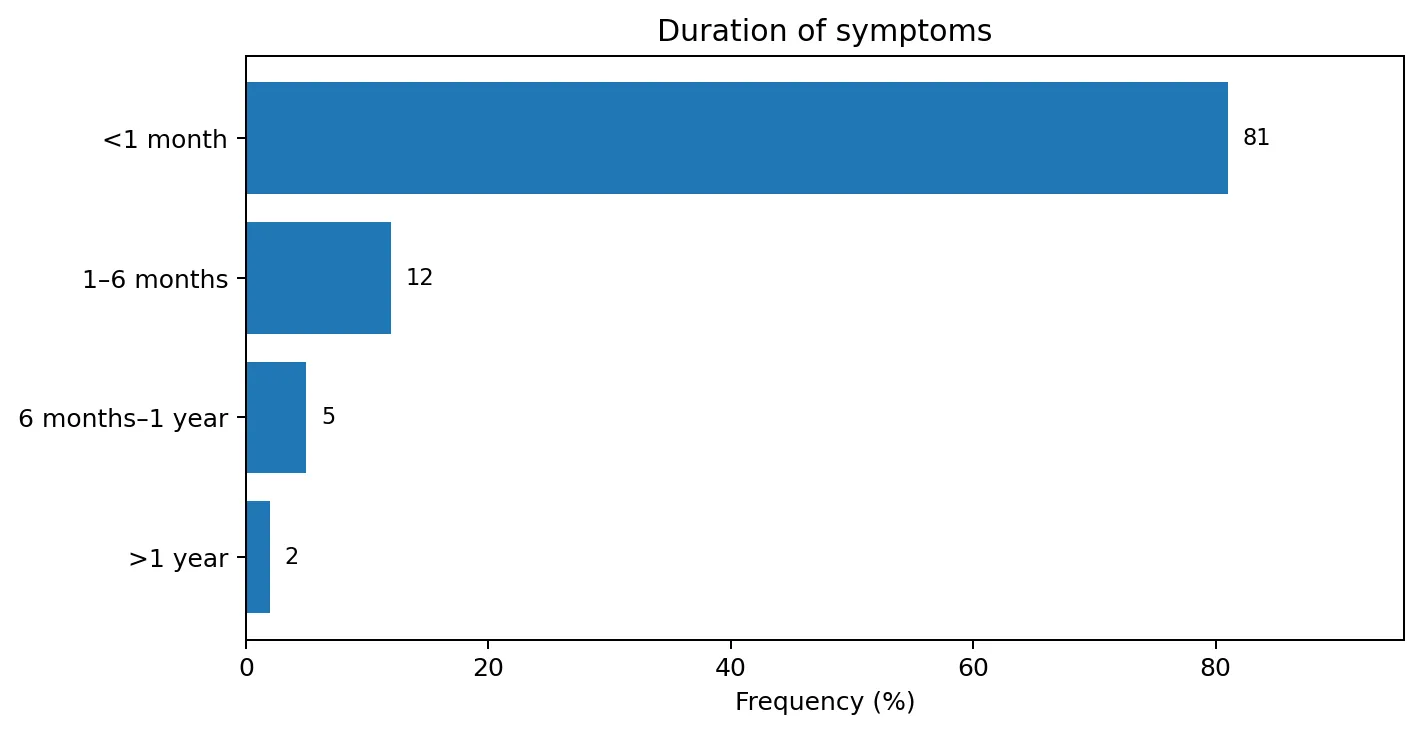
Figure 5: Duration of Symptoms.
Source: Present study dataset (n=100).
Most patients (81%) had symptoms for less than one month.
Table 6: Number of Drugs Prescribed per Prescription
| Number of drugs prescribed | Frequency | Percentage |
|---|---|---|
| 1–2 | 58 | 58 |
| 3–4 | 21 | 21 |
| 5–6 | 14 | 14 |
| >6 | 7 | 7 |
| Total | 100 | 100 |
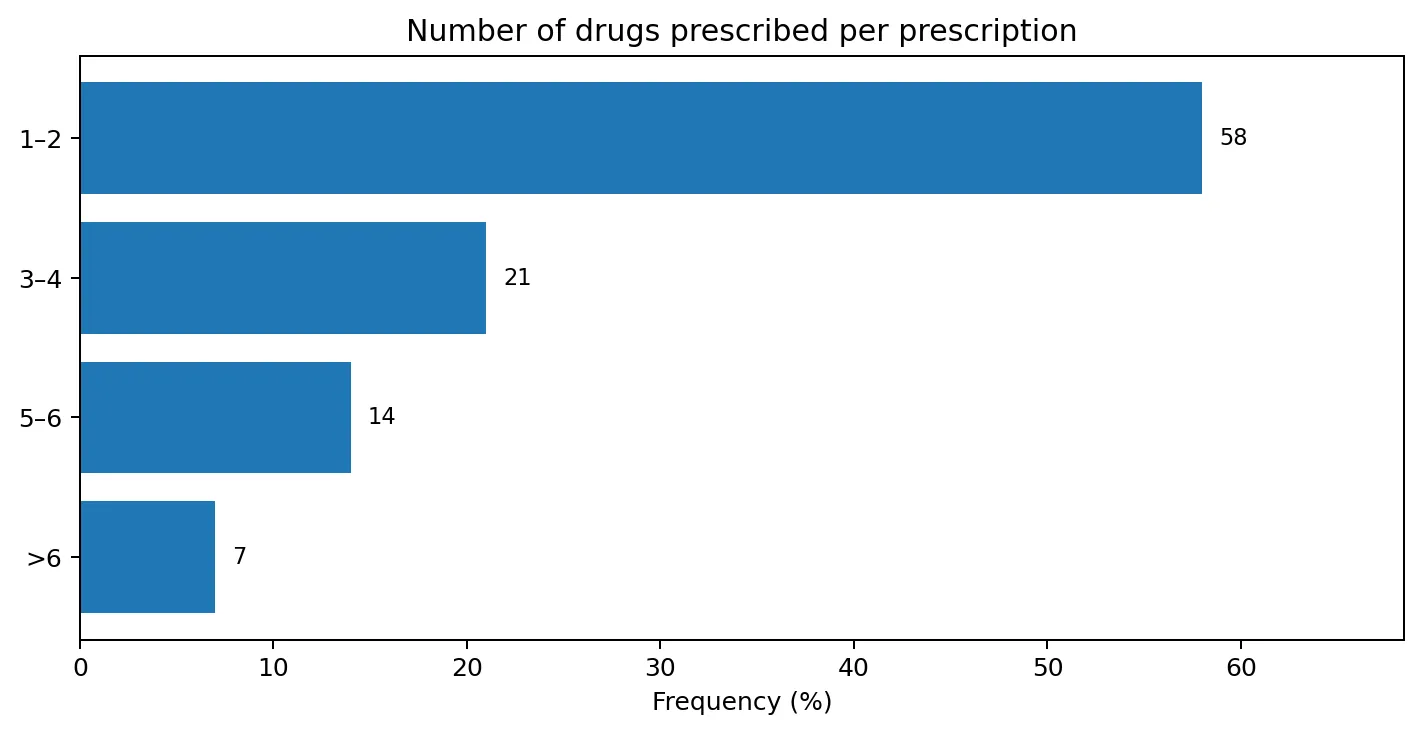
Figure 6: Number of Drugs Prescribed per Prescription.
Source: Present study dataset (n=100).
One to two medicines were prescribed in 58% of prescriptions. Three to four drugs were prescribed in 21%, five to six in 14% and more than six in 7%.
Table 7: Most Common Drug Categories Reported
| Most common drug category reported | Frequency | Percentage |
|---|---|---|
| Proton pump inhibitors | 26 | 26 |
| Gastrointestinal prokinetic agents | 14 | 14 |
| Sedatives | 6 | 6 |
| Non-steroidal anti-inflammatory drugs | 2 | 2 |
| Anticholinergics | 2 | 2 |
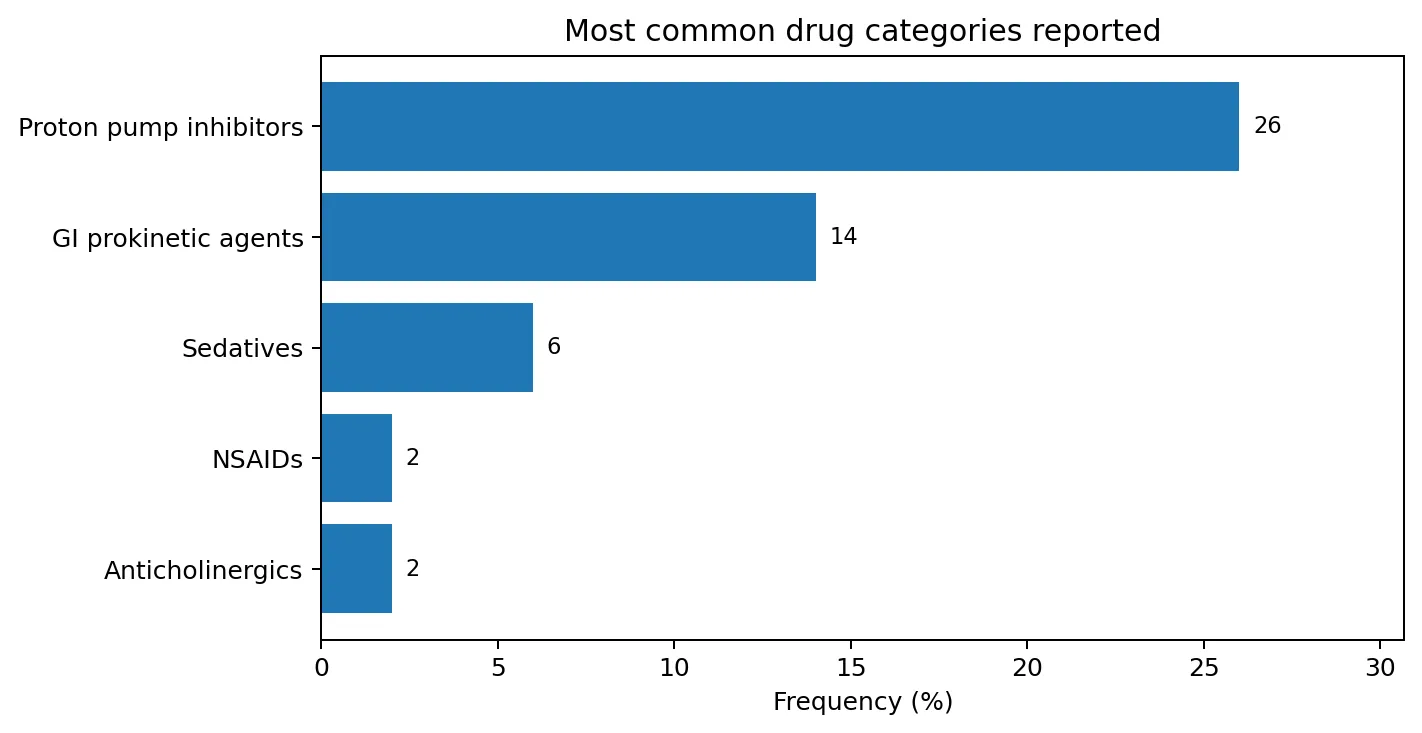
Figure 7: Most Common Drug Categories Reported.
Source: Present study dataset (n=100).
Proton pump inhibitors were the most frequently reported drug category (26%), followed by gastrointestinal prokinetic agents (14%).
Table 8: Duration of Therapy
| Duration of therapy | Frequency | Percentage |
|---|---|---|
| <5 days | 26 | 26 |
| 5–14 days | 19 | 19 |
| 15–30 days | 19 | 19 |
| >30 days | 36 | 36 |
| Total | 100 | 100 |
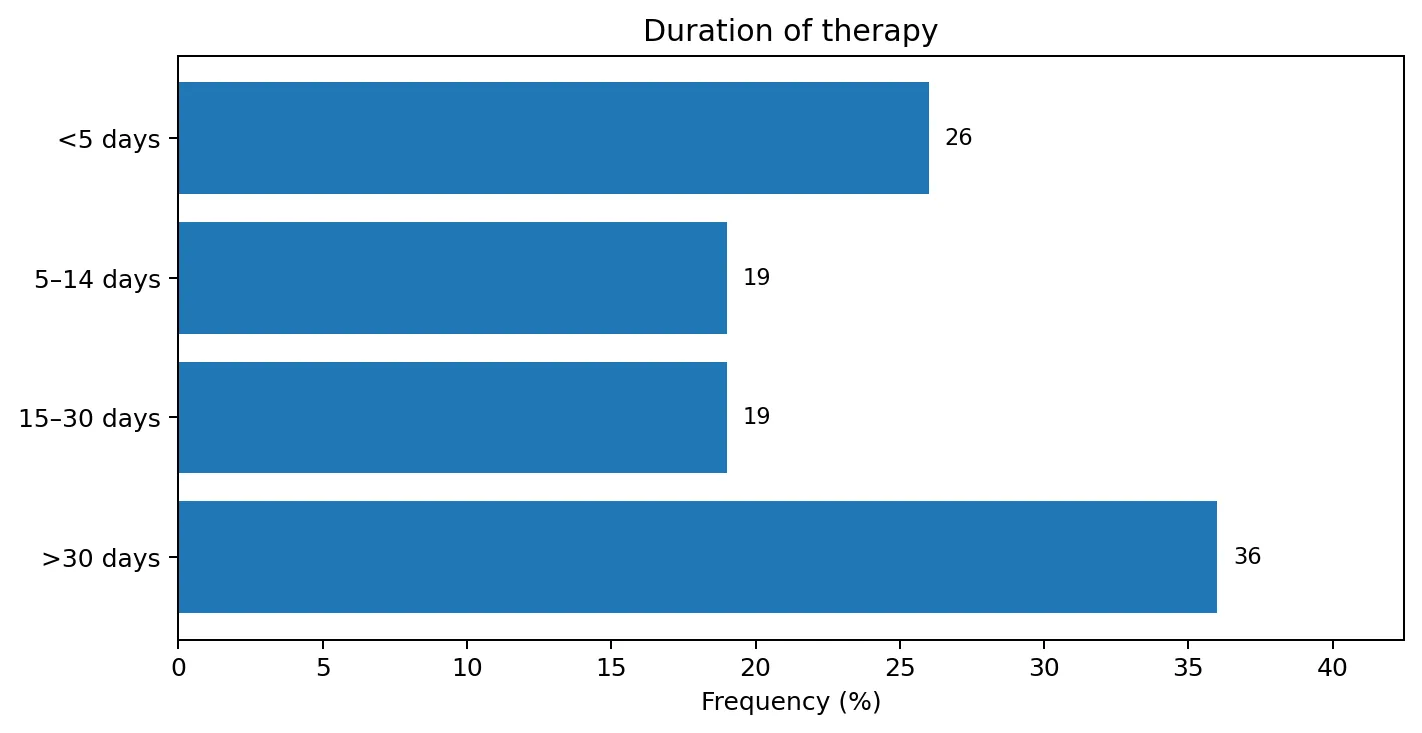
Figure 8: Duration of Therapy.
Source: Present study dataset (n=100).
Therapy was continued for more than 30 days in 36% of prescriptions, while 26% had a duration of less than five days.
Table 9: Recorded Comorbidities
| Comorbidity | Frequency | Percentage |
|---|---|---|
| Diabetes | 4 | 4 |
| Hypertension | 1 | 1 |
| None | 95 | 95 |
| Total | 100 | 100 |
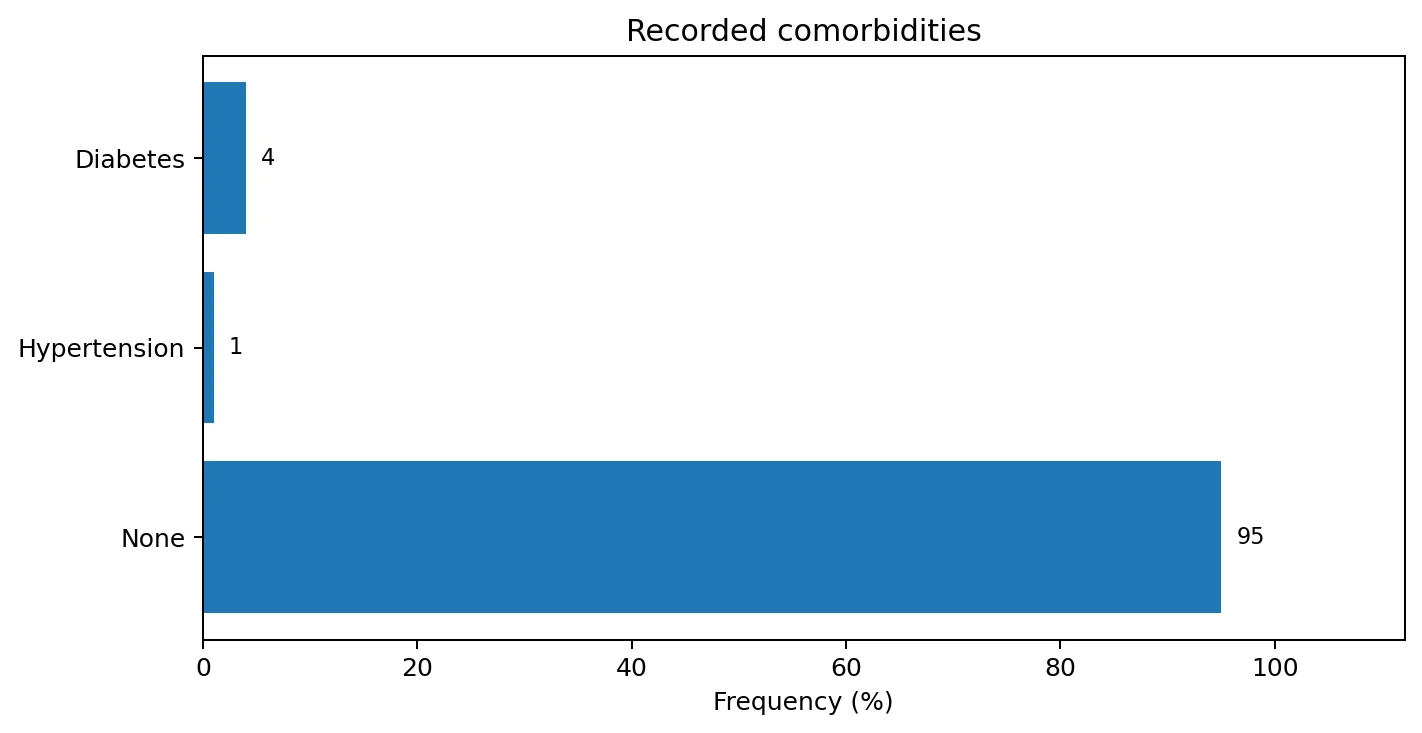
Figure 9: Recorded Comorbidities.
Source: Present study dataset (n=100).
No comorbidity was recorded in 95% of the study population; diabetes was recorded in 4% and hypertension in 1%.
Table 10: Dietary Advice
| Dietary plan prescribed | Frequency | Percentage |
|---|---|---|
| Diabetic diet | 2 | 2 |
| Liquid diet | 8 | 8 |
| Low-fiber diet | 2 | 2 |
| Soft diet | 26 | 26 |
| No dietary advice | 62 | 62 |
| Total | 100 | 100 |
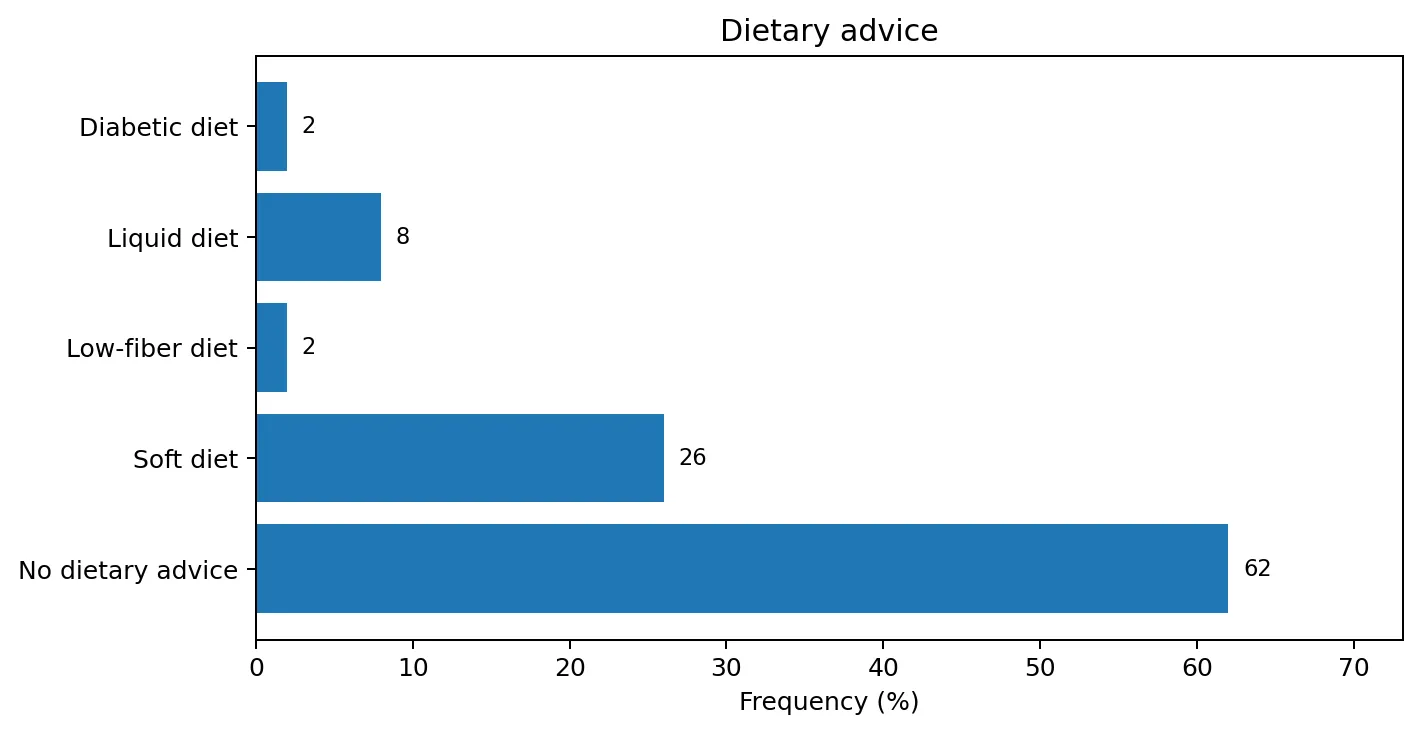
Figure 10: Dietary Advice.
Source: Present study dataset (n=100).
No dietary advice was documented in 62% of prescriptions, while a soft diet was documented in 26%.
Table 11: Follow-Up Advice
| Follow-up advised | Frequency | Percentage |
|---|---|---|
| No | 18 | 18 |
| Yes | 82 | 82 |
| Total | 100 | 100 |
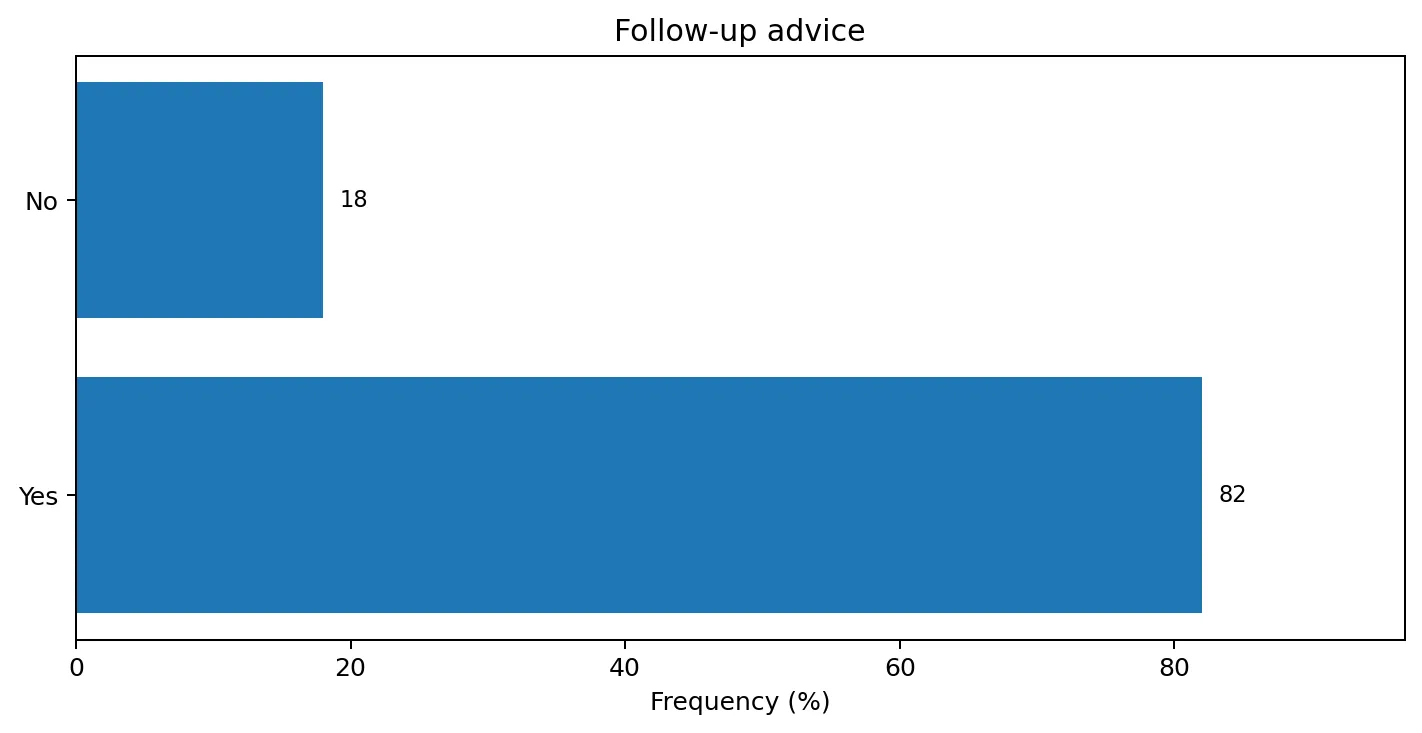
Figure 11: Follow-up Advice.
Source: Present study dataset (n=100).
Table 12: Recorded Adverse Reactions
| Adverse reactions | Frequency | Percentage |
|---|---|---|
| No | 99 | 99 |
| Yes | 1 | 1 |
| Total | 100 | 100 |
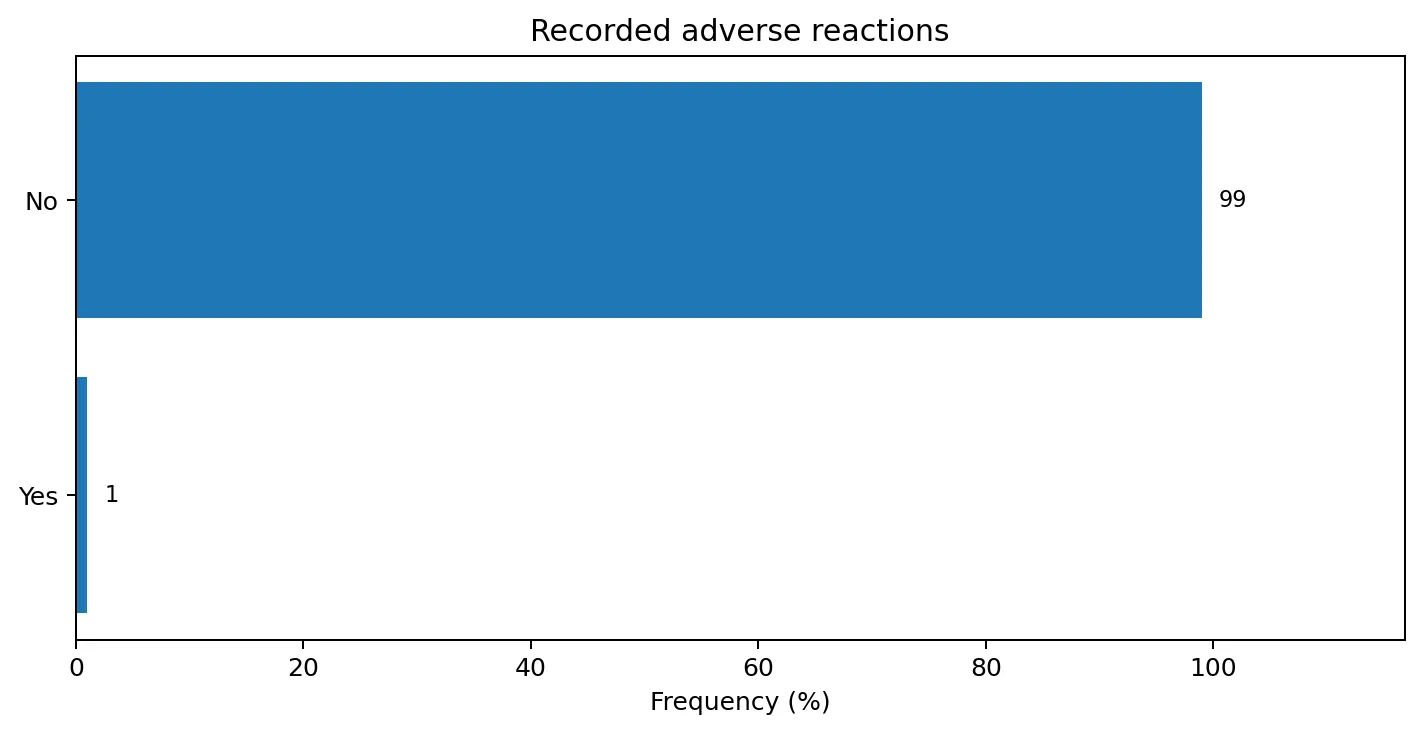
Figure 12: Recorded Adverse Reactions.
Source: Present study dataset (n=100).
Follow-up was advised in 82% of cases. An adverse reaction was recorded in 1% of the prescriptions.
Table 13: Lifestyle Advice
| Lifestyle advice | Frequency | Percentage |
|---|---|---|
| Alcohol restriction | 11 | 11 |
| Exercise | 1 | 1 |
| Smoking cessation | 7 | 7 |
| Others | 81 | 81 |
| Total | 100 | 100 |
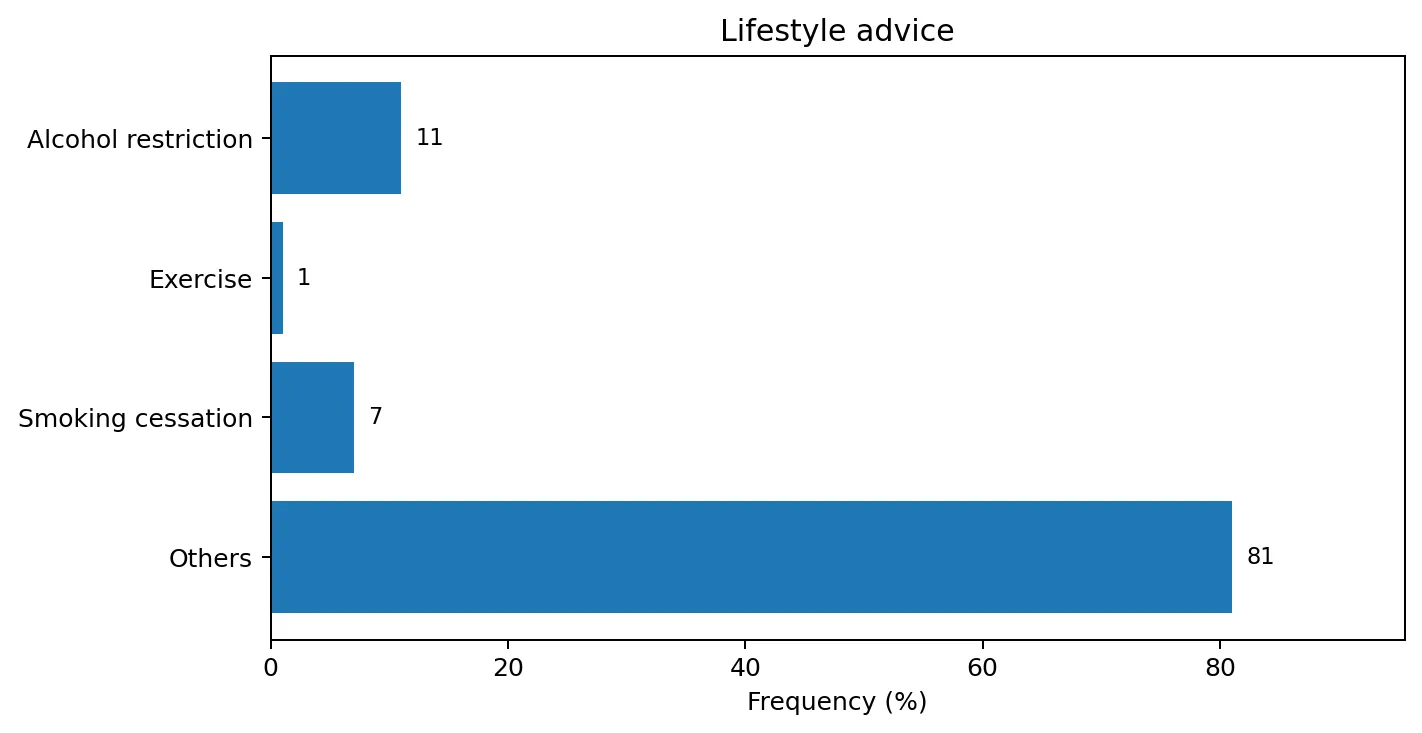
Figure 13: Lifestyle Advice.
Source: Present study dataset (n=100).
Lifestyle advice was documented in 81% of records under the category ‘others’, with alcohol restriction in 11%, smoking cessation in 7% and exercise in 1%. The category ‘others’ was not further defined in the study records.
DISCUSSION
The present study evaluated prescriptions from 100 patients attending the gastroenterology outpatient department of a tertiary care hospital. The study population included adults across a broad age range, with the 46–60-year group representing the largest category. The near-balanced sex distribution suggests that the dataset included both male and female patients in comparable proportions.
GERD was the most frequently listed primary diagnosis in the dataset (7%). Other recorded categories included chronic liver disease, abdominal endoscopy and inflammatory bowel disease (6% each), IBS (5%), diabetes (3%), and coronary artery disease and UTI (2% each). Because the diagnostic categories reported in the thesis are not mutually exhaustive descriptions of all gastroenterology presentations, these frequencies should be interpreted as the recorded categories rather than as population prevalence estimates.
Prescription burden was variable. More than half of the prescriptions contained one to two drugs, whereas 42% contained three or more drugs. Multiple-drug prescribing may be clinically appropriate in some patients; however, the present dataset does not establish whether each prescription was appropriate or inappropriate.
Proton pump inhibitors (PPIs) were the most frequently reported drug category (26%), followed by gastrointestinal prokinetic agents (14%). The dataset also describes other drug groups used in relevant clinical settings. The available results do not provide enough detail to evaluate the appropriateness of individual prescriptions.
Therapy duration was longer than 30 days in 36% of prescriptions. Prolonged treatment is particularly relevant when medicines are intended for chronic or recurrent gastrointestinal disorders, because continued review can help ensure that treatment remains appropriate. The present dataset did not provide sufficient information to determine whether individual long-duration prescriptions were guideline-concordant or clinically necessary; therefore, the duration findings should not be interpreted as evidence of inappropriate long-term prescribing.
The study also documented non-pharmacological components of care. Follow-up was advised in 82% of cases, while dietary advice was absent from 62% of prescriptions. Lifestyle advice was recorded in most cases under a broad 'others' category, although the thesis does not define this category. These findings suggest that documentation of non-pharmacological counselling was variable and could benefit from more standardized recording.
Only one adverse reaction was recorded. This low frequency should be interpreted cautiously because the study was based on prescription and clinical documentation, and the source material does not describe an active pharmacovigilance method. Similarly, the thesis identifies WHO prescribing indicators as objectives, but the available results pages do not report numerical values for all WHO indicators, including generic prescribing, antibiotic encounters, injection use and Essential Medicines List prescribing. Those indicators should therefore not be assigned numerical values without the underlying prescription-level dataset.
Overall, the findings indicate a predominance of acid-suppressive therapy and a measurable degree of multiple-drug prescribing. Continued prescription auditing, documentation of generic prescribing and WHO indicators, and periodic review of long-duration therapy may support rational medicine use in gastroenterology practice.
LIMITATIONS
CONCLUSION
The study demonstrates the prescription pattern among 100 patients attending a tertiary-care gastroenterology outpatient department. PPIs were the most frequently reported drug category, and one to two medicines were prescribed in most encounters. A substantial minority of prescriptions contained three or more medicines, highlighting the relevance of prescription review and monitoring for polypharmacy. Longer-duration therapy and variable documentation of dietary and lifestyle advice were also observed. Continued prescription auditing and systematic reporting of WHO prescribing indicators may help strengthen rational drug use and medication safety in gastroenterology practice.
ACKNOWLEDGEMENTS
The authors acknowledge the Department of Gastroenterology, Krishna Institute of Medical Sciences (KIMS) Hospital, Secunderabad, and Bharat Institute of Pharmacy for facilitating the study. The authors also acknowledge Dr. Sethu Babu, Senior Consultant Gastroenterologist, KIMS Hospital, and Dr. Nisa Firdous, Assistant Professor, Bharat Institute of Pharmacy, for guidance and support as documented in the thesis.
ETHICS STATEMENT
Ethical approval was obtained from the KIMS Institutional Ethics Committee on 19 May 2026 (Approval No.: KIMS/IEC-BHR/2026/132-05). The official approval letter is dated 23 May 2026 and lists committee registration number EC/NEW/INST/2004/TE/0416. Hospital permission was obtained before study initiation.
CONFLICT OF INTEREST
The authors declare no conflicts of interest.
FUNDING
This research received no funding.
REFERENCES


C. Navaneetha, S. Jyoshna, M. Ladle, M. D. Shahabaz Alam, N. Firdous, S. Babu, A Clinical Pharmacy Perspective on Drug Utilization and Prescribing Practices in Gastroenterology, Int. J. of Pharm. Sci., 2026, Vol 4, Issue 11, 3823-3834. https://doi.org/10.5281/zenodo.24414344
 10.5281/zenodo.24414344