

We use cookies to ensure our website works properly and to personalise your experience. Cookies policy
Yashodeep collage of Pharmacy Saralgaon , Nagaon Road, Saralgaon Tal-Murbad, Dist-Thane 421401.
Three-dimensional (3D) printing, which is also called additive manufacturing, is a newer technology that has drawn a lot of interest in pharmaceutical sciences, since it could make drug delivery better and support personalized medicine. This review gives an overview of the basic principles of 3D printing, along with its historical development, classification, and main techniques, such as fused deposition modeling (FDM), direct powder extrusion (DPE), stereolithography (SLA), selective laser sintering (SLS), binder jetting, and inkjet printing. It also looks at the various materials used in pharmaceutical 3D printing, including polymers, metals, ceramics, and smart materials, and at how they help create customized dosage forms and advanced drug delivery systems. The review points out the main benefits of this technology, such as personalized dosing, accurate drug delivery, controlled drug-release profiles, putting several drugs into one dosage form, less material waste, and the chance to manufacture on demand. It goes on to explore opportunities in personalized medicine, fast-dissolving tablets, drug-loaded implants, and formulations made for individual patients. Still, a number of challenges remain, such as nozzle blockage, material incompatibility, drug degradation during processing, printing defects, high equipment costs, slow production rates, and regulatory difficulties. For this reason, risk assessment and quality control are needed to check drug content uniformity, weight variation, mechanical strength, dissolution behaviour, and product stability.In addition, this review looks at future prospects and emerging trends in pharmaceutical 3D printing, such as artificial intelligence (AI), machine learning, smart materials, 4D printing, 3D-printed polypills, advanced drug-release systems, automated quality monitoring, and industrial manufacturing.
3D printing, also called additive manufacturing, is a modern way to make three-dimensional objects by adding material one layer at a time. The process depends on a digital design and can use many types of materials, including polymers, metals, ceramics, powders, and liquids. Biological materials can also be used, depending on the printing method [1]. There are several 3D printing methods, and they differ in how they work, how fast they print, their resolution, and the materials they require [2].
One of the most useful features of 3D printing is that it can create complex and personalized drug delivery systems. By changing the digital design, the formulation, and the printing conditions, the properties of the final dosage form can be adjusted to meet each patient's treatment needs. Thus, 3D printing offers a flexible and promising way to develop customized medicines and advanced drug delivery systems, with better control over the structure and features of the final product [3].
3D printing is a modern additive manufacturing method that differs from traditional subtractive manufacturing. In conventional methods, material is cut away from a larger piece to get the desired shape, while 3D printing builds an object by adding material layer by layer. The process usually begins by making a three-dimensional model with computer-aided design (CAD) software. This model is then split into thin layers and sent to the printer, where the layers are formed one after another and joined to make the final
three-dimensional product [4,5].
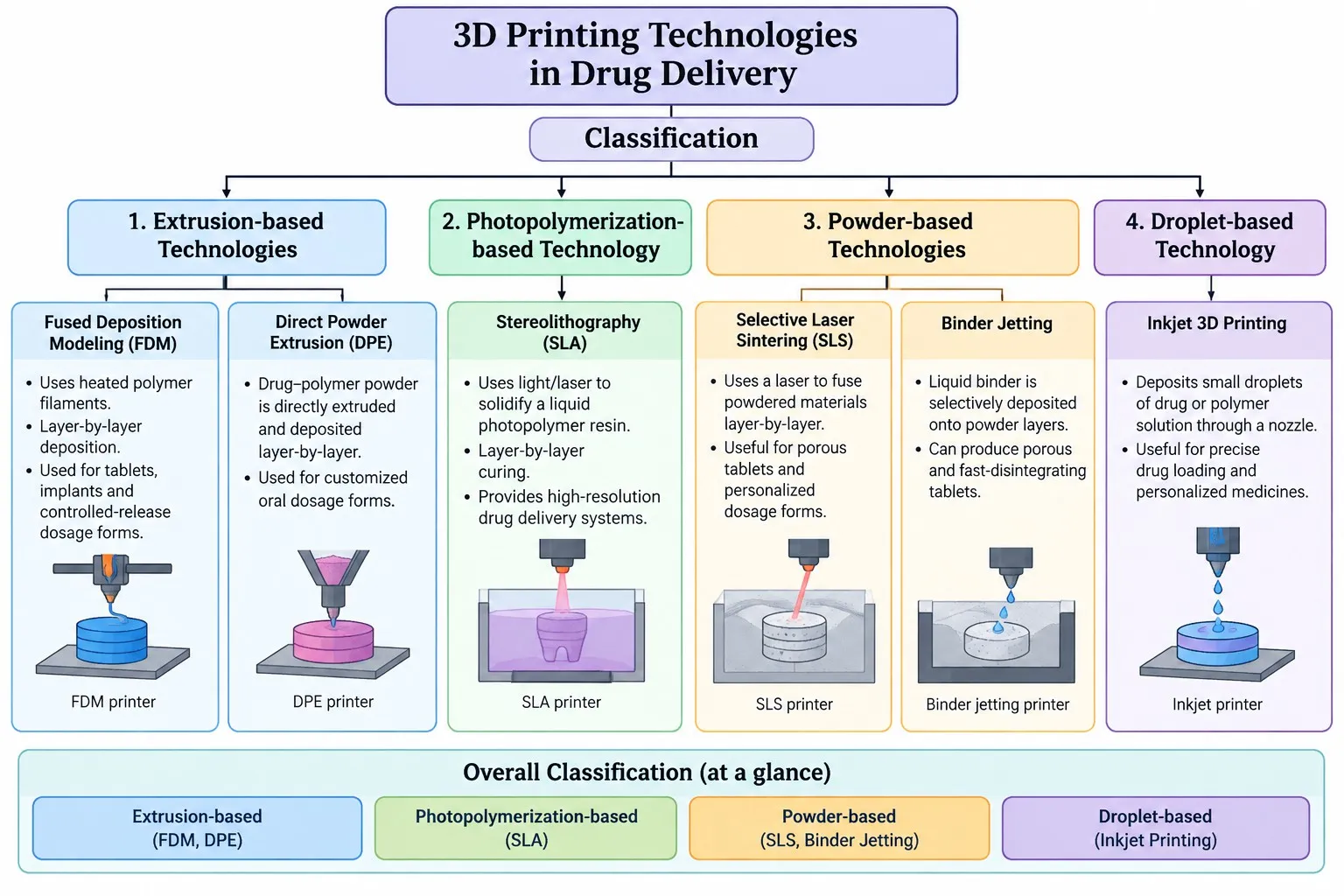
The rapid progress of 3D printing technology has led to the creation of many printing methods. Each method differs in the kind of material used, how the material is laid down, how the layers are formed, and the features of the final product. Because of these technical differences, the American Society for Testing and Materials (ASTM) has grouped 3D printing technologies into seven main categories: material extrusion, binder jetting, powder bed fusion, vat photopolymerization, material jetting, directed energy deposition, and sheet lamination [3,4].
3D printing is now used and studied in many fields, including automotive, construction, aerospace, and medical applications. In recent years, its importance in the pharmaceutical sector has grown a lot. Researchers around the world are exploring this technology to develop customized medicines, personalized dosage forms, and advanced drug delivery systems [6,7].
Basic Principle Of 3D Printing Technology
3D printing has become an increasingly useful technology across many fields, as it can create three-dimensional structures with high precision. In this process, objects are built layer by layer from a digital design, which makes it easy to construct even complex shapes and structures. In healthcare, particularly for drug and therapeutic delivery, 3D printing has attracted a great deal of interest because it is flexible and can produce customized formulations and delivery systems. The technology offers better control over the design and structure of the final product, making it possible to develop systems tailored to specific therapeutic needs [8].
History Of 3D Printing Technology
The history of 3D printing began in the late 1970s, when early methods of computer-aided manufacturing were developed [9]. The field grew quickly during the mid-1980s, especially after Charles Hull introduced and patented stereolithography (SLA). Hull is widely seen as one of the pioneers of 3D printing. In SLA, ultraviolet (UV) light is used to harden a liquid resin, slowly building a
three-dimensional object one layer at a time. He also founded 3D Systems, which helped turn SLA technology into a practical, commercial tool [10,11].
Around the same time, several other important printing methods were introduced. Carl Deckard created selective laser sintering (SLS), a process that uses a laser to fuse powdered material into a solid structure. Scott and Lisa Crump created fused deposition modeling (FDM), in which heated material is pushed through a nozzle and laid down layer by layer. At the Massachusetts Institute of Technology (MIT), Emmanuel Sachs and his colleagues created a powder-based printing method that later became known as binder jetting. This method uses a binding liquid to join chosen areas of a powder bed, gradually forming the needed object. Direct metal laser sintering also appeared as an important method, making it possible to produce metal parts directly from digital computer models [10,12].
The RepRap project, led by Andrew Bowyer at the University of Bath, was another key step in the history of 3D printing. The project aimed to build fairly affordable printers that could make many of their own parts. This idea encouraged open-source development and helped make 3D printing easier for researchers and users to access [13].
As technology kept advancing, 3D printing slowly moved beyond engineering and manufacturing and found important uses in healthcare and pharmaceutical sciences. It has been used for planning surgery, custom implants, medical education, and the creation of products tailored to individual patients. In pharmaceutical use, the technology has drawn a lot of interest because it can help make personalized dosage forms with specific drug doses and release properties. In 2015, the FDA approved Spritam, made by Aprecia Pharmaceuticals, as the first prescription medicine produced with 3D printing technology. The medicine was made using binder jetting and had a very porous structure, which let it dissolve quickly in the mouth. Spritam was approved to treat epilepsy and became an important milestone in the development of 3D-printed pharmaceutical products [14] CLASSIFICATION OF 3D PRINTING TECHNOLOGY
KEY 3D PRINTING METHODS
1. Extrusion-Based Technology
Several methods based on extrusion have been studied for use in pharmaceuticals. The methods used most often are Fused Deposition Modeling (FDM), Semi-Solid Extrusion (SSE), and Direct Powder Extrusion (DPE). Although these methods share the same basic idea of layer-by-layer extrusion, they differ in the type of material used and how it is processed during printing [15,16]. Extrusion-based 3D printing is a useful method for making customized drug delivery systems. In this method, the material that contains the drug is pushed through a nozzle and laid down layer by layer, following a digital design. As the layers are laid down, the material slowly hardens to form the desired dosage form. A main advantage of this method is that the shape, drug dose, drug combination, and release pattern can be adjusted to meet the needed therapeutic requirements. Because of this, extrusion-based printing has significant potential for personalized drug delivery [15,16].
A. Fused Deposition Modelling (FDM)
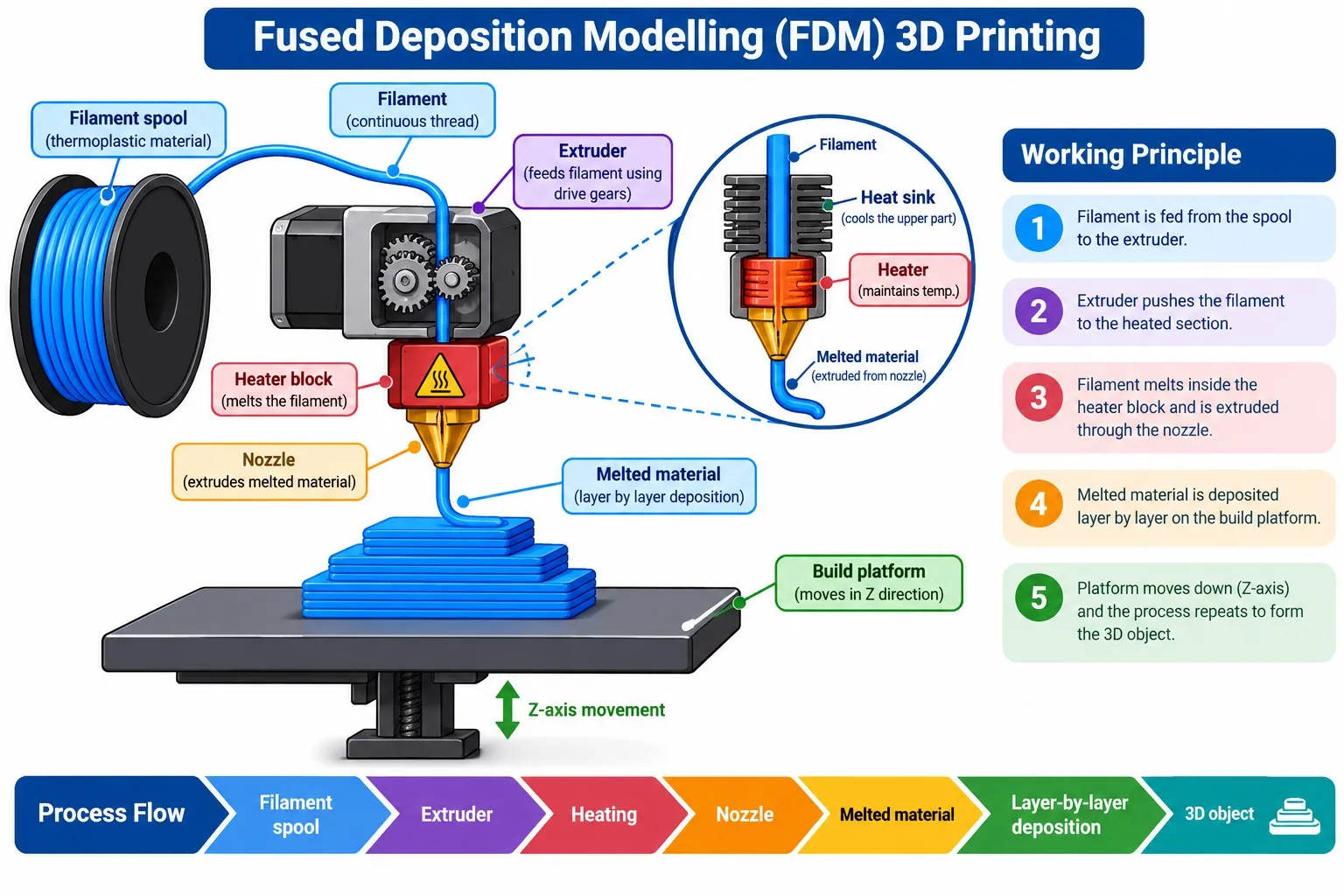
Fused Deposition Modeling (FDM) is a popular and inexpensive 3D printing technique that operates much like an inkjet printer, except that it uses small beads of heated plastic instead of ink. These plastic beads are melted and forced out of a nozzle that travels around to construct a prototype one layer at a time [17]. Common plastics used include polylactic acid (PLA), polyvinyl alcohol (PVA), and acrylonitrile butadiene styrene [18]. In this process, the material is typically a blend of active ingredients and polymers, kept as a filament roll. It goes through a heated nozzle that melts the blend so it can be extruded as thin strands, which solidify quickly as they are deposited in layers. That is why FDM is also referred to as Fused Filament Fabrication. The success of this printing hinges on the material’s flow and melting behavior, which are affected by factors such as nozzle size, pressure. Feed speed, along with the thermal properties of the material, including melting temperature and thermal conductivity. In comparison with powder-based printing, FDM delivers higher resolution, enabling it to produce detailed, intricate shapes and more precise doses when applied to pharmaceutical forms. It also offers solid mechanical strength and flexibility to regulate how quickly the printed object releases its contents by tuning design elements such as infill percentage and surface area. Nevertheless, FDM is restricted by the kinds of thermoplastics that perform well under heat, and it struggles to print materials that are sensitive to high temperatures[19].
B. Direct Powder Extrusion (DPE)
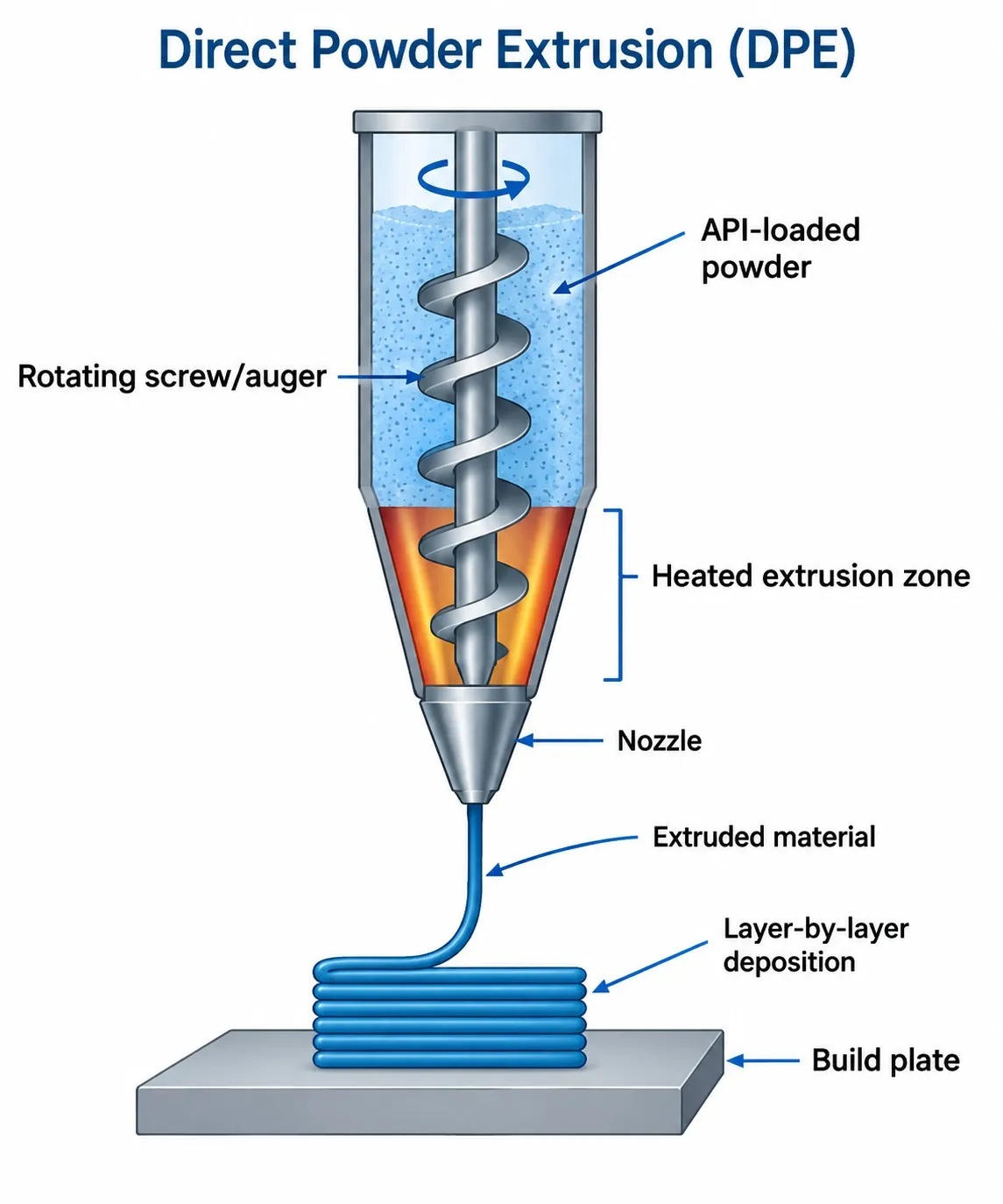
Direct Powder Extrusion (DPE) is a promising alternative to FDM that can help overcome some of the limitations of filament-based 3D printing. Because DPE usually works at lower temperatures than FDM, it may offer more flexibility in choosing APIs with different thermal properties. In this method, the drug is first mixed with suitable excipients, and the resulting powder mixture is fed straight into the printer head. The mixture is then heated and extruded through the nozzle, where it is deposited layer by layer on the build plate following the desired digital design. A key advantage of DPE is that you do not need to prepare a filament loaded with the drug before printing, as FDM does. This direct approach can make the printing process simpler, cut processing time and cost, and offer a flexible way to produce customized pharmaceutical dosage forms [20].
2. Photopolymerization-based Technology
3D printing based on photopolymerization is an important technique for creating customized drug delivery systems. In this method, a liquid mixture that contains light-sensitive polymers is exposed to a suitable light source. The light starts a polymerization reaction, which turns the liquid material into a solid structure. This process is repeated layer by layer to make the desired three-dimensional dosage form with the required shape and design [21,22]. Stereolithography (SLA) is one of the most widely studied photopolymerization-based techniques for pharmaceutical uses. Other related vat-photopolymerization techniques are Digital Light Processing (DLP) and Continuous Digital Light Processing (CDLP). These techniques give good accuracy and resolution, which makes them useful for creating complex and personalized drug delivery systems [22,23].
A. Stereolithography (SLA)
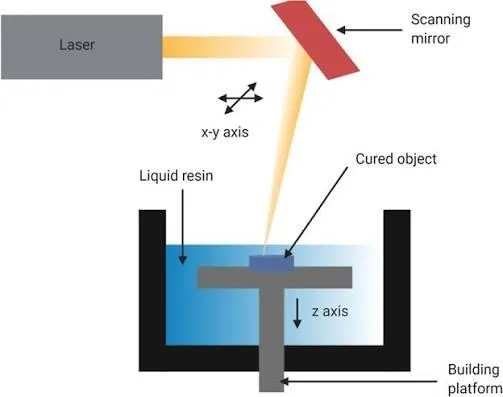
Stereolithography (SLA) is an important photopolymerization-based 3D printing technology created by Charles Hull in the 1980s and sold commercially in 1986 [24,25]. It makes three-dimensional structures using a UV laser to harden a liquid, light-sensitive resin.
When the resin is exposed to UV light, it goes through a photochemical reaction and changes from a liquid state into a solid form [24,26].
In the SLA process, the photosensitive resin is placed inside a printing vat. The UV laser follows the required pattern and hardens the resin only in those places to form one layer of the object. After the first layer is formed, the build platform moves so that fresh resin can reach the printing area. This process is repeated continuously until the complete object is made [27]. The printed object is then taken out of the resin, washed to remove excess material, and may be exposed to more UV light for post-curing. Extra surface finishing can be done when needed [24].
SLA is known for its high printing accuracy, fine resolution, and smooth surface finish. It can also give good bonding between successive layers, which results in suitable mechanical strength. The thickness of each printed layer is an important parameter because it affects the resolution and overall quality of the final product. This thickness mostly depends on how much UV energy the resin receives during curing [28,29,30].
Digital Light Processing (DLP) is a similar method that also uses light to cure photosensitive resin. Instead of tracing the pattern with a laser, DLP projects the whole image of a layer onto the resin at once. As a result, DLP can usually finish each layer faster than SLA. Because it can create accurate and detailed structures, SLA has great potential in pharmaceutical 3D printing, particularly for developing customized drug delivery systems and dosage forms.
3. Powder-based 3D Technology
Powder-based 3D printing is a layer-by-layer manufacturing method that uses powdered materials to build a desired
three-dimensional structure. In pharmaceutical applications, the powder can be made by mixing the active pharmaceutical ingredient (API) with suitable excipients, such as polymers. Depending on the printing method, the powder becomes a solid structure either through a liquid binder or by selectively applying energy, such as a laser, to fuse the particles. One of the main advantages of this technique is that it can change the shape, drug content, internal structure, and release behaviour of the printed dosage form to match the required formulation design [31,32].
Basic Principle & Working:
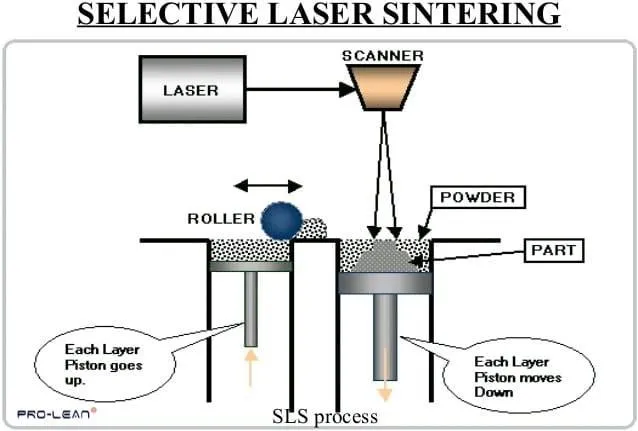
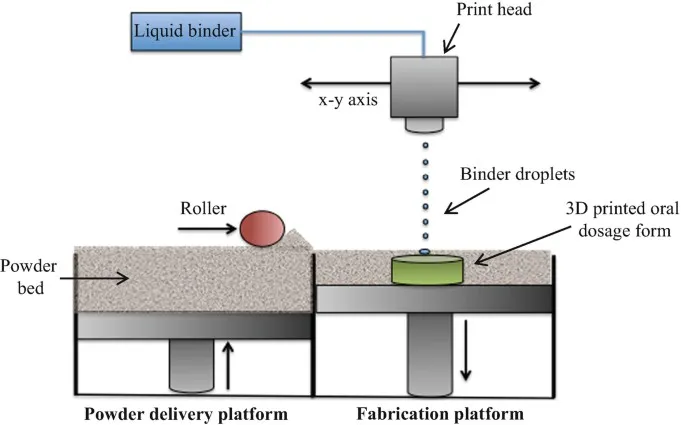
The process begins by placing a thin, even layer of pharmaceutical powder on the printing platform. A CAD model guides the printer and defines the areas where the powder needs to be joined. In binder jetting, a liquid binder is selectively deposited onto the powder bed so the particles stick to each other. In powder bed fusion, chosen parts of the powder are heated with a laser or another energy source, which fuses the particles.After one layer is formed, a fresh layer of powder is spread over the surface, and printing continues in the same way. These steps are repeated until the complete three-dimensional dosage form is made. The loose powder left around the printed product is then removed. Through this controlled layer-by-layer process, powder-based 3D printing can be used to develop pharmaceutical dosage forms with specific shapes, doses, internal structures, and drug-release profiles [31,33].
A. Selective Laser Sintering (SLS)
Selective laser sintering (SLS) is a 3D printing technique based on powder that is used to produce medicines with particular shapes, sizes, and drug-release properties. In this technique, a laser selectively heats and fuses powdered materials layer by layer in accordance with a computer-designed model. This process aids in producing solid dosage forms with controlled structures and varying drug-release characteristics [34,35].
SLS technology has been investigated for the manufacture of personalized medicines with varying drug concentrations and release patterns. Fina et al. employed pharmaceutical-grade polymers, such as Kollicoat IR and Eudragit L100-55, to produce
paracetamol-loaded 3D-printed tablets. The tablets that were produced exhibited good mechanical strength and differing
drug-release profiles depending on the polymer employed. Kollicoat IR enabled immediate drug release, while Eudragit L100-55 delivered modified drug release for up to 12 hours. The study also found no evidence of drug degradation under the printing conditions tested [34].
In addition, SLS has the potential to manufacture tablets with complex structures and customized drug-release properties. It could assist in developing patient-specific medicines and increasing flexibility in pharmaceutical manufacturing. Nevertheless, appropriate
powder materials, laser energy, and printing conditions must be chosen carefully to preserve the quality, stability, and safety of the final product [35].
B. Binder Jetting (BJ)
Binder Jetting (BJ) is a rapid prototyping and 3D-printing technology that uses a liquid binding agent to join powder particles selectively and build three-dimensional objects. In this process, a chemical binder is placed on specific areas of a powder layer, so the structure can be built layer by layer following the desired design [36].
The technique works with many materials, such as metals, sand, polymers, ceramics, and hybrid materials. Because its operating process is simple, its production speed is high, and its manufacturing cost is low, Binder Jetting has become a popular additive manufacturing method. It can also produce large-sized components efficiently. For some uses, like sand printing, the printed parts may need little or no extra post-processing, which makes the process even more cost-effective [37].
Wang et al. showed how Binder Jetting can be used in pharmaceutical manufacturing by creating an orodispersible solid dosage form. In their study, particles of lactose monohydrate powder were coated with polyvinylpyrrolidone (PVP) at 10%, 15%, and 20% (w/w). The coated powder was then successfully 3D printed into oral solid dosage forms with paracetamol as the active pharmaceutical ingredient, showing the potential of Binder Jetting for making advanced, patient-friendly drug delivery systems [38].
4. Droplet- based Technology (DBT)
Droplet-based 3D printing is a method in which tiny droplets of a drug-containing material are placed one after another to build a three-dimensional dosage form. The droplets can contain the drug, polymers, excipients, or a suitable mix of these components. A digital design controls where they are placed, which helps produce the required shape and structure accurately [39,40].
In this process, a printhead or nozzle releases the formulation as tiny droplets onto a printing surface. The deposited droplets are then dried or solidified by methods such as solvent evaporation, cooling, or light exposure, depending on the type of printing system used. By controlling the size and position of the droplets, the drug can be spread more accurately throughout the printed dosage form [40,41].
Inkjet 3D printing is a droplet-based approach that is commonly studied. In this method, the drug is mixed with suitable excipients to make a printable liquid or suspension. The formulation is released through a fine nozzle as small droplets and deposited according to the programmed design. After drying or solidification, the required dosage form is obtained. This precise, digitally controlled process makes droplet-based printing useful for personalized dosing and for developing dosage forms with different drug-release profiles [41,42].
A.Inkjet Printing Techniques (IJ)
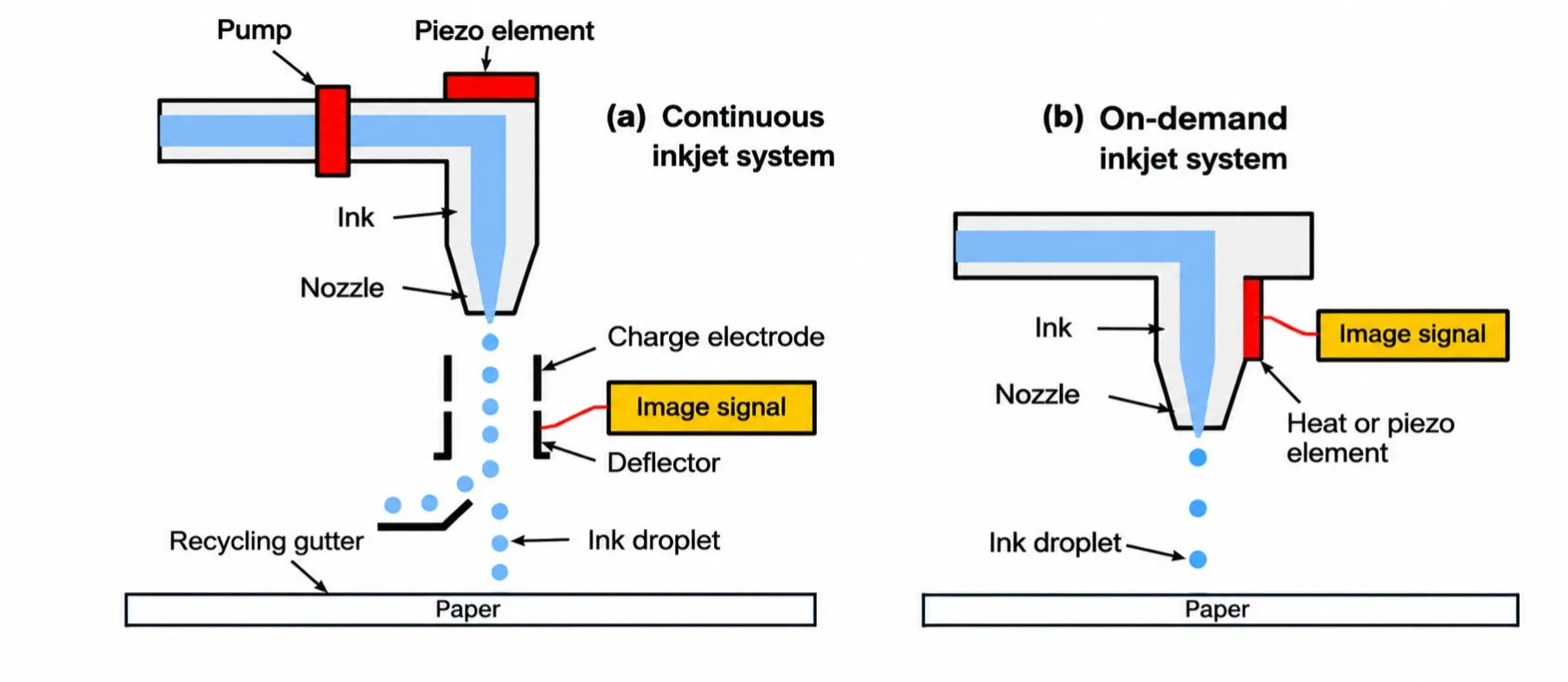
Inkjet printing is a technique in which very small droplets of a liquid material are produced and placed at specific positions to form the required pattern or structure [43]. In pharmaceutical 3D printing, the liquid droplets may contain the drug, polymer, or other excipients. The two common approaches for producing and depositing these droplets are Continuous Inkjet (CIJ) and
Drop-on-Demand (DOD) printing.
(INKJET PRINTING)
a) Continuous Inkjet (IJ) Printing
In Continuous Inkjet printing, the printing material is fed constantly through a nozzle under pressure, which creates a stream of very small droplets. These droplets receive an electrical charge and are then passed between plates that carry an electrical charge. The plates help control where the droplets go and direct them to the needed area of the printing surface [44]. Droplets that are not needed for printing are sent aside and can be gathered and used again. Careful control of droplet speed and the viscosity of the printing material matters for getting accurate and even printing [45].
b) Drop-On-Demand (DOD) Printing
Drop-on-Demand printing is a more controlled method in which droplets are made only when they are needed. This makes it suitable for placing materials accurately during printing. DOD printheads can contain a large number of nozzles, which lets droplets be placed at exact locations. The droplets are mostly produced by thermal or piezoelectric mechanisms.
In the thermal mechanism, an electric current heats the printing material and creates a small bubble. The pressure from this bubble pushes a tiny droplet out through the nozzle [46]. In the piezoelectric mechanism, an electric voltage makes the piezoelectric material change its shape. This movement creates pressure and pushes the droplet through the nozzle [47]. Because the piezoelectric method does not use heating, it can suit a wider range of materials and gives good control during printing [48].
Depending on the surface where the droplets are deposited, DOD printing can be done in different ways. In drop-on-drop deposition, droplets are placed one on top of another, and repeated deposition slowly forms the needed solid layer. In drop-on-powder deposition, the droplets are deposited onto a layer of solid powder. The droplets interact with the powder and help to form the desired structure [49].
In general, DOD printing can build a structure directly either by depositing droplets layer by layer or by combining liquid droplets with powder materials. The selection of the deposition method depends on the type of material and the final structure required [43,40].
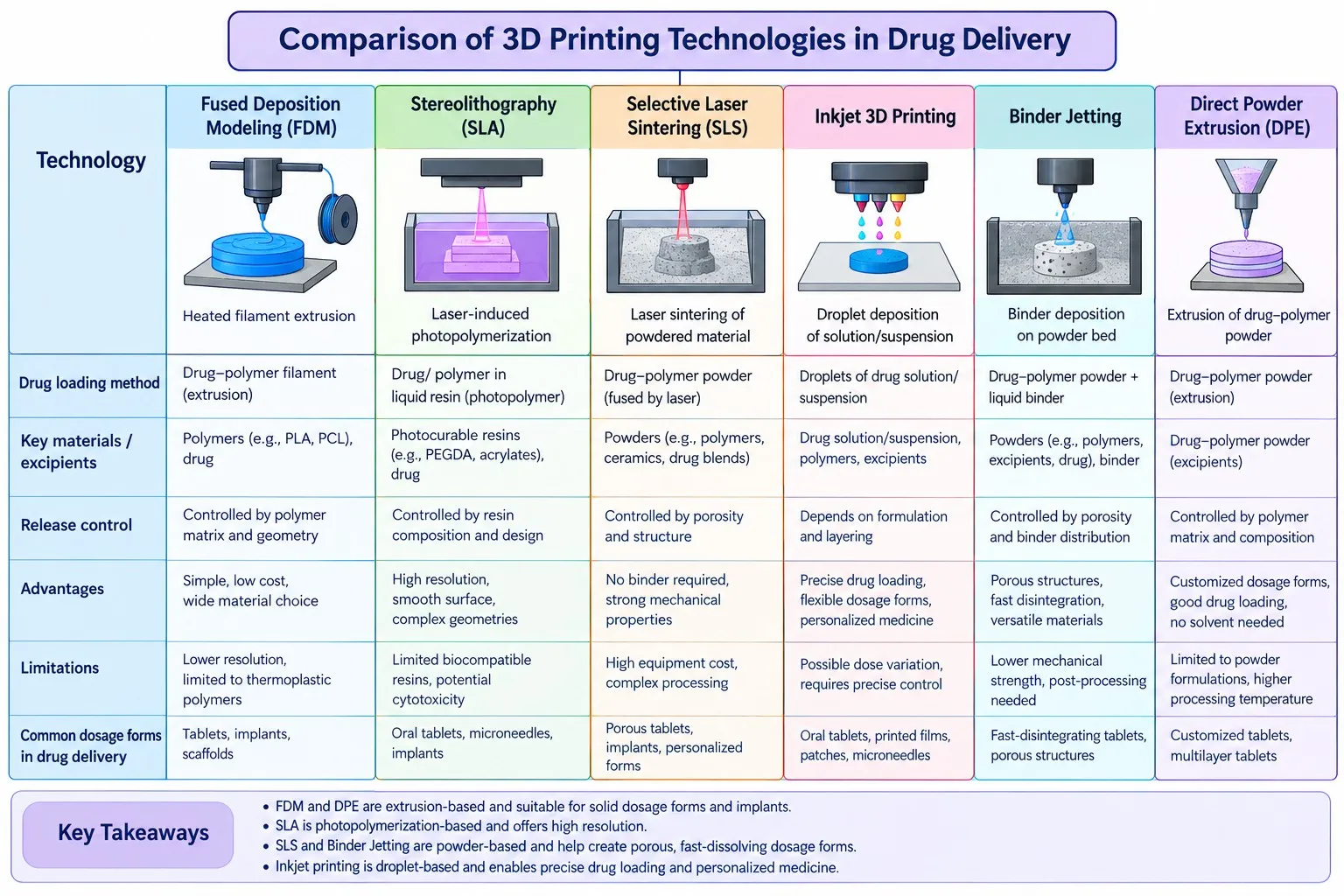
COMPARISON OF 3D PRINTING TECHNOLOGY
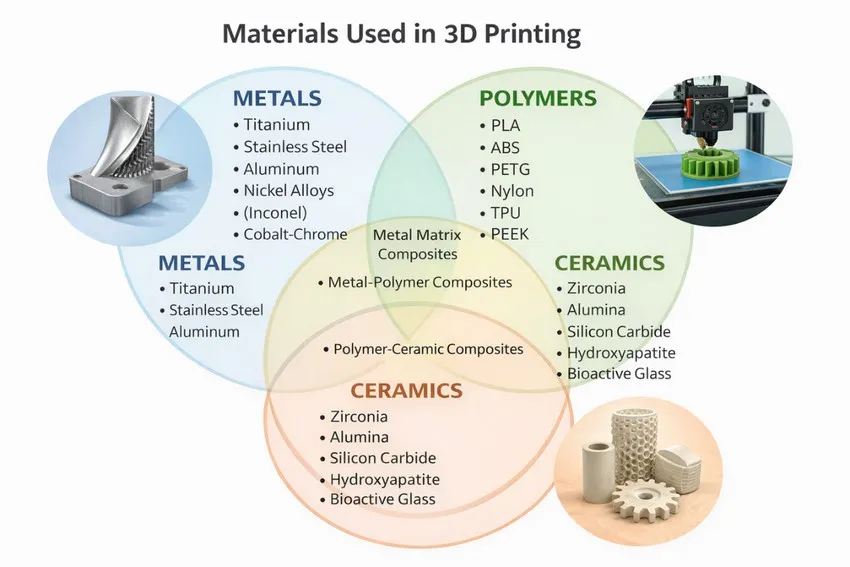
MATERIALS USED IN 3D PRINTING TECHNOLOGY
1. Metals
Metal-based 3D printing has become significantly important across pharmaceutical, biomedical, aerospace, automobile, and manufacturing applications. The key benefit of employing metals lies in their outstanding strength, durability, thermal stability, and other favorable physical properties. Due to these characteristics, they are well suitable for creating complex and customized structures through 3D printing [51].
A number of metals and metal alloys are commonly employed in 3D printing, such as aluminium alloys [52], cobalt-based alloys [53], nickel-based alloys [54], stainless steel [55], and titanium alloys [56,57].Cobalt-based alloys are useful for dental and biomedical uses because to their solid mechanical strength, stiffness, durability, and resistance to heat-treatment conditions [53].
Nickel-based alloys are primarily chosen for aerospace applications because of their outstanding corrosion resistance and their capacity to sustain very high temperatures, up to roughly 1200°C [51,54].
Titanium alloys hold particular importance since they combine low density, high strength, good ductility, corrosion resistance, and oxidation resistance. These properties make them well suited for applications demanding high mechanical strength and resistance to challenging conditions. As a result, titanium alloys are extensively used in aerospace components and biomedical applications [56,57].
2. Polymers
Polymers are among the most commonly employed materials in 3D printing for drug delivery and biomedical uses. Their widespread appeal stems largely from their light weight, ease of processing, flexibility, and capacity to take on various shapes and structures. In Fused Deposition Modelling (FDM), thermoplastic polymers like PLA, ABS, PP, and PE are melted and laid down layer by layer to create the intended dosage form or device [58].
Additional polymers, such as PEEK and PMMA, have likewise been adopted for 3D printing owing to their outstanding mechanical and thermal characteristics [59]. Based on the printing method, polymers can be utilized in the form of filaments, powders, or liquid formulations. Their favorable processability and comparatively low cost render them well suited for the development of customized pharmaceutical products [60].
In 3D-printed drug delivery systems, polymers play a key role since they assist in controlling the shape, structure, drug release, and mechanical properties of the finished dosage form. As a result, polymers are being studied with growing interest for uses including personalized drug delivery, implants, tablets, and other biomedical devices [61].
3. Ceramics
Ceramics are attracting growing interest as valuable materials for 3D printing, thanks to their high strength, durability, thermal resistance, and capacity to endure harsh conditions. By fine-tuning the printing and processing parameters, ceramic structures featuring complex shapes and enhanced mechanical properties can be produced with minimal pores and cracks [62].
Ceramic materials find use in a range of fields, such as dental, aerospace, biomedical, and advanced engineering applications. Notable examples include alumina, bioactive glass, and zirconia [63,64].
Alumina is a commonly used ceramic material that offers excellent chemical and thermal stability. It is applied in catalysis, adsorption, microelectronics, chemical processing, aerospace, and other high-tech industries [65]. Through 3D printing, alumina can be formed into components with complex shapes, and appropriate processing can yield high density after sintering [66].
Bioactive glass and glass-ceramics can likewise be produced using stereolithography (SLA). This method enables the creation of complex structures with enhanced mechanical strength. Owing to their bioactive nature, these materials are especially promising for bone scaffolds and other biomedical uses [67].
Another technique, Stereolithographic Ceramic Manufacturing (SLCM), is capable of producing ceramic components with high density, uniform microstructure, and good compressive and bending strength [67]. Zirconia is also an important ceramic material, owing to its excellent mechanical and thermal properties. For nuclear applications, hafnium-free zirconium is favored because of its low radiation susceptibility and low thermal neutron absorption [64].
4. Smart Materials
Smart materials are materials capable of reacting to changes in the environment around them. When subjected to external conditions like heat or water, they are able to alter their shape or geometry [68]. In 3D printing, smart materials are employed to create advanced structures, including self-evolving structures and soft robotic systems. Because they can respond to external stimuli, these materials are also closely linked with 4D printing.
Commonly used smart materials include shape memory alloys [69] and shape memory polymers [70]. Nickel–titanium (NiTi) is a notable example of a shape memory alloy and can be applied in biomedical implants as well as micro-electromechanical device applications [71]. When producing 3D-printed components from nickel–titanium, important factors to consider include parameters such as transformation temperature, microstructure reproducibility, and material density.
Shape memory polymers (SMPs) are functional materials that can react to various stimuli, including light, electricity, heat, and certain chemicals [70]. 3D printing technology simplifies the manufacture of complex shapes and customized structures using SMPs. The quality of these printed parts is primarily assessed in terms of dimensional accuracy, surface roughness, and part density [70].
5. Composites
Composite materials, with their outstanding versatility, light weight, and properties that can be tailored, have been transforming high-performance industries. Examples of composite materials include carbon fiber reinforced polymer composites [72] and glass fiber reinforced polymer composites [73]. Structures made of carbon fiber reinforced polymer composites are widely used in the aerospace industry because they have high specific stiffness, high strength, good corrosion resistance, and good fatigue performance [72]. Meanwhile, glass fiber reinforced polymer composites are widely used in many 3D printing applications [73] and have great potential because they are cost-effective and high-performance [74]. Fiberglass has high thermal conductivity and a relatively low coefficient of thermal expansion. In addition, fiberglass cannot burn, and it is not affected by the curing temperatures used in manufacturing processes, so it is very suitable for use in 3D printing applications [74].
APPLICATIONS OF 3D PRINTING TECHNOLOGY
1. Aerospace Industry
3D printing technology brings several benefits to the aerospace industry, since it lets companies make parts with complex designs and better structural features. It makes it possible to produce lightweight parts, which helps cut down on material use and energy consumption during production [75]. These lightweight parts can also help improve fuel efficiency and lower operational costs. Also, 3D printing technology is helpful for making spare parts for aerospace equipment, especially engine components. Because engine parts face high temperatures, mechanical stress, and continuous operation, they can get damaged and need to be replaced. So, 3D printing offers another way to make spare parts with the required design and specifications [76]. Nickel-based alloys are used widely in aerospace applications because they have excellent mechanical properties, good tensile strength, resistance to oxidation and corrosion, and the ability to withstand damage in demanding environments [77].
2. Food Industry
3D printing technology is playing a growing role in various industries, such as aerospace and food manufacturing. In the food industry, it provides a new way to make customized food products based on each person's nutritional needs. Athletes, children, pregnant women, and patients may need different nutrients in different amounts. So 3D food printing can help create food products by adjusting their ingredients, cutting out unneeded components, and boosting the content of beneficial nutrients to meet specific dietary requirements [78].
3D food printing, also called food layer manufacturing, is a process that deposits food materials layer by layer to produce a desired shape using computer-aided design (CAD) data [79]. This technique lets different ingredients be combined and formed into various shapes and complex structures, which makes food preparation more flexible and creative [80]. Ingredients such as sugar, chocolate, pureed foods, and materials used to make pasta, pizza, and crackers can be processed into food products with customized shapes and attractive designs.Another key advantage of 3D food printing is its potential to raise production efficiency while supporting better quality control and reducing material waste.
It may also help make food production more cost-effective and better for the environment. Because the ingredients, nutritional composition, and portion sizes can be adjusted to individual preferences and dietary needs, this technology offers promising opportunities for personalized nutrition and the development of customized food products [79].
3. Healthcare &Medical Industry
3D printing technology has become an important tool in the biomedical field because it can create customized structures for different medical applications. It is used to develop artificial skin [81], support drug and pharmaceutical research [82], produce bone and cartilage structures [83], engineer replacement tissues [84], explore organ fabrication [85], and develop models for cancer research [86]. In addition, this technology is useful for making physical models that support medical visualization, education, and communication. The main applications and benefits of 3D printing in the biomedical field are described below.
-3D Printed Skin: 3D printing technology lets researchers develop skin models that resemble the natural structure of human skin at a relatively low cost. These models can be used to test pharmaceutical products, cosmetics, and chemical substances. They also offer an alternative to conventional testing methods and may reduce the need for animal skin in product evaluation. As a result, researchers can study the effects of different substances using more relevant skin models [87].
anatomical structures before they carry out procedures. These models can show specific anatomical features and disease-related abnormalities, so surgeons can practise techniques in a controlled setting. This approach can improve surgical planning, support procedural accuracy, and offer practical training before operating on real patients.
4. Automotive Industry
3D printing technology has advanced, and this has opened up new possibilities in the automotive industry by making it easier to design and build vehicle parts. With this technology, manufacturers can make lightweight parts with complex shapes while cutting down the time needed to develop products. For instance, Local Motors brought out a 3D-printed electric car in 2014 and later created OLLI, a self-driving electric bus built with 3D printing technology. OLLI mixes electric mobility with smart features and also uses recyclable materials in its design. In the same way, Ford uses 3D printing to develop prototypes and make engine parts, which helps speed up product development and design improvements [89]. BMW uses this technology to make special hand tools that are used during vehicle testing and assembly. In 2017, Audi worked with SLM Solutions Group AG to make prototypes and spare parts using this technology [90].
Using 3D printing technology brings several benefits to automotive manufacturing. It gives more freedom in product design and lets manufacturers try out different design ideas before settling on a final part. This helps spot possible improvements early on and supports the creation of efficient, innovative automotive products. Also, the technology can lower material use and cut waste during manufacturing. Being able to make prototypes quickly also helps save time and lower development costs. All in all, 3D printing technology helps make the manufacturing process in the automotive industry more flexible, cost-effective, and efficient [91].
Applications of AI in 3D Printing Technology for Drug Delivery
1. Personalized Drug Delivery systems
AI can assist researchers in creating personalized dosage forms through the analysis of pharmaceutical data and individual treatment needs. When paired with 3D printing, it can aid in producing tablets with varying drug strengths, sizes, shapes, and release characteristics. This approach could be especially beneficial for patients needing specific doses, such as children and older adults.
Nevertheless, the final dosage must be established through proper medical assessment and pharmaceutical evaluation [92,93].
2. Optimization Of Pharmaceutical Formulations
Producing 3D-printed medicines demands a careful choice of active pharmaceutical ingredients, polymers, and excipients. AI and machine learning are able to analyse how alterations to these ingredients influence the printing process and the properties of the finished dosage form. By uncovering connections between formulation variables and product performance, AI can assist researchers in choosing appropriate compositions and cutting down on needless experimental trials. This could make formulation development more rapid and more efficient [92,94].
3. Prediction Of Drug - release Behaviour
The drug-release behaviour is affected by multiple factors, such as polymer composition, tablet geometry, porosity, and internal structure. AI models are able to analyse experimental data in order to predict how these factors might influence drug dissolution and release. Such predictions can help guide the development of immediate-release, sustained-release, and delayed-release formulations. Laboratory dissolution studies remain necessary to verify the predicted release profiles [94,95].
4. Improvement Of Printing Parameters
Various printing conditions can affect the accuracy and quality of pharmaceutical dosage forms. Careful control is required for parameters including temperature, extrusion speed, printing speed, and layer thickness. AI is able to analyse these variables and determine appropriate combinations for producing consistent 3D-printed medicines. This could contribute to better tablet dimensions, structural strength, and reproducibility in manufacturing [92,94].
5. AI-Based Quality control
It is essential to maintain product quality when pharmaceutical dosage forms are manufactured. Systems based on AI image analysis and sensor monitoring can assist in detecting visible printing defects, irregular tablet shapes, uneven layers, and dimensional variations. Detecting these issues early may make it possible to take corrective action during manufacturing. Nevertheless, further validated tests are needed to confirm drug content, uniformity, stability, and other pharmaceutical quality attributes [92,94].
6. Development Of Multi-Drug Tablets
3D printing can be utilized to produce tablets that contain multiple active pharmaceutical ingredients within one single dosage form. AI can help in choosing appropriate formulation parameters and in predicting how individual drugs will release. This could support the development of
polypills intended to combine several medicines while preserving their intended release profiles. Formulations of this kind could make medication schedules simpler for patients who need multiple treatments [93,95]
7. Design Of Controlled-Release Formulation
AI can assist in designing 3D-printed formulations that are intended to release drugs at a desired rate. By analyzing material properties, dosage-form geometry, and experimental dissolution results, AI models can help researchers find suitable designs for controlled drug delivery. Possible applications include sustained-release tablets and implantable drug delivery systems. The effectiveness of these designs must be verified through experimental studies [94,95].
8. Intelligent Pharmaceutical Manufacturing
Combining AI with automated 3D printers and monitoring sensors can enhance control over pharmaceutical manufacturing processes. AI systems are able to examine temperature, material flow, extrusion pressure, and other operating conditions in order to detect deviations that might impact product quality. When linked with validated feedback systems, this information can assist in adjusting printing conditions throughout production. Applications of this kind could contribute to more consistent and efficient pharmaceutical manufacturing [92,94].
Risk Assessment During 3D Printing Technology
Risk assessment plays a key role in 3D printing technology for drug delivery. It aids in spotting potential issues during printing and in determining how to avoid them. It also helps guarantee that the printed medicine has the right dose, an appropriate shape, good quality, and the intended drug-release characteristics. Carrying out proper risk assessment can lower printing errors and enhance the safety and effectiveness of the final product [96,97].
Risk Factors During 3D Printing
1. Printer and Software Settings: Incorrect software settings or digital design errors can influence the shape, size, and quality of the printed medicine. For this reason, printer settings and designs ought to be verified prior to printing [96,97].
2. Printing Temperature: During printing, elevated temperatures can harm heat-sensitive drugs. Keeping the temperature at a suitable level helps safeguard the drug and preserve its stability [96,97].
3. Layer Thickness: The thickness of every printed layer may influence the strength, structure, and drug-release rate of the dosage form. Achieving proper layer thickness is essential for manufacturing medicines of good quality [96,97].
4. Print-Head Position and Speed: An incorrect print-head position or speed can lead to uneven material deposition and printing defects. To achieve accurate and uniform products, these parameters need to be adjusted correctly [96,97].
5. Material Compatibility: The drug, the polymers, and the other excipients used in printing must be compatible with one another. Incompatibility can impact drug stability, product quality, and drug release [96,97].
6. Powder Characteristics: The particle size, moisture level, and flow behavior of the powder can influence the printing process. Inadequate powder flow can lead to clogging and an uneven distribution of the drug within the printed product. [96,97].
7. Ink Composition: In ink-based 3D printing, printing accuracy is strongly influenced by viscosity, surface tension, and flow rate. Unsuitable ink properties can result in irregular droplets, spreading of material, and flaws in the finished product [96,97].
8. Accuracy of Drug Dose: Incorrect drug concentration or uneven deposition of material can cause the amount of drug in the printed dosage form to vary. For this reason, drug content and content uniformity should be verified [96,97].
9. Quality Control and Safety: As appropriate, the printed medicine should be evaluated for weight variation, drug content, mechanical strength, appearance, and drug-release characteristics. These tests help verify that the product satisfies the necessary quality standards [96,97].
10. Drug Release and Stability: The rate at which a drug is released can be influenced by the structure, porosity, and composition of a printed tablet. Stability studies are also required to determine whether the medicine retains its quality during storage [96,97].
11. Environmental Conditions: The printing materials and the quality of the final product can be influenced by temperature and humidity. It is therefore important to keep appropriate environmental conditions throughout the printing process [96,97].
12. Regulatory Requirements: Consistent product quality and compliance with the relevant pharmaceutical regulations depend on proper documentation, validated processes, and appropriate quality-control procedures [96,98].
Challenges
While the pharmaceutical sector stands to gain considerable benefits from the adoption of additive manufacturing technologies, its implementation is not without significant hurdles.This domain encompasses a comprehensive array of concerns, including those pertaining to printing apparatus and consumables, pharmaceutical safety, regulatory compliance, quality assurance protocols, and medical considerations.
applications, and counterfeit pharmaceuticals.
1. Technological Challenges –
Every 3D printing methodology presents its own distinct challenges; for instance, in nozzle-based printing, the extrusion tip may become obstructed, thereby bringing the process to an abrupt standstill.The printing process.Methods relying on heat and lasers may compromise the integrity of active pharmaceutical ingredients (APIs) when those ingredientsCertain formulations exhibit heightened sensitivity to thermal and energetic influences.Under specific circumstances, the active pharmaceutical ingredient may fail to coalesce effectively with excipients, a phenomenon that can precipitate adverse stability outcomes.quality and stability of the medicine.The printed products may also end up with rough surfaces or defects.For this reason, theThe printing process must be meticulously regulated to ensure the production of safe, high-quality pharmaceuticals [99].
2. Material Challenges –
The selection of suitable materials constitutes another formidable hurdle within pharmaceutical additive manufacturing.
These substances must beThese materials must be suitable for printing, biocompatible with the human body, and fully compatible with the administered drug, while also possessing the capacity to degrade naturally within physiological environments.
As required, in the context of fused deposition modeling (FDM), substances such as hydroxypropyl cellulose (HPC), polyvinyl alcohol (PVA), and other analogous materials are utilized.Eudragit is employed; in stereolithography (SLA), materials such as polyethylene glycol diacrylate (PEGDA) and polyethylene are utilized.Glycol dimethacrylate (PEGDMA) is utilized in this context; however, the selection of such materials demands meticulous attention to avoid adverse chemical reactions.This process mitigates the risk of drug
contamination or the generation of toxic byproducts during the printing phase, thereby guaranteeing the ultimate safety and superior quality of the finished pharmaceutical product [99].
3. Safety Considerations
Safety constitutes a paramount consideration within the realm of additive manufacturing, as specific materials may release hazardous particulates or gaseous byproducts upon heating.Melting induces the release of these substances, which can precipitate respiratory distress or dermal irritation.Consequently, it is imperative to ensure sufficient ventilation, don appropriate protective equipment, and maintain strict safety protocols.Robust operational protocols are essential to safeguard the workforce [100].
4. Obstacles to Clinical Implementation
The deployment of 3D printing technology within healthcare facilities and pharmacies is constrained by several significant challenges, most notably the imperative for personnel who possess specialized training to operate the machinery and execute the preparatory protocols.Medicines present significant challenges, particularly in verifying their quality without compromising their integrity.
Techniques such as near-infrared spectroscopy offer a non-destructive means of assessment, yet even these advanced methods face limitations in ensuring comprehensive quality control.Furthermore, Raman confocal microscopy facilitates the assessment of pharmaceutical quality and uniformity.A further impediment lies in the substantial financial burden associated with acquiring and sustaining 3D printing technology, compounded by the intricate logistics required for the packaging, labeling, and meticulous preparation of pharmaceuticals for individual administration.Furthermore, the specific requirements of patients necessitate heightened attention.Every 3D printing methodology presents a distinct set of advantages and limitations.Consequently, further research is imperative to establish a definitive direction.The deployment of printers characterized by low operational costs, rapid throughput, and intuitive usability is particularly advantageous within hospital and pharmacy settings [101].
5. Regulatory Challenges
A paramount obstacle impeding the advancement of pharmaceutical 3D printing lies in the conspicuous absence of comprehensive regulatory frameworks and standardized guidelines.Despite the United States Food and Drug Administration's existing oversight mechanisms,Although the Food and Drug Administration (FDA) issued guidance on 3D-printed medical devices in 2017, comprehensive and unambiguous regulatory frameworks remain scarce.The realm of 3D-printed pharmaceuticals presents a significant regulatory ambiguity: it remains unsettled whether governing frameworks ought to encompass solely the finished medicinal product or extend their scope to include the entire manufacturing continuum [100,102].
Pharmaceutical formulations comprising multiple active ingredients necessitate rigorous evaluation to ensure both safety and therapeutic efficacy.To ensure the maintenance of high medicinal quality, the manufacturing process must strictly adhere to Good Manufacturing Practices (GMP), thereby necessitating a framework of explicit regulatory guidelines.To ensure the safety and quality of 3D-printed medicines, established guidelines are indispensable.
6. Anti-Counterfeiting Concerns
The illicit fabrication of pharmaceuticals represents another critical concern inherent to 3D printing technology; absent rigorous regulatory oversight, this capability could precipitate the widespread dissemination of counterfeit medications, thereby undermining public health safety.Historically employed in the manufacture and distribution of counterfeit pharmaceuticals at reduced prices, these substandard medications frequently fail to adhere to requisite quality benchmarks, thereby posing significant risks to patient safety. According to the World Health Organization, approximately 10.5% of pharmaceutical products circulating in low- and middle-income nations are substandard. whether falsified, this practice precipitates an annual economic loss estimated at approximately 30.5 billion US dollars; consequently, the implementation of rigorous inspections and robust regulatory frameworks is imperative.
Ceasing the manufacture and distribution of counterfeit pharmaceuticals is essential for maintaining rigorous quality standards and safeguarding patient well-being [103].
Advantages of 3D Printing in Drug Delivery
3D printing technology offers multiple benefits when it comes to making medicines. It helps create dosage forms with exact doses and various drug-release features that match patient needs.
1. Higher Drug Loading: 3D printing lets medicines be made with a suitable amount of drug, based on the formulation and the printing method.
2. Accurate Dosage: It helps make medicines with exact doses, which matters for treatment that is safe and effective.
3. Less Material Waste: This technology can cut down on material waste while medicines are being made and can help lower production costs.
4. Suitable for Difficult Drugs: It can help create dosage forms for drugs that dissolve poorly in water or need careful control of the dose.
5. Personalized Medicines: The dose and shape of medicines can be adjusted to fit the needs of each patient.
6. Better Patient Compliance: Personalized medicines can make treatment simpler, particularly for patients who take multiple medicines or need different doses.
7. Controlled Drug Release: 3D printing can make medicines that release the drug either right away or slowly over time.
8. Consistent Quality: Controlled printing conditions can help keep the size, shape, and drug content of dosage forms uniform.
9. Easy Small-Scale Production: It is useful for making small amounts of medicines to meet specific requirements.
10. Compact Equipment: 3D printers come in compact designs and can be set up in appropriate pharmaceutical laboratories and manufacturing
The units are [104].
Disadvantages of 3D Printing in Drug Delivery
Even though 3D printing has benefits, it also has some limits that can affect how medicines are made and how good they are.
1. Nozzle Blockage: The nozzle can get blocked while printing, which stops the process and affects the final product.
2. Powder Printing Difficulties: When powder flows poorly or gets blocked in powder-based printing, it can lead to printing errors and lower product quality.
3. Changes in Product Structure: Mechanical stress, storage conditions, and the materials used in the formulation can all affect the structure of printed medicines.
4. Printing Parameter Problems: The printing temperature, speed, and other machine settings can affect the quality of the final product. Keeping the machine well maintained is also needed to get good printing results [105].
Limitations of 3D Printing in Drug Delivery
3D printing offers many advantages in drug delivery, but it also comes with some drawbacks. A blocked nozzle or a pause during printing can affect the shape and quality of the final product. Powder blockage can also lead to printing errors. Also, mechanical stress, storage conditions, and ink formulation may alter the structure and stability of printed medicines [106].
Another drawback is that it is hard to choose the right materials and keep the printing conditions correct. Some 3D printing methods may make tablets with uneven shapes or small holes. In fused deposition modeling (FDM), high temperatures can harm drugs that are sensitive to heat. Also, only a small number of suitable excipients are available. In stereolithography (SLA), the UV light used during printing may harm some drugs and affect their quality [107].
Slow production is another major drawback. Traditional tablet presses can make more than 15,000 tablets per minute, while 3D printing may take 2 minutes to 2 hours to make just one tablet. So 3D printing is not well suited to large-scale production. However, it can be useful for preparing small amounts of medicines in hospitals and pharmacies to meet the needs of individual patients.
Other drawbacks include differences in layer thickness, a limited choice of printing materials, and the chance that some starting materials stay unchanged in the final product. These problems need to be fixed to improve the quality, safety, and effectiveness of 3D-printed medicines [108].
Opportunities of 3D Printing Technology in Drug Delivery
3D printing technology has become a promising method for drug delivery, since it lets medicines be designed to meet the needs of each individual patient. With this technology, medicines are made layer by layer from a model designed on a computer. It offers flexibility in making different drug doses, shapes, sizes, and patterns of drug release. For this reason, it has strong potential in personalized medicine and pharmaceutical manufacturing [109,110].
Opportunities in 3D Printing Technology
1. Personalized Medicine:
3D printing can help make medicines that fit the specific needs of each patient. The dose can be changed based on things like age, body weight, and what the treatment requires. This method may be especially helpful for children, older adults, and patients who need special doses [109,110].
2. Customized Drug Dosage:
A tablet's dose, shape, and size can be changed to match what the patient needs. This flexibility may help give more suitable treatment than using the same dosage form for every patient [109,110].
3. Combination of Multiple Drugs:
Different medicines can be put together into one tablet, which is called a polypill. This may cut down the number of tablets a patient has to take each day and make treatment easier to follow [110,111].
4. Controlled Drug Release:
3D printing lets researchers change the structure and makeup of tablets to control how a drug is released. Depending on the formulation, medicines can be designed to release the drug immediately, with a delay, or over a long time [109,110].
5. Tablets That Dissolve Fast:
3D printing can be used to make porous tablets that break apart quickly when they touch liquid. These tablets might help patients who find it hard to swallow regular tablets [109,111].
6. Making Medicines When Needed:
Medicines could be printed when they are needed, instead of making large amounts in advance. This could help hospitals and special pharmacies prepare certain medicines to match patient needs and cut down on the need to store many different dosage strengths [109,111].
7. Complex Systems for Delivering Drugs:
3D printing can make tablets with complex internal structures that are hard to create with regular manufacturing methods. These structures can be designed to give better control over how the drug is released [109,110].
8. Less Wasted Material:
In some printing methods, materials are placed only where they are needed, following the digital design. This may cut down on wasted material and help with making small batches of medicines [109,111].
9. Creating Implants and Other Dosage Forms:
3D printing can be used to make implants loaded with drugs and other systems for delivering drugs. The design and the material can be chosen based on how the drug will be given and the drug-release pattern that is wanted [109].
10. Using Smart Materials and Artificial Intelligence:
Smart materials and artificial intelligence can help researchers design better drug-delivery systems and improve printing conditions. In the future, these methods may help make medicines more personalized and responsive, but more research and validation are still needed [110].
Future Prospects of 3D Printing Technology in Drug Delivery
In the future, 3D printing technology could greatly improve how drugs are delivered. It lets medicines be made in different shapes, sizes, and doses to fit what each patient needs. It could also help create medicines that release drugs better and support treatment tailored to each person. With more research, this technology might make making medicines more flexible and efficient [112,113].
Future Prospects
1. Personalized Medicine:
In the future, 3D printing could help make medicines with doses that fit each patient. This might be helpful for children, older adults, and patients who need different doses based on what their treatment requires [112,114].
2. Controlled Drug Release:
3D printing could help create tablets that release drugs at different speeds, such as immediate, delayed, or prolonged release. This can be done by changing the shape, structure, and makeup of the dosage form [113,114].
3. Use of Artificial Intelligence (AI):
AI could help researchers choose suitable printing conditions, improve tablet design, and predict how drugs will be released. Pairing AI with 3D printing could make creating customized medicines more accurate and efficient [112,113].
4. Smart Materials:
In the future, researchers may use smart materials that react to changes in conditions like pH, temperature, or moisture. These materials could help create advanced drug-delivery systems, but their safety and effectiveness need more study [113,115].
5. Combining Several Drugs:
3D printing could make it possible to put two or more medicines into one tablet, which is called a polypill. This might lower the number of tablets patients have to take and make their treatment simpler to handle [112,114].
6. Making Medicines When Needed:
Hospitals and special pharmacies might be able to make certain medicines at the time they are needed. This could help give the right dose to each patient and cut down on the need to keep many different dose strengths in storage [112,114].
7. Progress in 4D Printing:
4D printing is an advanced method where printed materials are made to change their shape or qualities over time when certain conditions occur. For drug delivery, it may open up new options for creating dosage forms and delivery devices that respond to conditions [113].
8. Improved Drug-Delivery Systems:
More research may lead to drug-loaded implants, microneedles, and other special delivery systems made with 3D printing. These advances could offer new ways to deliver medicines by different routes [113,115].
9. Better Quality Control:
Going forward, sensors, automated monitoring, and AI might help spot printing errors and keep product quality consistent. With proper validation, these methods could make 3D-printed medicines more reliable to produce [112,113].
10. Getting Past Today's Challenges:
3D printing has many benefits, but some challenges remain, such as high equipment costs, slow production, material compatibility, drug stability, and regulatory requirements. More research is needed to solve these problems and help wider use in pharmaceutical manufacturing [112,114].
Emerging Trends in 3D-Printed Drug Delivery Systems
1. Role of AI and Machine Learning in 3D-Printed Drug Delivery
Artificial Intelligence (AI) and Machine Learning (ML) are turning into helpful tools in pharmaceutical 3D printing. They help researchers study formulation data and choose good printing conditions, like temperature, printing speed, and layer thickness.
AI-based models may also help predict printing quality, spot possible defects, and estimate how drugs will be released. These technologies can cut down on repeated experiments and help develop personalized medicines. However, the predictions must be checked with laboratory testing to make sure the final product is good and safe [116,117].
2. Quality Control and Evaluation of 3D-Printed Medicines
Quality control is crucial to make sure 3D-printed medicines meet the pharmaceutical standards they need to meet. Depending on the type of product, the printed dosage forms may be checked for weight variation, drug content uniformity, hardness, friability, disintegration, dissolution, and stability. Printing parameters and material properties should also be watched, since they can affect the final product. Advanced methods like near-infrared spectroscopy and Raman spectroscopy may help track product quality during manufacturing. Good quality control makes results more consistent and helps ensure the medicine gives the intended dose [118,119].
3. 3D-Printed Polypills
A polypill is one dosage form that holds two or more active pharmaceutical ingredients. 3D printing makes it possible to put different drugs in separate layers or compartments inside the same tablet. This design can help control how each drug is released, based on what the treatment needs. Polypills may be helpful for patients with chronic diseases who have to take several medicines on a regular basis. They may cut down the number of tablets a patient has to take and help people stick to their medication. But drug compatibility, dose accuracy, stability, and release behaviour must all be checked carefully [120].
4. Regulatory Aspects of 3D-Printed Medicines
Rules and regulations matter because they help make sure 3D-printed medicines are good quality, safe, and effective. The way the product is made must be carefully controlled, and the finished product should meet the pharmaceutical quality standards that apply to it. Key things to think about include choosing materials, printing settings, how much drug is in the product, how stable it is, labelling, and records of how it was made. Regulators also need good ways to assess medicines that are customized or made in small batches. Clear regulatory guidance and tested quality-control steps will help make sure 3D printing is used safely in pharmaceutical manufacturing [119,121].
5. Industrial Manufacturing and Scale-Up
3D printing could be useful in both small-scale and industrial pharmaceutical manufacturing. Using digital designs, it can make dosage forms with custom shapes, doses, and drug-release patterns. Hospitals and pharmacies may use this technology to prepare certain medicines personalized to individual patients, while industrial facilities may use it to make complex dosage forms. Still, raising production volume while keeping quality consistent is a challenge. Before large-scale use, printing speed, equipment cost, process validation, material availability, and batch-to-batch consistency all need to be considered [121,122].
6. Recent Advances in 3D-Printed Drug Delivery
Recent developments in pharmaceutical 3D printing include multi-drug dosage forms, advanced printing materials, AI-assisted formulation design, and more complex drug-release systems. Researchers are exploring structures that can deliver drugs at different rates, including immediate, sustained, and delayed release. New approaches also aim to improve dose customization and manufacture medicines closer to the point of patient care. These developments may expand the use of 3D printing in personalized medicine. However, many emerging technologies still require further experimental testing and clinical validation before widespread use [117,122].
7. Clinical Applications and Current Status
Pharmaceutical 3D printing is being studied for medicines made for individual patients, children's dosage forms, and treatments that need doses adjusted with care. It could be particularly helpful when the usual strengths sold in stores do not fit what a particular patient needs. Researchers have also looked into making customized oral dosage forms and tablets that combine several drugs. A key step forward came in 2015, when the US Food and Drug Administration approved Spritam (levetiracetam), a 3D-printed medicine. Newer studies are looking at how printed medicines can be used in hospitals, pharmacies, and industrial settings. Even so, wider use in clinical care calls for dependable quality control, suitable regulatory supervision, and proof of safety and effectiveness [121,123].
8. Research Gaps and Future Research Directions
Even though 3D printing opens up several options for delivering drugs, some areas still need more research. More studies are needed to check how stable printed medicines are over time, how consistent they are from batch to batch, and how printing conditions affect drug quality. Researchers should also look into whether active pharmaceutical ingredients work well with different printing materials and processes. More clinical studies are needed to evaluate the safety, effectiveness, and patient acceptance of customized dosage forms. Also, standard manufacturing procedures, validated analytical methods, and clear regulatory guidance are
needed to support wider use of this technology. Closing these gaps will help move pharmaceutical 3D printing from experimental research toward reliable clinical and industrial use [117,119,121].
CONCLUSION
Three-dimensional (3D) printing is a new technology with great potential in pharmaceutical sciences, especially in drug delivery and personalized medicine. Its layer-by-layer production method makes it possible to create dosage forms with custom shapes, sizes, drug doses, and release profiles. Various printing methods, such as Fused Deposition Modeling (FDM), Direct Powder Extrusion (DPE), Stereolithography (SLA), Selective Laser Sintering (SLS), Binder Jetting, and Inkjet Printing, provide many options for creating advanced drug delivery systems. Using different materials, such as polymers, metals, ceramics, and smart materials, further widens the uses of this technology.3D printing has several benefits, such as personalized dosing, controlled drug release, combining multiple drugs in one dosage form, less material waste, and the chance to produce medicines on demand. It could be especially helpful for making patient-specific medicines, fast-dissolving tablets, drug-loaded implants, and complex dosage forms. However, some challenges remain, such as nozzle blockage, limited material compatibility, drug degradation, printing defects, high equipment costs, slow production, and regulatory requirements. So, proper risk assessment, process optimization, quality control, and validation are needed to ensure that printed medicines are safe, high-quality, stable, and effective.Recent progress in artificial intelligence (AI), machine learning, smart materials, and 4D printing may further improve formulation design, printing accuracy, process monitoring, and control of drug release. Other new areas, such as 3D-printed polypills, automated quality assessment, and industrial manufacturing, offer more chances for pharmaceutical development. Even with these advances, more research is needed to solve challenges related to large-scale production, long-term stability, clinical safety, therapeutic effectiveness, material selection, and regulatory standardization. In conclusion, 3D printing is a promising approach for the future of pharmaceutical manufacturing and personalized drug delivery. Ongoing research and technological development may help turn its potential into reliable, safe, and effective medicines that better meet the needs of individual patients.
REFERENCES

Pooja Rothe, Amol Pardhi, Shriram Bairagi, A Comprehensive Review on the 3D Printing Technology in Drug Delivery, Int. J. of Pharm. Sci., 2026, Vol 4, Issue 11, 3786-3813. https://doi.org/10.5281/zenodo.24414194
 10.5281/zenodo.24414194