

We use cookies to ensure our website works properly and to personalise your experience. Cookies policy
1Professor and HOD, Department of pharmacognosy; Crescent college of pharmaceutical sciences, Madayipara, Kannur, Keralam.
2Assistant Professor, Department of pharmacognosy; Crescent college of pharmaceutical sciences, Madayipara, Kannur, Keralam.
3,4,5,6,7Research scholar, Crescent college of pharmaceutical sciences, Madayipara, Kannur, Keralam.
The present study was carried out to investigate the pharmacognostic, phytochemical and physicochemical characteristics of the aerial parts of Stylosanthes hamata and to evaluate its in-vitro antioxidant activity. The plant material was collected from Madayi Para, Payangadi, Kannur, Kerala, and subjected to pharmacognostic evaluation, including macroscopic, microscopic, powder microscopic and quantitative microscopic studies. The powdered plant material was extracted using a hydroalcoholic solvent (70:30), followed by preliminary phytochemical screening, physicochemical evaluation, chromatographic profiling and antioxidant assessment using the DPPH free radical scavenging assay. Phytochemical screening revealed the presence of carbohydrates, alkaloids, glycosides, flavonoids, terpenoids, tannins, proteins, amino acids and phytosterols, while saponins were absent. Physicochemical evaluation showed a moisture content of 14.4% w/w, swelling index of 6 ml, alcohol-soluble extractive value of 6% w/w, water-soluble extractive value of 60.5% w/w and total ash value of 22.5% w/w. Pesticide residue analysis using GC-MS and LC-MS revealed the presence of acetamiprid (0.1146 mg/kg), fluxapyroxad (0.0700 mg/kg) and tebuconazole (0.1420 mg/kg), all of which were below their respective maximum residue limits (MRLs). The DPPH assay demonstrated concentration-dependent antioxidant activity, with percentage scavenging increasing from 24.64% at 20 µg/ml to 43.55% at 100 µg/ml..
Medicinal plants have been used as natural remedies for thousands of years and have played a significant role in the development of healthcare system. Long before the discovery of modern medicines and advanced medical treatments, people relied on plants to treat diseases, reduce pain, heal wounds, and improve overall health. Herbal medicines are becoming increasingly popular worldwide because they are natural, cost-effective, readily available, and often have fewer side effects than synthetic drugs when used correctly under proper guidance. (1)(2)(3)(4)
Stylosanthes hamata commonly known as Caribbean stylo, is a perennial or short-lived herbaceous legume belonging to the family Fabaceae. It is widely recognized as a tropical forage plant and is characterized by its slender, branched, green stems, alternate trifoliate leaves and small yellow papilionaceous flowers arranged in terminal or axillary heads. The leaflets are generally narrow, lanceolate to oblong, and slightly hairy.
Furthermore, the systematic investigation of its biological properties and the development of suitable herbal formulations have not been sufficiently explored. The absence of comprehensive standardization data and extensive formulation-based investigations highlights the need for further scientific evaluation of this plant. Therefore, the present study was undertaken to investigate the pharmacognostic and physicochemical characteristics of S. hamata, assess its preliminary phytochemical composition, evaluate selected in-vitro biological activities, and perform chromatographic profiling. The study also aimed to explore its potential for herbal formulation development, thereby contributing to the scientific documentation and future utilization of this relatively less-investigated plant. (5)(6)(7)(8)
Antioxidant potency refers to the ability of a substance to neutralize free radicals and prevent oxidative damage. Plant-derived phytoconstituents, particularly phenolic compounds and flavonoids, are known to exhibit antioxidant effects through free radical scavenging mechanisms. The antioxidant potential of plant extracts can be evaluated using the DPPH radical scavenging assay, which measures their ability to reduce stable free radicals. The assessment of antioxidant potency helps determine the effectiveness of plant extracts as potential sources of natural antioxidants. (9)(10)
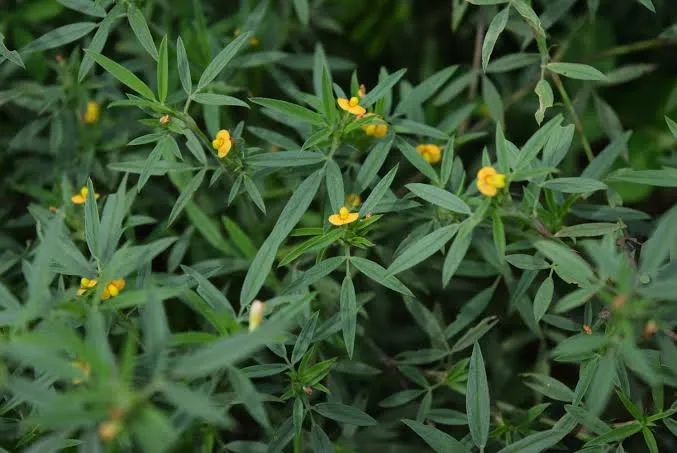
Figure 1: Stylosanthes hamata
AIM AND OBJECTIVES
AIM
To carry out the pharmacognostic and phytochemical investigation of the aerial parts of Stylosanthes hamata, evaluate its in-vitro Antioxidant activity.
OBJECTIVES
MATERIALS AND METHODS
COLLECTION AND AUTHENTICATION OF PLANT MATERIALS
The aerial parts of the Stylosanthes hamata were collected from Madayipara, Payangadi, Kannur, Kerala and further authentication was conducted.
PHARMACOGNOSTIC STUDY
1. MACROSCOPIC AND ORGANOLEPTIC EVALUATION
Morphological evaluation of Stylosanthes hamata such as color, Odor, taste, size, and shape was recorded as per observation. (9)
2. TRANSVERSE SECTION OF STEM
Thin transverse sections of fresh Stylosanthes hamata stem were prepared using a sharp razor. The sections were stained separately with phloroglucinol–concentrated HCl, washed, mounted in glycerin and covered with coverslips. The slides were observed under a microscope to study the stem anatomy. (10)
3. TRANSVERSE SECTION OF LEAF
A fresh leaf of Stylosanthes hamata was washed, supported using a potato piece, and thin transverse sections were prepared with a sharp blade. The sections were stained with safranin, washed, mounted in glycerin and covered with coverslips for microscopic examination. (11)
4. POWDER MICROSCOPY
A small quantity of Stylosanthes hamata powder was treated with phloroglucinol followed by concentrated HCl. After color development, the preparation was covered with a coverslip and observed microscopically to identify lignified elements. (10)
5. QUANTITATIVE MICROSCOPY
Determination of Stomatal Number
The dried epidermal peel was mounted on a clean glass slide with glycerin and covered with a coverslip. The stomata within a microscopic field were counted, and observations from different fields were recorded to determine the average stomatal number.
Determination of Stomatal Index
A thin epidermal peel of a fresh Stylosanthes hamata leaf was stained, mounted in glycerin and observed under a microscope. The number of stomata and epidermal cells in a selected field was counted, and the stomatal index was calculated using the following formula:
Stomatal Index (SI) = [S / (E + S)] × 100
Where: S = Number of stomata E = Number of epidermal cells (10)(12)(13)
PHYSICOCHEMICAL EVALUATION
Physicochemical evaluation of powdered Stylosanthes hamata was performed to determine moisture content, extractive values, ash values and swelling index. (16)(17)
MOISTURE CONTENT
About 5 g of powdered plant material was dried in a hot-air oven at 105°C until a constant weight was obtained. The percentage moisture content was calculated from the loss in weight.
EXTRACTIVE VALUE
I. ALCOHOL-SOLUBLE EXTRACTIVE VALUE
About 2 g of powdered material was macerated with 25 mL of alcohol for 24 hours. The filtrate was evaporated, dried at 105°C, cooled and weighed to determine the percentage extractive value.
II. WATER-SOLUBLE EXTRACTIVE VALUE
About 2 g of powdered material was macerated with 25 mL of distilled water for 24 hours. The filtrate was evaporated to dryness, and the residue was weighed to calculate the percentage extractive value.
ASH VALUE
I. TOTAL ASH
About 5 g of powdered material was incinerated in a silica crucible at approximately 450°C until a carbon-free residue was obtained. The ash was cooled and weighed.
II. ACID-INSOLUBLE ASH
The total ash was mixed with dilute hydrochloric acid, filtered and washed. The residue was ignited, cooled and weighed.
III. WATER-SOLUBLE ASH
The total ash was mixed with distilled water and filtered. The insoluble residue was ignited and weighed. The difference from total ash represented water-soluble ash.
SWELLING INDEX
About 2 g of powdered material was mixed with 20 mL of distilled water in a graduated cylinder and allowed to stand for 24 hours with intermittent shaking. The final swollen volume was recorded to determine the swelling index.
PESTICIDE RESIDUE ANALYSIS
The collected aerial parts of Stylosanthes hamata were packed securely and submitted to the Institute of Pesticide Formulation Technology (IPFT), Gurugram, Haryana, for pesticide residue analysis. The sample was analyzed using GC-MS and LC-MS methods according to IPFT/STP/01, and the detected pesticide residues were quantified and expressed in mg/kg. (18)(19)
EXTRACTION
The powdered aerial parts of Stylosanthes hamata were macerated with a hydroalcoholic solvent (alcohol: water, 70:30) for 24 hours in a closed container with frequent agitation. The mixture was strained and filtered, and the marc was pressed to recover the remaining extract. The filtrate was then concentrated and stored for further phytochemical and biological studies. (14)
PHYTOCHEMICAL SCREENING
Phytochemical screening of the hydroalcoholic extract of Stylosanthes hamata was performed using standard qualitative chemical tests to identify the presence of major secondary metabolites, including alkaloids, flavonoids, phenols, tannins, saponins and glycosides etc. (15)
ANTIOXIDANT ASSAY
DPPH FREE RADICAL SCAVENGING ASSAY
A 0.1 mM DPPH solution was prepared in methanol. Different concentrations of the hydroalcoholic extract (10–100 µg/mL) and ascorbic acid standard were prepared. Equal volumes of the sample and DPPH solution were mixed and incubated in the dark for 30 minutes at room temperature. Absorbance was measured at 515–517 nm using a UV–Visible spectrophotometer. Methanol was used as the blank. (9)(10)
Calculation:
Percentage inhibition was calculated using:
DPPH scavenging activity (%) = [(Ac − As) / Ac] × 100
Where: Ac = Absorbance of control As = Absorbance of sample
RESULTS AND DISCUSSION
ORGANOLEPTIC CHARECTERISTICS
The fresh plant material was green, while the dried material appeared greenish-brown. It exhibited a characteristic, slightly herbaceous odor and a slightly bitter taste. The stem was slender, branched and elongated, with variable size, a smooth to slightly rough surface, fine hairs and a fibrous, slightly coarse texture.
T.S OF STEM
The transverse section of Stylosanthes hamata revealed the following anatomical features:
1. Epidermis: Outermost protective layer of the stem.
2. Cortex: Parenchymatous region beneath the epidermis, mainly involved in storage.
3. Phloem: Vascular tissue responsible for the transport of prepared food.
4. Secondary Xylem: Well-developed vascular tissue responsible for water conduction and mechanical support.
5. Xylem Vessels: Tubular elements involved in the upward transport of water and minerals.
6. Medullary Rays: Radially arranged parenchymatous cells involved in lateral transport and storage.
7. Pith: Central region composed mainly of parenchymatous cells, functioning in storage.
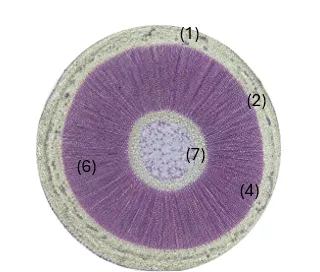
Figure 2: T. S. of stem of Stylosanthes hamata
(6)
T.S. OF LEAF
The transverse section of Stylosanthes hamata leaf showed the following anatomical features:
1. Upper Epidermis: Outermost protective layer of the leaf.
2. Lower Epidermis: Protective lower layer containing stomata.
3. Upper Palisade: Elongated, chloroplast-rich cells involved in photosynthesis.
4. Lower Palisade: Chloroplast-containing cells present beneath the upper palisade region.
5. Spongy Parenchyma: Loosely arranged cells with intercellular spaces for gaseous exchange.
6. Mesophyll: Internal tissue consisting of palisade and spongy tissues.
7. Midrib Region: Central region providing support and containing vascular tissues.
8. Vascular Bundle: Composed of xylem and phloem for transport of water and food.
9. Collenchyma: Supporting tissue providing strength and flexibility to the leaf.
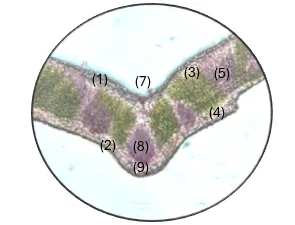
Figure 3: T.S. of leaf of Stylosanthes hamata
(1)
POWDER MICROSCOPY
Powder microscopy of Stylosanthes hamata revealed the following diagnostic characters:
1. Lignified Fibers: Long, elongated fragments with thick, lignified cell walls.
2. Trichomes: Simple, uniseriate, non-glandular covering hairs.
3. Parenchymatous Cells: Thin-walled, polygonal to irregularly arranged cells.
4. Vessel Elements: Thick-walled vascular elements involved in water conduction.
5. Epidermal Fragments: Fragments of epidermal tissue with closely arranged cells.
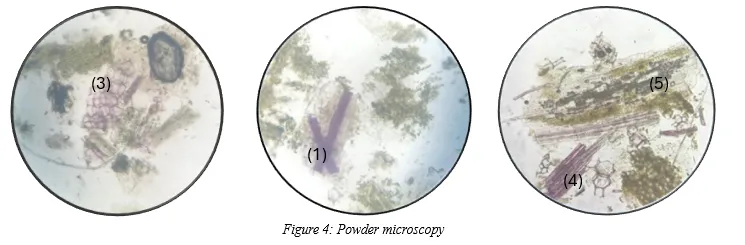
Figure 4: Powder microscopy
(3)
QUANTITATIVE MICROSCOPY
Table 1: Quantitative microscopy of Stylosanthes hamata
| SL. NO. | QUANTITATIVE MICROSCOPIC PARAMETER | RESULT |
|---|---|---|
| 1 | Stomatal number | 48 |
| 2 | Stomatal index (%) | 33.33% |
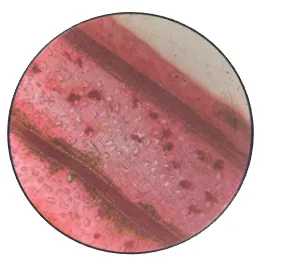
Figure 5: Stomata present Stylosanthes hamata
PHYSICOCHEMICAL EVALUATION
Table 2: Physicochemical evaluation of Stylosanthes hamata
| SL.NO | PHYSICOCHEMICAL PARAMETER | RESULT | |
|---|---|---|---|
| 1` | Moisture content | 14.4% w/w | |
| 2 | Swelling index | 6ml | |
| 3 | Extractive value | Alcohol soluble extractive value | 6% w/w |
| Water soluble extractive value | 60.5% w/w | ||
| 4 | Ash value | Total ash | 22.5% w/w |
| Acid-insoluble ash | 25% w/w | ||
| Water soluble ash | 20% w/w | ||
PESTICIDE RESIDUE ANALYSIS
Table 3: Pesticide residue analysis of Stylosanthes hamata
| SL.NO | PESTICIDE | SAMPLE (mg/Kg) | STANDARD MRL (mg/Kg) | COMPARISON |
|---|---|---|---|---|
| 1 | Acetamiprid | 0.1146 | 0.20 | Below MRL |
| 2 | Fluxapyroxad | 0.0700 | 0.40 | Below MRL |
| 3 | Tebuconazole | 0.1420 | 0.20 | Below MRL |
Pesticide residue analysis of the aerial parts of Stylosanthes hamata was performed using GC-MS and LC-MS techniques to assess the presence of pesticide contaminants in the plant material. The analysis detected three pesticide residues: acetamiprid (0.1146 mg/kg), fluxapyroxad (0.0700 mg/kg) and tebuconazole (0.1420 mg/kg). Acetamiprid, a neonicotinoid insecticide, was detected at 0.1146 mg/kg against an MRL of 0.20 mg/kg. Fluxapyroxad, a succinate dehydrogenase inhibitor (SDHI) fungicide, was present at 0.0700 mg/kg compared with an MRL of 0.40 mg/kg. Tebuconazole, a triazole fungicide, was detected at 0.1420 mg/kg against an MRL of 0.20 mg/kg. All three residues were found below their respective MRL values.
The presence of these pesticides is relevant to the phytochemical and biological evaluation of the plant. Acetamiprid acts on insect nicotinic acetylcholine receptors, while fluxapyroxad inhibits mitochondrial succinate dehydrogenase, interfering with fungal energy production. Tebuconazole inhibits fungal ergosterol biosynthesis by targeting the CYP51 enzyme. These compounds have different biological targets and activities from the plant-derived phytoconstituents investigated in this study.
PHYTOCHEMICAL SCREENING
Table 4: Phytochemical screening of hydroalcoholic extract of Stylosanthes hamata
| SL. NO. | PHYTOCHEMICAL CONSTITUENTS | RESULT |
|---|---|---|
| 1 | Carbohydrates | + |
| 2 | Alkaloids | + |
| 3 | Glycosides | + |
| 4 | Flavonoids | + |
| 5 | Terpenoids | + |
| 6 | Tannins | + |
| 7 | Proteins and amino acids | + |
| 8 | Phytosterols | + |
| 9 | Saponins | − |
ANTI-OXIDANT ASSAY
DPPH FREE RADICAL SCAVENGING ASSAY
Table 5: Antioxidant assay of hydroalcoholic extract of Stylosanthes hamata
| SL.NO. | CONCENTRATION (µg/ml) | % SCAVENGING OF SAMPLE | % SCAVENGING OF STANDARD |
|---|---|---|---|
| 1 | 20 | 24.64% | 74.21% |
| 2 | 40 | 28.65% | 76.36% |
| 3 | 60 | 34.67% | 77.79% |
| 4 | 80 | 41.98% | 81.66% |
| 5 | 100 | 43.55% | 83.95% |
The antioxidant activity of the hydroalcoholic extract of Stylosanthes hamata was evaluated using the DPPH (2,2-diphenyl-1-picrylhydrazyl) free radical scavenging assay. This method is based on the ability of antioxidant compounds to donate hydrogen atoms or electrons to stable DPPH radicals, resulting in a reduction of the purple-coloured DPPH solution and a corresponding decrease in absorbance.
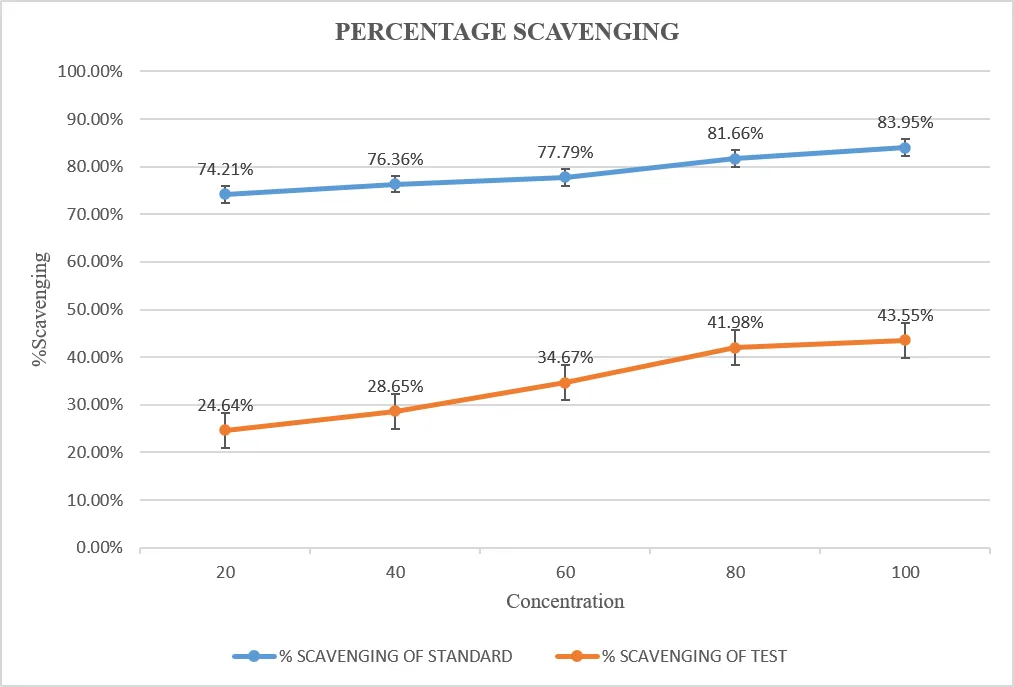
Figure 6: %Scavenging of DPPH Antioxidant assay
The results demonstrated a concentration-dependent increase in the free radical scavenging activity of the plant extract. At a concentration of 20 µg/mL, the extract exhibited 24.64% scavenging activity. This increased progressively to 28.65% at 40 µg/mL, 34.67% at 60 µg/mL, 41.98% at 80 µg/mL and reached a maximum of 43.55% at 100 µg/mL. This progressive increase indicates that the radical scavenging capacity of the extract improved with increasing concentration.
The increase in antioxidant activity may be attributed to the presence of phytochemical constituents, particularly flavonoids and tannins, identified during the preliminary phytochemical screening. These compounds are known for their ability to participate in free radical neutralization through hydrogen atom donation and electron transfer mechanisms. Phenolic compounds can also contribute to antioxidant activity by stabilizing free radicals through resonance.
CONCLUSION
The present study was carried out to investigate the pharmacognostic, physicochemical and phytochemical characteristics of the aerial parts of Stylosanthes hamata and to evaluate its in-vitro antioxidant activity. The pharmacognostic evaluation revealed characteristic macroscopic, microscopic and powder microscopic features that can be used for the identification and authentication of the plant. Physicochemical evaluation provided important quality-control parameters, while preliminary phytochemical screening confirmed the presence of carbohydrates, alkaloids, glycosides, flavonoids, terpenoids, tannins, proteins, amino acids and phytosterols.
Pesticide residue analysis was performed using GC-MS and LC-MS methods. The analysis detected acetamiprid (0.1146 mg/kg), fluxapyroxad (0.0700 mg/kg) and tebuconazole (0.1420 mg/kg). All three detected pesticide residues were below their respective maximum residue limits (MRL), indicating compliance with the specified limits for these residues.
The DPPH free radical scavenging assay demonstrated concentration-dependent antioxidant activity of the hydroalcoholic extract, with percentage scavenging increasing from 24.64% at 20 µg/mL to 43.55% at 100 µg/mL. However, the standard showed comparatively higher antioxidant activity, ranging from 74.21% to 83.95%.
Overall, the findings suggest that Stylosanthes hamata contains various phytoconstituents and possesses promising antioxidant potential. The study provides useful preliminary information regarding its pharmacognostic standardization, physicochemical properties, phytochemical composition and pesticide residue profile. Further investigations, including isolation of active constituents and advanced pharmacological studies, are recommended to establish its therapeutic potential and support its future development as a herbal medicinal resource.
REFERENCES


Dhanya Rajan E. P., Pavithra T. R., Fathima Shamsudeen, Fathima Salam, Jishnu T. S., Rohna Saseendran, Muhamed Uvais, Systematic Pharmacognostic Evaluation and Phytochemical Profiling of Stylosanthes Hamata with the Assessment of In-Vitro Antioxidant Activity, Int. J. of Pharm. Sci., 2026, Vol 4, Issue 11, 3750-3759. https://doi.org/10.5281/zenodo.24413965
 10.5281/zenodo.24413965