

We use cookies to ensure our website works properly and to personalise your experience. Cookies policy
Department of Industrial Pharmacy, Shri Sant Gajanan Maharaj College of Pharmacy (SSGMCOP), Buldhana, Maharashtra, India
Ethosomes, novel lipid based nanocarriers enriched with ethanol, have emerged as a promising advancement in dermal and transdermal drug delivery systems. Their unique composition, typically comprising phospholipids, ethanol, and water, imparts exceptional flexibility to vesicular membranes, enabling enhanced penetration through the stratum corneum and deeper skin layers. This property distinguishes ethosomes from conventional liposomes and other vesicular carriers, which often face limitations in delivering hydrophilic and lipophilic drugs across biological barriers. Over the past two decades, extensive research has highlighted the versatility of ethosomes in encapsulating a wide range of therapeutic agents, including synthetic drugs, phytoconstituents, peptides, and antifungal or antibacterial compounds. Their ability to improve bioavailability, sustain drug release, and reduce systemic side effects has positioned ethosomes as a valuable platform for topical and systemic therapy. The review consolidates current knowledge on ethosomal systems, focusing on their composition, preparation techniques, characterization methods, and mechanisms of skin penetration. Various preparation approaches, such as thin film hydration, cold method, and sonication, have been optimized to yield stable vesicles with high entrapment efficiency. Characterization parameters including particle size, zeta potential, entrapment efficiency, drug release kinetics, and stability studies are critical in determining the performance of ethosomal formulations. Mechanistically, ethanol disrupts lipid bilayers of the stratum corneum, while phospholipids enhance fluidity, collectively facilitating deeper drug permeation. This synergistic effect underscores the superiority of ethosomes over conventional carriers. Clinical and preclinical studies have demonstrated the therapeutic potential of ethosomes in diverse applications, ranging from anti inflammatory and antifungal treatments to cosmetic formulations and transdermal delivery of hormones or vaccines. Ethosomes have shown promise in improving patient compliance by offering non invasive, sustained, and targeted drug delivery. Furthermore, the incorporation of herbal extracts into ethosomal gels has opened new avenues for integrating traditional medicine with modern nanotechnology. Despite these advantages, challenges such as large scale production, long term stability, and regulatory standardization remain significant hurdles for commercial translation. Future perspectives emphasize the need for advanced characterization techniques, in vivo pharmacokinetic studies, and clinical trials to establish ethosomes as reliable drug delivery systems. In conclusion, ethosomes represent a revolutionary approach in nanocarrier technology, bridging the gap between conventional topical formulations and advanced transdermal systems. Their unique physicochemical properties, coupled with broad therapeutic applicability, make them a subject of growing interest in pharmaceutical research. This review provides a comprehensive overview of ethosomal systems, highlighting their potential to transform drug delivery practices and encouraging further exploration into their clinical utility.
The field of drug delivery has witnessed remarkable advancements over the past few decades, with nanotechnology playing a pivotal role in overcoming the limitations of conventional formulations. Among the various vesicular carriers developed, ethosomes have emerged as a novel and highly effective system for dermal and transdermal drug delivery (1, 2). Ethosomes are soft, malleable lipid vesicles composed primarily of phospholipids, ethanol, and water. Their distinctive feature lies in the high ethanol content, which imparts flexibility to the vesicular membrane and enhances penetration through the stratum corneum, the primary barrier of the skin (3, 4). This unique property distinguishes ethosomes from traditional liposomes and other nanocarriers, which often struggle to deliver drugs effectively across biological membranes. The development of ethosomes represents a significant step forward in pharmaceutical nanotechnology, offering a versatile platform for the delivery of both hydrophilic and lipophilic drugs (5, 6).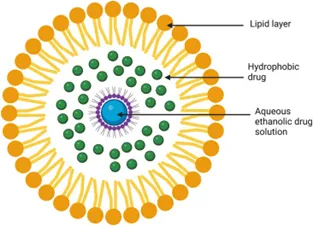
Figure 1: Ethosomes
The skin, being the largest organ of the human body, provides an attractive route for drug administration due to its accessibility, large surface area, and potential for localized as well as systemic therapy. However, the stratum corneum poses a formidable barrier, restricting the permeation of most therapeutic agents (7). Conventional topical formulations such as creams, gels, and ointments often fail to achieve adequate drug penetration, leading to suboptimal therapeutic outcomes. Ethosomes, with their ethanol‑rich composition, disrupt the lipid organization of the stratum corneum and facilitate deeper drug permeation (8, 9). This mechanism not only enhances drug bioavailability but also allows for sustained release, reduced dosing frequency, and improved patient compliance. Consequently, ethosomes have attracted considerable attention for their potential in treating a wide range of conditions, including infections, inflammation, pain management, and dermatological disorders (10).
The versatility of ethosomes extends beyond synthetic drugs to encompass natural bioactives and phytoconstituents. Herbal extracts, antioxidants, and anti‑inflammatory agents have been successfully incorporated into ethosomal systems, thereby bridging traditional medicine with modern nanotechnology (11). This integration has opened new avenues for the development of safer, more effective, and patient‑friendly formulations. Furthermore, ethosomes have demonstrated potential in cosmetic applications, such as anti‑aging and skin‑brightening products, highlighting their relevance not only in therapeutic but also in commercial domains. Their ability to encapsulate diverse molecules, maintain stability, and provide controlled release underscores their superiority over conventional carriers (12, 13).
Despite these advantages, several challenges hinder the widespread adoption of ethosomes. Issues related to large‑scale production, long‑term stability, and regulatory approval remain critical barriers to commercialization. Moreover, the variability in preparation methods and characterization techniques necessitates standardization to ensure reproducibility and quality control (14). Addressing these challenges requires collaborative efforts between researchers, industry stakeholders, and regulatory authorities. Future research must focus on advanced characterization, in vivo pharmacokinetic studies, and clinical trials to establish ethosomes as reliable and safe drug delivery systems (15, 16).
In summary, ethosomes represent a groundbreaking innovation in nanocarrier technology, offering enhanced penetration, improved bioavailability, and broad therapeutic applicability. Their unique physicochemical properties and ability to deliver a wide spectrum of drugs position them as a promising solution to the limitations of conventional topical and transdermal formulations. This review aims to provide a comprehensive overview of ethosomal systems, encompassing their composition, preparation, characterization, mechanism of action, therapeutic applications, and future prospects, thereby highlighting their potential to revolutionize drug delivery practices.
2. METHOD OF PREPARATION OF ETHOSOMES
The preparation of ethosomes has been extensively studied and optimized to yield stable, flexible vesicles with high entrapment efficiency and reproducible characteristics. Ethosomes are typically composed of phospholipids, ethanol, and water, with optional additives such as cholesterol, surfactants, or stabilizers depending on the formulation requirements. The method of preparation plays a crucial role in determining the physicochemical properties of ethosomes, including particle size, zeta potential, entrapment efficiency, drug release profile, and stability (17-19). Several techniques have been reported in the literature, each with distinct advantages and limitations. The most widely employed methods include the cold method, hot method, thin‑film hydration method, and sonication or extrusion techniques. In addition, novel approaches such as microfluidization, reverse phase evaporation, and ethanol injection have also been explored to improve scalability and reproducibility. A detailed description of these methods is provided below.
The cold method is the most commonly used and widely accepted technique for ethosome preparation. In this method, phospholipids and the drug are dissolved in ethanol under continuous stirring at room temperature. The aqueous phase, usually distilled water or buffer, is added gradually in a fine stream while maintaining constant stirring. The addition of water leads to the spontaneous formation of ethosomal vesicles due to the self‑assembly of phospholipids in the presence of ethanol. The resulting dispersion is homogenized to reduce particle size and improve uniformity. This method is advantageous because it avoids the use of high temperatures, thereby preserving the stability of thermolabile drugs and bioactives. Moreover, the cold method is simple, reproducible, and suitable for both hydrophilic and lipophilic drugs. However, the ethanol concentration must be carefully optimized, as excessive ethanol can destabilize vesicles, while insufficient ethanol may reduce penetration efficiency.
The hot method involves dissolving phospholipids in ethanol at elevated temperatures, typically between 40–60 °C, followed by the addition of the aqueous phase preheated to the same temperature. The mixture is stirred continuously until vesicles are formed. This method is particularly useful for drugs that require solubilization at higher temperatures or for formulations where ethanol concentration needs to be reduced. The hot method can improve entrapment efficiency for certain lipophilic drugs, but it may not be suitable for thermolabile compounds due to the risk of degradation. Additionally, the requirement of controlled heating makes the process more complex compared to the cold method.
The thin‑film hydration method, adapted from conventional liposome preparation, has also been employed for ethosomes. In this technique, phospholipids and the drug are dissolved in organic solvents such as chloroform or methanol, which are then evaporated under reduced pressure to form a thin lipid film on the walls of a round‑bottom flask. Ethanol is added to dissolve the lipid film, followed by hydration with the aqueous phase under continuous stirring. The resulting ethosomal suspension is subjected to sonication or extrusion to reduce particle size and achieve uniform distribution. This method allows precise control over vesicle composition and size, but the use of organic solvents necessitates careful removal to avoid toxicity. Furthermore, the process is relatively time‑consuming and requires specialized equipment.
Sonication and extrusion techniques are often employed as post‑processing steps to refine ethosomal dispersions prepared by the cold or hot methods. Sonication involves applying ultrasonic energy to break down larger vesicles into smaller, more uniform particles. Extrusion, on the other hand, forces the ethosomal suspension through polycarbonate membranes of defined pore sizes, thereby producing vesicles with controlled diameters. These techniques enhance homogeneity, reduce polydispersity, and improve stability. However, prolonged sonication may lead to drug leakage or degradation, while extrusion requires specialized equipment and may not be feasible for large‑scale production.
In addition to these conventional methods, several novel approaches have been explored to improve ethosome preparation. The ethanol injection method involves injecting an ethanolic solution of phospholipids and drug into an aqueous phase under constant stirring, leading to the spontaneous formation of ethosomes. This method is rapid and avoids the use of organic solvents, but requires precise control of injection rate and mixing conditions.
The reverse phase evaporation method involves creating a water‑in‑oil emulsion of phospholipids in organic solvents, followed by removal of solvents under reduced pressure to yield ethosomes. Although this method can achieve high entrapment efficiency, it is complex and less suitable for industrial scaling.
Microfluidization, a high‑pressure homogenization technique, has also been applied to ethosome preparation, producing vesicles with narrow size distribution and excellent reproducibility. This method is particularly promising for large‑scale production, though it requires sophisticated equipment and optimization of process parameters.
Regardless of the method employed, several critical factors influence the quality of ethosomes. The phospholipid concentration determines vesicle stability and entrapment efficiency, while the ethanol content governs membrane fluidity and penetration ability. The aqueous phase composition can affect vesicle size and drug release profile. The choice of method must therefore be tailored to the physicochemical properties of the drug, desired therapeutic application, and scalability requirements. For instance, the cold method may be preferred for heat‑sensitive drugs, while microfluidization may be more suitable for industrial production. Post‑preparation characterization, including particle size analysis, zeta potential measurement, entrapment efficiency determination, and stability studies, is essential to ensure the reproducibility and efficacy of ethosomal formulations.
3. EVALUATION OF ETHOSOMES
The evaluation of ethosomes is a critical step in establishing their suitability as drug delivery systems. Since ethosomes are complex nanocarriers composed of phospholipids, ethanol, and water, their performance depends on multiple physicochemical and biological parameters (20, 21). A thorough evaluation ensures reproducibility, stability, therapeutic efficacy, and regulatory compliance. The process encompasses characterization of vesicular properties, assessment of drug entrapment and release, stability studies, skin permeation analysis, and biological performance. Each parameter provides insights into the structural integrity, functional efficiency, and clinical potential of ethosomal formulations. This section provides a detailed discussion of the various evaluation techniques employed for Ethosomes (22, 23).
The particle size and polydispersity index (PDI) are fundamental parameters that influence ethosome behavior. Particle size determines the penetration ability of vesicles through the stratum corneum, while PDI reflects the uniformity of size distribution. Dynamic light scattering (DLS) is the most widely used technique for measuring particle size and PDI, offering rapid and accurate results. Ethosomes typically range between 100–400 nm, with smaller vesicles exhibiting superior penetration. A narrow PDI (<0.3) indicates homogeneity, which is essential for reproducibility and stability. Transmission electron microscopy (TEM) and scanning electron microscopy (SEM) provide morphological insights, confirming vesicle shape, lamellarity, and surface characteristics. Cryo‑TEM further allows visualization of ethosomes in hydrated states, preserving their native structure.
Zeta potential measurement is another crucial evaluation parameter, reflecting the surface charge of ethosomes. It provides information about colloidal stability, as higher absolute zeta potential values prevent aggregation through electrostatic repulsion. Ethosomes generally exhibit negative zeta potential due to the presence of ethanol and phospholipids. Stable formulations typically show values beyond ±30 mV, ensuring long‑term dispersion stability. Zeta potential also influences skin interaction, as charged vesicles interact differently with the lipid bilayers of the stratum corneum.
The entrapment efficiency (EE%) of ethosomes determines the proportion of drug successfully encapsulated within vesicles. High entrapment efficiency is desirable to maximize therapeutic potential and minimize wastage. EE% is commonly measured by ultracentrifugation or dialysis methods, followed by drug quantification using UV‑spectroscopy, HPLC, or LC‑MS techniques. Factors such as phospholipid concentration, ethanol content, and drug solubility significantly affect entrapment efficiency. Lipophilic drugs generally exhibit higher EE% due to their affinity for phospholipid bilayers, whereas hydrophilic drugs may require optimization of formulation parameters.
Drug release studies provide insights into the kinetics and mechanism of drug delivery from ethosomes. In vitro release is typically assessed using dialysis bags, Franz diffusion cells, or synthetic membranes. The release profile is analyzed using mathematical models such as zero‑order, first‑order, Higuchi, or Korsmeyer‑Peppas equations to determine the mechanism of release. Ethosomes often exhibit sustained release due to their bilayer structure, which controls drug diffusion. Controlled release enhances therapeutic efficacy, reduces dosing frequency, and improves patient compliance. Comparative studies with conventional formulations highlight the superiority of ethosomes in maintaining prolonged drug release.
Skin permeation and deposition studies are central to ethosome evaluation, as their primary advantage lies in enhanced dermal and transdermal delivery. Franz diffusion cells using excised animal or human skin are widely employed to assess permeation. Parameters such as flux, permeability coefficient, and drug deposition in different skin layers are measured. Ethosomes typically demonstrate higher permeation compared to liposomes or conventional gels, attributed to ethanol‑induced lipid disruption and vesicle deformability. Confocal laser scanning microscopy (CLSM) and fluorescence microscopy further confirm the depth of penetration and localization of ethosomes within skin layers. These studies validate the clinical potential of ethosomes in delivering drugs across the skin barrier.
Stability studies are essential to ensure the long‑term viability of ethosomal formulations. Stability is assessed under different storage conditions of temperature, humidity, and light exposure. Parameters such as particle size, zeta potential, entrapment efficiency, and drug content are monitored over time. Ethosomes may undergo aggregation, leakage, or degradation if not properly stabilized. The inclusion of cholesterol or antioxidants can enhance stability by reinforcing bilayer rigidity and preventing oxidative damage. Accelerated stability testing following ICH guidelines provides predictive data for shelf life estimation, which is critical for regulatory approval and commercialization.
Viscosity and rheological behavior are evaluated when ethosomes are incorporated into gel matrices for topical application. Rheological studies determine the spreadability, consistency, and patient acceptability of ethosomal gels. Instruments such as Brookfield viscometers or rheometers are used to measure viscosity and flow behavior. Optimal viscosity ensures prolonged contact with the application site, enhancing drug retention and therapeutic efficacy. Spreadability tests further assess ease of application, which is important for patient compliance.
Mucoadhesion studies are relevant when ethosomes are designed for mucosal delivery, such as buccal, nasal, or vaginal applications. Mucoadhesion is assessed using texture analyzers or modified balance methods, measuring the force required to detach ethosomal formulations from mucosal tissues. Strong mucoadhesion ensures prolonged residence time, improved drug absorption, and enhanced therapeutic outcomes.
In vivo pharmacokinetic and pharmacodynamic studies provide critical data on the biological performance of ethosomes. Animal models are employed to evaluate drug absorption, distribution, metabolism, and excretion following ethosomal administration. Pharmacodynamic studies assess therapeutic efficacy, such as anti‑inflammatory, antifungal, or analgesic effects. These studies confirm the translational potential of ethosomes from laboratory research to clinical application. Comparative in vivo studies with conventional formulations consistently demonstrate superior performance of ethosomes in terms of bioavailability and therapeutic outcomes (24, 25).
Toxicity and safety evaluation are indispensable to ensure patient safety. Cytotoxicity assays such as MTT or LDH release tests are conducted on cell lines to assess biocompatibility (26). Hemolysis studies evaluate the interaction of ethosomes with red blood cells, while skin irritation tests confirm their safety for topical application. Ethosomes generally exhibit low toxicity due to their biocompatible components, but ethanol concentration must be optimized to avoid irritation. Regulatory approval requires comprehensive safety data, including acute and chronic toxicity studies.
In addition to these conventional evaluations, advanced techniques such as differential scanning calorimetry (DSC), Fourier transform infrared spectroscopy (FTIR), and X‑ray diffraction (XRD) are employed to study the structural organization of ethosomes. DSC provides insights into phase transition behavior, FTIR confirms chemical interactions between drug and excipients, while XRD reveals crystallinity changes upon encapsulation. These techniques enhance understanding of ethosome architecture and drug‑excipient compatibility.
4. FUTURE SCOPE
The future scope of ethosomal research is vast and multifaceted, reflecting the growing interest in nanotechnology‑based drug delivery systems and the urgent need for innovative solutions to overcome the limitations of conventional formulations. Ethosomes, with their unique ethanol‑rich composition and flexible vesicular structure, have already demonstrated significant potential in enhancing dermal and transdermal drug delivery, yet their full clinical and commercial impact remains to be realized. Future investigations must focus on addressing the challenges of large‑scale production, reproducibility, and long‑term stability, as these factors are critical for regulatory approval and industrial translation. Advanced manufacturing techniques such as microfluidization, high‑pressure homogenization, and continuous flow processes could be optimized to produce ethosomes with consistent quality and narrow size distribution, thereby facilitating scalability. Moreover, the integration of ethosomes with emerging technologies such as 3D printing, smart drug delivery devices, and personalized medicine platforms offers exciting opportunities to tailor formulations according to individual patient needs, disease profiles, and therapeutic goals. Another promising direction lies in the incorporation of novel biomaterials, including biodegradable polymers, stimuli‑responsive excipients, and natural stabilizers, which could enhance ethosome stability, control drug release, and minimize adverse effects. The exploration of ethosomes for gene delivery, vaccine administration, and peptide transport represents a frontier area, as their ability to penetrate biological barriers could be harnessed to deliver macromolecules that are otherwise challenging to administer. In addition, the combination of ethosomes with herbal extracts and phytoconstituents aligns with the global trend of integrating traditional medicine with modern nanotechnology, potentially leading to safer, more effective, and culturally acceptable therapeutic options. Clinical trials must be expanded to validate the efficacy, safety, and patient compliance of ethosomal formulations across diverse therapeutic areas, including dermatology, oncology, endocrinology, and infectious diseases. Regulatory frameworks should evolve to accommodate nanocarrier‑based systems, ensuring standardized evaluation protocols, quality control measures, and safety assessments. Collaborative efforts between academia, industry, and healthcare institutions will be essential to accelerate the translation of ethosomes from laboratory research to clinical practice. Furthermore, the cosmetic and nutraceutical industries present lucrative avenues for ethosome application, with potential products ranging from anti‑aging creams and skin‑brightening gels to transdermal supplements and wellness formulations. The incorporation of ethosomes into multifunctional delivery systems, capable of co‑delivering multiple drugs or combining therapeutic and diagnostic functions (theranostics), could revolutionize patient care by offering integrated solutions. Future research should also explore the environmental impact and sustainability of ethosome production, ensuring that green chemistry principles and eco‑friendly processes are adopted to minimize waste and energy consumption.
5. CONCLUSION
Ethosomes represent a groundbreaking innovation in pharmaceutical nanotechnology, bridging the gap between conventional topical formulations and advanced transdermal systems. Their unique physicochemical properties, including enhanced penetration, high entrapment efficiency, and sustained release, position them as superior carriers for a wide range of therapeutic agents. The versatility of ethosomes in encapsulating synthetic drugs, herbal extracts, peptides, and macromolecules underscores their broad applicability across medical, cosmetic, and nutraceutical domains. Despite challenges related to scalability, stability, and regulatory approval, the future of ethosomes is promising, with ongoing research paving the way for clinical translation and commercial success. The integration of ethosomes with advanced technologies, personalized medicine, and sustainable practices will further enhance their relevance in modern healthcare. Ultimately, ethosomes have the potential to transform drug delivery practices, improve patient compliance, and contribute to the development of safer, more effective, and innovative therapeutic solutions. This review highlights the importance of continued exploration and refinement of ethosomal systems, encouraging researchers, clinicians, and industry stakeholders to harness their potential and shape the future of drug delivery.
6. CONFLICT OF INTEREST
None
REFERENCES

Gopal Gore, Sharad Tayde, Vijay Borkar, A Comprehensive Review on the Ethosomes, Int. J. of Pharm. Sci., 2026, Vol 4, Issue 5, 7523-7532. https://doi.org/10.5281/zenodo.20422855
 10.5281/zenodo.20422855