

We use cookies to ensure our website works properly and to personalise your experience. Cookies policy
Anand Charitable Sanstha’s, College of Pharmaceutical Science and Research Ashti (D, B & M Pharm), Gangainagar, Murshadpur, Ashti, Tal. Ashti, Dist. Beed, Maharashtra 414203
The present study aimed to investigate the phytochemical profile and wound healing potential of Nerium oleander leaf extract through the development of a topical herbal cream formulation. Leaves of Nerium oleander were collected, authenticated, and subjected to physicochemical evaluation and Soxhlet extraction using different solvents. Preliminary phytochemical screening revealed the presence of alkaloids, flavonoids, tannins, glycosides, saponins, terpenoids, and phenolic compounds, with the ethanolic extract exhibiting the highest phytochemical content and extraction yield (19%). The ethanolic extract was incorporated into an oil-in-water (O/W) cream base, and seven formulations (F1–F7) were developed and evaluated for physicochemical characteristics. Among the formulations, F7 showed optimum pH (6.12 ± 0.04), good spreadability, suitable viscosity, excellent homogeneity, easy washability, and superior stability. Acute dermal toxicity studies confirmed the safety of the optimized formulation with no signs of irritation or toxicity. The wound healing activity was evaluated using the excision wound model in Wistar rats. The optimized formulation (F7, 5% w/w) demonstrated significant wound contraction (98.5 ± 1.2% on day 16) and a shorter epithelialization period (14.6 ± 0.7 days) compared to the control group. The results indicate that Nerium oleander cream possesses promising wound healing activity, which may be attributed to the presence of bioactive phytoconstituents with antioxidant, antimicrobial, and anti-inflammatory properties. The developed herbal cream may serve as a safe and effective topical formulation for wound management
Wound healing is a complex and dynamic biological process involving a series of coordinated events, including hemostasis, inflammation, proliferation, and tissue remodeling. The successful healing of wounds is essential for restoring the structural and functional integrity of damaged tissues.1-3 However, delayed wound healing remains a significant clinical challenge due to factors such as microbial infection, oxidative stress, inflammation, diabetes, and poor vascularization. Conventional wound management approaches, including topical antibiotics and synthetic wound healing agents, are often associated with adverse effects, microbial resistance, high treatment costs, and limited long-term effectiveness. Consequently, there is growing interest in the development of safer, cost-effective, and plant-based alternatives for wound care.4-5
Medicinal plants have been widely used in traditional healthcare systems for centuries owing to their diverse therapeutic properties. Herbal formulations have gained considerable attention in recent years because of their natural origin, biocompatibility, minimal side effects, and ability to promote tissue regeneration. Numerous plant-derived phytoconstituents such as flavonoids, tannins, alkaloids, phenolic compounds, glycosides, and terpenoids have been reported to possess antioxidant, antimicrobial, anti-inflammatory, and collagen-stimulating activities that contribute significantly to the wound healing process.6-8
Nerium oleander Linn. (Family: Apocynaceae) is an evergreen ornamental shrub widely distributed in tropical and subtropical regions. The plant has been traditionally utilized in folk medicine for the treatment of various ailments, including skin disorders, inflammation, microbial infections, and wounds. Phytochemical investigations of Nerium oleander have revealed the presence of several biologically active compounds, including flavonoids, phenolic compounds, tannins, saponins, alkaloids, terpenoids, and glycosides. These phytoconstituents are known to exhibit potent antioxidant, antimicrobial, and anti-inflammatory activities, which are important mechanisms involved in wound repair and tissue regeneration.9-13
Topical drug delivery systems are particularly advantageous for wound management because they deliver the active ingredients directly to the site of injury, maintain a moist environment, reduce systemic side effects, and improve patient compliance. Among various topical dosage forms, creams are widely preferred due to their ease of application, good spreadability, aesthetic acceptability, and ability to provide sustained contact between the active constituents and the wound surface. The incorporation of herbal extracts into cream formulations can further enhance therapeutic effectiveness by facilitating localized delivery of phytoconstituents responsible for wound healing.14-17
Although several medicinal plants have been explored for wound healing applications, limited scientific information is available regarding the formulation and evaluation of Nerium oleander-based topical preparations. Therefore, the present study was undertaken to perform phytochemical screening of Nerium oleander leaf extracts and to develop a stable herbal cream formulation for wound healing application. The formulated cream was evaluated for physicochemical properties, safety, stability, and in vivo wound healing activity using the excision wound model. The study aims to provide scientific evidence supporting the traditional use of Nerium oleander and to establish its potential as a natural and effective topical wound healing agent.18-19
MATERIALS AND METHODS:
Materials:
The authenticated plant material was used for further studies. Stearic acid, cetyl alcohol, and glycerin were procured from Loba Chemie Pvt. Ltd., India. Liquid paraffin was obtained from Merck Pvt. Ltd., India, while methyl paraben and propyl paraben were purchased from S.D. Fine Chemicals, India. Distilled water was obtained from the laboratory supply and used throughout the study. The Nerium oleander extract was prepared in the laboratory and utilized for phytochemical investigation and formulation development.
Collection of Plant Material
Fresh and healthy leaves of Nerium oleander were collected from a local region of Ashti. The plant material was authenticated based on morphological characteristics and comparison with standard herbarium specimens. The authenticated leaves were washed, shade dried, and used for further experimental studies.20-21
Morphological and Organoleptic Evaluation
The collected leaves of Nerium oleander were subjected to morphological and organoleptic evaluation. Morphological characteristics such as leaf shape, size, margin, apex, venation, and texture were examined visually. Organoleptic properties including color, odor, taste, and surface characteristics were evaluated under natural light and recorded to establish the identity and quality of the plant material.22
Physicochemical Evaluation
The physicochemical parameters of Nerium oleander leaves, including moisture content, total ash, acid-insoluble ash, water-soluble ash, extractive values (ethanol, methanol, chloroform, and water), and pH, were determined according to standard pharmacopoeial procedures. These evaluations were performed to assess the quality, purity, and suitability of the plant material for herbal formulation development.23-24
Preparation of Plant Material
The collected leaves were shade dried, powdered using a mechanical grinder, and passed through a suitable sieve to obtain a uniform particle size. The powdered material was stored in airtight containers until further use for extraction, phytochemical screening, and formulation studies.25-26
Extraction of Nerium oleander Leaves
The dried and powdered leaves of Nerium oleander were subjected to successive Soxhlet extraction using solvents of increasing polarity, namely petroleum ether, ethanol, and distilled water. Initially, the powdered material (50–100 g) was extracted with petroleum ether for 6–8 h to remove fats, waxes, and other non-polar constituents. The defatted marc was subsequently extracted with ethanol for 8–10 h to obtain polar phytoconstituents such as flavonoids, phenolics, and glycosides. Finally, aqueous extraction was performed using distilled water for 10–12 h to isolate water-soluble compounds including tannins, saponins, and glycosides. The extraction process was continued until the siphon tube solvent became colorless, indicating complete extraction.27-30
Concentration and Drying of Extracts
The obtained extracts were filtered and concentrated by evaporating the respective solvents. The petroleum ether extract was concentrated on a water bath, while the ethanolic extract was concentrated under reduced pressure using a rotary evaporator. The aqueous extract was concentrated by controlled heating on a hot plate. The concentrated extracts were further dried on a hot plate at a suitable temperature to remove residual moisture. The dried extracts were cooled, weighed, and stored in airtight containers for further studies.31
Storage of Extracts
The dried petroleum ether, ethanolic, and aqueous extracts were transferred into labeled amber-colored glass bottles and stored in a cool and dry place until further phytochemical screening and formulation development.32
Preliminary Phytochemical Screening
The aqueous extract of Nerium oleander leaves was subjected to preliminary phytochemical screening using standard qualitative methods to identify the presence of various bioactive constituents. The extract was tested for alkaloids, flavonoids, tannins, saponins, terpenoids, phenolic compounds, glycosides, steroids, coumarins, and quinones using specific chemical reagents. The presence of these phytoconstituents was confirmed based on characteristic color changes or precipitate formation. The phytochemical profile obtained from these investigations provided preliminary information regarding the bioactive compounds responsible for the wound healing potential of Nerium oleander.33-35
Qualitative Phytochemical Tests
The phytochemical screening was performed using standard procedures. Alkaloids were detected using Mayer's and Dragendorff's tests, while flavonoids were identified by Shinoda and sulfuric acid tests. Tannins were confirmed by the ferric chloride test, and saponins were detected using the froth test. Terpenoids were identified by the Salkowski test, whereas phenolic compounds were confirmed by ferric chloride and Folin–Ciocalteu tests. Glycosides were detected using Borntrager's test, steroids by Liebermann–Burchard test, coumarins by sodium hydroxide test, and quinones by sulfuric acid test. The observations were recorded as positive or negative based on the development of characteristic color reactions or precipitates.36
Formulation Development of Herbal Cream
A topical herbal cream containing Nerium oleander extract was developed for wound healing application using an oil-in-water (O/W) emulsion system. The formulation components included stearic acid as an emulsifying agent, cetyl alcohol as a stiffening agent, liquid paraffin as an emollient, glycerin as a humectant, and methyl paraben and propyl paraben as preservatives. Different formulations (F1–F7) were prepared by varying the concentrations of cream base ingredients while maintaining a constant concentration of Nerium oleander extract (5% w/w).37-39
Preparation of Herbal Cream
The cream formulations were prepared by the fusion method. The oil phase consisting of stearic acid, cetyl alcohol, and liquid paraffin was melted and heated to 70–75°C. Simultaneously, the aqueous phase containing distilled water, glycerin, preservatives, and Nerium oleander extract was heated to the same temperature. The aqueous phase was gradually added to the oil phase with continuous stirring until a uniform emulsion was formed. The resulting emulsion was allowed to cool gradually with constant stirring to obtain a smooth and homogeneous cream. The prepared formulations were stored in suitable containers and evaluated for their physicochemical properties and wound healing activity.
Table 1: Composition of Different Nerium oleander Cream Formulations (F1–F7)
|
Ingredients (% w/w) |
F1 |
F2 |
F3 |
F4 |
F5 |
F6 |
F7 |
|
Nerium oleander extract |
5 |
5 |
5 |
5 |
5 |
5 |
5 |
|
Stearic acid |
4 |
5 |
8 |
7 |
6.5 |
5 |
6 |
|
Cetyl alcohol |
2 |
2.5 |
3.5 |
3.5 |
3.5 |
2.5 |
3 |
|
Liquid paraffin |
6 |
6.5 |
5 |
7.5 |
6 |
6.5 |
7 |
|
Glycerin |
4 |
4.5 |
5.5 |
6.5 |
4.5 |
4.5 |
5 |
|
Methyl paraben |
0.18 |
0.18 |
0.18 |
0.18 |
0.18 |
0.18 |
0.18 |
|
Propyl paraben |
0.02 |
0.02 |
0.02 |
0.02 |
0.02 |
0.02 |
0.02 |
|
Distilled water |
q.s. |
q.s. |
q.s. |
q.s. |
q.s. |
q.s. |
q.s. |
Evaluation of Formulated Herbal Cream
The prepared Nerium oleander cream formulations were evaluated for various physicochemical parameters to ensure their quality, stability, and suitability for topical application. The evaluation included organoleptic characteristics, pH, spreadability, viscosity, washability, homogeneity, and stability studies using standard procedures.40-44
Organoleptic Evaluation
The formulated creams were visually examined for color, odor, appearance, texture, and consistency under normal lighting conditions. The formulations were checked for smoothness, uniformity, grittiness, and any signs of phase separation or lump formation to assess their aesthetic acceptability and quality.
Determination of pH
The pH of the cream formulations was determined using a calibrated digital pH meter. One gram of cream was dispersed in 10 mL of distilled water, and the pH was measured at room temperature. Measurements were performed in triplicate, and the average value was recorded.
Determination of Spreadability
Spreadability was determined by placing a known quantity of cream between two glass slides and applying a specified weight. The time required for the upper slide to move a predetermined distance was recorded, and spreadability was calculated using the following equation:
S = (M × L)/T
where S is spreadability, M is the applied weight, L is the length moved by the slide, and T is the time taken.
Determination of Viscosity
The viscosity of the cream formulations was measured using a Brookfield viscometer equipped with a suitable spindle. Measurements were performed at controlled temperature and rotational speed, and the mean viscosity was calculated from three determinations.
Washability
Washability was evaluated by applying a small quantity of cream on the skin surface and washing it with water. The ease of removal was observed visually and recorded.
Homogeneity
Homogeneity was assessed by visual inspection and by spreading the cream on a glass slide. The formulations were examined for uniform distribution of ingredients, smooth texture, and absence of aggregates or coarse particles.
Stability Studies
Stability studies were conducted by storing the cream formulations in airtight containers under different storage conditions, including room temperature (25 ± 2°C), refrigeration (4 ± 2°C), and accelerated conditions (40 ± 2°C/75 ± 5% RH). The formulations were periodically evaluated for changes in color, odor, pH, consistency, and phase separation over the study period.
Evaluation of Wound Healing Activity by Excision Wound Model
The wound healing potential of the optimized Nerium oleander cream formulation was evaluated using an excision wound model in Wistar albino rats. Healthy animals weighing 150–200 g were housed under standard laboratory conditions with free access to food and water. All experimental procedures were approved by the Institutional Animal Ethics Committee (IAEC) and conducted according to ethical guidelines.45-52
Acute Dermal Toxicity Study
Prior to wound healing evaluation, an acute dermal toxicity study was performed according to OECD Guideline 402. The optimized cream formulation was applied to the shaved dorsal skin of experimental animals, and observations were made for 14 days for signs of erythema, edema, irritation, or other adverse reactions.
Experimental Design
Animals were randomly divided into four groups (n = 6). Group I served as the control, Group II received standard treatment with silver sulfadiazine cream (1% w/w), Group III received Nerium oleander cream (2.5% w/w), and Group IV received Nerium oleander cream (5% w/w). The formulations were applied topically once daily throughout the study period.
Wound Creation and Treatment
Animals were anesthetized, and the dorsal fur was removed. After disinfection with 70% ethanol, a circular full-thickness excision wound of approximately 2 cm diameter was created under aseptic conditions. The respective formulations were applied topically once daily until complete wound closure was achieved.
Table 2: Experimental Design for Evaluation of Wound Healing Activity
|
Group |
Treatment |
Dose/Concentration |
|
Group I |
Control |
— |
|
Group II |
Standard |
Silver sulfadiazine cream (1% w/w), topical application once daily |
|
Group III |
Test I |
Nerium oleander cream (2.5% w/w), topical application once daily |
|
Group IV |
Test II |
Nerium oleander cream (5% w/w), topical application once daily |
Evaluation Parameters and Statistical Analysis
The wound healing activity was assessed by determining percentage wound contraction, epithelialization period, and general clinical observations. Wound area was measured on days 0, 4, 8, 12, and 16 using transparent tracing paper and graph paper. Percentage wound contraction was calculated using the following formula:
Wound Contraction (%) = [(Initial Wound Area − Wound Area on Specific Day) / Initial Wound Area] × 100
The epithelialization period was recorded as the number of days required for complete healing of the wound without any residual raw surface. General observations such as infection, inflammation, scab formation, granulation tissue development, and wound appearance were monitored throughout the study.
All results were expressed as Mean ± SEM. Statistical analysis was performed using one-way ANOVA followed by Dunnett's multiple comparison test. Differences were considered statistically significant at p < 0.05.
RESULTS AND DISCUSSION:
Morphological and Organoleptic Evaluation of Nerium oleander Leaves
The morphological and organoleptic characteristics of Nerium oleander leaves were evaluated to establish their identity and quality prior to extraction and formulation development. The leaves were lanceolate to narrowly elliptic in shape with entire margins, acute apex, and prominent pinnate venation. Fresh leaves exhibited a dark green upper surface and a pale green lower surface. Organoleptic examination revealed a mild characteristic odor and a distinctly bitter taste. The powdered leaves appeared greenish-brown with a coarse and fibrous texture. These characteristics were consistent with the standard description of Nerium oleander and confirmed the authenticity and purity of the plant material used in the study.
Table 3: Morphological and Organoleptic Characteristics of Nerium oleander Leaves
|
Parameter |
Observation |
|
Shape |
Lanceolate to narrowly elliptic |
|
Size |
Length: 10–20 cm; Width: 2–4 cm |
|
Surface |
Smooth and leathery |
|
Margin |
Entire |
|
Apex |
Acute to acuminate |
|
Base |
Tapering |
|
Venation |
Pinnate |
|
Color (Fresh) |
Dark green (upper), pale green (lower) |
|
Odor |
Mild and characteristic |
|
Taste |
Bitter |
|
Powder Color |
Greenish-brown |
|
Powder Texture |
Coarse and fibrous |
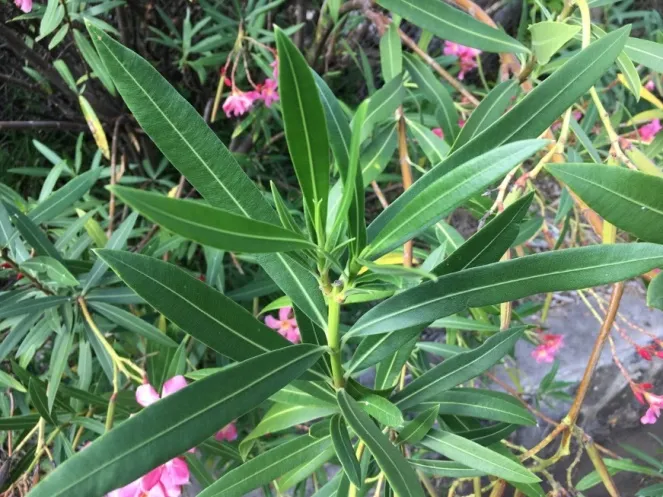
Fig. 1: Morphological of Nerium oleander Leaves
The observed morphological and organoleptic features serve as important diagnostic parameters for identification and standardization of Nerium oleander. These findings indicate that the collected leaves were healthy, mature, and suitable for phytochemical and formulation studies.
Physicochemical Evaluation of Nerium oleander Leaf Powder
The physicochemical parameters of Nerium oleander leaf powder are presented in Table 8.2. The moisture content was found to be low (6.25%), indicating good stability and reduced susceptibility to microbial contamination. Total ash value was 9.80%, while acid-insoluble ash was only 1.25%, suggesting minimal contamination with siliceous matter. The highest extractive value was observed in methanol (12.80%), followed by water (8.50%) and petroleum ether (2.65%), indicating the abundance of polar phytoconstituents in the plant material.
Table 4: Physicochemical Parameters of Nerium oleander Leaves
|
Parameter |
Result (% w/w) |
|
Loss on Drying |
6.25 ± 0.15 |
|
Total Ash |
9.80 ± 0.22 |
|
Acid-Insoluble Ash |
1.25 ± 0.08 |
|
Water-Soluble Ash |
3.42 ± 0.12 |
|
Petroleum Ether Extractive |
2.65 ± 0.10 |
|
Methanol Extractive |
12.80 ± 0.30 |
|
Water Extractive |
8.50 ± 0.20 |
The low moisture content and acceptable ash values indicate the purity and quality of the crude drug. The higher methanol extractive value suggests the presence of significant amounts of bioactive polar compounds such as flavonoids, phenolics, and glycosides, which are known to contribute to wound healing activity.
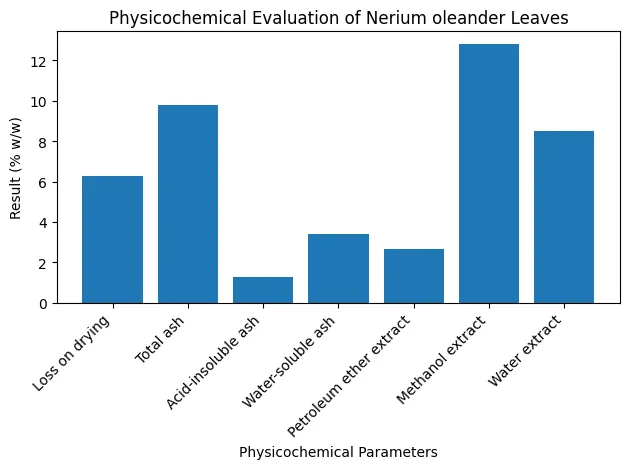
Fig. 2: Physicochemical Parameters of Nerium oleander Leaves
Drying of Extract by Hot Plate Method
The ethanolic extract obtained after Soxhlet extraction was concentrated and dried using a hot plate. Controlled heating facilitated complete removal of the solvent and produced a concentrated semi-solid extract suitable for phytochemical screening and cream formulation. The dried extract was dark greenish-brown in appearance and exhibited a uniform consistency. Hot plate drying proved to be a simple and effective method for concentrating the extract while preserving the active phytoconstituents. The obtained semi-solid mass was stable and suitable for further pharmaceutical processing.
Percentage Yield of Ethanolic Extract
Twenty grams of powdered Nerium oleander leaves were extracted using ethanol. After concentration and drying, 3.8 g of crude extract was obtained, corresponding to a percentage yield of 19%.
Table 5: Percentage Yield of Ethanolic Extract
|
Parameter |
Observation |
|
Weight of Plant Powder |
20 g |
|
Weight of Dried Extract |
3.8 g |
|
Percentage Yield |
19% |
The ethanolic extraction yielded 19% crude extract, indicating efficient extraction of phytoconstituents from Nerium oleander leaves. The comparatively high yield confirms ethanol as a suitable solvent for extracting bioactive compounds responsible for the plant's therapeutic and wound healing properties. Therefore, the ethanolic extract was selected for further phytochemical screening and formulation development.
Preliminary Phytochemical Investigation of Nerium oleander Leaf Extracts
Preliminary phytochemical screening was performed on aqueous, ethanolic, and petroleum ether extracts of Nerium oleander leaves to identify the major classes of bioactive constituents. The results revealed significant variation in phytochemical composition depending on the extraction solvent used. Among all extracts, the ethanolic extract exhibited the highest phytochemical richness, showing strong positive reactions for alkaloids, flavonoids, glycosides, phenolic compounds, tannins, saponins, and terpenoids. In contrast, the aqueous extract demonstrated moderate levels of flavonoids, tannins, and glycosides, whereas the petroleum ether extract predominantly contained non-polar constituents such as fixed oils, fats, terpenoids, and steroids. The superior extraction efficiency of ethanol can be attributed to its intermediate polarity, which enables the extraction of a broad spectrum of phytoconstituents. These phytochemicals are reported to possess antioxidant, antimicrobial, anti-inflammatory, and tissue regenerative properties that play an important role in wound healing. Therefore, based on the phytochemical profile, the ethanolic extract was selected for subsequent formulation development and biological evaluation.
Table 6: Phytochemical Screening of Nerium oleander Leaf Extracts
|
Phytochemical Constituents |
Aqueous Extract |
Ethanolic Extract |
Petroleum Ether Extract |
|
Alkaloids |
+ |
+++ |
– |
|
Flavonoids |
++ |
+++ |
– |
|
Tannins |
++ |
++ |
– |
|
Saponins |
+ |
++ |
– |
|
Terpenoids |
+ |
++ |
+ |
|
Glycosides |
++ |
+++ |
+ |
|
Phenolic Compounds |
+ |
+++ |
– |
|
Steroids |
– |
+ |
+ |
|
Fixed Oils & Fats |
– |
– |
++ |
+++ = Abundantly present
++ = moderately present
+ = slightly present
– = absent
Formulation Development of Nerium oleander Herbal Cream
A topical herbal cream containing Nerium oleander ethanolic extract was successfully prepared using the oil-in-water (O/W) emulsification method. Suitable excipients such as stearic acid, cetyl alcohol, liquid paraffin, glycerin, methyl paraben, and propyl paraben were selected to obtain a stable and smooth cream formulation.
Selection of Excipients
The selected excipients provided desirable properties to the formulation. Stearic acid acted as an emulsifying agent, cetyl alcohol as a stiffening agent, liquid paraffin as an emollient, and glycerin as a humectant. Preservatives were added to improve microbial stability and shelf life.
Incorporation of Nerium oleander Extract
The ethanolic extract of Nerium oleander was uniformly incorporated into the aqueous phase of the cream without any signs of precipitation or phase separation. The successful incorporation of the extract indicated good compatibility with the selected excipients.
Preparation of Cream
The oil and aqueous phases were heated separately to 70–75°C and mixed with continuous stirring. The emulsion was cooled gradually to obtain a smooth, homogeneous, and stable cream suitable for topical application.
Table 7: Composition of Different Nerium oleander Cream Formulations (F1–F7)
|
Ingredients (% w/w) |
F1 |
F2 |
F3 |
F4 |
F5 |
F6 |
F7 |
|
Nerium oleander extract |
5 |
5 |
5 |
5 |
5 |
5 |
5 |
|
Stearic acid |
4 |
5 |
8 |
7 |
6.5 |
5 |
6 |
|
Cetyl alcohol |
2 |
2.5 |
3.5 |
3.5 |
3.5 |
2.5 |
3 |
|
Liquid paraffin |
6 |
6.5 |
5 |
7.5 |
6 |
6.5 |
7 |
|
Glycerin |
4 |
4.5 |
5.5 |
6.5 |
4.5 |
4.5 |
5 |
|
Methyl paraben |
0.18 |
0.18 |
0.18 |
0.18 |
0.18 |
0.18 |
0.18 |
|
Propyl paraben |
0.02 |
0.02 |
0.02 |
0.02 |
0.02 |
0.02 |
0.02 |
|
Distilled water |
q.s. |
q.s. |
q.s. |
q.s. |
q.s. |
q.s. |
q.s. |
Development of Cream Formulations (F1–F7)
Seven formulations (F1–F7) were prepared by varying the concentrations of stearic acid, cetyl alcohol, liquid paraffin, and glycerin while maintaining a constant concentration (5% w/w) of Nerium oleander extract. All formulations showed good appearance and homogeneity without phase separation.
The developed formulations exhibited satisfactory physical characteristics and stability. Variations in excipient concentrations influenced the consistency and texture of the creams. The successful incorporation of the phytochemically rich Nerium oleander extract and the absence of incompatibility confirmed the suitability of the formulation for further evaluation of wound healing activity.
Fig. 3: Development of Nerium oleander Herbal Cream
Evaluation of Formulated Nerium oleander Cream: Physicochemical Characterization
The developed Nerium oleander cream formulations (F1–F7) were evaluated for organoleptic properties, pH, spreadability, viscosity, and washability to identify the optimized formulation suitable for topical wound healing application.
Table 8: Physicochemical Evaluation of Nerium oleander Cream Formulations (F1–F7)
|
Formulation |
Color |
Texture/Consistency |
pH (Mean ± SD) |
Spreadability (g·cm/s) Mean ± SD |
Viscosity (cP) Mean ± SD |
Washability |
|
F1 |
Light green |
Soft, less viscous |
5.40 ± 0.08 |
18.83 ± 0.35 |
11327 ± 85 |
Difficult to remove |
|
F2 |
Light green |
Soft, uniform |
5.59 ± 0.04 |
17.87 ± 0.25 |
12643 ± 65 |
Moderately washable |
|
F3 |
Greenish-white |
Thick, slightly rigid |
6.72 ± 0.07 |
13.10 ± 0.30 |
18327 ± 80 |
Moderately washable |
|
F4 |
Greenish-white |
Thick and rigid |
6.81 ± 0.07 |
12.20 ± 0.30 |
19610 ± 110 |
Difficult to remove |
|
F5 |
Light green |
Moderately smooth |
6.22 ± 0.05 |
15.50 ± 0.30 |
15323 ± 85 |
Moderately washable |
|
F6 |
Light green |
Smooth and consistent |
6.09 ± 0.05 |
16.33 ± 0.25 |
16527 ± 85 |
Moderately washable |
|
F7 |
Greenish-white |
Smooth, creamy, optimum |
6.12 ± 0.04 |
17.00 ± 0.20 |
15890 ± 70 |
Easily washable |
Organoleptic Evaluation
All formulations exhibited a characteristic light green to greenish-white color due to the incorporation of Nerium oleander extract and possessed a mild acceptable odor. Differences in texture and consistency were observed based on the concentration of stearic acid and cetyl alcohol. Formulations F1 and F2 were softer, while F3 and F4 showed comparatively thicker and rigid consistency. Formulation F7 exhibited a smooth, creamy texture with excellent homogeneity and no signs of grittiness or phase separation.
Organoleptic evaluation indicated that the concentration of emulsifying and stiffening agents significantly influenced the appearance and consistency of the cream. Among all formulations, F7 showed superior aesthetic characteristics and physical elegance, making it highly suitable for topical application.
Determination of pH
The pH of all formulations ranged between 5.40 and 6.81, which falls within the acceptable range for skin application. Formulations F1 and F2 showed slightly acidic pH values, whereas F3 and F4 exhibited comparatively higher pH values. Formulation F7 demonstrated a pH of 6.12 ± 0.04, closely matching the physiological pH of the skin.
Determination of Spreadability
Spreadability values ranged from 12.20 ± 0.30 to 18.83 ± 0.35 g·cm/s. Formulations F1 and F2 exhibited the highest spreadability due to their lower viscosity and softer consistency. F3 and F4 showed reduced spreadability owing to their rigid nature. F7 demonstrated optimum spreadability (17.00 ± 0.20 g·cm/s), allowing easy application and uniform distribution over the skin surface.
Determination of Viscosity
The viscosity of the formulations ranged from 11327 ± 85 cP to 19610 ± 110 cP. Lower viscosity values were observed for F1 and F2, whereas F3 and F4 exhibited significantly higher viscosity due to increased concentrations of stearic acid and cetyl alcohol. Formulation F7 showed a moderate viscosity of 15890 ± 70 cP.
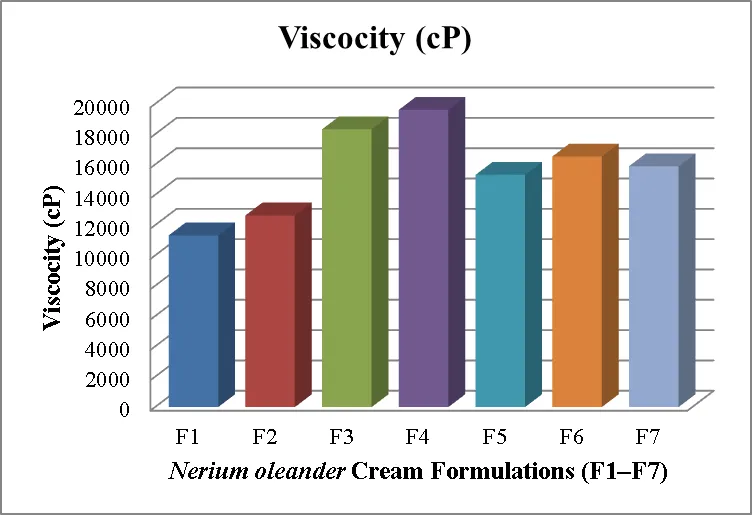
Fig.4: Viscosity of Nerium oleander Cream Formulations (F1–F7)
Evaluation of Washability
The washability study revealed differences among the formulations. F1 and F4 were relatively difficult to remove due to their higher consistency and oil content. F2, F3, F5, and F6 were moderately washable. Formulation F7 was found to be easily washable and left no residue after washing.
The physicochemical evaluation demonstrated that all formulations possessed acceptable characteristics for topical application. However, formulation F7 showed the most desirable combination of organoleptic properties, skin-compatible pH, optimum spreadability, suitable viscosity, and excellent washability. Therefore, F7 was selected as the optimized formulation for further stability studies and in vivo wound healing evaluation.
Skin Irritation Test
The optimized Nerium oleander cream formulation (F7) was evaluated for dermal safety by observing the treated skin area for signs of erythema, edema, itching, or inflammation. No visible irritation or adverse reactions were observed throughout the study period. The Primary Irritation Index (PII) was found to be negligible, indicating that the formulation is non-irritant and safe for topical application.
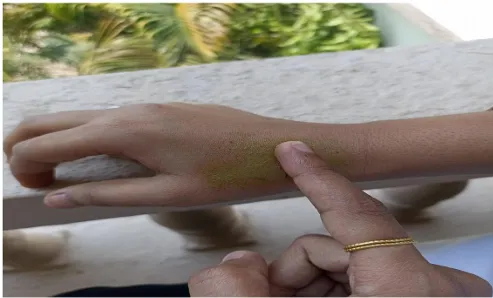
Fig. 5: Skin Irritation Test
Homogeneity
The homogeneity of all cream formulations (F1–F7) was assessed visually and by spreading the cream on a glass slide. All formulations exhibited acceptable uniformity without visible phase separation. However, F7 showed excellent homogeneity with a smooth, lump-free texture and uniform distribution of the extract throughout the cream base.
Stability Studies
The stability of the cream formulations was evaluated under room temperature, refrigerated, and accelerated storage conditions for 90 days. Most formulations remained stable under normal storage conditions. Minor changes in consistency and slight phase separation were observed in F3 and F4 under accelerated conditions. In contrast, F7 remained physically and chemically stable throughout the study, showing no significant changes in color, odor, pH, consistency, or phase separation.
Final Optimized Formulation (F7)
Based on the comprehensive evaluation of physicochemical properties, safety, and stability, formulation F7 was selected as the optimized batch. The formulation exhibited desirable organoleptic characteristics, skin-compatible pH, optimum spreadability, suitable viscosity, excellent washability, superior homogeneity, no skin irritation, and outstanding stability under various storage conditions.
In Vivo Pharmacological Study
Acute Dermal Toxicity Study
The acute dermal toxicity study of the optimized Nerium oleander cream (F7) was performed according to OECD Guideline 402. No signs of erythema, edema, irritation, behavioral changes, or mortality were observed during the 14-day observation period. The Primary Irritation Index (PII) was found to be 0.0, confirming the non-irritant and safe nature of the formulation for topical application.
Table 9: Acute Dermal Toxicity Study of Optimized Formulation (F7)
|
Parameter |
Observation (24 h) |
Observation (7 days) |
Observation (14 days) |
|
Erythema (Redness) |
None |
None |
None |
|
Edema (Swelling) |
None |
None |
None |
|
Irritation |
None |
None |
None |
|
Behavioral Changes |
Normal |
Normal |
Normal |
|
Mortality |
None |
None |
None |
|
Primary Irritation Index |
- |
- |
0.0 (Non-irritant) |
The absence of dermal toxicity and irritation indicates that the optimized cream formulation is safe for topical administration and suitable for wound healing studies.
Excision Wound Healing Study
The wound healing activity of Nerium oleander cream was evaluated using the excision wound model. The treated groups exhibited significantly higher wound contraction compared to the control group. Among all formulations, the 5% Nerium oleander cream (F7) showed the highest wound contraction and fastest wound closure throughout the study period.
Table 10: Percentage Wound Contraction of Different Treatment Groups (Mean ± SD, n = 6)
|
Day |
Control |
Standard (1%) |
Test I (2.5%) |
Test II (5%) |
|
0 |
0 ± 0.0 |
0 ± 0.0 |
0 ± 0.0 |
0 ± 0.0 |
|
4 |
18.2 ± 1.5 |
32.5 ± 1.8 |
28.4 ± 1.6 |
35.6 ± 1.7 |
|
8 |
36.8 ± 2.0 |
58.7 ± 2.1 |
52.3 ± 1.9 |
62.5 ± 2.0 |
|
12 |
58.4 ± 2.3 |
82.6 ± 2.2 |
75.8 ± 2.1 |
86.9 ± 2.3 |
|
16 |
72.5 ± 2.5 |
96.2 ± 1.5 |
90.4 ± 1.8 |
98.5 ± 1.2 |
The optimized formulation (F7, 5% w/w) demonstrated superior wound contraction compared to the control and lower-dose formulation. The enhanced healing activity may be attributed to the presence of flavonoids, tannins, alkaloids, and other bioactive constituents that promote collagen synthesis, tissue regeneration, and protection against microbial infection.
Epithelialization Period
The epithelialization period was significantly reduced in all treated groups compared to the control. The optimized formulation (F7) exhibited the shortest epithelialization period (14.6 ± 0.7 days), which was slightly better than the standard treatment group.
Table 11: Epithelialization Period of Different Treatment Groups (Mean ± SD, n = 6)
|
Group |
Epithelialization Period (Days) |
|
Control |
21.5 ± 1.2 |
|
Standard (1%) |
15.2 ± 0.8 |
|
Test I (2.5%) |
17.3 ± 1.0 |
|
Test II (5%) |
14.6 ± 0.7 |
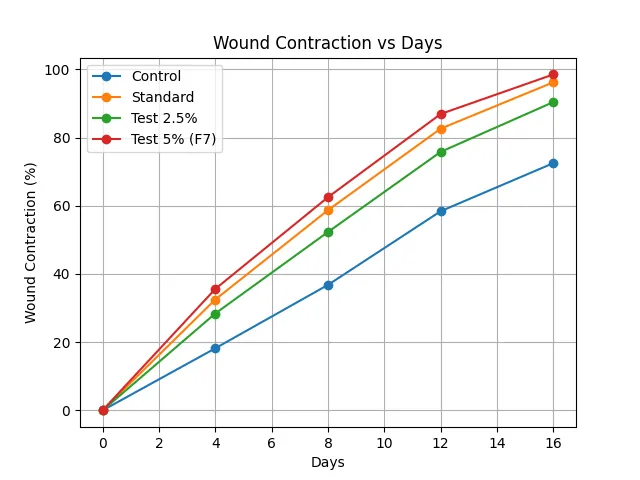
Fig. 6: Concentration vs Days
Statistical analysis using one-way ANOVA demonstrated a significant difference (p < 0.05) among the control, standard, and treatment groups. The optimized formulation (F7) showed significantly higher wound contraction and shorter epithelialization period compared to the control group and produced results comparable to the standard treatment.
The in vivo wound healing study demonstrated that the optimized Nerium oleander cream (F7, 5% w/w) significantly enhanced wound contraction and reduced epithelialization time compared to the control group. The formulation was found to be safe, non-irritant, and therapeutically effective. The wound healing activity was comparable to the standard drug, indicating the potential of Nerium oleander cream as a promising herbal alternative for topical wound management.
CONCLUSION
The present investigation successfully demonstrated the potential of Nerium oleander leaves as a source of bioactive compounds for wound healing applications. Physicochemical evaluation and phytochemical screening confirmed the presence of important secondary metabolites such as flavonoids, tannins, alkaloids, glycosides, and phenolic compounds, with the ethanolic extract showing the highest phytochemical richness and extraction yield. A topical herbal cream containing Nerium oleander extract was successfully formulated using the oil-in-water emulsification technique. Among the developed formulations, F7 exhibited optimum physicochemical characteristics, including skin-compatible pH, desirable spreadability, suitable viscosity, excellent homogeneity, easy washability, and good stability.
The optimized formulation was found to be safe and non-irritant in acute dermal toxicity studies. Furthermore, the in vivo wound healing study using the excision wound model revealed significant enhancement of wound contraction and reduction in epithelialization period compared to the control group. The wound healing efficacy of the optimized formulation was comparable to the standard treatment, indicating its therapeutic potential. The observed activity may be attributed to the synergistic effects of phytoconstituents possessing antioxidant, antimicrobial, and anti-inflammatory properties. Overall, the study concludes that the developed Nerium oleander herbal cream is a safe, stable, and effective topical formulation with promising wound healing potential and may serve as a natural alternative for wound management.
CONFLICT OF INTEREST:
The authors declare that there are no conflicts of interest.
REFERENCES

Shilpa Khilare, Ashvini Bankar, Dr. Sagar Muley, Phytochemical Screening and Formulation Development of Nerium Olender for Wound Healing Activity, Int. J. of Pharm. Sci., 2026, Vol 4, Issue 8, 2513-2530, https://doi.org/10.5281/zenodo.21934579
 10.5281/zenodo.21934579