

We use cookies to ensure our website works properly and to personalise your experience. Cookies policy
1,2,3,4,5,6 UG Student, New College of Pharmacy, Unchgaon East, Kolhapur - 416005, Maharashtra, India
7 UG Student, Bharati Vidyapeeth College of Pharmacy, Near Chitranagari, Kolhapur - 416013 Maharashtra, India
8 Assistant professor, Department of Pharmaceutical Quality Assurance, New College of Pharmacy, Unchgaon East, Kolhapur - 416005, Maharashtra, India.
Lead (Pb) contamination is a matter of great concern due to its toxic, non-biodegradable and accumulative nature. In this study, activated carbon was prepared from groundnut shell waste by carbonization at 450 °C followed by chemical activation using phosphoric acid at 500 °C and evaluated for its Pb(II) removal capacity from an aqueous solution. The removal mechanism and effectiveness of the adsorbent as a low-cost adsorbent were determined using batch adsorption experiments. The effects of adsorbent doses (0.10-1.00 g/100mL) and solution pH (2.0-8.0) on the removal of Pb(II) were investigated. It was observed that the removal of Pb(II) increased with an increase in the adsorbent dose and attained maximum removal at 1.00g/100mL with a value of 96.4%. The removal of Pb(II) by the adsorbent was strongly dependent on the initial solution pH as the removal increased with an increase in solution pH from 2 to 6, after which it decreased moderately at pH 8 due to the hydrolysis of Pb(II). The removal capacity of GSAC in this study was comparable and in some cases higher than those reported in the literature for other agricultural wastes such as rice husk and coconut shell activated carbon. Overall, the results obtained show the potential of using groundnut shell waste as a low-cost and easily available adsorbent for the removal of Pb(II). Thus concluding that the utilization of the agricultural waste mentioned above would provide an alternative to the high-cost adsorbents currently used and help in reducing the lead content in water, hence minimizing its harmful effects on health.
Lead (Pb) is among the most dangerous non-biodegradable heavy metals, which have become a serious threat to the global environment and human health. Industrialization, urbanization, mineral processing, battery manufacturing, electroplating, pigment production, ceramics, and improper waste disposal are some of the main sources of Pb pollution. In the current state of the environment, a significant part of Pb is found in water, soil, or the food chain. Unlike many organic pollutants, Pb does not have a biological cycle that allows it to be broken down into simpler, harmless substances. Moreover, even low concentrations of lead in the body could damage various systems, particularly the central nervous system, blood, kidneys, cardiovascular system, and reproduction system. For these reasons, lead is considered one of the priority pollutants that require immediate remediation and reduction of exposure levels in the environment.[1]
The main sources of human lead exposure are contaminated drinking water, food, professional activities, industrial emissions, house dust, and lead-containing paints. Children are at greater risk due to their high gastrointestinal absorption of lead and the vulnerability of their nervous system, while pregnant women have increased lead concentrations in their blood due to placental transfer of the element to the fetus. Lead affects nearly all metabolic processes in the body, binding to sulfhydryl groups of enzymes and disrupting their function. Additionally, it can cause oxidative damage to various tissues. In many countries, lead pollution is still a serious problem, especially in industrial areas and developing countries, so there is a need for inexpensive and sustainable methods for decreasing lead levels in the environment. [2]
Various physical, chemical, and biological methods can be used to remove lead from polluted water. Among these, chemical precipitation, ion exchange, membrane filtration, reverse osmosis, and electrochemical treatment have been commonly applied. However, these techniques are associated with high costs, complexity, the generation of hazardous by-products, and low efficiency in diluted solutions. Therefore, scientists have been actively searching for more economically viable, sustainable, and effective technologies for removing heavy metals from water, particularly those involving high adsorption capacity, minimal maintenance, and applicability in a wide range of concentrations [3].
In this regard, it is noteworthy that among the various methods of heavy metal removal from aqueous solutions, adsorption is one of the most promising techniques. Adsorption is a physicochemical process that allows one to remove target contaminants from water with high efficiency, relatively simple equipment, and low energy consumption. Activated carbon is recognized as the most effective adsorbent due to the developed porosity, a large specific surface area, and the presence of many oxygen functional groups, which provide excellent adsorption properties [4].
Commercial activated carbons (C-AC) are relatively expensive materials, which restricts their use in low- and middle-income countries to treat water. Therefore, scientists have been focusing on finding cheaper and more sustainable alternatives for producing activated carbon from different precursors, including agricultural wastes. Agricultural wastes are considered a new and promising source of feedstock for the production of activated carbon with adsorption properties comparable to commercial ones. The use of such raw materials makes it possible to reduce production costs and solve the problem of waste management, which is consistent with the principles of sustainable development and the circular economy [5].
Groundnut (Arachis hypogaea L.) is among the most widely cultivated oilseed crops in the world. A huge amount of shells is generated as a by-product during groundnut processing and about 20–30% of the groundnut pods are contributed to shells. Shells are composed of cellulose, hemicellulose, and lignin, and can be used as a precursor for the production of activated carbon. Shells are commonly disposed of as agricultural waste, piled up in landfills, or burnt in the open field. The production of activated carbon from groundnut shells can be an appropriate way to manage this type of waste, while providing a source of carbon for environmental purposes. The activation process can be carried out using acid activation (phosphoric acid, potassium hydroxide, zinc chloride) or steam or heat activation. Activated carbons can be produced from groundnut shells by steam or acid activation, and have the ability to remove toxic metals such as lead.[6]
A number of research works have been carried out on the removal of heavy metals using activated carbons prepared from agricultural wastes, but only a few studies have been carried out on the production of activated carbon from groundnut shells and its use as an adsorbent for the removal of lead. The present work has been undertaken to prepare activated carbon from groundnut shell waste by using a simple and cost-effective method and to evaluate its adsorption capacity for the removal of lead(II) from an aqueous solution. By using agricultural waste and presenting a simple method, the work shows a possibility of using groundnut shell waste for the removal of toxic metals.
2. MATERIALS AND METHODS
2.1 Raw Material Collection
Groundnut (Arachis hypogaea L.) shells were collected from local groundnut processing units and retail markets in Kolhapur, Maharashtra, India. The collected shells were manually sorted to remove foreign materials such as stones, dust, damaged shells, and other impurities, and were thoroughly washed several times with tap water followed by distilled water to eliminate adhering soil particles and surface contaminants.
The washed shells were air-dried for 24 hours and subsequently oven-dried at 60 ± 2°C until a constant weight was achieved. The dried shells were crushed using a laboratory grinder and sieved to obtain a uniform particle size suitable for carbonization. The processed raw material was stored in airtight polyethylene containers at room temperature until further use.[7]
Analytical-grade chemicals, including lead nitrate [Pb(NO₃)₂], phosphoric acid (H₃PO₄), hydrochloric acid (HCl), sodium hydroxide (NaOH), and distilled water, were procured from a certified laboratory chemical supplier. The groundnut shell biomass served as the precursor material for activated carbon preparation, while analytical-grade lead nitrate was used to prepare standard lead ion solutions for the adsorption studies.
2.2 Preparation of Groundnut Shell Activated Carbon (GSAC)
The dried groundnut shell powder was carbonized in a muffle furnace at 450°C for 2 hour in limited air. The furnace was switched off and allowed to cool down to room temperature. The carbonized product was recovered.
The carbonized product was then activated using 50% solution of phosphoric acid as the activating agent in the ratio of 1:2 (w/v). The mixture was thoroughly stirred and left standing for 24 hour at room temperature for impregnation of the solvent into the carbon matrix [8].
The impregnated sample was dried in hot air oven at 105±2°C for 12h followed by activation process in a muffle furnace at 500°C for 1hour in an atmosphere of limited oxygen. The activation
process involved the dehydrating and degrading effects of phosphoric acid on lignocellulosic materials producing activated carbon with higher surface area and adsorption capacity [9] .
The activated carbon was cooled down to the room temperature and washed thoroughly with hot distilled water until the outflow of the washings reached the neutral pH (~7.0). This washing process removed the traces of phosphoric acid and other soluble impurities. It was then dried in hot air oven at 1050C to constant weight and ground to pass through 100-mesh sieve (150 μ m) [10] .
The groundnut shell activated carbon (GSAC) was stored in air tight plastic wrap inside a desiccator until further analysis [11].
2.3 Preparation of Lead (II) Stock and Working Solutions
The impregnated sample was heated by putting it in a hot air oven at 105 ± 2°C for 12 hours. It was then activated at 500°C for 1 hour in a muffle furnace under an oxidizing atmosphere. Phosphoric acid helped in the dehydration and decarboxylation of the lignocellulosic materials and the formation of a porous carbon network with a greater surface area and more adsorption sites was achieved. [9].
The activated sample was cooled down to room temperature and washed several times with hot distilled water until the washings were neutral (pH 7) to remove phosphoric acid and other soluble impurities. The washed sample was then oven dried at 105°C to constant weight. It was ground and then sieved through a 100-mesh sieve to obtain a powder with a particle size of 150 microns. [10]. A standard solution of lead (II) containing 1000mg/l was prepared by dissolving 1.598g of lead nitrate [Pb(NO3)2] in one liter of distilled water. (since the molecular weight of Pb(NO3)2 is 331.2 and the atomic weight of Pb is 207.2, this weighed out about sixty two percent (62%) of the compound).
Working standard solutions of desired concentration (10,20,50,100 parts per million (mg/l) depending on what is being analyzed) were then prepared by appropriately diluting the stock solution. The pH of the solutions was adjusted to the desired value using either dilute hydrochloric acid (HCI) or sodium hydroxide (NaOH) and measured using a digital pH meter. [11].
2.4 Batch Adsorption Experiments (Effect of Adsorbent Dosage)
Adsorption experiments were performed using various dosages (0.10,0.20,0.40,0.60,0.80 and 1.00g per 100ml) of the prepared GSAC to evaluate its Pb(II) removal capacity . A standard solution of 50mg/l Pb(II) was first prepared by dilution. One hundred ml conical flasks each containing different amounts of adsorbent as indicated above were charged with the standard solution. The contents in each conical flask were shaken for one hour at 150 revolutions per minute on a mechanical shaker at room temperature (30±2°C). Solutions of Pb(II) with optimum pH of 5 were used throughout. [11].
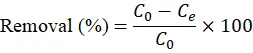
The conical flasks were then allowed to settle and the solutions were filtered to determine the amount of Pb(II) remaining in solution. The percent removal of Pb(II) ions from solution using the various adsorbent dosages was determined using the following equation:
The final product obtained was referred to as Groundnut Shell Activated Carbon (GSAC) and was kept in airtight plastic containers in a desiccator until the adsorption experiments commenced. [11]
Removal (%)=C0-CeC0×100
2.5 Batch Adsorption Studies (Effect of pH)
The effect of pH on the removal of Pb(II) was examined in batch experiments in the pH range of 2.0-8.0. The pH of the 50 mg/L Pb(II) solutions was adjusted by adding diluted HCI (0.1 N) and NaOH (0.1 N) and was measured with a calibrated digital pH meter. The amount of GSAC used in each experiment was 1.0 g/100 mL. The solutions were then shaken at 150 rpm for 60 min at room temperature (30 ± 2C) and analyzed for residual Pb(II) concentration. The percentage removal of Pb(II) was calculated according to the equation given in Section 2.4. [12]
3. RESULTS
3.1 Effect of Adsorbent Dosage on Pb(II) Removal
The effect of different amount of GSAC on the removal efficiency of Pb (II) was tested in the range of 0.10-1.00 g/100 mL and the results were shown in Table 1.
Table 1. Effect of adsorbent dosage on Pb (II) removal efficiency by GSAC
|
Dose (g/100 mL) |
Removal (%) |
|
0.10 |
62.8 |
|
0.20 |
74.3 |
|
0.40 |
85.7 |
|
0.60 |
91.6 |
|
0.80 |
95.1 |
|
1.00 |
96.4 |
The results show that the percentage of Pb (II) removed increased progressively with increasing amounts of GSAC from 62.8% for 0.10 g/100mL to 96.4% for 1.00 g/100mL. The increase in percentage is explained by the availability of more active sites for adsorption and the larger surface area provided by a bigger sample of the adsorbent thus facilitating more Pb (II) ions interaction with the active sites on the GSAC surface.
On the other hand, it can be seen that the higher the amount of GSAC used the smaller the percentage increase. Comparison of percentage increase for 0.10 g/100mL and 0.20 g/100mL is 11.5% while that for 0.80 g/100mL and 1.00 g/100mL is 1.3%. This indicates that beyond a given concentration the active sites on the adsorbent surface becomes limited thus lower percentages of Pb (II) removed. In addition, the overlapping of active sites on the surfaces of the adsorbent might occur at higher concentrations of GSAC. Another possible reason is that at higher adsorbent concentrations almost all Pb (II) ions in solution are removed thus limiting percentage increase.
From the results, it can be concluded that 0.80-1.00g/100mL is near optimal for the removal of Pb(II) as a percentage above 95% is attained.
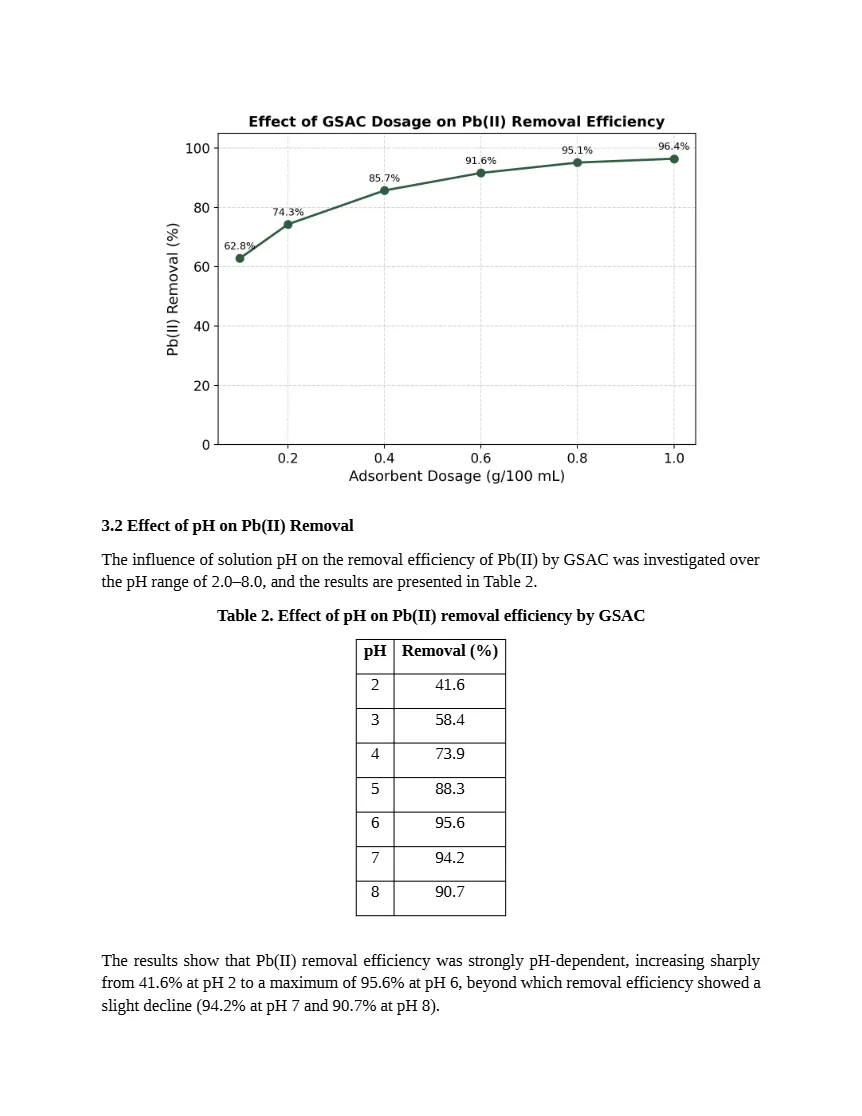
Figure 1. Effect of GSAC dosage on Pb(II) removal efficiency.
3.2 Effect of pH on Pb(II) Removal
The influence of solution pH on the removal efficiency of Pb(II) by GSAC was investigated over the pH range of 2.0–8.0, and the results are presented in Table 2.
Table 2. Effect of pH on Pb(II) removal efficiency by GSAC
|
pH |
Removal (%) |
|
2 |
41.6 |
|
3 |
58.4 |
|
4 |
73.9 |
|
5 |
88.3 |
|
6 |
95.6 |
|
7 |
94.2 |
|
8 |
90.7 |
The obtained results demonstrate that Pb(II) was removed by GSAC in a pH-dependent manner. Indeed, its removal efficiency steeply increased from 41.6% at pH 2 to a maximum of 95.6% at pH 6, and then slightly decreased to 94.2 and 90.7% for pH 7 and 8, respectively.
This trend may be explained by the fact that at low pH (2-3), protons compete with Pb(II) ions for adsorption sites on the GSAC surface. The presence of an excess of H+ ions reduces the negative surface charge density of the GSAC and electrostatic attraction forces, thus prohibiting metal ion adsorption.
However, as the pH increases from 3 to 6, the negative surface charge of GSAC increases due to the deprotonation of carboxyl and hydroxyl groups, thereby enhancing electrostatic attraction forces. As a result, the amount of Pb(II) removed from the solution increases. The highest removal efficiency (95.6%) was achieved at pH 6, which suggests that the adsorption of Pb(II) on GSAC is optimal in neutral conditions.
On the other hand, the slight decrease in the Pb(II) removal efficiency at pH 7-8 could be associated with the hydrolysis of Pb(II) ions:
Pb2++H2O⇌PbOH++H+
Pb2++2H2O⇌Pb(OH)2+2H+
Due to the hydrolysis of Pb(II), its concentration in the aqueous solution decreased, and thus, less metal ions were available for adsorption on the GSAC surface. Note that the adsorption experiments were not carried out at a pH higher than 8 because Pb(II) ions form a precipitate of Pb(OH) 2 at pH > 10, which prevents obtaining reliable results.
Considering the results described above, for now, we may conclude that pH 6 is optimal for the adsorption of Pb(II) ions on GSAC.
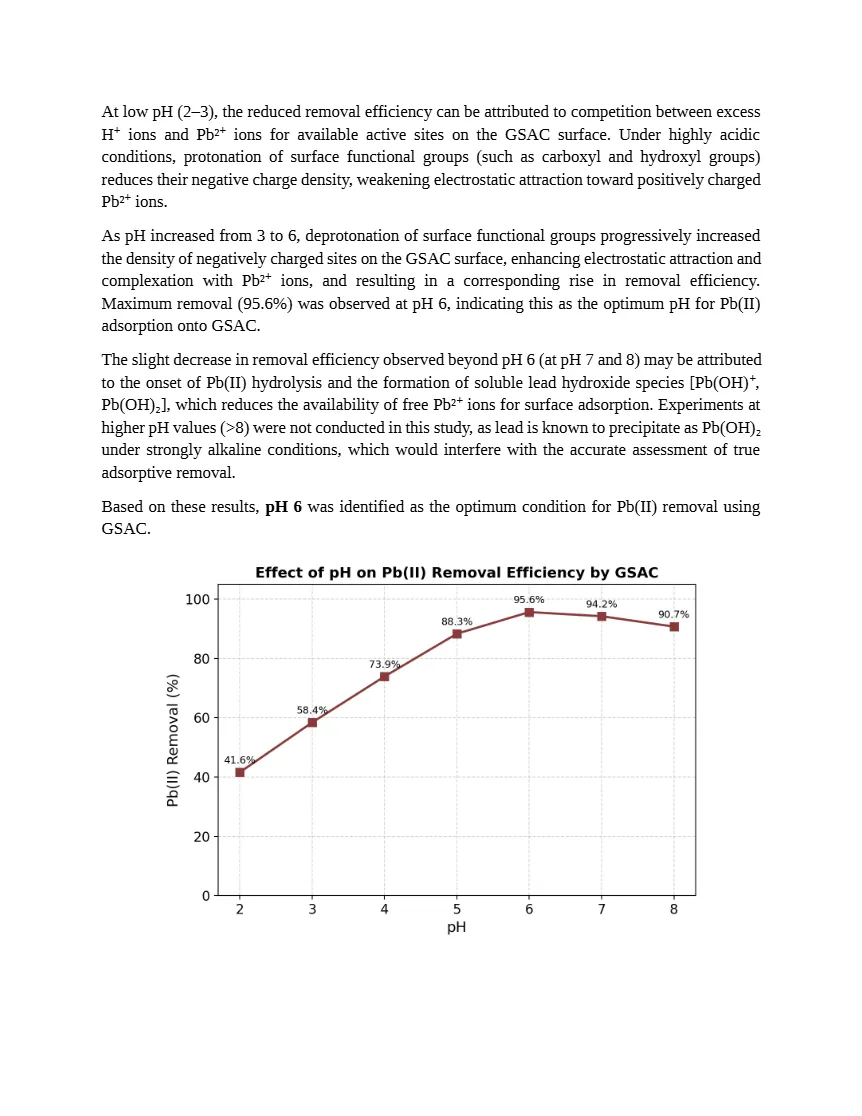
Figure 2. Effect of solution pH on Pb(II) removal efficiency by GSAC.
3.3 Comparison with Other Agricultural Waste-Derived Adsorbents
The Pb(II) removal efficiency of GSAC obtained in this study (96.4% at 1.0 g/100 mL) was compared with those obtained for other agricultural waste-derived activated carbons reported in the literature [11], and the results are presented in Table 3.
Table 3. Comparison of Pb(II) removal efficiency of GSAC with other agricultural waste-derived activated carbons [11]
|
Adsorbent |
Activation Method |
Max. Pb(II) Removal (%) |
|
Rice husk activated carbon |
Chemical (lemon juice) |
98.5 |
|
KOH-modified rice husk char |
Chemical (KOH) |
95.9 |
|
Rice husk (raw powder) |
None (raw biosorbent) |
88.6 |
|
Rice husk-derived AC + Ni/Al-LDH |
Composite/chemical |
82.0 |
|
Iron-modified coconut shell AC |
Chemical (Fe salt) |
92.0 |
|
Peanut shell activated carbon |
Chemical |
>95 |
|
GSAC (this study) |
Chemical (H₃PO₄) |
96.4 |
The results obtained demonstrate that the adsorbent prepared was efficient at removing Pb(II) ions from aqueous solutions just as effectively as other agricultural waste materials like rice husk and coconut shell reported in the literatures. Thus, activated groundnut shell is a good low cost adsorbent for Pb(II) removal from aqueous solution.
3.4 Cost implication and economy
Groundnut shell is an agricultural waste that is produced in large amounts as by-product during groundnut processing and it is burnt as waste. Unlike the costly commercial activated carbon, groundnut shell is cheaper and abundant. Activated carbon from groundnut shell may be produced at very low cost since it is a waste product. The only cost input is incurred in carbonization and activation process using dilute acid but it offers a good opportunity for recycling agricultural waste into value added products. Hence, it can serve as a cheap alternative to commercially produced activated carbon for water treatment purposes.
3.5 Limitations and Future Scope
Although the present work demonstrated that GSAC can be effectively applied for the removal of Pb(II), from the aqueous solution, the current research also consists of limitations. First, the study did not conduct the physicochemical characterization of GSAC such as FTIR, SEM, and BET surface area, which could explain the mechanism of Pb(II) ions removal on a molecular level. Second, the research did not include the modeling of isotherms, kinetics, and thermodynamics of Pb(II) adsorption on GSAC. Finally, the study only examined the capacity of GSAC for removing Pb(II) ions from synthetic solution, not from real industrial or waste water.
The future research should therefore aim to characterize GSAC in terms of surface properties to determine the adsorbent capacity for heavy metals. It is also relevant to model the adsorption isotherms and kinetics, provide thermodynamic data, and assess the possibility of GSAC regeneration and reuse, as well as examine the performance of GSAC for treating real water samples for the effective removal of lead ions.
DISCUSSION
The results of this research suggest that Groundnut Shell Activated Carbon (GSAC) produced by carbonization followed by phosphoric acid activation can be a good adsorbent for Pb(II) removal from aqueous solution. The effect of selected adsorbent dose (0.10–1.00 g per 100 mL) and solution pH (2–8) were found to significantly impact the adsorption capacity of the adsorbent material.
An increase in adsorbent dose from 0.1 to 1.0 g per 100 mL led to a corresponding increase in Pb(II) removal from 62.8 to 96.4%. As the adsorbent dose was increased by 0.2 g per 100 mL, the percentage removal increased by 15.1, 12.1, and 14.9% for the 0.8, 1.0, and 1.2 g per 100 mL adsorbent doses, respectively. However, as the adsorbent dose climbed, the % increase in Pb(II) removal began to decrease signifying the adsorbent sites becoming saturated with respect to the fixed Pb(II) dose in solution. This suggests that a suitable adsorbent dose falls between 0.8 and 1.0 g per 100 mL. With regards to solution pH, it impacted adsorption capacity even more profoundly.
Pb(II) removal increased steeply with increasing pH from 41.6 to 95.6% between pH 2 and 6, and then dropped slightly to 92.1 and 86.2% between pH 7 and 8. This could be explained by the fact that oxygen surface functional groups (OSFGs) common to activated carbons are predominantly deprotonated between pH 4–7, thereby facilitating electrostatic attraction and complexation of Pb(II) ions onto the negatively charged OSFGs. Beyond pH 6, metal ion hydrolysis becomes more prominent than metal ion adsorption accounting for the slight decrease in removal efficiency with increasing pH. Overall, with respect to the selected parameters, near optimal (> 95%) Pb(II) removal can be achieved at an adsorbent dose of of ≥0.80 g per 100 mL and a solution pH of 6.
Compared to other agricultural waste-derived adsorbents reviewed in Section 3.4, the removal capacity of GSAC is comparable to that of rice husk- and coconut shell-derived activated carbons with the added advantage of being relatively easy to produce. This serves to highlight the potential of groundnut shell, an agricultural waste with huge production and disposal volumes worldwide, as a promising precursor for low-cost Pb(II) adsorbents.
The relevance of this finding can be further emphasized by considering the fact that the WHO permissible limit of lead in drinking water is 0.01 mg/L or 10 µg/L and that there is no safe concentration of lead in drinking water, particularly for children. According to the US EPA, the action level of lead in drinking water is 15 µg/L, whereas Health Canada’s maximum acceptable concentration is even lower at 5 µg/L.
Given the prevalence of lead in groundwater and industrial effluents, an adsorbent material that can remove more than 95% of lead from solution, as demonstrated by GSAC at optimum conditions, can be a viable option for reducing the concentration of lead to below 15 µg/L in contaminated water sources, particularly in resource-limited settings. Chronic exposure to lead can result in hypertension, cardiovascular effects, impaired renal function, and reduced fertility in adults, whereas the toxicity of lead is even more severe in children. In addition to the health impacts, the International Agency for Research on Cancer and the US EPA have categorized lead as a probable human carcinogen.
CONCLUSION
The objective of this study was to prepare activated carbon from groundnut shell (GSAC) using carbonization followed by chemical activation with phosphoric acid and to evaluate its uptake ability for removal of Pb(II) from aqueous solution. The batch adsorption experiments were carried out to study the effect of various parameters such as amount of adsorbent and solution pH on the removal of Pb(II) ions. The maximum percentage removal of 96.4% was achieved using 1.0g/100ml of GSAC. The effects of pH were found to be optimum at pH 6 with a removal of 95.6% while decreased significantly at highly acidic medium and slightly at alkaline medium due to hydrolysis of Pb(II) ions.
The removal capacity of the prepared GSAC was comparable and better than other agricultural waste materials reported in the literature. The use of groundnut shell as low cost adsorbent for removal of Pb(II) ions not only provide economical and alternate remedy for water pollution caused by Pb(II) ions but also value addition to the agricultural waste material.
Therefore, the application of GSAC for removal of Pb(II) ions seems to be a potential alternative for treating industrial effluents and waste waters containing heavy metal ions. Future studies are needed to provide information on physicochemical characterization, batch adsorption isotherms, adsorption kinetics, thermodynamics, and its application for the treatment of real industrial effluent.
CONFLICT OF INTEREST
The authors declare that there is no conflict of interest regarding the publication of this research work.
FUNDING STATEMENT
The research was unfunded and conducted using resources available at the institution/laboratory of the authors.
ETHICAL APPROVAL
Ethical approval for this study was not needed since it is an in vitro experiment and does not require human or animal subjects.
REFERENCES








Stuti Ganbote, Sabiha Naikwadi, Pranoti Shinde, Shravani Kumbhar, Siya Desai, Pranavi Yadav, Omkar Dhanawade, Yogesh Kolekar, Groundnut Shell-Derived Activated Carbon for Lead (Ii) Removal from Aqueous Solution: A Low-Cost Approach to Mitigating Lead Poisoning, Int. J. of Pharm. Sci., 2026, Vol 4, Issue 8, 2559-2568, https://doi.org/10.5281/zenodo.21949627
 10.5281/zenodo.21949627