

We use cookies to ensure our website works properly and to personalise your experience. Cookies policy
Department of Pharmacy Practice, Jamia Salafiya Pharmacy College, Pulikkal, Malappuram dt, Kerala, India.
Introduction: Antibiotics are substances that treat and prevent bacterial infections. Pharmacovigilance (PV) is concerned with the detection, collection, assessment, understanding, and prevention of adverse effects related to drugs. Research reveals that 0.2-24% of hospital admissions are caused by adverse reactions to medicines, with 3.7% of those cases being fatal. In India, studies show that about 54% of all ADRs can be related to antibiotics. Methodology: A questionnaire based on the “KAP on the ADRs of antibiotic” were prepared and validated and conducted as a survey among patients who were used antibiotics once in their lifetime. Demographic details, patient knowledge, awareness of adverse effects, treatments taken, and reporting behaviors were collected and analysed using Microsoft Excel. Result: The final questionnaire was drafted with three sections. The questionnaire was subjected to face validity and content validity. The Cronbach alpha yielded high reliability of 0.72 for the scale. The results of the observational study show an average Knowledge and attitude in the participants with weak behaviour. Conclusion : This study found that many patients are unaware of the pharmacovigilance of ADR reporting of antibiotic. The patients who were aware of the ADR reporting was found to be 59.36%. Although the patients were moderately aware of the practice in ADR reporting to healthcare workers. These findings highlight the need for improved awareness to the people in practically applying ADR reporting to healthcare workers as well as the dangers about the incompletion of the course of antibiotic prescribed by doctors
Antibiotics are substances that treat and prevent bacterial infections. World Health Organization (WHO) defines an Adverse Drug Reaction (ADR) as “A response to a drug that is noxious and unintended and which occurs at doses normally used in man for prophylaxis, diagnosis, or therapy of disease, or therapy of disease, or for the modification of physiological function.”1
Macrolides, including erythromycin and azithromycin, are associated with usually reversible bilateral hearing loss or imbalance, particularly at high doses and in patients having renal or hepatic impairment. One study reported that 25% of pneumonia patients receiving 4 g/day erythromycin developed sensorineural hearing loss. Aminoglycosides may cause irreversible cochlear or vestibular damage in 10% to 20% of patients.2,3 Penicillin has been associated with low-frequency incidence of anaphylactic reactions, but it also has cross-reactivity with cephalosporins and other antibiotic classes.4 Nephrotoxic antibiotics include aminoglycosides and amphotericin B; however, other medications, including Sulfonamides, beta-lactams, acyclovir, fluoroquinolones, rifampin, and vancomycin, can also cause renal injury particularly when there is the presence of poly-medicating or other risk factors.5
Pharmacovigilance (PV) deals with the detection, collection, assessment, understanding, and prevention of adverse effects associated with drugs. pharmacovigilance’s goal is to keep drugs safe for patients by monitoring them for ADRs and reporting them when they happen. Data suggest that 0.2-24% of hospitalizations are caused directly or indirectly by ADRs, of which 3.7% result in the patient’s death. The reasons include the number of prescribed drugs, having many new drugs in the market, and inadequate PV systems for monitoring ADRs, and low levels of awareness or education among patients and healthcare providers about the need to report ADRs. Severe ADRs can increase the length of stay, treatment cost, risk of death, and may have many medical and economic implications. Reporting ADRs quickly may help to prevent patients from experiencing additional negative effects of prescription drugs. The rate of ADR reporting in India is less than 1%, while the worldwide average is around 5% due to a lack of awareness about pharmacovigilance and ADR monitoring among patients and healthcare providers.9
A KAP survey is the representative survey in a target population relative to the topic of interest. Information is collected in the form of semi-structured questionnaires or, more typically, through “Structured” or “Self-administered” questionnaires that can be administered both qualitatively and quantitatively through either self-administration or interviewers.10
In India, other studies show that approximately 54% of all ADRs can be antibiotic-relate, with a notable proportion being severe.11
MATERIALS AND METHODS:
The tool employed to assess the knowledge, attitude, and practice (KAP) was a questionnaire. The KAP questionnaire was developed after a extensive literature review. The questionnaire was a survey model, with 25 item standard questions in Malayalam. KAP questionnaire contains 2 sections. The first section contains the demographic details. Followed section contains 3 subdivisions: knowledge related, attitude related, and practice related. A two-step validation process was accompanied for its relevance, clarity and simplicity. Face validity and content validity were employed on this questionnaire.
Step-01: the questionnaire was sent to an expert panel of 10 members via google form. They are professors and lecturers from department of pharmacy practice and were requested to evaluate the relevance, simplicity, and clarity of each item in questionnaire. The observations and suggestions were considered. Further the scale was assessed using Cronbach alpha.
Step-02: The questionnaire was pilot tested by administering it to a sample of 30 non-teaching staff at jamia salafiya pharmacy college who meet the eligibility criteria and were not aware of this study. The reliability were tested using Cronbach alpha, is 0.72 indicates acceptable
This study conducted among patients who were used antibiotics once in their lifetime. The statistical analysis was done using Microsoft excel.
RESULT AND DISCUSSION:
The study included a total of 475 participants.
Table 1. Knowledge of participants regarding ADRs of antibiotics
|
Knowledge based questions |
Yes[n(%)] |
No[n(%)] |
|
Do you know what Adverse Drug Reaction (ADR) is? |
282 (59.36) |
193 (40.63) |
|
Do you know antibiotics cause Adverse drug reaction or allergic reaction? |
330 (69.47) |
145 (30.52) |
|
Do you think the ADRs of antibiotics are same for every person? |
92 (19.36) |
383 (80.63) |
|
Are you aware that some antibiotic ADRs can be life-threatening? |
306 (64.42) |
169 (35.57) |
|
Do you think each infection needs a different antibiotic? |
367 (77.26) |
108 (22.73) |
|
Do you know antibiotics can kill the bacteria that normally live on the skin and inside the body? |
258 (54.31) |
217 (45.68) |
|
Are you aware that, if antibiotics are consumed in excess, they will not work when they are really needed? |
257 (54.10) |
218 (45.89) |
|
Do you know the signs of an ADR from antibiotics? |
212 (44.63) |
263 (55.36) |
The majority of participants were aware that Antibiotics can cause adverse drug reactions, including potentially life-threatening reactions, and believed that overuse of antibiotics increases the risk of ADRs. However fewer participants understood that ADRs differ between individuals or could confidently identify the signs of an antibiotic-related ADR.
Table 2. Attitude of participants regarding ADRs of antibiotics
|
Attitude based questions |
Yes[n(%)] |
No[n(%)] |
|
I believe all side effects should be reported to a doctor. |
454 (95.57) |
21 (4.42) |
|
I believe antibiotics are effective against viruses |
282 (59.36) |
193 (40.63) |
|
I feel confident in identifying signs of antibiotic-related ADRs. |
242 (50.94) |
233 (49.05) |
|
I believe reporting ADRs helps improve patient safety. |
445 (93.68) |
30 (6.31) |
|
I believe overusing antibiotics increases the risk of ADRs. |
425 (89.47) |
50 (10.52) |
|
I expect my doctor to prescribe antibiotics if I suffer from common cold or flu symptoms |
208 (43.78) |
267 (56.21) |
|
I must take the antibiotics according to the doctors instructions |
457 (96.21) |
18 (3.78) |
|
I trust the doctors decision if she/ he decides to prescribe or not prescribe antibiotics |
458 (96.42) |
17(3.57) |
Attitudes towards ADR reporting and rational antibiotic use were generally positive; most agreed that side effects should be reported and trusted their doctors prescribing decisions. Despite this, misconceptions persisted, particularly the belief of effectiveness of antibiotics against viral infections and the expectation of antibiotic prescriptions for common cold or flu symptoms.
Table 3. Practice of participants regarding ADRs of antibiotics
|
Practice related questions |
Yes[n(%)] |
No[n(%)] |
|
Have you ever experienced an Adverse Drug Reactions after taking antibiotics? |
40 (8.42) |
435 (91.57) |
|
Did you ever report any ADR to a healthcare professional? |
107 (22.52) |
368 (77.47) |
|
Have you ever read the information leaflet that comes with antibiotics? |
112 (23.57) |
363 (76.42) |
|
Do you complete the full course of antibiotics even if you feel better? |
273 (57.47) |
202 (42.52) |
|
Do you keep records of any allergies or previous ADRs |
137 (28.84) |
338 (71.15) |
|
Have you ever advised someone else to stop antibiotics due to ADRs? |
86 (18.10) |
389 (81.89) |
|
When you get a cold, do you take antibiotics to feel better faster? |
104 (21.89) |
371 (78.10) |
|
I prefer to keep antibiotics at home in case there is a need for them later |
94 (19.78) |
381 (80.21) |
|
After experiencing a side effect did you switch to different antibiotic without consulting a doctor? |
24 (5.05) |
451 (94.94) |
Practices related to antibiotics and ADRs were less satisfactory. Although a notable proportion of respondents had experienced an antibiotic-related ADR, relatively few had reported these reactions to healthcare professionals. Many engaged in behaviours that increase ADR risk, including using antibiotics for colds, keeping antibiotics at home for future use, and in some cases modifying antibiotic therapy without consulting a doctor. Only a minority kept written records of drug allergies or previous ADRs.
Table 4. Association with demographic factors
|
Parameter |
Number of participants |
Knowledge |
Attitude |
Practice |
|||
|
Age group |
|
Mean |
SD |
Mean |
SD |
Mean |
SD |
|
18-30 |
111 |
5.81 |
1.51 |
6.05 |
1.05 |
4.46 |
1.56 |
|
31-40 |
122 |
5.47 |
1.80 |
6.32 |
1.04 |
4.85 |
1.32 |
|
41-50 |
89 |
5.64 |
1.82 |
6.39 |
0.91 |
4.93 |
1.61 |
|
51-60 |
72 |
5.28 |
1.63 |
6.08 |
1.15 |
4.78 |
1.37 |
|
61-70 |
66 |
4.53 |
2.11 |
5.94 |
1.08 |
5.32 |
1.56 |
|
>70 |
15 |
4.93 |
2.19 |
6.27 |
1.16 |
5.07 |
1.49 |
|
F |
|
4.995 |
2.336 |
3.009 |
|||
|
p-value |
|
<0.001* |
0.041* |
0.011* |
|||
|
Gender |
|
|
|
|
|||
|
Male |
166 |
5.37 |
1.82 |
6.24 |
1.046 |
4.75 |
1.42 |
|
Female |
309 |
5.42 |
1.81 |
6.15 |
1.059 |
4.88 |
1.54 |
|
t |
|
-0.27 |
0.911 |
-0.97 |
|||
|
p-value |
|
0.787NS |
0.363NS |
0.333NS |
|||
|
Education |
|
|
|
|
|||
|
No formal education |
11 |
4.91 |
2.1 |
6 |
1.3 |
5.09 |
1.4 |
|
School level |
96 |
4.54 |
1.8 |
6 |
1.0 |
4.74 |
1.6 |
|
High school level |
149 |
5.35 |
1.9 |
6.38 |
1.0 |
5 |
1.4 |
|
Higher secondary level |
92 |
5.48 |
1.6 |
6.14 |
1.1 |
4.34 |
1.3 |
|
Undergraduate |
104 |
6.09 |
1.5 |
6.18 |
1.1 |
5.1 |
1.5 |
|
Postgraduate |
23 |
6.22 |
1.4 |
5.87 |
1.0 |
4.87 |
1.5 |
|
F |
|
9.177 |
2.176 |
3.255 |
|||
|
p-value |
|
<0.001* |
0.056NS |
0.007* |
|||
*p value < 0.05 is statistically significant. NS – Non-significant
The analysis shows that age, education level, and gender had varying influences on knowledge, attitude, and practice (KAP) regarding antibiotic-related adverse drug reactions (ADRs). Age was significantly associated with all three domains: knowledge scores differed across age groups (p < o.oo1), with participants aged 18-30 showing the highest knowledge and those 61-70 the lowest; attitude scores also varied significantly (p=0.041), with the 41-50 group scoring highest; and practice scores showed significant differences as well (p=0.011), with the 61-70 group demonstrating the best practices. Gender, however, showed no significant differences in knowledge (p=0.787), attitude (p=0.363), or practice (p=0.333) scores. Educational qualification had a strong association with knowledge (p < 0.001), where postgraduates and undergraduates had higher knowledge scores compared to those with school-level education. While educational level did not significantly affect attitude scores (p=0.056), it did significantly influence practice scores (p=0.007), with undergraduates reporting the best practices. Overall younger age and higher education were linked to better knowledge, while older age and undergraduate education were associated with better ADR-related practices.
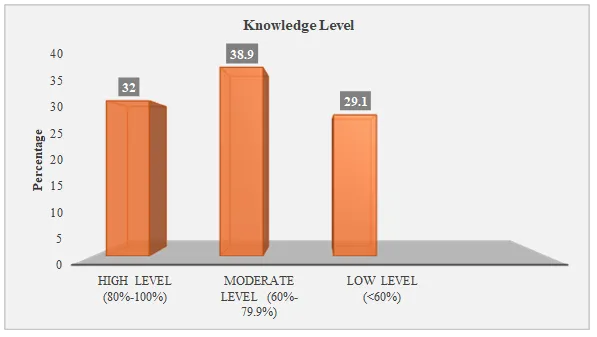
Figure 1.Level of participants knowledge regarding ADRs of antibiotics
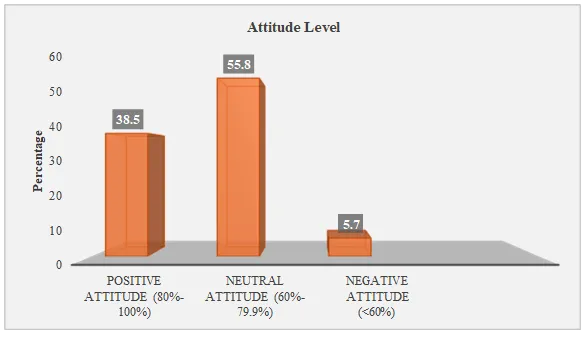
Figure 2.Level of participants attitude regarding ADRs of antibiotics
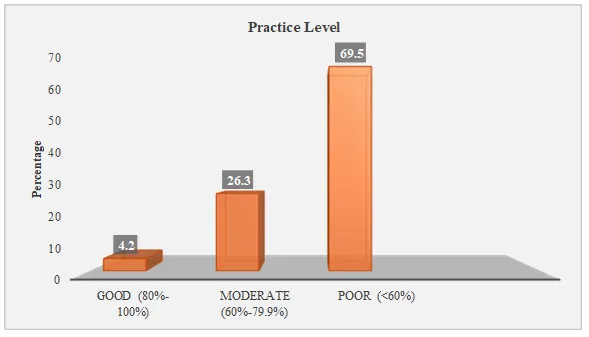
Figure 3.Level of participants practice regarding ADRs of antibiotics
A large proportion of participants had a moderate knowledge and neutral to positive attitude toward antibiotics and adverse drug reactions (ADRs), however, the majority of the participants had deficiency in safe practices was evident, with nearly 70% exhibiting poor practice score. This notable difference between what participants know and think about antibiotics compared to how they actually use them in consistent with the literature from various global KAP studies. For example, Azim et al., (2023) reported that while the general population in Bangladesh exhibited moderate knowledge and a favorable attitude towards antibiotic use and antimicrobial resistance (AMR), inappropriate practices such as self-medication and incomplete courses were prevalent, underscoring that awareness does not automatically translate into correct behavior.6 Similarly, Zhang et al., (2024) found among physicians and pharmacists managing sepsis that despite acceptable knowledge and supportive attitudes towards rational antibiotic use, gaps in implementation and inconsistent clinical practices persisted , highlighting systemic and behavioral barriers even among health professionals.7 Higuita-Gutiérrez et al., (2020) observed in Colombian medical students that, although knowledge and attitudes towards antibiotic resistance were relatively high, actual adherence to prudent antibiotic use practices lagged, reinforcing the recurring theme that educational attainment alone is insufficient to ensure optimal practices.8 In addition, the study conducted by Rayees et al., (2019) on monitoring studies on adverse drug reactions highlights the continued existence of poor practice behaviors, which includes inconsistent reporting of ADR, remain a significant challenge in clinical settings, further contributing to under-recognition and under-reporting of ADRs.4
These findings suggest that while awareness and positive attitudes are necessary components, they must be supported by targeted behavioral interventions, systematic training, and institutional strategies to effectively improve antibiotic use and ADR-related practices in both community and clinical environments.
CONCLUSION
In the study 475 patients participated. About 59.36% (n=323) of the patients were aware of the ADRs of antibiotics. Only fewer patients could identify signs of antibiotic-related ADRs. There are misconceptions persist, particularly the belief like effectiveness of antibiotics against viral infections. Practices related to antibiotics are less satisfactory.
CONFLICT OF INTEREST
The authors have no conflicts of interest regarding this study.
ACKNOWLEDGMENTS
The authors would like to express our sincere gratitude to Dr. Sirajudheen M K for providing the academic support and facilities necessary to carry out this research work successfully. The authors would like to thank Dr. Kameswaran R, Head of Department and respected guide Ms Anjali C S for their constant encouragement, valuable guidance, and thoughtful suggestions throughout the study. We are deeply extending our heartfelt thanks to Almas Hospital, where the study was conducted, for their permission and support during data collection.
REFERENCES
Pavan G, Kumar M, Dhingra S, Kumar NV, Ravichandiran, Murti K. Exploring antibiotic safety: A prospective observational study from a tertiary care public sector hospital. Clinical Epidemiology and Global Health. 2024;28:101592.doi: 10.1016/j.cegh.2024.101592








Joice Grace Babuji, Lulu Thasneem, N M Niranjana, Ek Safna Sherin, Wafa Moyin Alungal, Cs Anjali, Dr. R Kameswaran, Dr. Mk Sirajudheen. A Prospective Observational Study on Assessment of Awareness in ADRs of Antibiotic Medications Using Knowledge, Attitude, and Practice (KAP) questionnaire, Int. J. of Pharm. Sci., 2026, Vol 4, Issue 8, 3228-3235, https://doi.org/10.5281/zenodo.22040295
 10.5281/zenodo.22040295