We use cookies to ensure our website works properly and to personalise your experience. Cookies policy
Jaya College of Pharmacy, CTH Road, Thiruninravur, Chennai, Tamil Nadu
In the present study, novel pyrazole derivatives as potential anti-inflammatory agents were explored through in-silico drug discovery approaches. Pyrazole is an important heterocyclic scaffold with several pharmacological activities including anti-inflammatory activity. Four substituted pyrazole derivatives were screened for drug-likeness, pharmacokinetic properties and molecular binding affinities against inflammatory protein targets. Ligand structures were drawn with ChemDraw and Marvin Sketch. Protein structures were obtained from RCSB Protein Data Bank and processed with Swiss-PDB Viewer. The drug-likeness and Lipinski parameters were calculated by Molinspiration and the ADME properties were predicted using SwissADME. Molecular docking was performed using PyRx and visualization of protein ligand interactions was performed using PyMOL. Ibuprofen was the drug of choice. The docking scores obtained for ibuprofen, Compound 1, Compound 2, Compound 3, and Compound 4 were ?7.6, ?8.3, ?9.8, ?10.1, and ?10.2 kcal/mol, respectively. Compound 4 exhibited the most favorable docking score, followed by Compounds 3 and 2, indicating stronger predicted binding affinity than ibuprofen. Overall, the findings suggest that the investigated pyrazole derivatives, particularly Compound 4, may serve as promising leads for further anti-inflammatory drug development and experimental validation
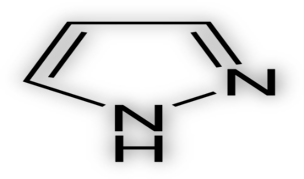
Pyrazole is a five-membered heterocyclic ring having three carbon atoms and two nitrogen atoms at N1 and N2 position with molecular formula C 3 H 4 N 2 .Pyrazole derivatives have attracted immense interest due to their wide applications in pharmaceutical and agrochemical industries. They are observed to have pharmacological activities such as antibacterial, antifungal, anticancer, antidepressant, anti-inflammatory, anti-tuberculosis and antioxidant effects. Pyrazole is also a significant scaffold in drug discovery and synthesis of organic compounds. Many methods have been reported for the synthesis of pyrazole derivatives. One of the most commonly reported methods is the reaction of 1,3-diketones with hydrazine derivatives.
SOFTWARES
1. ChemDraw
ChemDraw is a molecular editor and chemical structure drawing software that allows you to edit and create chemical structures. It provides chemical structure to name and name to structure conversion functionalities, NMR and mass spectrum simulation, structure cleaning and ligand structure drawing.
2. ChemAxon
ChemAxon is a cheminformatics and bioinformatics software platform for molecular visualization, chemical structure drawing, database searching, molecular property calculation, and drug discovery applications. It offers a range of tools for the manipulation and processing of chemical information.
3. Marvin Sketch
Marvin Sketch is a powerful chemical editor for drawing chemical structures, reactions and queries. It supports 2D and 3D visualization of compounds and reactions . It is useful in chemical structure preparation and drug discovery studies .
4. Swiss-PDB Viewer
Swiss-PDB Viewer is a molecular visualization and protein analysis application for the study of protein structures and structural alignments. Proteins can be overlaid and their structures and active sites compared. It is also helpful for preparing and analyzing protein structures before molecular docking.
5. Studio Discovery
Discovery Studio is a computational software suite for studying small molecules and macromolecules. It offers tools for ligand design, pharmacophore modeling, structure-based drug design, QSAR, ADME studies, macromolecular analysis and predictive toxicity.
6. PyRx Virtual Screening
PyRx is a virtual screening software that can be used to screen libraries of compounds against potential drug targets in computer-aided drug discovery. It provides a user-friendly user interface to tools for ligand and protein preparation, molecular docking, virtual screening and analysis of docking results.
7. PyMOL software
PyMOL is a molecular visualization system for the display and analysis of three-dimensional structures of proteins and small molecules. It is especially useful for visualizing protein-ligand interactions, binding poses, molecular frameworks, and publication quality 3D images
8. PubChem Compound
PubChem is a chemical database maintained by the National Center for Biotechnology Information (NCBI) It contains information about chemical structures, molecular properties, biological activities and related chemical data. Compound information and chemical structure are useful for computational studies.
9. Molinspiration.com
Molinspiration is a cheminformatics tool for molecular property calculation and structure analysis. It supports the manipulation of molecules, conversion of SMILES and SD files, visualization of molecules and calculation of various molecular properties. It is often used to assess properties and drug-likeness.
10. RCSB Protein Data Bank (RCSB-PDB)
RCSB Protein Data Bank (PDB) is a database for the three-dimensional structural data of large biological molecules, such as proteins and nucleic acids. It is widely used to get protein structures for structural analysis and molecular docking studies
MATERIAL AND METHODS:
1. Preparing the Ligands
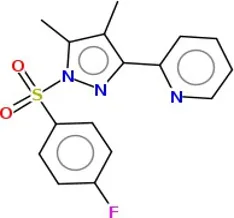
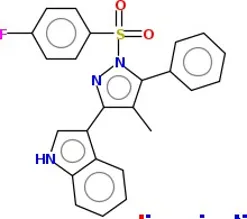
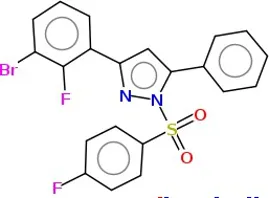
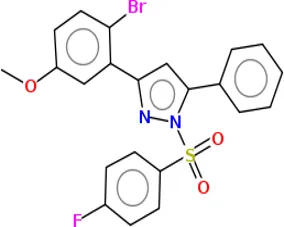
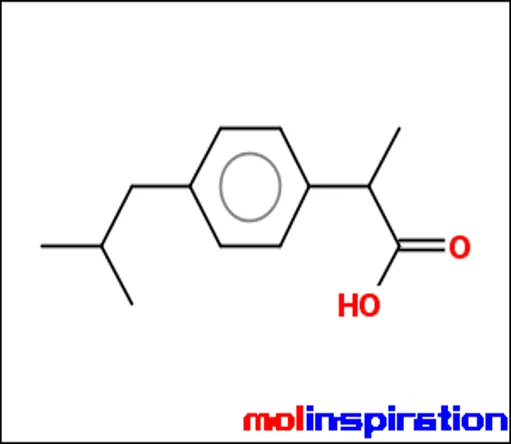
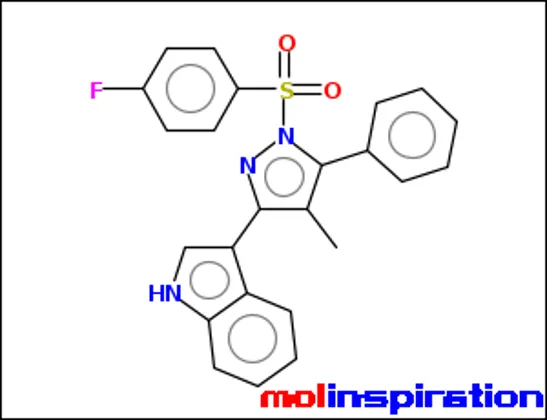
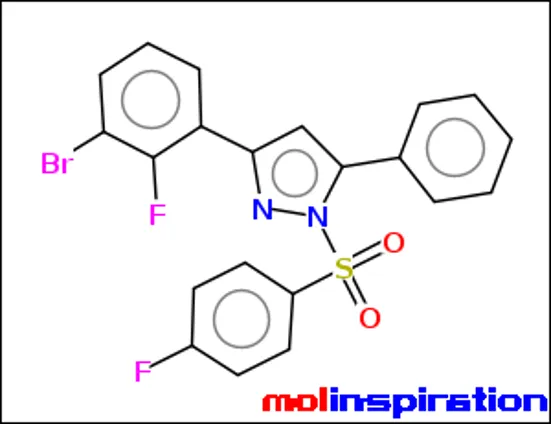
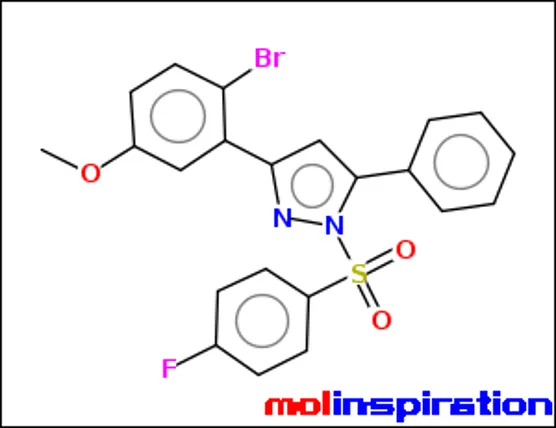
The novel substituted pyrazole derivatives were designed and drawn by chemical drawing software ( ChemDraw, Marvin sketch). The molecular frameworks were optimized and the canonical SMILES and IUPAC names were recorded for further analysis. Ligands were evaluated for compliance with Lipinski’s Rule of Five using Molinspiration to verify drug-likeness. Discussed in (Table 1).
Results: All the compounds for docking studies showed acceptable drug-like properties. Compound 1 had no Lipinski violations, whereas compounds 2, 3 and 4 each had one violation based on molecular weight or lipophilicity exceeding ideal limits.
2. Protein Preparation
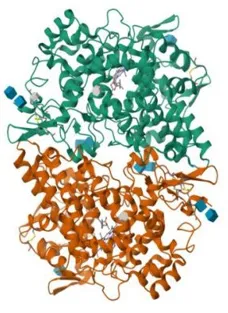
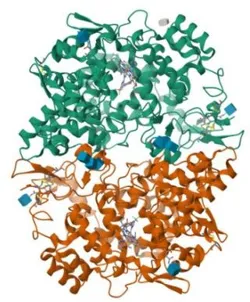
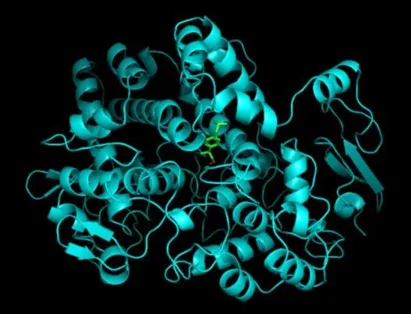
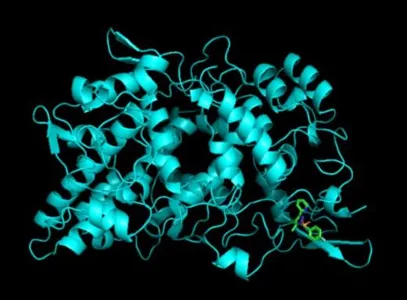
The target proteins of the inflammatory proteins, Prostaglandin H2 synthase (PDB ID: 1EQG) and Prostaglandin G/H synthase (PDB ID: 3LN1) were obtained from RCSB Protein Data Bank. The protein structures were prepared for docking studies using Swiss-PDB Viewer . This involved removing water molecules and other heteroatoms, adding missing residues and hydrogens, and optimizing side chains. Discussed in (Table 2).
Results: The refined protein structures were validated and active binding sites were identified for further docking studies.
3. ADME Prediction
The synthesized ligands were screened for Absorption, Distribution, Metabolism and Excretion (ADME) properties using the SwissADME web tool to predict the pharmacokinetic profiles like gastrointestinal absorption, blood brain barrier permeability and inhibition potential of cytochrome P450 enzymes. Discussed in (Table 3).
Results: SwissADME was used to predict the ADME properties of four substituted pyrazole derivatives and ibuprofen.Compound 1 was predicted to have high gastrointestinal absorption and blood brain barrier permeability. Conversely, Compounds 2, 3 and 4 were predicted to have low gastrointestinal absorption and were not predicted to permeate the blood-brain barrier.The predicted bioavailability score of all the four pyrazole derivatives was 0.55 whereas ibuprofen showed a bioavailability score of 0.85.
4. Molecular Docking
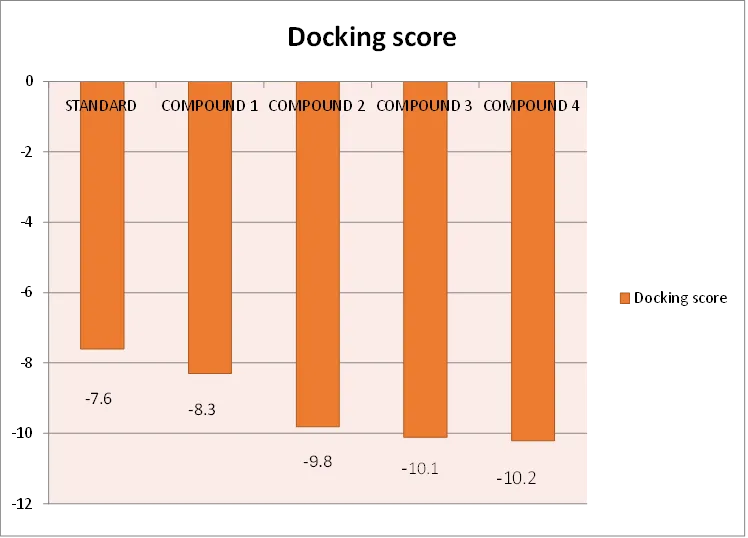
Molecular docking studies were performed using PyRx virtual screening tool which uses AutoDock Vina as docking engine. Protein macromolecules and ligand molecules were loaded in PyRx and grid box parameters were calculated to cover the expected active sites. Docking studies were performed to determine the binding mode and affinity of each ligand to target proteins. The binding strength was assessed by recording the docking scores in kcal/mol.Docking score Discussed in(Table 4)
Results: Compound 1 showed a binding affinity of −8.3 kcal/mol versus −7.6 kcal/mol for ibuprofen.Compound 2 had a docking score of −9.8 kcal/mol whereas Compounds 3 and 4 had docking scores of −10.1 and −10.2 kcal/mol respectively.The lowest docking score (most negative) was obtained for compound 4, suggesting the highest predicted binding affinity for this compound among the tested compounds under the applied docking conditions.
The order of docking score was:Compound 4: −10.2 > Compound 3: −10.1 > Compound 2: −9.8 > Compound 1: −8.3 > Ibuprofen: −7.6 kcal/mol
5. Analysis of Protein-Ligand Interactions
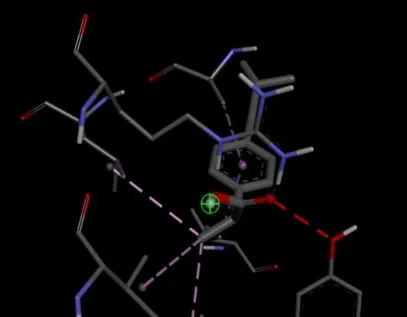
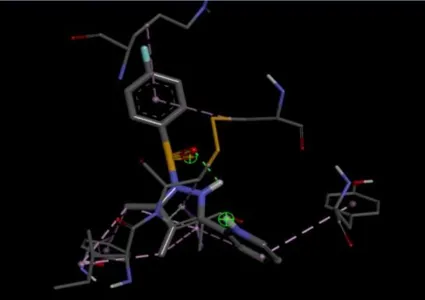
The interactions like hydrogen bonding, hydrophobic contacts and pi-stacking were analyzed by visualization of the docked protein-ligand complexes using PyMOL molecular viewer . This step helped in identifying important amino acid residues involved in ligand binding in the protein active site.Discussed in (Image 1,2,3,4,5)
Results: PyMOL was used to successfully visualize the docked complexes to study the binding orientation of the ligands in the active site region. The interaction analysis was used to compare the predicted binding affinities of the pyrazole derivatives with ibuprofen.
6. Physicochemical Properties and Drug-Likeness
Physicochemical properties such as molecular weight, lipophilicity (logP), topological polar surface area (TPSA), number of hydrogen bond donors and acceptors, and rotatable bonds were calculated by using Molinspiration and SwissADME. These data were useful for the evaluation of the pharmacological efficacy and bioavailability of the compounds.Discussed in (Table 3)
Results: Compound 1 did not violate the Lipinski rule of five and showed a miLogP value of 2.58, a molecular weight of 331.37 g/mol and a TPSA of 64.86 Å2 .Compound 2 had one Lipinski violation with a molecular weight of 431.49 g/mol and a miLogP value of 4.33.Compounds 3 and 4 had one Lipinski violation each. They had molecular weights of 475.31 and 487.35 g/mol, and miLogP values of 4.68 and 4.60, respectively.Compound 1 showed the best drug-likeness profile among the pyrazole derivatives tested according to the Lipinski parameters reported. Compounds 2, 3 and 4 showed one violation each, predominantly because of their higher molecular weight and/or lipophilicity.
TABLE:1 (PREPARATION OF LIGANDS)
|
SR. NO |
NAMES |
Canonical SMILES/ IUPACNAME |
STRUCTURE |
|
1 |
Compound 1 |
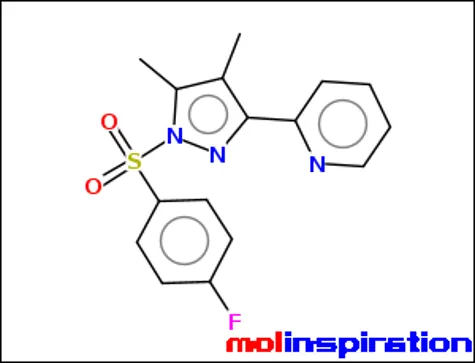
Cc2c(C) n(S (=O) (=O) c1ccc (F) cc1) nc2c3ccccn3 |
|
|
2 |
Compound 2 |
Cc4c(c1c[nH]c2 cccc12)nn(S(=O)( =O)c3ccc(F)cc3)c 4c5ccccc5 |
|
|
3 |
Compound 3 |
[H]c3c(c1cccc(Br)c1F)nn(S(=O)(= O)c2ccc(F)cc2)c3 c4ccccc4 |
|
|
4 |
Compound 4 |
[H]c3c(c1cc(OC)ccc1Br)nn (S(=O)(= O)c2ccc(F)cc2)c3 c4ccccc4 |
|
TABLE:2 (PREPARATION OF PROTEIN)
|
SR. NO |
ENZYME NAME |
PDB CODE |
STRUCTURE OF ENZYME |
|
1 |
Prostaglandin H2 synthase |
1EQG |
|
|
2 |
Prostaglandin G/H synthase |
3LN1 |
|
DRUG LIKENESS OF IBUPROFEN
|
Molinspiration property engine
IBUPROFEN
|
COMPOUND 1
MiSMILES: Cc2c(C) n(S (=O) (=O) c1ccc (F) cc1) nc2c3ccccn3
|
COMPOUND 2
MiSMILES: Cc4c(c1c[nH]c2ccccc12)nn(S(=O)(=O)c3ccc(F)cc3)c4c5ccccc5
|
Molinspiration property engine v2022.08
|
COMPOUND 3
MiSMILES: [H]c3c(c1cccc(Br)c1F)nn(S(=O)(=O)c2ccc(F)cc2)c3c4ccccc4
|
Molinspiration property engine v2022.08
|
COMPOUND 4
MiSMILES: c3c(c1cc(OC)ccc1Br)nn(S(=O)(=O)c2ccc(F)cc2)c3c4ccccc4
|
Molinspiration property engine v2022.08
|
ADME PROPERTIES (SWISS ADME):
TABLE:3 PHYSIOCHEMICAL PROPERTIES
|
Compound |
Compound 1 |
Compound 2 |
Compound 3 |
Compound 4 |
Ibuprofen |
|
Formula |
C16H14FN3O2S |
C24H18N3O2S |
C21H13BrF2N202S |
C22H16BrFN2O3S |
C13H18O2 |
|
Molecular weight |
331.36 g/mol |
431.48 g/mol |
475.31 g/mol |
487.34 g/mol |
206.28g/mol |
|
No. Heavy atoms |
23 |
31 |
29 |
30 |
15 |
|
No. Atom. Heavy atoms |
17 |
26 |
23 |
23 |
6 |
|
Fraction Csp3 |
0.12 |
0.04 |
0.00 |
0.05 |
0.46 |
|
No. Rotatable bonds |
3 |
4 |
4 |
5 |
4 |
|
No. H-bond Acceptor |
5 |
4 |
5 |
5 |
2 |
|
No. H- bond Donor |
0 |
1 |
0 |
0 |
1 |
|
Molar refractivity |
84.42 |
118.95 |
109.78 |
116.32 |
62.18 |
|
TPSA |
73.23 Å2 |
76.13 Å2 |
60.34 Å2 |
69.57 Å2 |
37.30 Å2 |
PHARMACOKINETICS
|
Compound |
Compound 1 |
Compound 2 |
Compound 3 |
Compound 4 |
IBUPROFEN |
|
GI Absorption |
High |
Low |
Low |
Low |
High |
|
BBB Permeant |
Yes |
No |
No |
No |
Yes |
|
P-gp Substrate |
No |
No |
No |
No |
No |
|
CYP1A2 inhibitor |
Yes |
No |
Yes |
Yes |
No |
|
CYP2C19 Inhibitor |
Yes |
Yes |
Yes |
Yes |
No |
|
CYP2C9 Inhibitor |
Yes |
No |
Yes |
Yes |
No |
|
CYP2D6 Inhibitor |
Yes |
No |
No |
No |
No |
|
CYP3A4 Inhibitor |
No |
No |
No |
No |
No |
|
Log Kp ( Skin Permeation) |
-6.23cm/s |
-5.11cm/s |
-5.17cm/s |
-6.33cm/s |
-5.70cm/s |
WATER SOLUBILITY
|
Parameter |
Compound 1 |
Compound 2 |
Compound 3 |
Compound 4 |
IBUPROFEN |
|
Log S (ESOL) |
-4.10 |
-6.26 |
-6.69 |
-6.60 |
-3.36 |
|
Solubility (ESOL) |
2.62e-02 mg/ml; 7.91e-05 mol/l |
2.36e-04 mg/ml; 5.48e-07 mol/l |
9.74e-05 mg/ml; 2.05e-04 mol/l |
1.24e-04 mg/ml; 2.54e-07 mol/l |
9.09e-02 mg/ml; 4.41e-04 mol/l |
|
Class (ESOL) |
Moderately Soluble |
Moderately Soluble |
Moderately Soluble |
Moderately Soluble |
Soluble |
|
Log S (Ali) |
-4.15 |
-6.73 |
-6.71 |
-6.77 |
-3.97 |
|
Solubility (Ali) |
2.34e-02 mg/ml; 7.08e-05 mol/l |
7.98e-05 mg/ml; 1.85e-07 mol/l |
9.22e-05 mg/ml; 1.94e-07 mol/l |
8.25e-05 mg/ml; 1.57e-07 mol/l |
2.23e-02 mg/ml; 1.08e-04 mol/l |
|
Class (Ali) |
Moderately Soluble |
Moderately Soluble |
Poorly soluble |
Poorly Soluble |
Soluble |
|
Log S (SILICOS-IT) |
-6.02 |
-9.33 |
-9.14 |
-8.98 |
-3.44 |
|
Solubility (SILICOS-IT) |
3.14e-04 mg/ml; 9.48e-07 mol/l |
2.01e-07 mg/ml; 4.66e-10 mol/l |
3.40e-07 mg/ml; 7.15e-10 mol/l |
5.09e-07 mg/ml; 1.4-09 mol/l |
7.49e-02 mg/ml; 3.63e-04 mol/l |
|
Class (SILICOS-IT) |
Poorly Soluble |
Poorly Soluble |
Poorly Soluble |
Poorly Soluble |
Soluble |
DRUGLIKENESS
|
Parameter |
Compound 1 |
Compound 2 |
Compound 3 |
Compound 4 |
IBUPROFEN |
|
LIPINSKI |
Yes; 0 Violation |
Yes; 1 Violation |
Yes; 1 Violation |
Yes; 1 Violation |
Yes; 0 Violation |
|
GHOSE |
Yes |
No |
No |
No |
Yes |
|
Veber |
Yes |
Yes |
Yes |
Yes |
Yes |
|
Egan |
Yes |
No |
No |
No |
Yes |
|
Muegge |
Yes |
No |
No |
No |
Yes |
|
Bioavailability Score |
0.55 |
0.55 |
0.55 |
0.55 |
0.85 |
LIPOPHILICITY
|
Parameter |
Compound 1 |
Compound 2 |
Compound 3 |
Compound 4 |
IBUPROFEN |
|
Log Po/w(miLogP) |
2.25 |
2.73 |
3.53 |
3.41 |
2.17 |
|
Log Po/w (XLOGP3 |
2.95 |
5.38 |
4.68 |
5.55 |
3.50 |
|
Log Po/w (WLOGP ) |
4.44 |
6.88 |
7.42 |
6.87 |
3.07 |
|
Log Po/w (MLOGP ) |
2.98 |
4.70 |
5.72 |
5.00 |
3.13 |
|
Log Po/w (SILICOS-IT) |
2.67 |
4.79 |
4.84 |
4.48 |
3.15 |
|
Consensus Log Po/w |
3.06 |
4.90 |
5.44 |
5.06 |
3.00 |
PROTEIN LIGAND INTERACTIONS
IMAGE : 1
IBUPROFEN (STANDARD):
COMPOUND 1
IMAGE :2
COMPOUND 2
IMAGE :3
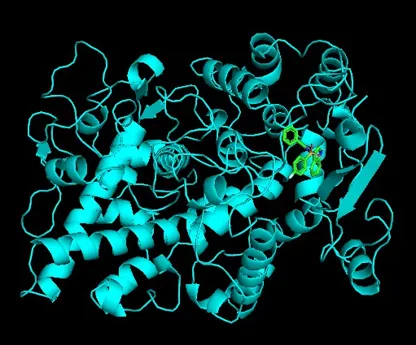
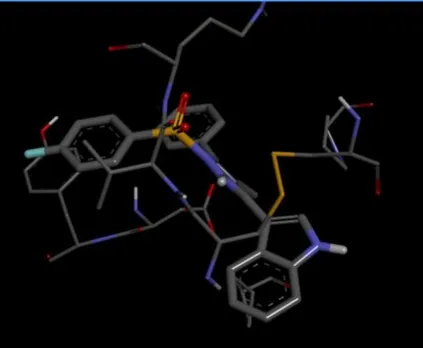
COMPOUND 3:
IMAGE :4
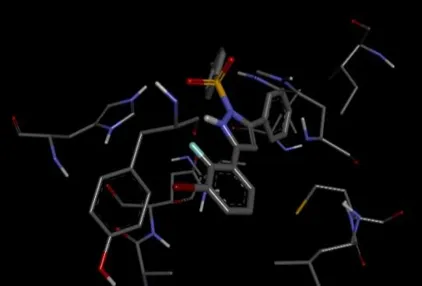
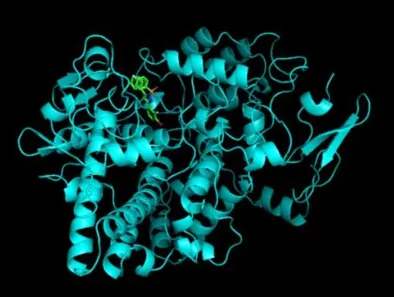
COMPOUND 4:
IMAGE :5
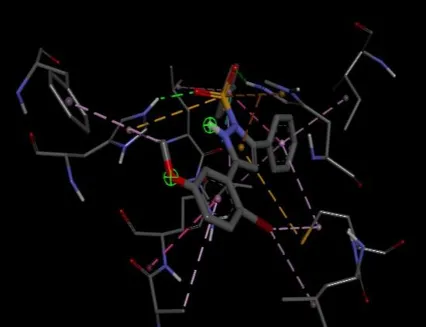
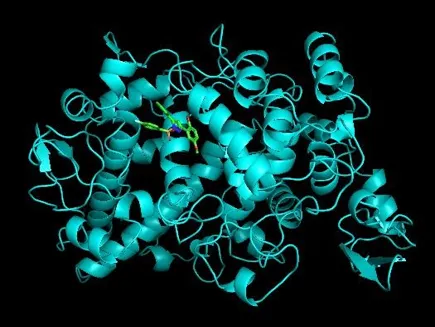
TABLE:4
DOCKING RESULTS
|
PROTEIN |
LIGANDS |
DOCKING SCORE (kcal/mol) |
|
1EQG |
IBUPROFEN (STANDARD ) |
-7.6 |
|
COMPOUND 1 |
-8.3 |
|
|
COMPOUND 2 |
-9.8 |
|
|
COMPOUND 3 |
- 10.1 |
|
|
COMPOUND 4 |
-10.2 |
DISCUSSION:
In the present study the drug-likeness, physicochemical properties, predicted ADME properties, aqueous solubility and protein-binding potential of four substituted pyrazole derivatives have been assessed by an in-silico approach. The reference anti-inflammatory drug was ibuprofen and molecular docking was conducted on prostaglandin H2 synthase (PDB ID: 1EQG). Physicochemical analysis indicated that Compound 1 exhibits good drug-like properties with a molecular weight of 331.37 g/mol, a miLogP value of 2.58, a TPSA of 64.86 Ų, and no violation of the Lipinski rule of five. In contrast, compounds 2, 3 and 4 were more lipophilic and had higher molecular weights and one Lipinski violation each. The ADME prediction showed that Compound 1 was highly absorbed from the gastrointestinal tract and was predicted to cross the blood–brain barrier. Compounds 2, 3 and 4 were poorly absorbed from the gastrointestinal tract and not predicted to cross the blood–brain barrier.
The predicted bioavailability score was 0.55 for all the four pyrazole derivatives as compared to 0.85 for ibuprofen . The ESOL solubility prediction also indicated that lower predicted aqueous solubility was observed for the pyrazole derivatives in comparison to ibuprofen, with the solubility values of Compounds 2–4 being particularly low, perhaps because of their higher molecular weight and higher lipophilicity. Molecular docking analysis revealed that all four pyrazole derivatives showed more negative binding scores than ibuprofen. The docking scores were -8.3, -9.8, -10.1 and -10.2 kcal/mol for Compounds 1, 2, 3 and 4 respectively as compared to -7.6 kcal/mol for ibuprofen. The best predicted binding affinity was obtained for Compound 4, followed by Compounds 3 and 2. This improved performance of the docked compounds may be due to their aromatic substitutes and hydrophobic properties, which may facilitate favorable non-covalent interactions within the protein binding region. Nevertheless, the compound with the best docking score did not have the best overall drug-likeness or ADME profile. The compound 4 was predicted to have the strongest binding affinity, but also the poor predicted aqueous solubility, low predicted gastrointestinal absorption and one Lipinski violation. Less negative docking score whereas compound 1 showed relatively good drug-likeness and predicted absorption profile. The results thus suggest that both molecular binding affinity and pharmacokinetic properties should be considered in prioritizing compounds for further development. The present results are preliminary and based on computational predictions and do not confirm anti-inflammatory efficacy, safety or therapeutic activity. Further in-vitro anti-inflammatory and enzyme-inhibition activities, toxicity studies, molecular-dynamics simulation and experimental pharmacokinetic studies are to be carried out to confirm the potential of these substituted pyrazole derivatives.
CONCLUSION:
In-silico study on four substituted pyrazole derivatives were performed against inflammatory protein target 1EQG through drug-likeness, ADME, solubility and molecular docking analyzes. Compound 1 had relatively favorable pharmacokinetic characteristics with zero Lipinski violations and high predicted gastrointestinal absorption, whereas Compounds 2–4 had one Lipinski violation and lower predicted absorption. Molecular docking showed good binding scores of −8.3, −9.8, −10.1 and −10.2 kcal/mol for Compounds 1–4, respectively, against −7.6 kcal/mol for ibuprofen, with Compound 4 showing the most favorable predicted binding score . However, the derivatives demonstrated lower predicted aqueous solubility and bioavailability than ibuprofen. Overall, these findings indicate that the investigated pyrazole derivatives possess promising computational binding characteristics and may serve as potential leads for further anti-inflammatory drug development. Experimental validation through in-vitro biological, toxicity, and pharmacological studies is required to confirm their therapeutic potential.
REFERENCES

B. Vasantha Rajan, E. Gopinath, P. Divakar, S. Vaani Priya Lakshmi, In SILICO Molecular Docking Analysis of Pyrazole Derivatives as Potential Anti-Inflammatory Agents Targeting Protein Code IEQG, Int. J. of Pharm. Sci., 2026, Vol 4, Issue 10, 3165-3177. https://doi.org/10.5281/zenodo.23527448
 10.5281/zenodo.23527448