

We use cookies to ensure our website works properly and to personalise your experience. Cookies policy
Department of Pharmacy Practice, Narasaraopeta Institute of Pharmaceutical Sciences, Narasaraopet, Andhra Pradesh, 522601, India.
Liver diseases are still one of the major issues for public health worldwide, as they cause a large number of morbidities and mortalities. Early diagnosis, preventive measures, and awareness of risk factors such as viral infections, alcohol misuse, obesity, and hepatotoxic drugs are very important to be able to manage the disease effectively. Knowledge, Attitude, and Practice (KAP) assessment is a valuable tool to identify gaps in public awareness and to plan effective educational interventions. Methods: A prospective observational study was conducted over six months among 150 participants from a local community. Baseline KAP regarding liver diseases, risk factors, symptoms, and preventive measures was assessed using a validated questionnaire. The patients were given a series of counseling sessions on various topics such as vaccination (Hepatitis B), avoidance of alcohol, changes in diet, and healthy lifestyle habits. The patients were re-evaluated three months later. Numerical data was summarized statistically, and the paired t-test was used to find out if there was a significant difference in the two sets of data after the educational intervention. Results: Knowledge scores, attitudes towards liver disease prevention, and the adoption of healthy lifestyle practices were significantly improved by the educational intervention. Participants showed a higher level of knowledge of vaccination, avoidance of hepatotoxic substances, and taking the screening tests at the earliest point. Conclusion: Properly planned local-level campaigns for raising awareness in the community can not only make people knowledgeable and change their attitudes and practices towards liver diseases but also are capable of becoming the cornerstone for disease prevention, early detection, and reduction of liver-related complications.
The liver is the largest solid organ in the body and is essential for various metabolic, detoxification, synthetic, and storage functions. Diseases of the liver such as viral hepatitis, fatty liver disease, cirrhosis, and hepatocellular carcinoma are the leading cause of mortality globally resulting in millions of deaths annually. Most liver diseases do not show any symptoms during the early stages thus; the diagnosis is often delayed until there are serious complications. [1.2] Viral hepatitis is a major global health problem as it affects millions of individuals annually. The spread of non-alcoholic fatty liver disease (NAFLD) is attributed mostly to unhealthy lifestyles and a rise in obesity levels. Alcohol-related liver disease continues to be one of the major preventable causes of ill health and premature death. Although Hepatitis B vaccines are available, and public health programs are in place, there is still low awareness of risk factors, lifestyle changes, and early screening among many communities. It is very important to understand the knowledge, attitudes, and practices (KAP) of the community towards liver diseases before designing and implementing any educational interventions. Such awareness interventions result in early detection of diseases, prevention, and lead to the adoption of healthy lifestyles such as reducing alcohol consumption, eating a balanced diet, vaccination, and refraining from the use of hepatotoxic drugs. [3,4]
AIM
To examine the community population's knowledge, attitude, and practices (KAP) in relation to liver diseases and to check the impact of well-organized educational programs on prevention and control.
OBJECTIVES
METHODOLOGY
Study Design
Prospective observational study.
Study Duration
Three months.
Study Setting
Community-based population or outpatient department of a tertiary care hospital.
Study Population
Adults aged ≥10 years residing in the selected community.
Sample Size
150 participants.
Sampling Method
Convenience sampling.
Inclusion Criteria
Male and female patients are considered.
Age group between 10-80 years are considered
In and out patients are considered.
Exclusion Criteria
Below the age of 10 years and above the age of 80 years are not considered. [7,8]
Study Procedure
STATISTICAL ANALYSIS
EXPECTED OUTCOME
RESULTS
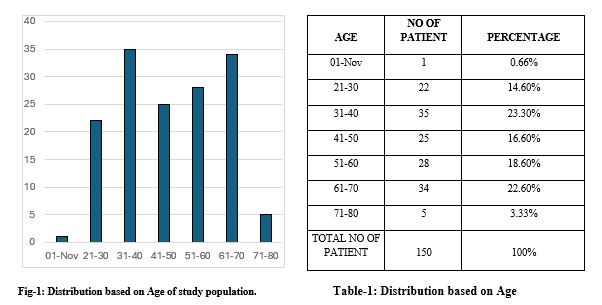
150 people participated in the research. The majority of the participants were from the 31, 40 years group (23.3%, n=35), so most people surveyed were middle-aged adults. Then there were 61, 70 years (22.6%, n=34) and 51, 60 years (18.6%, n=28) subjects. Those aged 41, 50 years made up 16.6% (n=25), while 21, 30 years were 14.6% (n=22) of the sample. Very few participants were 71, 80 years old (3.3%, n=5), and only one person (0.66%) was in the 1-10 years age group. In brief, most of the people involved in the survey were adults.
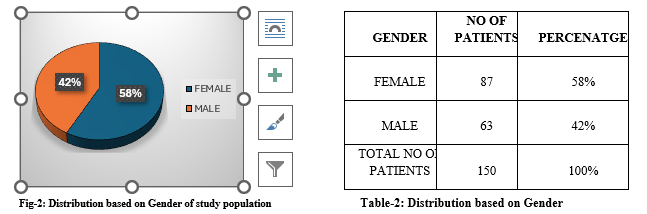
The data on the genders of the people in this research revealed that females were the dominant gender as they made up 58% (n=87) of the total number of people, whereas males were 42% (n=63). So female participation was a little higher than the male one in the research. Having a fairly equal ratio of three genders will help to get a more representative picture of the population. It may be also that there will be gender differences about awareness, behavior towards healthcare, and also medication practices within the community
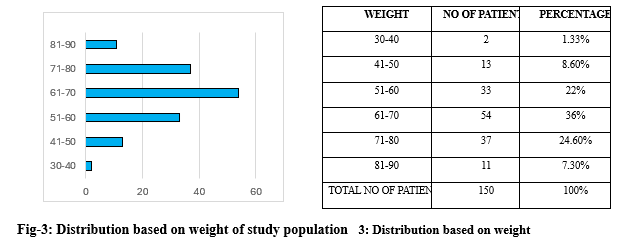
By looking at the weight distribution of the research participants, it has been shown that the most body weights of the people were 61-70 kg (36%, n=54). Next came 71-80 kg (24.6%, n=37) and 51-60 kg (22%, n=33). Those weighted 41-50 kg represented 8.6% (n=13) of the population. Plus, 7.3% (n=11) of participants had weights between 81, 90 kg, whereas only 1.33% (n=2) were in the 30, 40 kg weight group. Overall, this result shows that the majority of the participants have normal to slightly elevated body weight.
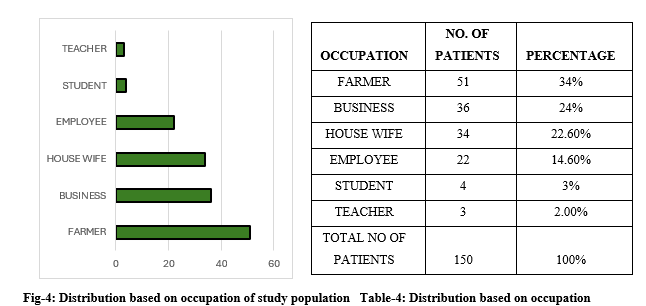
The participants' occupational status showed that farmers were the largest group (34%, n=51), which is a direct reflection of the rural background of the study population. Next in line were business people (24%, n=36) and housewives (22.6%, n=34). Employees made up 14.6% (n=22) of the participants. A smaller rung on the ladder consisted of students (3%, n=4) and teachers (2%, n=3). These results indicate that, among the participants, agriculture and small businesses are the leading sources of livelihood.
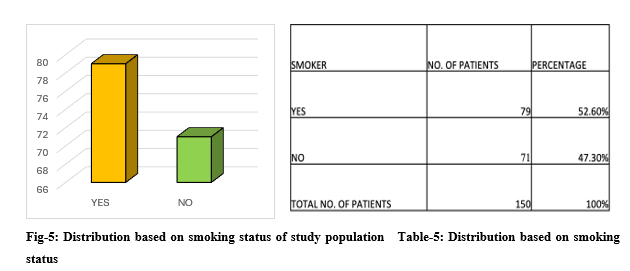
In this research project the smoking habits of the respondents were evaluated. 79 smokers (52.6%) and 71 non-smokers (47.3%) were the participants ho responded to the question based on the total number of 150 individuals. So, it is evident that a little over half the population of the study has a history of smoking. It should be noted that smoking, which is a lifestyle factor, may have an impact on health status generally and the individual's exposure to the risk of various diseases. One should remember smoking, a lifestyle choice, can affect health in general and can also increase the individual's risk of different diseases.
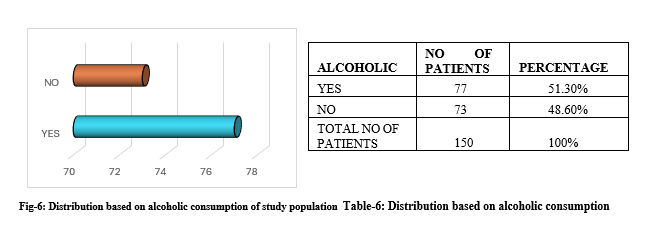
Out of 150 participants, 77 people (51.3%) were drinking alcohol, and 73 people (48.6%) were not alcoholics. The results show that about half of the study population reported drinking alcohol. Drinking alcohol is known to be one of the major risk factors that can lead to liver diseases like fatty liver disease, alcoholic hepatitis, and liver cirrhosis. So, the high exposure to alcohol among the study subjects can be a potential risk factor for their liver health.
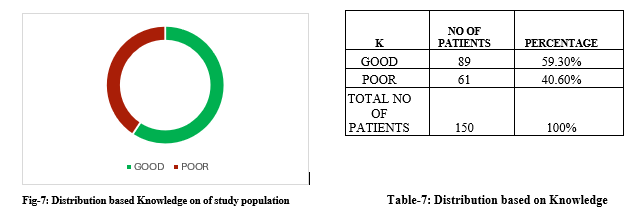
Knowledge level about liver disease and its risk factors showed that 89 participants (59.3%) have good knowledge while 61 participants (40.6%) have poor knowledge. This means that a majority of participants are aware of liver health and risk factors; however, a significant portion is still not well-informed. Due to insufficient knowledge about how to prevent liver disease, lifestyle risk factors, and early symptoms people may get diagnosed late and the disease might not be managed well.
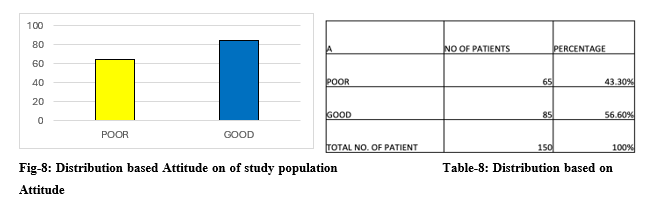
When it comes to how people feel about preventing liver disease and leading a healthy lifestyle through their choices, 85 participants (56.6%) had a positive attitude, while 65 participants (43.3%) had a negative attitude. This data indicates that a little more than half of the participants are willing to maintain liver health by changing their lifestyle such as by reducing alcohol intake, not smoking, and eating healthy.
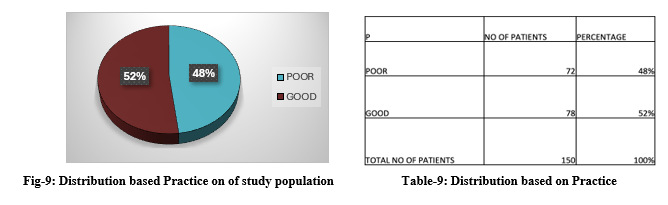
When evaluating liver health and disease prevention practices, results indicate that 78 participants (52%) have very good practices whereas 72 participants (48%) have poor ones. Though a majority of the participants have healthy behaviors like drinking very small amounts of alcohol and living healthy lifestyles, quite a few of them continue to engage in unhealthy activities that might lead to liver disease.

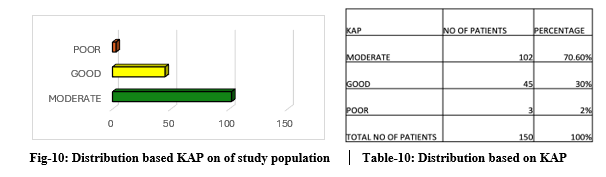
The overall assessment of Knowledge, Attitude, and Practice (KAP) in respect to liver disease showed that the majority of respondents have moderate to good levels of awareness and behaviors connected to liver health. Even though a large portion of the participants had good knowledge, raised attitudes and correct practices, the existence of people with poor scores points toward the necessity for more public awareness and educational efforts concerning liver disease prevention and healthy lifestyle practices.
DISCUSSION
In fact, this research aimed at assessing the demographic aspects of the subjects and their knowledge, attitude, and practice (KAP) concerning liver disease. Altogether, 150 individuals took part in the research. The analysis of gender showed that women made up 58% of the total sample, whereas men accounted for 42%, thus, a slightly higher number of women took part in the research. Age analysis demonstrated that the highest number of participants was from the 31, 40 years group, then 61, 70 years and 51, 60 years, which means that liver health issues are likely to be of concern to middle-aged and older people. [12,14] The analysis of body weights showed that most of the participants weighed 61, 70 kg, then 71, 80 kg and 51, 60 kg. Being overweight is considered to be a major risk factor for several liver diseases, especially non-alcoholic fatty liver disease (NAFLD), which is becoming increasingly common as a result of unhealthy lifestyle and eating habits. The employment analysis indicated that the majority of the survey participants were farmers, next were business persons and housewives, which is indicative of the rural origin of the study population. Lifestyle factors such as smoking and alcohol drinking were also evaluated since they have a very strong link with liver disease. The results indicated that 52.6% of respondents were smokers whereas 47.3% were non-smokers. Likewise, 51.3% of respondents indicated that they consume alcohol, whereas 48.6% said that they don't. Alcohol use is an important factor that increases the risk of liver diseases such as alcoholic fatty liver, alcoholic hepatitis, and liver cirrhosis. Persistent alcohol consumption results in progressive liver damage by means of oxidative stress, inflammation, and liver cell injury. Smoking can enhance the harmful effects of alcohol on the liver by causing metabolic abnormalities and increasing oxidative stress. [10,11]
Knowledge:- Having a proper understanding of liver diseases and their risk factors is crucial. In this aspect, knowledge assessment showed that 59.3% of the study participants were knowledgeable about liver disease whereas 40.6% were not very much aware. Even though the majority of the respondents were found to be knowledgeable about liver disease and its prevention, a good number of them were still unaware to some extent. Inadequate knowledge concerning the causes, symptoms, and preventive measures of liver disease might result in getting the diagnosis late and improper handling of the disease.
Attitude:- The attitude survey demonstrated that 56.6% of the participants were friendly with the idea of liver disease prevention, while 43.3% of the participants were negative. A positive disposition to the health of liver is necessary for the real implementation of preventive health behaviors, such as reducing the level of alcohol consumption, avoiding smoking, eating healthily, and consulting the doctor when symptoms appear. Yet the fact that a fairly large number of individuals still have a negative attitude shows that there is a need for raising awareness and changes in behavior.
Practice:- The assessment of practice indicated that 52% of the participants engaged in good liver-related behaviors, and 48% were involved in poor liver-related behaviors. Most of the time, impure practices are the result of lifestyle behaviors, while good practices usually mean abstinence from alcohol, good nutrition, and proper utilization of health services. Limiting alcohol consumption, sticking to a healthy diet, and steering clear of unhealthy habits are key healthy practices for preventing liver diseases. However, the presence of poor practices among a considerable proportion of participants indicates that lifestyle-related risk factors remain common within the study population. [14,15] Overall, the KAP findings suggest moderate levels of knowledge, attitude, and practice regarding liver disease prevention among the participants. The presence of awareness on the one hand and the lack of knowledge and behavior towards a healthy lifestyle on the other hand together determine to what extent the individuals are capable of managing their own health without assumptions of non-fulfillment. These data hold a clear message that in a context of overall low-level knowledge, behavior changes can be achieved through well-designed and well-implemented community-based health education programs. Raising awareness of the risk factors of liver disease in the general population and promoting the adoption of healthy liver practices can have a major impact on the reduction of the incidence of liver diseases [15, 16]
CONCLUSION
The demographic characteristics as well as the knowledge, attitude, and practice (KAP) regarding liver disease and its risk factors were assessed in a community-based observational study of 150 participants. The study findings revealed that the majority of the participants were middle-aged adults; females were slightly more than males in the study population. The majority of the participants were within the body weight range of 61–70 kg, and the countryside origin of the population was reflected in the fact that agriculture was the most common occupation.
Lifestyle factors such as smoking and alcohol consumption were common among a significant proportion of the participants, with more than half the population reporting smoking and alcohol use. These are the main factors that increase one's risk for the development and progression of liver diseases such as fatty liver disease, alcoholic hepatitis, and liver cirrhosis. [18]
The evaluation of knowledge, attitude, and practice showed that 59.3% of the participants had good knowledge, 56.6% had a positive attitude, and 52% practiced good behavior regarding liver health. Nevertheless, a considerable number of people had poor knowledge, negative attitude, and unhealthy lifestyle, which means there are still awareness and behavior gaps in the community.
This study's results emphasize the need for public awareness about liver disease prevention, and healthy lifestyle habits. The provision of health education programs, early screening, and advice on the harmful effects of alcohol consumption and smoking at the community level can be pivotal in decreasing the liver disease burden.
Further studies should focus on the evaluation of clinical parameters, the identification of new risk factors, and the assessment of the performance of specially designed educational interventions aimed at increasing liver health awareness and the promotion of healthier lifestyle practices among rural populations. [19,20]
REFERENCES






P. Lazaru, J. N. Suresh Kumar, Venumadhavi Yamala, Deviprasanna Tadimalla, Surendrakumar Tulava, Pavankumar Paritala, Gayathri Yampati, A Prospective Observational Study on Assessment of Knowledge, Attitude, Practices and Raising Awareness and Control of Liver Diseases, Int. J. of Pharm. Sci., 2026, Vol 4, Issue 3, 1392-1401. https://doi.org/10.5281/zenodo.19000430
 10.5281/zenodo.19000430