

We use cookies to ensure our website works properly and to personalise your experience. Cookies policy
Department of Pharm.D, Sree Chaitanya Institute of Pharmaceutical Sciences, LMD Colony, Karimnagar, Telangana Mother and Child Healthcare Hospital, a Unit of Government General Hospital, Karimnagar, Telangana.
Cesarean section (CS) is one of the most commonly performed surgical procedures worldwide and is carried out to ensure maternal and fetal safety when complications arise. This prospective observational study was conducted among 165 pregnant women undergoing cesarean section to evaluate maternal and fetal predictors associated with elective and emergency procedures. Data were collected using a structured data collection form based on predefined inclusion and exclusion criteria. Of the 165 patients, 89 (53.9%) underwent elective CS and 76 (46%) underwent emergency CS. The majority of women belonged to 20-29 years age group (63%). Previous cesarean section was the most common indication for elective CS (41.2%), followed by breech presentation and intrauterine growth restriction. In emergency CS, fetal distress was the leading indication (20%), followed by placental abruption and failure to progress in labor. Other indications included oligohydramnios, malpresentation, contracted pelvis. Elective cesarean sections were slightly more frequent than emergency procedures. Previous cesarean section emerged as the predominant maternal predictor for elective CS, while fetal distress was the major fetal predictor for emergency CS. These findings provide valuable insights into the current pattern of cesarean delivery indications and may help optimize obstetric care and clinical decision-making.
Childbirth is regarded as a major life event with significant psychological importance in a woman's life. In general, there are two modes of childbirth: vaginal delivery and cesarean section.1 A cesarean section is a surgical procedure involving an incision in the mother's abdomen and uterus to deliver the baby. Common indications for cesarean section include labor dystocia, abnormal fetal heart rate, multiple pregnancy, fetal macrosomia, gestational diabetes mellitus, and preeclampsia.2
Based on urgency, cesarean sections are classified as:
The decision to perform a cesarean section is influenced by several maternal and fetal factors. Maternal factors include advanced maternal age, hypertension, placenta previa, placental abruption, preeclampsia, obesity, gestational diabetes mellitus, and previous uterine surgery or cesarean delivery. Fetal factors include fetal distress, breech presentation, multiple pregnancy, oligohydramnios/polyhydramnios, intrauterine growth restriction (IUGR), and macrosomia.5
The Robson Classification System, recommended by the WHO in 2015, is a standardized method for assessing and comparing cesarean section rates. It classifies all pregnant women into ten groups based on parity, previous cesarean section, onset of labor, gestational age, fetal presentation, and the number of fetuses.6
The objective of the present study was to evaluate the maternal and fetal factors associated with elective and emergency cesarean section among pregnant women undergoing cesarean delivery at a tertiary care hospital.
METHODS
This prospective observational study was conducted among inpatients at the Mother and Child Healthcare Hospital, Government District General Hospital, Karimnagar, Telangana, from July to December 2025. The study was carried out over a period of 6 months and included a total of 165 patients.
Inclusion Criteria
Exclusion Criteria
Sources of Data
Data collected from hospitalized pregnant women who underwent cesarean section in the inpatient department of GMCH. Patient case records, including demographic details and obstetric history. Inpatient clinical notes, including ultrasonography reports. Patient interviews and counseling records regarding past medical history and family history.
Study procedure
The study was initiated at a single centre by selecting patients based on predefined inclusion criteria. Pregnant women aged above 18 years who underwent cesarean section were enrolled in the study. Data collection was carried out based on demographic details, obstetric history, clinical findings, and relevant investigations.
Study plan
Study method
RESULTS
In the present study conducted at Mother and Child Healthcare Hospital, a unit of Government General Hospital, Karimnagar, Telangana, a total of 165 cases of cesarean delivery were analyzed over a duration of 6 months. The maternal and fetal characteristics and indications associated with cesarean section were evaluated.
Table 1: Distribution of Patients According to Maternal Age
| AGE GROUPS | NO. OF PATIENTS | PERCENTAGE (%) |
|---|---|---|
| < 20 | 0 | 0 |
| 20-29 | 104 | 63 |
| 30-34 | 52 | 31.5 |
| >35 | 9 | 5.45 |
[Figure - see the formatted PDF]
Figure 1: Maternal Age
Out of 165 cases, most women were in the 20–29 years age group (104 cases, 63%). followed by women aged 30–34 years (52 cases, 31.5%). Only 9 cases (5.45%) were observed in women aged 35 years and above, and no cases were observed below 20 years of age.
Table 2: Categorization of Data According to Type of Cesarean Section
| TYPE | NO. OF PATIENTS | PERCENTAGE (%) |
|---|---|---|
| Elective | 89 | 53.9 |
| Emergency | 76 | 46 |
[Figure - see the formatted PDF]
Figure 2: Distribution According to Type of Cesarean Section
Among the 165 cases analyzed, 89 cases (53.9%) were elective cesarean sections, while 76 cases (46%) were emergency cesarean sections
Table 3: Distribution of Data According to Maternal and Fetal Indications
| INDICATIONS | ELECTIVE | EMERGENCY | ||
|---|---|---|---|---|
| No. of patients | Percentage (%) | No. of patients | Percentage (%) | |
| Failure to progress | 0 | 0 | 9 | 5.4 |
| Oligohydramnios | 4 | 2.4 | 6 | 3.6 |
| Fetal distress | 0 | 0 | 33 | 20 |
| Previous C-section | 68 | 41.2 | 4 | 2.4 |
| Placental abruption | 2 | 1.21 | 19 | 11.5 |
| Breech | 7 | 4.2 | 2 | 1.21 |
| IUGR | 5 | 3 | 2 | 1.21 |
| Contracted Pelvis | 3 | 1.8 | 1 | 0.6 |
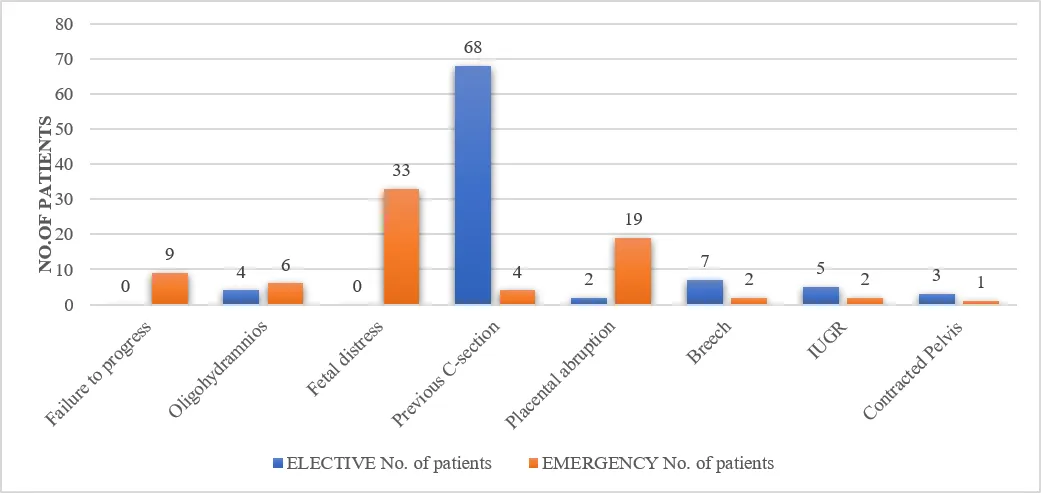
Figure 3: Maternal and Fetal Indications.
In the current study, out of 165 C-section cases, the predominant indication for elective cesarean procedure was PVCS, accounting for 68 cases (41.2%), followed by breech presentation in 7 cases (4.2%), intrauterine growth restriction in 5 cases (3%), oligohydramnios in 4 cases (2.4%), contracted pelvis in 3 cases (1.8%), and placental abruption in 2 cases (1.21%). Among emergency cases, fetal distress was the leading indication, accounting for 33 cases (20%), followed by abruption in 19 cases (11.5%), failure to progress in 9 cases (5.4%), oligohydramnios in 6 cases (3.6%), PVCS in 4 cases (2.4%), breech and intrauterine growth restriction, with 2 cases each (1.21%), and contracted pelvis in 1 case (0.6%).
Table 4: Distribution of Cases According to Fetal Position
| FETAL POSITION | NO. OF SUBJECTS | PERCENTAGE (%) |
|---|---|---|
| Cephalic | 156 | 94.5 |
| Breech | 9 | 5.4 |
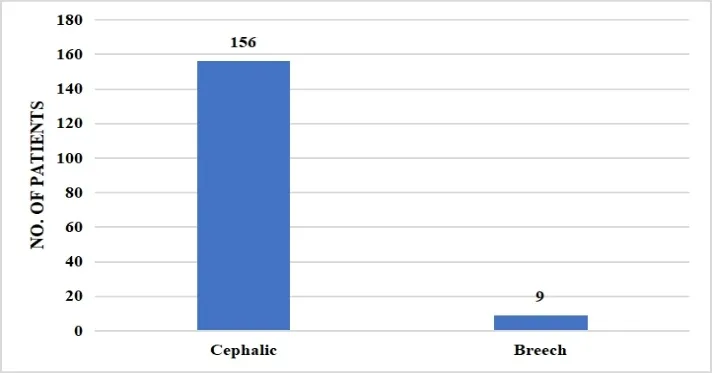
Among 165 C-section cases analyzed, the majority of fetuses were in the cephalic position 156 cases (94.5%), while breech presentation was observed in 9 cases (5.4%).
Table 5: Distribution of Data According to Maternal Comorbidities
| COMORBIDITIES | NO. OF PATIENTS | PERCENTAGE (%) |
|---|---|---|
| Gestational hypertension | 22 | 13.3 |
| Gestational diabetes | 12 | 7.27 |
| Hypothyroidism | 30 | 18.1 |
[Figure - see the formatted PDF]
Figure 5: Graph Showing Distribution of Patients with Comorbidities
In this study, comorbid conditions were observed among several patients undergoing C-section. The most common comorbidities identified were hypothyroidism (18.1%), gestational hypertension (13.3%), and gestational diabetes mellitus (7.27%).
Table 6: Categorization of Data According to Body Mass Index (bmi)
| BMI | NO. OF PATIENTS | PERCENTAGE (%) |
|---|---|---|
| 18.5-24.9 | 60 | 36.3 |
| 25-29.9 | 89 | 53.9 |
| >30 | 16 | 9.69 |
[Figure - see the formatted PDF]
Figure 6: Showing Data Distribution According to BMI
Among 165 cases analysed, 60 women (36.3%) had a normal BMI (18.5-24.9), 89 women (53.9%) were overweight (25-29.9), and 16 women (9.69%) were obese (>30).
Table 7: Distribution of Cases According to Parity
| PARITY | NO. OF PATIENTS | PERCENTAGE (%) |
|---|---|---|
| Nulliparous | 29 | 17.5 |
| Multiparous | 136 | 82.4 |
[Figure - see the formatted PDF]
Among 165 cases, 29 (17.5%) women were nulliparous and 136 (82.4%) women were multiparous.
Table 8: Pattern of C-Section Cases by Gravida Status
| GRAVIDA | NO. OF SUBJECTS | PERCENTAGE (%) |
|---|---|---|
| Primigravida | 23 | 13.9 |
| Multigravida | 142 | 86 |
[Figure - see the formatted PDF]
Table 9: Arrangement of Data by Fetal Heart Rate
| FETAL HEART RATE (bpm) | NO. OF PATIENTS | PERCENTAGE (%) |
|---|---|---|
| 110-160 | 147 | 89 |
| >160 | 18 | 10.9 |
[Figure - see the formatted PDF]
Figure 9: Graphical Representation of Data Based on Fetal Heart Rate
Among 165 cases, 147 fetuses (89%) had a normal fetal heart rate of 110-160 bpm, while 18 fetuses (10.9%) had a heart rate above 160 bpm.
Table 9: Stratification of Data on the Basis of Previous Cesarean Section History
| HISTORY OF PVCS | NO. OF PATIENTS | PERCENTAGE (%) |
|---|---|---|
| With previous C-Section | 72 | 43.6 |
| Without previous C-section | 93 | 56.3 |
[Figure - see the formatted PDF]
Figure 10: Grouping of Patients According to Previous Cesarean Section History
Out of 165 patients, 23 (13.9%) were primigravida, while 142 (86%) were multigravida.
Table 11: Distribution of Cases According to the Robson’s Ten Group Classification System
| GROUP | NO. OF PATIENTS | PERCENTAGE (%) |
|---|---|---|
| 1 | 13 | 7.87 |
| 2 | 12 | 7.27 |
| 3 | 24 | 14.5 |
| 4 | 11 | 6.66 |
| 5 | 97 | 58.7 |
| 6 | 3 | 1.81 |
| 7 | 3 | 1.81 |
| 8 | 2 | 1.21 |
| 9 | 0 | 0 |
| 10 | 0 | 0 |
[Figure - see the formatted PDF]
Figure 11: Graphical Representation of Data as per Robson’s Classification
In this present study, among 165 cases, C-sections were grouped according to Robson's categorization. The majority of cases belonged to Group 5 (PVCS, singleton, cephalic ≥37 weeks), accounting for 97 cases (58.7%), followed by Group 3 (spontaneous pregnancy, with no PVCS, singleton, cephalic, multiparous, >37 weeks) with 24 cases (14.5%). Group 1 (nulliparous, singleton, cephalic, >37 weeks, uninduced labor) had 13 cases (7.87%), while Group 2 (labor induced or preceding labor CS, single fetus in cephalic position, >37 weeks) included 12 cases (7.27%), and Group 4 (no past cesarean, single gestation, multiparous, planned surgical birth, >37 weeks) accounted for 11 cases (6.66%). Fewer cases were observed in groups 6 (all nullipara with single baby, breech lie) and 7 (multiparous individuals, breech singletons) with 3 cases each (1.81%). Group 8 (all multiparous pregnancies) with 2 cases (1.21%). No cases were observed in Group 9 (single fetus, oblique or transverse) and Group 10 (cephalic singleton pregnancies, less than 37 weeks).
DISCUSSION
A C-section is a surgical procedure used to deliver a baby when vaginal delivery is not possible or safe. It can be planned in advance (elective) or performed urgently due to complications (emergency). The present study aimed to identify the most common maternal & fetal predictors associated with C-section. A total of 165 cases were analyzed over a six-month period at a tertiary care hospital. The cases were divided into elective & emergency groups for analysis. In the current study, the distribution of cases according to maternal age revealed that most cesarean deliveries occurred in women aged 20-29 years (104 women, 63.1%), followed by 30-34 years (52 women, 31.5%) & 35 years or older (9 women, 5.5%). No cases were observed below 20 years of age. Similarly, the study by Asha Panth et al. reported that the majority of women who underwent C-delivery were in the 20-29 years age group, with relatively few cases in women under 20 years of age. Among 165 cases in the present study, 89 (53.9%) underwent elective C-sections, while 76 cases (46.1%) were emergency C-sections. In contrast, Pandya et al reported a higher proportion of emergency cesarean deliveries [57.2%] compared to elective [42.4%].
In the elective C-section group, the most common indication was previous cesarean (PVCS), accounting for 68 cases [41.2%], followed by breech presentation in 7 cases (4.2%), IUGR in 5 cases [3.0%], oligohydramnios in 4 cases [2.4%], C. pelvis in 3 cases [1.8%], and placenta abruption in 2 cases (1.2%).
In emergency cases we observed that the leading indication was fetal distress in 33 cases (20.1%), followed by placenta abruption in 19 cases (11.5%), FTP in 9 cases (5.4%), oligohydramnios in 6 cases (3.6%), PVCS in 4 cases (2.4%), breech & scar in 2 cases each (1.2%), and C. pelvis in 1 case (0.6%). These findings are consistent with those reported by Neetu Singh et al., who also identified PVCS (33.1%) as the most common indication for elective C-section. A similar pattern of indications was observed in the study by Janki M. Pandya et al., where PVCS (46.2%) was the leading indication for elective C-section & fetal distress (13.4%) was the most common indication for emergency C-section.
According to Suniti Verma et al., PVCS was the leading indication for elective cesarean delivery, accounting for 42.1%, a finding similar to that observed in the present study.
From the collected data of 165 cases, we observed that 29 women (17.5%) were nulliparous & 136 women (82.4%) were multiparous.
In the present study, C-section cases were categorized as per the Robson’s ten-group classification system. The majority of cases belonged to group 5 accounting for 97 cases (58.8%), followed by group 3 with 24 cases (14.5%). Groups 1 & 13 included 7.88% of cases, while Group 2 included 12 cases (7.3%), and Group 4 accounted for 11 cases (6.7%). Fewer cases were observed in Groups 6 & 7, with 3 cases each (1.8%). Groups 8 & 2 cases (1.2%). No cases were observed in Groups 9 & 10, which is consistent with the findings of Bhatt et al., where most cases in their study were in Group 5. In contrast, group 3 was the second most common group in the present study, whereas group 2 was the second most common group in their study.
This study has certain limitations. It was conducted at a single centre, which may limit the applicability of the findings to other populations. Certain predictors, such as socioeconomic status, were not assessed as part of the study design. Additionally, being an observational study, it can identify associations but cannot establish causal relationships between maternal or fetal predictors or indications and cesarean delivery.
CONCLUSION
A prospective observational study was carried out in a tertiary care mother and child health care hospital to assess maternal and fetal indications for cesarean section. The majority of cesarean deliveries were observed among women aged 20–29 years, with elective procedures being slightly more common than emergency cases. Our study concluded that previous cesarean section was the most common indication for elective cesarean delivery, while fetal distress was the leading indication among emergency cases. Other frequently observed maternal and fetal indications included malpresentation, oligohydramnios, intrauterine growth restriction, contracted pelvis, and placental abruption. These findings provide valuable insights into the pattern of cesarean indications in a tertiary care setting and may serve as a reference for clinicians, researchers, and healthcare professionals.
REFERENCES

Dr. D. Yamuna, K. Nirmala, Afsheen Baig, M. Sai Nikhitha, A Prospective Observational Study on Maternal and Fetal Predictors of Cesarean Section , Int. J. of Pharm. Sci., 2026, Vol 4, Issue 11, 5135-5146. https://doi.org/10.5281/zenodo.24554252
 10.5281/zenodo.24554252